
No products in the cart.
AI SEO Content Research: The Complete Guide to Data-Driven Content That Ranks

10
Aug
Aug
AI SEO content research has transformed how digital marketers identify opportunities, analyze search intent, and create content that actually ranks. Traditional keyword research relied on manual brainstorming and basic volume metrics. Modern AI-powered research tools process millions of data points to uncover semantic relationships, content gaps, and predictive performance indicators that human analysts would miss. This guide explains exactly how to leverage AI for comprehensive content research, from understanding search intent to building topical authority that withstands algorithm updates.
What Is AI SEO Content Research?
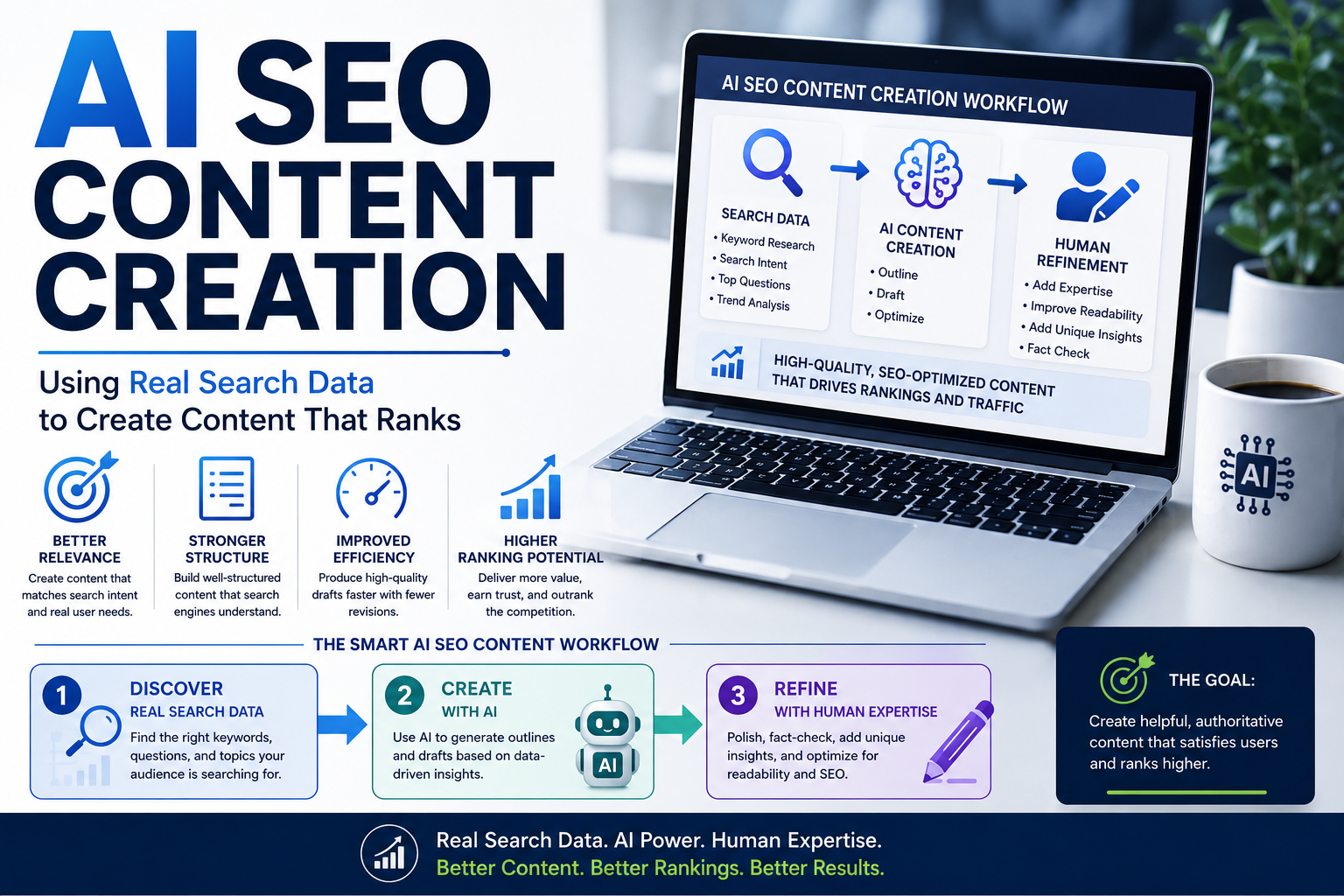
AI SEO content research refers to the systematic use of machine learning algorithms and natural language processing to analyze search engine data, competitor content, and user behavior patterns. Unlike conventional research methods that focus on individual keywords, AI-driven approaches examine entire topic clusters, entity relationships, and contextual relevance across thousands of pages simultaneously.
The core difference lies in processing capability. A human researcher might analyze 50-100 keywords in a day. AI systems can evaluate millions of search queries, SERP features, backlink profiles, and content structures within minutes. This scale enables identification of patterns that would remain invisible through manual analysis alone.
How AI Algorithms Process Search Data
Modern AI content research tools employ several sophisticated techniques. Natural language processing (NLP) breaks down search queries into semantic components, understanding the relationship between words rather than treating them as isolated strings. Machine learning models then cluster related concepts, identify topical hierarchies, and predict which content formats are most likely to satisfy specific search intents.
These systems also analyze SERP features like featured snippets, People Also Ask boxes, and video carousels. By understanding which elements appear for different query types, AI tools can recommend content structures that maximize visibility across multiple search result formats.
Why Traditional Content Research Falls Short
Conventional keyword research tools typically provide search volume, keyword difficulty, and cost-per-click data. While useful, these metrics fail to capture the full picture of what users actually need. A keyword with high volume might have ambiguous intent, leading to content that attracts clicks but generates high bounce rates because it doesn’t match user expectations.
Traditional methods also struggle with semantic variations. Users searching for “best running shoes” and “top running footwear” might have identical intent, but keyword-based tools treat these as separate opportunities. AI systems recognize the semantic equivalence and consolidate research efforts accordingly.
Another significant limitation is the inability to analyze content quality at scale. Manual competitor analysis requires reading dozens of articles to understand what makes them rank. AI tools can evaluate thousands of competing pages, extracting structural patterns, content depth metrics, and engagement signals that correlate with high rankings.
Core Components of AI-Driven Content Research
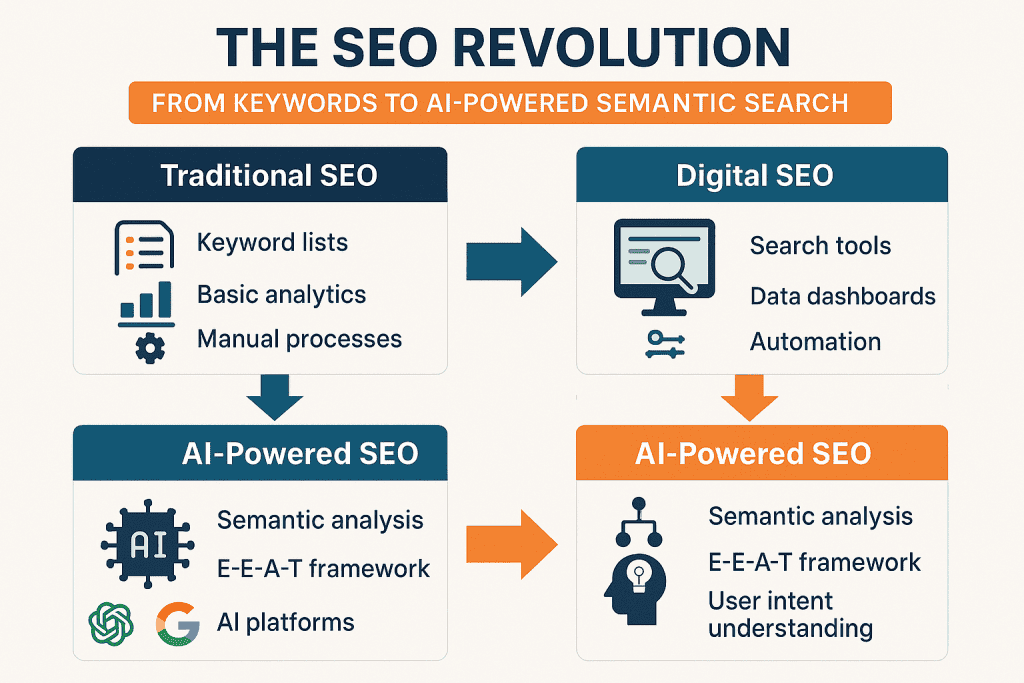
Effective AI SEO content research integrates multiple data streams to create a comprehensive understanding of the search landscape. Each component contributes unique insights that inform different aspects of content strategy.
Search Intent Classification
AI systems classify queries into four primary intent categories: informational, navigational, commercial, and transactional. Beyond this basic classification, advanced models identify micro-intents that influence content requirements. For example, an informational query might require a step-by-step tutorial, a comparison guide, or a statistical overview depending on the specific phrasing and context.
Machine learning models analyze SERP composition to determine which content types dominate for specific queries. If video results appear prominently, users likely prefer visual demonstrations. If listicles dominate, structured formats with clear headings perform better. This analysis guides both topic selection and content formatting decisions.
Entity and Topic Clustering
Search engines increasingly rely on entity-based indexing rather than simple keyword matching. AI content research tools identify key entities within a niche, including products, people, organizations, and concepts. These entities form the foundation of topical authority, which Google uses to determine expertise and relevance.
Topic clustering goes beyond simple keyword grouping. AI algorithms analyze co-occurrence patterns across top-ranking pages to understand which subtopics naturally belong together. This enables creation of comprehensive content hubs that cover entire subject areas rather than isolated articles targeting individual keywords.
Competitor Gap Analysis
AI-powered gap analysis examines competitor content at scale, identifying topics they cover, questions they answer, and structural elements they employ. This analysis reveals opportunities where competitors have weak coverage or missing information that your content can address.
Advanced tools also analyze competitor backlink profiles to identify link-worthy content types and outreach opportunities. Understanding which competitor pages attract the most links provides insight into what content formats and topics resonate with your industry’s link-building community.
Essential AI Tools for Content Research
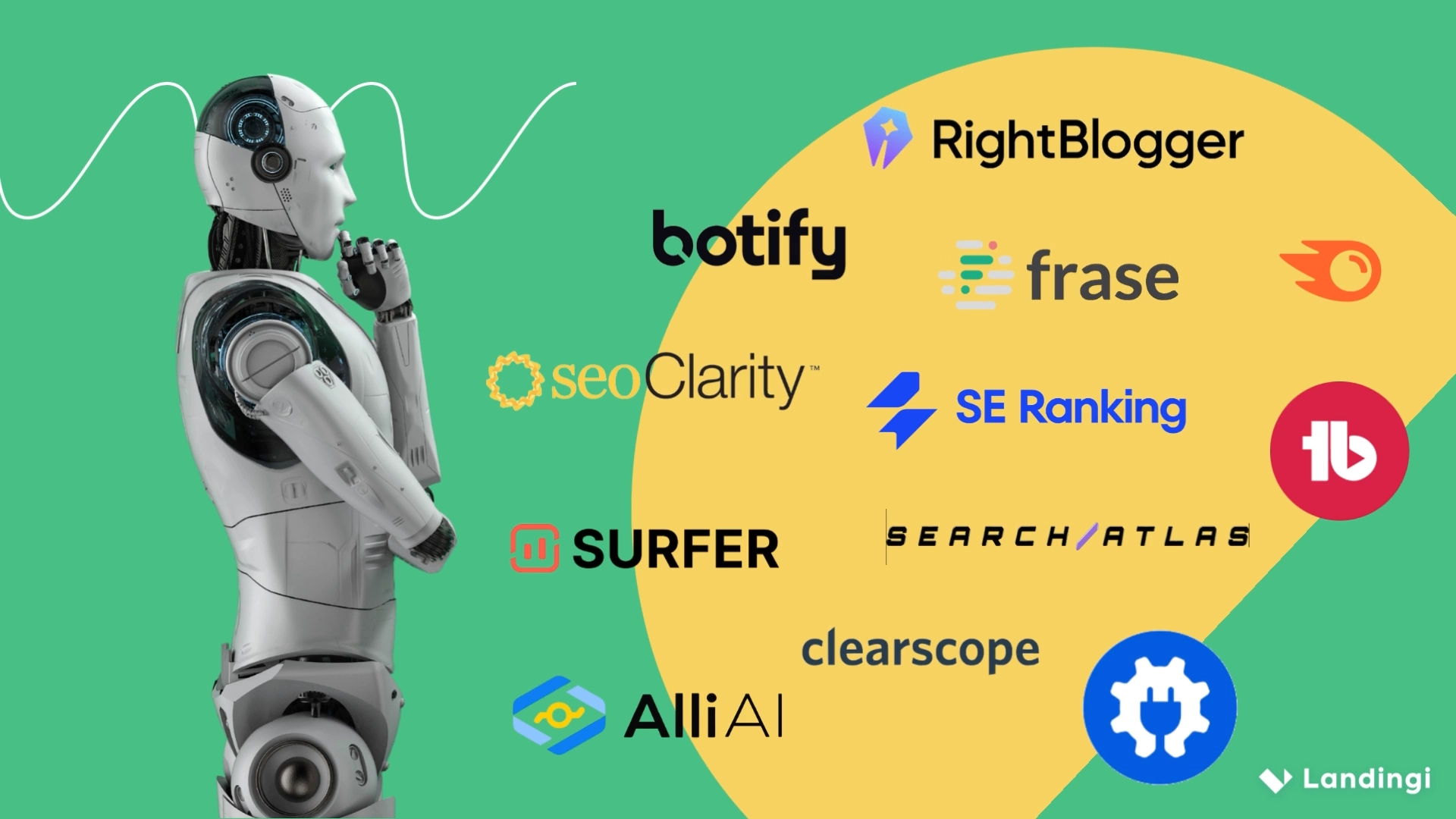
The market offers numerous AI-powered research tools, each with distinct strengths. Understanding their capabilities helps select the right combination for your specific needs.
| Tool Category | Primary Function | Key Features |
|---|---|---|
| NLP-Based Keyword Tools | Semantic keyword discovery | Intent classification, entity extraction, question identification |
| Content Optimization Platforms | On-page analysis and recommendations | Real-time scoring, competitor comparison, readability analysis |
| Predictive Analytics Tools | Performance forecasting | Traffic predictions, ranking probability, content lifespan estimates |
| SERP Analysis Tools | Search results evaluation | Feature tracking, position monitoring, click-through rate analysis |
| Content Gap Identifiers | Opportunity discovery | Competitor comparison, topic clustering, demand forecasting |
Evaluating AI Research Tool Accuracy
Not all AI tools deliver equally reliable results. When evaluating options, consider the underlying data sources, update frequency, and validation methods. Tools that train their models on real search data from major search engines typically provide more accurate predictions than those relying on synthetic datasets.
Look for tools that provide transparency about their methodology and confidence scores for predictions. The best platforms combine AI analysis with human editorial oversight, ensuring that algorithmic recommendations align with practical content marketing experience.
Step-by-Step AI Content Research Process
Implementing AI SEO content research requires a structured approach that moves from broad opportunity identification to specific content briefs. This process ensures that AI insights translate into actionable content strategies.
Step 1: Define Your Content Universe
Begin by identifying your core topic areas and target audience segments. Input this information into your AI research tool to establish the boundaries for analysis. The system will then map the competitive landscape, identifying key players and content saturation levels within your chosen niches.
This initial mapping phase should also include analysis of your existing content performance. AI tools can evaluate which of your current pages attract the most traffic, engagement, and conversions, providing a baseline for future content decisions.
Step 2: Generate Topic Clusters
Using your defined content universe, AI tools generate comprehensive topic clusters that represent the full scope of your subject area. Each cluster contains a pillar topic supported by multiple subtopics that address specific user questions and needs.
For example, a fitness website might generate a cluster around “strength training for beginners” with subtopics covering equipment selection, workout frequency, nutrition requirements, common mistakes, and progression strategies. Each subtopic represents a potential article that supports the overall cluster authority.
Step 3: Analyze Search Intent Patterns
For each topic in your clusters, AI tools analyze search intent patterns across multiple query variations. This analysis reveals whether users primarily seek information, comparisons, or purchasing guidance. Content formats should align with these intent patterns to maximize relevance.
This step also identifies question-based queries that present opportunities for featured snippet optimization. AI systems can predict which questions are most likely to trigger snippet displays based on current SERP features and content patterns.
Step 4: Assess Content Competition
AI tools evaluate the competitive landscape for each topic, analyzing factors such as domain authority, content depth, freshness, and engagement metrics of currently ranking pages. This assessment helps prioritize topics where you have realistic chances of ranking within your target timeframe.
Competition analysis should also examine content quality gaps. If top-ranking pages are thin or outdated, this represents an opportunity to create superior content that outperforms existing results.
Step 5: Create Data-Driven Content Briefs
The final research phase produces comprehensive content briefs that guide writers through the creation process. These briefs include target keywords, semantic variations, suggested headings, content structure recommendations, and specific data points or statistics to include.
AI-generated briefs also provide guidance on internal linking opportunities, suggesting related content that should be connected to establish topical authority. This interconnected structure helps search engines understand your site’s expertise in specific subject areas.
Benefits of AI-Powered Content Research
Organizations that adopt AI SEO content research gain significant advantages over competitors relying on traditional methods. These benefits extend beyond simple time savings to fundamentally improve content quality and performance.
- Comprehensive Coverage: AI systems identify opportunities that manual research would miss, ensuring no valuable topics remain unexplored.
- Predictive Insights: Machine learning models forecast content performance before publication, enabling resource allocation toward high-potential topics.
- Consistent Quality: Data-driven briefs ensure all content meets established standards for depth, relevance, and user satisfaction.
- Rapid Adaptation: AI tools continuously monitor search landscape changes, enabling quick pivots when algorithm updates or trend shifts occur.
- Scalable Operations: Research processes that once required days of manual work now complete in hours, supporting larger content production volumes.
Limitations and Challenges
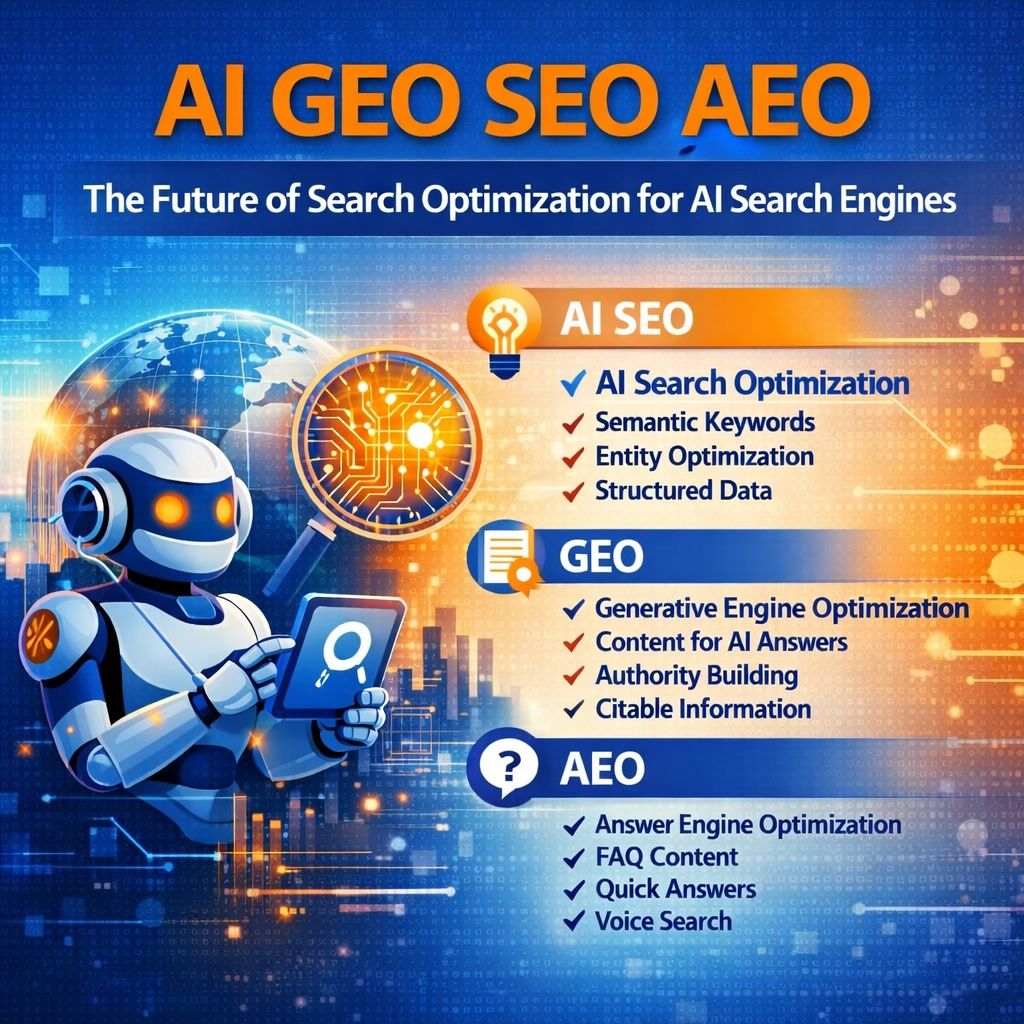
While AI SEO content research offers substantial benefits, understanding its limitations prevents unrealistic expectations and poor implementation decisions.
AI tools cannot fully replicate human judgment regarding brand voice, audience nuances, or creative differentiation. The best results come from combining AI insights with experienced editorial oversight that adds unique perspectives and authentic expertise.
Data quality issues can also affect AI recommendations. Tools trained on outdated or biased datasets may produce misleading suggestions. Regular validation of AI outputs against actual performance data helps maintain research accuracy.
Cost considerations matter as well. Premium AI research tools require significant investment, which may not be justified for small operations with limited content production needs. Start with free or low-cost options to assess value before committing to enterprise solutions.
Common Mistakes in AI Content Research
Many organizations fail to maximize AI research value due to common implementation errors. Recognizing these pitfalls helps avoid wasted effort and suboptimal outcomes.
Over-Reliance on AI Recommendations
Treating AI outputs as absolute truth rather than guidance leads to generic content that lacks differentiation. AI tools identify patterns from existing successful content, which means following recommendations too closely produces content similar to what already ranks. Adding unique perspectives, proprietary data, and distinctive expertise differentiates your content from AI-generated suggestions.
Ignoring Human Search Behavior
AI models analyze historical data, but user behavior evolves continuously. Seasonal trends, cultural shifts, and emerging technologies change search patterns in ways that historical data may not predict. Supplement AI insights with direct user research, social listening, and customer feedback to capture current needs.
Neglecting Content Refresh Cycles
AI research provides a snapshot of the search landscape at a specific moment. Search patterns and competitive dynamics change constantly. Establish regular research refresh cycles to ensure your content strategy remains aligned with current conditions.
Practical Applications Across Content Types
AI SEO content research applies to various content formats beyond traditional blog articles. Understanding these applications helps maximize the value of your research investment.
Product Page Optimization
AI research identifies the specific attributes, comparisons, and use cases that shoppers search for when evaluating products. This information guides product page copy that addresses purchase objections and highlights relevant differentiators.
Video Content Strategy
Analysis of video search patterns reveals topics that perform well in video format, optimal video lengths, and content structures that maximize viewer retention. This research supports YouTube and other video platform strategies.
Email Marketing Content
Understanding what topics and questions your audience searches for informs email content that addresses genuine needs rather than promotional messages that get ignored. AI research identifies content themes that drive engagement and conversions.
Measuring AI Research Effectiveness
Tracking the impact of AI-driven content research requires establishing clear metrics that connect research activities to business outcomes. These measurements validate tool investments and guide continuous improvement.
Ranking performance provides the most direct measurement. Track keyword positions for content created through AI research processes, comparing performance against content developed through traditional methods. Traffic growth, engagement metrics, and conversion rates provide additional performance indicators.
Content efficiency metrics also matter. Measure the time required to produce content using AI research versus manual methods, along with the percentage of content that achieves target rankings within established timeframes.
Important Notes for Implementation
Successful AI SEO content research implementation requires attention to several critical factors that influence outcomes.
Data privacy considerations affect which tools you can use, particularly for organizations in regulated industries. Ensure your chosen tools comply with applicable data protection regulations and your organization’s data governance policies.
Integration with existing workflows determines adoption success. AI research tools should complement rather than replace existing content processes. Establish clear handoffs between research outputs and content creation workflows to maximize efficiency.
Continuous learning remains essential. AI models improve with feedback, so document which research recommendations led to successful outcomes and which missed the mark. This feedback loop enhances future research accuracy.
Frequently Asked Questions
How does AI SEO content research differ from traditional keyword research?
Traditional keyword research focuses on individual search terms and their metrics like volume and difficulty. AI SEO content research analyzes entire topic clusters, search intent patterns, semantic relationships, and competitive content structures. This broader analysis provides more comprehensive guidance for content strategy, including topic selection, content formatting, and internal linking recommendations.
What are the best AI tools for content research?
Several categories of AI tools serve different research needs. NLP-based tools like Clearscope and Surfer SEO analyze semantic relevance and content optimization. Predictive tools like MarketMuse provide content strategy recommendations based on competitive analysis. Comprehensive platforms like Semrush and Ahrefs incorporate AI features into their traditional SEO toolkits. The best choice depends on your specific research requirements and budget.
Can AI replace human content researchers?
AI cannot fully replace human researchers because it lacks contextual understanding of brand voice, audience nuances, and creative differentiation. The most effective approach combines AI’s processing power and pattern recognition with human judgment and expertise. AI handles data analysis and pattern identification while humans provide strategic direction and creative interpretation.
How often should I conduct AI content research?
Research frequency depends on your industry’s dynamism and content production volume. Fast-moving industries like technology and fashion benefit from monthly research updates. More stable industries may require quarterly reviews. Additionally, conduct fresh research whenever you plan significant content initiatives or notice ranking declines that suggest changing search patterns.
Does AI content research work for local SEO?
AI research tools can analyze local search patterns, identifying location-specific queries and content opportunities. However, local SEO also requires understanding of local business nuances, community-specific language, and regional competitive dynamics that general AI models may not capture. Combine AI insights with local market knowledge for best results.
Conclusion
AI SEO content research represents a fundamental shift in how content strategies develop and execute. The ability to process massive datasets, identify semantic patterns, and predict content performance provides substantial competitive advantages for organizations that implement these approaches effectively.
Success requires balancing AI capabilities with human expertise. The most effective content strategies combine AI’s analytical power with editorial judgment, creative differentiation, and authentic subject matter expertise. Organizations that achieve this balance create content that ranks well and genuinely serves user needs, building sustainable organic traffic and brand authority.
Start by evaluating your current research processes and identifying areas where AI could add value. Begin with a single content cluster or topic area, implement AI research tools, and measure the results against your baseline performance. This incremental approach allows you to validate the value of AI research before scaling across your entire content operation.
Xem thêm:
- AI SEO Product Descriptions: The Complete Guide to Higher Rankings and More Sales
- AI SEO Site Architecture: The Complete Guide to Building Search-Ready Websites
- AI SEO Agent Workflow: The Complete Blueprint for Automated Search Dominance
- AI SEO AI Search Sources: The Complete Guide to Optimizing for Generative Engines
- AI Conclusion Generator: Generate Powerful Closing Paragraphs in Seconds
Bài viết cùng chủ đề:

AI SEO SEO Automation with Make: The Complete Workflow Guide

AI SEO SEO Automation with Zapier: The Complete Workflow Guide

AI SEO SEO Automation with n8n: The Complete Workflow Guide
AI SEO SEO Automation with Gemini: The Complete Guide to Scaling Organic Growth

AI SEO SEO Automation with Claude: The Complete Guide to Scaling Content in 2025

AI SEO SEO Automation with ChatGPT: The Complete Playbook for 2025

AI SEO & SEO Automation for Affiliate Sites: The 2025 Playbook for Passive Income Growth
AI SEO & SEO Automation for Bloggers: The Complete Guide to Scaling Your Content

AI SEO & SEO Automation for Agencies: The Complete 2025 Playbook

AI SEO and SEO Automation for Ecommerce: The Complete Playbook for 2025

AI SEO & SEO Automation for WordPress: The Complete Playbook for 2025
AI SEO SEO Automation Strategy: The Complete Playbook for 2025

Mastering the AI SEO SEO Automation Process: A Complete Guide to Scaling Organic Growth
AI SEO SEO Automation System: The Complete Guide to Scaling Organic Growth in 2025
AI SEO SEO Automation Platform: The Complete Guide to Scaling Organic Growth in 2025
AI SEO SEO Automation Software: The Complete Guide to Scaling Organic Growth in 2025















