
No products in the cart.
AI SEO Website Architecture: The Complete Blueprint for 2025
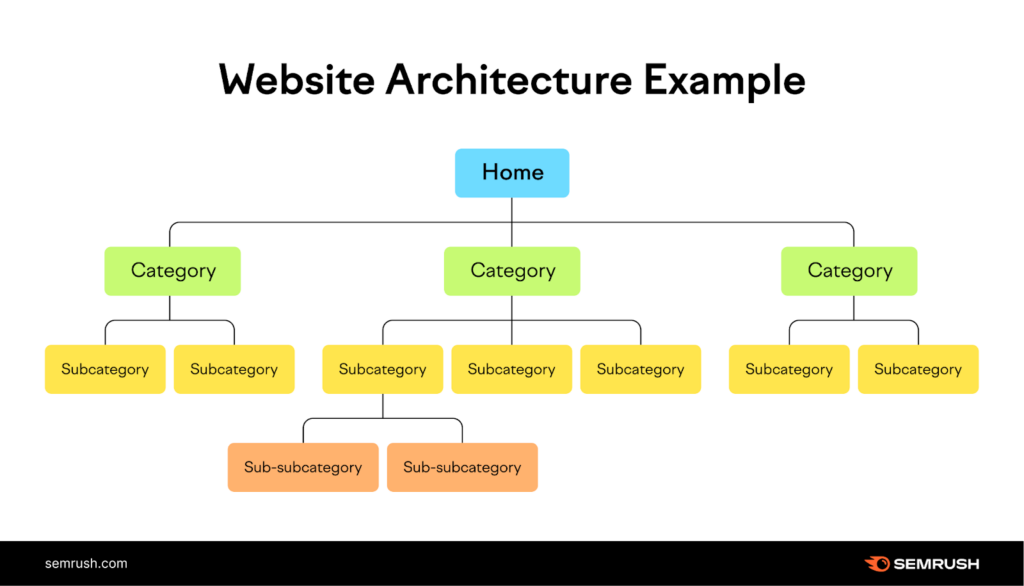
10
Aug
Aug
AI SEO website architecture is no longer a futuristic concept—it is the operational standard for digital growth in the current search landscape. As search engines shift from keyword matching to semantic understanding and machine learning ranking models, the physical and logical structure of your website becomes a critical ranking factor. This guide breaks down how to design a site structure that satisfies both AI crawlers and human users, ensuring your content gets indexed, understood, and ranked effectively.
What is AI SEO Website Architecture?
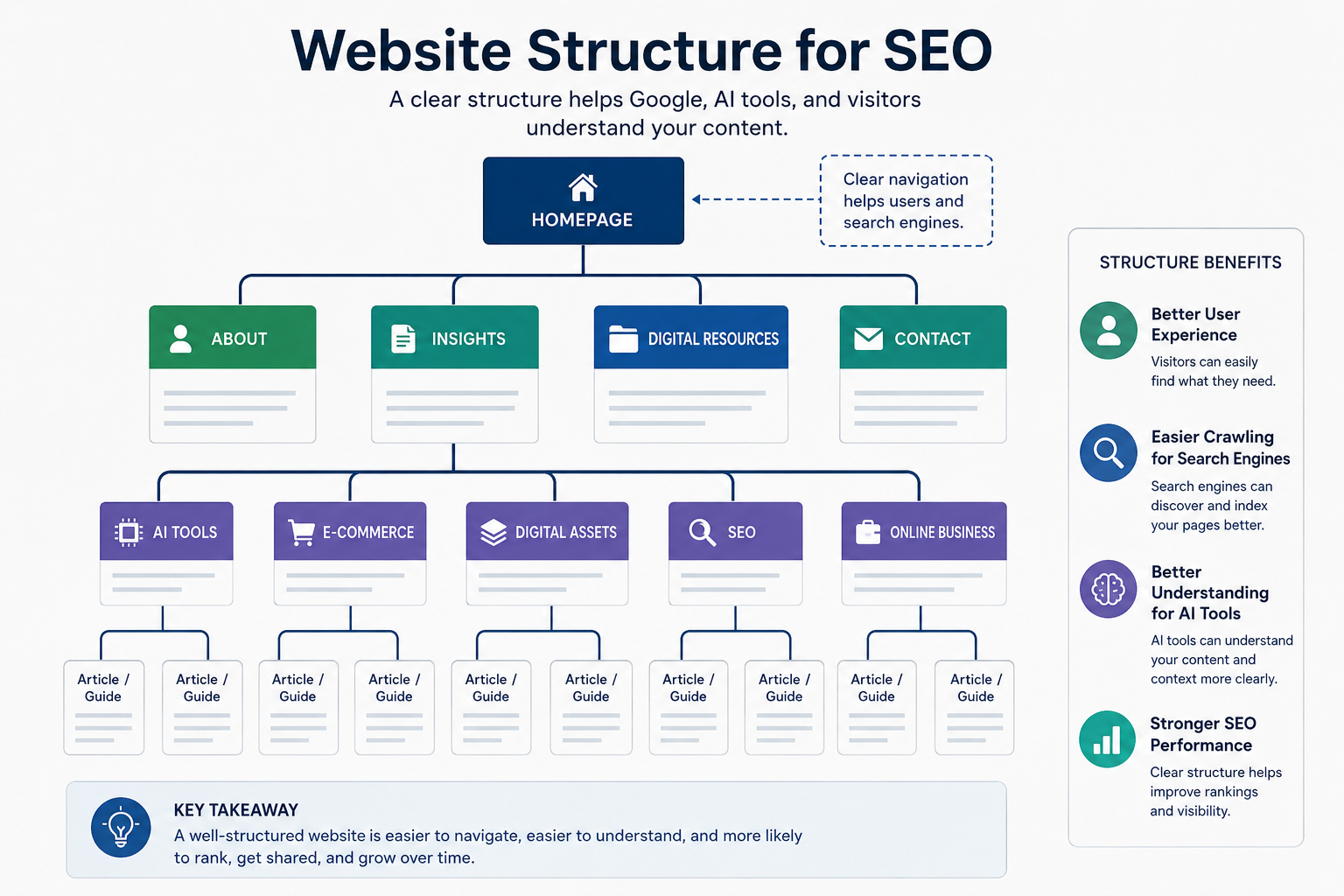
AI SEO website architecture refers to the strategic organization of a website’s URLs, internal links, navigation menus, and content hierarchy, optimized specifically for artificial intelligence algorithms used by search engines like Google’s RankBrain, BERT, and MUM. Unlike traditional SEO architecture that focused on keyword placement, AI-driven architecture prioritizes entity relationships, topical depth, and contextual relevance.
This approach involves structuring your site so that AI crawlers can efficiently map the relationship between pages, understand the main topic of each page, and determine which pages are most authoritative. The goal is to create a clear, logical flow of link equity and topical authority that mirrors how a human expert would organize a library of information.
The Shift from Keyword-Centric to Entity-Centric Structure
Traditional architecture grouped pages by exact-match keywords. AI architecture groups pages by entities and subtopics. For example, a traditional structure might have URLs like /best-running-shoes and /best-trail-running-shoes. An AI-optimized structure creates a hub page for “Running Shoes” with supporting pages for “Trail Running Shoes,” “Road Running Shoes,” and “Racing Flats,” all interlinked with descriptive anchor text that reinforces the semantic relationship.
This entity-based model allows AI to understand that your site is an authority on running shoes as a whole, not just a collection of unrelated product pages. The architecture signals topical depth, which is a primary factor in modern relevance scoring.
Why AI SEO Website Architecture Matters for Rankings
Search engines use AI to determine how well a page answers a query. However, before a page can be ranked, it must be discovered and understood. Architecture directly impacts three core AI processes: crawling efficiency, indexation priority, and contextual understanding.
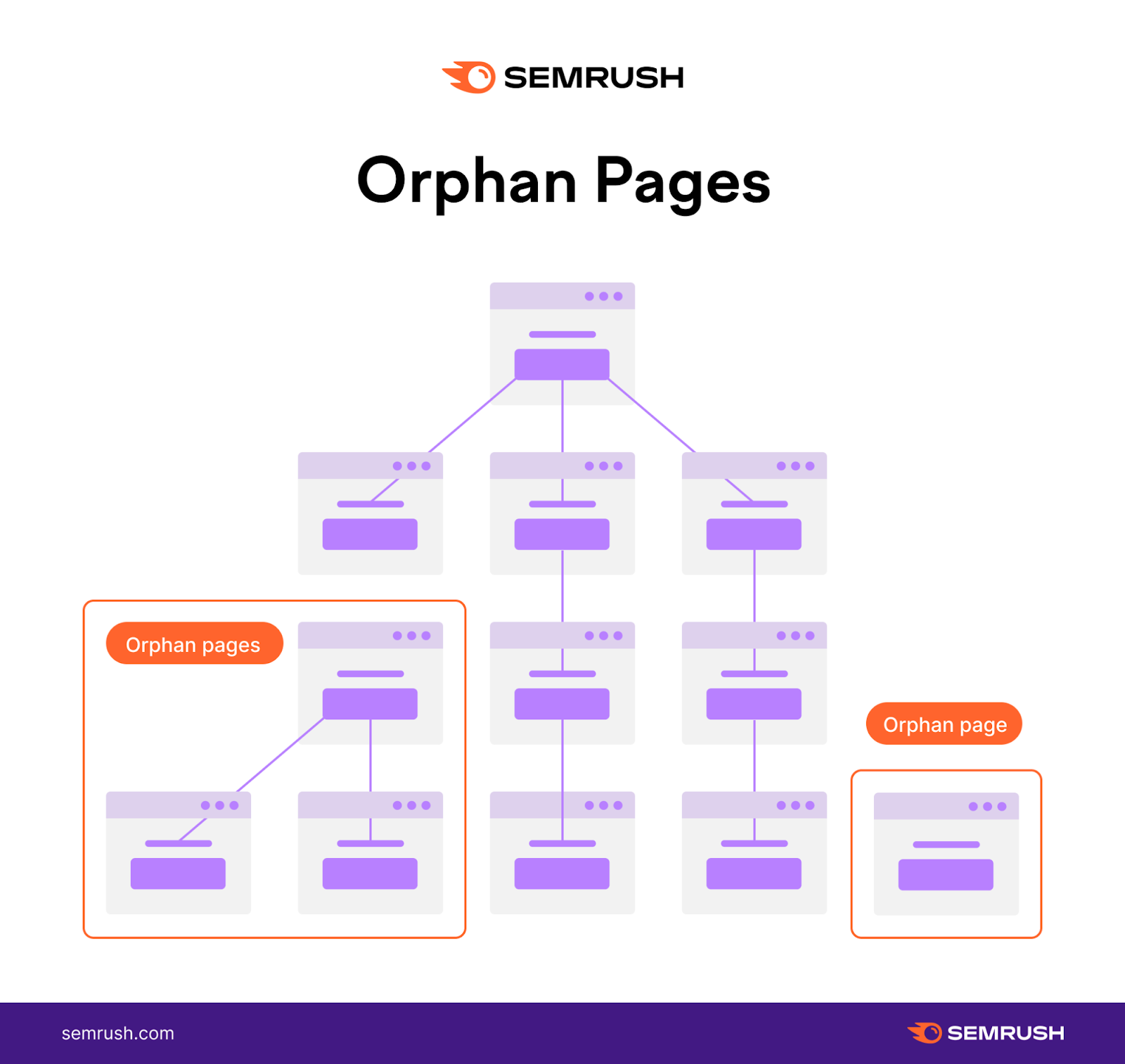
When your architecture is flat and logical, AI crawlers can reach every important page within a few clicks from the homepage. This reduces crawl waste and ensures that your most valuable content receives the necessary crawl budget. Conversely, a chaotic architecture with orphan pages and deep nesting confuses AI, leading to missed indexation and diluted authority.
Crawl Budget Optimization for AI Bots
AI bots allocate a specific crawl budget to each site. If your architecture forces bots to wade through thousands of low-value filter pages or broken links, they will spend less time on your high-priority content. A well-structured site with a clean XML sitemap and logical internal linking tells the AI exactly where to go and what is important.
Using a pillar-cluster model is the most effective way to manage crawl budget. The pillar page covers the broad topic, and cluster pages dive into specific subtopics. Each cluster page links back to the pillar, and the pillar links out to all clusters. This creates a web of contextual signals that AI uses to rank the entire cluster higher.
Core Components of an AI-Optimized Site Structure
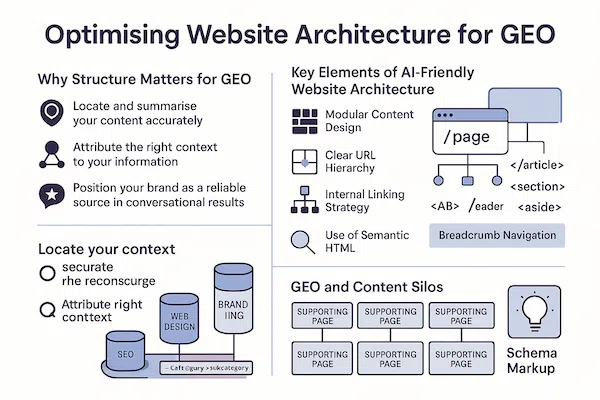
Building an AI-ready architecture requires attention to several technical and structural elements. Each component works together to create a machine-readable blueprint of your website’s purpose.
Logical URL Hierarchy
Your URL structure should be a direct reflection of your site’s topical hierarchy. Short, descriptive URLs that include the primary entity perform best. Avoid dynamic parameters, excessive folders, and numbers. A URL like /health/fitness/cardio is clearer to AI than /page.php?id=123&cat=456.
Keep URLs under 75 characters when possible. Use hyphens to separate words. Ensure that the URL path matches the breadcrumb trail and the H1 heading on the page. This consistency reinforces the topic for AI algorithms.
Internal Linking with Contextual Anchor Text
Internal links are the primary way AI discovers new pages and understands their relationship to existing ones. The anchor text you use acts as a label for the target page. Instead of using generic text like “click here,” use descriptive phrases that include the target page’s main keyword or entity.
For example, if you have a page about “AI content detection,” link to it from a related article using the anchor text “how AI content detection works.” This tells the AI exactly what the linked page is about, improving its relevance score for that query.
Breadcrumb Navigation
Breadcrumbs are not just for user experience; they provide AI with a clear hierarchical path. Breadcrumb markup using schema.org vocabulary helps search engines understand the position of a page within the site’s structure. This is particularly useful for large e-commerce sites with thousands of categories and subcategories.
Implementing breadcrumbs reduces the likelihood of AI misinterpreting the relationship between a product page and its category. It also encourages users to explore deeper into the site, which sends positive engagement signals back to the AI.
Designing a Pillar-Cluster Architecture for AI
The pillar-cluster model is the gold standard for AI SEO website architecture. It organizes content around a central “pillar” page that serves as the definitive resource for a broad topic. Surrounding this pillar are “cluster” pages that target specific long-tail keywords and subtopics related to the main theme.
This structure works because it mirrors how AI models learn. They ingest a broad concept and then drill down into specifics. By providing a clear hub-and-spoke model, you are effectively teaching the AI what your site is about and why you deserve to rank for related terms.
How to Build a Topic Cluster
Start by identifying a core topic that is central to your business. Create a comprehensive pillar page that covers the topic at a high level, linking out to every cluster page. Then, create cluster pages that address specific questions, subtopics, or related keywords. Each cluster page should link back to the pillar page and to other relevant clusters.
This internal linking structure passes authority from the pillar to the clusters and vice versa. Over time, the entire cluster gains topical authority, making it easier for AI to rank all pages for their respective keywords.
Using AI Tools to Identify Cluster Opportunities
Modern SEO platforms use AI to analyze search intent and suggest cluster topics. Tools like Ahrefs, Semrush, and Surfer SEO can generate lists of related keywords and questions that should be included in your cluster. These tools analyze the top-ranking pages for your pillar keyword and identify the subtopics they cover, giving you a data-driven blueprint for your architecture.
Leveraging these insights ensures that your architecture is built on actual search demand, not just guesswork. This reduces the risk of creating pages that no one searches for.
Technical Considerations for AI Crawlers
Beyond the logical structure, there are technical elements that determine how well AI can access and interpret your architecture. Ignoring these can render your perfect structure invisible to search engines.
XML Sitemaps and Robots.txt
Your XML sitemap should list all canonical URLs that you want indexed. It should be updated dynamically whenever you add or remove content. The robots.txt file should be used to block AI from crawling low-value pages like search results, internal filters, and tag pages, directing crawl budget to your core architecture.
Ensure that your sitemap is referenced in the robots.txt file and submitted via Google Search Console. This creates a direct line of communication between your site and the AI crawler.
JavaScript Rendering and AI
AI crawlers have become better at rendering JavaScript, but it is still not as reliable as server-side rendering. If your site relies heavily on JavaScript to load content and links, you risk having an incomplete view of your architecture. Use server-side rendering or static site generation for critical pages to ensure that all links and content are visible in the raw HTML.
Test your site using Google’s URL Inspection Tool to see exactly what the AI bot sees. If the rendered HTML does not match your intended structure, you need to fix the rendering process.
Benefits and Limitations of AI-Driven Architecture
Adopting an AI-focused architecture provides significant advantages, but it is not without challenges. Understanding both sides helps in setting realistic expectations.
| Aspect | Benefits | Limitations |
|---|---|---|
| Ranking Potential | Higher visibility for a wider range of related keywords due to topical authority. | Requires significant time to build out comprehensive cluster content. |
| User Experience | Clear navigation reduces bounce rates and improves engagement metrics. | Complex information architecture can be difficult to maintain on large sites. |
| Crawl Efficiency | AI bots can index more pages with less wasted crawl budget. | Requires constant technical audits to fix broken links and redirects. |
| Scalability | Easy to add new content that fits into the existing structure. | Initial setup requires deep keyword research and content planning. |
Practical Guide: Implementing AI SEO Website Architecture
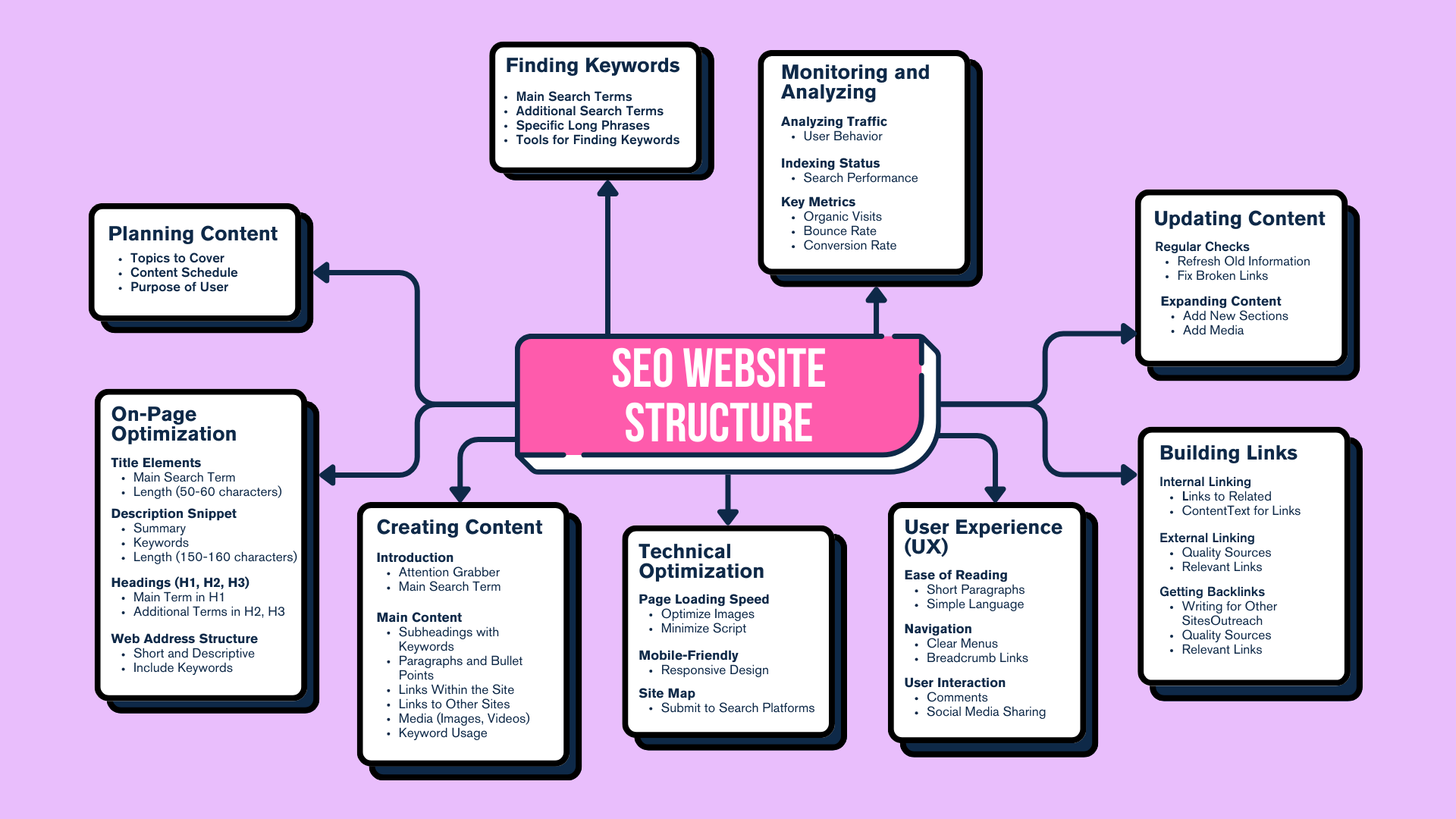
Implementing this architecture requires a systematic approach. Follow these steps to restructure your site for AI success.
Step 1: Audit Your Current Structure
Use tools like Screaming Frog or Sitebulb to crawl your site and map out the current hierarchy. Identify orphan pages, broken internal links, and pages that are too deep in the navigation. Look for duplicate content issues and thin pages that add no value. This audit provides the baseline for your restructuring efforts.
Step 2: Define Your Core Entities
List the main products, services, or topics your business covers. These are your pillar topics. For each pillar, brainstorm all related subtopics and questions your audience might have. Use keyword research tools to validate search volume and difficulty for these subtopics.
Step 3: Map the New Hierarchy
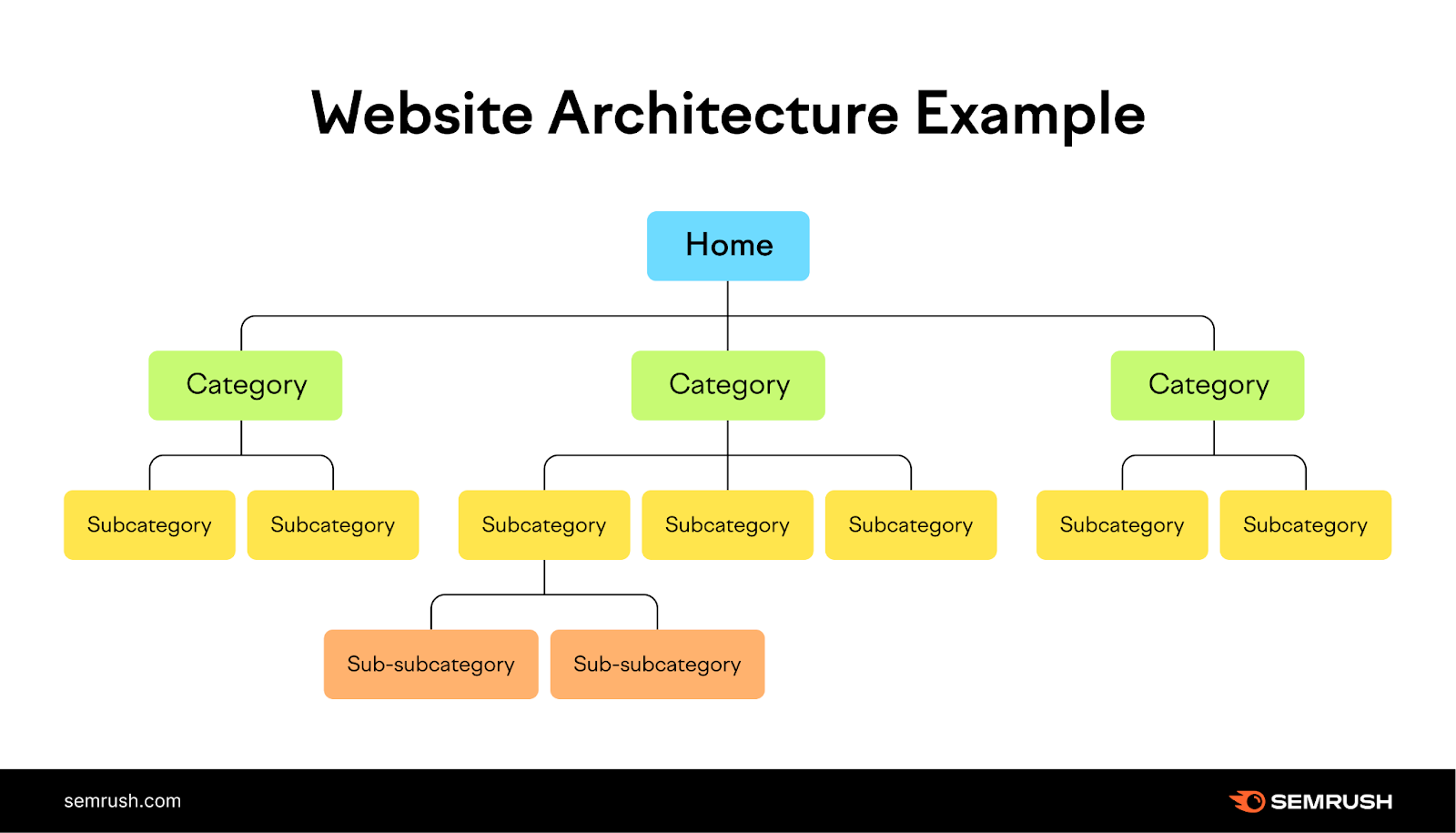
Create a visual map of your new architecture. Place the pillar pages at the top level, followed by category pages, and then individual cluster posts or product pages. Ensure that every page is reachable within three clicks from the homepage. This flat architecture is preferred by AI algorithms.
Step 4: Implement 301 Redirects
If you are changing URLs, set up 301 redirects from old URLs to the new ones. This preserves link equity and prevents 404 errors. Update your internal links to point to the new structure. Update your XML sitemap and resubmit it to search engines.
Step 5: Strengthen Internal Linking
Go through each cluster page and add contextual links to the pillar page and to other related clusters. Use descriptive anchor text. Add related posts sections to your blog template to automate some of this linking. Ensure that the pillar page links out to every cluster page.
Common Mistakes and How to Avoid Them
Even with the best intentions, there are common pitfalls that can undermine your AI SEO website architecture. Recognizing these early can save you from costly corrections.
Creating Orphan Pages
Orphan pages are pages that have no internal links pointing to them. AI cannot discover them through crawling, making them invisible. Always ensure every new piece of content is linked from at least one other page on your site. Use your sitemap as a checklist to verify that all pages are linked internally.
Over-Optimizing Anchor Text
While descriptive anchor text is good, using the exact match keyword for every link looks unnatural to AI. Vary your anchor text using synonyms and partial matches. This creates a more natural link profile that is less likely to trigger spam filters.
Ignoring Mobile Architecture
AI primarily uses the mobile version of your site for indexing. If your mobile navigation hides links behind hamburger menus or accordions, AI may not see them. Ensure that your mobile site has the same crawlable links as your desktop site. Use responsive design to maintain a single URL structure.
Important Notes for Long-Term Success
AI SEO website architecture is not a one-time project. It requires ongoing maintenance and adaptation as your business grows and as search algorithms evolve.
Regularly audit your internal links to fix broken ones. Monitor your crawl stats in Google Search Console to see if AI is discovering new pages efficiently. Update your pillar pages regularly with new information to maintain their authority. As you publish new content, ensure it is properly linked into the existing cluster structure.
Pay attention to Core Web Vitals and page speed. A fast, technically sound site enhances the AI’s ability to crawl and render your pages. Slow sites waste crawl budget and hurt user engagement signals.
Frequently Asked Questions
What is the ideal site depth for AI SEO?
The ideal site depth is three clicks or fewer from the homepage. This ensures that AI crawlers can reach any page with minimal effort. Pages deeper than three clicks receive less authority and are less likely to be indexed quickly.
How does AI determine which pages are most important?
AI uses a combination of internal link signals, the number of links pointing to a page, the relevance of the anchor text, and the page’s position in the site hierarchy. Pages linked from the homepage and from high-authority pillar pages are considered more important.
Does a blog need a separate architecture from the main site?
No. The blog should be integrated into the main site’s architecture. If your blog is on a subdomain or a separate folder, it should still link back to relevant product or service pages. This passes authority and reinforces the topical relationship between your content and your commercial pages.
Can I use AI tools to generate content for my cluster pages?
Yes, AI content generation tools can help create drafts for cluster pages. However, you must edit and fact-check the content thoroughly. AI-generated content that is not reviewed can contain inaccuracies and lack the depth needed to rank. Use AI as a starting point, not the final product.
How often should I update my website architecture?
You should review your architecture quarterly. Look for new keyword opportunities, remove outdated content, and adjust your internal linking. Major overhauls should only be done when you have a significant change in business focus or a large influx of new content.
Conclusion
AI SEO website architecture is the foundation upon which all other SEO efforts are built. Without a clear, logical structure, even the best content will fail to rank because AI cannot understand its context or importance. By implementing a pillar-cluster model, optimizing your internal links, and ensuring technical crawlability, you create a site that is primed for success in the AI-driven search landscape.
Start by auditing your current structure and identifying your core entities. Build out your clusters methodically, and maintain your architecture with regular audits. The effort you invest in structuring your site today will compound over time, leading to higher rankings, more organic traffic, and a stronger digital presence.
Xem thêm:
- WP Trove AI Articles: The Complete Guide to Automated Content Creation
- The Ultimate AI SEO Roadmap: How to Rank in the Age of Intelligent Search
- AI SEO Edge SEO: The Complete Guide to Gaining a Competitive Advantage in 2025
- AI SEO Transactional Intent: The Complete Guide to Converting Search Traffic
- AI SEO Keyword Cluster Generator: The Complete Guide to Smarter Content Planning
Bài viết cùng chủ đề:

AI SEO SEO Automation with Make: The Complete Workflow Guide

AI SEO SEO Automation with Zapier: The Complete Workflow Guide

AI SEO SEO Automation with n8n: The Complete Workflow Guide
AI SEO SEO Automation with Gemini: The Complete Guide to Scaling Organic Growth

AI SEO SEO Automation with Claude: The Complete Guide to Scaling Content in 2025

AI SEO SEO Automation with ChatGPT: The Complete Playbook for 2025

AI SEO & SEO Automation for Affiliate Sites: The 2025 Playbook for Passive Income Growth
AI SEO & SEO Automation for Bloggers: The Complete Guide to Scaling Your Content

AI SEO & SEO Automation for Agencies: The Complete 2025 Playbook

AI SEO and SEO Automation for Ecommerce: The Complete Playbook for 2025

AI SEO & SEO Automation for WordPress: The Complete Playbook for 2025
AI SEO SEO Automation Strategy: The Complete Playbook for 2025

Mastering the AI SEO SEO Automation Process: A Complete Guide to Scaling Organic Growth
AI SEO SEO Automation System: The Complete Guide to Scaling Organic Growth in 2025
AI SEO SEO Automation Platform: The Complete Guide to Scaling Organic Growth in 2025
AI SEO SEO Automation Software: The Complete Guide to Scaling Organic Growth in 2025















