
No products in the cart.
AI A/B Testing: The Complete Guide to Automated Experimentation That Outperforms Traditional Methods
29
Jul
Jul
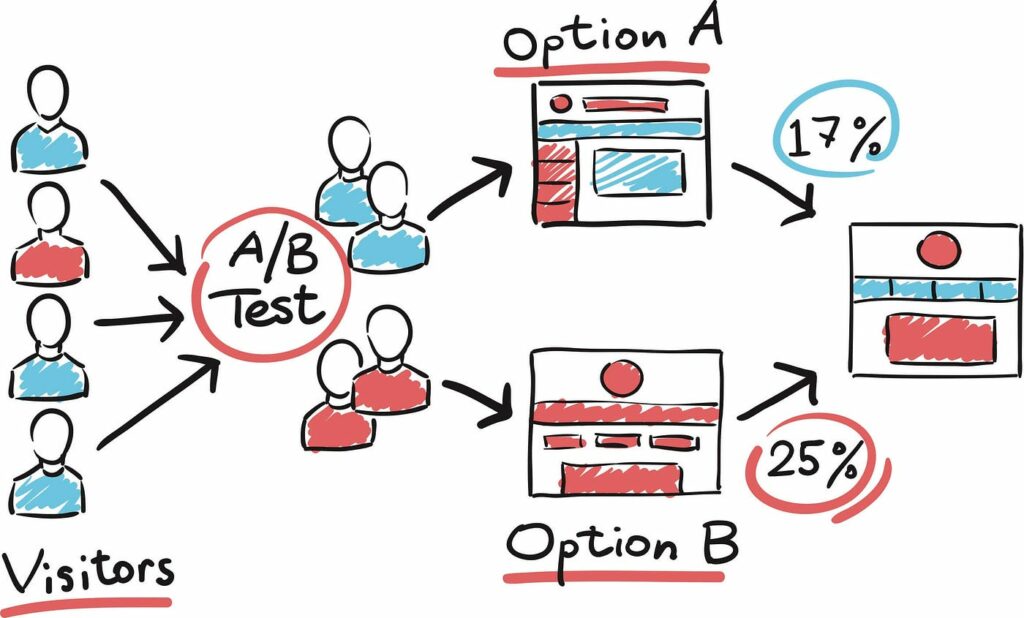
Every digital marketer, product manager, and UX researcher has faced the same frustrating moment: you launch a classic A/B test, wait for weeks, and finally get a result that barely inches the needle. Meanwhile, your competitors are iterating faster, personalizing experiences in real time, and squeezing every drop of conversion juice from their traffic. The difference is AI A/B testing. This advanced approach uses machine learning algorithms to design experiments, allocate traffic dynamically, and deliver winning variations faster than any human-managed test ever could. In this comprehensive guide, you will learn exactly what AI-powered experimentation is, how it differs from traditional testing, when to use it, and how to avoid the pitfalls that sink most teams.
What Is AI A/B Testing?
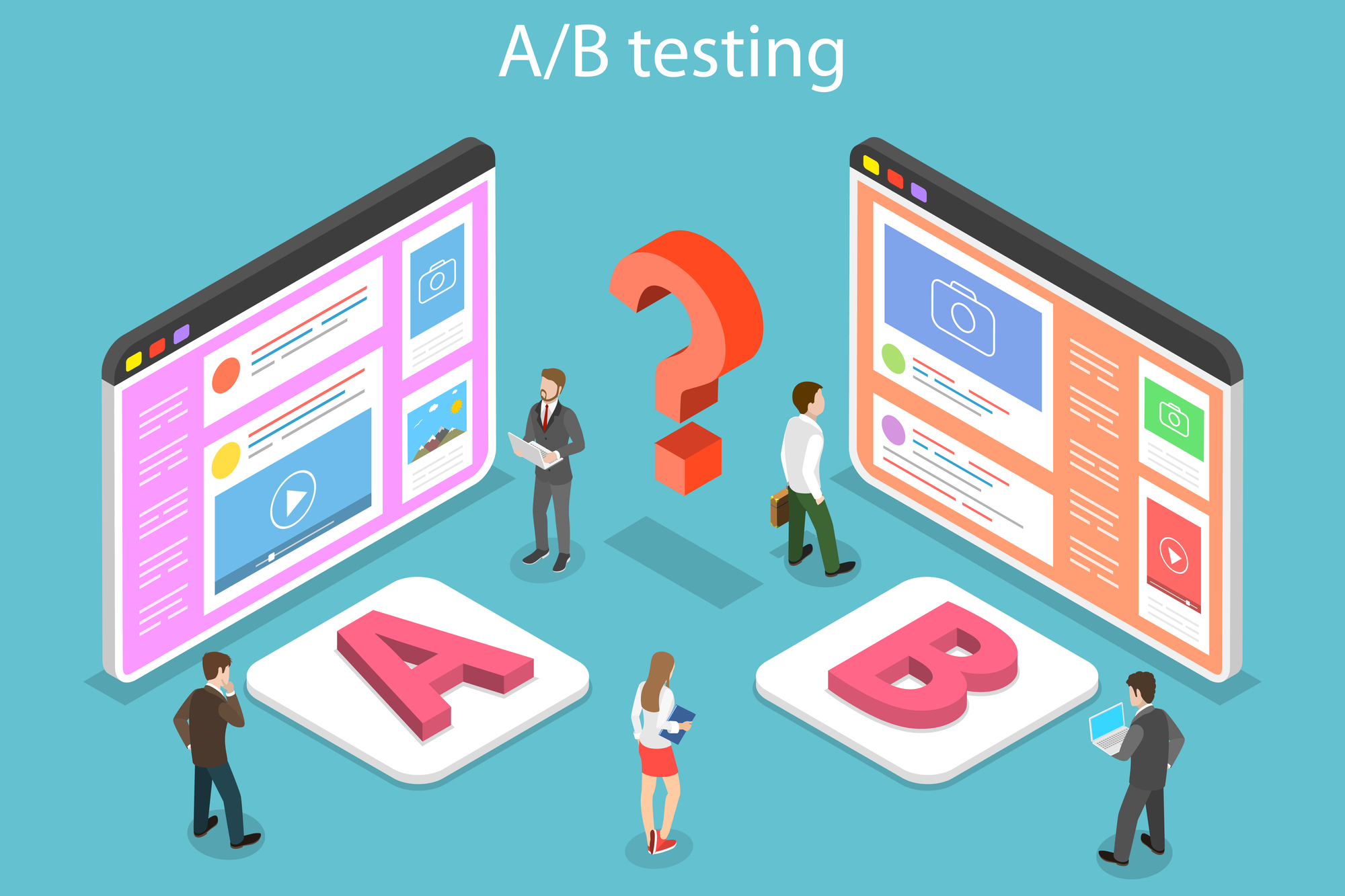
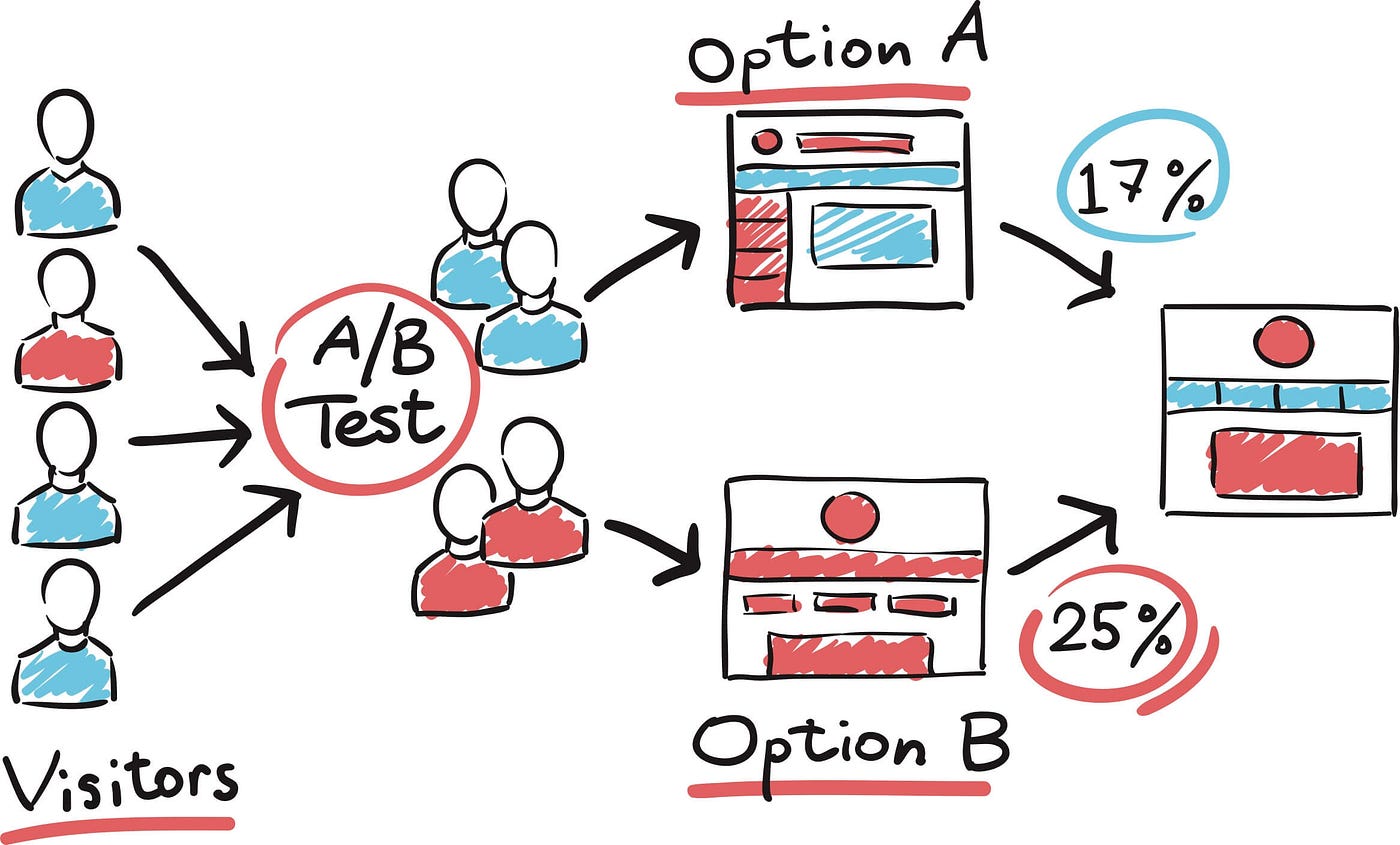
AI A/B testing is a modern experimentation framework that replaces static, rule-bound split testing with adaptive, self-learning algorithms. Instead of flipping a coin to send 50% of traffic to version A and 50% to version B, an AI engine continuously monitors performance and shifts more visitors toward the better-performing variant. This process, often called multi-armed bandit optimization, dramatically reduces the time and traffic needed to find a winner.
Traditional A/B testing relies on frequentist statistics and fixed sample sizes. You decide ahead of time how many visitors you need, you wait until the test “reaches significance,” and then you call a winner. AI A/B testing flips that model on its head by using Bayesian statistics, contextual bandits, or reinforcement learning to make real-time decisions. The system treats each visitor as an opportunity to learn something new and adjusts the traffic split accordingly.
The core technologies behind AI A/B testing include Bayesian inference, deep neural networks, Thompson sampling, and upper confidence bound algorithms. These methods evaluate not only which variation is winning but also how much uncertainty still exists. When uncertainty is high, the algorithm explores more; when a clear leader emerges, it exploits that variation aggressively. This balance between exploration and exploitation is what makes AI-driven experimentation so powerful.
How AI A/B Testing Differs from Traditional A/B Testing
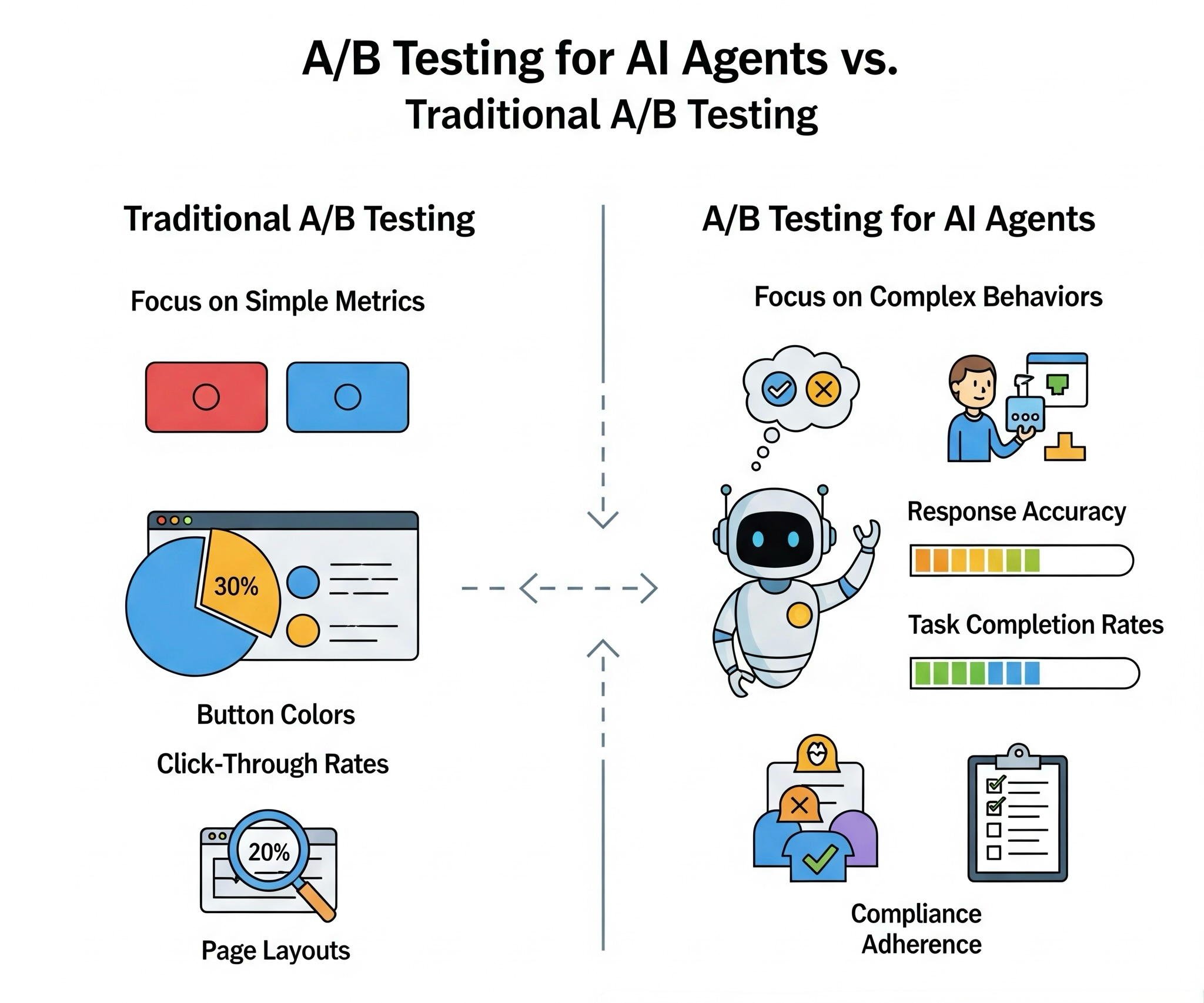
Understanding the contrast between old-school testing and AI-powered approaches is essential before adopting any tool. The table below highlights the most significant differences across key dimensions.
| Dimension | Traditional A/B Testing | AI A/B Testing |
|---|---|---|
| Traffic allocation | Fixed split (e.g., 50/50) throughout the test | Dynamic allocation, shifts toward winners in real time |
| Statistical framework | Frequentist (p-values, fixed sample size) | Bayesian or reinforcement learning (continuous probability updates) |
| Test duration | Weeks or months to reach significance | Days, sometimes hours, because exploitation accelerates results |
| Simultaneous variants | Typically limited, to avoid multiple testing problems | Can test dozens or hundreds of variations concurrently |
| Personalization capability | Rare; shows same winner to all segments | Core feature; matches best variation to user context |
| Human oversight required | High; manual analysis and stopping rules | Lower; algorithm automates decisions, though strategic oversight remains critical |
The most transformative shift is in the approach to time and traffic. Traditional tests treat every visitor equally until the end, even if one variant is already losing badly. AI A/B testing reduces the number of visitors exposed to underperforming experiences, which can directly protect revenue during high-stakes tests on pricing pages or checkout flows.
How AI A/B Testing Algorithms Work Under the Hood
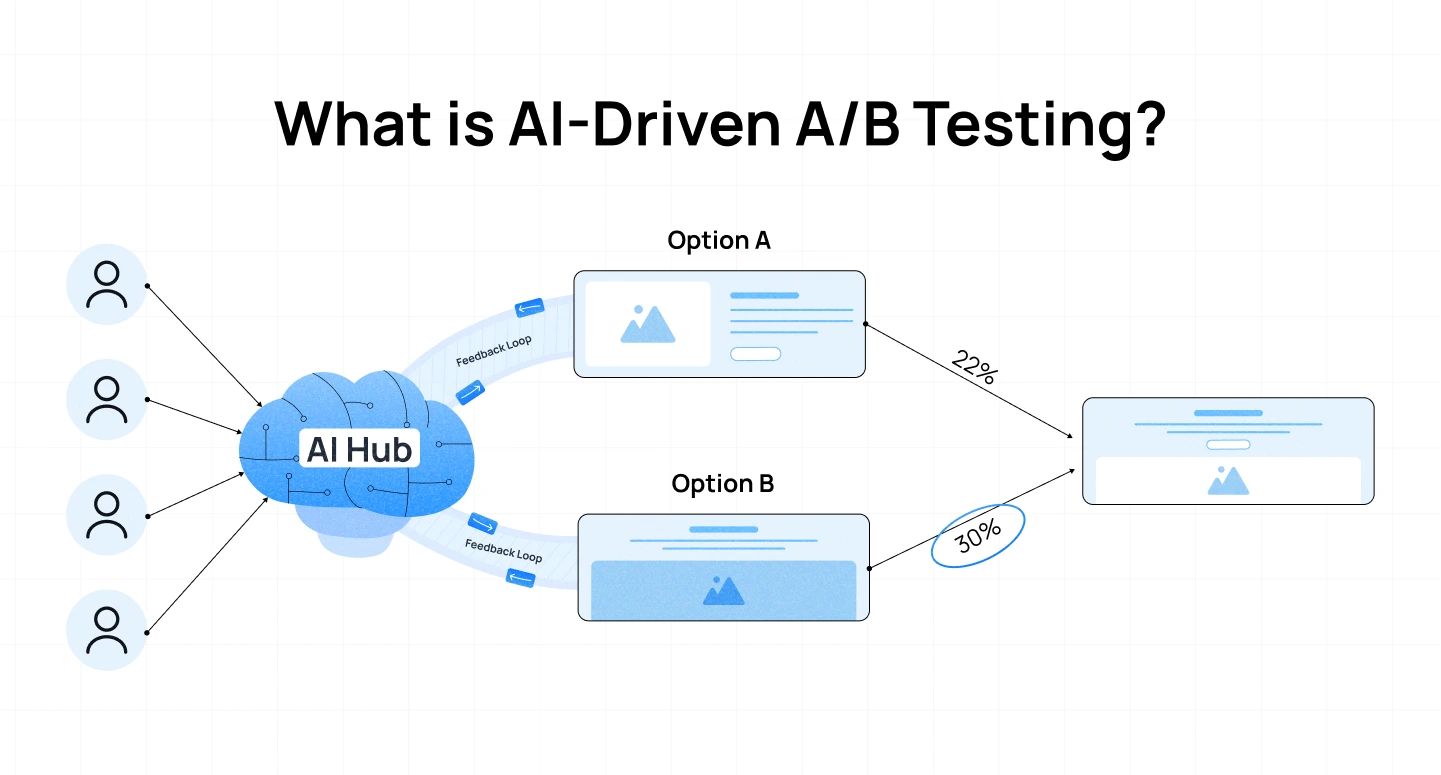
To trust an AI experimentation platform, you need a working understanding of its decision engine. While implementations vary, most AI A/B testing systems share a common conceptual flow.
1. Bayesian Updating for Conversion Rates
Instead of a single point estimate like “variant B has a 3.2% conversion rate,” Bayesian models maintain a full probability distribution for each variant’s conversion rate. The distribution captures both the most likely value and the remaining uncertainty. Every time a visitor converts or doesn’t, the algorithm updates both the mean and the width of that distribution. Variants with narrower, higher distributions are clear winners; wide distributions signal a need for more exploration.
2. Traffic Allocation via Thompson Sampling
Thompson sampling is one of the most elegant and widely used methods for dynamic traffic splitting. At each decision point, the system draws a random sample from every variant’s current posterior distribution. It then assigns the next visitor to the variant that produced the highest sampled value. This simple mechanism naturally balances exploration and exploitation: a variant with high uncertainty will occasionally produce a very high draw and get traffic, while a consistently strong variant will win most of the time.
3. Contextual Bandits for Personalization
When user attributes such as device type, location, or past purchase behavior are available, the problem becomes a contextual bandit. The AI model learns not just which variant works best overall but which works best for each specific context. A neural network might learn to show a minimalist landing page to returning mobile users and a feature-rich version to desktop newcomers. This personalization layer is where AI A/B testing massively outperforms static methods.
4. Automated Stopping and Winner Selection
Instead of arbitrary p-value thresholds like 0.05, AI systems can declare a winner when the probability that one variant is truly best exceeds a predefined threshold—often 95% or 99%—and enough traffic has been observed. Some platforms also incorporate cost functions, so a test will stop early only if continuing would cost more in lost conversions than the expected information gain.
Key Benefits of AI A/B Testing
- Faster time to result: By shifting traffic toward winners early, you reduce the opportunity cost of running a test. A test that would take four weeks with a 50/50 split might converge in under ten days.
- Higher overall conversion during the test: Because fewer visitors see losing variations, cumulative conversions over the test period are often significantly higher than they would be with static allocation. For an e-commerce site doing $100,000 in daily revenue, even a modest 2% lift during the test translates into thousands saved.
- Ability to test many variants simultaneously: An AI engine can efficiently explore dozens of headline, image, and CTA combinations without requiring millions of visitors. This lets teams optimize entire page experiences holistically rather than one element at a time.
- Built-in personalization: Contextual bandit algorithms naturally surface segment-specific winners, enabling marketers to deliver different experiences to different audiences without running separate tests.
- Continuous, always-on optimization: AI A/B testing can evolve into continuous experimentation, where algorithms permanently manage traffic allocation and keep improving over time without explicit stop and start dates.
- Reduction in false positives from peeking: Because Bayesian methods continuously update credible intervals, you do not break the statistics by looking at results early. The algorithm explicitly models the uncertainty that remains.
- Novelty effects are still real: An algorithm may rapidly shift traffic to a new design simply because early visitors are more engaged by the novelty. If the effect fades after a few days, the model might have already converged on a false winner. Guardrails that enforce minimum exposure time are essential.
- Delayed feedback blinds the algorithm: For businesses with long conversion cycles—B2B lead generation, high-ticket purchases, subscription upgrades—a visitor’s action may occur days or weeks after the initial exposure. If the AI does not incorporate delayed rewards properly, it may make premature decisions based on early signals like clicks instead of final outcomes.
- Model opacity can hide errors: When a deep learning model controls traffic, understanding why a particular variant is winning for a specific segment can be challenging. Without explainability tools, teams risk institutionalizing a decision based on a spurious correlation.
- Over-exploitation in stable environments: If user behavior changes due to seasonality or a competitor’s campaign, an algorithm that has heavily exploited one winner may be slow to re-explore and adapt. Configuring adequate exploration even after convergence is crucial.
- Resource intensity for small sites: AI A/B testing still needs a critical mass of traffic and conversions. Sites with fewer than a few thousand monthly visitors and low conversion volumes may not provide enough signal for a Bayesian model to outperform a simple split test.
- Eppo – Warehouse-native experimentation with Bayesian engines and feature flags.
- Statsig – Offers multi-armed bandit experiments alongside traditional tests.
- VWO – Has a “SmartStats” Bayesian-powered decision engine that reduces test duration.
- Google Optimize (sunset, but its successor in Google Ads and Firebase leverages AI optimization).
- Optimizely (now part of Episerver) – Provides both frequentist and Bayesian approaches with personalization layers.
- Infrastructure and latency: AI-based decisioning adds a real-time API call or edge computation step. Ensure your experimentation platform’s response time is under 50ms for server-side decisions to avoid impacting page speed and Core Web Vitals.
- Data quality and event instrumentation: The AI can only optimize what it can measure. Inconsistent event naming, missing conversions from app-to-web flows, or ad blockers interfering with analytics can distort the reward signal and lead the model astray.
- Privacy compliance: Contextual bandits use user attributes. Under GDPR and similar regulations, you must ensure proper consent, data minimization, and the ability to explain automated decisions. Platforms with built-in privacy controls and first-party data handling are safer bets.
- Internal alignment on Bayesian thinking: Teams accustomed to p-values may struggle to trust “87% probability variant A is best” instead of “p < 0.05.” Invest time in educating stakeholders on probabilistic decision-making so tests don’t get second-guessed or overruled by intuition.
Limitations and Risks You Must Understand
AI A/B testing is not a magic wand. Several conditions can cause it to underperform or even produce misleading conclusions if not properly managed.
AI A/B Testing vs. Multi-Armed Bandit: Clarifying the Terminology
People often use “AI A/B testing” and “multi-armed bandit” interchangeably, but they are not identical. Multi-armed bandit is a specific class of algorithm (like Thompson sampling or epsilon-greedy) that solves the explore-exploit problem. AI A/B testing is a broader category that includes multi-armed bandits but also encompasses contextual bandits, reinforcement learning agents that plan entire customer journeys, and hybrid models that combine Bayesian inference with deep learning. When vendors say “AI-powered testing,” they typically mean something beyond a simple cookie-cutter bandit—think personalization, automated feature engineering, and anomaly detection layered on top.
Where AI A/B Testing Delivers the Biggest Wins
Certain business scenarios are almost perfectly aligned with the strengths of AI experimentation. In these cases, the return on investment can be tenfold compared to traditional methods.
E-commerce Product Listings and Recommendations
An online retailer can test hundreds of product image variations, description formats, and recommendation placements simultaneously. The AI model learns which combinations lift add-to-cart rates for new versus returning visitors, mobile versus desktop, and even traffic source. The result feels like a personalized storefront for every user segment, all while a single experiment runs in the background.
SaaS Pricing and Trial Flows
Pricing page tests are particularly high-risk with fixed 50/50 splits because a losing variation can directly reduce subscription revenue over a long test. AI A/B testing minimizes that risk by sharply reducing traffic to underperforming price presentations once the data points in a clear direction, sometimes within a week.
Media and Content Headlines
Publishers and content marketers can use AI testing to optimize article headlines, featured images, and push notification copy in real time. Since the cost of showing a suboptimal headline is low but the cumulative gain from thousands of small optimizations is huge, continuous AI-driven experimentation has become standard at organizations like The New York Times and BuzzFeed.
Ad Creative Optimization
Platforms like Google’s Responsive Search Ads and Meta’s Advantage+ are essentially large-scale AI A/B testing engines. They automatically mix and match headlines, descriptions, and assets, then serve combinations predicted to perform best for each impression. Marketers who understand this underlying mechanism can feed better inputs and set smarter constraints.
Practical Steps to Implement AI A/B Testing
Step 1: Choose the Right Experimentation Platform
Not all A/B testing tools offer genuine AI capabilities. Look for platforms that explicitly advertise Bayesian statistics, multi-armed bandits, or automated personalization. Leading options include:
Step 2: Define Your Optimization Metric and Guardrail Metrics
An AI model will chase whatever metric you feed it. If you optimize for clicks alone, expect more pop-ups and spammy-feeling changes. The primary metric should be directly tied to business value—revenue per visitor, qualified leads, or verified trials. Simultaneously, set guardrail metrics that the algorithm must not degrade, such as page load time, bounce rate, or customer support contacts.
Step 3: Design Variants with Enough Structure for the AI to Learn
When testing many variants, avoid purely random changes. Use a framework. For a landing page, systematically vary the headline (4 options), hero image style (3 options), and CTA color/text (3 options). This creates 36 total combinations. A contextual bandit can then learn interactions between these factors. Dumping 36 unrelated designs into the test without structure makes the learning problem harder and the insights less actionable.
Step 4: Set a Minimum Sample Size and Duration
Even though the A A good rule of thumb is to require at least 100 conversions per variant and a full business cycle (typically one week) before allowing the algorithm to declare a winner automatically.
Step 5: Analyze Results Beyond the Winning Variant
After the AI converges, dig into the posterior distributions, not just the declared winner. Examine how the probability of being best changed over time. Look at segment-level performance to uncover insights that can fuel your next round of hypothesis generation. A winning variant that increased overall conversion may still have lost for high-value returning customers—information that a simple winner announcement will obscure.
Common Mistakes That Sabotage AI A/B Testing Initiatives
1. Optimizing for micro-conversions instead of macro-conversions. An AI model trained on “email sign-up” clicks will flood you with low-intent leads, hurting your sales team. Always tie the reward signal to a downstream business outcome, even if it means using predicted lifetime value as a proxy when conversions are delayed.
2. Ignoring the cold start problem. When you launch a test with new variants, the AI has no data. A naive approach might distribute traffic evenly for a brief period, but some platforms let you incorporate prior knowledge—for example, by using historical data from similar past tests as a prior. If you skip this, you could lose valuable conversions during the initial exploration phase.
3. Testing too many insignificant changes. AI A/B testing can handle many variants, but that doesn’t mean you should test every trivial button shadow. Focus on changes that have a plausible mechanism for a 5%+ improvement. The signal-to-noise ratio still matters; smaller effects require exponentially more data, even for Bayesian algorithms.
4. Letting the algorithm run unattended forever. Continuous optimization can drift. A model might slowly overfit to a particular season or audience segment. Schedule regular reviews where a human evaluates whether the underlying assumptions still hold and whether the winning experience aligns with brand strategy and long-term customer relationship goals.
5. Treating AI insights as causal proof. AI A/B testing can tell you which variant performed best over a period, but correlation is not causation in a dynamic traffic system. External factors like a press mention or a competitor’s price drop can shift behavior during the test. Use holdout groups and staggered rollouts to verify sustained lift before scaling a change permanently.
Important Technical Considerations for Your Team
Frequently Asked Questions About AI A/B Testing
What is the difference between AI A/B testing and a standard multi-armed bandit?
AI A/B testing is a broader term that encompasses multi-armed bandits as a core algorithm. A standard multi-armed bandit simply balances traffic to maximize a single metric without personalization. AI A/B testing often adds context awareness, deep learning, and user-level personalization on top of the bandit logic, making it far more sophisticated.
Can AI A/B testing work with low traffic websites?
It can function, but the benefits are smaller. Bayesian models update with every data point, so even 500 visitors provide some signal, but the algorithm may act conservatively for a long time. For sites with fewer than 1,000 monthly visitors, traditional A/B testing with a strong minimum detectable effect threshold is often more practical unless you can borrow strength from prior experiments.
Does AI A/B testing remove the need for statistical knowledge?
No. While the platform automates calculations, you still need to understand concepts like credible intervals, the probability of being best, and the risks of early stopping for business-critical metrics. Misinterpreting an AI’s output as an absolute truth rather than a probabilistic one leads to overconfidence and poor decisions.
Is AI A/B testing more expensive than regular A/B testing?
Platform fees for AI features are typically higher than basic A/B testing tools. However, the total cost of experimentation can be lower when you factor in reduced opportunity cost from faster test resolution, fewer lost conversions during tests, and the revenue uplift from personalization. For mid-market and enterprise companies, the ROI usually justifies the premium.
How do I know if the AI model is biased or performing poorly?
Regularly monitor the distribution of traffic across variants and segments. If one segment suddenly gets 100% of a variant, that’s a red flag. Use lift back-testing by comparing a holdout group that saw a fixed equal-split alternative. If the AI-driven group underperforms the fixed group over time, the model needs recalibration or a redesign.
Conclusion: AI A/B Testing Is the New Standard for Serious Optimizers
AI A/B testing has moved from an experimental research topic to a production-ready capability embedded in the tools that power the world’s most sophisticated digital experiences. By replacing static splits with dynamic, self-learning traffic allocation and layering contextual personalization on top, these methods shatter the traditional trade-off between test duration and statistical rigor. The result is faster insights, higher cumulative conversions during tests, and the ability to treat experimentation as an always-on growth engine rather than a sporadic project.
Adopting AI-driven experimentation does require upgraded skills and a shift in mindset—from p-value binaries to probabilistic thinking, from one-size-fits-all winners to segment-level optimization. Yet for any team managing meaningful digital traffic, the gains in speed, scale, and customer relevance make that investment one of the highest-leverage decisions available. Start small with a single Bayesian test, learn the platform’s nuances, and let the data build the case for scaling AI across your entire experimentation program.
Xem thêm:
- AI SEO Anchor Text Generator: The Complete Guide to Smarter Internal Linking
- AI Parasite SEO: How to Leverage Artificial Intelligence and High-Authority Platforms for Lightning-Fast Rankings
- AI SEO Search Trends: The Complete Guide to Ranking in 2025
- AI Topical Authority: The Ultimate Guide to Dominating Search with Expert-Level Content
- AI SEO Contextual Internal Links: The Complete Guide to Smarter Site Architecture
Bài viết cùng chủ đề:

AI SEO SEO Automation with Make: The Complete Workflow Guide

AI SEO SEO Automation with Zapier: The Complete Workflow Guide

AI SEO SEO Automation with n8n: The Complete Workflow Guide
AI SEO SEO Automation with Gemini: The Complete Guide to Scaling Organic Growth

AI SEO SEO Automation with Claude: The Complete Guide to Scaling Content in 2025

AI SEO SEO Automation with ChatGPT: The Complete Playbook for 2025

AI SEO & SEO Automation for Affiliate Sites: The 2025 Playbook for Passive Income Growth
AI SEO & SEO Automation for Bloggers: The Complete Guide to Scaling Your Content

AI SEO & SEO Automation for Agencies: The Complete 2025 Playbook

AI SEO and SEO Automation for Ecommerce: The Complete Playbook for 2025

AI SEO & SEO Automation for WordPress: The Complete Playbook for 2025
AI SEO SEO Automation Strategy: The Complete Playbook for 2025

Mastering the AI SEO SEO Automation Process: A Complete Guide to Scaling Organic Growth
AI SEO SEO Automation System: The Complete Guide to Scaling Organic Growth in 2025
AI SEO SEO Automation Platform: The Complete Guide to Scaling Organic Growth in 2025
AI SEO SEO Automation Software: The Complete Guide to Scaling Organic Growth in 2025















