
No products in the cart.
AI Topical Authority: The Ultimate Guide to Dominating Search with Expert-Level Content
29
Jul
Jul
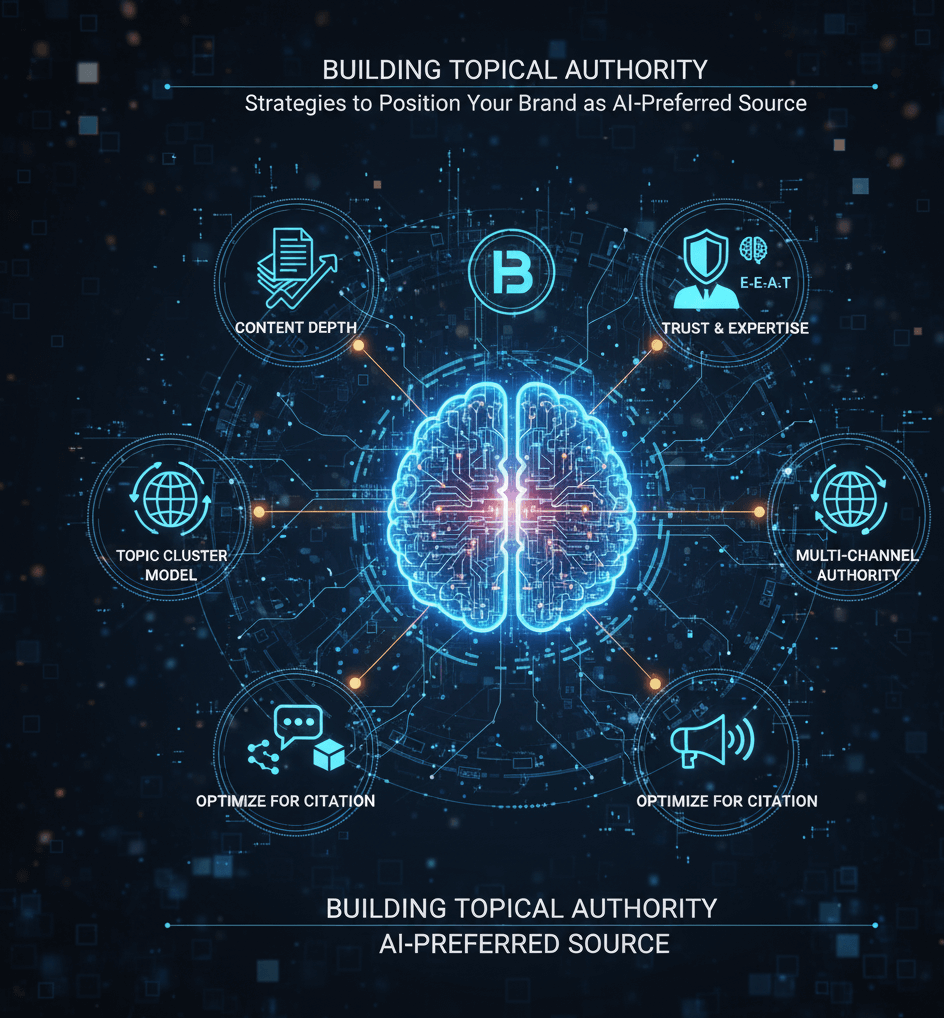
Search engines no longer just match keywords. They decode meaning, map relationships between concepts, and judge whether a source truly understands a subject. At the center of this evolution sits AI Topical Authority—the measurable signal that tells algorithms your website is the definitive resource on a given topic. Without it, even well-written pages struggle to rank. With it, you earn trust, visibility, and sustainable organic traffic in an era dominated by AI-driven ranking systems.
What Is AI Topical Authority?
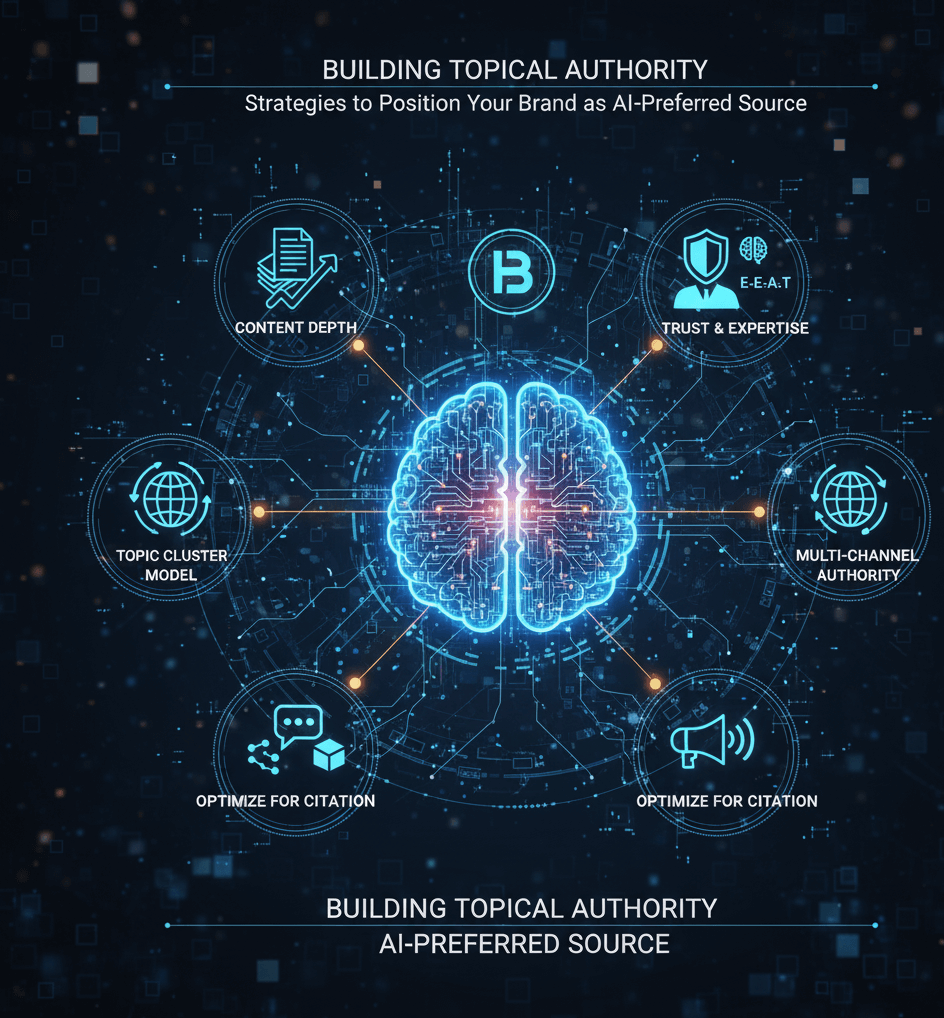
AI Topical Authority describes the perception search engine algorithms have of a website’s depth, breadth, and credibility across a specific subject area. It is not about a single keyword. It is about covering an entire knowledge domain with interconnected, high-quality content that satisfies user intent at every stage of the customer journey. Modern AI systems—large language models, neural networks, and knowledge graphs—evaluate content holistically, measuring how comprehensively a site addresses a topic and how well it connects subtopics through entities, context, and semantic relationships.
In practice, an AI-analytics layer looks for signals like:
- The volume of related pages and the semantic distance between them
- The presence of recognized entities (people, places, concepts) and their attributes
- User engagement metrics that indicate expertise satisfaction
- External citations from other authoritative sources within the same topic cluster
- Co-occurrence of entities across the domain
- Link distance and anchor text relevance between related pages
- Internal link graph structure resembling a natural knowledge tree
- User behavior signals like pogo-sticking and time on site that hint at unmet or met information needs
- Publishing Isolated Pages Without Clustering – A collection of standalone blog posts on related topics does not signal authority. Without a clear hub-and-spoke structure, AI sees a scattered set of documents, not a cohesive knowledge base.
- Keyword Stuffing and Over-Optimization – Repeating the same phrases unnaturally triggers AI classifiers that detect low-quality, manipulative content. It damages topical trust, pushing you down in favor of more organically written resources.
- Neglecting E-E-A-T Signals – Thin author pages, missing contact details, and zero external citations raise red flags. AI models increasingly penalize sites that fail to prove who wrote the content and why they are qualified.
- Producing Shallow Content at Scale – AI-generated mass content without expert oversight may cover many topics but with inadequate depth. AI systems can detect this “breadth without depth” pattern and throttle rankings across the entire domain.
- Ignoring Content Decay – Topical authority erodes if information becomes outdated. A site must regularly audit and refresh content, adding new entities and facts to stay aligned with the current knowledge graph.
- Poor Internal Linking Practices – Using generic anchor text, orphan pages, or a flat link structure prevents AI from understanding the hierarchy and semantic connections between your content pieces.
- Invest in a Knowledge Graph for Your Domain – Map out every major entity in your niche and create a dedicated page for it if justified. This internal “knowledge base” mimics what large search engines do and helps them understand your site’s structure.
- Collaborate with Recognized Experts – Guest contributions from verified professionals, cited quotes, and co-authored pieces amplify E-E-A-T. The AI can recognize real people behind the content.
- Use Structured Data Extensively – FAQ, HowTo, Article, and Author schema types help AI parse your content’s intent and entity relationships without ambiguity.
- Focus on Information Gain – Every new page should bring something the search engine hasn’t seen before: unique data, a fresh perspective, or a previously uncovered subtopic. AI penalizes redundant content that adds zero value.
- Monitor Entity-Based Metrics – Use tools that track entity association in SERPs. If Google starts associating your brand with a set of entities, you are on the right path.
- Beware of AI Hallucinations – If you use generative AI for content creation, fact-check every claim. Factual errors, even small ones, undermine trustworthiness and can devastate topical authority when detected at scale.
When these signals align, the AI assigns a high topical authority score. This score directly influences rankings, featured snippets, and inclusion in AI-generated search overviews like Google’s Search Generative Experience.
Why AI Topical Authority Matters in Modern SEO
Google’s Helpful Content System, RankBrain, BERT, and MUM are all built on the same foundation: identifying content that demonstrates real subject matter expertise. A site with strong AI Topical Authority consistently outranks isolated pages that may have perfect on-page optimization but lack contextual depth. The reason is straightforward. AI evaluates your entire topical footprint, not just one URL.
Consider a health website that publishes 200 articles about diabetes. AI scans those pages, extracts entities like “HbA1c,” “insulin resistance,” and “endocrinologist,” and sees how they connect. If the site also includes author bios of certified endocrinologists, uptodate statistics, and peer-reviewed references, the algorithm’s confidence in that site’s authority skyrockets. In contrast, a competitor with only 10 thin, keyword-stuffed pages will be flagged as shallow, regardless of how well each page targets a single query.
This shift means SEO professionals must think in terms of knowledge graphs, not just keyword lists. AI Topical Authority is the new moat that protects you from algorithm updates and AI-powered competition.
The Core Components of AI Topical Authority
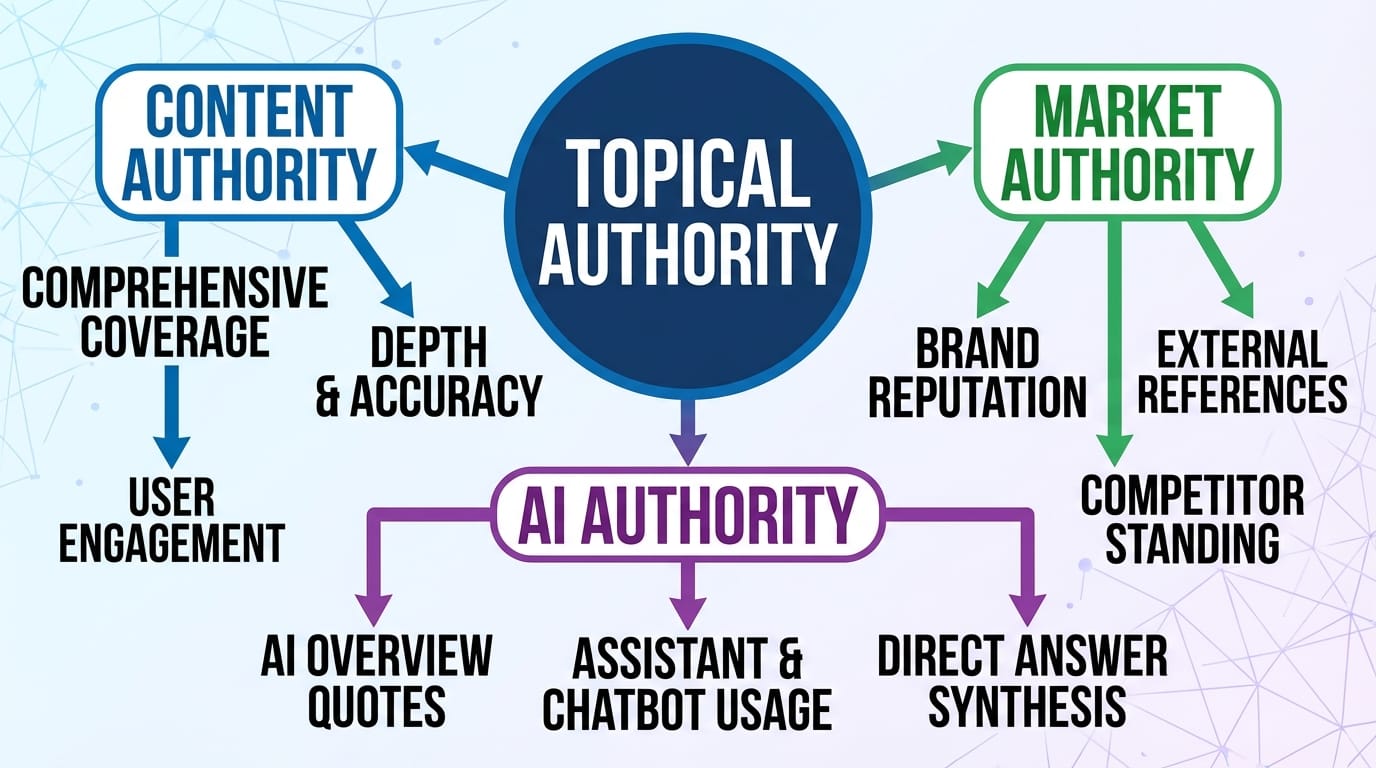
Building AI Topical Authority requires several interdependent elements working together. Missing one weakens the entire structure.
Pillar Content and Topic Clusters
A central, exhaustive pillar page that broadly covers a core topic acts as the hub. Surrounding cluster content dives deeply into specific subtopics, all interlinked strategically. This architectural pattern sends a clear signal to AI crawlers: the site has organized its expertise logically and thoroughly.
Entity Coverage and Semantic Richness
Entities are the building blocks of machine understanding. A site that consistently uses relevant entities—product names, technical terms, industry figures—with accurate context trains the AI to associate the brand with that knowledge space. Semantic richness comes from covering tangential yet relevant concepts, not just repeating primary keywords.
Experience, Expertise, Authoritativeness, Trustworthiness (E-E-A-T)
E-E-A-T is no longer a manual quality rater guideline. AI models now approximate these signals at scale. They look for author credentials, firsthand experience indicators (“we tested,” “our team observed”), external backlinks from trusted domains in the same vertical, and transparent sourcing. Pages that lack clear authorship or cite no references lose ground to those that provide documented expertise.
Content Freshness and Maintenance
AI tolerates stale content less and less. Regular updates, revision dates, and the addition of new findings signal that the site remains an active authority. A cluster left untouched for two years fades in topical relevance, hurting the entire domain’s authority score in that subject.
How AI Algorithms Evaluate Topical Authority
Understanding the technical layer demystifies why some content wins. When a query is entered, modern search engines don’t just retrieve documents with matching strings. They parse the query into a knowledge graph representation, then score pages based on how completely they cover that graph.
BERT (Bidirectional Encoder Representations from Transformers) enabled search engines to grasp the nuanced context of words in a sentence. MUM (Multitask Unified Model) goes further, connecting information across languages and formats—text, image, video—to understand complex topics end-to-end. If MUM determines that a topic like “sustainable architecture” involves entities such as “passive cooling,” “LEED certification,” and “carbon-neutral materials,” a site that thoroughly addresses all three entities in interconnected content will be seen as an authority. One that skips any may not even make the consideration set.
Entity recognition APIs and neural ranking systems analyze:
Thus, topical authority emerges as a machine-learned pattern, not a manually assigned badge.
The Role of Content Depth and Semantic Relevance
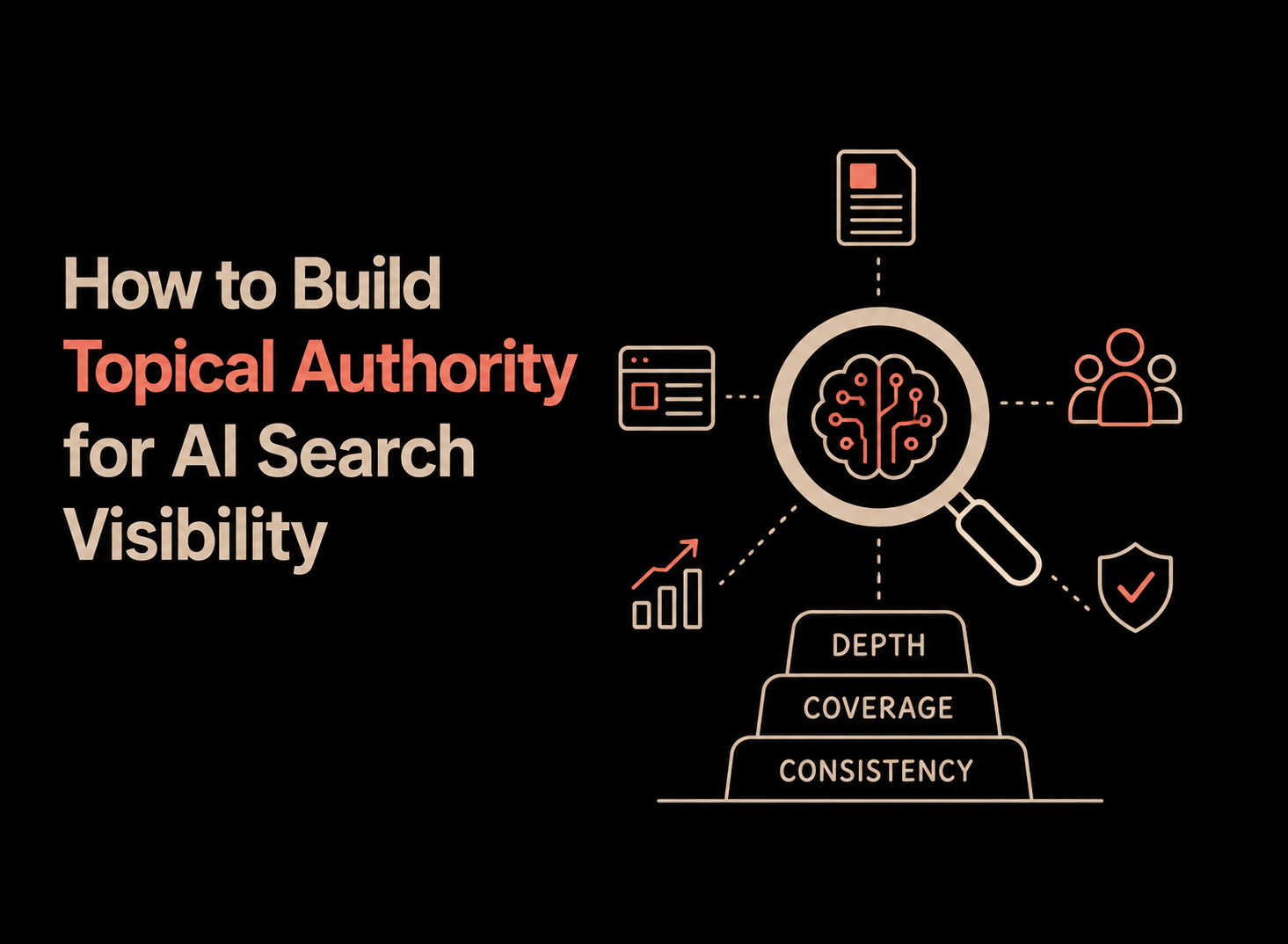
Depth does not mean word count. It means fully answering the query and the implicit questions a user hasn’t yet asked. For a query like “how to start a vegetable garden,” a shallow post might list steps. A topically authoritative resource will also address soil pH, regional planting zones, organic pest control, companion planting, and harvesting schedules—all clearly interconnected with internal links guiding the user deeper.
Semantic relevance is achieved by using natural language that mirrors the varied ways people search. Instead of repeating “AI topical authority” 15 times, an authoritative page naturally includes phrases like “machine understanding of domain expertise,” “entity-based ranking,” and “semantic content clusters.” This variability helps the AI model see the page as a genuine, comprehensive discussion, not a contrived SEO asset.
Building AI Topical Authority: A Step-by-Step Guide
The following process prioritizes what AI models actually care about, balancing technical structure with human-centric quality.
1. Conduct Thorough Topic and Entity Research
Move beyond keyword tools. Use Google’s Knowledge Graph API, Wikipedia category trees, and “People Also Ask” boxes to map the full entity landscape of your chosen topic. Identify core entities, subtopics, and the questions real users ask. Tools that visualize topic clusters based on SERP commonality help you see the exact breadth required to satisfy AI’s completeness threshold.
2. Create a Pillar-Cluster Content Architecture
Design one definitive pillar page that outlines the macro-topic. Break it into 15–30 subtopic cluster pages, each targeting a specific question or angle. The pillar links to each cluster page, and all cluster pages link back to the pillar, often with relevant cross-links between clusters. This is not a static blueprint; as you discover new subtopics, add new cluster pages and update the pillar accordingly.
3. Cover All Subtopics and User Intents
For each subtopic, analyze the search intent spectrum: informational, navigational, commercial, transactional. A topically authoritative domain serves all relevant intents. For “email marketing software,” a site should cover how it works (informational), comparisons (commercial), setup guides (transactional), and troubleshooting (navigational/long-tail). This holistic coverage signals to AI, “This domain owns the entire topic.”
4. Optimize for Entities and Semantic Relationships
Incorporate recognized entities naturally. Use schema markup like Organization, Person, Article, and BreadcrumbList to explicitly declare relationships. Ensure internal anchor texts use descriptive, entity-rich phrases, not just “click here.” When you mention a concept like “natural language processing,” link to your own NLP cluster page, reinforcing the topical connection.
5. Demonstrate E-E-A-T Through Content and Authorship
Add author boxes with real credentials, even if you use AI writing assistants. Show firsthand experience: share original research, case studies, or testing data. Cite authoritative external sources and provide context why they matter. Google’s algorithms use authorship signals as a proxy for trustworthiness. Anonymous, unattributed content will almost never build strong AI topical authority in competitive spaces.
6. Leverage AI Writing Tools Responsibly
AI writing assistants can accelerate content production, but they must be guided by human experts. Raw AI output often lacks the nuance and firsthand experience that distinguish a topical authority. Use AI for outlining, entity gap analysis, and drafting sections, then inject subject matter expertise, unique insights, and editorial polish. The final content should pass a rigorous fact-check and reflect a genuine perspective that AI alone cannot replicate.
Common Mistakes When Trying to Build AI Topical Authority
Even well-intentioned strategies fail when these pitfalls appear. Recognizing them early saves months of wasted effort.
AI Topical Authority vs. Traditional SEO: A Comparison
The table below contrasts the old keyword-centric approach with the new AI-driven topical authority model.
| Factor | Traditional SEO | AI Topical Authority |
|---|---|---|
| Core Focus | Individual keywords and backlinks | Complete topic coverage and entity relationships |
| Content Strategy | One keyword per page, isolated posts | Pillar-cluster networks, interconnected semantically |
| Expertise Signal | Domain authority (DA) and backlink volume | E-E-A-T, author credentials, entity citations |
| Algorithmic Basis | TF-IDF, PageRank, static ranking factors | BERT, MUM, neural matching, knowledge graphs |
| User Intent Handling | Often single-intent matching | Multi-intent, multi-format, full journey coverage |
| Risk of Updates | High vulnerability to core algorithm changes | Greater stability; aligns with AI’s long-term goals |
Important Notes and Best Practices
Building AI Topical Authority is a marathon, not a sprint. AI systems are designed to reward sustained, genuine expertise. Quick wins from thin content will evaporate as models become more sophisticated. The following guidelines ensure long-term success.
Frequently Asked Questions
What is AI topical authority in simple terms?
AI topical authority is the level of expertise a search engine believes your website has on a specific subject, judged by how comprehensively and accurately your content covers that topic and all its related subtopics. It replaces old-school keyword signals with a machine-learned understanding of knowledge depth and entity relationships across your entire domain.
How long does it take to build topical authority with AI?
Visible results typically appear between 6 and 12 months after implementing a rigorous pillar-cluster strategy combined with consistent E-E-A-T signals. However, some competitive niches may take 18 months or more. The timeline depends on domain history, content quality, and how aggressively you fill entity gaps compared to competitors.
Can AI-generated content hurt topical authority?
Yes, if used without human expertise. Search engines are adept at detecting generic, hallucinated, or shallow AI content that lacks real-world experience. Unedited AI posts dilute entity relevance and can trigger quality classifiers that demote the entire site. The safest approach is human-guided AI: machines assist, experts validate and enrich.
How does Google’s Helpful Content System relate to topical authority?
The Helpful Content System is a site-wide classifier that evaluates whether content demonstrates first-hand expertise and satisfies visitor needs. It directly feeds into AI topical authority: a “helpful” label boosts the domain’s overall topical score, while an “unhelpful” classification can suppress rankings across all pages, even those that are individually well-optimized. The two concepts are deeply intertwined.
What are the best tools to build AI topical authority?
Effective tools include entity research platforms like TextRazor or Google’s Natural Language API for semantic analysis, content planning tools like MarketMuse or SurferSEO for cluster gap detection, and rank tracking software that monitors topic-level visibility. Additionally, robust crawlers like Screaming Frog help optimize internal linking structures to strengthen entity relationships across your site.
Conclusion
AI Topical Authority is not a trend—it is the fundamental way modern search engines assess quality and reward genuine expertise. By shifting focus from isolated keywords to comprehensive topic coverage, entity-rich content, and unmistakable E-E-A-T signals, you align perfectly with how AI models think. That alignment brings compounding returns: better rankings, stronger brand trust, and immunity to the algorithmic turbulence that punishes superficial strategies. The path demands patience, strategic architecture, and human expertise amplified by AI, but the outcome is a digital presence that search engines cannot ignore.
Xem thêm:
- AI SEO Image Captions: The Complete Guide to Boosting Search Visibility in 2025
- AI SEO Reports: How Intelligent Automation Redefines Search Performance Analysis
- WP Trove AI Writer Review: The Ultimate AI Content Tool for WordPress
- WP Trove Content Automation: The Complete Guide to Scaling Your WordPress Content Workflow
- AI Landing Page Optimization: Transform Your Conversion Rates with Smart Technology
Bài viết cùng chủ đề:

AI SEO SEO Automation with Make: The Complete Workflow Guide

AI SEO SEO Automation with Zapier: The Complete Workflow Guide

AI SEO SEO Automation with n8n: The Complete Workflow Guide
AI SEO SEO Automation with Gemini: The Complete Guide to Scaling Organic Growth

AI SEO SEO Automation with Claude: The Complete Guide to Scaling Content in 2025

AI SEO SEO Automation with ChatGPT: The Complete Playbook for 2025

AI SEO & SEO Automation for Affiliate Sites: The 2025 Playbook for Passive Income Growth
AI SEO & SEO Automation for Bloggers: The Complete Guide to Scaling Your Content

AI SEO & SEO Automation for Agencies: The Complete 2025 Playbook

AI SEO and SEO Automation for Ecommerce: The Complete Playbook for 2025

AI SEO & SEO Automation for WordPress: The Complete Playbook for 2025
AI SEO SEO Automation Strategy: The Complete Playbook for 2025

Mastering the AI SEO SEO Automation Process: A Complete Guide to Scaling Organic Growth
AI SEO SEO Automation System: The Complete Guide to Scaling Organic Growth in 2025
AI SEO SEO Automation Platform: The Complete Guide to Scaling Organic Growth in 2025
AI SEO SEO Automation Software: The Complete Guide to Scaling Organic Growth in 2025















