
No products in the cart.
AI Broken Link Building: How Artificial Intelligence Transforms Dead Links Into High-Authority Backlinks
29
Jul
Jul
Introduction
The quest for quality backlinks has always been a cornerstone of SEO, yet traditional methods often drain time and resources. AI broken link building changes the game by merging intelligent automation with a manual technique that webmasters already trust. Instead of spending hours scouring websites for missing pages, marketers now use machine learning to identify the most valuable broken link opportunities within minutes. This approach not only speeds up prospecting but also enhances personalization at scale, making outreach more human and effective. In this comprehensive guide, you will discover how artificial intelligence reimagines broken link building, why it delivers better results than conventional tactics, and the exact steps to implement a data-driven campaign. We will unpack the core mechanics, compare AI tools with manual processes, highlight common pitfalls, and answer the most pressing questions around this powerful link acquisition strategy.
What Is AI Broken Link Building?
AI broken link building is the process of using machine learning algorithms, natural language processing, and intelligent automation to find, evaluate, and capitalize on broken external links at scale. The method inherits the classic premise: a website links to a page that no longer exists, creating a dead link that frustrates users and wastes link equity. You step in with a replacement resource, and the site owner fixes the link – often rewarding you with a backlink. Artificial intelligence supercharges every phase. Instead of manual crawling with browser extensions, AI-powered crawlers scan millions of pages in real time, instantly flagging 404 errors. They then analyse contextual relevance, domain authority, and traffic potential to prioritise targets that actually move the needle. Outreach becomes nuanced thanks to generative AI that drafts personalised emails referencing the exact broken link and suggesting a matching resource. The core workflow remains the same, but the speed, accuracy, and conversion rates leap forward.
Why Broken Link Building Still Works in the Age of AI
Broken link building endures because it rests on a genuine value exchange: you help a webmaster fix a detrimental dead link while introducing a relevant piece of content. Search engines reward links earned this way because they are editorially given and contextually sound. When you add AI broken link building, you eliminate the biggest frustration – the grind of hunting for broken pages. What used to take a team of link builders an entire week can now be accomplished by a single specialist in a few hours. Moreover, the strategic insight from AI ensures you only pursue links from pages that hold measurable SEO value, not just any 404 you stumble upon.
How AI Broken Link Building Works: The Core Process
Understanding the mechanics removes the mystery and lets you implement the system with precision. While each tool has its unique interface, the fundamental flow of an AI broken link building campaign can be broken into four intelligent stages.
1. Scalable Discovery and Crawling
Traditional methods rely on manual checks or simple crawlers that produce mountains of unvetted data. AI-powered discovery solves this by using parallel crawling technology combined with pattern recognition. You define seed criteria – for example, resource pages, industry directories, or educational links within your niche. The AI engine then spiders these pages, extracts all outbound links, and verifies their HTTP status codes. It simultaneously categorises the surrounding content and measures page-level metrics like organic traffic estimates and backlink profiles. The output is a clean, deduplicated list of dead links, each accompanied by the anchor text, the linking page’s authority, and a topical classification. Tools such as Screaming Frog with integrated API connectors or purpose-built platforms like Ahrefs’ broken link reports, powered by machine learning filters, make this stage fluid.
2. Contextual Relevance Scoring
A raw list of 404 errors is useless without prioritisation. Here, artificial intelligence reads the content around the broken link to determine semantic relevance. Natural language processing models examine the paragraph containing the dead link, the page’s overall topic, and even the linking domain’s thematic focus. The system then scores each opportunity against your target content. For example, if your asset is a “comprehensive guide to indoor plant care,” the AI gives high relevance scores to broken links on gardening resource pages while deprioritising broken links on unrelated cooking sites. This semantic filtering prevents you from wasting time on low-context opportunities and keeps your outreach tightly aligned with user intent.
3. Automated Content Matching and Replacement Suggestions
Once high-relevance broken links are identified, the AI matches them with the most appropriate pages from your inventory. Using vector embeddings and semantic search, the system understands which of your resources logically replaces the missing page. The output goes beyond simple keyword matching; it interprets the original page’s likely purpose – whether it was a tutorial, a statistical reference, or a tool – and proposes your closest equivalent. Some platforms even generate a side-by-side comparison snippet, showing why your page fills the gap. This step transforms a vague “hey, I found a broken link” email into a specific, value-first pitch: “Your resource page on plant health links to a dead guide about soil pH; ”
4. AI-Assisted Personalised Outreach
Generic outreach templates kill conversion rates. AI broken link building tools leverage large language models to draft unique emails that mention the exact broken link, the specific anchor text, and a polite suggestion to replace it with your resource. The tone adapts to the recipient’s style – formal for academic sites, conversational for bloggers. Advanced platforms pull recent social media activity or the author’s name from the page to add a human touch. Follow-ups are triggered based on open rates and replies, while sentiment analysis helps you gauge interest and adjust messaging. The result is outreach that feels painstakingly manual yet is executed at a scale impossible for a human alone.
Comparing Traditional Broken Link Building vs AI Broken Link Building
To appreciate the shift, it helps to see how the two approaches stack up across critical dimensions. The following table highlights the differences that impact efficiency, quality, and return on investment.
| Aspect | Traditional Broken Link Building | AI Broken Link Building |
|---|---|---|
| Prospecting Speed | Slow; manual checks or basic crawlers with hours of filtering | Extremely fast; real‑time crawling and smart filtering in minutes |
| Relevance Accuracy | Guessed from anchor text and cursory page judgement; many false positives | High accuracy; NLP analyses full content context and topic clusters |
| Personalisation Depth | Template‑based with minor tweaks; often misses key details | Hyper‑personalised; references specific dead link, anchor text, and recipient’s content |
| Scalability | Limited by human hours; a few dozen opportunities per day | Thousands of qualified prospects per week with automated follow‑ups |
| Link Quality Consistency | Variable; depends heavily on the prospector’s experience | Consistently high; AI prioritises authoritative, relevant pages only |
| Cost Efficiency | High labour costs for low output | Higher tool investment but drastically lower cost per acquired link |
The contrast underscores why agencies and in-house SEO teams are rapidly adopting AI broken link building. It transforms a manual, hit-or-miss tactic into a systematic, data-driven machine.
Key Benefits of AI Broken Link Building
Integrating artificial intelligence into your link building workflow yields advantages that ripple across your entire SEO effort. Beyond raw efficiency, the strategic gains redefine what is possible.
Exponential Time Savings
The most immediate benefit is reclaiming hours. Manual broken link building squanders up to 80% of its effort on discovery and validation. AI flips that ratio, allowing you to spend most of your time on relationship building and content improvement. A campaign that once stretched across two weeks can now launch within a day, leaving more room for creative strategy.
Higher Reply and Conversion Rates
When outreach emails pinpoint the exact issue and propose a highly relevant fix, webmasters respond positively. Data from several outreach platforms indicates that AI-personalised broken link emails achieve reply rates 2-3 times higher than generic templates. The recipient recognises genuine help, not a template blast. This emotional response increases the likelihood of your link being added without negotiation.
Data-Driven Prioritisation for Maximum ROI
Not all backlinks carry equal weight. AI broken link building systems assign a priority score based on domain rating, estimated organic traffic, and topical fit. You stop chasing dead links on obscure, low-traffic pages and focus on those that promise referral visitors and genuine ranking improvement. This intelligent triage ensures that every hour of outreach targets high-impact opportunities, boosting the overall ROI of your campaign.
Seamless Integration with Content Marketing
Because AI analyses the exact nature of broken content, it often reveals content gaps you hadn’t noticed. You might discover that dozens of resource pages link to a defunct “pest control calendar” – a perfect prompt to create that asset if it is missing. Thus, AI broken link building feeds your content strategy with live demand signals from the web, making your publishing calendar more responsive and link-worthy.
Limitations and Challenges to Be Aware Of
While the technology is transformative, a clear-eyed view of its constraints protects you from overreliance and ensures ethical practice.
- Tool dependency and learning curve: Sophisticated platforms demand setup time and a financial investment. Selecting the wrong tool can lead to inaccurate data and wasted budget.
- Potential for impersonal outreach at scale: Over-automation without proper oversight can still produce emails that feel templated if context isn’t deeply embedded. Human review remains essential for high-value targets.
- Incomplete link and content data: AI crawlers may miss broken links hidden behind JavaScript or located within iframes. Supplementing automated scans with manual spot-checks is wise.
- Overlooking editorial standards: Just because a link is dead does not mean your page is an acceptable replacement. A generic blog post rarely satisfies the need that a rigorous research paper filled. AI matching can misinterpret intent, so editorial judgment must still guard the final selection.
- Risk of being flagged as spam: Aggressive, high-volume outreach without consent can damage domain reputation. Even AI-assisted campaigns must respect opt-out requests and follow ethical email practices.
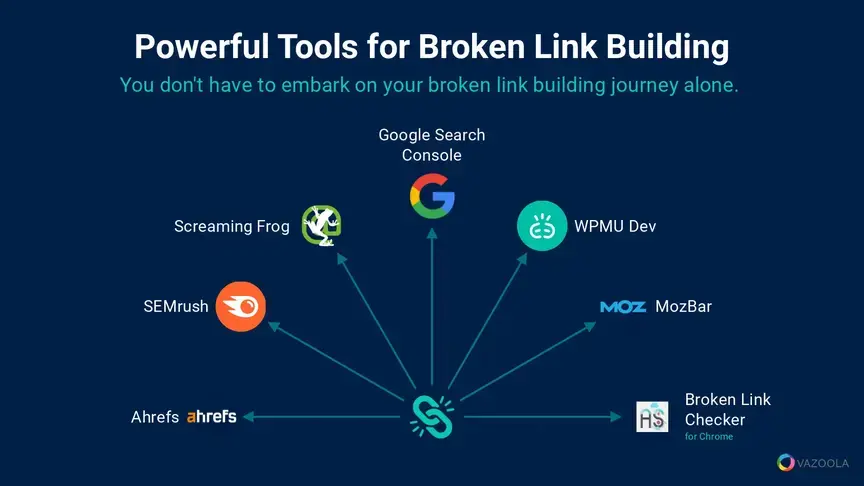
- Ahrefs or Semrush for identifying competitor backlinks, analysing broken pages, and filtering by domain authority.
- Check My Links or Dr. Link Check as a lightweight browser companion for on-the-fly verification.
- Respona or Pitchbox for AI-driven prospecting, email personalisation, and follow-up automation.
- Spraying generic AI-generated emails: Allowing the AI to run entirely without human review leads to messages that feel uncanny or miss subtle context. Always spot-check and personalise the top-tier prospects manually. The human touch seals trust.
- Ignoring topical alignment: Pushing a fitness blog post to replace a dead medical research paper because the AI found a keyword overlap damages credibility. Set strict niche and content-type parameters during discovery.
- Neglecting the receiving page’s history: A page with hundreds of outbound links or a “links” page buried deep might signal low editorial standards. AI metrics like outbound link ratio and page depth help, but a quick visual inspection adds safety.
- Overlooking broken internal links: While focused on external backlink opportunities, your own site may house broken links. Many AI tools offer internal broken link detection; fixing those strengthens user experience and recaptures link equity before chasing others.
- Skipping warm-up for outreach domains: Sending hundreds of emails from a brand-new domain triggers spam filters. Gradually ramp up volume and ensure proper email authentication (SPF, DKIM, DMARC) is in place. AI platforms often include deliverability monitoring.
- Failing to track placements correctly: Without proper UTM parameters or backlink monitoring, you cannot attribute acquired links to the campaign. Set up automatic tracking from day one to measure true ROI.
Practical Guide: Launching Your First AI Broken Link Building Campaign
Putting theory into action requires a structured roadmap.
Step 1: Identify Your Most Linkable Asset
Start with content that already demonstrates value. Long-form guides, original research, interactive tools, or definitive industry resources work best. Ensure the page loads quickly, is mobile-friendly, and clearly articulates its unique angle. Without a high-quality replacement resource, even the most advanced AI outreach will fail to convert.
Step 2: Select Your AI Broken Link Building Stack
Combine a robust backlink and site explorer tool with an AI outreach platform. A typical stack might include:
You can also extend the stack with an AI writing assistant like ChatGPT or Claude, using it to draft and refine outreach templates by feeding it the broken link URL and your replacement page.
Step 3: Configure Your Discovery Parameters
Feed your AI tool with seed lists: competitor domains, industry resource page URLs, or topic keywords. Define your relevance filters – target only pages with a minimum Domain Rating, set a niche category, and exclude educational or government sites if your content doesn’t match that rigour. Run the crawl and let the system gather broken links with full contextual data.
Step 4: Curate and Verify the Prospect List
AI produces a large pool; human curation sharpens it. Manually scan the top 100 opportunities. Visit the linking page to confirm the broken link is legitimate and assess whether your resource genuinely makes sense. Remove any page that is clearly outdated, spammy, or irrelevant. This hybrid check maintains quality while benefiting from machine speed.
Step 5: Craft AI-Enhanced Personalised Emails
Using your outreach platform, set up a campaign sequence. For each prospect, the AI pulls in the broken link text, the surrounding sentence, and the recipient’s name. Write a base template that the AI adapts. For example: “Hi [Name], I was browsing your excellent [page name] and noticed the link to [broken page title] is no longer working. I recently published an updated resource that covers the same topic in depth – [your page link]. It might make a perfect replacement. No worries if not, just thought I’d help out.” The A
Step 6: Monitor, Follow Up, and Optimise
Track open rates, click rates, and replies. AI-driven sentiment analysis flags positive responses for immediate human follow-up. For unresponsive prospects, let the system send a polite nudge after five to seven days. Analyse which types of pages convert best – perhaps educational sites respond more than commercial blogs – and adjust your discovery filters accordingly. Continuous refinement sharpens the campaign’s edge.
Common Mistakes in AI Broken Link Building and How to Avoid Them
Even automated systems stumble when strategy lags behind technology. Sidestep these frequent errors to protect your sender reputation and link quality.
Important Notes for a Sustainable AI Broken Link Building Strategy
Long-term success depends on embedding the method into a holistic SEO philosophy, not treating it as a quick hack. First, always prioritise the user experience. When you suggest a replacement link, that new page must genuinely help the reader. Anything less erodes goodwill and may lead to future link removals. Second, diversify your prospecting sources. Relying solely on one AI tool or one type of resource page limits growth. Combine competitor backlink analysis with content gap exploration and “best of” list pages. Third, respect data privacy and consent. Under regulations like GDPR, unsolicited outreach must be legitimate interest-based and offer a clear opt-out. Your AI platform should handle unsubscribe requests cleanly. Fourth, keep your replacement assets fresh. A page that replaces a broken link today can itself become outdated. Periodic content audits ensure you remain the best substitute, sustaining earned links over time. Lastly, blend AI with genuine relationship building. When a webmaster replies warmly, move the conversation to a personal channel. Those one-on-one connections often yield multiple links, guest post invitations, and collaborative opportunities that pure automation cannot create.
Frequently Asked Questions About AI Broken Link Building
What exactly is AI broken link building?
AI broken link building uses artificial intelligence to automate and enhance the traditional process of finding broken external links, identifying relevant replacement content, and conducting personalised outreach. Machine learning algorithms crawl the web, score opportunities by relevance and authority, and generate tailored communication, dramatically increasing efficiency and link acquisition rates.
How does artificial intelligence improve broken link finding?
AI improves discovery by crawling millions of pages concurrently, instantly verifying HTTP status codes, and applying natural language processing to understand the context of each link. Instead of returning a raw list of 404 errors, it filters opportunities based on topical relevance, domain strength, and traffic potential. This cuts prospecting time by over 90% and delivers a curated list of high-value targets.
Can AI completely automate broken link outreach?
While AI can handle the heavy lifting of drafting, personalising, and scheduling emails, fully automated outreach risks appearing impersonal and may violate email provider guidelines. Best practice combines AI-generated drafts with human review for top prospects, allowing the nuance of real conversation while maintaining scale. Full automation can work for low-tier targets, but high-authority sites typically require a human touch.
Which tools are best for AI broken link building?
The ideal stack includes a comprehensive SEO suite like Ahrefs, Semrush, or Moz for backlink analysis and broken link discovery, paired with an outreach platform such as Respona, Pitchbox, or BuzzStream that offers AI-driven personalisation. Complementing these with a large language model (e.g., ChatGPT) for email variation and an email verification service ensures data quality and delivery.
Is AI broken link building white hat?
Yes, when executed correctly, the technique aligns with white hat SEO principles. You are providing a genuine service – alerting webmasters to broken links and offering a helpful replacement. Search engines value editorially placed, contextually relevant links. AI simply scales the manual, labour-intensive parts; the value exchange remains the same. Avoid deceptive tactics, and the practice stays firmly within ethical guidelines.
What is the typical success rate for AI-assisted broken link campaigns?
Success depends on niche, content quality, and outreach finesse, but campaigns that use AI personalisation consistently see reply rates between 10% and 25%, with placement rates around 5% to 15%. The conversion from initial reply to link placement often improves by 30-50% compared to fully manual template approaches, thanks to precise, context-aware messaging.
How do I measure the ROI of AI broken link building?
Track the number of acquired backlinks, the domain authority of linking pages, referral traffic via Google Analytics, and any movement in target keyword rankings. Assign a value to each acquired link based on equivalent guest posting cost or traffic value. Compare this against tool subscriptions, content creation costs, and the time invested. When you factor in the speed advantage, most marketers find the ROI substantially positive after the first few months.
Conclusion
AI broken link building redefines a classic SEO practice by injecting speed, precision, and personalisation at every stage. Where manual methods strained under the weight of repetitive tasks, intelligent automation now surfaces the most valuable opportunities and crafts outreach that resonates. The result is not just more backlinks – it is stronger, more relevant links that boost your organic visibility and bring targeted referral traffic. By adopting the strategic workflow outlined here, selecting the right tools, and maintaining a human-centred oversight, any SEO professional can transform broken links from a tedious chore into a predictable pillar of their link acquisition engine. Start small, test, and let the data guide your scaling. The web is full of dead links waiting to become your next competitive advantage.
Xem thêm:
- LLM SEO: The Ultimate Guide to Optimizing for Large Language Model Search
- How to Build Topical Authority with AI: The Complete Strategic Framework
- AI SEO Claude Projects: The Complete Guide to Automating Search Rankings in 2025
- AI SEO Comparison Generator: The Complete Guide to Smarter Competitive Analysis
- AI SEO AI Overview Ranking: The Complete Playbook for 2025
Bài viết cùng chủ đề:

AI SEO SEO Automation with Make: The Complete Workflow Guide

AI SEO SEO Automation with Zapier: The Complete Workflow Guide

AI SEO SEO Automation with n8n: The Complete Workflow Guide
AI SEO SEO Automation with Gemini: The Complete Guide to Scaling Organic Growth

AI SEO SEO Automation with Claude: The Complete Guide to Scaling Content in 2025

AI SEO SEO Automation with ChatGPT: The Complete Playbook for 2025

AI SEO & SEO Automation for Affiliate Sites: The 2025 Playbook for Passive Income Growth
AI SEO & SEO Automation for Bloggers: The Complete Guide to Scaling Your Content

AI SEO & SEO Automation for Agencies: The Complete 2025 Playbook

AI SEO and SEO Automation for Ecommerce: The Complete Playbook for 2025

AI SEO & SEO Automation for WordPress: The Complete Playbook for 2025
AI SEO SEO Automation Strategy: The Complete Playbook for 2025

Mastering the AI SEO SEO Automation Process: A Complete Guide to Scaling Organic Growth
AI SEO SEO Automation System: The Complete Guide to Scaling Organic Growth in 2025
AI SEO SEO Automation Platform: The Complete Guide to Scaling Organic Growth in 2025
AI SEO SEO Automation Software: The Complete Guide to Scaling Organic Growth in 2025















