
No products in the cart.
AI SEO AI Overview Ranking: The Complete Playbook for 2025
10
Aug
Aug
The search landscape has shifted beneath the feet of digital marketers. Google’s AI Overviews, powered by the Gemini model, now sit at the top of the search engine results page (SERP), fundamentally altering how users consume information. For brands, this means the traditional “rank at position one” strategy is no longer sufficient. The new battleground is the AI SEO AI Overview ranking, a complex system that determines whether your content is cited, summarized, or completely ignored by the algorithm. This guide breaks down the mechanics of this new reality, offering a step-by-step framework to secure visibility in the age of generative search.
Understanding the Shift: What is an AI Overview?
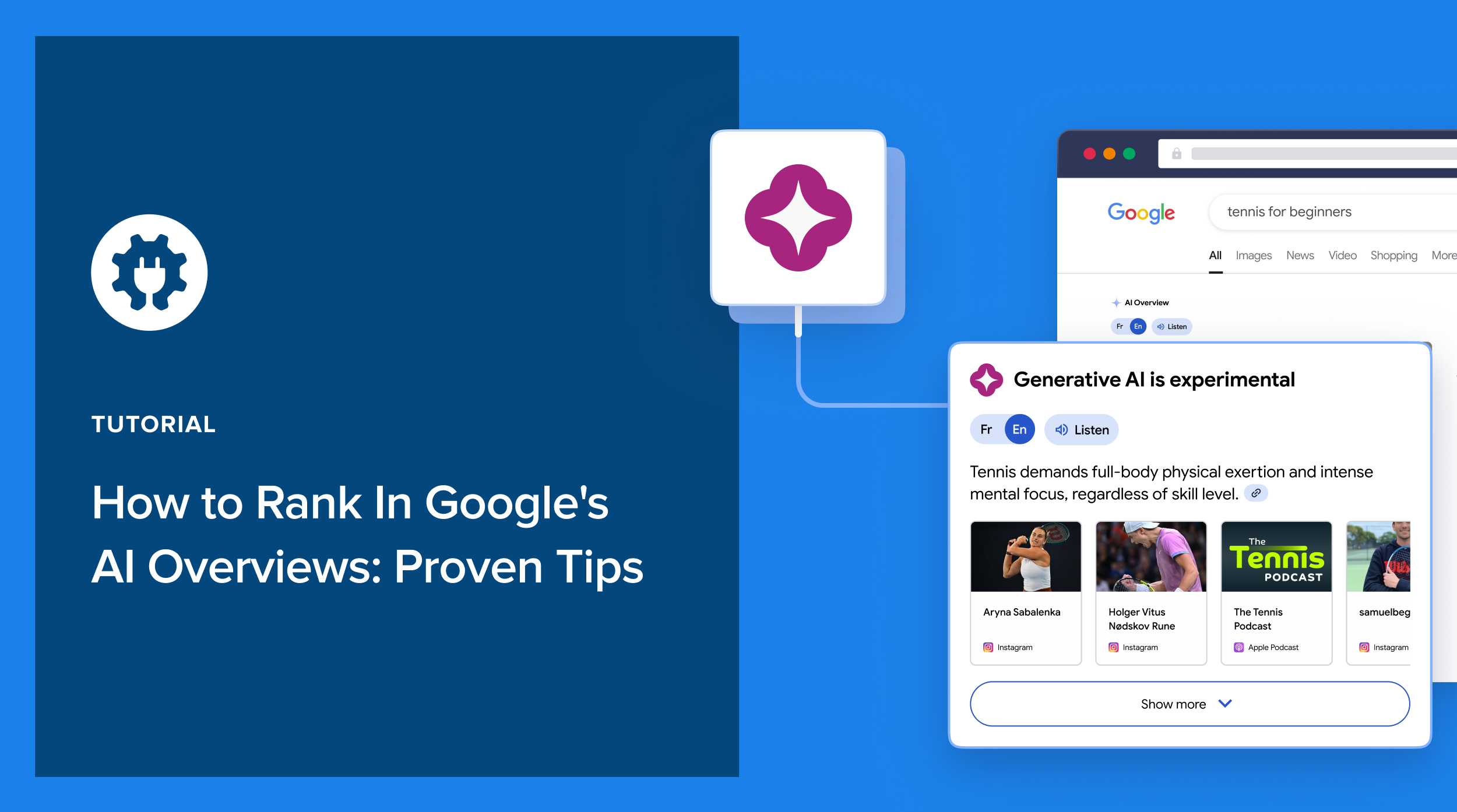
An AI Overview is a generative response that appears directly beneath the search query bar and above the traditional blue links. It synthesizes information from multiple web sources to provide a direct, conversational answer. Unlike featured snippets, which pull a single block of text, AI Overviews aggregate data, compare options, and even suggest follow-up queries. This shift means that the click-through rate (CTR) for organic results has dropped, as users often find the answer without leaving the SERP.
For SEO professionals, the goal has evolved from ranking a page to becoming a cited source within the AI-generated summary. The AI SEO AI Overview ranking refers to the algorithmic process that selects which domains and specific URLs are used as the foundational data for these summaries. It is a blend of traditional relevance signals and new criteria specific to generative retrieval.
The Anatomy of an AI Overview
To understand how to rank, you must understand the components of the overview itself. Typically, an AI Overview includes:
- The Summary Text: A 40-60 word paragraph that directly answers the query.
- Source Citations: Small cards or inline links that display the favicon and domain name of the referenced sites.
- Comparison Tables: Used for product or service comparisons, pulling data from review sites and vendor pages.
- Follow-up Prompts: Suggested questions that expand the initial query.
- H2: What is [Topic]?
- H2: How does [Topic] work?
- H2: What are the benefits of [Topic]?
- Brand Visibility: Your brand name appears at the top of the SERP, even if the user does not click through. This builds top-of-mind awareness.
- Authority Signal: Being cited by Google’s AI is a strong trust signal. Users perceive your brand as a leading authority on the topic.
- Voice Search Alignment: AI Overviews are often read aloud by Google Assistant and other voice assistants. Being the source means your content is the answer delivered to the user.
- Reduced CTR: The primary metric of traditional SEO—clicks—will likely decrease. Users get the answer directly, so they do not need to visit your site.
- Loss of Context: The AI may strip away the nuance of your argument, presenting a simplified version that lacks your original perspective.
- Attribution Issues: Sometimes the AI synthesizes information from multiple sources, making it unclear which specific sentence was pulled from your site. This makes tracking ROI difficult.
Your goal is to be the source cited in the summary text and the comparison table. This requires content that is not just informative, but structured in a way that the retrieval engine can easily parse and extract.
Core Ranking Factors for AI Overviews
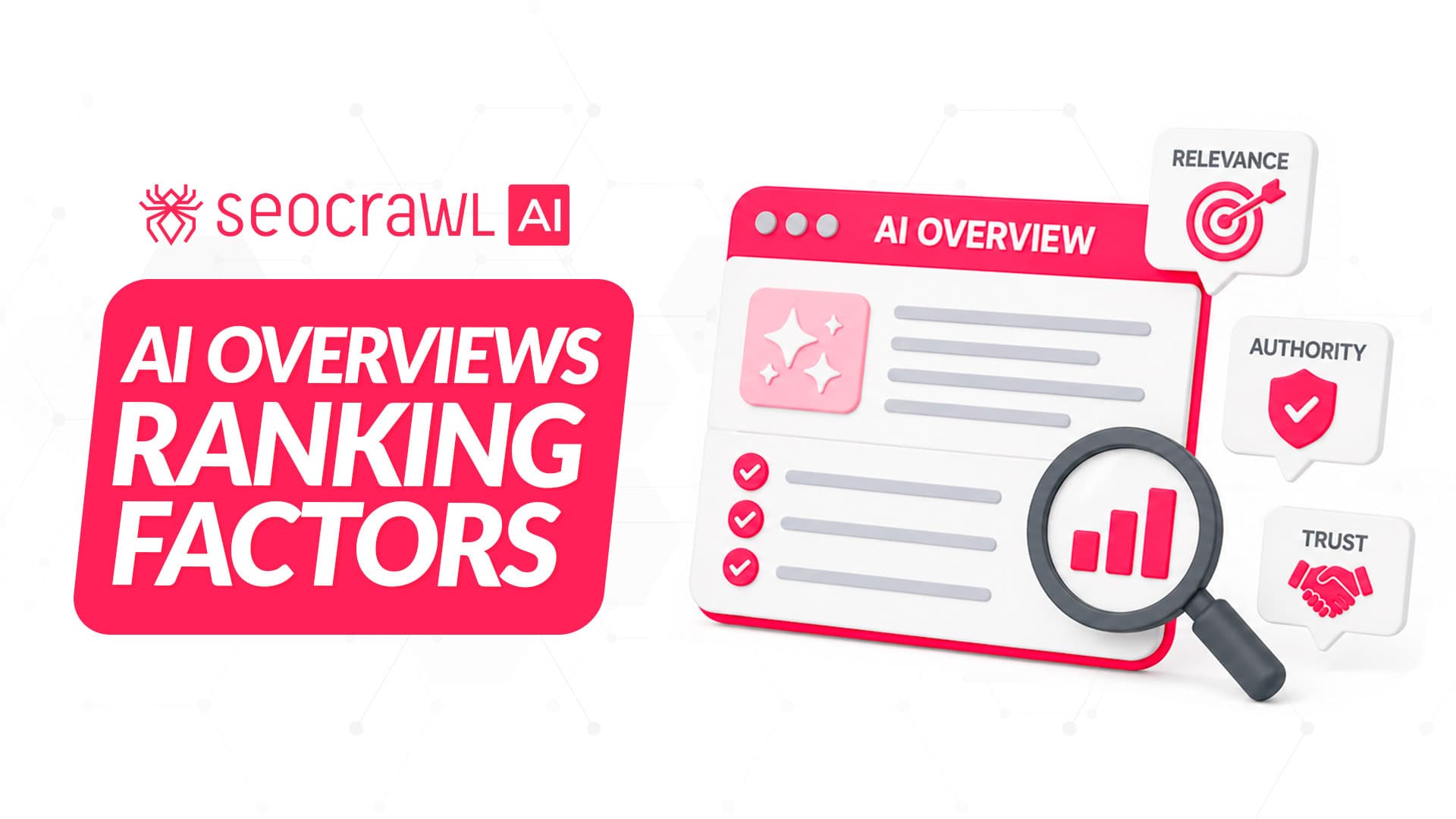
While Google has not released the exact algorithm for AI Overviews, analysis of thousands of SERPs reveals distinct patterns. The AI SEO AI Overview ranking is not a popularity contest; it is a relevance and clarity contest. Here are the primary factors that influence whether your content gets picked up.
1. Entity Authority and Topical Depth
Google’s Knowledge Graph plays a massive role here. The algorithm prefers sources that are recognized as authorities on a specific entity. If you are writing about “best running shoes,” your domain must be strongly associated with running, footwear, or fitness. A general news site might rank well for a breaking story, but for evergreen product recommendations, specialized niche sites often win. Building topical depth through a cluster of interlinked articles is essential to signal your authority to the Knowledge Graph.
2. Content Structure and Semantic Markup
The retrieval engine looks for clear, logical structures. Content that uses descriptive H2 and H3 headings that mirror the user’s query language is more likely to be extracted. Additionally, the use of structured data (Schema.org) helps the AI understand the context of your content. For example, using Product schema, FAQPage schema, or HowTo schema provides explicit signals about the type of information you are presenting.
3. The “Answer First” Format
Traditional SEO often buries the lead, using introductory paragraphs to set the scene. AI Overviews prefer the inverted pyramid style. The first 50-100 words of your article must contain the direct answer to the query. If the user asks “how to clean suede,” the first sentence should be “To clean suede, use a suede brush and eraser to remove dry dirt, then blot stains with a white cloth and white vinegar.” This immediate clarity allows the AI to extract the core answer without parsing fluff.
4. Source Diversity and Quotability
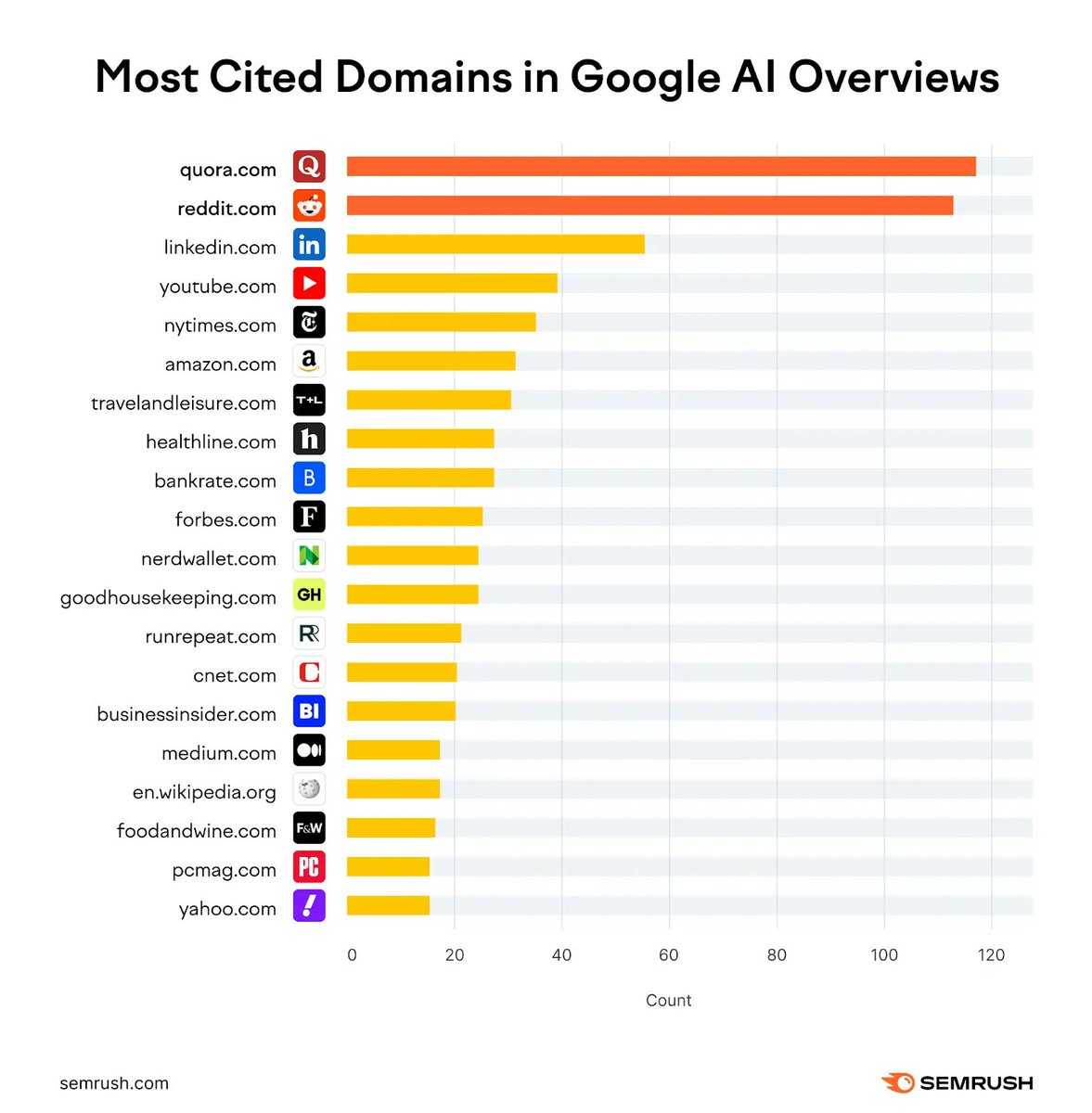
AI Overviews rarely cite a single source. They typically pull from 3-5 different domains to create a synthesized answer. The algorithm looks for “quotable” sentences—statements that are self-contained, factual, and contain the key data points. Lists, bullet points, and short paragraphs are easier to quote than dense, multi-clause sentences. Content that presents unique statistics or proprietary data is also highly favored, as it adds value to the synthesized answer.
How to Optimize for AI Overview Ranking
Optimizing for AI Overviews requires a shift from “page optimization” to “answer optimization.” You are no longer writing for a human reader alone; you are writing for an AI that will paraphrase and re-contextualize your words.
Step 1: Target Conversational and Long-Tail Queries
AI Overviews are triggered more frequently by conversational queries and questions. Focus your keyword research on long-tail phrases that mimic how people speak. Instead of targeting “best CRM,” target “what is the best CRM for small businesses with limited budgets.” These specific queries have a higher likelihood of triggering an AI Overview, and the intent is clearer, making it easier to structure your content to match.
Step 2: Implement a “Definition + Explanation” Structure
For informational queries, structure your H2s to include the exact question. For example:
This format directly mirrors the structure of the AI Overview itself. By using these exact headings, you are essentially providing a template for the AI to pull from. Ensure the paragraph directly under each heading is a concise, definitive answer.
Step 3: Create Comparison Tables
When your query involves comparisons (e.g., “Shopify vs WooCommerce“), the AI Overview will often generate a table. To get your data included, you must publish your own comparison table. Use the table, tr, td, and th tags to create a clear, HTML-based table. Include columns for features, pricing, ease of use, and customer support. The A
Step 4: Cite Your Sources and Data
E-E-A-T (Experience, Expertise, Authoritativeness, Trustworthiness) is critical. AI Overviews are designed to avoid citing low-quality or unverified content. Link out to reputable sources (government sites, academic papers, industry reports) to back up your claims. Additionally, include your own original data—surveys, case studies, or internal analytics—to provide unique value that the AI cannot find elsewhere.
Benefits and Limitations of AI Overview Visibility
Securing a spot in an AI Overview is a double-edged sword. It offers massive brand exposure but often at the cost of direct traffic. Understanding this trade-off is crucial for setting realistic KPIs.
The Benefits of Being Cited
The Limitations and Risks
Common Mistakes and How to Avoid Them
Many SEO teams are making critical errors when trying to optimize for AI Overviews. These mistakes often stem from applying outdated tactics to a new system. Here are the most common pitfalls and the strategies to avoid them.
Mistake 1: Chasing “Position Zero” with Thin Content
Many believe that a 300-word answer will suffice for an AI Overview. This is incorrect. The AI needs context to verify your answer. If your content is too short, the AI cannot determine your authority or the validity of your claims.
Solution: Write comprehensive guides (1500+ words) that cover the topic from multiple angles. The direct answer should be at the top, but the supporting evidence and detailed explanations should follow.
Mistake 2: Ignoring the “Why” and “How”
AI Overviews often include a “why” or “how” explanation. If your content only provides a list of steps without explaining the reasoning behind them, the AI may look elsewhere for the explanatory content.
Solution: For every claim you make, add a sentence explaining the mechanism or rationale. For example, if you say “use a low-tack tape,” add “because it prevents paint from peeling when removed.”
Mistake 3: Over-Optimizing for Keywords
Keyword stuffing confuses the AI. The algorithm is looking for semantic relevance, not exact-match repetition. If you force the keyword “AI SEO AI Overview ranking” into every paragraph, the content becomes unnatural and difficult to parse.
Solution: Use synonyms and related terms naturally. Write for a human expert first, and the A
Important Notes for Long-Term Success
The AI Overview landscape is still evolving. Google is constantly tweaking the algorithm, and what works today may not work tomorrow. However, certain principles remain constant. Focus on building a brand that is a genuine authority in your niche. Invest in original research and unique data. Create content that is so clear and well-structured that any system—human or machine—can understand it.
Monitoring your performance is also critical. Use tools like Google Search Console to track your impressions and clicks for queries that trigger AI Overviews. Look for the “AI Overview” filter in your performance reports to see which queries are showing the generative result. This data will help you refine your strategy over time.
Frequently Asked Questions
How do I check if I am ranking in AI Overviews?
You can manually check by performing the search in an incognito window and looking for the AI Overview box. For a scalable approach, use SEO tools like Semrush or Ahrefs, which have added AI Overview tracking features. These tools show you which keywords trigger an AI Overview and which domains are cited.
Does having a high Domain Authority guarantee an AI Overview citation?
No. While Domain Authority (DA) is a factor, it is not the primary one. The AI prioritizes content relevance and clarity. A small niche blog with a clear, well-structured answer can outrank a high-DA news site with a generic article. The key is specificity and depth.
What is the ideal word count for AI Overview optimization?
T This length allows you to cover the topic comprehensively without becoming unfocused. The critical factor is not the total word count, but the density of the direct answer within the first 100 words.
Should I remove FAQ sections from my content?
No. FAQ sections are still valuable. They provide clear, question-and-answer pairs that the AI can easily extract. However, ensure the FAQ answers are not duplicates of the main body text. They should add new value or offer a more concise summary of the key points.
Will AI Overviews kill organic traffic?
It will reduce CTR for informational queries, but it will not kill organic traffic entirely. Transactional and navigational queries are less likely to trigger AI Overviews. Additionally, users who want in-depth information, tutorials, or unique perspectives will still click through to the source. The traffic that remains is often higher quality and more engaged.
Conclusion
The rise of AI Overviews marks a significant evolution in search, but it is not the end of SEO. It is a transformation. The AI SEO AI Overview ranking system rewards clarity, authority, and structure. By shifting your focus from “ranking pages” to “providing answers,” you can position your brand as a primary source in this new generative landscape. The brands that succeed will be those that treat the AI as a highly intelligent reader—one that values directness, evidence, and comprehensive coverage. Adapt your content strategy to serve this new reader, and you will secure your place at the top of the future of search.
Xem thêm:
- AI Semantic SEO: Mastering the Next Evolution of Search Engine Optimization
- Mastering AI EEAT Optimization: The Strategic Blueprint for Next-Level Search Authority
- AI SEO Short Tail Keywords: The Complete Guide to High-Volume Search Domination
- AI SEO MarketMuse: The Complete Guide to Content Intelligence in 2025
- AI SEO Ranking Factors: The Complete Guide to Ranking in the Age of Machine Learning
Bài viết cùng chủ đề:

AI SEO SEO Automation with Make: The Complete Workflow Guide

AI SEO SEO Automation with Zapier: The Complete Workflow Guide

AI SEO SEO Automation with n8n: The Complete Workflow Guide
AI SEO SEO Automation with Gemini: The Complete Guide to Scaling Organic Growth

AI SEO SEO Automation with Claude: The Complete Guide to Scaling Content in 2025

AI SEO SEO Automation with ChatGPT: The Complete Playbook for 2025

AI SEO & SEO Automation for Affiliate Sites: The 2025 Playbook for Passive Income Growth
AI SEO & SEO Automation for Bloggers: The Complete Guide to Scaling Your Content

AI SEO & SEO Automation for Agencies: The Complete 2025 Playbook

AI SEO and SEO Automation for Ecommerce: The Complete Playbook for 2025

AI SEO & SEO Automation for WordPress: The Complete Playbook for 2025
AI SEO SEO Automation Strategy: The Complete Playbook for 2025

Mastering the AI SEO SEO Automation Process: A Complete Guide to Scaling Organic Growth
AI SEO SEO Automation System: The Complete Guide to Scaling Organic Growth in 2025
AI SEO SEO Automation Platform: The Complete Guide to Scaling Organic Growth in 2025
AI SEO SEO Automation Software: The Complete Guide to Scaling Organic Growth in 2025















