
No products in the cart.
How to Build Topical Authority with AI: The Complete Strategic Framework
29
Jul
Jul
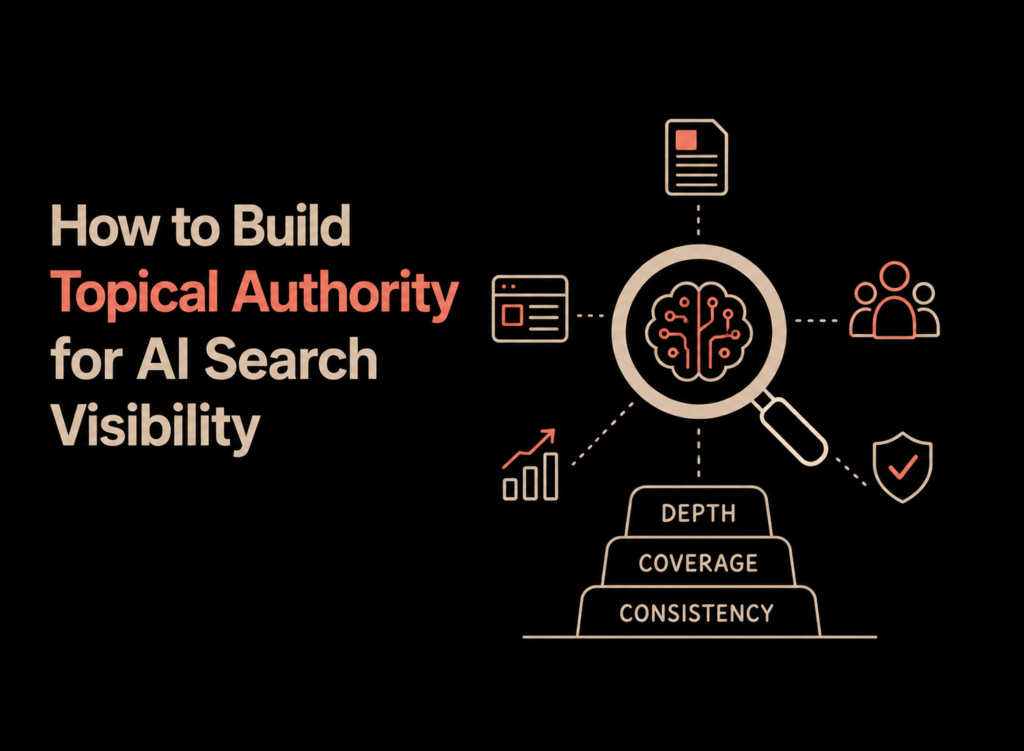
In a search landscape increasingly dominated by zero-click results and AI-generated overviews, building topical authority has become the cornerstone of sustainable organic growth. The concept of how to build topical authority with AI is not about replacing human expertise; it is about augmenting it. By leveraging artificial intelligence for research, content architecture, and semantic analysis, you can accelerate the path from a generic website to a recognized subject-matter expert that search engines trust implicitly. This guide breaks down the exact methodology, tools, and pitfalls when using machine intelligence to cement your site’s authority across an entire subject area.
What Is Topical Authority and Why Does It Matter?
Topical authority refers to the depth and breadth of expertise a website demonstrates on a specific subject, not just a single keyword. Search engines like Google evaluate whether your domain comprehensively covers a topic cluster, from foundational concepts to nuanced subtopics, and how reliably you address user intent across the entire knowledge graph. When you establish topical authority, you earn higher, more consistent rankings across hundreds of related queries, often with fewer backlinks than competitors who lack depth.
Traditional SEO focused on isolated page-level metrics. The modern approach centers on entity-based information retrieval. Search algorithms map entities (people, places, concepts, things) and their relationships. A site that publishes interconnected, mutually reinforcing content about all aspects of a topic signals semantic completeness. AI can analyze those relationships at scale, mapping content gaps and suggesting internal links that humans might overlook, making the process of building topical authority faster and more precise.
The E-E-A-T Connection
Google’s Search Quality Rater Guidelines emphasize Experience, Expertise, Authoritativeness, and Trustworthiness. Topical authority directly feeds into Authoritativeness. A site that covers a medical topic comprehensively with accurate, well-referenced, interconnected content is far more likely to be considered authoritative than one with scattered, thin articles. AI tools can audit your content ecosystem against E-E-A-T signals, identifying missing subtopics that real users and raters expect to see, and flagging shallow content that dilutes your perceived expertise.
The Core Components of Building Topical Authority with AI
Understanding the mechanics of building topical authority with AI requires breaking the process into distinct phases. Each phase can be enhanced by different types of machine learning models, from natural language processing for semantic analysis to large language models for content drafting and clustering. The goal is never to hand the entire strategy over to AI, but to use it as a force multiplier for research, pattern recognition, and optimization.
| Phase | AI Role | Human Oversight Required |
|---|---|---|
| Topic Cluster Design | Discover related entities, generate cluster maps, analyze competitor content architectures | Validate relevance, adjust hierarchy based on business goals and user journey |
| Content Gap Analysis | Crawl your site and competitors, compare topic coverage, identify missing semantic territories | Prioritize gaps by search volume, conversion potential, and alignment with expertise |
| Content Creation | Draft outlines, generate initial copy, optimize for related entities, suggest media | Ensure factual accuracy, inject unique experience, refine tone, review for originality |
| Internal Linking & Hubs | Recommend links between semantically related pages, detect orphaned content | Review link relevance, avoid over-optimization, maintain natural user flow |
| Ongoing Optimization | Monitor SERP changes, detect new questions, track entity coverage shifts | Decide on content updates, consolidation, and strategic pivots |
How to Build Topical Authority with AI: Step-by-Step Process
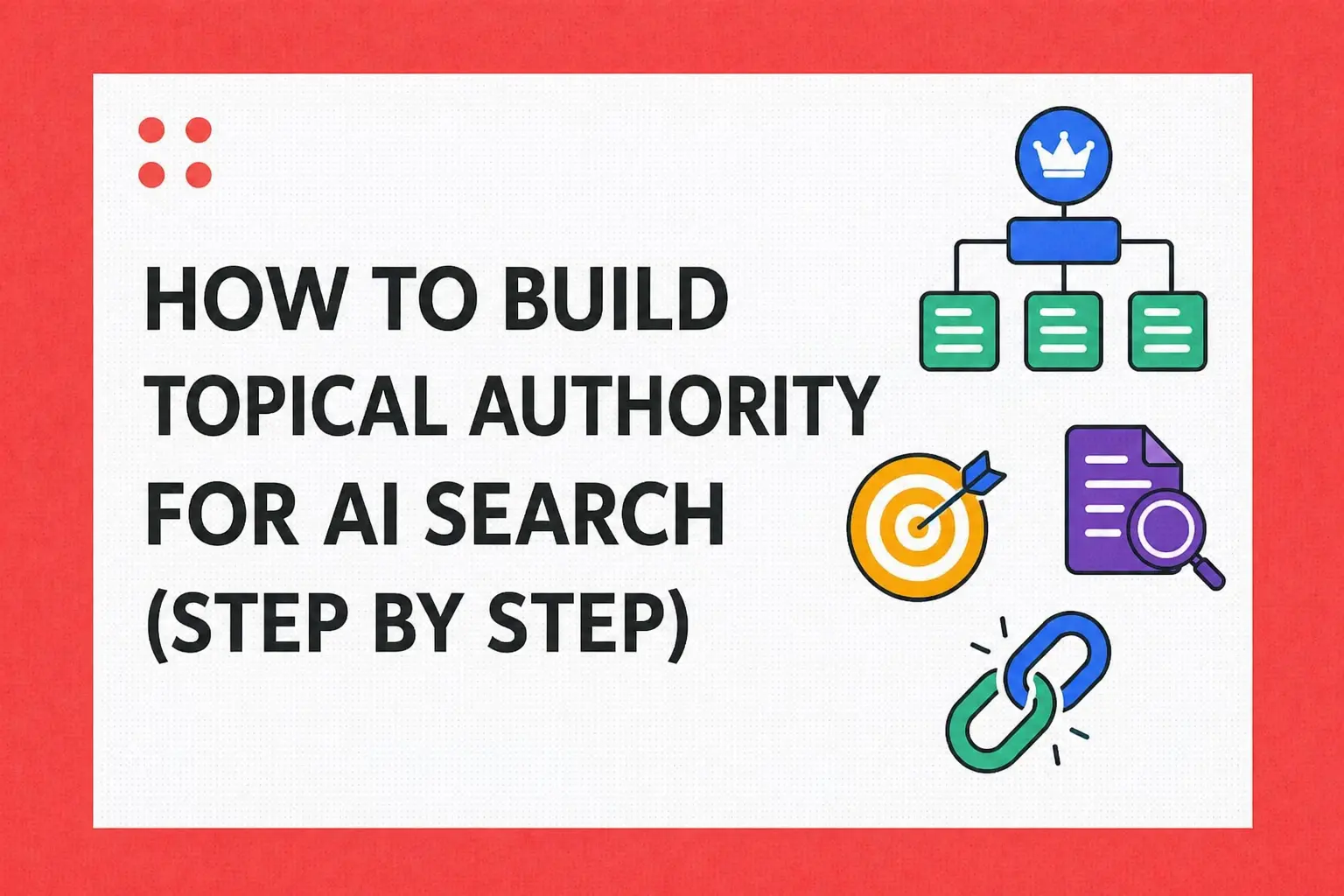
The following methodology combines proven SEO strategy with AI tooling to build authority methodically. Every step emphasizes the synergy between machine precision and human judgment. Implement this framework, and you will create a self-reinforcing content ecosystem that search engines recognize as an authority hub.
1. Map Your Knowledge Domain Using Entity-Driven AI
Start by defining your core topic and the main entity around which your authority will revolve. Tools like Google’s Natural Language API or specialized SEO platforms with entity extraction can analyze top-ranking pages for a head term and return the associated entities, subtopics, and attributes. For example, if your core topic is “home brewing,” A
Build a visual cluster map. AI-powered tools like MarketMuse or Clearscope can generate content briefs that show all the semantically related terms a comprehensive pillar page should include. Go beyond keywords. List every sub-concept, problem, stage of the user journey, and frequently asked question. This entity map becomes your blueprint for content creation, ensuring you leave no semantic blind spots.
2. Audit Current Content with an AI Content Intelligence Platform
Before creating new material, run your existing content through an AI content audit. Tools like Frase, Surfer SEO, or Scalenut can compare each URL against the top-performing competitors and highlight missing entities, insufficient depth, and weak content scoring. The AI assesses your coverage on a per-page and per-cluster basis, showing exactly where your site lacks depth.
Look for thin pages that answer only fragmentary parts of the user’s question. AI can quantify how comprehensively you cover a given topic. A score below 70% often indicates a significant authority gap. Prioritize updating these pages before writing new ones. Consolidating several shallow pages into one authoritative resource is often more powerful than publishing new, mediocre posts.
3. Generate a Comprehensive Topic Cluster Strategy
Using the entity map and audit data, structure your site into pillar pages and cluster content. A pillar page is a long-form, definitive guide covering the broad topic (e.g., “Complete Guide to Home Brewing”). Cluster pages drill into each sub-entity in granular detail (e.g., “How to Control Fermentation Temperature,” “Choosing the Right Malt for IPAs”). AI can automate the grouping of related keywords and suggest the ideal hierarchical structure.
Prompt a large language model to outline all necessary cluster topics. Provide the model with your entity list and ask for a taxonomy. Cross-reference this with search volume data from Ahrefs or Semrush. The output should be a prioritized editorial calendar, with pillar pages first, followed by high-impact cluster content. The internal linking framework at this stage is critical—every cluster page must link to the pillar, and related cluster pages must interlink with clear anchor text that reinforces the semantic relationship.
4. Create Depth-First Content with AI-Assisted Drafting
For each piece of content, the goal is to cover the topic with the maximum useful depth. AI writing assistants can generate complete outlines that incorporate the entities identified in step one. They can then draft sections that address explicit and implicit user intent. Use specific prompts to guide the AI toward including comparisons, step-by-step instructions, common mistakes, data points, and real-world examples that demonstrate genuine experience.
Always treat AI output as a first draft. Layer in original research, unique case studies, proprietary data, and expert quotes. Google’s helpful content system rewards content that shows first-hand expertise. An article about “yeast starters” that describes a specific observation from your own brewing log demonstrates experience that AI alone cannot fabricate. This blend of comprehensive, AI-informed structure and human-exclusive insight is what builds true authority.
5. Optimize Internal Linking at Scale with AI Graph Analysis
Internal link architecture is the skeleton of topical authority. AI can model your site as a graph and identify the optimal connections between pages based on semantic similarity. Tools like InLinks or custom Python scripts using sentence transformers can calculate the cosine similarity between every page on your site and recommend links that a human editor might never spot. This ensures Google crawls your site through conceptually coherent paths.
Implement these links carefully. Avoid creating link chains that feel artificial. Each link should genuinely help a user navigate from one related concept to another. Use descriptive anchor text that includes entity names or variations. For instance, a page about “kettle souring” should link to your “lactic acid bacteria” page with the anchor “lactic acid bacteria used in kettle souring.” This reinforces semantic connections for search engines and users alike.
6. Maintain Authority Through AI-Powered Content Monitoring
Topical authority is not built once and forgotten. Search intent evolves, new subtopics emerge, and competitors deepen their own coverage. Set up AI-driven monitoring that flags when your core pages drop in rank, when SERPs show new “People Also Ask” questions you have not addressed, or when a competitor publishes a significantly more detailed guide. Tools like seoClarity or custom alerts in Google Looker Studio with AI connectors can automate these signals.
Regularly re-run entity audits on your pillar pages. AI can quickly compare your content against the current top 10 results and highlight new entities that must be included to maintain comprehensiveness. This proactive approach prevents authority decay and keeps your site ahead of shifting algorithmic expectations.
Selecting the Right AI Tools for Topical Authority
The market overflows with AI-powered SEO tools, but not all are suited for building true authority. Focus on tools that analyze content at the semantic and entity level, not just keyword density. The table below categorizes tools based on their primary function in the topical authority workflow.
| Tool Category | Examples | Primary Use Case |
|---|---|---|
| Entity & Semantic Research | MarketMuse, Clearscope, Frase | Content briefs with related entities, content scoring, competitive gap analysis |
| Internal Linking & Site Graphs | InLinks, LinkStorm, custom NLP scripts | Automated internal link recommendations based on semantic similarity |
| Keyword & Topic Clustering | Keyword Insights AI, Topic, Semrush Topic Research | Group thousands of keywords into topical clusters for pillar-cluster strategies |
| Large Language Models for Drafting | Claude, GPT-4, Gemini, specialized SEO writing apps | Generating outlines, expanding sections, rephrasing for comprehensiveness |
| Content Performance & Monitoring | Clearscope, ContentKing, seoClarity | Tracking content decay, SERP feature changes, new questions to answer |
No single tool replaces a strategist. The most effective approach layers several tools. Use an entity research tool to build the content brief, a large language model for drafting, an internal linking tool for architecture, and a monitoring platform for upkeep. Always evaluate AI output through the lens of genuine user value and factual accuracy.
Common Mistakes When Building Topical Authority with AI
Even with advanced AI, many websites fail to gain authority because they misuse the technology. Recognizing these pitfalls early will save months of wasted effort and prevent algorithmic suspicion.
- Over-reliance on AI-generated text without human vetting. AI can hallucinate statistics, invent product names, or produce factually incorrect statements. Publishing unchecked AI content instantly erodes trustworthiness.
- Chasing keyword volume instead of semantic completeness. AI tools can suggest popular keywords, but true authority requires covering the entire entity graph, including low-volume but essential subtopics that define expertise.
- Neglecting unique experience. AI content often lacks the sensory details, personal anecdotes, and case-specific nuance that signal first-hand knowledge. Without this, the content is merely derivative.
- Creating orphan pages. Publishing excellent cluster content but failing to link it from the pillar page or related articles prevents Google from seeing the cohesive structure. AI internal linking recommendations must be implemented, not just observed.
- Ignoring content consolidation. AI audits reveal many thin pages covering similar topics. Instead of updating and merging them, some teams keep churning out new content, diluting authority across too many weak URLs.
- Forgetting to update old content. Topical authority relies on freshness. Letting outdated statistics or obsolete advice remain on your site tells Google your expertise is not current.
- Quality over quantity. One definitive guide that covers every sub-entity with genuine experience is worth more than ten thin AI-generated posts.
- Transparency. If AI contributed to content, have expert authors review and annotate. For YMYL (Your Money or Your Life) topics, rigorous expert review is non-negotiable.
- User signals matter. Even with perfect semantic optimization, if users bounce because the content feels robotic, authority cannot take hold. Blend AI efficiency with human warmth and readability.
- Continuous learning loop. Use AI analysis of user behavior (scroll depth, click patterns) to refine content further. Authority is an ongoing dialogue with your audience.
Practical Examples of AI-Driven Topical Authority in Action
Consider a financial advice website trying to build authority around “cryptocurrency taxes.” Using AI entity mapping, they discover related entities like cost basis methods, tax-loss harvesting, DeFi reporting, NFT taxation, and specific IRS forms. An AI content audit reveals they have a pillar page but are missing detailed guides on DeFi and NFT taxes—two high-interest subtopics. They use AI to outline those guides, draft sections explaining complex concepts simply, and identify opportunities to link back to their pillar page. Within six months, their organic traffic for hundreds of long-tail crypto tax queries multiplies because search engines now see them as covering the entire domain comprehensively.
Another example is a health and wellness brand focusing on “intermittent fasting.” AI clustering identifies subtopics like autophagy, insulin sensitivity, meal timing windows, electrolyte management, and contraindications. Their existing content touched only meal timing and basic benefits. After deploying AI to create in-depth, medically reviewed articles on the missing subtopics and linking them all through a central hub, they noticed not only improved rankings for the head term but also consistent featured snippets for long-tail questions. The AI’s ability to surface and organize information that users were actively searching for filled the authority vacuum.
Important Notes for Building Sustainable Topical Authority with AI
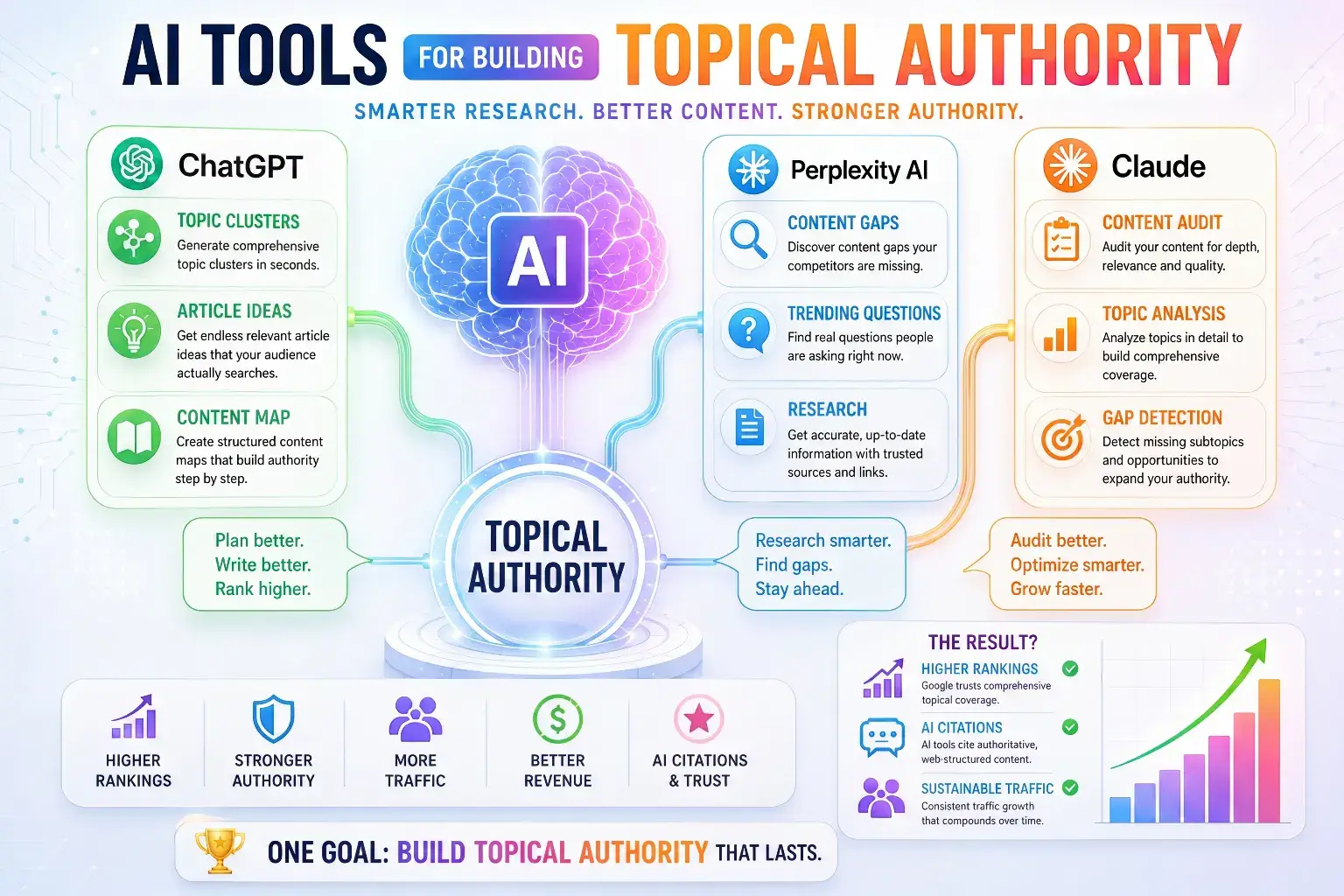
The path to authority with AI requires a mindset shift. AI is a diagnostic and acceleration tool, not an authority factory. Keep these principles central to your strategy.
Frequently Asked Questions About Building Topical Authority with AI
What exactly does “topical authority” mean in SEO?
Topical authority is the perception by search engines that a website is a comprehensive, trustworthy source on a specific subject area. It is earned by covering all relevant subtopics, entities, and user questions with depth and accuracy, and by having a strong internal linking structure that connects this knowledge semantically.
Can AI alone build topical authority for my website?
No. AI can greatly accelerate research, content structuring, and optimization, but authority requires authentic human expertise and first-hand experience. Google’s algorithms are designed to reward content that demonstrates genuine insight, unique data, and trustworthy authorship—qualities that AI cannot fully replicate on its own.
How long does it take to build topical authority using AI?
While AI compresses the research and content production cycle, earning authority typically takes six to twelve months of consistent, high-quality publishing and optimization. The speed depends on your niche’s competitiveness, the existing authority of your domain, and how thoroughly you implement the full entity and linking strategy.
Which AI tools are best for finding content gaps for topical authority?
Tools like MarketMuse, Clearscope, and Frase excel at comparing your content against top-ranking competitors and highlighting missing entities and subtopics. Keyword clustering tools such as Keyword Insights AI are also effective for identifying whole topic clusters you have not yet addressed.
Is internal linking really that critical for topical authority?
Absolutely. Internal links act as semantic pathways that help search engines understand the relationships between your content pieces. AI can identify and suggest connections based on conceptual similarity, but the implementation must be logical and user-focused. Proper internal linking can dramatically improve indexation and ranking for your entire topic cluster.
How do I avoid over-optimizing with AI and triggering a Google penalty?
Write for humans first. Use AI for structural guidance and entity inclusion, not to keyword-stuff or manipulate rankings. Ensure content reads naturally, provides unique value, and includes genuine expert contributions. Avoid churning out mass quantities of AI-generated text without substantial human editing and factual review.
Conclusion
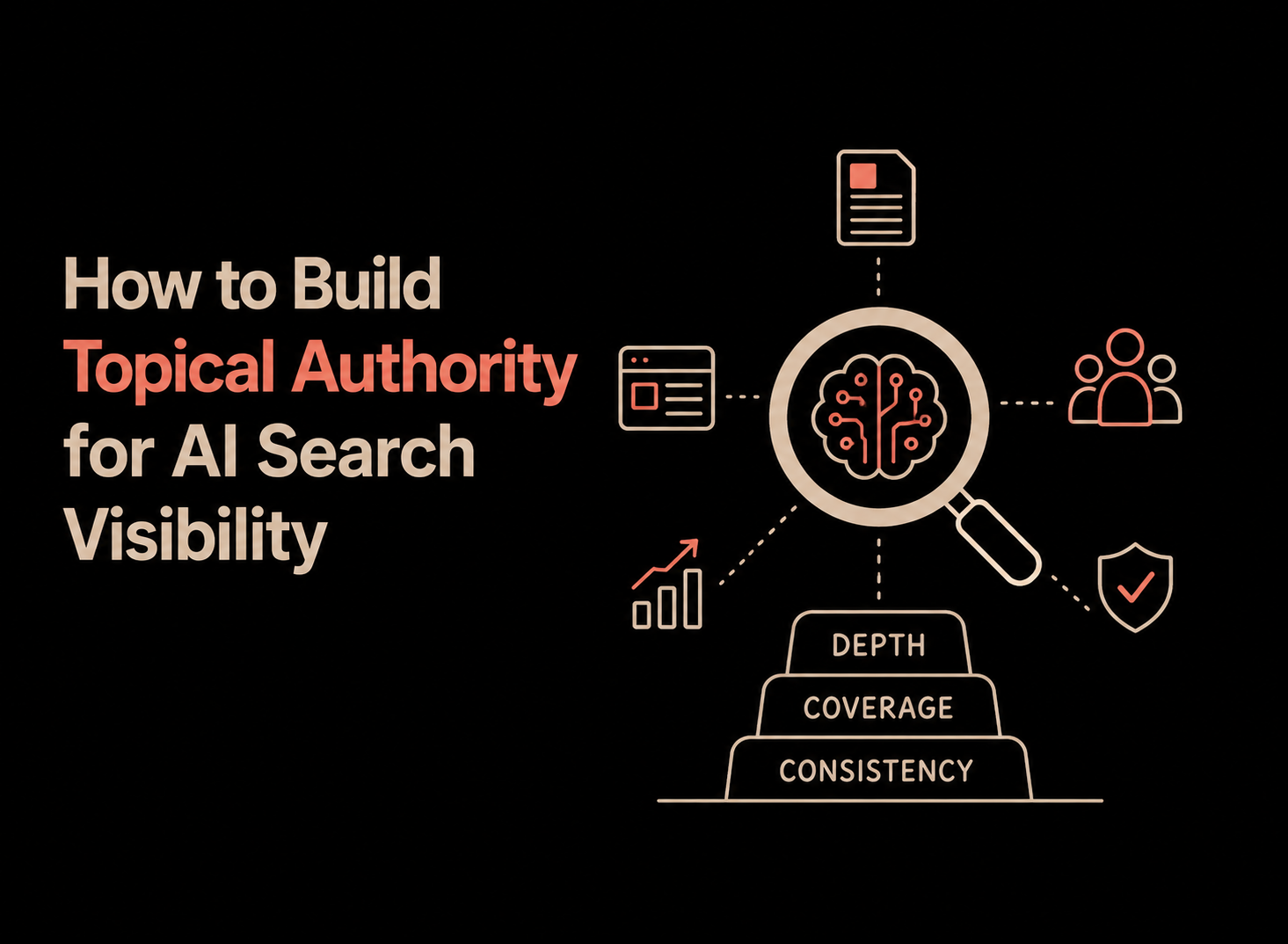
Mastering how to build topical authority with AI is fundamentally a discipline of strategic human-machine collaboration. The technology illuminates the hidden semantic structure of your niche, uncovers gaps you would otherwise miss, and scales the organizational burden of content planning and internal linking. Yet the soul of authority—the experience, the nuanced insight, the trustworthy voice—remains uniquely human. Approach AI as an expert assistant that handles data complexity, while you invest your intellect in creating content that truly helps people. When this balance is struck, search engines, and more importantly, your audience, will recognize you as the definitive source in your space.
Xem thêm:
- AI SaaS SEO: The Ultimate Guide to Dominating Organic Growth in 2025
- AI SEO Transactional Intent: The Complete Guide to Converting Search Traffic
- WP Trove AI Copywriting: The Complete Guide to Smarter Content Creation
- Mastering AI SEO Competitor Keywords: The Complete Guide to Outranking Your Rivals
- AI SEO AI Search Optimization Audit: The Complete 2025 Guide to Future-Proofing Your Rankings
Bài viết cùng chủ đề:

AI SEO SEO Automation with Make: The Complete Workflow Guide

AI SEO SEO Automation with Zapier: The Complete Workflow Guide

AI SEO SEO Automation with n8n: The Complete Workflow Guide
AI SEO SEO Automation with Gemini: The Complete Guide to Scaling Organic Growth

AI SEO SEO Automation with Claude: The Complete Guide to Scaling Content in 2025

AI SEO SEO Automation with ChatGPT: The Complete Playbook for 2025

AI SEO & SEO Automation for Affiliate Sites: The 2025 Playbook for Passive Income Growth
AI SEO & SEO Automation for Bloggers: The Complete Guide to Scaling Your Content

AI SEO & SEO Automation for Agencies: The Complete 2025 Playbook

AI SEO and SEO Automation for Ecommerce: The Complete Playbook for 2025

AI SEO & SEO Automation for WordPress: The Complete Playbook for 2025
AI SEO SEO Automation Strategy: The Complete Playbook for 2025

Mastering the AI SEO SEO Automation Process: A Complete Guide to Scaling Organic Growth
AI SEO SEO Automation System: The Complete Guide to Scaling Organic Growth in 2025
AI SEO SEO Automation Platform: The Complete Guide to Scaling Organic Growth in 2025
AI SEO SEO Automation Software: The Complete Guide to Scaling Organic Growth in 2025















