
No products in the cart.
AI Core Web Vitals: How Artificial Intelligence Optimizes User Experience Metrics

29
Jul
Jul
Websites that load quickly, respond instantly to user input, and stay visually stable enjoy higher rankings and better conversions. Artificial intelligence is rapidly reshaping how developers and site owners approach these benchmarks, collectively known as Core Web Vitals. Rather than manually tweaking code or guessing what slows down a page, AI-driven systems now analyze, prioritize, and often fix performance problems in real time. This fusion of AI and Core Web Vitals is not just a technical novelty—it represents a fundamental shift in how digital experiences are built and maintained at scale.
What Exactly Are AI Core Web Vitals?
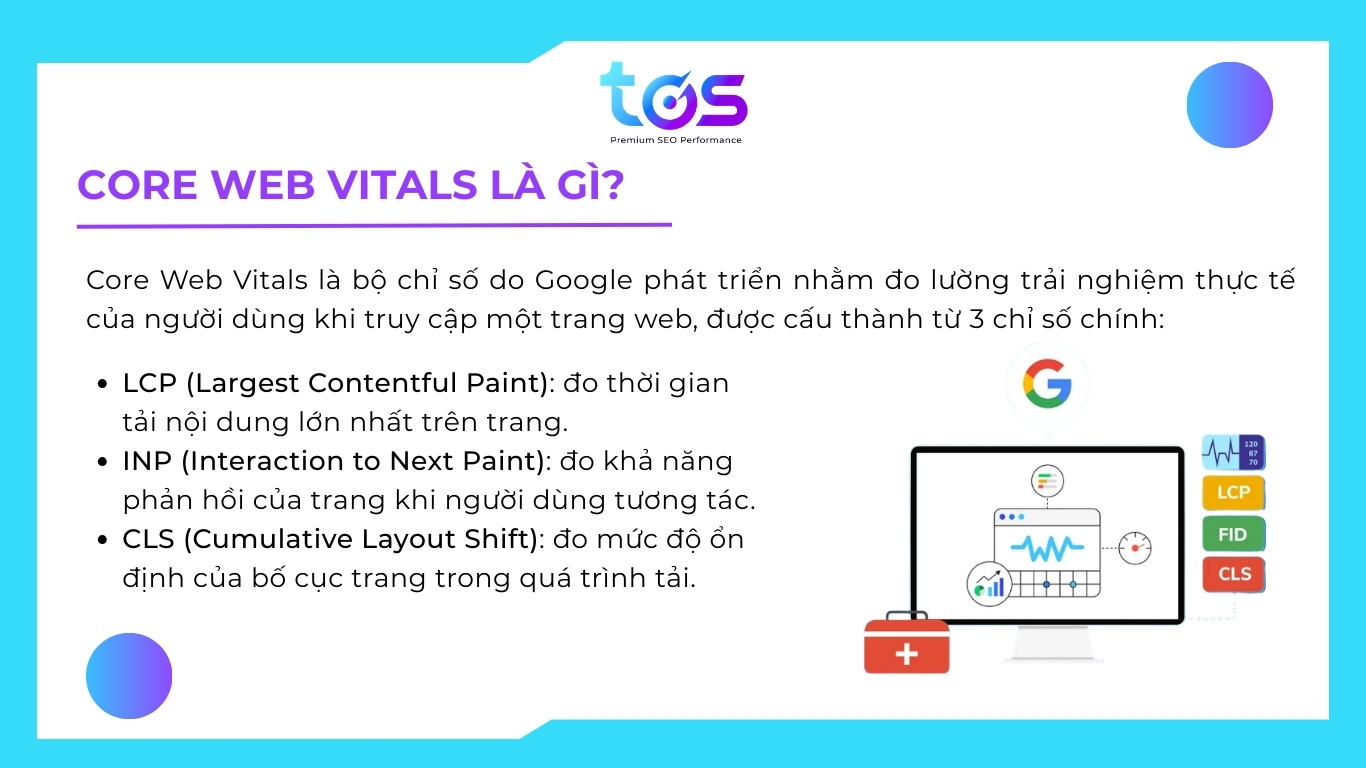
The term AI Core Web Vitals refers to the application of machine learning, predictive analytics, and intelligent automation to improve the three Core Web Vitals metrics: Largest Contentful Paint (LCP), Interaction to Next Paint (INP), and Cumulative Layout Shift (CLS). Instead of relying solely on static audits, AI examines vast amounts of user behavior data, device-specific conditions, and network variables to identify performance bottlenecks that human testers might miss.
- Largest Contentful Paint (LCP): Measures loading speed for the main content. AI predicts which elements will most likely become the LCP element under different conditions and preloads or prioritizes them.
- Interaction to Next Paint (INP): Captures responsiveness throughout the entire page lifecycle. AI isolates long-running JavaScript tasks and dynamically splits or defers them.
- Cumulative Layout Shift (CLS): Quantifies visual stability. AI models detect layout shift risks as pages render, automatically reserving space for dynamic content like ads and embeds.
- Continuous optimization: AI reacts to changes in site code, third-party scripts, and traffic patterns without redeployment.
- Personalization at scale: Delivers ideal loading behavior for each visitor’s device, connection, and location.
- Proactive issue resolution: Predicts performance regressions from code changes before they reach production.
- Reduced manual effort: Eliminates hours of auditing and fine-tuning, freeing teams to work on features.
- Cross-device consistency: Maintains strong vitals on low-end Android devices as well as high-end iPhones.
- Model bias and overfitting: An AI trained only on North American desktop traffic may make poor decisions for mobile users in emerging markets.
- Black-box decisions: Some automated optimizations break functionality, such as infinite scrolling or dynamic product filters, if the AI cannot understand complex JavaScript states.
- Cost and complexity: Enterprise-grade AI optimization platforms require substantial investment and integration effort.
- Dependency on training data: Without sufficient real-user data, the AI cannot make accurate predictions, leading to suboptimal general rules.
- Limited control: Developers may resist ceding fine-grained performance tuning to an algorithm, especially on highly customized applications.
- Blindly trusting AI scores without field data validation: Lab-based Lighthouse scores can look poor while CrUX field data remains healthy. Always cross-reference before allowing the AI to make aggressive changes.
- Over-automating third-party script handling: AI may defer a script that is essential for checkout functionality, causing revenue loss. Critical scripts should always be marked as such.
- Ignoring INP until it is too late: Many AI tools focused initially on LCP. As INP became official, teams that only optimized for LCP saw INP scores plummet. Ensure your AI system addresses all three vitals equally.
- Applying the same AI rules to all pages: A blog post and a single-page web app have different performance profiles. AI models must be segmented by page type to avoid harmful one-size-fits-all rules.
- Neglecting privacy and compliance: AI-driven optimization often requires collecting granular user behavior data. Under GDPR and similar regulations, this collection must be transparent and consensual.
When we say AI Core Web Vitals, we are describing a proactive, data-fueled system that continuously learns from real-user monitoring (RUM) data and adapts optimizations automatically. This goes far beyond traditional lab-based testing, enabling personalized performance on a per-user, per-session basis.
How AI Transforms Each Core Web Vital
AI-Powered Largest Contentful Paint Optimization
LCP often suffers from unoptimized images, render-blocking resources, and slow server response times. AI tools now scan the entire dependency tree of a page and decide which resources are critical. They can dynamically inline essential CSS and intelligently lazy-load off-screen images without interfering with the LCP element. Machine learning models trained on billions of page loads predict the optimal moment to fetch a hero image or a font, reducing the time a user stares at a blank screen.
Advanced AI observability platforms use reinforcement learning to adjust resource hints (preload, prefetch, preconnect) in real time based on actual network conditions. For e-commerce sites, an AI might detect that users on slow 4G connections in a particular region need an entirely different loading sequence than desktop visitors on fiber. This level of granular optimization is impossible to maintain manually.
Using AI to Improve Interaction to Next Paint
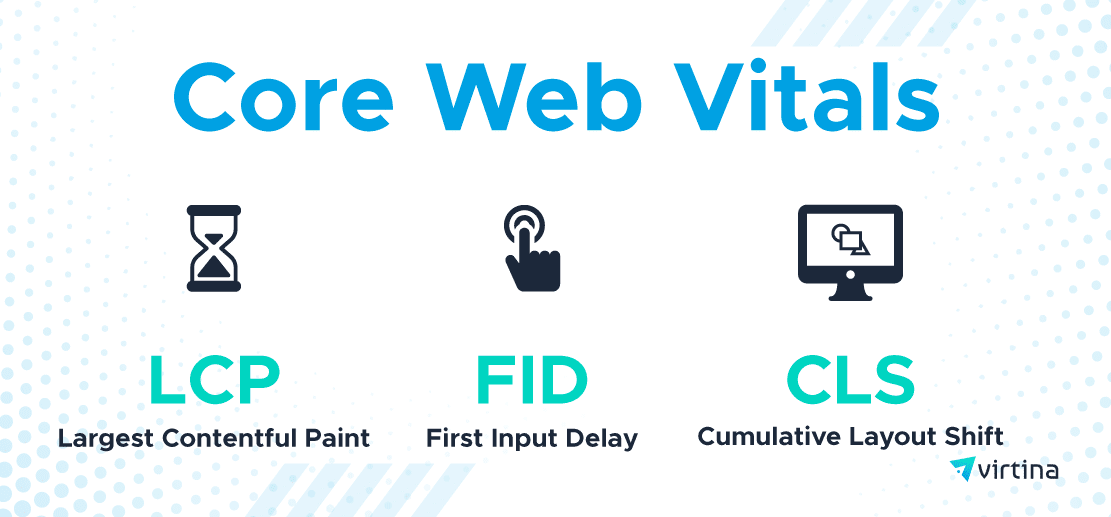
INP became a Core Web Vital in March 2024, replacing First Input Delay. It captures the worst-case interaction delay, meaning a single sluggish click can ruin the entire metric. AI excels at finding these hidden pain points. By analyzing thousands of real user sessions, machine learning pinpoints exactly which JavaScript event handlers are blocking the main thread for too long and under what circumstances.
Some AI-driven solutions now automatically refactor long tasks using code splitting and web workers. They can predict when a third-party script—such as a chat widget or analytics library—will cause a spike in main thread activity and temporarily defer non-critical interactions. The result is a consistently responsive interface that feels fast even under heavy load, directly boosting INP scores.
Intelligent Cumulative Layout Shift Prevention
CLS is notoriously hard to perfect because layouts often shift due to dynamically injected content. AI models pre-render shadow DOM elements and simulate page layouts before assets fully load. By predicting the size of images, fonts, and embeds, they can pre-allocate space, virtually eliminating unexpected movement.
Furthermore, AI monitors CLS at the session level, not just the page level. If a user scrolls rapidly and triggers lazy-loaded elements that push content down, that movement counts against the score. Modern AI tools detect scroll velocity and postpone non-visible content loading until the user is likely to stop, preserving visual stability.
AI-Driven Tools and Platforms for Core Web Vitals
Many platforms now embed AI directly into their performance optimization suites. They range from cloud-based website acceleration services to developer tooling that augments build pipelines. The following table compares several categories of AI-powered solutions.
| Tool Category | AI Capability | Core Web Vitals Impact |
|---|---|---|
| Automated Optimization Platforms (e.g., NitroPack, FlyingPress) | Machine learning for image compression, CSS/JS minification, caching policies, and font delivery | Significantly improves LCP and reduces CLS by automatically applying best practices |
| Real-User Monitoring with AI (e.g., DebugBear, SpeedCurve) | Anomaly detection, trend forecasting, root-cause analysis using clustering algorithms | Highlights specific INP bottlenecks and LCP regression before they affect large user bases |
| CI/CD Performance Budget Enforcement (e.g., Lighthouse CI with ML models) | Predictive scoring to block deploys that would degrade vitals beyond a threshold | Prevents regressions in all three metrics during the development cycle |
| Edge AI Delivery Networks (e.g., Cloudflare Workers with AI models) | On-the-fly HTML rewriting, resource prioritization, and personalized loading strategies | Enhances INP and LCP by serving tailored content per visitor location and device |
| AI-Powered Web Testing (e.g., WebPageTest’s experimental AI labs) | Generates natural language recommendations and compares performance against industry segments | Democratizes expert-level optimization insights for all three vitals |
These tools do not replace performance fundamentals, but they automate the complex, repetitive decision-making that typically requires a dedicated performance engineer. AI can test thousands of variations of resource loading sequences and select the combination that yields the best 75th percentile LCP, INP, and CLS across diverse user populations.
Why AI-Driven Core Web Vitals Matter for SEO and Business
Google explicitly uses page experience signals in ranking. While Core Web Vitals are not the top ranking factor, they act as tie-breakers and influence mobile rankings, especially in competitive niches. AI optimization directly supports higher rankings by maintaining consistently good field data, which is what Google uses for evaluation.
Beyond SEO, AI Core Web Vitals improvements unlock tangible business results. A well-known study from Deloitte found that a 0.1-second improvement in mobile site speed can increase retail conversion rates by 8.4% for mobile sites. AI can squeeze out fractions of a second across thousands of pages without manual intervention, converting better user experience into revenue. Moreover, automated vitals management reduces bounce rates and improves advertiser quality scores on platforms that consider landing page experience.
Benefits and Limitations of AI in Core Web Vitals

Key Benefits
Significant Limitations
Balancing AI automation with human oversight is critical. The best results emerge when AI handles repetitive monitoring and micro-optimizations while developers set strategic boundaries and verify business-critical user flows.
Real-World Application: Implementing AI for Core Web Vitals Step by Step
A practical AI-driven vitals strategy involves integrating real-user data, selecting the right tools, and establishing a feedback loop. The following phased approach works for most e-commerce, media, and SaaS websites.
Phase 1: Establish Baseline Data with AI-Enhanced RUM
Deploy a real-user monitoring solution that uses machine learning to segment your audience by device class, connection type, and geography. Look for AI features that automatically surface the most impactful improvement opportunities. For example, if the tool reports that LCP degrades by 1.2 seconds for users on 3G in Southeast Asia, that becomes your immediate priority. Import this data into a central dashboard that also tracks organic traffic and conversion rates.
Phase 2: Apply Intelligent Automation in Dev and Staging
Integrate AI-based static analysis into your CI/CD pipeline. Tools like Lighthouse CI with automated scoring can stop a pull request that would drop LCP below 2.5 seconds for the median user. At the same time, configure automated image and font optimizations using AI-driven services that select the perfect format (WebP, AVIF) and responsive breakpoints without manual markup.
Phase 3: Implement Edge-Level AI Decisions
Move beyond basic CDN caching. Deploy edge workers that examine incoming request headers and use lightweight models to decide which version of a page to serve. An AI on the edge can strip non-critical third-party scripts for a visitor on a slow connection, preload only the hero image on a high-resolution screen, and defer all analytics until after the first meaningful paint. This directly protects LCP and INP without touching your origin server code.
Phase 4: Closed-Loop Learning and A/B Testing
Treat Core Web Vitals optimization as a continuous machine learning problem. Run A/B tests where one segment receives the AI-optimized experience and another gets the baseline. Measure not just the vitals scores but also business KPIs like add-to-cart rate and session duration. Feed the results back into the AI model so it learns which optimizations genuinely improve user behavior and which are merely cosmetic. Over time, the model becomes incredibly precise, knowing that delaying a live chat widget by 400 milliseconds on product pages boosts INP without reducing leads.
Common Mistakes When Combining AI and Core Web Vitals

Important Technical Notes for Developers
When implementing AI Core Web Vitals solutions, pay close attention to the following aspects. First, ensure that AI-generated resource hints do not inadvertently cause cache churn or excessive DNS lookups. A model that over-prefetches can waste bandwidth and worsen performance on constrained networks. Second, monitor the CPU overhead of the AI inference itself. Running complex models on the client side can worsen INP rather than improve it. Edge and server-side AI are generally safer for performance. Third, always test with Web Workers and the `scheduler.postTask` API in conjunction with AI decision engines to balance main thread work. Fourth, understand that AI models need retraining. A site redesign or a new third-party vendor can invalidate previous optimization patterns. Schedule regular model updates based on the latest 28-day CrUX data window.
Frequently Asked Questions About AI Core Web Vitals
Can AI fully automate Core Web Vitals optimization?
AI can automate roughly 70–80% of optimization tasks, especially for LCP and CLS on content-heavy sites. However, complex interactive applications with heavily state-dependent JavaScript still require human oversight for INP tuning. The best setup is an AI-assisted workflow where the algorithm proposes changes and developers approve or fine-tune them.
Do AI Core Web Vitals tools work with any CMS or framework?
Most AI optimization platforms operate at the DNS or CDN level, making them framework-agnostic. They inspect the final HTML output, regardless of whether it comes from WordPress, Shopify, React, or Next.js. However, some advanced in-app AI modules are tightly integrated with specific frameworks like Nuxt or Astro and can offer deeper, build-time optimizations.
How quickly can AI improve poor Core Web Vitals scores?
With a robust AI platform, noticeable improvements often appear within hours for LCP and CLS because the system can immediately start caching, compressing, and stabilizing layouts. INP improvements may take a few days to a week as the AI needs time to collect enough interaction data to identify and address long tasks accurately.
Are AI-driven optimizations safe for e-commerce checkout flows?
Reputable AI tools allow you to define safety rules and exclusions. Critical flows like checkout, payment gateways, and login can be marked as “no-optimize” or “manual-only” zones. It is a common practice to let AI optimize product listing pages and blog content aggressively while keeping conversion-critical steps under precise control.
Does Google penalize sites that use AI for Core Web Vitals?
Google does not penalize sites for using AI. It evaluates the actual user experience as measured by CrUX data. As long as the AI makes the site faster and more stable for real users, it can only have a positive impact on rankings. The key is to verify through field data that the AI is not cheating lab tests while degrading real-world experience.
Conclusion: The Future of AI Core Web Vitals
AI Core Web Vitals represent a natural evolution in web performance management. As sites become more dynamic and user expectations rise, manual optimization cannot keep pace. AI fills the gap by continuously learning from real visitors and adapting the experience accordingly. The synergy between artificial intelligence and performance metrics like LCP, INP, and CLS is already elevating page experience into a dynamic, self-healing system. Organizations that embrace AI-driven performance strategies today will build faster, more resilient digital properties that rank higher and convert better, even as web technologies grow more complex. The path forward is clear: let AI handle the heavy computational load of performance tuning while human creativity focuses on delivering outstanding content and functionality.
Xem thêm:
- The Best AI SEO Tools for 2025: A Comprehensive Guide to Smarter Content & Rankings
- Open Source AI SEO Tools: The Complete Blueprint for Data-Driven Search Visibility
- AI SEO Agents: The Future of Automated Search Optimization
- AI B2C SEO: Mastering Consumer Search with Artificial Intelligence for Unmatched Growth
- AI SEO Planning Workflow: The Complete Guide to Scaling Organic Growth in 2025
Bài viết cùng chủ đề:

AI SEO SEO Automation with Make: The Complete Workflow Guide

AI SEO SEO Automation with Zapier: The Complete Workflow Guide

AI SEO SEO Automation with n8n: The Complete Workflow Guide
AI SEO SEO Automation with Gemini: The Complete Guide to Scaling Organic Growth

AI SEO SEO Automation with Claude: The Complete Guide to Scaling Content in 2025

AI SEO SEO Automation with ChatGPT: The Complete Playbook for 2025

AI SEO & SEO Automation for Affiliate Sites: The 2025 Playbook for Passive Income Growth
AI SEO & SEO Automation for Bloggers: The Complete Guide to Scaling Your Content

AI SEO & SEO Automation for Agencies: The Complete 2025 Playbook

AI SEO and SEO Automation for Ecommerce: The Complete Playbook for 2025

AI SEO & SEO Automation for WordPress: The Complete Playbook for 2025
AI SEO SEO Automation Strategy: The Complete Playbook for 2025

Mastering the AI SEO SEO Automation Process: A Complete Guide to Scaling Organic Growth
AI SEO SEO Automation System: The Complete Guide to Scaling Organic Growth in 2025
AI SEO SEO Automation Platform: The Complete Guide to Scaling Organic Growth in 2025
AI SEO SEO Automation Software: The Complete Guide to Scaling Organic Growth in 2025















