
No products in the cart.
AI Digital PR: The Ultimate Guide to Automating and Amplifying Your Public Relations Strategy
29
Jul
Jul
In an era where a single viral story can make or break a brand, AI Digital PR has emerged as the difference between reactive scrambling and proactive storytelling. This fusion of artificial intelligence with modern public relations goes far beyond scheduling social media posts. It empowers communications teams to predict media trends, personalise journalist outreach at machine scale, and measure sentiment shifts in real time. While the term might sound futuristic, thousands of in-house PR departments and agencies already lean on AI to cut through the noise and earn coverage that actually moves the needle. Whether you are a startup founder, a seasoned communications director, or a curious marketer, understanding the mechanics, tools, and guardrails of AI Digital PR is no longer optional—it is the new baseline for staying competitive.
What Is AI Digital PR?
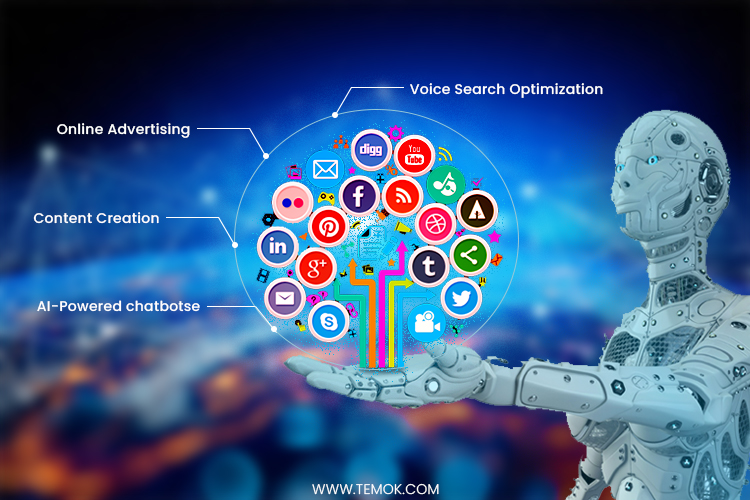
AI Digital PR is the strategic application of machine learning, natural language processing, and data analytics to plan, execute, and measure public relations campaigns in digital channels. It does not replace human judgment; it amplifies it. At its core, AI Digital PR automates repetitive tasks like building media lists, drafting first versions of pitch emails, monitoring online mentions, and analysing coverage sentiment. The real magic happens when AI connects dots that a human would miss—surfacing a journalist who just changed beats, identifying an emerging narrative before it peaks, or flagging a micro-influencer whose audience perfectly overlaps with a company’s target persona.
Traditional digital PR already handled online press releases, blogger outreach, and SEO-boosting backlinks. AI layers intelligence on top. It moves the discipline from “send and hope” to “predict and optimise.” The result is a data-driven, measurable PR function that speaks the language of the C-suite: revenue impact, share of voice, and tangible brand lift.
How Artificial Intelligence Is Reshaping Every Phase of Digital PR
Intelligent Media Monitoring and Sentiment Analysis
Gone are the days when PR teams manually combed through Google Alerts. Modern AI Digital PR platforms ingest millions of news articles, social posts, podcasts, and forum threads in real time. Natural language processing algorithms classify mentions by topic, entity, and—most critically—sentiment. They can distinguish sarcasm from genuine praise, detect sudden spikes in negative chatter long before a crisis escalates, and map how a story spreads across geographies.
Practitioners now set up smart alerts that trigger only when a predefined sentiment threshold is crossed, saving countless hours of noise scanning. This shift lets teams focus on strategic response rather than information gathering.
Automated Content Creation That Passes the Human Test
Generative AI models have progressed to the point where they can draft press releases, bylined articles, pitch angles, and social media copy that require minor human editing—never a full rewrite. The key is feeding the model with a brand’s tone of voice, messaging architecture, and recent coverage examples. With the right prompt engineering, AI can produce five distinct headline variations, each optimised for a different publication’s style, in the time it takes a human to brainstorm two. This acceleration does not replace the strategic communicator; it eliminates the blank-page paralysis and lets professionals invest their energy in nuance, storytelling, and relationship building.
Predictive Analytics and Trendspotting
One of the most underused capabilities of AI Digital PR is its ability to forecast. By analysing historical coverage patterns, seasonal media cycles, and search trend data, AI tools can predict when a topic will peak—and who will write about it. Brands that adopt predictive PR align their announcements, expert commentary, and thought leadership pieces with these rising tides. The payoff is higher open rates, better journalist engagement, and coverage that lands not in a vacuum but within a conversation that is already gaining momentum.
Hyper-Personalised Media Outreach
Spray-and-pray email blasts to hundreds of journalists are the fastest way to end up in the spam folder. AI Digital PR engines analyse a journalist’s recent articles, social media activity, and writing patterns to generate a relevance score and suggest personalised opening sentences. They can even recommend the optimal send time based on past engagement data. While the final email still requires a human eye and a genuine touch, AI ensures that every pitch begins with a foundation of real relevance rather than a generic greeting.
Crisis Detection and Response Playbooks
The first hour of a reputation crisis often determines the final cost. AI-driven listening tools can detect unusual spikes in negative sentiment across platforms and automatically alert the crisis team with contextual snapshots. More advanced systems propose response playbooks based on similar crises from the past, factoring in what worked, what backfired, and which stakeholders need immediate attention. This turns crisis management from a purely reactive scramble into a semi-automated, evidence-based discipline.
Key Components of a Modern AI Digital PR Stack

Building an AI-powered PR operation requires stitching together purpose-built tools, not relying on a single miracle platform. The most effective stacks combine:
- Media database with AI enrichment: platforms that auto-update journalist profiles, beats, and contact preferences using web scraping and verification algorithms.
- AI writing and editing assistants: tools that generate press releases, pitches, and social copy from briefs while maintaining brand voice guidelines.
- Real-time media monitoring: natural language processing engines that track print, online, broadcast, and social channels globally, with sentiment and entity recognition.
- Predictive analytics dashboards: systems that forecast media interest, identify upcoming narrative waves, and measure share of voice against competitors.
- Automated reporting and attribution: AI that correlates PR activity with web traffic, lead generation, and even revenue using multi-touch attribution models.
- Influencer and journalist scoring: machine learning models that rank contacts by true engagement, topical relevance, and audience authority—not just follower counts.
- Speed and scale: Tasks that once took days—like building a targeted media list of 200 contacts across five markets—now take minutes, freeing up strategists to focus on creative storytelling.
- Data-driven precision: Gut feelings are replaced by metrics. AI identifies which angles resonate, which journalists convert, and which headlines drive clicks, allowing continuous optimisation.
- Consistent brand voice: AI writing tools trained on a style guide produce on-brand copy 24/7, ensuring consistency even when multiple team members contribute.
- Cost efficiency: By automating labour-intensive research, monitoring, and first-draft creation, teams can handle greater volumes without scaling headcount linearly.
- Measurable ROI: AI attribution models finally close the loop between a press mention and a business outcome, earning PR a permanent seat at the strategic table.
- Loss of relational nuance: Algorithms cannot replicate the trust built over a decade of coffees with an editor. Over-automating outreach can feel transactional and erode media relationships.
- Data privacy and compliance: Scraping journalist data and tracking behaviours without consent can violate GDPR and other regulations. AI tools must be vetted for compliance.
- Algorithmic bias and hallucination: Generative AI can produce plausible-sounding but factually incorrect statements. If not meticulously fact-checked, a press release could contain damaging inaccuracies.
- Brand safety in sentiment analysis: Current AI still struggles with sarcasm, cultural context, and mixed-emotion content, sometimes misclassifying tones. Blind faith in a sentiment score can lead to misguided responses.
- Homogenised creativity: When every brand uses the same AI models, pitches and content can drift toward a vanilla sameness, losing the distinctiveness that earns standout coverage.
- Audit current bottlenecks. Identify where your team spends the most repetitive hours: media list updates, coverage reporting, email drafting. These are the first candidates for AI assistance.
- Select the right tools for your maturity stage. Smaller teams might start with an AI writing assistant and a smart monitoring platform. Enterprise PR functions can evaluate end-to-end suites that bake AI into every step.
- Build a proprietary prompt library and style guide. AI is only as good as the instructions it receives. Develop a set of prompts for press releases, pitches, and crisis statements that incorporate your brand voice, key messages, and compliance requirements.
- Train your team on AI literacy, not just tool usage. Teach PR professionals how to validate AI outputs, spot hallucinations, and layer human empathy onto algorithm-generated drafts. The goal is to produce cyborgs, not replace humans.
- Create a human-in-the-loop approval process. No AI-generated pitch, release, or crisis response should go out without a trained human reviewing it for accuracy, tone, and strategic alignment.
- Start measuring with the new KPIs. Move beyond clip counts. Track journalist engagement rates, sentiment shifts, coverage authority scores, and attributable web conversions. Use AI dashboards to automate this reporting.
- Fully automating journalist relationships. Sending AI-generated pitches without a personalised human layer is the fastest way to burn media bridges. Use AI for research and drafting—not for pressing send without customisation.
- Ignoring ethical boundaries and transparency. Failing to disclose AI usage in content intended for publication, or scraping data without consent, can lead to legal trouble and reputational damage. Ethics must be coded into every workflow.
- Copy-pasting raw AI output. AI models can invent facts, quotes, and statistics with unnerving confidence. Every factual claim must be verified against primary sources before it reaches a journalist.
- Neglecting training data bias. If an AI tool is trained primarily on Western business media, its recommendations will carry that skew. Teams working across diverse markets need to audit outputs for cultural blind spots.
- Measuring the wrong success signals. Chasing vanity metrics like total impressions while ignoring engagement depth or negative sentiment trends provides a dangerous false comfort.
- Disclose when appropriate. If a piece of content was significantly drafted by AI, consider noting it, especially in sensitive industries. Transparency with stakeholders and journalists prevents future backlash.
- Always keep a human editor in the loop. Even the most advanced model lacks contextual understanding of geopolitics, regional sensitivities, and organisational history. A final human review is non-negotiable.
- Prioritise data quality over quantity. Feeding AI with noisy, outdated media data produces poor recommendations. Invest in clean, well-maintained databases and verified sources.
- Build AI ethics into team culture. Regular training sessions on algorithmic bias, fact-checking protocols, and privacy compliance turn caution into a shared reflex, not a checkbox.
Benefits of AI Digital PR
The shift from manual to AI-assisted PR yields tangible advantages that compound over time.
Limitations and Risks of Leaning Too Heavily on AI

AI Digital PR is a powerful accelerator, not a magic wand. Over-reliance without guardrails introduces real dangers.
AI Digital PR vs Traditional PR: A Head-to-Head Comparison
The table below highlights where AI augments or replaces traditional methods, and where the human touch remains irreplaceable.
| Aspect | Traditional PR | AI Digital PR |
|---|---|---|
| Media list building | Manual research, often outdated within weeks | Automated, continuously updated, relevance-scored |
| Pitch creation | One-at-a-time writing, generic blasts common | AI drafts personalised angles; human refines and approves |
| Monitoring | Keyword-based alerts, manual sentiment grading | Real-time NLP with sarcasm detection and predictive alerts |
| Measurement | Clip counts, AVEs, subjective PR value | Multi-touch attribution, web traffic, lead impact, share of voice trend |
| Crisis management | Reactive, dependent on human discovery speed | Proactive spike detection, AI-suggested response playbooks |
| Relationship depth | High-touch, built on personal trust | AI aids contact management but cannot replace rapport |
| Content scale | Limited by team bandwidth | Virtually unlimited first drafts, faster iterations |
Practical Steps to Integrate AI Into Your Digital PR Workflow
Moving from concept to execution requires a deliberate roadmap, not a chaotic tool shopping spree.
Common Mistakes That Derail AI Digital PR Efforts
Even well-intentioned teams can fall into traps that negate the benefits of automation.
Important Notes for Maintaining Trust in AI-Powered PR
Trust is the currency of public relations. When AI enters the picture, that trust must be actively protected.
Frequently Asked Questions About AI Digital PR
What exactly is AI Digital PR?
AI Digital PR is the integration of artificial intelligence technologies—such as machine learning, natural language processing, and generative text models—into digital public relations workflows. It automates research, monitoring, content drafting, and measurement so that communications professionals can focus on strategy, creative storytelling, and relationship building.
Can AI completely replace PR professionals?
No. AI excels at processing vast amounts of data, recognising patterns, and generating first drafts. It cannot replicate emotional intelligence, cultural nuance, long-term trust with journalists, or the strategic judgment required in high-stakes crisis moments. The most effective model is human-AI collaboration, where technology handles the heavy lifting of data and repetitive tasks while humans provide direction, creativity, and ethical oversight.
What are the best AI tools for digital PR?
The ideal tool stack depends on your team’s size and goals. Commonly used categories include AI-enhanced media databases like Muck Rack or Prowly, generative writing assistants such as Jasper or ChatGPT with custom brand prompts, real-time monitoring platforms like Brandwatch, and predictive analytics from providers like Signal AI. Many of these platforms now embed AI features directly into their core offering, reducing the need for separate integrations.
How does AI improve media pitch success rates?
AI increases success rates by ensuring relevance. It analyses a journalist’s recent articles, social posts, and coverage history to suggest personalised angles and optimal send times. Instead of a generic pitch, the journalist receives a message that clearly connects to their interests and previous work, dramatically improving open and response rates while reducing the risk of being marked as spam.
Are AI-generated press releases accepted by media outlets?
When properly edited by a human, yes. Journalists and editors rarely care about the drafting tool; they care about accuracy, newsworthiness, and clarity. An AI-drafted release that has been fact-checked, tailored to the media outlet’s style, and infused with a genuine story angle is indistinguishable from one written entirely by hand. Purely raw, unedited AI output often contains errors or generic phrasing that will be rejected.
What metrics should I track for AI-driven PR campaigns?
Move beyond counting clips. Measure share of voice trends over time, sentiment breakdown, journalist engagement rate (opens, replies), coverage authority based on domain rating of the publishing site, referral traffic to your website, and downstream conversions where tracking permits. AI dashboards allow you to correlate a specific press mention with a spike in demo requests or lead form fills, finally quantifying PR’s business impact.
Conclusion
AI Digital PR is not a distant promise—it is the current operating reality for brands that win the attention game. By automating the mechanical and amplifying the strategic, artificial intelligence lets communications teams move at the speed of news while preserving the human judgment that builds lasting reputations. The winners in this new landscape will not be those who replace their PR professionals with algorithms, but those who equip their people with the best AI tools, clear ethical guidelines, and a relentless commitment to telling stories that matter. Start by auditing one bottleneck in your workflow, applying AI deliberately, and measuring the difference. Over time, those small integrations compound into a PR engine that is faster, smarter, and far more accountable than anything the industry has seen before.
Xem thêm:
- WP Trove SEO Automation: The Complete Guide to Streamlining Your WordPress Rankings
- AI SEO Sitebulb: The Complete Guide to Smarter Technical Audits
- AI SEO Entity Relationships: The Complete Guide to Semantic Search Dominance
- Mastering AI Search Ranking: How Artificial Intelligence is Redefining SEO Success
- AI SEO Contextual Keywords: The Complete Guide to Smarter Search Rankings
Bài viết cùng chủ đề:

AI SEO SEO Automation with Make: The Complete Workflow Guide

AI SEO SEO Automation with Zapier: The Complete Workflow Guide

AI SEO SEO Automation with n8n: The Complete Workflow Guide
AI SEO SEO Automation with Gemini: The Complete Guide to Scaling Organic Growth

AI SEO SEO Automation with Claude: The Complete Guide to Scaling Content in 2025

AI SEO SEO Automation with ChatGPT: The Complete Playbook for 2025

AI SEO & SEO Automation for Affiliate Sites: The 2025 Playbook for Passive Income Growth
AI SEO & SEO Automation for Bloggers: The Complete Guide to Scaling Your Content

AI SEO & SEO Automation for Agencies: The Complete 2025 Playbook

AI SEO and SEO Automation for Ecommerce: The Complete Playbook for 2025

AI SEO & SEO Automation for WordPress: The Complete Playbook for 2025
AI SEO SEO Automation Strategy: The Complete Playbook for 2025

Mastering the AI SEO SEO Automation Process: A Complete Guide to Scaling Organic Growth
AI SEO SEO Automation System: The Complete Guide to Scaling Organic Growth in 2025
AI SEO SEO Automation Platform: The Complete Guide to Scaling Organic Growth in 2025
AI SEO SEO Automation Software: The Complete Guide to Scaling Organic Growth in 2025















