
No products in the cart.
AI Indexing: The Complete Guide to How Artificial Intelligence is Revolutionizing Search and Data Retrieval
29
Jul
Jul
AI indexing is reshaping the digital landscape, powering search engines, recommendation systems, and enterprise knowledge bases with an intelligence that far surpasses simple keyword matching. Unlike traditional indexing, where a crawler maps exact words to documents, AI indexing interprets meaning, context, and user intent. This guide breaks down how the technology works, its core components, practical applications, and the strategies you need to thrive in an AI‑driven search ecosystem. Whether you are an SEO specialist, a developer, or a business owner, understanding AI indexing is no longer optional – it is the foundation of being found online.
What Is AI Indexing?
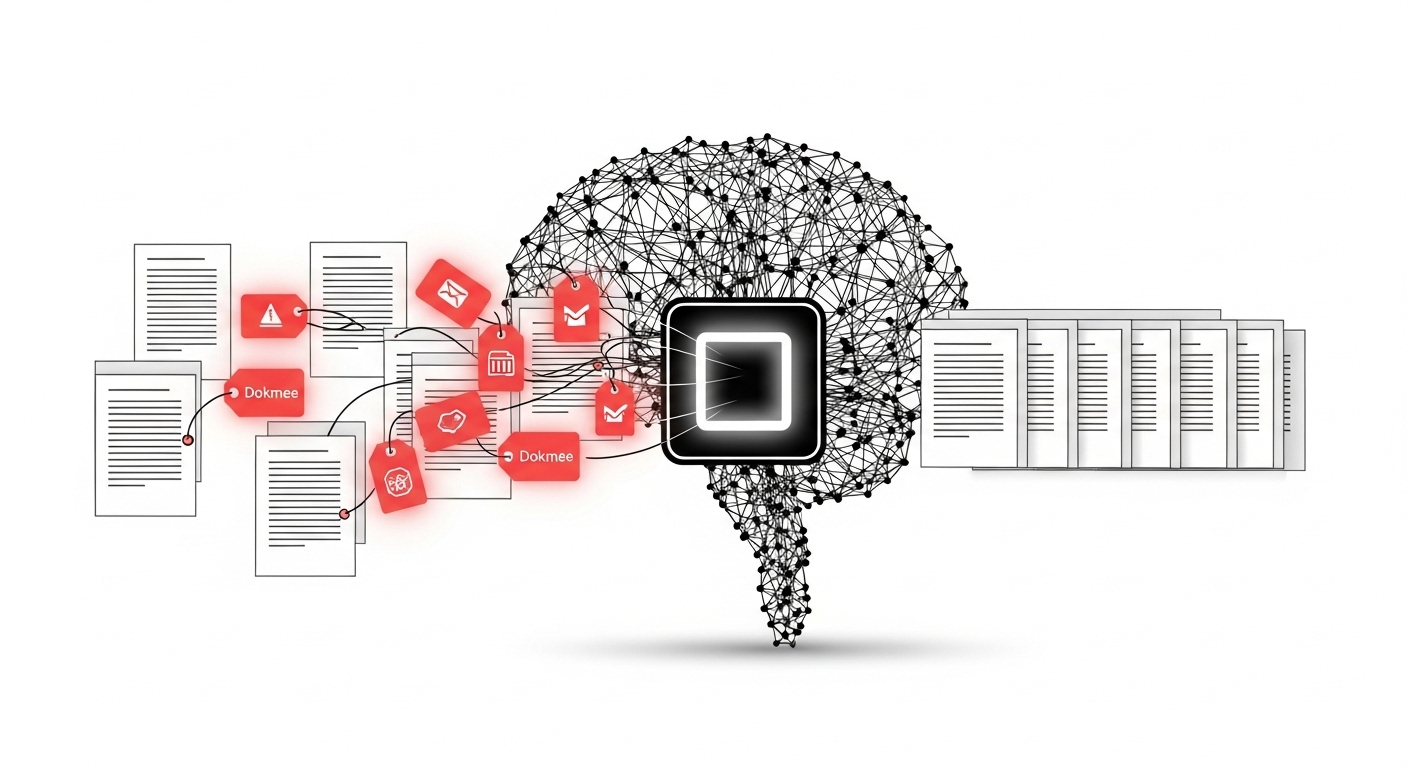
AI indexing is the process of organizing and storing information using artificial intelligence models to understand the semantic relationships between words, phrases, entities, and even images. Instead of merely recording which documents contain a given term, AI systems analyze the content with natural language processing (NLP), computer vision, and deep learning. This creates a multidimensional map where similar concepts cluster together, drastically improving retrieval relevance. The technology is the backbone behind Google’s passage ranking, voice search assistants, and the internal search functions of platforms like Netflix and Amazon.
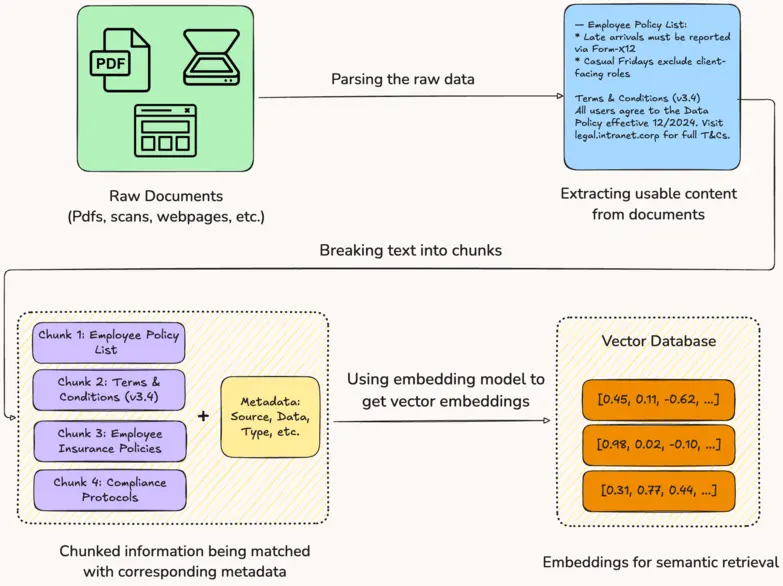
In essence, AI indexing transforms raw data into vector representations – numerical codes that capture meaning. When a user types a query, the system compares the query’s vector against the index to find the closest conceptual matches, even if the exact keywords do not appear. This shift from lexical search to semantic search is the defining characteristic of AI indexing.
The Evolution from Traditional to AI‑Powered Indexing
Early search engines relied on inverted indexes: massive dictionaries mapping each word to every document that contained it. While effective for simple retrieval, they failed with synonyms (“car” vs. “automobile”), context (“Apple” the company vs. the fruit), or user intent. As the web exploded, that brittleness became a liability. AI indexing emerged to fix those cracks.
The timeline accelerated with Google’s Hummingbird update (2013), which moved toward meaning, and later RankBrain (2015), the first machine-learning-driven indexing component. Today, models like BERT, MUM, and GPT-4 power indexing processes that understand language at a near-human level. The indexing pipeline now includes entity recognition, sentiment analysis, and cross-language understanding, making the search experience profoundly more intuitive.
How AI Indexing Works Under the Hood
At its core, AI indexing parses content through multiple stages of deep neural networks. First, the raw text is tokenized and cleaned. Then a language model converts each token or passage into a dense vector – a fixed-length array of floating-point numbers. These vectors reside in a vector database, often built with approximate nearest neighbor (ANN) algorithms for speed. When a search query arrives, it is encoded into the same vector space, and similarity metrics like cosine distance retrieve the most semantically related entries.
This pipeline outperforms keyword matching because it captures context. For instance, the phrase “how to fix a leaking tap” will retrieve results about “repairing a dripping faucet” even without a direct word overlap. The system also weighs factors like the authority of the source, freshness, and user engagement signals, continuously retraining its models with new data.
Key Components of AI Indexing
Natural Language Processing (NLP) Foundation
NLP is the engine that reads and understands content. Techniques such as part‑of‑speech tagging, dependency parsing, and named entity recognition break down text into structured information. Transformer architectures then build a contextual understanding of how words relate across a sentence or paragraph, enabling the index to know that “bank” in “river bank” is not the same as in “financial bank.”
Semantic Understanding and Entity Mapping
Modern AI indexes build massive knowledge graphs that link entities – people, places, objects, concepts – and their attributes. Google’s Knowledge Graph, for example, holds billions of facts and relationships. When indexing a page about Einstein, the AI automatically connects it to concepts like “theory of relativity,” “Nobel Prize,” and “E=mc²,” enriching the index beyond the visible text.
Vector Embeddings and Neural Hashing
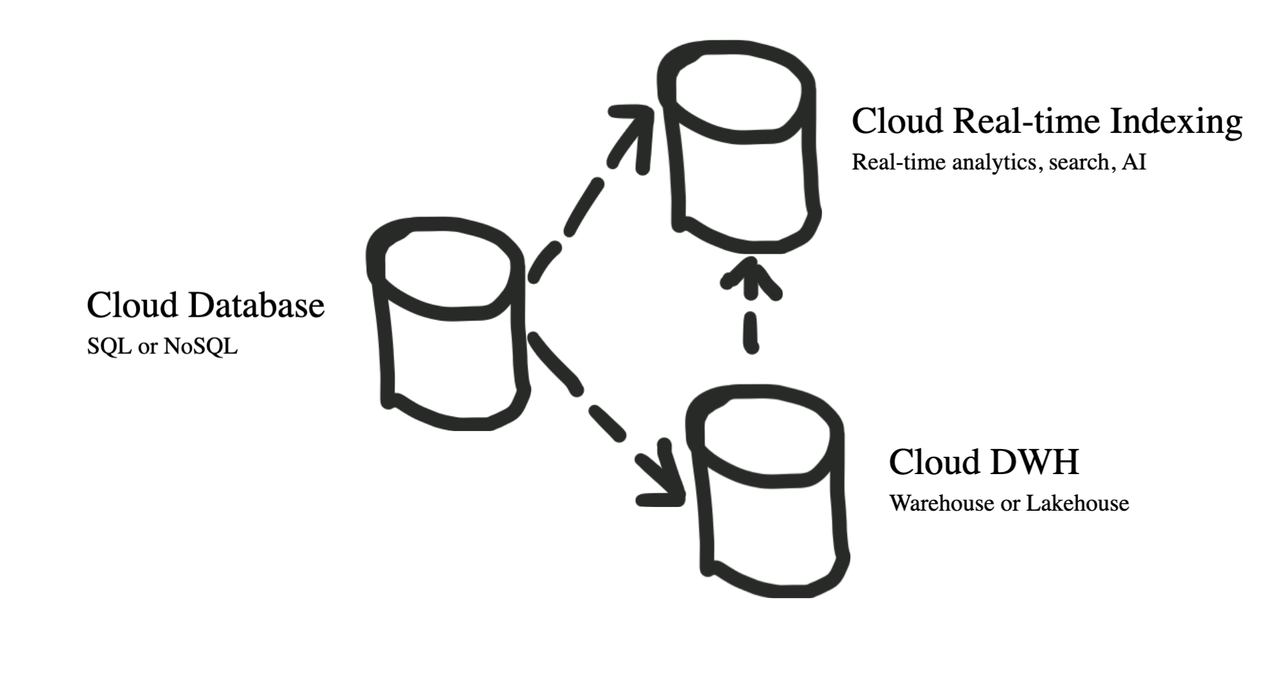
Vector embeddings compress semantic meaning into numbers. A 768‑dimensional BERT embedding can represent a paragraph so precisely that pairs of similar paragraphs sit closer in vector space. To speed up retrieval at scale, systems often apply neural hashing or product quantization, reducing the computational footprint while preserving accuracy. This is how AI indexing can sift through trillions of web pages in milliseconds.
Ranking and Relevance Algorithms
The index is only half the story; ranking determines what rises to the top. AI‑driven rankers use hundreds of signals, from click-through rates to content depth, to order results. Machine learning models like LambdaMART or neural ranking frameworks learn from user behavior, continuously adjusting to deliver the most satisfying answer for each unique query.
Types of AI Indexing
AI indexing is not monolithic. Different approaches solve different problems, often layered together in production systems.
- Semantic Indexing: Uses NLP to go beyond keywords, recognizing topics, themes, and user intent. Latent Semantic Indexing (LSI) was an early form; today, deep transformer models dominate.
- Neural Indexing: Relies directly on neural networks to generate embeddings and create the index. Google’s MUM, for example, can index information across 75 languages and multiple modalities simultaneously.
- Multimodal Indexing: Extends AI indexing to images, videos, and audio. A model like CLIP can embed a photograph and its caption into a shared vector space, allowing text‑to‑image search within the same index.
- Federated or Distributed AI Indexing: Used when data cannot be centralized due to privacy concerns. The model travels to local data silos, extracts insights, and updates a global index without raw data leaving its original location.
- Superior Relevance and Precision: Semantic understanding drastically reduces “zero‑result” searches and the frustration of irrelevant links.
- Handling Ambiguous Queries: A traditional index might mix “pitcher” (baseball) and “pitcher” (container); AI indexing separates them based on context and user history.
- Personalization at Scale: By embedding user behavior signals into the index, the system tailors results to individual preferences without sacrificing privacy via anonymized vectors.
- Multilingual and Cross‑Modal Retrieval: An AI index built in English can answer a query in Spanish, pulling from documents originally written in either language, as long as the models align semantic spaces.
- Future‑Proofing Content: Sites that invest in clear, entity‑rich, and well‑structured information are more likely to be indexed accurately by AI systems now and as algorithms grow more sophisticated.
- Computational Cost: Training large transformer models and serving real‑time embeddings require significant GPU/TPU resources, which can be expensive for smaller companies.
- Algorithmic Bias: If training data contains cultural or demographic skews, the index may amplify those biases, returning sexist or racist associations unless carefully audited.
- Black‑Box Decision Making: The opacity of neural models makes debugging difficult; when an important document fails to appear, tracing the exact failure point is extremely challenging.
- Data Privacy and Security: Embeddings can sometimes be inverted to reveal private information. Organizations must implement robust anonymization and access controls in their indexing pipelines.
- Constant Model Drift: Language evolves. AI indexes need continuous retraining to understand new slang, current events, and emerging entities, requiring a dedicated MLOps infrastructure.
- Focus on Topics and Entities, Not Just Keywords: Write comprehensive pages that cover a subject from multiple angles. Use tools like Google’s Natural Language API to check which entities your content triggers and fill gaps.
- Structure Content with Clear Headings and Semantic HTML: HTML5 semantic tags (article, section, aside) and a logical heading hierarchy help AI indexing understand the document outline and relative importance of sections.
- Incorporate Structured Data (Schema Markup): JSON‑LD schema for articles, FAQs, products, and reviews gives the AI index explicit clues about your content’s meaning, boosting the chance of rich results and featured snippets.
- Build Topical Authority Through In‑Depth Content: AI indexes reward clusters of interlinked pages that thoroughly cover a domain. A pillar page supported by detailed sub‑pages signals expertise, trust, and depth.
- Optimize for Natural Language and Voice Search: Use conversational phrases and long‑tail question formats. Since AI indexing interprets intent, a direct answer styled as a concise paragraph often gets pulled as a featured snippet.
- Ensure Technical Performance: Fast load times, mobile‑friendliness, and clean rendering are non‑negotiable. A crawling AI index will deprioritize pages that frustrate users or fail Core Web Vitals.
- Keep Content Fresh and Updated: AI indexing models weigh freshness signals. Regularly review and refresh key pages, add new data points, and clearly display publication and last‑updated dates.
- Over‑Optimizing for Single Keywords: Repeating the same phrase unnaturally damages readability and is easily spotted by modern models that evaluate content holistically.
- Ignoring Context and User Journey: A page that answers a query but fails to address related next questions leaves users unsatisfied, feeding negative engagement signals back into the AI index.
- Publishing Thin or Duplicate Content: AI indexing demotes pages that add no unique value. Syndicate carefully and always provide original analysis or commentary when referencing existing material.
- Neglecting Entity Connections: Failing to link to authoritative sources and internal content that reinforces the topic deprives the AI index of relational signals that would strengthen your entity associations.
- Blocking Important Resources via Robots.txt or Noindex Tags Incorrectly: Sometimes CSS or JS files crucial for rendering are blocked, preventing the AI index from seeing the page as a user would. Regularly audit your directives.
- Relying Solely on AI‑Generated Content Without Human Oversight: Unedited machine‑generated text can lack coherence or factual accuracy. AI indexing systems increasingly reward demonstrable expertise and originality, so human editing is essential.
Benefits of AI Indexing Over Traditional Methods
Organizations adopt AI indexing because it delivers measurable improvements in user satisfaction, operational efficiency, and content discoverability.
Limitations and Challenges
Despite its power, AI indexing comes with trade-offs that developers and content strategists must navigate.
AI Indexing vs. Traditional Indexing: A Head‑to‑Head Comparison
| Feature | Traditional Indexing | AI Indexing |
|---|---|---|
| Core Mechanism | Keyword matching and inverted indexes | Semantic vector embeddings and neural models |
| Understanding of Context | None; treats words in isolation | Deep; interprets full context and relationships |
| Handling Synonyms | Requires manual synonym lists or query expansion | Automatic, based on learned semantic proximity |
| Multilingual Capability | Separate indexes per language | Unified cross‑lingual vector space possible |
| Relevance Accuracy | Fragile with complex queries | High, especially for nuanced or conversational queries |
| Implementation Complexity | Simple, well‑established | High; requires ML expertise and tuning |
| Cost | Low computational overhead | Moderate to high due to GPU needs |
| Use Cases | Library catalogs, basic site search | Web search, recommendations, enterprise knowledge |
Real‑World Applications of AI Indexing
Web Search Engines
Google, Bing, and DuckDuckGo all leverage AI indexing to interpret billions of queries daily. Google’s passage ranking, powered by AI, can surface a specific sentence inside a long article that answers a very particular question without the page needing to be solely about that topic. This granularity is a direct result of neural indexing techniques that understand each passage independently.
E‑commerce Product Discovery
Amazon’s product search uses AI indexing to connect “lightweight running shoes for rainy weather” with products tagged “water‑repellent trail runner 240g.” By indexing attributes, reviews, and even user‑uploaded photos, the engine delivers hyper‑relevant results, increasing conversion rates and customer satisfaction.
Enterprise Knowledge Management
Large corporations use AI indexing inside tools like Microsoft SharePoint or Elastic to connect employees with internal documents. A lawyer searching for “non‑compete clause in California” can find a contract addendum from 2018 that never mentions “non‑compete” but uses “restrictive covenant,” because the AI index understands legal synonyms.
Healthcare and Medical Research
PubMed and clinical decision support systems employ AI indexing to cross‑reference patient symptoms with the latest medical literature. By indexing genetic markers, treatments, and outcomes in a shared vector space, physicians can identify rare disease correlations that a keyword search would miss entirely.
Multimedia Streaming Services
Netflix and Spotify index content not just by title but by mood, theme, and acoustic fingerprint. A user who enjoys “upbeat indie rock with strong female vocals” triggers a vector search that retrieves tracks from artists who may never have been categorized under those exact tags, illustrating the power of AI indexing beyond text.
How to Optimize Content for AI Indexing
Winning in an AI‑powered search environment means optimizing for meaning, not just keywords. The following practices align your content with how AI indexing evaluates and organizes information.
Common Mistakes That Harm Your AI Indexing Performance
Even seasoned professionals fall into traps that undermine AI indexing efforts. Steer clear of these pitfalls.
Important Notes When Implementing AI Indexing in Your Own Systems
If you are on the development side, building an AI indexing pipeline demands careful architecture. Start with a clear definition of what success looks like – precision@k, mean reciprocal rank, or user‑reported satisfaction. Choose the right embedding model (all‑MiniLM‑L6‑v2 is popular for lightweight workloads; GPT‑4 generated embeddings for high‑accuracy needs) and a vector database that scales with your data volume, such as Pinecone, Weaviate, or Milvus.
Continuous evaluation is non‑negotiable. Set up a golden dataset of queries and expected results, and run it after every model update to catch regressions. Implement human feedback loops where subject‑matter experts can flag poor results, turning those corrections into training data. Also, design for privacy from day one – anonymize personal identifiers before they enter the index and comply with GDPR and CCPA requirements. Lastly, remember that an AI index is never finished; it requires ongoing tuning, re‑indexing as new content arrives, and monitoring for data drift.
Frequently Asked Questions About AI Indexing
What is the difference between AI indexing and traditional indexing?
Traditional indexing relies on exact keyword matches stored in an inverted index. AI indexing uses machine learning to understand meaning, context, and intent, connecting queries to relevant content even when the specific words do not overlap. This makes AI indexing far more accurate for complex or conversational searches.
How does Google use AI indexing?
Google integrates AI indexing through systems like RankBrain, BERT, and MUM. These models interpret the semantics of web pages and user queries, build a rich understanding of entities and their relationships, and rank results based on relevance signals beyond simple keyword frequency.
Can small websites benefit from AI indexing?
Absolutely. AI indexing rewards clear, well‑structured, and authoritative content. A small site with deeply focused, entity‑optimized articles can outrank larger competitors if it better satisfies user intent. Focus on topical depth, proper schema markup, and natural language that matches how your audience asks questions.
What role do vector embeddings play in AI indexing?
Vector embeddings are the mathematical backbone of AI indexing. They convert words, sentences, or whole documents into numerical representations that capture semantic meaning. By measuring distances between these vectors, the index can instantly find content that is conceptually similar to a query.
Will AI indexing replace traditional SEO?
AI indexing does not replace SEO; it transforms it. Best practices like creating high‑quality content, earning backlinks, and providing a great user experience remain essential. The difference is that modern SEO must also emphasize semantic relevance, entity relationships, and structured data to align with how AI indexes evaluate pages.
Conclusion
AI indexing has moved from a niche research topic to the standard by which all major search and information retrieval systems operate. Its capacity to understand context, language, and user intent creates a search experience that feels almost telepathic, bridging the gap between what people type and what they truly mean. For content creators and technical teams alike, adapting to this paradigm means embracing semantic depth, structured data, and a relentless focus on user satisfaction. As AI models continue to advance, the indexing layer will only grow smarter, more multimodal, and more integral to how we access the world’s information. Those who invest in understanding and optimizing for AI indexing today will own the visibility of tomorrow.
Xem thêm:
- AI Affiliate SEO: How Artificial Intelligence Is Reshaping Affiliate Search Rankings
- AI SEO AI Search Audit: The Complete Guide to Future-Proofing Your Rankings
- AI SEO AI Search Authority: The Complete Guide to Dominating Generative Search
- AI Programmatic SEO: The Ultimate Guide to Automated Content Generation at Scale
- AI SEO Optimization: The Complete Guide to Dominating Search with Artificial Intelligence
Bài viết cùng chủ đề:

AI SEO SEO Automation with Make: The Complete Workflow Guide

AI SEO SEO Automation with Zapier: The Complete Workflow Guide

AI SEO SEO Automation with n8n: The Complete Workflow Guide
AI SEO SEO Automation with Gemini: The Complete Guide to Scaling Organic Growth

AI SEO SEO Automation with Claude: The Complete Guide to Scaling Content in 2025

AI SEO SEO Automation with ChatGPT: The Complete Playbook for 2025

AI SEO & SEO Automation for Affiliate Sites: The 2025 Playbook for Passive Income Growth
AI SEO & SEO Automation for Bloggers: The Complete Guide to Scaling Your Content

AI SEO & SEO Automation for Agencies: The Complete 2025 Playbook

AI SEO and SEO Automation for Ecommerce: The Complete Playbook for 2025

AI SEO & SEO Automation for WordPress: The Complete Playbook for 2025
AI SEO SEO Automation Strategy: The Complete Playbook for 2025

Mastering the AI SEO SEO Automation Process: A Complete Guide to Scaling Organic Growth
AI SEO SEO Automation System: The Complete Guide to Scaling Organic Growth in 2025
AI SEO SEO Automation Platform: The Complete Guide to Scaling Organic Growth in 2025
AI SEO SEO Automation Software: The Complete Guide to Scaling Organic Growth in 2025















