
No products in the cart.
AI Programmatic SEO: The Ultimate Guide to Automated Content Generation at Scale
29
Jul
Jul
AI Programmatic SEO represents the fusion of advanced language models with large-scale page generation techniques. Rather than manually writing every landing page for hundreds of locations or thousands of product variants, teams now leverage artificial intelligence to produce contextually relevant, unique content at a velocity traditional methods cannot match. This guide unpacks the mechanics, benefits, risks, and best practices for building sustainable AI-powered programmatic content that ranks.
What Is AI Programmatic SEO?
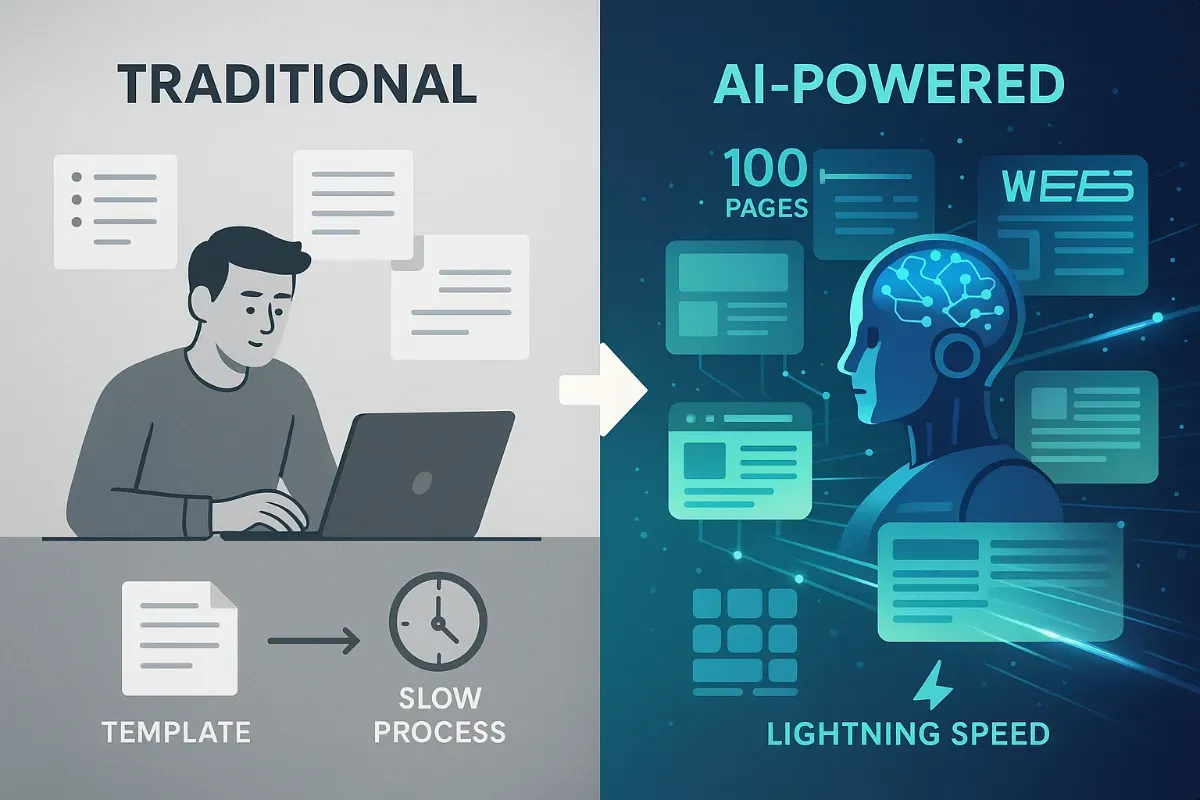
Programmatic SEO has long been the practice of creating many pages automatically by combining structured data with pre-built templates. A classic example is a mortgage calculator that serves city-specific pages by pulling rate data into a formula. AI Programmatic SEO takes this a step further. Instead of rigid templates that only swap out a city name, the system uses large language models to write full paragraphs, meta tags, and even schema markup for each URL. The content remains templated in structure but becomes dynamic in expression, making every page read naturally while still being generated at scale.
The core promise is combining the efficiency of automation with the quality signals that search engines reward. When executed correctly, an AI programmatic campaign can populate thousands of pages that answer specific user intents without triggering duplicate content filters or thin content penalties.
How AI Programmatic SEO Works
Data Sources and Template Design
Everything begins with clean, structured data. A database of cities, product SKUs, service types, or menu items acts as the skeleton. Developers then craft HTML templates embedded with placeholders for headers, body copy, FAQs, and image alt text. These placeholders are merged with data during page generation.
AI Content Generation Models
Instead of filling a placeholder with a static snippet, the system calls an AI model (GPT-4, Claude, or a fine-tuned open-source model) with a prompt that includes the data point and context. The prompt might instruct the model to write a 100-word neighborhood description for a specific ZIP code, using factual details from a location database. The model returns a unique text block, which gets injected into the template. This process repeats for every record in the dataset.
Quality Assurance and Uniqueness
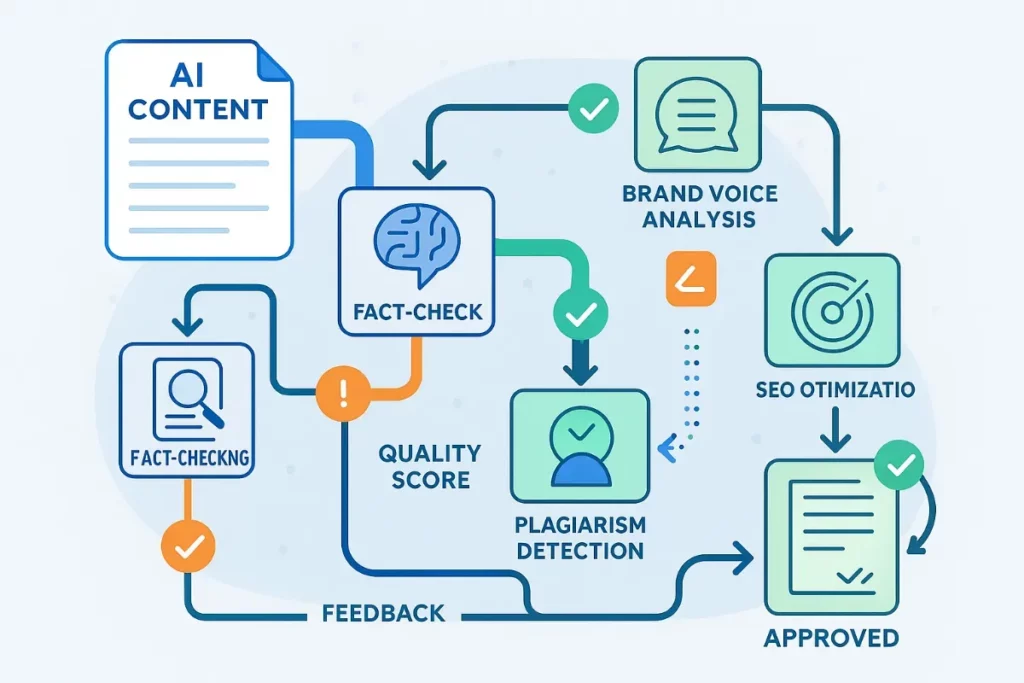
AI outputs are not published blindly. A robust pipeline includes a review layer—either automated checks (plagiarism scores, keyword density, coherence metrics) or periodic human sampling. Some teams stage the content in a sandbox environment first, run technical SEO audits, and then push approved batches live. The goal is to guarantee that each page offers a distinct value proposition, not just reworded platitudes.
Key Components of an AI Programmatic SEO Strategy
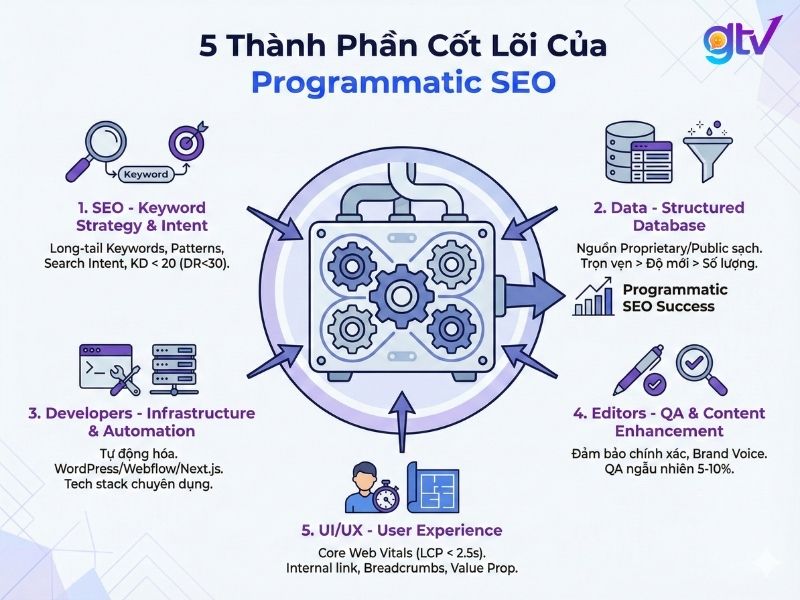
- Structured data repository: The single source of truth for all variables that will populate pages. Spreadsheets, Air tables, or APIs feeding a headless CMS.
- Smart content templates: HTML skeletons with placeholders for dynamic text blocks, designed to accommodate varying character lengths without breaking layout.
- Prompt engineering layer: A set of version-controlled prompts that instruct the AI to adopt a specific brand voice, include relevant LSI keywords, and respect factual constraints.
- Orchestration middleware: A script or low-code tool (Zapier, Make, custom Python) that loops through data, calls the AI API, captures responses, and builds final pages.
- SEO validation suite: Automated checks for canonical tags, meta length, structured data validity, internal linking, and page speed before deployment.
- Publishing AI output without human review: Even the best models make factual errors. Randomly audit at least 5 percent of generated pages and immediately fix systemic prompt flaws.
- Overusing the same prompt across disparate intents: A single template cannot serve commercial, informational, and navigational queries equally. Segment datasets by intent and tailor prompts accordingly.
- Ignoring internal linking: Thousands of orphan pages hurt crawl efficiency. Always set up automated rules so each new page links to relevant pillar content.
- Keyword stuffing in AI prompts: Telling the model to “include keyword X 5 times” leads to unnatural text. Instead, instruct it to “cover the topic comprehensively” and let keyword inclusion happen organically.
- Neglecting page speed: Dynamic pages often load additional scripts. Compress images, lazy-load non-critical elements, and use CDN caching to keep Core Web Vitals in check.
Benefits of AI Programmatic SEO
The most obvious upside is scale. A team of two can produce 10,000 location pages in a week—pages that each feel handcrafted. Beyond volume, AI enables semantic depth. Instead of repeating the same generic sentence across all dentist location pages, the tool can weave in neighborhood landmarks, regional insurance norms, and local service nuances. This granularity boosts topical authority and can dramatically improve time-on-page metrics.
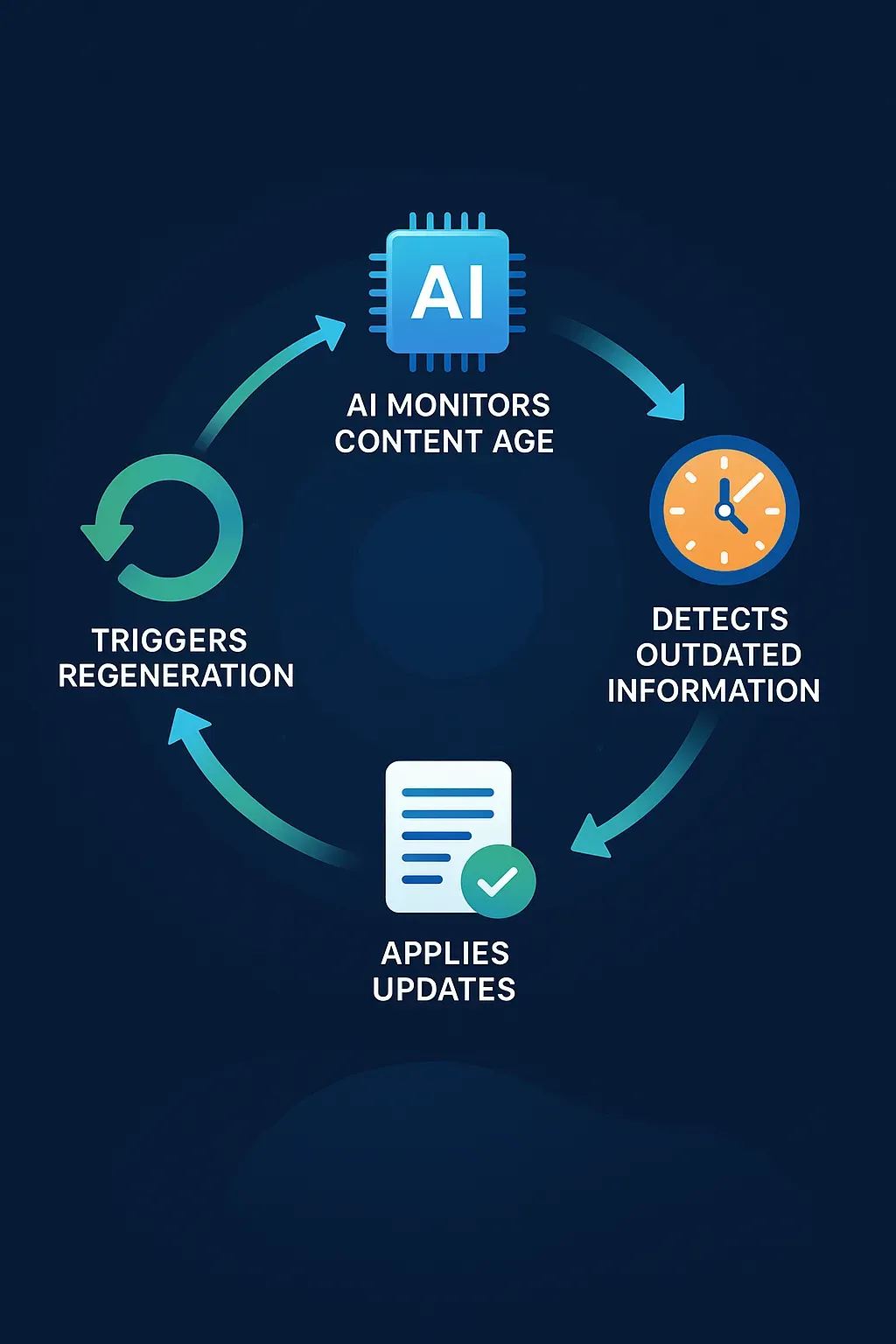
Consistency also improves. Unlike human writers who might inject unintended tone shifts or factual slip-ups, a well-governed AI maintains a uniform brand voice while pulling accurate data from validated sources. The speed of iteration is another advantage. When search trends shift, you can update prompts and regenerate entire page clusters within hours instead of months.
Limitations and Risks
AI Programmatic SEO is not a set-and-forget tactic. Google’s algorithms, particularly the helpful content system and scaled content abuse policies, are designed to demote mass-produced pages that add no real value. If the AI writes generic copy that could apply to any city, the site risks being classified as thin content. Another challenge is hallucination; language models sometimes invent details (wrong phone numbers, outdated addresses) that erode trust and trigger local SEO disasters.
There are also technical hurdles. Generating pages at scale means managing crawl budget, avoiding index bloat, and preventing cannibalization. If thousands of near-identical pages compete for the same keyword cluster, they can collectively drag rankings down instead of lifting them. Finally, the cost of API calls for generation can escalate quickly if prompts are inefficient or if every page rebuild triggers new requests.
AI Programmatic SEO vs. Traditional Programmatic SEO
| Aspect | Traditional Programmatic SEO | AI Programmatic SEO |
|---|---|---|
| Content uniqueness | Minimal, often just swapped keywords | High, with entire sections rewritten per page |
| Time to create 1,000 pages | Days to weeks (depending on template complexity) | Hours, including quality checks |
| Scalability ceiling | Limited by human ability to write fresh snippets | Effectively unlimited, bounded by data quality |
| Risk of thin content penalty | High if too many pages use identical boilerplate | Lower if AI prompts enforce meaningful variation |
| Maintenance | Manual updates across all pages | Centralized prompt improvements propagate on next regeneration |
How to Implement AI Programmatic SEO: A Step-by-Step Guide

Step 1: Keyword and Intent Research
Before writing a single line of code, map out the head terms and long-tail modifiers that make programmatic sense. Use tools to identify patterns: “service in city,” “product for use case,” “compare X vs Y.” Cluster these intents so each template serves a distinct query space. Only then begin assembling the data sources that will power the pages.
Step 2: Build Scalable Content Templates
Design page layouts that separate static branding elements from dynamic content zones. For a local service business, a template might include sections for a unique introduction, a services list, a neighborhood highlight, and a local testimonial. Each of these sections will later receive AI-generated text. Ensure the HTML structure supports proper heading hierarchy (H1 for the city+keyword, H2s for sub-topics) and that meta title/description fields are also templated.
Step 3: Integrate AI for Unique Content Generation
Connect your data source to an orchestration layer. For each record, craft a prompt that feeds the AI: the entity name, category attributes, local data points, and a clear instruction about tone and length. For example, for a “plumber in Austin” page, the prompt might be: “Write a 120-word introduction for a plumbing company page in Austin, TX. Mention the local climate’s impact on pipes, average response time, and at least one landmark area like South Congress. Write in a friendly, expert tone.” The AI returns text that is injected into the template. Repeat for every page, storing the output in a staging CMS.
Step 4: Technical SEO and Indexation
Every page must carry a self-referencing canonical, an XML sitemap entry, and valid structured data (LocalBusiness, Product, FAQ, as applicable). Implement a logical internal linking structure—category pages link to sub-pages, related pages cross-link to each other. Run a batch crawl to confirm all meta tags populate correctly, no duplicate title tags exist, and page load time stays under thresholds. Configure your robots.txt and CMS settings to avoid indexing staging copies or parameter-based duplicates.
Step 5: Monitor and Iterate
Launch with a conservative indexation pace. Watch Google Search Console for crawl anomalies, index coverage drops, and keyword rankings. Use heatmaps and Analytics to measure engagement. If certain page segments underperform, refine the prompt for that section and regenerate the batch. Because AI content is prompt-driven, improvements propagate evenly across all pages, delivering consistent uplift.
Common Mistakes and How to Avoid Them
Important Notes on Google’s Guidelines
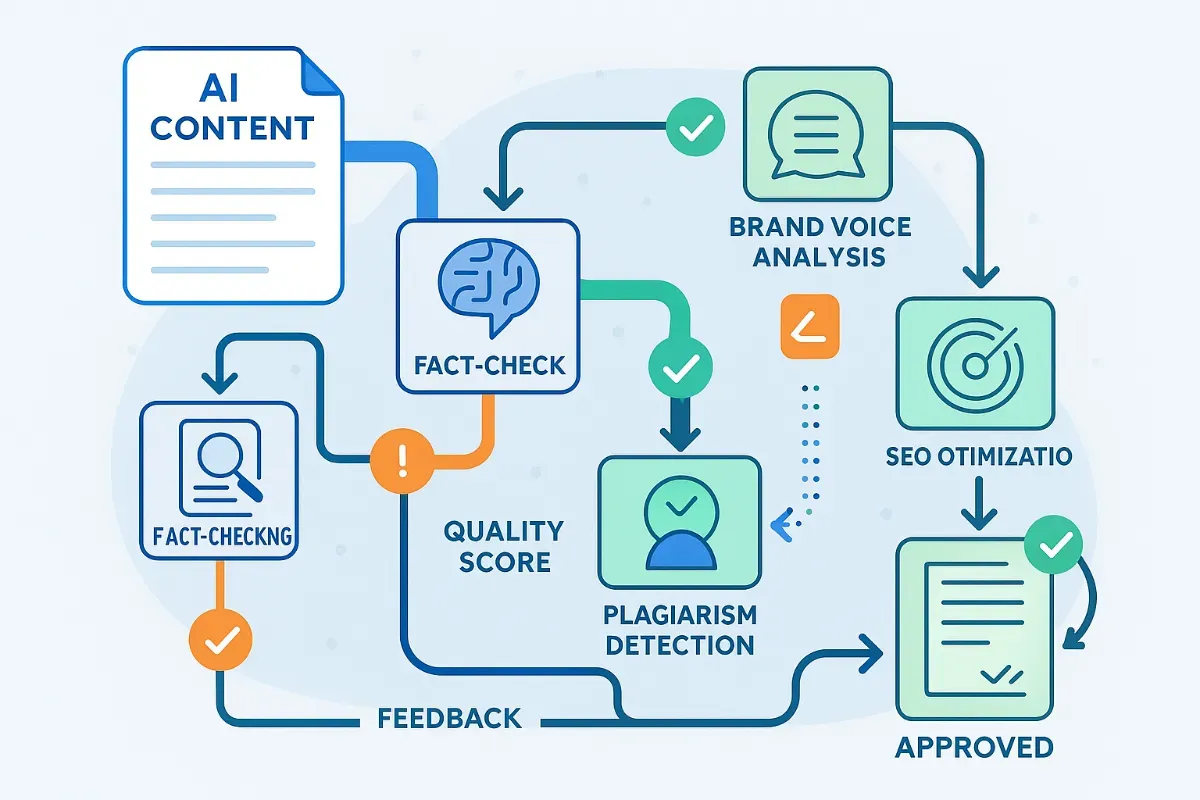
Google’s documentation explicitly states that AI-generated content is not inherently against its guidelines; the ranking systems evaluate content quality, not the method of creation. The critical line is whether the content demonstrates first-hand experience, expertise, authoritativeness, and trustworthiness (E-E-A-T). AI programmatic pages can satisfy this when they incorporate verified local data, showcase original images, or compile unique pricing insights that human editors curate.
However, the same policies penalize “scaled content abuse”—defined as producing many pages primarily to manipulate search rankings without offering substantial value. To stay compliant, never rely solely on AI to generate entire pages from broad prompts. Always anchor output in factual, structured data that reflects real-world variables, and add layers of human editorial oversight. Markup pages as “AI-assisted” in your documentation internal transparency, but note that no special schema for AI disclosure is required by Google.
Frequently Asked Questions
What is programmatic SEO with AI?
AI programmatic SEO is the process of automatically generating hundreds or thousands of unique web pages by combining structured data with AI-written content. It replaces static placeholder text with contextually adaptive paragraphs, meta tags, and even structured data, allowing sites to target a massive number of long-tail keywords without creating duplicate or thin content.
Does Google penalize AI-generated programmatic pages?
Google penalizes low-quality, scaled content regardless of how it was produced. If AI-generated programmatic pages offer genuine value—unique information, accurate data, and a clear purpose—they can rank well. The risk comes when pages are created solely to manipulate rankings and provide little substance. Maintaining human review and factual grounding minimizes this risk.
Can I use ChatGPT for programmatic SEO?
Yes, ChatGPT and similar large language models are commonly used for AI programmatic SEO. They are accessed via API within scripts or automation platforms to generate text blocks for each page. The key is to craft precise prompts that incorporate real data from your dataset, set output length limits, and include quality checks before publishing the results.
How do I ensure uniqueness across thousands of pages?
Uniqueness comes from data diversity and prompt variation. Provide the AI with distinct attributes for each record (city-specific landmarks, product specifications, seasonal facts) and instruct it to weave those into the text. Regularly run similarity checks across pages and tweak prompts to avoid repetitive phrasing. Also, vary the structure of generated sections, not just the words.
What tools are needed for AI programmatic SEO?
A typical stack includes a data source (Google Sheets, Airtable, or a database), an AI API (OpenAI, Anthropic, or a self-hosted model), an orchestration tool (Zapier, Make, or custom Python/Node.js scripts), and a CMS that supports programmatic publishing (WordPress with REST API, Webflow CMS, or a static site generator like Next.js). SEO crawlers such as Screaming Frog and site audit tools are essential for quality control.
Conclusion
AI Programmatic SEO reshapes the frontier of search-driven content strategies. When grounded in robust data and guided by human expertise, it enables organizations to claim thousands of relevant, high-intent queries with content that feels personal and authoritative. The technology alone does not guarantee success; thoughtful template architecture, rigorous quality gates, and alignment with Google’s quality framework are what separate sustainable wins from one-click penalties. Teams that master this discipline will unlock an unparalleled ability to scale visibility while maintaining the trust of both users and search engines.
Xem thêm:
- AI SEO AI Search Optimization Audit: The Complete 2025 Guide to Future-Proofing Your Rankings
- AI SEO Site Structure: The Complete Guide to Building an AI-Ready Website Architecture
- AI SEO Content Updates: The Complete Guide to Staying Ahead in 2025
- AI SEO Topic Discovery: The Complete Guide to Finding Content That Ranks
- Mastering AI EEAT Optimization: The Strategic Blueprint for Next-Level Search Authority
Bài viết cùng chủ đề:

AI SEO SEO Automation with Make: The Complete Workflow Guide

AI SEO SEO Automation with Zapier: The Complete Workflow Guide

AI SEO SEO Automation with n8n: The Complete Workflow Guide
AI SEO SEO Automation with Gemini: The Complete Guide to Scaling Organic Growth

AI SEO SEO Automation with Claude: The Complete Guide to Scaling Content in 2025

AI SEO SEO Automation with ChatGPT: The Complete Playbook for 2025

AI SEO & SEO Automation for Affiliate Sites: The 2025 Playbook for Passive Income Growth
AI SEO & SEO Automation for Bloggers: The Complete Guide to Scaling Your Content

AI SEO & SEO Automation for Agencies: The Complete 2025 Playbook

AI SEO and SEO Automation for Ecommerce: The Complete Playbook for 2025

AI SEO & SEO Automation for WordPress: The Complete Playbook for 2025
AI SEO SEO Automation Strategy: The Complete Playbook for 2025

Mastering the AI SEO SEO Automation Process: A Complete Guide to Scaling Organic Growth
AI SEO SEO Automation System: The Complete Guide to Scaling Organic Growth in 2025
AI SEO SEO Automation Platform: The Complete Guide to Scaling Organic Growth in 2025
AI SEO SEO Automation Software: The Complete Guide to Scaling Organic Growth in 2025















