
No products in the cart.
AI Local SEO: The Smart Way to Dominate Neighborhood Search Results
29
Jul
Jul
The landscape of local search has changed dramatically. Businesses that once relied on manual directory submissions and basic keyword placement now face a hyper-competitive, algorithm-driven environment where real-time relevance determines who gets the call. AI Local SEO represents the fusion of artificial intelligence technologies with localized digital marketing strategies, enabling companies to analyze massive datasets, predict consumer behavior, and automate critical tasks that would overwhelm any human team. From dynamic Google Business Profile optimization to intent-aware content generation, AI is rewriting the rules of how physical storefronts, service area businesses, and multi-location brands achieve visibility in maps and local packs.
Understanding this shift is no longer optional. The businesses that embrace AI-powered local search gain a measurable edge in rankings, review management, and conversion rates. This guide unpacks every layer of the topic—explaining core mechanics, dissecting key components, comparing tools, and offering a practical blueprint for implementation without the hype.
What Exactly Is AI Local SEO?

AI Local SEO is the application of machine learning, natural language processing, and predictive analytics to improve a business’s visibility in geographically constrained search results. Traditional local SEO relied on manual keyword research, static listing management, and guessing which factors influenced the local pack. AI Local SEO transforms this by continuously ingesting signals from Google Maps, search queries, user behavior, and competitor activity to generate actionable insights in near real-time.
At its heart, AI understands context. It recognizes that a search for “best coffee near me” at 7 AM carries different intent than the same phrase at 3 PM. It detects linguistic nuances across neighborhoods, adjusts for mobile versus desktop queries, and even correlates weather patterns with foot traffic. This depth of analysis allows AI-powered systems to recommend precise changes—down to the wording of a Google Business Profile description or the ideal time to request reviews—that directly impact local rankings.
How Traditional Local SEO Differs from AI-Driven Approaches
To appreciate the leap forward, a comparison between manual local SEO and AI-powered strategies proves essential. Traditional methods depend on static optimizations: filling in every field of a Google Business Profile once, building a set number of citations, and hoping that consistency carries the day. AI Local SEO operates dynamically, treating each listing as a living asset that requires continuous refinement.
| Aspect | Traditional Local SEO | AI Local SEO |
|---|---|---|
| Keyword research | Manual spreadsheets, broad match | Real-time intent clustering, hyper-local modifiers |
| Listing optimization | One-time setup, periodic audits | Continuous A/B testing of photos, descriptions, services |
| Review management | Alert-based, cookie-cutter replies | Sentiment-driven prioritization, personalized response generation |
| Ranking analysis | Manual rank checks per ZIP code | Predictive grid mapping with competitor gap detection |
| Content creation | Generic blog posts, duplicate location pages | Unique, neighborhood-specific content at scale |
The distinction lies in speed and precision. Where a human might analyze five competitors in an afternoon, AI evaluates hundreds across thousands of keywords simultaneously, spotting patterns invisible to the naked eye. This doesn’t replace human oversight but supercharges it, freeing strategists to focus on high-level creativity while AI handles data processing and routine execution.
Core Components of AI Local SEO
1. Automated Google Business Profile Management
The Google Business Profile (formerly Google My Business) remains the cornerstone of local visibility. AI tools now monitor GBP performance metrics—direction requests, phone calls, website clicks—and automatically adjust categories, attributes, and posts to align with what searchers engage with most. If a restaurant’s “outdoor seating” attribute drives more calls during summer evenings, the system amplifies that feature. It can even update holiday hours dynamically by analyzing historical demand spikes.
2. Hyper-Local Content Generation
Local service pages, neighborhood guides, and FAQ sections must reflect the unique language of each area. AI Local SEO platforms leverage natural language generation to produce content that mentions specific landmarks, transit stops, and community events while naturally incorporating high-intent geo-modified keywords. For a plumber serving five suburbs, AI can create distinct, non-duplicate pages that speak to the pipe material common in each area (older clay pipes in historic districts versus PVC in new developments) without manual rewriting.
3. Predictive Local Rank Tracking
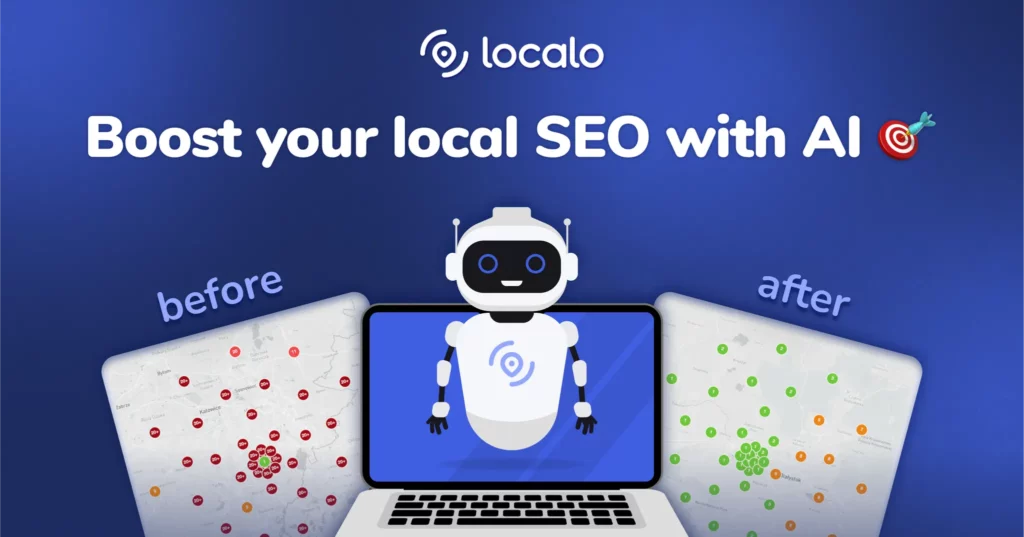
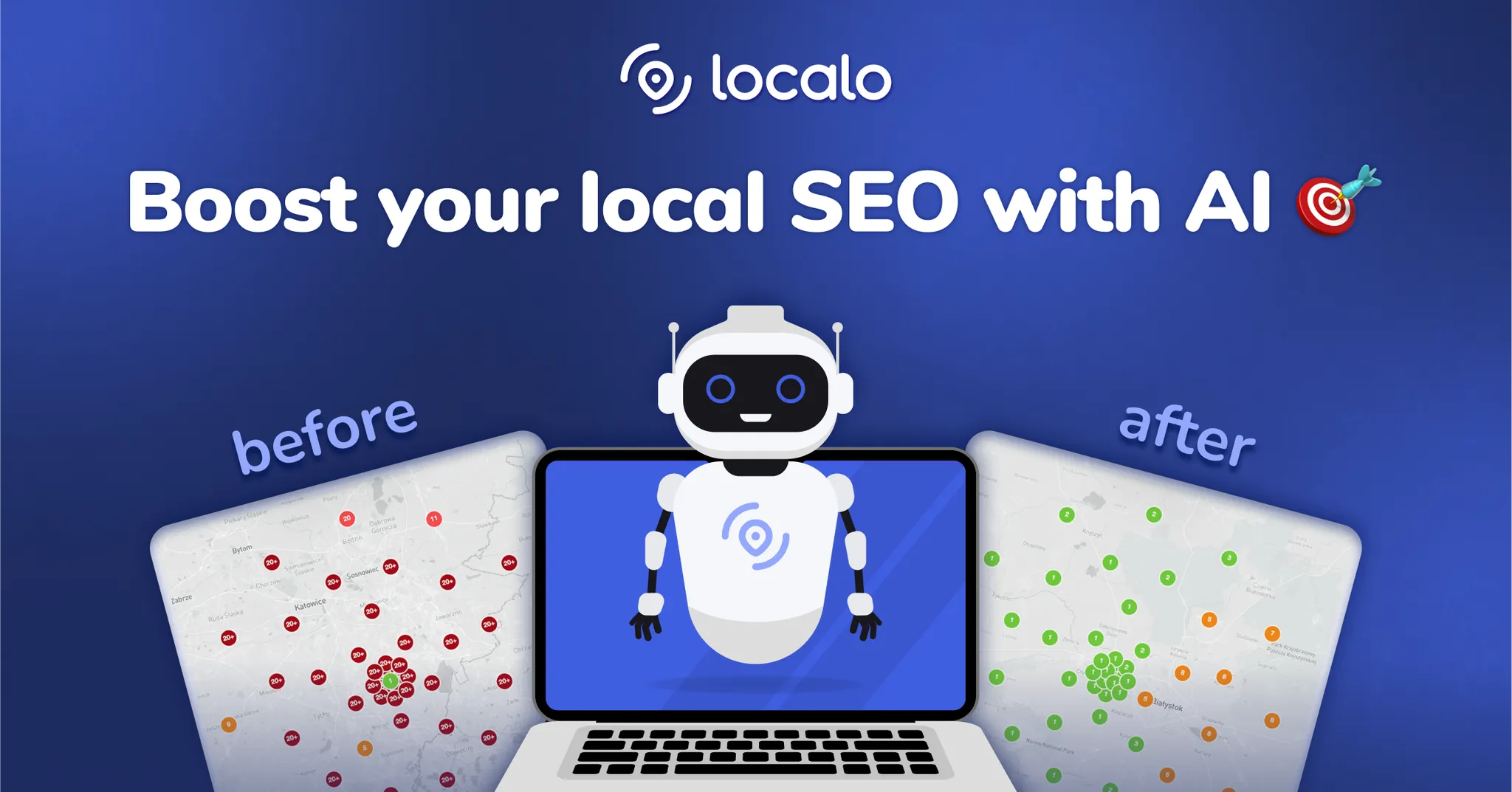
Instead of checking rankings weekly, AI models predict ranking movements based on competitor actions, algorithm updates, and user behavior shifts. Heatmap visualizations show where a business appears within a city grid, identifying weak zones where incremental optimization can capture additional market share. These predictions are tied to conversion probability—not just position—so resources flow to the locations and keywords most likely to produce revenue.
4. Sentiment-Adaptive Review Management
Reviews influence local pack placement more than many realize. AI scans incoming reviews for root cause signals. A sudden cluster of comments mentioning “wait time” triggers an alert to assess staffing during peak hours, while an uptick in positive mentions of “friendly staff” prompts the system to highlight that phrase in the business description. Automated reply suggestions, trained on brand voice but personalized to each reviewer’s specific points, maintain response velocity without sounding robotic.
5. Citation Consistency and Discovery
AI crawls the web to identify new directories, data aggregators, and niche platforms relevant to a business category. It then auto-populates accurate NAP (name, address, phone) data while flagging inconsistencies across existing citations. The system prioritizes fixes based on domain authority and traffic potential, not just total volume, making citation building more strategic.
Benefits That Drive Real Business Results
- Time efficiency: Routine tasks like responding to reviews, updating hours across 50 locations, or generating location-specific meta descriptions happen in minutes instead of weeks.
- Improved accuracy: Real-time monitoring catches duplicate listings, incorrect phone numbers, and map pin errors before they harm rankings.
- Deeper consumer insight: By analyzing search queries that triggered a business appearance, AI reveals unmet needs (e.g., “24-hour emergency plumber with financing” indicating demand for payment plans).
- Scalability: A single marketer can manage hundreds of locations effectively, each with its own competitive landscape and community vernacular.
- Algorithm adaptation: AI Local SEO systems that continuously retrain on fresh ranking data adapt faster to Google updates than manual practitioners relying on blog posts and conference talks.
- Blind trust in automation: Allowing AI to publish content without human review leads to robotic phrasing or references that confuse locals (mentioning a highway exit that closed two years ago).
- Ignoring NAP consistency across AI tools: Using one platform for GBP and another for citations can create synchronization gaps if the tools don’t share a single source of truth.
- Keyword stuffing through AI-generated text: Some NLP models default to dense keyword placement that reads unnaturally. This triggers both user distrust and potential spam filters.
- Neglecting the “near me” intent shift: AI optimized for explicit local keywords (“plumber Dallas”) might miss implicit local queries (“why is my faucet dripping brown water”). Training data must include conversational, question-based phrasing.
- Treating all locations identically: AI can uniqueify content, but only if prompts specify distinct attributes per location. Feeding the same base prompt for 200 cities yields shallow variations that Google may devalue.
Limitations and Risks to Watch Closely

AI Local SEO is powerful, but it is not a magic wand. One major trap is over-automation without human guardrails. An AI might generate location pages that include a landmark now closed or misunderstand local cultural sensitivities, producing content that reads as inauthentic. Google’s guidelines emphasize originality and value; spammy, auto-spun pages risk manual actions.
Data input quality remains critical. If a business supplies wrong addresses or inconsistent category choices, AI amplifies those mistakes globally. Privacy regulations also constrain how much user behavior data can be collected and processed, especially in regions with strict GDPR enforcement. Finally, cost can be a barrier for micro-businesses, though many platforms now offer tiers tailored to single-location operators.
Practical Step-by-Step Guide to Implement AI Local SEO
Step 1: Audit Your Current Local Footprint
Before introducing AI, compile every existing listing across Google, Bing, Apple Maps, Yelp, and industry-specific directories. Tools like Yext or Semrush’s listing management can scrape this, but AI-powered scanners go further, surfacing unverified duplicates or legacy phone numbers still floating online. Export this data into a clean, structured format—AI algorithms perform best when initial inputs are accurate and normalized.
Step 2: Select an AI Local SEO Platform That Matches Your Scale
For multi-location brands, enterprise solutions like BrightLocal’s AI dashboards or Uberall’s CoreX platform integrate directly with GBP APIs and offer predictive recommendations. Single-location businesses might start with AI features inside all-in-one platforms like Local Falcon for rank tracking or ChatGPT-based custom scripts for generating location-specific content. Evaluate based on whether the tool offers real-time monitoring, automated review responses, and a content engine—not just a dashboard with a machine learning label.
Step 3: Integrate First-Party Data Sources
Connect your CRM, point-of-sale system, and call tracking software to the AI engine. This allows the system to correlate rankings with actual booked appointments or store visits, not just impressions. A carpet cleaning company discovering that “rug stain removal” queries spike on Mondays after weekend parties can program AI to boost related posts or ad copy at that exact time.
Step 4: Deploy Hyper-Local Content at Scale
Use AI to generate a content matrix that maps every service, location, and seasonal angle. For example: “emergency HVAC repair in [Neighborhood A]” might have a page that references the air conditioning strain during July’s heatwave, while [Neighborhood B]’s version focuses on furnace maintenance before the first freeze. Train the model using your past customer interactions, service FAQs, and local news sources to ensure each page passes manual review.
Step 5: Automate Review Intelligence
Set up sentiment triggers: 1-star reviews get instant routing to a manager, 5-star reviews mentioning a specific employee trigger an appreciation template that highlights that name. AI can also parse competitor reviews to find their weaknesses—“cleanliness” complaints at a rival gym become a content opportunity to emphasize your facility’s sanitization protocols.
Step 6: Monitor, Refine, and Never Set-and-Forget
Schedule weekly manual spot-checks on AI-generated changes. Look for tone drift, factual inaccuracies, or missed opportunities. Over time, feedback loops train the model to better match your business reality. A pizza shop might initially receive generic AI recommendations about “gluten-free crust,” but after marking those as low priority, the system learns to prioritize “late-night delivery” instead—directly aligning with actual revenue drivers.
Common Mistakes That Undermine AI Local SEO Efforts

Important Notes for Long-Term Success
A vibrant local presence still depends on real-world excellence. A restaurant with slow service and unappealing food will accumulate negative reviews no matter how advanced its AI. Technology amplifies reputation, it doesn’t create it from scratch. Invest equally in service quality, staff training, and physical environment.
Furthermore, keep human empathy at the core of customer interactions. AI should handle pattern recognition and repetitive tasks, but humans must own crisis communication—especially after genuinely bad experiences where a generic AI response would inflame the situation. The most successful blends treat AI as an insight engine and a productivity multiplier, not a replacement for authentic community engagement.
Frequently Asked Questions About AI Local SEO
Does AI Local SEO actually improve Google Maps rankings?
Yes, when implemented correctly. AI improves rankings indirectly by optimizing the signals Google evaluates—keyword relevance in the business profile, review velocity and sentiment, citation accuracy, and behavioral engagement. Analytics from several case studies show businesses using AI-driven GBP optimization achieving up to 40% more direction requests within 90 days compared to manually managed profiles, primarily because the AI continuously tests and refines attributes and descriptions based on click-through data.
Can a small business afford AI Local SEO tools?
Many platforms now offer affordable entry points. Tools like Local Dominator provide AI-assisted rank tracking starting around $30 per month, while others like SOCi target large enterprises. Small businesses can also use ChatGPT’s advanced data analysis features alongside free GBP insights to generate content ideas and review response drafts without dedicated software. The key is starting small—perhaps with automated review management—before expanding to full predictive analytics.
How does AI handle multi-language local SEO for diverse communities?
AI models trained on multilingual datasets can generate location pages and review responses in Spanish, Mandarin, Arabic, and other languages while preserving local intent. The technology goes beyond straight translation by incorporating regional slang, cultural references, and search habits that direct translation misses. A grocery store in a predominantly Vietnamese neighborhood might benefit from AI that understands food-specific terms and holiday patterns unique to that community, improving relevance far beyond a manually translated page.
Will AI eventually replace local SEO professionals?
Not entirely. AI excels at data processing, pattern detection, and repetitive execution. But local SEO strategy still demands human judgment—selecting which neighborhoods to prioritize based on profitability goals, deciding how to position a brand during a local controversy, or interpreting nuanced cultural shifts that raw data can’t capture. The role evolves from a “doer” operating checklists to a “strategist” directing AI outputs toward business objectives and verifying quality.
What’s the biggest misconception about AI in local search?
That it guarantees instant top rankings. AI provides a competitive advantage by removing guesswork and accelerating test-and-learn cycles, but it operates within Google’s ranking frameworks. If a competitor has more genuine reviews, better backlinks, and stronger on-site signals, no A Realistic expectations treat AI as a force multiplier that compounds small, continuous improvements into dominant market positions over time.
Where AI Local SEO Is Headed Next
The convergence of generative AI and local search will deepen. We already see Google’s Search Generative Experience pulling local information into conversational answers, making traditional blue-link results less prominent. Future AI Local SEO strategies will optimize for inclusion in these AI-generated snapshots, requiring even more precise and structured data. Voice search, image-based queries (pointing a phone at a storefront to get instant info), and autonomous delivery vehicle routing will create new local discovery touchpoints that AI can influence.
Proximity-based push notifications triggered by customer location patterns, dynamic pricing reflected in Google Business Profile posts based on local demand spikes, and virtual try-on experiences integrated into maps will blur the line between search and immediate commerce. Businesses that build robust AI infrastructure now—clean data, integrated systems, and a culture of ethical automation—will be best positioned to capitalize on these changes the moment they scale.
Conclusion
AI Local SEO is not a distant concept or a Silicon Valley buzzword. It is a practical, deployable set of technologies already reshaping how plumbers, dentists, coffee shops, and retail chains attract neighborhood customers. By automating data analysis, content personalization, and review intelligence, these tools free local marketers to focus on big-picture growth while ensuring every minutiae of local search algorithm preference is addressed. The businesses that pair machine efficiency with human creativity and genuine service will dominate the maps, the local packs, and the AI-generated answers that increasingly guide consumer decisions. The only true failure is waiting until every competitor has already adopted these capabilities.
Xem thêm:
- Best AI Content Generators: The Ultimate Guide to Tools That Write for You in 2025
- AI SEO Product Schema: The Complete Guide to Structured Data That Ranks
- DeepSeek SEO: The Ultimate Guide to AI-Powered Search Optimization in 2025
- AI SEO CDN Setup: The Complete Guide to Boosting Search Rankings and Site Speed
- AI SEO LLM Brand Visibility: The Complete Playbook for the Generative Search Era
Bài viết cùng chủ đề:

AI SEO SEO Automation with Make: The Complete Workflow Guide

AI SEO SEO Automation with Zapier: The Complete Workflow Guide

AI SEO SEO Automation with n8n: The Complete Workflow Guide
AI SEO SEO Automation with Gemini: The Complete Guide to Scaling Organic Growth

AI SEO SEO Automation with Claude: The Complete Guide to Scaling Content in 2025

AI SEO SEO Automation with ChatGPT: The Complete Playbook for 2025

AI SEO & SEO Automation for Affiliate Sites: The 2025 Playbook for Passive Income Growth
AI SEO & SEO Automation for Bloggers: The Complete Guide to Scaling Your Content

AI SEO & SEO Automation for Agencies: The Complete 2025 Playbook

AI SEO and SEO Automation for Ecommerce: The Complete Playbook for 2025

AI SEO & SEO Automation for WordPress: The Complete Playbook for 2025
AI SEO SEO Automation Strategy: The Complete Playbook for 2025

Mastering the AI SEO SEO Automation Process: A Complete Guide to Scaling Organic Growth
AI SEO SEO Automation System: The Complete Guide to Scaling Organic Growth in 2025
AI SEO SEO Automation Platform: The Complete Guide to Scaling Organic Growth in 2025
AI SEO SEO Automation Software: The Complete Guide to Scaling Organic Growth in 2025















