
No products in the cart.
AI SEO Product Schema: The Complete Guide to Structured Data That Ranks

10
Aug
Aug
In the rapidly shifting landscape of search engine optimization, the fusion of artificial intelligence and structured data has created a new frontier. The term “AI SEO Product Schema” represents the strategic use of schema markup, enhanced by machine learning insights, to help search engines understand product details with unprecedented accuracy. This guide explores how businesses can leverage this powerful combination to improve visibility, earn rich results, and future-proof their e-commerce presence.
What Is AI SEO Product Schema?

AI SEO Product Schema refers to the implementation of structured data (specifically Schema.org vocabulary) on product pages, optimized and refined using artificial intelligence tools. While traditional schema markup tells search engines what a product is, AI-enhanced schema goes further by predicting user intent, optimizing attribute selection, and dynamically updating markup based on performance data.
At its core, this approach combines two distinct technologies. The first is the standardized vocabulary of Schema.org, which includes properties like price, availability, rating, and brand. The second is the analytical power of AI, which processes search query patterns, click-through rates, and user behavior to determine which schema properties matter most for ranking and visibility.
Why Product Schema Matters for SEO in 2025
Search engines have evolved from simple keyword matchers to sophisticated semantic understanding systems. Google’s algorithms, particularly with the integration of machine learning models like RankBrain and MUM, prioritize content that provides clear, structured signals. Product schema serves as a direct communication channel between your website and these algorithms.
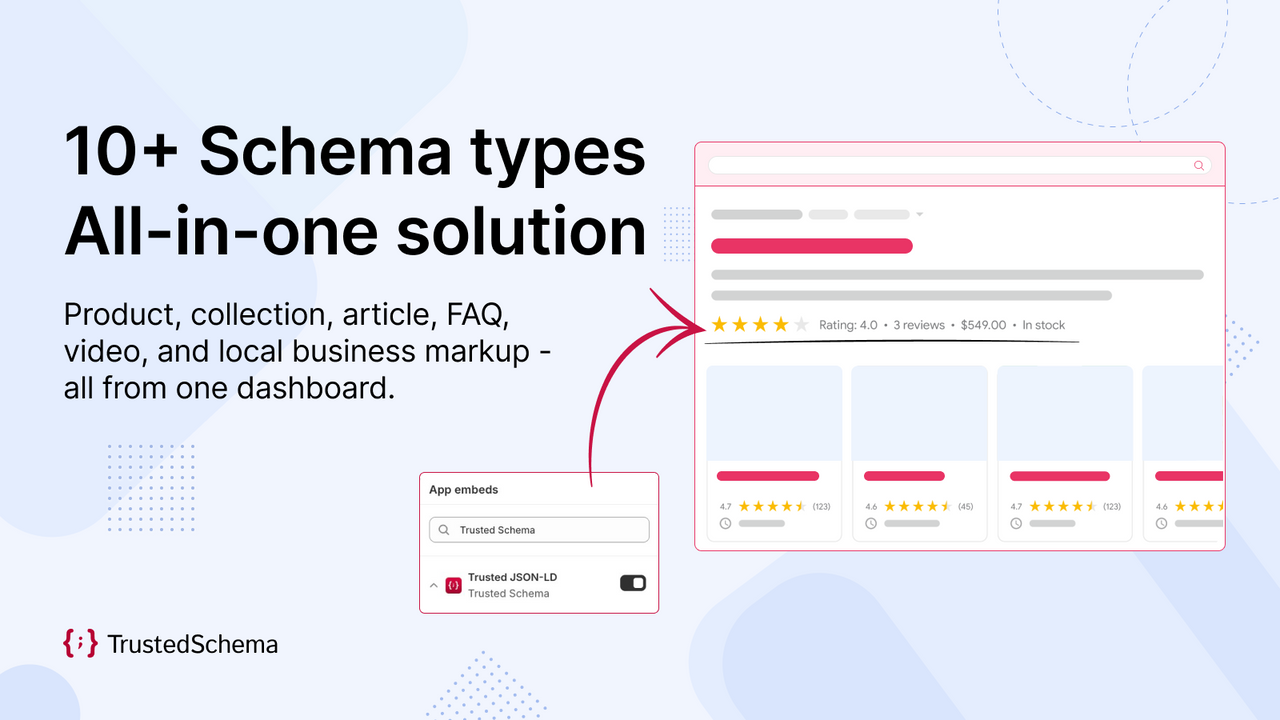
When implemented correctly, product schema enables your listings to appear with enhanced features in search results. These include star ratings, price ranges, availability status, and even image carousels. These visual elements dramatically increase the likelihood of user engagement, as they provide immediate value without requiring a click.
Data from various e-commerce studies indicates that pages with rich snippets can experience click-through rate improvements of 20% to 40% compared to standard listings. For competitive product categories, this advantage often translates directly into increased sales and revenue.
Core Components of AI-Driven Product Schema

Understanding the building blocks of effective product schema is essential for proper implementation. The following components form the foundation of any robust structured data strategy.
Essential Product Properties
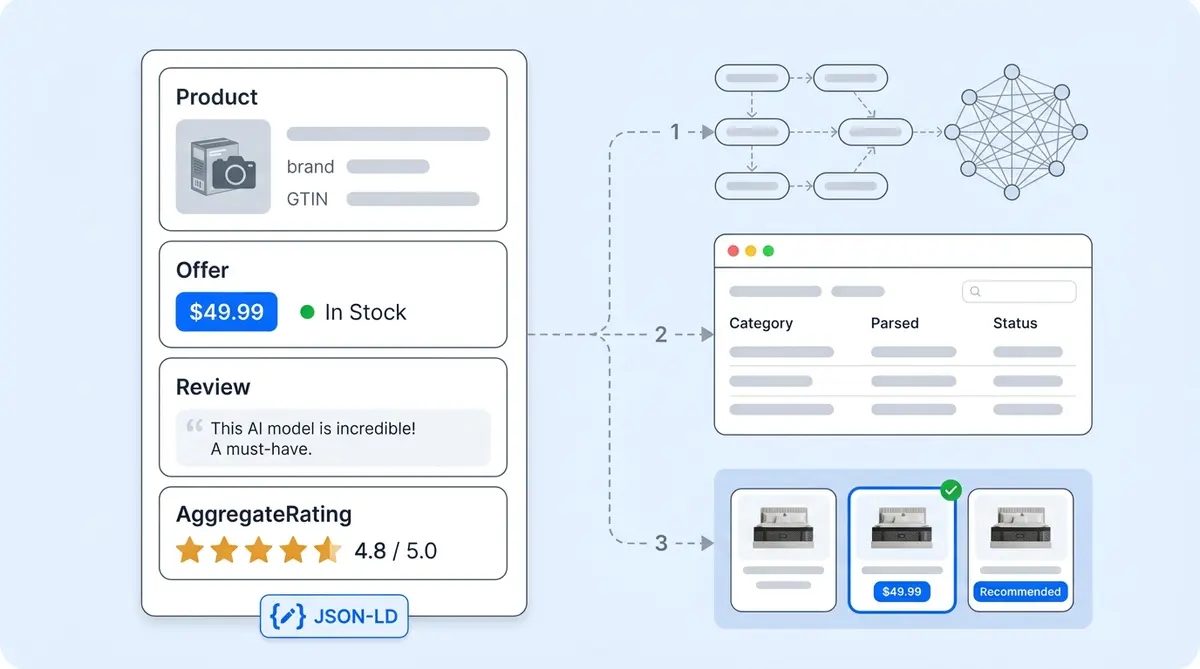
Every product schema must include certain core properties to be considered valid by search engines. The most critical include the product name, image, description, brand, and offers. The offers property itself contains sub-properties such as price, price currency, and availability.
Beyond these basics, advanced properties like aggregateRating, review, and sku provide additional context. AI tools can analyze historical performance data to recommend which optional properties to prioritize for specific product types. For instance, a clothing retailer might benefit more from size and color attributes, while an electronics store should emphasize technical specifications.
Dynamic Attribute Selection
Traditional schema implementation often involves static templates where every product gets the same set of attributes. AI-driven approaches change this paradigm by dynamically selecting attributes based on the product category, search demand, and competitive landscape.
For example, an AI system might identify that searches for “wireless headphones” frequently include queries about battery life and noise cancellation. The system then automatically ensures these attributes are prominently featured in the schema markup for relevant products, increasing the likelihood of matching long-tail search queries.
How AI Enhances Product Schema Implementation
The integration of artificial intelligence into schema management goes beyond simple automation. It involves continuous learning and optimization cycles that improve performance over time.
Automated Schema Generation
AI-powered SEO platforms can automatically generate schema markup for thousands of products simultaneously. These tools analyze product data feeds, identify the appropriate schema type, and generate valid JSON-LD code without manual intervention. This capability is particularly valuable for large e-commerce operations with extensive product catalogs.
Machine learning algorithms can also detect inconsistencies or errors in existing markup. They flag missing required fields, incorrect data types, and formatting issues that might prevent rich result eligibility. This proactive error detection saves significant time compared to manual audits.
Performance-Based Optimization
One of the most powerful applications of AI in schema management is the ability to correlate schema implementation with search performance metrics. AI systems can track which products with specific schema attributes achieve higher rankings and better click-through rates.
These insights enable continuous refinement. If products with review snippets consistently outperform those without, the AI system prioritizes review markup for new products. If certain attribute combinations correlate with featured snippet placement, those combinations become the standard for future implementations.
Benefits of Implementing AI SEO Product Schema
The advantages of combining AI insights with product schema extend across multiple dimensions of search performance and user experience.
Enhanced Search Visibility
Structured data helps search engines understand your content more deeply, which can lead to better indexing and ranking. Products with comprehensive schema markup are more likely to appear in relevant search results, including voice search responses and AI-generated answer boxes.
Rich Results and Higher CTR
Rich snippets display additional information directly in search results. Product schema enables the display of prices, ratings, availability, and shipping information. This visual richness captures user attention and communicates value propositions before the click.
Voice Search Optimization
Voice assistants rely heavily on structured data to provide concise answers. When users ask about product specifications, prices, or availability, assistants pull information from schema markup. Products with complete, accurate schema are more likely to be featured in voice search responses.
Competitive Advantage
Despite the proven benefits, many e-commerce sites still lack proper schema implementation. By adopting AI-enhanced schema strategies, businesses can gain a significant edge over competitors who have not yet embraced this technology.
Limitations and Challenges
While the benefits are substantial, implementing AI SEO Product Schema comes with certain challenges that require careful consideration.
Technical Complexity
Proper schema implementation requires technical knowledge of JSON-LD syntax, Schema.org vocabulary, and Google’s rich result guidelines. The learning curve can be steep for small business owners without technical backgrounds.
Data Accuracy Requirements
Search engines penalize websites that provide misleading or inaccurate structured data. Maintaining accurate pricing, availability, and rating information across all products requires robust data management systems. AI tools can help, but human oversight remains essential.
Algorithm Updates
Search engine algorithms and rich result guidelines evolve regularly. Schema implementations that work today might require adjustments tomorrow. Staying current with these changes demands ongoing attention and adaptation.
AI SEO Product Schema vs. Traditional Schema
Understanding the differences between traditional and AI-enhanced approaches helps clarify the value proposition of the newer methodology.
| Aspect | Traditional Schema | AI-Enhanced Schema |
|---|---|---|
| Implementation Method | Manual coding or static templates | Automated generation with ML insights |
| Attribute Selection | Fixed set for all products | Dynamic based on product and intent |
| Optimization Cycle | Periodic manual review | Continuous automated refinement |
| Error Detection | Manual audits and testing tools | Proactive AI-powered monitoring |
| Scalability | Difficult for large catalogs | Easily scales to thousands of products |
| Performance Insights | Limited correlation analysis | Deep data-driven performance tracking |
The table illustrates that AI-enhanced schema offers significant advantages in scalability and continuous optimization. However, traditional methods remain viable for small websites with limited product catalogs and technical resources.
Practical Implementation Guide
Implementing AI SEO Product Schema requires a systematic approach that combines technical execution with strategic thinking.
Step 1: Audit Your Current Schema Status
Begin by assessing whether your product pages currently have any structured data. Use Google’s Rich Results Test tool to check individual URLs. For larger sites, crawl your entire domain using SEO auditing software to identify pages with missing or incomplete schema.
Document the current state of your schema implementation, including which properties are present, which are missing, and any errors that appear. This baseline assessment guides your optimization priorities.
Step 2: Choose the Right AI SEO Tools
Several platforms offer AI-powered schema generation and optimization capabilities. Popular options include Merkle Schema Generator, TechnicalSEO.com tools, and enterprise platforms like BrightEdge or Botify. Evaluate tools based on your catalog size, technical expertise, and budget.
Look for tools that offer automated validation, performance tracking, and integration with your existing e-commerce platform. The best solutions provide actionable recommendations rather than just raw data.
Step 3: Structure Your Product Data
AI tools are only as effective as the data they process. Ensure your product information is organized in a structured format, such as a CSV feed or API endpoint. Include all relevant attributes: name, description, price, availability, brand, SKU, images, and any category-specific properties.
Clean data is essential. Remove duplicates, standardize formats, and ensure consistency across all product entries. Inconsistent data leads to schema errors and missed rich result opportunities.
Step 4: Generate and Implement Schema
Using your chosen AI tool, generate JSON-LD schema for your product pages. The tool should automatically select appropriate properties based on your product data and industry best practices. Review the generated code to ensure accuracy before implementation.
Implement the schema by adding the JSON-LD script to your product page templates. Most e-commerce platforms like Shopify, WooCommerce, and Magento offer plugins or built-in options for schema integration. For custom websites, work with your development team to ensure proper placement.
Step 5: Validate and Monitor Performance
After implementation, validate your schema using Google’s Rich Results Test and the Schema Markup Validator. These tools identify any errors or warnings that might prevent rich result eligibility.
Monitor your search performance using Google Search Console. Track impressions, clicks, and average position for pages with schema markup. Compare these metrics against pages without schema to measure the impact of your implementation.
Common Mistakes and How to Avoid Them

Many businesses make avoidable errors when implementing product schema. Recognizing these pitfalls helps ensure successful outcomes.
Using Incorrect Schema Types
Some websites use generic “Product” schema when more specific types would be more appropriate. For example, a book should use “Book” schema, while a recipe should use “Recipe” schema. Using the wrong type confuses search engines and reduces the chances of rich result eligibility.
Research the specific schema types relevant to your products. The Schema.org website provides comprehensive documentation of available types and their properties.
Inconsistent Pricing Information
Schema markup that displays a different price than what appears on the page creates a poor user experience and can lead to manual penalties. Ensure your schema dynamically pulls pricing data from your database rather than using hardcoded values.
For products with variable pricing based on options, use the “offers” property with multiple offer entries or specify price ranges appropriately.
Ignoring Review and Rating Data
Reviews and ratings are among the most impactful schema properties for click-through rates. Yet many sites fail to include this markup. If you collect customer reviews, ensure they are properly marked up with aggregateRating and review properties.
Be cautious about fake or unverifiable reviews. Google has strict guidelines about review schema, and violations can result in severe penalties.
Neglecting Mobile Optimization
Schema markup must work seamlessly on mobile devices. Ensure your JSON-LD implementation does not slow down page load times or interfere with mobile rendering. Use lazy loading for schema scripts where appropriate.
Important Notes for Long-Term Success
AI SEO Product Schema is not a set-and-forget strategy. Continuous attention and adaptation are required to maintain and improve results.
Stay informed about updates to Schema.org vocabulary and Google’s rich result guidelines. Subscribe to official Google Search Central blog updates and participate in SEO communities to learn about emerging trends.
Regularly audit your schema implementation to identify and fix errors. Use automated monitoring tools that alert you to issues before they impact your search performance.
Consider the user experience beyond search engines. Schema markup should enhance, not replace, high-quality product content. Detailed descriptions, clear images, and honest reviews remain essential for conversion optimization.
Frequently Asked Questions
What is the difference between schema markup and structured data?
Structured data is any data that is organized in a predefined format, such as a spreadsheet or database. Schema markup is a specific vocabulary of structured data tags used to annotate web content for search engines. In the context of SEO, the terms are often used interchangeably, but schema specifically refers to the Schema.org vocabulary.
How long does it take to see results from product schema?
Results vary based on your website’s authority, competition, and the accuracy of your implementation. Some sites see improvements within a few weeks, while others may take several months. Google must crawl and index your pages with the new schema before rich results can appear.
Can AI SEO Product Schema work for small e-commerce sites?
Yes, small sites can benefit significantly from AI-enhanced schema. Many AI tools offer affordable plans or free tiers suitable for smaller catalogs. The key is to start with accurate, complete schema for your most important products and expand from there.
Does product schema guarantee rich snippets?
No, implementing schema does not guarantee rich snippets. Google decides whether to display rich results based on its algorithms and quality guidelines. Schema increases your chances, but content quality, page experience, and relevance also play crucial roles.
What is JSON-LD and why is it recommended?
JSON-LD (JavaScript Object Notation for Linked Data) is a format for encoding linked data using JSON syntax. Google recommends JSON-LD for structured data because it is easy to implement, does not interfere with HTML rendering, and can be dynamically generated by server-side scripts.
Conclusion
AI SEO Product Schema represents a significant evolution in how e-commerce websites communicate with search engines. By combining the precision of structured data with the predictive power of artificial intelligence, businesses can achieve superior visibility, higher click-through rates, and ultimately, increased revenue.
The implementation journey requires technical diligence, strategic thinking, and ongoing optimization. Start with a thorough audit of your current schema status, invest in the right AI tools, and commit to continuous improvement. The competitive advantages gained through proper schema implementation are substantial and increasingly essential in the AI-driven search landscape.
As search engines continue to evolve toward greater semantic understanding, the importance of structured data will only grow. Businesses that embrace AI-enhanced schema today position themselves for success in the search landscape of tomorrow.
Xem thêm:
- AI SEO Link Relevance: The Complete Guide to Modern Link Building
- AI SEO SERP Tracking: The Complete Guide to Smarter Rank Monitoring in 2025
- WP Trove Content Generator: The Complete Guide to Automating Your WordPress Publishing
- AI SEO URL Structure: The Complete Guide to Optimizing for Machine Learning Search Engines
- AI SEO H3 Optimization: The Complete Guide to Structuring Content for AI Search
Bài viết cùng chủ đề:

AI SEO SEO Automation with Make: The Complete Workflow Guide

AI SEO SEO Automation with Zapier: The Complete Workflow Guide

AI SEO SEO Automation with n8n: The Complete Workflow Guide
AI SEO SEO Automation with Gemini: The Complete Guide to Scaling Organic Growth

AI SEO SEO Automation with Claude: The Complete Guide to Scaling Content in 2025

AI SEO SEO Automation with ChatGPT: The Complete Playbook for 2025

AI SEO & SEO Automation for Affiliate Sites: The 2025 Playbook for Passive Income Growth
AI SEO & SEO Automation for Bloggers: The Complete Guide to Scaling Your Content

AI SEO & SEO Automation for Agencies: The Complete 2025 Playbook

AI SEO and SEO Automation for Ecommerce: The Complete Playbook for 2025

AI SEO & SEO Automation for WordPress: The Complete Playbook for 2025
AI SEO SEO Automation Strategy: The Complete Playbook for 2025

Mastering the AI SEO SEO Automation Process: A Complete Guide to Scaling Organic Growth
AI SEO SEO Automation System: The Complete Guide to Scaling Organic Growth in 2025
AI SEO SEO Automation Platform: The Complete Guide to Scaling Organic Growth in 2025
AI SEO SEO Automation Software: The Complete Guide to Scaling Organic Growth in 2025















