
No products in the cart.
Best AI Content Generators: The Ultimate Guide to Tools That Write for You in 2025
29
Jul
Jul
Businesses and creators are turning to the best AI content generators to produce blog posts, social media captions, ad copy, and email sequences at unprecedented speed. The market for these tools has exploded, offering solutions that range from quick brainstorming assistants to full‑fledged writing partners that understand tone, audience, and brand guidelines. With the right AI content generator, a team can cut content production time by up to 70 % while maintaining a steady publishing schedule. This guide dissects what makes an AI writing tool genuinely effective, compares the top contenders, and shares the exact strategies used by content marketers to get original, high‑ranking output without sacrificing quality.
What Are AI Content Generators?

An AI content generator is a software application that uses large language models and natural language processing to produce written text. Trained on vast corpora of books, articles, websites and code, these models predict the most probable next word in a sequence, enabling them to compose coherent paragraphs, headlines, meta descriptions and even full long‑form articles. The underlying technology has evolved from simple autocomplete to transformer‑based architectures such as GPT‑4, Claude and Gemini, which can now understand context, follow complex instructions and mimic different writing styles.
At their core, AI content generators take a prompt—a sentence, a topic outline or a set of keywords—and generate text that matches the request. Advanced platforms add layers of user control: tone sliders, brand voice memory, SEO scoring and integration with tools like Surfer SEO or SEMrush. The result is a workspace where a human editor collaborates with the machine, refining and polishing the output rather than staring at a blank page.
Types of AI Content Generators
Not all AI writing tools serve the same purpose. Understanding the segmentation helps you pick the right assistant for your workflow.
Long‑Form AI Writers
These tools specialise in producing in‑depth articles, whitepapers, ebooks and reports. They offer guided workflows where you input a title or brief and receive a structured draft within minutes. Many come with built‑in research capabilities and the ability to expand bullet points into full paragraphs. Jasper, Writesonic and Byword are prominent examples in this category.
Short‑Form Copy Assistants
Designed for punchy, high‑impact copy, these generators excel at headlines, ad copy, product descriptions, social media posts and subject lines. They often feature templates for AIDA, PAS and other copywriting frameworks. Copy.ai and Rytr are widely used for short‑form tasks because they keep the interface simple and the output focused.
SEO‑Integrated Content Platforms
These generators go beyond writing by embedding SEO recommendations directly into the editor. They analyse top‑ranking pages for a keyword, suggest semantic LSI terms, and grade the readability and optimisation of your AI‑generated text. Surfer AI, Frase and KoalaWriter are leaders here, blending content generation with real‑time SEO guidance.
Multimodal and Workflow‑First Generators
A growing number of platforms combine text generation with image creation, video scripts, or entire campaign workflows. Notion AI, Canva’s Magic Write and HubSpot’s Content Assistant are integrated into larger ecosystems, allowing seamless content production without switching tabs. They are ideal for teams that already operate inside those environments.
How to Choose the Best AI Content Generator
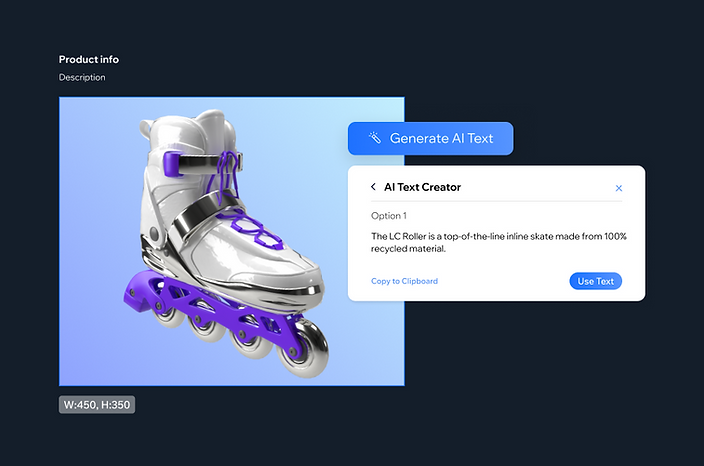
Selecting the right tool depends on your primary content goals. A social media manager needs different features than a technical blog editor. Before committing to a subscription, evaluate these dimensions:
- Use case alignment – Does the tool specialise in your content format (landing pages, product descriptions, thought leadership articles)?
- Output quality and creativity – Test the AI with a complex prompt. Does it sound human, or does it rely on generic filler?
- Tone and brand voice controls – Can you save custom style guides so every piece sounds consistently like your company?
- SEO and research integrations – Does it natively support keyword clustering, content briefs, and competitor analysis?
- Collaboration features – How many team members can use it, and does it have approval workflows?
- Pricing model – Unlimited word plans versus credit‑based systems; factor in your monthly output volume.
- Plagiarism and fact‑checking – Look for built‑in plagiarism checkers and the ability to ground generations in cited sources.
- Publishing without human editing – AI output often contains repetitive phrasing, awkward transitions, or subtle factual errors. Always allocate time for a thorough edit, ideally by someone with subject‑matter expertise.
- Ignoring the prompt – A vague prompt like “write an article about keto diet” yields a generic result. Use the prompt to specify audience, tone, word count, structure and unique angles. Treat prompt writing as your primary creative task.
- Over‑optimising for AI detection – Obsessively running text through AI detectors leads to unnatural rewrites. Google cares about helpfulness, not detection scores. Focus on adding first‑hand experience and data that no AI could fabricate.
- Neglecting E-E-A-T signals – For YMYL (Your Money or Your Life) topics, include author bios, cite reputable sources, and link to original research. AI generators can draft these elements, but they must be verified and enriched by a human.
- Using the same tool for everything – A tool excellent for ad copy may be mediocre at technical whitepapers. Maintain a small stack of specialised generators rather than forcing one platform to do it all.
Benefits of Using the Best AI Content Generators
The adoption of AI writing tools is not just a fad. Organisations that deploy them correctly report measurable improvements across multiple fronts.
Dramatic Increase in Production Speed
A 2,000‑word article that might take a human writer six hours can be drafted in 20 minutes with an AI generator. This speed frees up teams to focus on strategy, editing and promotion rather than getting stuck on the first draft. Marketing agencies routinely use generators to scale content for dozens of clients without hiring extra full‑time writers.
Consistent Brand Messaging at Scale
When you upload a brand voice document to a tool like Jasper or Anyword, every piece of generated copy aligns with your style guidelines. Whether you produce ten blog posts or a hundred product descriptions, the tone, terminology and sentence structure remain uniform—something hard to achieve with a team of freelance writers.
Overcoming Writer’s Block
The blank‑page syndrome is a real productivity killer. AI content generators act as an always‑on brainstorming partner, offering dozens of headline variations, intro paragraphs or angle suggestions in seconds. For content creators who produce daily material, this capability alone justifies the cost.
Multilingual Content Output
Many generators now support over 25 languages, enabling brands to enter new markets without hiring native writers for every locale. The quality of translation and localisation has improved so much that minor post‑editing by a bilingual reviewer is often sufficient.
Limitations and Challenges of AI Content Generators

Despite their power, these tools are not a silver bullet. Using them effectively requires an honest appraisal of their shortcomings.
Factual Hallucinations and Outdated Knowledge
Language models can confidently state incorrect statistics, invent quotes or reference events that never happened. Relying on an AI generator without rigorous fact‑checking can damage your brand’s credibility. Tools with live internet access, like Writesonic or the ChatGPT browser mode, mitigate this somewhat, but human oversight remains non‑negotiable.
Generic, Fluffy Prose
Without a well‑crafted prompt, AI tends to produce content that sounds pleasant but says nothing. The typical “In today’s fast‑paced digital world…” intro is a hallmark of a prompt that lacked specificity. The best AI content generators in the world still need a human editor to inject original insights, data and personal stories.
Potential SEO Risks
Google does not penalise AI content per se, but it rewards helpful, people‑first material. If you publish raw AI output without adding unique value, your pages risk being categorised as low‑quality automated content. This means AI generators must be used as drafting accelerators, not as end‑to‑end publishers.
Limited Creativity and Strategic Thinking
AI can remix existing information but struggles with true novelty. It cannot draw on lived experience or develop a contrarian thought‑leadership angle unless you explicitly prompt it. Strategic content—pieces that define a category or win backlinks—still needs heavy human input alongside the generator.
Comparing the Best AI Content Generators
The table below highlights how the most talked‑about platforms stack up in real‑world usage. The evaluation considers writing quality, ease of use, SEO capabilities and overall value for content teams.
| Tool | Best For | Key Features | Pricing (Starting) | Tone of Voice |
|---|---|---|---|---|
| Jasper | Enterprise teams, brand‑consistent long‑form | Brand voice, campaign mode, SEO mode, plagiarism checker | $49/month | Highly configurable |
| Copy.ai | Solo marketers, short‑form copy | Workflows, infobase, 90+ templates, chat interface | Free / $36/month | Friendly, adaptable |
| Writesonic | SEO articles, agencies | AI Article Writer 5.0, factual article mode, SonicEditor | $19/month | Clean, professional |
| ChatGPT / GPT‑4 | Versatile brainstorming, research | Custom GPTs, code interpreter, file uploads, internet access | Free / $20/month | Requires prompt engineering |
| Claude 2 / 3 | Long‑context documents, nuanced writing | 200K context window, file analysis, natural prose style | $20/month (Pro) | Thoughtful, detailed |
| Rytr | Budget‑conscious beginners | Use case templates, built‑in plagiarism checker, tone presets | Free / $9/month | Casual, engaging |
| KoalaWriter | SEO‑first bloggers | One‑click article from SERP analysis, real‑time data, internal linking | $9/month | Informative, SEO‑friendly |
In-Depth Reviews of the Best AI Content Generators
Digging beyond the feature lists reveals the true strengths and ideal use cases for each platform.
Jasper: The Enterprise Standard
Jasper positions itself as a complete content creation suite for teams that care deeply about brand consistency. Its Knowledge Base feature lets you upload style guides, product fact sheets and company documents, which the AI then references in every generation. Campaigns tie together blog posts, email sequences and social snippets under one creative brief. The SEO mode integrates with Surfer SEO to optimise content as you write. Jasper’s output is reliably fluent and requires less structural editing than many competitors. The downside is the price tag—agencies and enterprises will see ROI, but freelancers may find it steep.
Copy.ai: The Short‑Form Powerhouse
Copy.ai has reinvented itself as a workflow‑driven platform. Instead of just spitting out text, it guides users through sequences—for example, extracting key points from a sales call and turning them into a case study skeleton. Its Infobase acts like a personal knowledge hub, allowing the AI to pull facts about your product without you retyping them every time. The free tier is generous enough for evaluating whether it fits your stack. Best suited for social media managers, email marketers and anyone whose daily grind involves dozens of short copy pieces.
Writesonic: SEO Articles Made Fast
Writesonic’s AI Article Writer 5.0 competes directly with human writers on informational search queries. The workflow asks for a target keyword, analyses the top 20 Google results, and delivers a complete draft that includes LSI keywords, a logical heading structure, and even stock image suggestions. The factual article mode forces the AI to include citations, reducing hallucinations. For affiliate marketers and niche site operators who need volume without sacrificing topical coverage, Writesonic often delivers the best balance of speed and quality.
ChatGPT and Claude: The Unstructured Workhorses
OpenAI’s ChatGPT and Anthropic’s Claude are not pure content generators but general‑purpose assistants that excel when you need creative flexibility. With custom GPTs, you can build a specialised editor that outputs in your exact format. Claude’s immense context window (up to 200,000 tokens) allows you to feed an entire competitor analysis PDF and ask it to draft an opinion piece in your style. The trade‑off is that they lack built‑in SEO tooling, so you must pair them with external optimisation tools. For experienced writers who treat AI as a co‑author rather than a magic button, these are among the best AI content generators available.
Rytr: Quality on a Budget
Rytr proves that powerful AI writing does not need to cost much. For $9 a month you get unlimited generations, a clean interface and tone settings that range from “convincing” to “passionate.” The built‑in plagiarism checker is a welcome addition at this price point. While the output can feel slightly generic if you rely on its default prompts, a few minutes of manual tuning turns Rytr into a capable blogging sidekick. It is an excellent entry point for freelancers testing the waters of AI‑assisted writing.
Common Mistakes When Using AI Content Generators and How to Avoid Them
Even powerful tools can produce poor results when misused. Recognising these pitfalls keeps your content strategy intact.
Important Notes for Maximising the Best AI Content Generators
A few operational habits separate the teams that get stellar ROI from those that complain about robotic text.
First, treat the AI as a junior writer. Give it a detailed brief, review its work, and provide feedback. Many platforms let you rate output quality; use that consistently to train the model toward your preferences. Second, build a swipe file of your best‑performing human‑written content. Paste those examples into the generator’s context window so the AI learns your cadence, hook styles and vocabulary. Third, integrate the generator into your tech stack. Connect it to WordPress, Google Docs, or your CMS via native integrations or Zapier so that content moves from draft to published without friction. Finally, never rely on the AI for legal or medical accuracy. In regulated industries, have compliance experts review every word the machine produces.
Frequently Asked Questions About AI Content Generators
What is the best AI content generator for blogging?
For long‑form blogging with SEO features, Jasper and Writesonic lead the pack. Jasper offers brand voice consistency and Surfer SEO integration, while Writesonic’s AI Article Writer generates complete, fact‑enriched drafts from a single keyword. Solo bloggers on a budget often prefer KoalaWriter for its one‑click SERP‑informed articles.
Can Google detect AI‑generated content?
Google can identify patterns typical of AI writing, but its algorithms do not penalise content solely for being AI‑generated. The company evaluates content based on experience, expertise, authoritativeness, and trustworthiness. As long as the output provides original value, includes accurate information, and demonstrates human oversight, it can rank well regardless of how the first draft was produced.
Are free AI content generators worth using?
Free plans from tools like Rytr, Copy.ai and ChatGPT offer genuinely useful functionality for low‑volume tasks. They are excellent for learning prompt engineering and testing whether AI fits your workflow. However, free tiers usually come with word limits, watermarks, or reduced output quality compared to paid versions. For business‑critical content, investing in a paid plan almost always pays off in speed and polish.
How do I make AI write in my brand’s voice?
Most advanced generators feature brand voice settings where you upload style guidelines, past articles, or product descriptions. The AI then mimics your tone, preferred vocabulary, and sentence length. If the tool lacks this feature, you can achieve similar results by including a sample of your writing in the prompt and explicitly instructing the model to match that style for every generation.
Do I need to cite AI as the author?
T Google’s guidelines encourage clear labelling only if the content would be considered misleading otherwise. Having a real human listed as the author or editor—along with their credentials—strengthens your E-E-A-T profile far more than an AI byline ever could.
Conclusion
The best AI content generators have moved beyond simple autocomplete templates. They are strategic allies that compress research time, enforce brand consistency, and allow lean teams to compete with larger publishers. Tools like Jasper, Writesonic, and Copy.ai each excel in different corners of the content ecosystem, while generalist assistants like ChatGPT and Claude offer unmatched flexibility for those willing to invest in prompt engineering. The common thread among successful users is a discipline of human oversight: the machine accelerates the draft, but the human injects experience, fact‑checks the claims, and shapes the narrative. By pairing the right generator with a deliberate editing process, your content can scale without ever sounding automated.
Xem thêm:
- AI SEO Embeddings: The Complete Guide to Semantic Search Optimization
- AI Metadata Generator: The Ultimate Tool for Streamlining Digital Asset Management
- AI SEO Content Quality: The Complete Guide to Publishing Content That Ranks in 2025
- AI SEO Attribution: The Complete Guide to Measuring What Actually Drives Rankings
- AI SEO No Code Automation: The Complete Guide to Scaling Organic Growth Without Developers
Bài viết cùng chủ đề:

AI SEO SEO Automation with Make: The Complete Workflow Guide

AI SEO SEO Automation with Zapier: The Complete Workflow Guide

AI SEO SEO Automation with n8n: The Complete Workflow Guide
AI SEO SEO Automation with Gemini: The Complete Guide to Scaling Organic Growth

AI SEO SEO Automation with Claude: The Complete Guide to Scaling Content in 2025

AI SEO SEO Automation with ChatGPT: The Complete Playbook for 2025

AI SEO & SEO Automation for Affiliate Sites: The 2025 Playbook for Passive Income Growth
AI SEO & SEO Automation for Bloggers: The Complete Guide to Scaling Your Content

AI SEO & SEO Automation for Agencies: The Complete 2025 Playbook

AI SEO and SEO Automation for Ecommerce: The Complete Playbook for 2025

AI SEO & SEO Automation for WordPress: The Complete Playbook for 2025
AI SEO SEO Automation Strategy: The Complete Playbook for 2025

Mastering the AI SEO SEO Automation Process: A Complete Guide to Scaling Organic Growth
AI SEO SEO Automation System: The Complete Guide to Scaling Organic Growth in 2025
AI SEO SEO Automation Platform: The Complete Guide to Scaling Organic Growth in 2025
AI SEO SEO Automation Software: The Complete Guide to Scaling Organic Growth in 2025















