
No products in the cart.
AI Localization: Unlocking Global Markets with Intelligent Language Adaptation
29
Jul
Jul
In an era where digital experiences cross borders in milliseconds, global businesses face a relentless demand to speak the language of their customers—not just in words, but in culture, context, and emotion. Traditional translation methods often buckle under the speed and scale required. AI localization has emerged as the definitive solution, fusing artificial intelligence with linguistic expertise to transform how brands connect with audiences worldwide. By automating and refining the adaptation process, AI localization slashes turnaround times, preserves brand voice, and delivers hyper-relevant content that resonates deeply in every target market. This authoritative guide unpacks every layer of AI localization, from core technologies to real‑world applications, helping you harness its full potential.
What Exactly Is AI Localization?
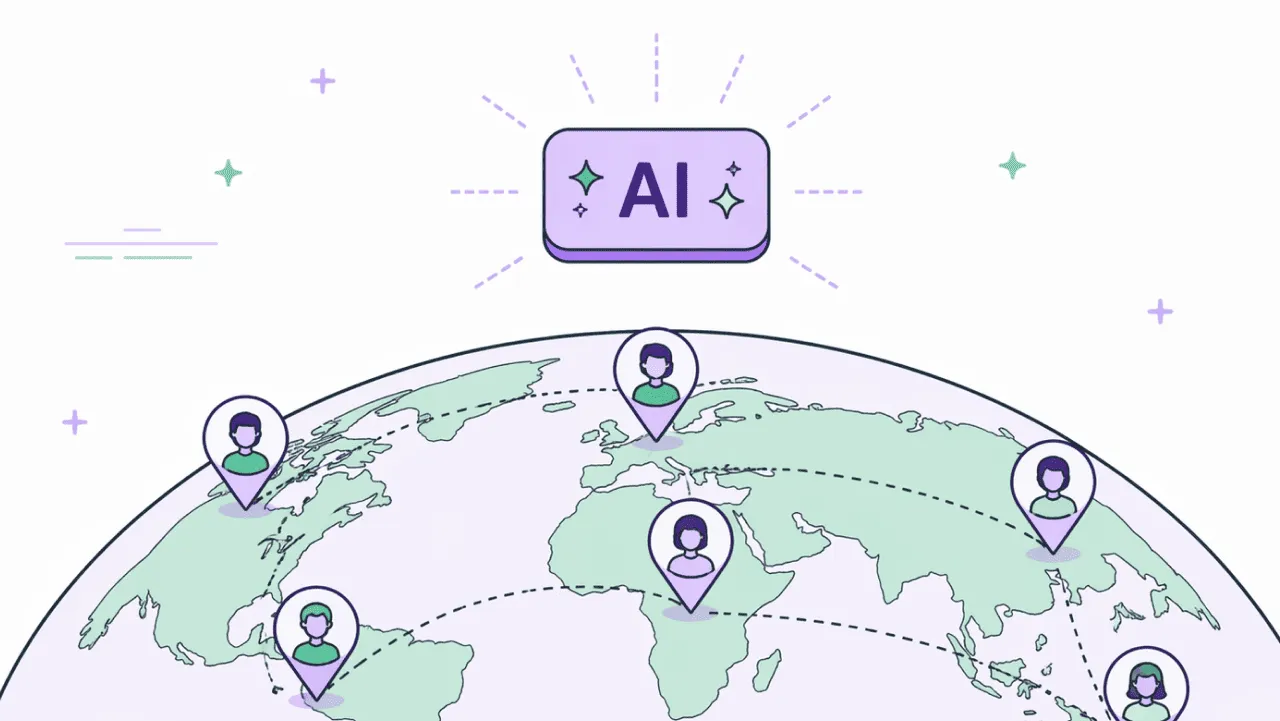
AI localization is the practice of using artificial intelligence algorithms—in particular neural machine translation, natural language processing, and deep learning—to adapt content for specific linguistic and cultural regions. It goes far beyond word‑for‑word translation. An AI localization system adjusts idiomatic expressions, formatting conventions, visual elements, tone, and even humor to match local expectations. This intelligent layer sits on top of workflow automation, continuously learning from user feedback and new data to improve accuracy over time.
The result is a cohesive, culturally nuanced output that feels native to each audience, whether it’s a mobile app, an e‑commerce product page, a legal document, or a marketing video. AI localization doesn’t eliminate human expertise; it elevates it by handling repetitive, high‑volume tasks so that professional linguists can focus on creative and strategic refinements.
The Core Technologies Powering AI Localization
Multiple, intersecting AI disciplines make modern localization engines possible. Understanding these building blocks clarifies why AI localization outperforms legacy approaches.
Neural Machine Translation (NMT)
NMT models, trained on vast parallel corpora, predict entire sentence sequences instead of translating phrase by phrase. This holistic view captures contextual relationships, resulting in more fluent and accurate output. Leading platforms incorporate transformer‑based architectures that handle long‑range dependencies in texts, dramatically reducing awkward phrasing and grammatical errors.
Natural Language Processing and Understanding
NLP analyzes the structure and meaning of source content. Named‑entity recognition identifies brand names, product names, and dates that must remain unchanged or be adapted differently. Sentiment analysis ensures the emotional tone carries over to the target language, while part‑of‑speech tagging supports correct grammatical adjustments.
Computer Vision for Multimedia Localization
Images, videos, and interactive graphics often contain embedded text or culturally specific visuals. AI‑powered computer vision detects text in images, translates it, and re‑inserts it with proper layout. It can also identify images that may be inappropriate or ineffective in certain cultures—for instance, hand gestures or color symbolism—and suggest alternatives.
Generative AI and Large Language Models
Large language models (LLMs) add a layer of stylistic and contextual finesse. They can rewrite sentences in multiple registers, generate localized microcopy for user interfaces, and simulate conversational flows for chatbots in dozens of languages. Their ability to understand nuanced prompts allows businesses to maintain a consistent brand personality globally.
Continuous Learning and Adaptive Feedback Loops
AI localization platforms incorporate human‑in‑the‑loop feedback. When editors correct a term or adjust a tone, the system captures that input to update its translation memory and style guides. Over successive iterations, the engine becomes increasingly aligned with a brand’s unique voice and industry‑specific terminology.
How AI Localization Differs From Traditional Localization
The leap from manual workflows to AI‑driven pipelines fundamentally changes speed, cost, and scalability. A side‑by‑side comparison makes these differences tangible.
| Dimension | Traditional Localization | AI Localization |
|---|---|---|
| Translation Engine | Human translators only; limited use of translation memory | NMT combined with adaptive translation memory and glossaries |
| Speed | Weeks to months for large projects | Hours to days, with real‑time options for dynamic content |
| Cultural Adaptation | Dependent on individual translator’s cultural knowledge | Algorithmic analysis of cultural markers, supplemented by human review |
| Consistency | Can vary across translators and projects | Uniformly enforced by central style guides and machine‑enforced rules |
| Cost Structure | Higher per‑word costs, minimal automation discounts | Lower per‑word rates due to automation; human review focused on quality assurance |
| Scalability | Linear increase in time and cost with volume | Near‑infinite scalability; ideal for agile, continuous localization |
The AI Localization Workflow: A Step‑by‑Step Process
Modern AI localization follows a structured yet flexible pipeline that integrates automation with expert oversight.
- Content Analysis and Preparation: AI analyzes the source content to detect language, complexity, and formatting. It parses file types (HTML, JSON, XML, etc.) and extracts translatable strings while preserving code.
- Automated Pre‑translation: Neural machine translation engines, fed by curated translation memories and term bases, produce a first draft. For high‑volume, repetitive content like product descriptions, this step may achieve 80‑90% accuracy on its own.
- Contextual Adaptation: NLP layers adjust tone, idiomatic expressions, and dialect preferences. For video game localization, for instance, AI adapts slang and humor to regional tastes.
- Multimedia Modification: Computer vision re‑renders images with translated text. Voice‑over synthesis generates localized audio tracks if needed, matching lip movements and intonation patterns.
- Human Post‑editing and Review: Professional linguists review the AI output, polishing creative elements and catching rare misinterpretations. Their edits feed back into the system for continuous improvement.
- Quality Assurance and Testing: Automated QA tools check for truncation, placeholder errors, and linguistic consistency. In‑context testing, such as viewing the localized app on actual devices, confirms a flawless user experience.
- Deployment and Monitoring: Localized assets are pushed live. AI monitors user engagement metrics and sentiment to flag underperforming content for re‑optimization.
- Start with a High‑Quality Glossary and Style Guide: Feed the AI engine a robust term base, brand voice guidelines, and do‑not‑translate lists. This foundation anchors consistency from day one.
- Select the Right Engine for Your Domain: General NMT works for everyday content, but medical, legal, or highly technical content benefits from custom‑trained models that understand specialized jargon.
- Design for Internationalization from the Outset: Code UIs to accommodate text expansion (German can be 30% longer than English) and avoid hard‑coded strings. This makes AI localization integration seamless.
- Implement a Human‑in‑the‑Loop Flow: Define clear thresholds for human review. Safety‑critical content like medical instructions always warrants expert check; marketing headlines can pass with lighter review.
- Leverage Continuous Localization Technology: Integrate localization directly into your development pipeline. AI‑powered connectors automatically detect new strings, translate them, and open pull requests for review—keeping localized versions in sync with the master.
- Measure and Iterate: Track engagement metrics per locale. If bounce rates spike in a particular region, the AI localization process may need dialect fine‑tuning or visual asset adjustment.
- Neglecting Linguistic Validation: Trusting raw NMT output for customer‑facing content without any human check leads to comical or damaging errors that spread rapidly on social media.
- Using a Single, Untrained Model for All Content: Feeding a legal contract into a tourism‑trained model produces gibberish. Match the model to the domain or use adaptive engines that switch modes based on content tags.
- Overlooking Visual and UX Cultural Dissonance: A landing page that is perfectly translated may still feature an image of a handshake that offends certain cultures, or a red “buy now” button that signals danger instead of urgency. AI computer vision can help, but a cultural audit remains critical.
- Ignoring Local SEO Nuances: Directly translating keywords often fails because search behavior differs by language. AI localization should include keyword research in each target language to maintain discoverability.
- Skipping In‑Context Review: Testing localized strings in the actual app or on the staging site catches layout breaks, truncations, and logical flow issues that automated checks miss.
Benefits of AI Localization for Global Businesses

Adopting AI localization delivers measurable advantages across every department, from marketing to product development.
Dramatic Speed to Market
Launching a product simultaneously in 20 languages used to be a logistical nightmare. AI localization compresses timelines from months to days, enabling global rollouts that keep pace with agile development cycles. This first‑mover advantage can directly translate into market share.
Cost Efficiency Without Quality Compromise
By automating repetitive content and reserving human talent for high‑value creative tasks, companies routinely reduce localization budgets by 30‑50%. The cost per word drops, yet quality actually improves because human linguists dedicate their energy to nuanced refinement rather than mechanical translation.
Unmatched Consistency Across All Channels
AI enforces brand terminology, tone, and style guides across websites, apps, help centers, and marketing collateral. A term like “shopping cart” never becomes “basket” in one region and “trolley” in another unless deliberately specified. This consistency builds trust and reduces user confusion.
Deep Personalization at Scale
Traditional localization treated entire countries as monolithic blocks. AI can tailor content to regional dialects, urban versus rural preferences, or even individual user segments based on behavior. E‑commerce platforms, for example, display product descriptions that reflect local shopping trends and measurement units automatically.
Real‑Time Adaptation for Dynamic Content
Chatbots, live customer support, and user‑generated content demand instantaneous localization. AI‑powered systems translate and moderate in real time, allowing brands to maintain a responsive, multilingual presence 24/7 without a global army of agents.
Challenges and Limitations of AI Localization
Despite its transformative power, AI localization is not a silver bullet. Recognizing these limitations prevents costly missteps.
Cultural Nuance and Creative Limitations
Subtle humor, poetry, and deeply embedded cultural references can still stump AI. An idiom that works brilliantly in English may have no equivalent in Japanese; a literal translation can confuse or even offend. High‑creativity assets like brand manifestos and award‑winning ad copy still require substantial human input.
Data Privacy and Compliance Risks
Localization engines process vast amounts of sensitive text. Without careful configuration, confidential data might flow through third‑party AI APIs, triggering GDPR, HIPAA, or industry‑specific compliance violations. On‑premises or private cloud deployments and strict data‑handling protocols become essential.
Over‑Reliance on Automation
A “set it and forget it” mentality leads to bland, robotic content. Even the finest AI localization model needs periodic human auditing to ensure brand warmth and emotional resonance. Brands that skip post‑editing often sound disjointed and lose the human touch that builds customer loyalty.
Initial Investment and Training Complexity
Implementing AI localization requires integrating translation management systems, training custom NMT engines, and curating high‑quality glossaries. The upfront effort can be steep, especially for small businesses. However, cloud‑based localization platforms increasingly offer plug‑and‑play options that lower the barrier.
Real‑World Applications and Use Cases
The versatility of AI localization means it is reshaping industries in tangible ways.
E‑Commerce and Retail
Global marketplaces like Amazon and Alibaba localize millions of product listings daily. AI localization automatically converts currencies, sizes, and descriptions while preserving SEO keywords in each language. It even adapts customer reviews by extracting sentiment and translating tone, helping shoppers make confident decisions.
Gaming and Entertainment
Video game studios ship titles simultaneously in over 15 languages. AI localization handles in‑game dialogue, UI strings, and subtitles, while human poets refine lyrical songs. Streaming services use AI to dub and subtitle movies, syncing lip movements through deep learning to produce a natural viewing experience.
Software and Mobile Applications
Mobile apps from banking to fitness rely on continuous localization. AI integrates with CI/CD pipelines to release new features in dozens of languages within the same sprint. It also localizes error messages and help documentation, drastically reducing support tickets from non‑English users.
Legal and Financial Services
Contracts, compliance documents, and financial disclosures require precise, terminology‑consistent translation. AI localization engines trained on legal corpora ensure that phrases like “force majeure” carry the exact legal weight in all jurisdictions, while human attorneys verify interpretive nuances.
Tourism and Hospitality
Hotel booking platforms, airline apps, and travel review sites use AI localization to present listings, policies, and user reviews in the traveler’s native language. Real‑time translation of reviews builds trust, and localized imagery highlights culturally appealing destinations.
AI Localization vs. Machine Translation: Understanding the Distinction
Many confuse raw machine translation with true AI localization. The table below separates the two so you can invest wisely.
| Aspect | Simple Machine Translation | AI Localization |
|---|---|---|
| Scope | Text‑only conversion from source to target language | Full adaptation: text, visuals, tone, format, cultural cues |
| Context Awareness | Sentence‑level, often misses broader document context | Document‑level and cross‑channel context via NLP and memory |
| Cultural Adjustment | Minimal; may produce literal or inappropriate phrasing | Algorithmic plus human‑guided cultural tailoring |
| Integration | Standalone API call or widget | End‑to‑end platform with asset management, CMS connectors, and QA |
| Output Quality | Raw; often requires significant editing | Publication‑ready after light post‑editing |
Machine translation is a component inside AI localization, but calling them equivalent ignores the orchestration, quality control, and cultural intelligence that true localization demands.
Best Practices for Implementing AI Localization
A strategic approach separates success from costly rework. These guidelines, drawn from real deployments, pave the way.
Common Mistakes That Derail AI Localization Projects
Avoiding these pitfalls saves time, budget, and brand reputation.
The Future of AI Localization: What Lies Ahead
AI localization is evolving rapidly. Emerging trends point toward even deeper integration of intelligence and empathy.
Multimodal Localization will become standard—video, audio, images, and even AR/VR experiences will be localized in a unified pipeline. Emotion‑aware adaptation will use affective computing to adjust the emotional tone of marketing messages based on cultural sentiment patterns. Voice cloning and real‑time dubbing will allow a CEO’s speech to be delivered with their voice in 50 languages, lips perfectly synced. Blockchain‑based translation attestation may provide immutable records of localization edits for regulated industries, enhancing trust. Above all, democratized AI localization tools will empower small businesses and content creators to go global instantly, shrinking the gap between local and global reach.
Success in this future will depend not on replacing human insight, but on crafting a seamless symbiosis where AI handles volume and speed while humans inject soul and strategy.
Frequently Asked Questions About AI Localization
What exactly does AI localization include beyond translation?
AI localization extends translation by adapting images, formatting, tone, cultural metaphors, humor, date and currency formats, and even color psychology. It ensures the entire user experience—visual, textual, and auditory—feels native to the target audience.
Can AI localization completely replace human translators?
No. While AI handles repetitive, high‑volume text with increasing accuracy, human translators remain essential for creative, emotionally nuanced, and safety‑critical content. The most effective systems combine AI efficiency with human oversight to achieve both speed and authenticity.
How does AI localization handle dialects and regional variations?
Advanced systems use locale‑specific language models and glossaries. For example, Spanish content can be tagged for Latin American or European Spanish. AI then selects appropriate vocabulary, grammar, and even formality levels for each region, often with a final check by a native dialect speaker.
Is AI localization secure for confidential business documents?
Security depends on deployment architecture. Private cloud or on‑premises AI localization platforms keep data within the organization’s controlled environment, adhering to GDPR, HIPAA, and other regulations. Avoid free public translation APIs for sensitive content and always vet a provider’s data processing policies.
How can a small business get started with AI localization?
Begin by centralizing your source content and creating a basic glossary of key terms. Choose a cloud‑based localization management platform that offers built‑in NMT and easy CMS integrations. Start with one target language for your highest‑potential market, and gradually expand as you refine the workflow.
Conclusion
AI localization is no longer a futuristic concept—it is the operational backbone of every brand that competes on a global stage. By merging neural machine translation, natural language understanding, and adaptive learning, companies can deliver content that is not only linguistically accurate but culturally magnetic. The numbers speak for themselves: faster time‑to‑market, slashed budgets, and higher engagement across diverse audiences. Yet the true magic emerges when technology amplifies human creativity rather than replacing it. Organizations that adopt AI localization thoughtfully—investing in quality data, respecting cultural complexity, and maintaining a human touch—will not just translate their message; they will make the world feel like home in every language.
Xem thêm:
- AI SEO for Marketing Teams: The Complete Playbook for 2025
- AI SEO Backlink Prospects: The Complete Guide to Smarter Link Building in 2025
- AI SEO Entity Mapping: The Complete Guide to Future-Proofing Your Search Rankings
- AI SEO & SEO Automation for Affiliate Sites: The 2025 Playbook for Passive Income Growth
- AI SEO User Experience: The Complete Guide to Merging Search Optimization with Human-Centered Design
Bài viết cùng chủ đề:

AI SEO SEO Automation with Make: The Complete Workflow Guide

AI SEO SEO Automation with Zapier: The Complete Workflow Guide

AI SEO SEO Automation with n8n: The Complete Workflow Guide
AI SEO SEO Automation with Gemini: The Complete Guide to Scaling Organic Growth

AI SEO SEO Automation with Claude: The Complete Guide to Scaling Content in 2025

AI SEO SEO Automation with ChatGPT: The Complete Playbook for 2025

AI SEO & SEO Automation for Affiliate Sites: The 2025 Playbook for Passive Income Growth
AI SEO & SEO Automation for Bloggers: The Complete Guide to Scaling Your Content

AI SEO & SEO Automation for Agencies: The Complete 2025 Playbook

AI SEO and SEO Automation for Ecommerce: The Complete Playbook for 2025

AI SEO & SEO Automation for WordPress: The Complete Playbook for 2025
AI SEO SEO Automation Strategy: The Complete Playbook for 2025

Mastering the AI SEO SEO Automation Process: A Complete Guide to Scaling Organic Growth
AI SEO SEO Automation System: The Complete Guide to Scaling Organic Growth in 2025
AI SEO SEO Automation Platform: The Complete Guide to Scaling Organic Growth in 2025
AI SEO SEO Automation Software: The Complete Guide to Scaling Organic Growth in 2025















