
No products in the cart.
AI SEO Backlink Prospects: The Complete Guide to Smarter Link Building in 2025
10
Aug
Aug
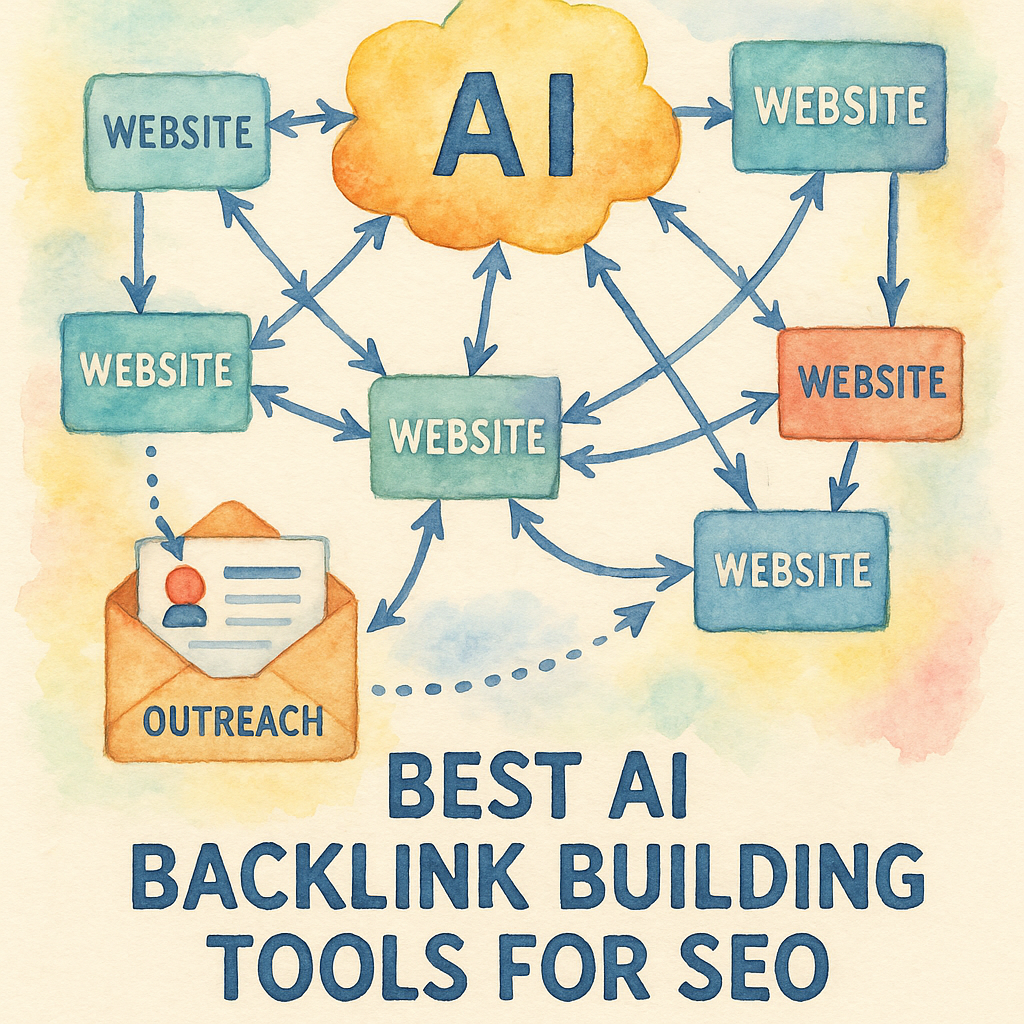
Building high-quality backlinks remains one of the most challenging aspects of search engine optimization. The emergence of artificial intelligence has transformed how marketers identify, evaluate, and secure valuable link opportunities. AI SEO backlink prospects represent a paradigm shift from manual outreach and guesswork to data-driven precision. This comprehensive guide explores how artificial intelligence is reshaping link building, offering practical strategies for leveraging these tools to outperform competitors and achieve sustainable search rankings.
Understanding AI SEO Backlink Prospects
AI SEO backlink prospects refer to potential link-building opportunities identified and analyzed through artificial intelligence algorithms. Traditional link building relies on manual research, intuition, and time-consuming processes to find websites that might link to your content. AI systems process vast amounts of data to identify patterns, predict link value, and prioritize prospects with the highest potential for improving search rankings.
The core advantage lies in the ability to analyze thousands of websites simultaneously. AI evaluates domain authority, content relevance, audience overlap, traffic patterns, and historical link-building success rates. This creates a prioritized list of prospects that human researchers would take weeks to compile manually.
How AI Identifies High-Quality Link Prospects
Machine learning algorithms examine multiple data points when evaluating potential backlink sources. These include topical relevance between the linking page and your content, the linking domain’s authority metrics, the page’s organic traffic levels, and the engagement signals such as social shares and comments. AI systems also assess the anchor text distribution across a domain’s existing backlink profile to predict how a new link might perform.
Natural language processing enables AI to understand the semantic context of content. This means the system can identify websites that discuss topics related to your industry even when they use different terminology. For example, a site discussing “home financing” might be a relevant prospect for a mortgage broker, even if the exact keyword “mortgage” appears infrequently.
The Evolution of Link Building: From Manual to AI-Powered
Link building has undergone significant transformation over the past decade. Understanding this evolution provides context for why AI SEO backlink prospects have become essential for modern digital marketing strategies.
| Era | Method | Key Characteristics | Challenges |
|---|---|---|---|
| 2000-2010 | Directory submissions | Quantity over quality, link farms, low editorial standards | Google penalties, low conversion value |
| 2010-2018 | Manual outreach | Guest posting, broken link building, resource pages | Time-intensive, low response rates |
| 2018-2023 | Data-driven tools | Metrics-based prospecting, competitor analysis | Data overload, still manual outreach |
| 2023-Present | AI-powered prospecting | Predictive analytics, automated personalization, real-time adaptation | Tool costs, learning curve |
The shift toward AI represents a natural progression. As search engines become more sophisticated, link building must evolve to match their complexity. AI tools now handle the heavy lifting of prospect identification, allowing marketers to focus on relationship building and content creation.
Key Components of AI-Driven Link Prospecting
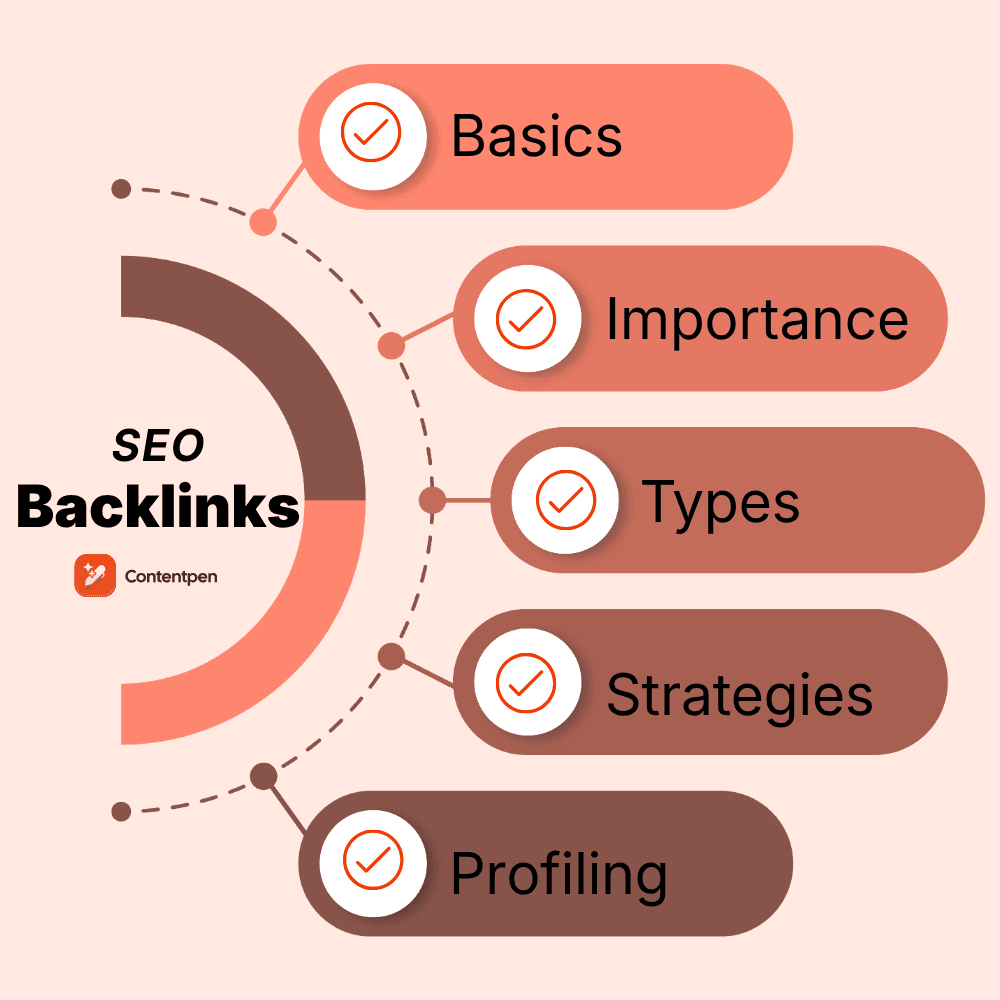
Several technological components work together to create effective AI SEO backlink prospects. Each element contributes to the overall accuracy and efficiency of the system.
Predictive Analytics
AI systems analyze historical link-building data to predict which prospects are most likely to respond positively to outreach. Factors include the website’s past linking behavior, the responsiveness of site owners, and the types of content that have successfully attracted links in the past. This predictive capability reduces wasted effort on prospects with low conversion probability.
Semantic Relevance Scoring
Traditional tools rely on keyword matching to determine relevance. AI goes deeper by understanding the meaning and context of content. Semantic analysis evaluates whether a prospect’s content genuinely aligns with your topic area, even when different vocabulary is used. This reduces the risk of acquiring links from topically unrelated sites, which carry less SEO value.
Competitor Gap Analysis
AI continuously monitors the backlink profiles of competing websites. When competitors acquire new links, the system evaluates those sources and adds them to your prospect list if they meet quality thresholds. This creates a continuous pipeline of proven link opportunities that your competitors have already validated.
Benefits of Using AI for Backlink Prospecting
The advantages of AI-powered link building extend beyond simple time savings. Organizations that adopt these tools gain strategic benefits that impact overall SEO performance.
- Scalability: AI systems evaluate thousands of prospects daily, far exceeding human capacity. This enables comprehensive coverage of your niche without sacrificing quality.
- Accuracy: Machine learning models continuously improve their predictions based on outreach outcomes. Each campaign makes the system smarter and more precise.
- Speed: What takes a human researcher days, AI accomplishes in minutes. This allows marketers to act quickly on time-sensitive opportunities.
- Cost efficiency: While AI tools require investment, they reduce the labor hours needed for prospecting. Most organizations find the return on investment substantial.
- Reduced risk: AI filters out low-quality or spammy websites that could trigger Google penalties. This protects your domain’s reputation and ranking stability.
Limitations and Challenges of AI Link Prospecting
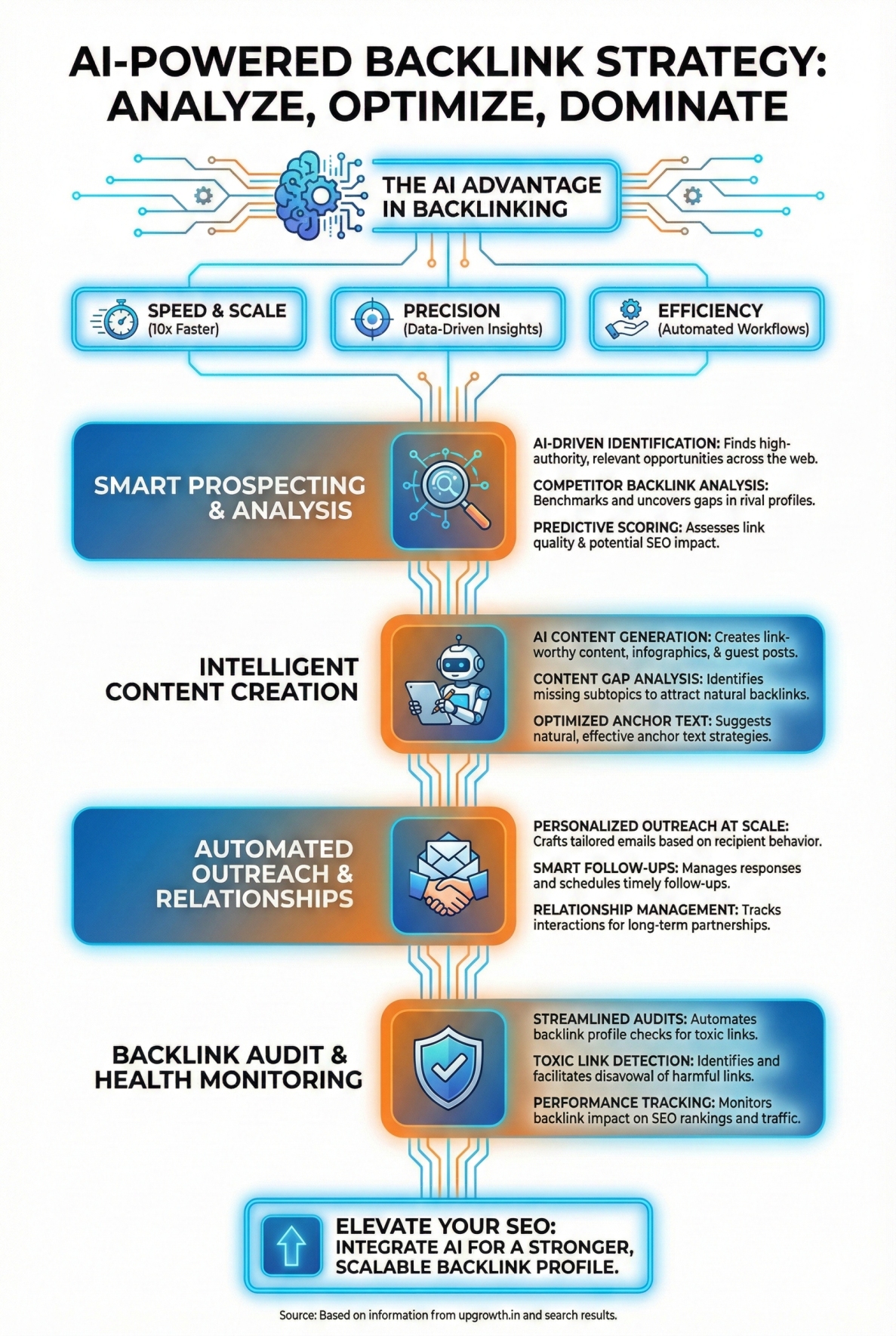
Despite the significant advantages, AI SEO backlink prospects come with certain limitations that marketers must understand to use these tools effectively.
AI algorithms are only as good as their training data. If the system has not been exposed to diverse link-building scenarios, its predictions may be skewed. Additionally, AI cannot fully replicate human judgment regarding editorial relationships and brand fit. A prospect might score highly on metrics but still be a poor fit for your brand’s voice or values.
Another challenge involves the increasing sophistication of search engine algorithms. Google’s systems are also AI-powered, creating an ongoing arms race between link detection and link building. What works today may become less effective as search algorithms evolve to identify AI-generated outreach patterns.
Practical Guide: Implementing AI SEO Backlink Prospects
Implementing an AI-driven link-building strategy requires a systematic approach. The following steps provide a framework for integrating these tools into your existing SEO workflow.
Step 1: Define Your Link Building Goals
Before using any AI tool, establish clear objectives. Are you aiming to increase domain authority, drive referral traffic, or rank for specific keywords? Your goals determine which metrics the AI should prioritize when evaluating prospects. Document your target metrics and set realistic timelines for achieving them.
Step 2: Choose the Right AI Tools
Several platforms offer AI-powered link prospecting capabilities. Evaluate tools based on your budget, technical expertise, and specific needs. Look for features such as semantic analysis, competitor monitoring, and outreach automation. Many tools offer free trials, allowing you to test their effectiveness before committing.
Step 3: Configure Your Prospect Criteria
Set parameters for the types of websites you want to target. Define minimum domain authority scores, traffic thresholds, and topical relevance requirements. The more specific your criteria, the more relevant your prospect list will be. Review and adjust these parameters regularly based on campaign performance.
Step 4: Analyze and Prioritize Prospects
AI tools generate extensive lists of potential prospects. Not all prospects deserve equal attention. Prioritize based on a combination of metrics, including relevance score, authority, and probability of link acquisition. Focus your outreach efforts on the top 20% of prospects that offer the highest potential value.
Step 5: Personalize Your Outreach
AI can assist with personalization by analyzing the prospect’s content and identifying specific topics or angles that might resonate. Use these insights to craft personalized outreach messages that demonstrate genuine familiarity with the prospect’s website. Generic templates generate poor response rates, even when the prospect list is highly targeted.
Step 6: Track and Measure Results
Monitor the performance of your link-building campaigns continuously. Track metrics such as outreach response rates, link acquisition rates, and the impact on search rankings. Feed this data back into your AI system to improve future prospect identification. The most successful organizations treat AI link building as an iterative process of continuous refinement.
Common Mistakes to Avoid with AI Link Prospecting
Many marketers make avoidable errors when implementing AI-powered link building. Recognizing these pitfalls helps you maximize the value of your investment.
Over-reliance on automation: AI identifies prospects, but human judgment remains essential for final decisions. Automated outreach without personalization often results in poor response rates and can damage your brand’s reputation.
Ignoring relevance for authority: High-authority websites that are topically unrelated to your content provide minimal SEO value. Google’s algorithms evaluate link context, not just domain metrics. Always prioritize relevance over raw authority scores.
Neglecting existing relationships: AI tools focus on new prospects, but your existing network often provides the most valuable link opportunities. Combine AI prospecting with relationship-based link building for optimal results.
Failing to update criteria: Search algorithms and market conditions change constantly. Your prospect criteria should evolve accordingly. Review your AI settings quarterly and adjust based on performance data.
Important Notes for Successful AI Link Building
Several considerations ensure long-term success when using AI for backlink prospecting. These notes reflect best practices from experienced SEO professionals.
Always maintain a diverse backlink profile. Relying exclusively on AI-identified prospects can create an unnatural link pattern. Combine AI prospecting with organic link acquisition through content marketing, digital PR, and community participation.
Monitor your competitors’ AI adoption. If your competitors are using AI tools and you are not, they will identify and secure valuable link opportunities before you do. Stay informed about emerging tools and techniques in the link-building space.
Remember that AI tools complement, not replace, human expertise. The most successful link-building campaigns combine AI efficiency with human creativity, relationship building, and strategic thinking. Invest in training your team to use these tools effectively.
Frequently Asked Questions
What are AI SEO backlink prospects?
AI SEO backlink prospects are potential link-building opportunities identified through artificial intelligence algorithms. These systems analyze websites based on relevance, authority, traffic, and other metrics to create prioritized lists of sites that could provide valuable backlinks. AI evaluates thousands of prospects simultaneously, far exceeding human capacity.
How do AI tools identify high-quality backlink prospects?
AI tools use machine learning and natural language processing to evaluate multiple factors. These include topical relevance, domain authority, organic traffic levels, audience overlap, and historical linking behavior. Predictive analytics assess the likelihood of successful outreach, while semantic analysis ensures genuine content relevance beyond simple keyword matching.
Are AI link building tools worth the investment?
For most organizations, yes. AI tools significantly reduce the time required for prospect identification and improve the accuracy of targeting. The cost of AI tools is typically lower than the labor costs of manual prospecting. However, the return on investment depends on proper implementation and integration with a comprehensive link-building strategy.
Can AI replace human link builders?
No. AI excels at data analysis and prospect identification, but human skills remain essential for relationship building, content creation, and strategic decision-making. The most effective approach combines AI efficiency with human creativity and judgment. AI handles the repetitive tasks, allowing humans to focus on high-value activities.
What metrics should I use to evaluate AI link prospects?
Key metrics include domain authority, page authority, organic traffic, topical relevance scores, spam scores, and the diversity of the prospect’s existing backlink profile. Also consider engagement metrics such as social shares and comments. The specific metrics you prioritize should align with your link-building goals.
How quickly will I see results from AI link building?
Results vary based on your niche, competition level, and the quality of your content. Some organizations see improvements within 30-60 days, while others require several months. Link building is a long-term strategy. Focus on consistent implementation and continuous refinement rather than expecting immediate results.
Conclusion
AI SEO backlink prospects have fundamentally changed the landscape of link building. The ability to analyze thousands of websites, predict outreach success, and prioritize opportunities based on data-driven insights provides a significant competitive advantage. Organizations that embrace these tools position themselves for sustainable search visibility in an increasingly competitive digital environment.
The key to success lies in combining AI efficiency with human expertise. Use AI to identify and prioritize prospects, but rely on your team for personalization, relationship building, and strategic decision-making. Continuously refine your approach based on performance data, and stay informed about emerging AI capabilities in the SEO space.
Link building remains one of the most durable and valuable SEO strategies. AI makes it more accessible, efficient, and effective than ever before. By implementing the strategies outlined in this guide, you can build a robust backlink profile that drives meaningful improvements in search rankings and organic traffic. The future of link building is intelligent, data-driven, and powered by artificial intelligence.
Xem thêm:
- AI SEO FAQ Schema: The Complete Guide to Smart Structured Data
- AI Localization: Unlocking Global Markets with Intelligent Language Adaptation
- AI SEO Tag Optimization: The Complete Guide to Smarter Metadata in 2025
- How to Get Cited by AI: The Definitive Playbook for Generative Search Visibility
- AI SEO Competitor Content: The Complete Playbook for Outranking Rival Sites
Bài viết cùng chủ đề:

AI SEO SEO Automation with Make: The Complete Workflow Guide

AI SEO SEO Automation with Zapier: The Complete Workflow Guide

AI SEO SEO Automation with n8n: The Complete Workflow Guide
AI SEO SEO Automation with Gemini: The Complete Guide to Scaling Organic Growth

AI SEO SEO Automation with Claude: The Complete Guide to Scaling Content in 2025

AI SEO SEO Automation with ChatGPT: The Complete Playbook for 2025

AI SEO & SEO Automation for Affiliate Sites: The 2025 Playbook for Passive Income Growth
AI SEO & SEO Automation for Bloggers: The Complete Guide to Scaling Your Content

AI SEO & SEO Automation for Agencies: The Complete 2025 Playbook

AI SEO and SEO Automation for Ecommerce: The Complete Playbook for 2025

AI SEO & SEO Automation for WordPress: The Complete Playbook for 2025
AI SEO SEO Automation Strategy: The Complete Playbook for 2025

Mastering the AI SEO SEO Automation Process: A Complete Guide to Scaling Organic Growth
AI SEO SEO Automation System: The Complete Guide to Scaling Organic Growth in 2025
AI SEO SEO Automation Platform: The Complete Guide to Scaling Organic Growth in 2025
AI SEO SEO Automation Software: The Complete Guide to Scaling Organic Growth in 2025















