
No products in the cart.
AI SEO Authority Building: The Complete Playbook for Dominating Search in 2025
31
Jul
Jul
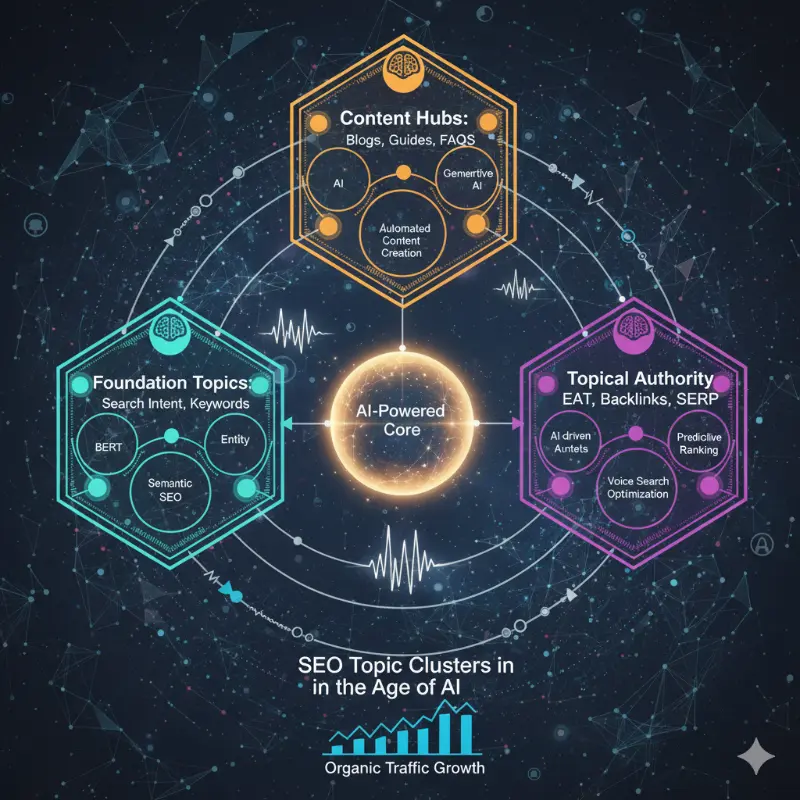
The digital landscape has shifted beneath our feet. Traditional link-building tactics and keyword-stuffed content no longer move the needle. Instead, search engines now prioritize entities that demonstrate genuine expertise, authority, and trustworthiness. This is where AI SEO authority building enters the picture. It is the strategic fusion of artificial intelligence tools with a human-centric content strategy designed to establish your brand as the definitive resource in your niche. This guide breaks down exactly how to leverage machine learning, natural language processing, and predictive analytics to build a digital footprint that algorithms and audiences alike cannot ignore.
What Is AI SEO Authority Building?
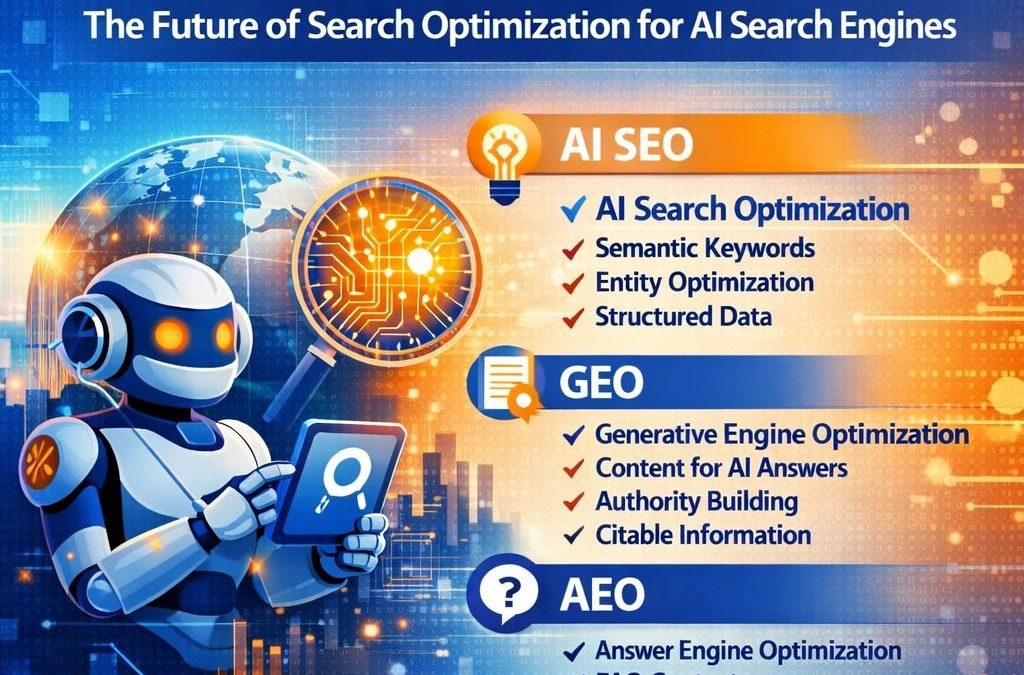
AI SEO authority building is the process of using artificial intelligence to accelerate and enhance the creation of topical authority. It goes beyond simple rank tracking. The core objective is to train search engine algorithms to recognize your website as the most credible source for a specific cluster of topics. This involves using AI to analyze search intent at scale, identify content gaps, generate comprehensive briefs, and optimize existing pages for semantic relevance.
The concept relies on the principle of entity salience. Search engines like Google use knowledge graphs to understand relationships between people, places, and concepts. By consistently publishing high-quality, interlinked content that covers every facet of a subject, you increase your entity’s salience. AI tools help you map this territory efficiently, ensuring you do not miss critical subtopics that your competitors have overlooked.
Why Traditional Authority Building Fails Without AI
The old method of buying backlinks or publishing generic “ultimate guides” is obsolete. Google’s SpamBrain and the Helpful Content Update have become exceptionally adept at detecting manipulative patterns. Manual research for keyword clusters can take weeks, and by the time you publish, the search landscape may have shifted.
AI provides a distinct advantage in speed and precision. It can process millions of search queries to identify the exact questions your target audience is asking. It can analyze the top-ranking pages for a keyword and extract the entities, sentiment, and structural patterns that contribute to their success. Without this analytical power, you are essentially guessing. AI SEO authority building replaces guesswork with data-driven certainty.
The Core Components of an AI-Driven Authority Strategy
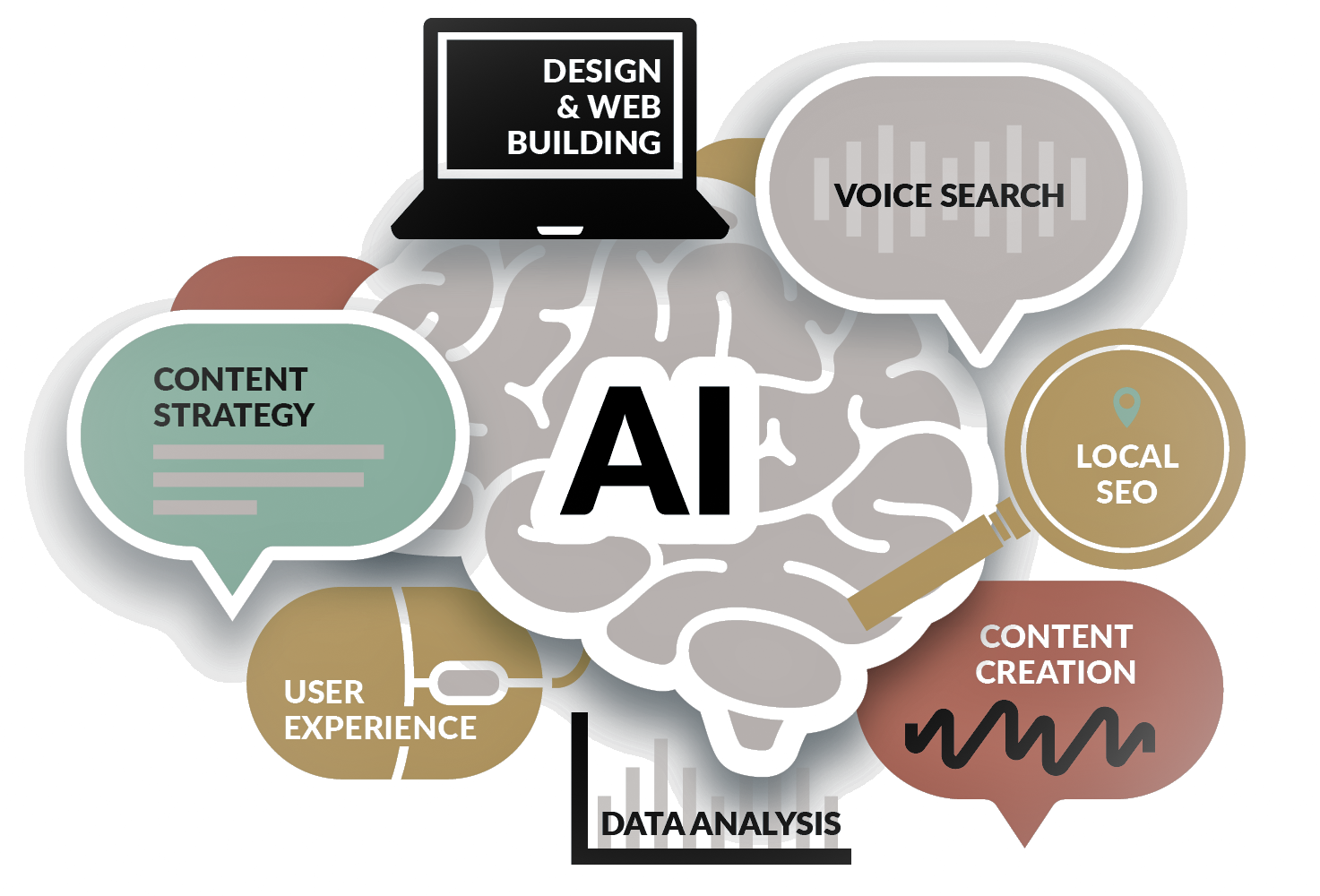
Building authority with AI is not a single action but a multi-layered system. Each component reinforces the others, creating a compounding effect on your search visibility.
1. AI-Powered Topical Map Generation
Your authority is built on a foundation of comprehensive topic coverage. AI tools like Clearscope, MarketMuse, or custom GPT models can generate a semantic topology of your niche. They analyze your existing content and compare it against the entire search index to identify missing subtopics. For example, if you are targeting “project management software,” the A
2. Predictive Content Gap Analysis
Standard gap analysis looks at what competitors rank for. AI takes this further by predicting what they will rank for in the future. By analyzing search trend velocity and query expansion patterns, AI models can suggest content topics that are on the cusp of gaining traction. Publishing these pieces early positions you as a first-mover, which is a strong authority signal.
3. Semantic Optimization and Entity Clustering
It is no longer enough to use the exact keyword. You must demonstrate contextual understanding. AI SEO authority building involves using natural language processing (NLP) to analyze your draft content. The AI checks whether you have covered the required entities, synonyms, and related concepts that the search engine expects to see on a comprehensive page. It scores your content against the top 10 results and provides specific recommendations for improvement.
4. Automated Internal Linking Architecture
Authority flows through links. AI can analyze your entire site structure and suggest the optimal internal linking strategy. It identifies orphan pages, suggests anchor text variations, and ensures that link equity is distributed to your most important money pages. This creates a silo structure that helps search engines understand the hierarchy of your content.
Step-by-Step Guide to Implementing AI SEO Authority Building
Implementing this strategy requires a systematic approach.
Step 1: Define Your Core Entity and Pillar Clusters
Start with a clear definition of your primary entity. This is your main topic. Use AI to generate a list of 10-15 pillar topics that support this entity. Each pillar will become a cornerstone piece of content. For instance, if your core entity is “digital marketing,” your pillars might be “SEO,” “Content Marketing,” “Social Media,” and “Email Automation.”
Step 2: Use AI for Keyword and Question Mining
Input your pillar topics into an AI research tool. Ask it to extract the “People Also Ask” questions, long-tail variations, and comparison queries. The output should be a structured list of keywords categorized by search intent: informational, commercial, and transactional. This list forms the blueprint for your content calendar.
Step 3: Generate Detailed Content Briefs
Do not let AI write your final content. Instead, use it to create a detailed brief. The brief should include the target keyword, related entities, suggested headings, word count, and specific data points to include. This ensures your writers produce content that is optimized for both users and algorithms. The human writer adds the unique experience, case studies, and original insights that AI cannot fabricate.
Step 4: Publish and Analyze with AI Monitoring
After publishing, use AI tools to monitor your content’s performance. These tools track your keyword position, but more importantly, they track your “visibility score” for the entire topic cluster. If your visibility plateaus, the A
Benefits of Using AI for Authority Building
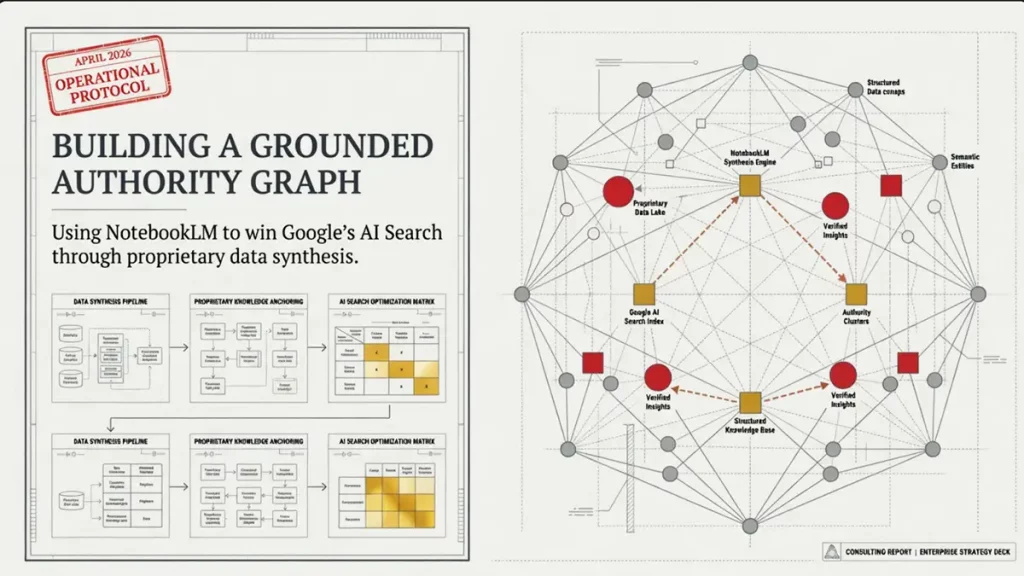
The advantages of this approach are tangible and measurable. Below is a breakdown of the key benefits compared to traditional methods.
| Benefit | Traditional Method | AI-Driven Method |
|---|---|---|
| Research Speed | 2-3 weeks for a full keyword cluster | 2-3 hours for a full keyword cluster |
| Content Coverage | Often misses long-tail opportunities | Comprehensive entity mapping |
| Scalability | Difficult to scale without hiring more staff | Easily scalable with automated workflows |
| Accuracy | Based on manual interpretation | Based on predictive analytics and NLP |
Another significant benefit is the reduction of cognitive bias. Human researchers often stick to what they know. AI surfaces unexpected connections and emerging trends that a human might dismiss. This leads to a more diverse and robust content portfolio, which is a strong signal of expertise to search engines.
Limitations and Risks to Consider
AI is not a silver bullet. There are distinct limitations that must be managed to avoid damaging your authority.
The Risk of Generic Content
If you rely solely on AI-generated text without human editing, your content will sound robotic and lack unique insights. Google’s algorithms are sophisticated enough to detect a lack of first-hand experience. AI SEO authority building requires a “human-in-the-loop” approach. The AI provides the structure and data; the human provides the voice and expertise.
Data Privacy and Compliance
Using AI tools often involves sending your data to third-party servers. If you are in a regulated industry like healthcare or finance, you must ensure your AI tools are compliant with GDPR or HIPAA. Using a tool that violates these regulations can lead to legal issues that severely damage your brand’s trustworthiness.
Over-Reliance on Historical Data
AI models are trained on past data. They cannot predict sudden market shifts or viral trends. You must maintain a human oversight role to pivot your strategy when unexpected events occur. An AI might suggest writing about a topic that is becoming obsolete, while a human expert would recognize the decline.
Common Mistakes in AI SEO Authority Building
Many businesses fail to see results because they make critical errors in execution. Here are the most common pitfalls and how to avoid them.
Mistake 1: Ignoring Search Intent in Favor of Keywords
AI tools often group keywords by similarity, but they do not always understand the nuance of intent. For example, the keyword “best running shoes” has commercial intent, while “how to tie running shoes” has informational intent. Publishing a product review for the informational query will not build authority. You must manually review the AI’s keyword groupings to ensure the content matches the user’s stage in the buying cycle.
Mistake 2: Creating Content Silos Without Interlinking
Publishing 100 articles on a topic is useless if they are not linked together. The AI can generate the content, but you must implement a strict internal linking protocol. Each new article should link to the pillar page and to 2-3 other relevant cluster articles. This creates a web of context that search engines can crawl effectively.
Mistake 3: Neglecting E-E-A-T Signals
AI cannot verify your credentials. You must manually add author bios, credentials, and citations to your content. If you are writing about medical topics, you need a medical reviewer. If you are writing about finance, you need a certified accountant. These human signals are critical for the “Trustworthiness” part of E-E-A-T. Without them, your AI-optimized content will not rank for YMYL (Your Money or Your Life) topics.
Important Notes on Algorithm Updates and AI
Search engines are constantly updating their algorithms to better understand content quality. The March 2024 core update placed a heavy emphasis on “scaled content abuse.” This specifically targets websites that use AI to mass-produce low-value content. To stay safe, focus on quality over quantity. It is better to publish 4 in-depth, AI-assisted articles per month than 40 thin AI-generated posts.
Furthermore, you must keep your AI tools updated. The models are improving rapidly, and using an outdated version may produce suboptimal suggestions. Regularly audit your AI prompts and workflows to ensure they align with the latest SEO best practices.
Practical Application: A Case Study Approach
Consider a B2B SaaS company selling CRM software. They want to build authority for the keyword “CRM for small business.” Using AI SEO authority building, they follow this process:
- Entity Mapping: The AI identifies related entities: “pipeline management,” “contact segmentation,” “sales automation,” “customer retention.”
- Content Creation: They create a pillar page on “The Ultimate Guide to CRM for Small Business” and 20 cluster articles on each specific entity.
- Optimization: The AI analyzes each draft and suggests adding specific statistics about small business sales cycles and customer churn rates.
- Authority Signals: They include quotes from their own sales directors and link to their proprietary data on customer behavior.
Within six months, their domain authority increases, and they begin ranking for high-competition keywords that were previously out of reach. The key was the combination of AI’s analytical power and the company’s real-world experience.
Frequently Asked Questions (FAQ)
How long does it take to see results from AI SEO authority building?
Typically, it takes 4 to 6 months to see significant movement in search rankings. This timeline depends on the competitiveness of your niche and the consistency of your publishing schedule. The initial phase involves content creation and indexing, which takes 2-3 months. The subsequent phase involves link building and algorithmic trust, which takes another 2-3 months.
Can AI completely replace human SEO experts?
No. AI is a powerful assistant, but it lacks the strategic judgment and creative intuition of a human expert. AI can process data and generate reports, but it cannot build relationships with journalists for digital PR or understand the subtle cultural nuances of a target market. The best results come from a hybrid approach where AI handles the heavy lifting of data analysis and humans focus on strategy and relationship building.
What is the difference between AI SEO and traditional SEO?
Traditional SEO relies heavily on manual research, backlink acquisition, and on-page optimization based on keyword density. AI SEO uses machine learning to automate research, predict content performance, and optimize for semantic relevance rather than just exact-match keywords. AI SEO is more proactive, while traditional SEO is often reactive.
Is AI-generated content penalized by Google?
Google does not penalize AI content itself. It penalizes low-quality content, regardless of whether it is written by a human or a machine. If the AI content is helpful, accurate, and provides a good user experience, it will rank. If it is spammy and unoriginal, it will be flagged. The rule is to always review and edit AI output to ensure it meets your quality standards.
How do I measure the ROI of AI SEO authority building?
You should track three primary metrics: organic traffic growth, keyword ranking distribution, and lead generation. More specifically, monitor the number of keywords ranking in the top 3 positions for your pillar topics. Also, track the growth of your branded search volume, as this indicates rising brand authority. Use analytics tools to attribute conversions to organic search traffic.
Conclusion
AI SEO authority building represents the new standard for digital growth. It is a sophisticated approach that leverages technology to enhance, not replace, human expertise. By implementing a structured workflow that includes AI-driven research, semantic optimization, and rigorous human oversight, you can build a digital presence that withstands algorithm updates and delivers lasting value. The future of search is not about tricking the algorithm; it is about becoming the undeniable authority in your space. Start by mapping your core entities, invest in the right AI tools, and commit to a consistent publishing schedule. The results will follow.
Xem thêm:
- AI Programmatic SEO: The Ultimate Guide to Automated Content Generation at Scale
- AI Keyword Generator: Transform Your SEO Strategy with Smart Automation
- AI Structured Data: The Complete Guide to Automating Schema Markup for Smarter Search
- AI SEO Topic Mapping: The Complete Guide to Building Content Clusters That Rank
- AI Conversion Optimization: Harnessing Machine Learning to Turn Browsers into Buyers
Bài viết cùng chủ đề:

AI SEO SEO Automation with Make: The Complete Workflow Guide

AI SEO SEO Automation with Zapier: The Complete Workflow Guide

AI SEO SEO Automation with n8n: The Complete Workflow Guide
AI SEO SEO Automation with Gemini: The Complete Guide to Scaling Organic Growth

AI SEO SEO Automation with Claude: The Complete Guide to Scaling Content in 2025

AI SEO SEO Automation with ChatGPT: The Complete Playbook for 2025

AI SEO & SEO Automation for Affiliate Sites: The 2025 Playbook for Passive Income Growth
AI SEO & SEO Automation for Bloggers: The Complete Guide to Scaling Your Content

AI SEO & SEO Automation for Agencies: The Complete 2025 Playbook

AI SEO and SEO Automation for Ecommerce: The Complete Playbook for 2025

AI SEO & SEO Automation for WordPress: The Complete Playbook for 2025
AI SEO SEO Automation Strategy: The Complete Playbook for 2025

Mastering the AI SEO SEO Automation Process: A Complete Guide to Scaling Organic Growth
AI SEO SEO Automation System: The Complete Guide to Scaling Organic Growth in 2025
AI SEO SEO Automation Platform: The Complete Guide to Scaling Organic Growth in 2025
AI SEO SEO Automation Software: The Complete Guide to Scaling Organic Growth in 2025















