No products in the cart.
AI Meta Descriptions: The Complete Guide to Writing High-Converting Search Snippets With Artificial Intelligence
29
Jul
Jul
Nearly every search result you see online begins with a meta description—that one- to two-sentence preview beneath the blue link. For years, marketers treated these snippets as an afterthought. Today, AI meta descriptions are reshaping how entire websites approach on-page SEO. An AI-powered description can be drafted in seconds, but creating one that actually earns clicks demands a nuanced blend of prompt engineering, semantic relevance, and brand voice.
Search engines process billions of queries daily, and artificial intelligence has moved from a novelty to a core component of content workflows. Crafting an effective AI meta description is no longer about tricking algorithms. It is about leveraging large language models to surface the exact intent behind a keyword and condense a page’s value into 155 characters that drive measurable click-through rates. This guide unpacks every layer of the process, from foundational definitions to advanced prompt structures, comparison tables, and mistake-proofing tactics.
What Are AI Meta Descriptions?
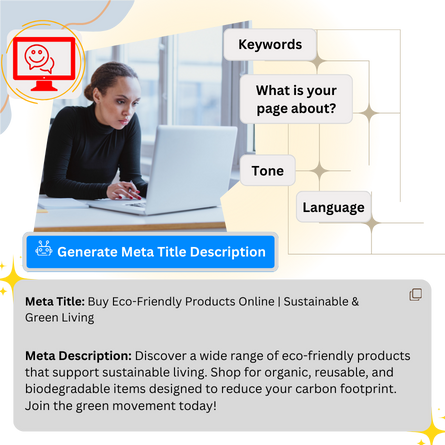
AI meta descriptions are short HTML attributes generated or refined by artificial intelligence to summarize a webpage’s content for search engine results pages. Unlike manual copy, an AI meta description is typically produced by a large language model trained on massive datasets. The model can analyze a page’s title, headers, body text, and even surrounding search context to suggest a snippet that aligns with both user intent and stylistic guidelines.
The technical skeleton remains unchanged. A meta description is still placed inside the <head> tag as <meta name="description" content="..." />. What the AI layer adds is the ability to scale. A human copywriter might optimize 10 pages an hour. An AI agent, properly prompted, can generate 1,000 unique, intent-matched descriptions in the same window. This shift is why SEO platforms now embed AI meta description features directly into their dashboards.
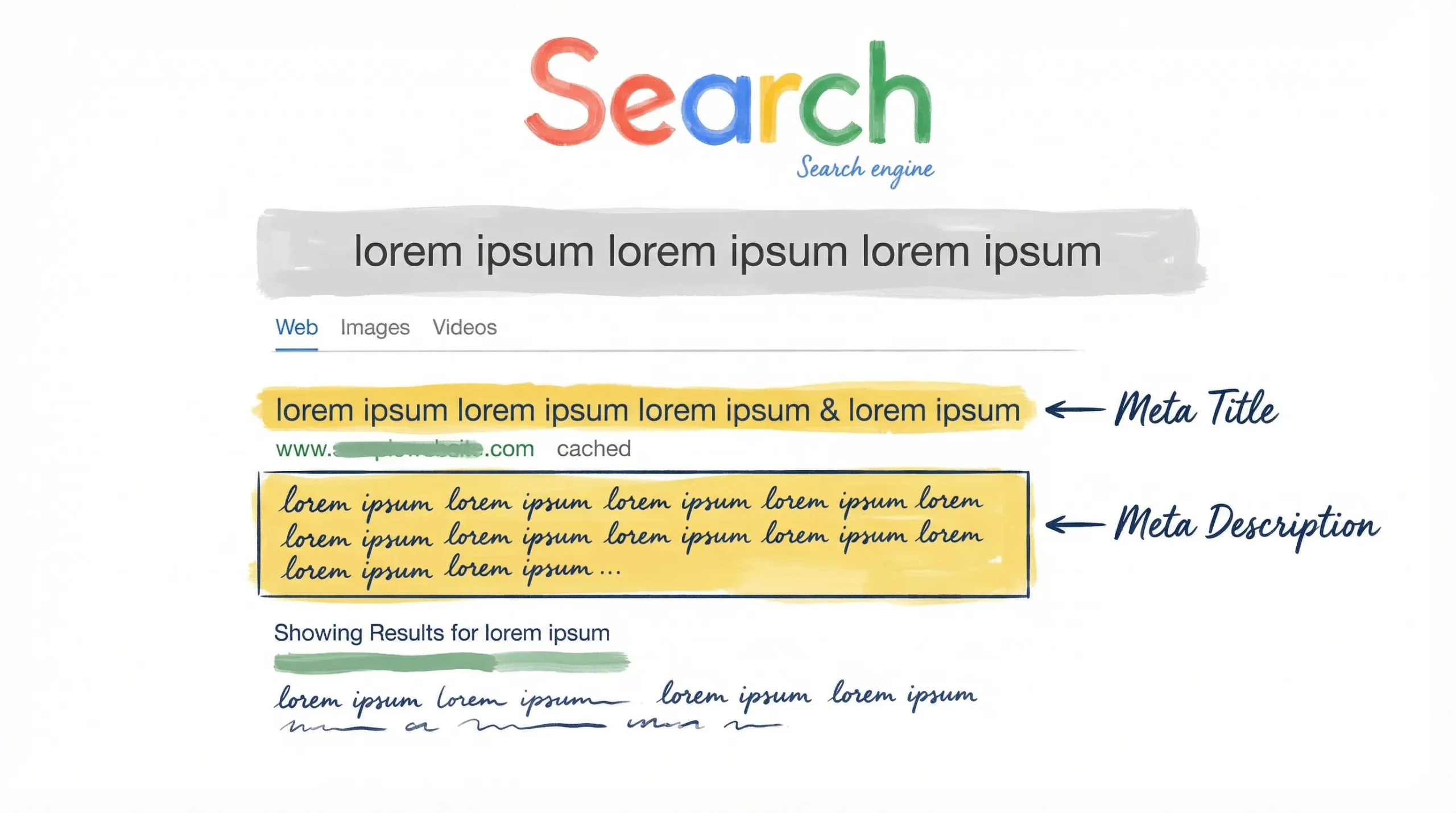
The Anatomy of a Search Snippet
- Title tag: The clickable headline, often the primary ranking signal.
- URL breadcrumb: The visible path that signals site structure.
- Meta description: The descriptive text that can contain the target keyword, call-to-action phrasing, and unique value proposition.
- The target focus keyword and its semantic variants
- The emotional tone and reading level of the source page
- Intent classification—informational, commercial, transactional, or navigational
- Character constraints, typically 150-160 characters for desktop SERPs
- Role: “You are an expert SEO copywriter specializing in meta descriptions for B2B SaaS.”
- Context: Paste the page data collected in Step 1.
- Instructions: “In 150 characters or fewer, use the primary keyword naturally in the first sentence. Include one emotional benefit and a light call-to-action. Avoid clickbait. Never fabricate statistics.”
- Example: Provide a gold-standard snippet that matches your brand.
- Add a human sentiment check: AI can sound sterile. Read every snippet aloud and ask if a real person would feel understood. If not, layer in a conversational phrase.
- Respect platform-specific limits: While Google uses 160 characters as a guideline, social platforms like Facebook or Twitter often pull the meta description for link previews. Keep the description under 200 characters to avoid awkward cuts everywhere.
- Do not auto-publish at scale blind: Even with a 98% accuracy rate, a 50,000-page site would have 1,000 flawed snippets. Spot-check at least 5% of outputs, prioritizing your highest-traffic pages and any page with legal implications.
- Archive prompt versions: AI model behavior changes subtly over time. Store your prompts, date them, and note which produced the highest CTR. This institutional knowledge compounds faster than most teams realize.
- Combine with structured data: A meta description alone is not a rich snippet. Pair AI-generated text with Review, Product, or FAQ schema markup to increase the chance of earning star ratings or expandable results that absorb even more SERP real estate.
Search engines may rewrite meta descriptions if they deem the original insufficient, but a well-structured AI meta description dramatically increases the odds that your carefully chosen words will appear in the SERP.
How Artificial Intelligence Generates Meta Descriptions
Modern AI models do not simply template-fill. They rely on transformer architectures that predict the next token based on a massive contextual window. When tasked with generating an AI meta description, the model processes the following signals in milliseconds:
GPT-4 class models, as well as specialized SEO assistants, can further condition output on historical CTR data, location modifiers, and buyer journey stage. The result is a snippet that goes beyond keyword insertion. It anticipates what a searcher needs to read before deciding to click.
Retrieval-Augmented Generation for On-Page Context
Advanced implementations use retrieval-augmented generation, or RAG. The AI first ingests the actual HTML content of the page, extracts entities and key arguments, then synthesizes a description. This reduces hallucinations because the model is grounded in real text rather than guessing what the page contains. For large e-commerce sites with thousands of product pages, RAG-based AI meta descriptions can maintain factual accuracy while varying language to avoid duplicate meta tags.
Benefits of Using AI for Meta Descriptions
Scale Without Sacrifice
The most immediate gain is volume. A content team managing a 50,000-page catalog cannot hand-write every snippet. AI meta descriptions allow bulk generation in minutes while preserving semantic variation. Outputs are not identical; each one reflects the distinct topic of its URL. This prevents the thin-content duplicate meta description penalty that can depress crawl efficiency.
Intent Alignment at Depth
Humans sometimes default to a single description pattern. AI, on the other hand, can be prompted to vary phrasing according to search intent. A guide titled “how to plant tomatoes” receives a step-oriented snippet emphasizing learning, while a product page for tomato seeds gets a commercial angle with urgency words like “fast shipping” or “heirloom varieties.” This dynamic approach keeps meta tags closely matched to the micro-intent behind each query.
Continuous A/B Testing Loops
Because AI generates variants effortlessly, SEO specialists can run rapid meta description A/B tests. Tools can push two different AI-generated snippets live, measure aggregate CTR over two weeks, and pick the winner. The model can then be fine-tuned with that performance data to improve future outputs. This feedback loop turns meta descriptions from static text into living assets that adapt to real user behavior.
Multilingual Consistency
Global brands often struggle to maintain tone across languages. AI meta descriptions can be generated natively in dozens of languages, preserving core brand messaging while respecting local search nuances. A German-language snippet for an insurance page will feature appropriate compound keywords and cultural phrasing, something a direct translation often misses.
Limitations and Critical Pitfalls of AI Meta Descriptions
For all its speed, AI cannot read a brand’s mind. The most common failure is a bland, generic output that reads like a dictionary definition. Without strong guardrails, AI meta descriptions can become a sea of “Learn more about X,” “Discover the best Y,” and “Find top-rated Z.” This sameness erodes differentiation and drives average CTR into a downward spiral.
Hallucinated Claims and Factual Errors
A model might invent a price, a discount percentage, or a feature that does not exist on the page. In regulated industries like finance or healthcare, a fabricated claim inside a meta description can trigger compliance violations. Any AI-generated snippet must pass human review before going live, especially when accuracy is legally binding.
Inability to Capture Proprietary Tone
Even with detailed brand voice guidelines in the prompt, AI can drift. Sarcasm, wit, or highly specific jargon may come out forced. This is where human editors remain essential: they inject the final layer of personality that distinguishes a market leader from a generic aggregator.
Search Engine Rewrite Risk
Google rewrites meta descriptions over 70% of the time for informational queries, according to a 2023 study by Portent that analyzed 80,000 SERPs. An AI meta description, no matter how polished, may still be ignored if the algorithm determines the page text provides a better match. That does not mean the effort is wasted—it raises the baseline quality, increasing the chance your snippet wins the rewrite lottery—but it is a reality that tempers expectations.
AI vs. Human-Written Meta Descriptions: A Direct Comparison
| Factor | AI Meta Descriptions | Human-Written Meta Descriptions |
|---|---|---|
| Speed | Thousands per hour; near-instant bulk generation | 5–10 per hour depending on research and approval cycles |
| Scalability | Seamless across massive sites; consistent formatting | Requires large teams or extensive agency budgets |
| Originality | Can default to formulaic patterns without strong prompts | Naturally varied, especially with experienced copywriters |
| Intent Matching | High when fed intent signals; can parse micro-intent | Depends on writer’s SEO knowledge; often surface-level |
| Brand Voice Fidelity | Requires prompt fine-tuning; sometimes misses nuance | Strong, if writer is embedded in the brand |
| Compliance Safety | Risk of hallucinated claims; needs verification | Lower risk, but human error still exists |
| Cost per Description | Fractions of a cent after platform setup | $5–$25+ depending on expertise |
The table makes one thing clear: the ideal workflow is not an either-or proposition. The fastest, most accurate meta description pipeline uses AI for first drafts and bulk processing, with human editors curating outputs for flagship pages, legal sign-off, and distinctive brand moments.
How to Generate AI Meta Descriptions: A Step-by-Step Implementation Guide
Step 1: Prepare Your Page Data
AI thrives on context. Gather the URL, title tag, H1, the first 200 words of body copy, and the primary target keyword for each page. If you have existing high-CTR meta descriptions, include them as reference examples. Structured input prevents the model from guessing and dramatically reduces editing time.
Step 2: Design a Prompt That Thinks Like a Searcher
A weak prompt says, “Write a meta description about topic X.” A performance prompt includes persona, intent, and linguistic constraints. For an AI meta description that actually outperforms human copy, use layers:
Step 3: Generate and Iterate
Run the prompt. Ask the AI for three to five variations immediately. Scan for factual accuracy, keyword inclusion, and readability. Delete any variant that starts with “In this article” or “We will explore.” Those phrases telegraph low value and are routinely rewritten by search engines.
Step 4: Apply SEO Guardrails
Check character count. An AI may produce a 175-character snippet, truncating mid-sentence. Use a SERP preview tool to visualize the final look. Verify that the primary keyword appears within the first 120 characters if possible, as that portion is most visible before truncation.
Step 5: Human Review and Brand Injection
Even a 95% perfect AI meta description benefits from a 60-second human polish. Add a hyphen where it improves scannability. Replace a weak verb. Insert the product’s unique differentiator that the AI cannot know because it was never in the training data. This final layer is where the AI stops and true conversion copywriting begins.
Step 6: Deploy, Measure, Refine
Once live, track CTR in Google Search Console. Segment by query and page type. Feed winning patterns back into your prompt library so the next batch of AI meta descriptions starts from a higher performance baseline. This closes the optimization loop and turns the activity into an ever-improving asset.
Common Mistakes When Implementing AI Meta Descriptions (and How to Avoid Them)
Mistake 1: Forgetting the Target Keyword
AI models sometimes paraphrase to the point of removing the exact keyword. While semantic close matches are valuable, the bolded keyword in a SERP still affects user attention. Always check that the target term survives in the final output. A quick fix is to mandate “natural inclusion” in the prompt rather than strict placement, which can lead to stuffing.
Mistake 2: Using the Same Prompt for Every Page Type
A blog post, a product page, and a category archive serve different intents. A uniform prompt produces uniform, off-target descriptions. Segment your pages by template and write separate base prompts for each. The prompt for a recipe page might emphasize ingredients, cook time, and star rating, whereas a service page prompt highlights trust signals and local relevance.
Mistake 3: Letting AI Write Descriptions for Empty Pages
If a page has only 50 words of content, even the best AI meta description will misrepresent the page or cause a high bounce rate. Always generate descriptions only after core text is in place. AI meta descriptions should complement, not compensate for, thin content. Google’s helpful content system will penalize the mismatch indirectly.
Mistake 4: Ignoring SERP Real Estate on Mobile
Mobile meta descriptions truncate earlier, often around 120 characters. An AI snippet that front-loads vague fluff loses the punch. Instruct the model to place the most compelling benefit within the first eight words. This rule ensures the snippet works on a 5-inch screen and still reads as a complete thought.
Mistake 5: Skipping the Canonical Audit
Large sites frequently have canonicalized pages or near-duplicate content. Generating an AI meta description for every URL without first checking the canonical tag leads to descriptions on pages that will never rank. Allocate generation budget to self-canonical, indexable pages first. Use a crawl tool to filter out noise before feeding the URL list to the AI pipeline.
Important Notes When Using AI Meta Descriptions
Frequently Asked Questions About AI Meta Descriptions
Can Google detect AI-generated meta descriptions?
Google does not penalize meta descriptions simply because they are AI-generated. The search engine evaluates the usefulness and accuracy of the snippet, not how it was created. As long as the description faithfully represents the page content and serves the user, its origin is irrelevant. However, if AI produces misleading or spun content, that can lead to manual action or algorithm devaluation, same as any human-written manipulation.
What is the optimal character length for an AI meta description in 2025?
The safe, commonly seen length is between 150 and 160 characters, including spaces. Desktop SERPs typically show up to 920 pixels, which translates to roughly 155–160 characters for most fonts. Mobile snippets are shorter, so placing the key value proposition within the initial 120 characters ensures the message survives truncation on any device.
How do I ensure my AI meta description matches search intent?
Feed the AI the page’s primary keyword along with an intent label—informational, commercial, transactional, or navigational. For commercial intent, prompt for phrases like “best,” “compare,” or “pricing.” For informational intent, ask for “learn,” “guide,” or “steps.” Also include a sample query to ground the model in the real search behavior that should trigger your page.
Will an AI meta description boost my rankings directly?
Meta descriptions are not a direct ranking factor in Google’s algorithm, and that has been consistent for over a decade. Their power lies in click-through rate, which can indirectly affect rankings over time through user engagement signals. An AI meta description that improves CTR from 2% to 5% can significantly increase organic traffic, even if ranking position stays the same. That traffic, in turn, sends positive behavioral signals.
Which AI tool is best for generating meta descriptions at scale?
T Enterprise SEO platforms like BrightEdge or Conductor have built-in AI meta description generators tied to their data. API-first teams often use OpenAI’s GPT-4o with custom prompts or Anthropic’s Claude for longer context windows. For WordPress users, plugins like Rank Math and Yoast now incorporate AI assistants that generate meta descriptions directly in the editor based on the post analysis.
Can AI write meta descriptions that include local keywords?
Yes, with the correct prompt. Supply the city, region, or “near me” qualifier within the context. For a plumber in Austin, you might prompt: “Include ‘Austin plumbing’ naturally and mention emergency availability.” The A For multi-location businesses, variable injection via spreadsheet integration makes this feasible across hundreds of city pages.
Conclusion
AI meta descriptions have evolved far beyond templated text. They are now a strategic lever that blends linguistic precision, intent modeling, and scale. When a page earns a visible, enticing snippet on page one, the organic click curve shifts measurably. Achieving that outcome consistently requires more than just pressing “generate.” It demands a workflow that pairs AI’s raw efficiency with the human ability to inject empathy, brand-specific knowledge, and editorial judgment.
The framework outlined here—from prompt engineering and page preparation to review guardrails and performance iteration—provides a repeatable system. The goal is not to remove the human but to elevate their role from line-by-line writer to strategic curator. In an environment where every pixel of SERP real estate matters, a refined AI meta description pipeline can be the difference between a listing that blends in and one that searchers click before they even finish reading the title.
Xem thêm:
- AI SEO APIs: The Ultimate Guide to Automating Search Optimization with Artificial Intelligence
- AI SEO Search Visibility: The Complete Playbook for Ranking in the Age of Machine Learning
- AI SEO GEO Content: The Complete Guide to Generative Engine Optimization
- AI SEO Web Scraping: The Complete Guide to Automating Search Insights in 2025
- AI Meta Titles: The Complete Guide to Automated Title Tags That Drive Clicks
Bài viết cùng chủ đề:

AI SEO SEO Automation with Make: The Complete Workflow Guide

AI SEO SEO Automation with Zapier: The Complete Workflow Guide

AI SEO SEO Automation with n8n: The Complete Workflow Guide
AI SEO SEO Automation with Gemini: The Complete Guide to Scaling Organic Growth

AI SEO SEO Automation with Claude: The Complete Guide to Scaling Content in 2025

AI SEO SEO Automation with ChatGPT: The Complete Playbook for 2025

AI SEO & SEO Automation for Affiliate Sites: The 2025 Playbook for Passive Income Growth
AI SEO & SEO Automation for Bloggers: The Complete Guide to Scaling Your Content

AI SEO & SEO Automation for Agencies: The Complete 2025 Playbook

AI SEO and SEO Automation for Ecommerce: The Complete Playbook for 2025

AI SEO & SEO Automation for WordPress: The Complete Playbook for 2025
AI SEO SEO Automation Strategy: The Complete Playbook for 2025

Mastering the AI SEO SEO Automation Process: A Complete Guide to Scaling Organic Growth
AI SEO SEO Automation System: The Complete Guide to Scaling Organic Growth in 2025
AI SEO SEO Automation Platform: The Complete Guide to Scaling Organic Growth in 2025
AI SEO SEO Automation Software: The Complete Guide to Scaling Organic Growth in 2025