
No products in the cart.
AI Meta Titles: The Complete Guide to Automated Title Tags That Drive Clicks
29
Jul
Jul
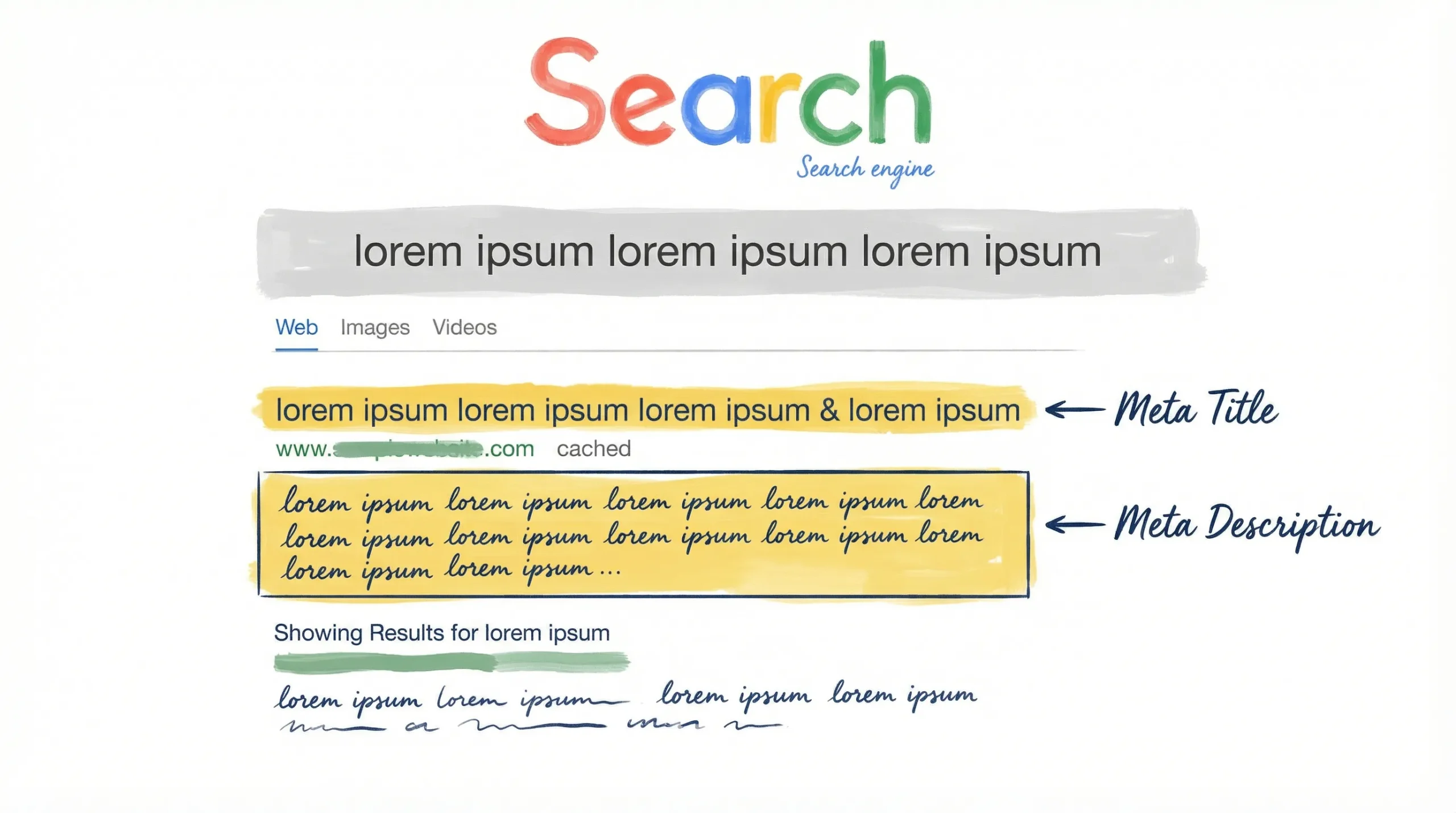
The way we craft meta titles is shifting permanently. In a landscape where speed and data-backed decisions determine search rankings, AI meta titles have moved from experimental curiosity to essential SEO tool. More than 60% of search engine users click on a result based almost entirely on the title tag they see. A single poorly written meta title can destroy weeks of content investment. AI now promises to generate hundreds of optimized titles in minutes—titles that are keyword-rich, emotionally resonant, and built on what actually performs in the search engine results pages. But not all AI-generated titles are created equal. Understanding how these systems work, where they excel, and where they fail separates the websites that climb from those that stagnate.
What Are AI Meta Titles? Defining the Next Generation of Title Tags
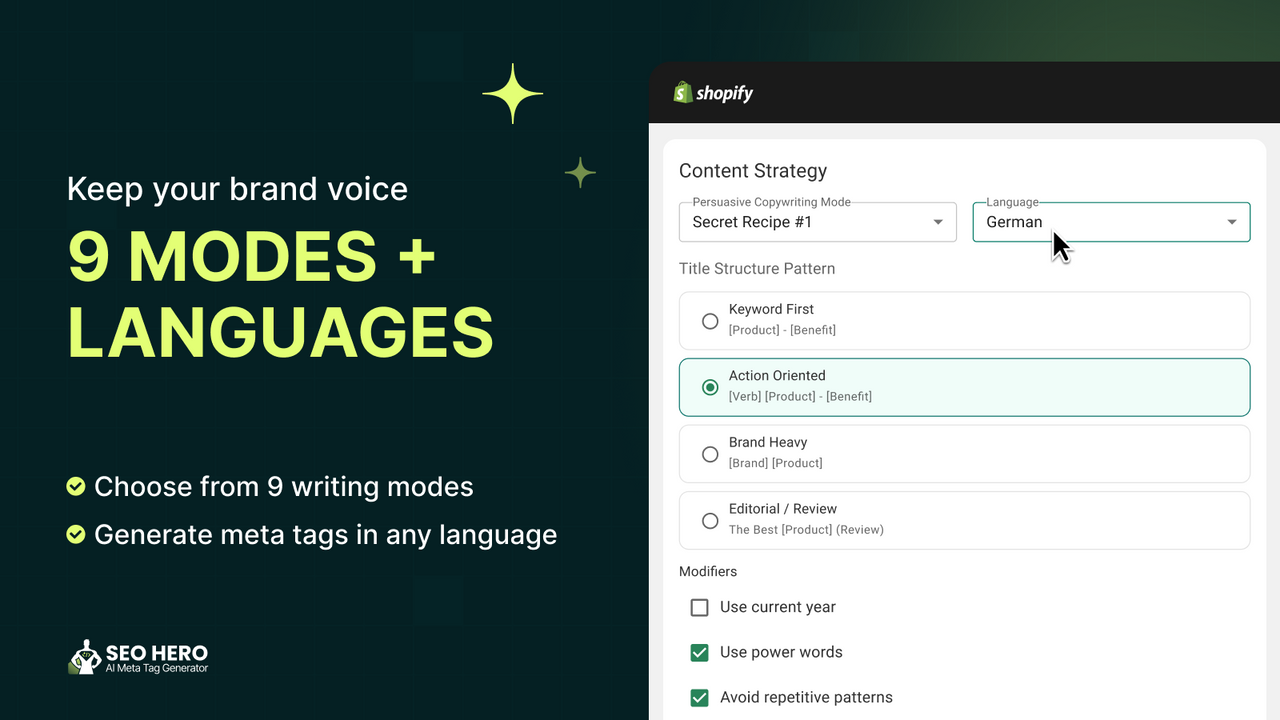
An AI meta title is a page title tag generated by artificial intelligence algorithms rather than written entirely by a human. The technology behind these titles leverages natural language processing, transformer models, and large-scale training on click-through rate data. It does not simply stuff keywords. Modern AI meta titles systems understand semantic relationships, search intent clustering, and the emotional triggers that make someone click instead of scroll past. The output is a string of text—usually between 50 and 60 characters—that appears as the clickable headline in Google, Bing, and social media shares.
These titles are not random. They are the product of models that have analyzed billions of search queries, title patterns, and engagement metrics. When you feed a tool like a specialized AI meta title generator with a target keyword, a tone preference, and a page description, it cross-references its training corpus to produce a title that statistically has a higher probability of attracting organic traffic. This is fundamentally different from rigid template-based generators that simply insert keywords into a fixed structure. AI meta titles adapt their phrasing, length, power words, and even punctuation based on what is working right now in your specific niche.
How AI Generates Meta Titles: The Technology Under the Hood
To use AI meta titles effectively, it helps to know what is going on behind the interface. Most contemporary SEO tools that produce AI meta titles are built on large language models fine-tuned for search marketing tasks. The process typically involves three layers: understanding the page content, aligning with search intent, and constructing a high-CTR phrase.
Natural Language Understanding and Keyword Extraction
First, the AI reads your page—or at least the prompt you provide that summarizes its content. It identifies the primary topic, extracts related entities, and pinpoints the main keyword you intend to rank for. This is not a simple word count exercise. The AI recognizes that a page about “organic dog food” needs to convey trust, natural ingredients, and health benefits. It will pull those concepts into its title suggestion. This stage prevents the kind of mechanical keyword repetition that older automated tools produced.
Search Intent Modeling and Pattern Matching
Next, the AI model matches your page type against its database of high-performing title patterns for that intent. A transactional page (someone looking to buy) requires a different emotional hook than an informational blog post. The AI knows that commercial intent titles often benefit from numbers, price cues, or urgency words like “sale” or “best.” Informational AI meta titles lean into curiosity gaps, question-based structures, and definitive statements. The system selects from a vast library of syntax templates that have driven measurable results in similar contexts.
Click-Through Rate Prediction and Refinement
Advanced AI meta title tools go further. They incorporate predictive models trained on historical CTR data. Before suggesting a title, the algorithm scores it against what has historically performed for queries like yours. If brackets, colons, or specific emotional adjectives tend to lift CTR for “best running shoes” in the current year, the A This closed-loop feedback allows AI meta titles to mimic the instincts of a seasoned copywriter who has been A/B testing title tags for a decade.
Benefits of Using AI Meta Titles at Scale
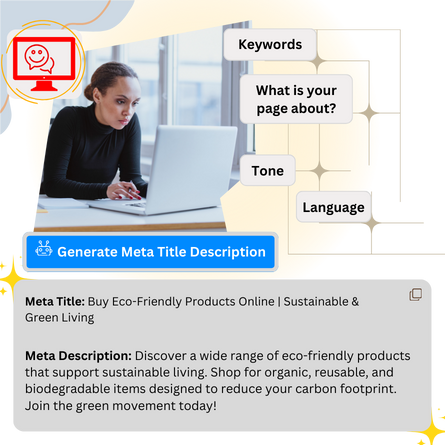
The speed advantage is obvious, but the true power of AI meta titles runs deeper. Marketing teams that adopt AI for title tag creation consistently report three transformative benefits that go well beyond saving time.
- Massive scalability without loss of relevance. A human copywriter might produce 20 carefully crafted title tags in a day. An AI can generate 200 unique, context-aware titles in the same time, each tailored to the specific page content. For large e-commerce sites with thousands of product and category pages, this is not a luxury—it is the only way to maintain unique, optimized title tags across every URL.
- Built-in keyword optimization with semantic depth. AI meta titles naturally weave in primary and secondary keywords in a readable way, avoiding the spammy feel of old-school auto-generation. The AI understands Latent Semantic Indexing keywords and will pepper these into titles without being explicitly told, strengthening topical relevance signals for search engines.
- Data-driven emotional targeting. The best AI tools analyze which words trigger higher engagement for your specific industry. A title for a law firm might perform better with “trust” and “experienced,” while a fashion retailer needs “trendy” and “affordable.” AI meta titles pull these emotionally charged words from aggregated performance data, not guesswork.
- Rapid A/B testing capability. Because AI can generate multiple variations of a single meta title, SEO teams can deploy a split-testing approach. Serve two different AI-generated titles for the same page over a month, measure CTR impact in Google Search Console, and let the data declare the winner. Manual creation rarely allows this volume of experimentation.
- Generic, same-sounding outputs across competitors. Because many AI tools are trained on similar public datasets, they can produce titles that feel interchangeable. When five competitors in the same niche use AI meta titles for the same keyword, the search results page can start to look monotonous. The titles lack the brand-specific quirks and unexpected phrasing that make a human-written tag stand out.
- Lack of deep brand voice and cultural nuance. AI can mimic tone if instructed, but it does not understand the lived experience behind your brand. A luxury hotel brand that uses words like “exclusive” and “curated” might receive AI meta titles that feel sterile or slightly off. The subtle emotional resonance that comes from a writer who has spent years absorbing the brand’s voice is absent. AI might also fail to account for regional colloquialisms or sensitive cultural references that could alienate a local audience.
- Risk of over-optimization and clickbait fatigue. AI models trained aggressively on CTR data may push titles toward sensationalism. What works temporarily for clicks can harm long-term trust if users feel misled after landing on the page. Google’s algorithms have become increasingly sensitive to such disconnects, and pages with titles that over-promise and under-deliver can suffer penguin-like adjustments in ranking stability.
- Character limit blindness in some free tools. Not all AI meta title generators respect the critical 50–60 character display limit on Google. A beautifully crafted 78-character title gets truncated, often cutting off the brand name or a key benefit. Humans naturally internalize this constraint; some AIs may ignore it if not explicitly instructed.
- Publishing AI output without any human touch. The AI does not know your inside jokes, your customer lingo, or the recent PR crisis that makes a certain word sensitive. Always apply a human filter. A title like “Kill It with Our New Shoes” might test well on CTR prediction but horrify a brand that emphasizes compassion.
- Forgetting to include the primary keyword close to the front. Some AI tools, especially older ones, generate clever titles that bury the keyword at the end. Google still weights the beginning of the title tag more heavily. Manually check that the main keyword appears in the first 30 characters whenever possible.
- Using the same AI meta title pattern for every page. If every product page on your site reads “Buy [Product Name] – Best Price & Free Shipping,” your search results will look like a robot factory. The AI can be instructed to vary structures. Tell it to alternate between listicles (“7 Reasons Why…”), direct benefit (“Save Up to 40% on…”), and question formats for different sections of the site.
- Neglecting to update titles for seasonal shifts and events. An evergreen AI meta title might work for 10 months of the year but fall flat during the holiday season. AI tools can regenerate seasonal titles in minutes. Schedule quarterly reviews to refresh titles for Black Friday, summer sales, or industry conferences.
- Always keep the title under 60 characters. Google displays roughly the first 50–60 characters of a title tag in search results. If the AI gives you 68 characters, cut it down yourself or instruct the AI strictly to stay within that limit. Use a character counter tool as a final gate before publishing.
- Make the title a standalone pitch. Users often scan a dozen results at once. Your AI meta title must make sense out of context. Avoid titles that reference something on the page that the user hasn’t seen yet. “Download the Whitepaper” is weak. “2025 SEO Trends Whitepaper – Free Download” works.
- Test including your brand name strategically. For well-known brands, placing the brand at the end of the title (e.g., “ | Nike”) can increase trust and CTR. For lesser-known sites, that space might be better used for a benefit. AI tools can be instructed to include or exclude your brand name. Test both approaches if you are not a household name.
- Regularly audit AI-generated titles for staleness. Market language evolves. A phrase that felt fresh two years ago can sound dated today. Run an annual audit of your top 100 organic landing pages. Feed their existing titles back into an AI tool and ask for “modernized” versions. Incremental CTR lifts across many pages add up to significant traffic gains.
Limitations and Critical Risks of AI Meta Titles
Enthusiasm for AI meta titles must be tempered with an honest assessment of where they fall short. Over-reliance without human oversight can damage brand perception and, ironically, hurt click-through rates. The technology is powerful, but not sentient.
AI Meta Titles vs. Human-Crafted Titles: A Side-by-Side Comparison
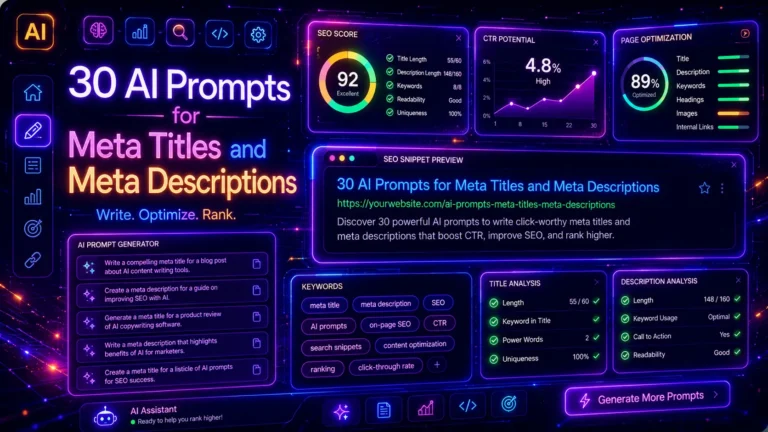
The choice is not binary. The most successful SEO strategies blend both approaches. The table below breaks down the key differences to help you decide when to let AI lead and when a human must take over.
| Aspect | AI Meta Titles | Human-Crafted Titles |
|---|---|---|
| Speed for bulk creation | Extremely fast; thousands per hour | Slow; 20–50 per focused work hour |
| Keyword integration | Precision-driven, includes semantic variants | Natural, may miss secondary keywords |
| Emotional subtlety | Learned from aggregate data, can feel formulaic | Deeply intuitive, grounded in brand empathy |
| Originality | Risk of homogenized phrasing across industry | Unique voice, unpredictable and fresh |
| Data-driven adaptation | Easily retrained on new CTR patterns | Relies on the marketer’s manual analysis |
| Cost | Low per title at scale | High for specialized senior copywriters |
A Practical Guide to Creating Effective AI Meta Titles
Moving from theory to execution requires a disciplined workflow. Throwing a keyword into a random AI tool and pasting the output will not improve your rankings. Follow this step-by-step process every time you generate AI meta titles.
Step 1: Choose an AI Tool Purpose-Built for Meta Titles
Do not use a generic chatbot with a simple prompt. Dedicated AI meta title tools are fine-tuned on search data and respect SEO character limits. Look for platforms that integrate directly with your CMS and allow you to set rules for brand names, title separators, and stop words. Some top options include Jasper’s SEO mode, SurferSEO’s title generator, and specialized modules in Clearscope or Semrush. These tools let you input a focus keyword, target search intent (informational, commercial, transactional), and even desired emotional angle.
Step 2: Build a Rich Input Prompt That Goes Beyond the Keyword
The quality of the output is directly proportional to the detail you provide. Instead of asking for “AI meta title for running shoes,” craft a prompt like: “Generate a meta title for a product category page. The primary keyword is ‘lightweight running shoes.’ The target audience is marathon runners concerned about joint impact. Include the brand name ‘StrideFlex.’ The tone should be supportive and science-backed. Keep between 50 and 60 characters. Include a power word.” The A
Step 3: Generate a Minimum of Seven Variations Per Page
One AI meta title is a suggestion; a set of seven is a strategy. Generate multiple versions. Ask the tool to vary the structure—some with questions, some with declaratives, some with colons or numbers. This batch gives you a palette to choose from and lets you identify which direction aligns best with your brand. You can also run these variations through a simple poll with your team or even a tiny ad test on platforms that allow rapid headline testing.
Step 4: Human Review and Emotional Edit
Never publish an AI meta title without an experienced SEO writer reviewing it. Read each candidate aloud. Does it sound like your brand? Would you click it if you saw your competitor’s name next to it? This is where you inject warmth, swap a generic word for a brand-specific term, or adjust the rhythm. Sometimes the A One small word change—swapping “buy” for “discover,” for example—can completely transform the emotional pull and still keep the keyword intact.
Step 5: Monitor Click-Through Rate and Iterate Monthly
An AI meta title is not a set-it-and-forget-it asset. Use Google Search Console to monitor the CTR for the page. If after four weeks the CTR is below the average for your position, ask the AI to generate new variations based on the same input but with a different slant. Maybe add urgency, a current year, or a benefit the original missed. This iterative loop of AI generation, human editing, and performance checking is where compound SEO gains happen.
Common Mistakes When Using AI Meta Titles (and How to Avoid Them)
Even savvy marketers fall into traps when they first adopt AI for title tag creation. Anticipating these errors will keep your pages competitive.
Important Notes for Long-Term Success with AI Meta Titles
Keep these foundational principles in mind as you integrate AI into your SEO workflow. They prevent short-term wins from turning into long-term optimization debt.
Frequently Asked Questions About AI Meta Titles
What exactly is an AI meta title?
An AI meta title is a page title tag written by artificial intelligence software rather than a human copywriter. The AI analyzes the page content, target keywords, and high-performing title patterns in your industry to suggest a clickable headline that fits within search engine character limits and aims to maximize organic click-through rate.
Do AI-generated meta titles hurt SEO?
Not inherently. AI meta titles that are accurate, relevant, and not misleading will not hurt your SEO. Google does not penalize a page simply because a machine wrote the title tag. Problems arise only when AI titles become clickbait that does not match the page content, when they are duplicated across many pages, or when they ignore the user’s search intent. A human review step eliminates these risks almost entirely.
How can I start using AI to write my meta titles today?
Begin with a dedicated SEO content platform like SurferSEO, Jasper, or Semrush’s SEO Writing Assistant. Provide the tool with your target keyword, a brief description of the page, and any specific requirements such as character count and brand name placement. Generate multiple options for each page, select the best candidates, and refine them manually before publishing. Most tools offer a free trial period.
Will AI eventually replace human copywriters for meta titles entirely?
For high-volume, product-driven sites, AI already handles the majority of meta title creation because of speed and consistency. However, for cornerstone content, brand storytelling, and industries where voice differentiation is a competitive advantage, human oversight remains irreplaceable. The most realistic future is a hybrid model where AI produces drafts and humans curate, emotionally tune, and approve the final tags.
What is the single best AI tool for creating meta titles?
T For advanced SEO teams that need deep integration with content optimization, Clearscope or SurferSEO excel. For marketing teams that want an all-in-one writing assistant, Jasper’s document mode with SEO mode enabled is a strong choice. For large e-commerce platforms, tools that connect directly to product catalogs and generate bulk titles via API are more appropriate. Test two or three against a sample of 50 pages to see which produces the most natural, brand-aligned results.
Conclusion: AI Meta Titles as a Force Multiplier for Modern SEO
The strategic value of AI meta titles cannot be reduced to a simple time-saving hack. They represent a fundamental upgrade to how search marketers think about title tags—from a one-time creative task to a continuous optimization loop. When implemented with thoughtful human oversight, these AI-generated titles consistently outperform manually written ones in terms of keyword precision and adaptability to shifting search behavior. The brands that will dominate the search results in the coming years are those that stop viewing AI as a replacement for creativity and start using it as an extension of their team’s strategic intuition. Start small, review ruthlessly, and let the data guide you. The tools are ready, and the click-through rewards are waiting.
Xem thêm:
- AI SEO Product Schema: The Complete Guide to Structured Data That Ranks
- AI SEO for Google Business Profile: The Complete Guide to Ranking in 2025
- AI SEO Ecommerce Content Generator: The Complete Guide to Scaling Product Pages in 2025
- AI SEO Archive Optimization: The Complete Guide to Maximizing Legacy Content Value
- AI SEO Semantic Search Optimization: The Complete Guide to Ranking in the Age of Machine Learning
Bài viết cùng chủ đề:

AI SEO SEO Automation with Make: The Complete Workflow Guide

AI SEO SEO Automation with Zapier: The Complete Workflow Guide

AI SEO SEO Automation with n8n: The Complete Workflow Guide
AI SEO SEO Automation with Gemini: The Complete Guide to Scaling Organic Growth

AI SEO SEO Automation with Claude: The Complete Guide to Scaling Content in 2025

AI SEO SEO Automation with ChatGPT: The Complete Playbook for 2025

AI SEO & SEO Automation for Affiliate Sites: The 2025 Playbook for Passive Income Growth
AI SEO & SEO Automation for Bloggers: The Complete Guide to Scaling Your Content

AI SEO & SEO Automation for Agencies: The Complete 2025 Playbook

AI SEO and SEO Automation for Ecommerce: The Complete Playbook for 2025

AI SEO & SEO Automation for WordPress: The Complete Playbook for 2025
AI SEO SEO Automation Strategy: The Complete Playbook for 2025

Mastering the AI SEO SEO Automation Process: A Complete Guide to Scaling Organic Growth
AI SEO SEO Automation System: The Complete Guide to Scaling Organic Growth in 2025
AI SEO SEO Automation Platform: The Complete Guide to Scaling Organic Growth in 2025
AI SEO SEO Automation Software: The Complete Guide to Scaling Organic Growth in 2025















