
No products in the cart.
AI SEO GEO Content: The Complete Guide to Generative Engine Optimization
10
Aug
Aug
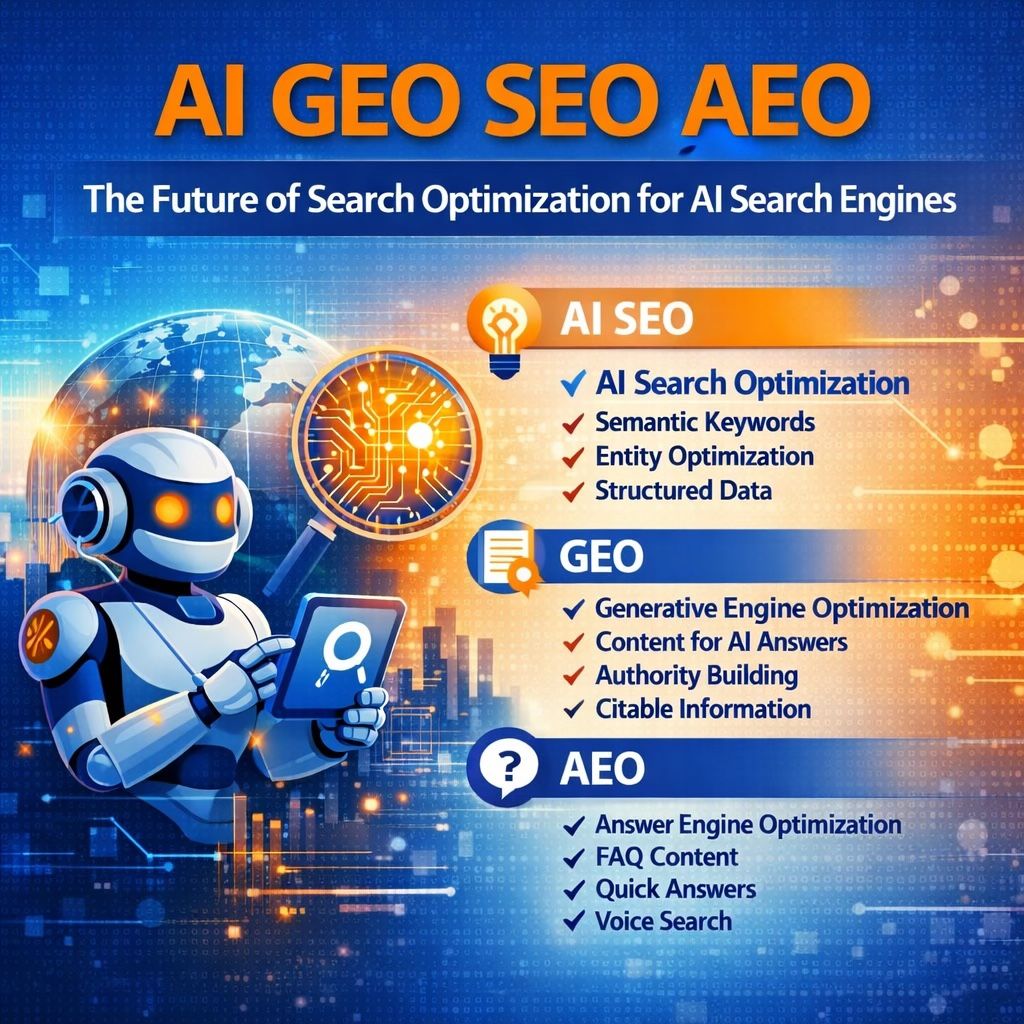
The digital marketing landscape is shifting at a pace that feels almost impossible to track. Traditional search engine optimization focused on ranking in a list of blue links. Today, a new force is reshaping how audiences discover, consume, and trust information. This force is the convergence of artificial intelligence, search optimization, and generative engine visibility. Understanding AI SEO GEO Content is no longer optional for brands that want to remain visible in an era where answers are generated, not just listed.
This guide breaks down everything you need to know about optimizing for generative engines, from the core concepts to actionable strategies that drive real traffic and authority.
What is AI SEO GEO Content?
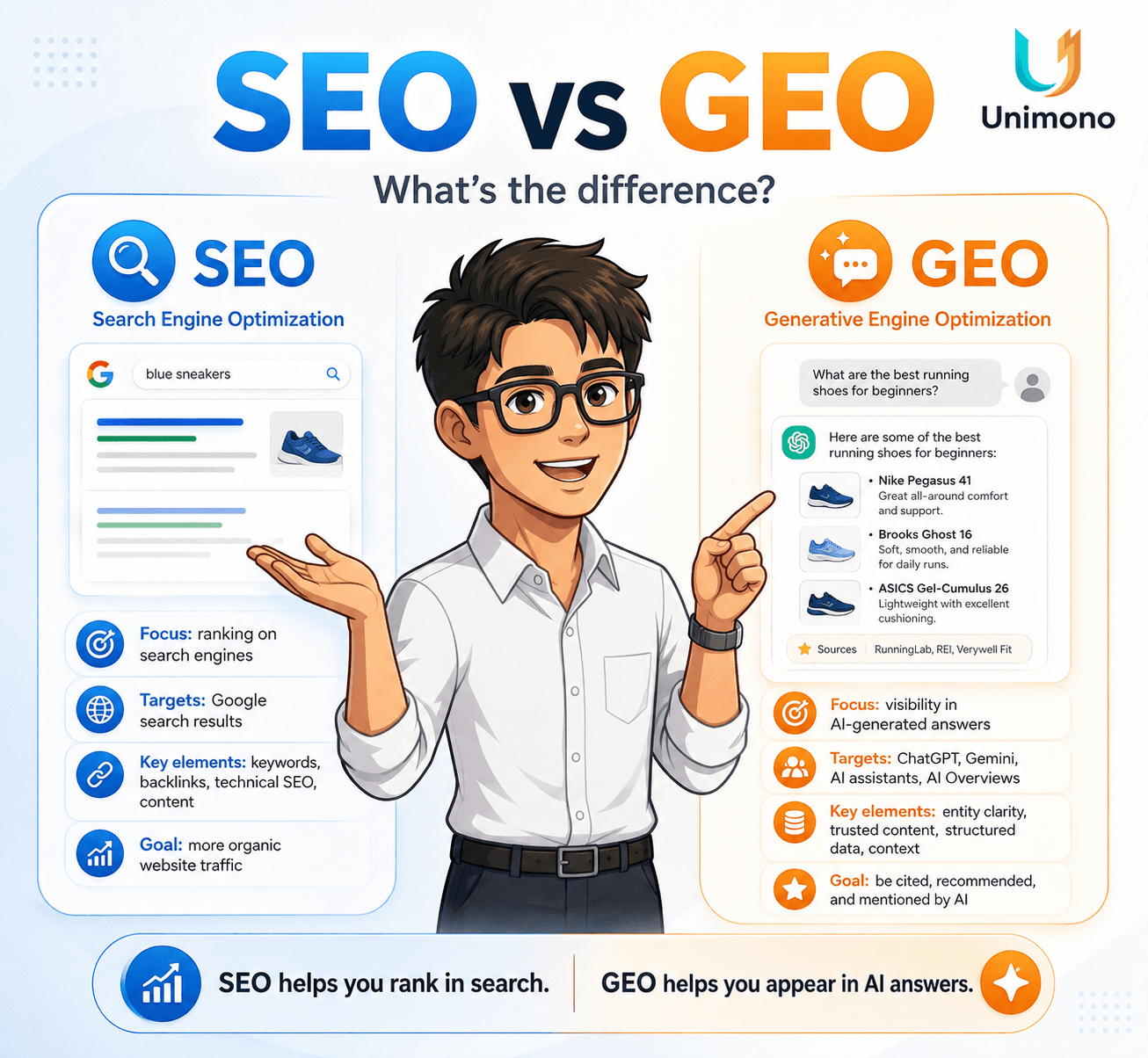
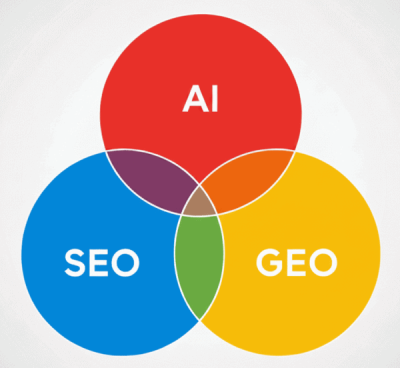
AI SEO GEO Content refers to a strategic approach to creating and structuring digital information so that it is easily understood, cited, and recommended by artificial intelligence systems, particularly Generative Engines like ChatGPT, Perplexity, Google AI Overviews, and Bing Copilot. GEO stands for Generative Engine Optimization.
While traditional SEO aims to satisfy a search engine crawler’s algorithm, GEO aims to satisfy the natural language processing (NLP) models that generate conversational answers. The goal is to become a primary source that an AI model trusts enough to reference when a user asks a complex question.
This is not about tricking the AI. It is about creating such clear, authoritative, and well-structured content that the AI recognizes it as the definitive answer to a user’s query. It combines the technical rigor of SEO with the clarity and depth required for machine learning models to parse and utilize the information effectively.
The Evolution: From SEO to GEO
To fully grasp the importance of AI SEO GEO Content, it helps to look at the timeline of how we have accessed information online.
The Era of Traditional SEO
For two decades, SEO was about keywords, backlinks, and technical site health. Marketers optimized for a specific algorithm (Google’s PageRank and its many updates). The user would type a query, and the search engine would return a list of ten links. The goal was to get your link on page one. The content itself was often secondary to the technical signals surrounding it.
The Rise of the Zero-Click Search
As search engines became smarter, they started providing answers directly on the search results page. Featured snippets, knowledge panels, and “People Also Ask” boxes reduced the need for users to click through to a website. This was the precursor to the generative engine. Users got their answer without leaving the search page, but the source was still a specific URL.
The Generative Engine Shift
Generative engines represent a fundamental change. Instead of listing sources, they synthesize information from multiple sources to create a single, coherent, conversational answer. When you ask ChatGPT a question, it does not show you a list of links first. It gives you a paragraph, a bulleted list, or a table. It only cites sources as an afterthought, often in small text at the bottom.
This means that if your content is not part of the “training data” or the live retrieval set that the AI uses, you are invisible. The shift is from ranking to being referenced. This is the core of AI SEO GEO Content.
How Generative Engines Select Content
Generative engines do not browse the web in real-time for every query. They rely on a combination of pre-trained knowledge and live retrieval (RAG – Retrieval-Augmented Generation). Understanding this process is crucial for creating content that gets selected.
The AI looks for specific signals to determine which sources to use for its answer. These signals include:
- Clarity and Structure: Content that uses clear headings, bullet points, and tables is easier for the AI to parse and extract data from.
- Authority and Trust: The AI prioritizes sources that are consistently accurate, well-cited, and recognized as industry leaders.
- Unique Data: Content that includes original research, proprietary statistics, or unique insights is highly valuable because it offers information the AI cannot find elsewhere.
- Entity Recognition: The AI needs to understand who you are, what you are talking about, and how you relate to other concepts. Clear entity definitions (e.g., “Apple Inc. is a technology company”) help the AI map your content.
- Quotability: Content that contains concise, definitive statements is more likely to be quoted verbatim in an AI answer.
- Articles
- FAQs
- How-to guides
- Products
- Organizations
- Including author bios with credentials.
- Linking to reputable external sources (e.g., government sites, academic papers).
- Getting cited by other authoritative sites.
- Updating content regularly to ensure accuracy.
- The Hook: A clear statement of the problem or question.
- The Answer: A direct, concise answer to the query.
- The Context: A brief explanation of why this answer is correct.
- Future-Proofing: As AI adoption grows, visibility in these engines will become as important as Google rankings are today.
- Higher Trust: Being cited by an AI often carries more weight with users than a traditional ad or a blue link.
- Brand Authority: If ChatGPT recommends your product or cites your data, it positions you as a thought leader in your industry.
- Reduced CPC Pressure: Organic visibility in AI answers can reduce the need for expensive pay-per-click campaigns.
- Lack of Control: You cannot “buy” a spot in an AI answer. It is earned through trust and authority, which takes time.
- Attribution Issues: Users often do not click through to the source. They trust the AI’s answer, meaning you may get the brand impression but not the website traffic.
- Algorithm Volatility: AI models are updated frequently. What works today to get cited might not work tomorrow.
- Resource Intensive: Creating the depth of content required for GEO is time-consuming and requires high-level expertise.
- Consistency is Key: The AI needs to see a pattern of consistent publishing and updating. A one-off “perfect” article is less valuable than a steady stream of good content.
- Monitor Brand Mentions: Use tools like Google Alerts or Brand24 to track when your brand is mentioned in AI responses. This is your new “ranking report.”
- Focus on User Experience: The best way to optimize for AI is to optimize for the user. If a human finds your content clear, helpful, and engaging, the A
- Diversify Your Content Types: Do not just write blog posts. Create videos, podcasts, infographics, and interactive tools. The AI can pull data from all these formats.
- Stay Updated: The field of AI is moving fast. Follow industry leaders in the GEO space to stay ahead of the curve.
Core Components of AI SEO GEO Content Strategy
Creating content for generative engines requires a different mindset than writing for a human skimming a blog post. Here are the core components you need to master.
1. Entity-First Optimization
Instead of focusing solely on keywords, focus on entities. An entity is a specific person, place, thing, or concept. For example, if you are writing about “digital marketing,” the entities involved might be “SEO,” “Content Marketing,” “Google,” and “Social Media.”
Your content should clearly define these entities and their relationships. Use consistent naming conventions and avoid ambiguous pronouns. The AI needs to know that “Apple” refers to the fruit or the tech company based on the context you provide.
2. Structured Data and Schema Markup
While traditional SEO uses schema to help Google understand the page, GEO uses it to help the AI model extract specific facts. Use schema markup for:
This provides a clear, machine-readable map of your content’s key information.
3. Direct Answer Formatting
Generative engines love content that gets straight to the point. The “zero-click” format is now the “zero-scroll” format. Structure your content so that the answer to the main query appears within the first 100-150 words of the article.
Use the “inverted pyramid” style: put the conclusion first, then the supporting details. This increases the likelihood that the A
4. Comprehensive Coverage
Generative engines are designed to provide complete answers. If your content only covers one aspect of a topic, the A Your content should be exhaustive, covering the basics, the advanced concepts, the pros, the cons, and the alternatives.
This is where the “long-form” aspect of AI SEO GEO Content becomes critical. A 500-word article rarely provides enough context for an AI to consider it a comprehensive source.
5. Authoritativeness and Citations
In the world of GEO, “E-E-A-T” (Experience, Expertise, Authoritativeness, Trustworthiness) is more important than ever. The AI is trained to recognize authoritative sources. You can build this authority by:
Practical Guide: How to Create AI SEO GEO Content
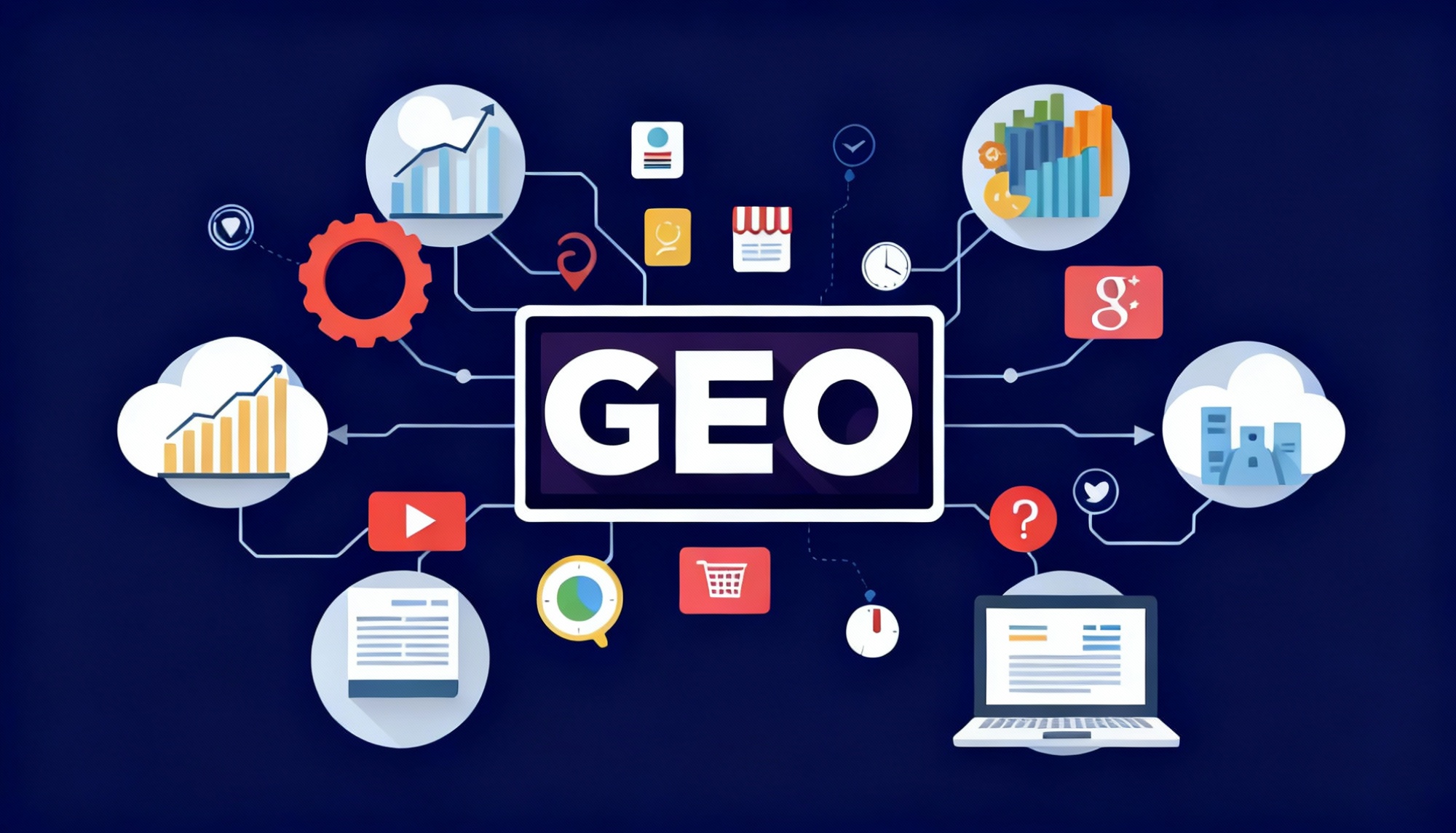
Now that we understand the theory, let’s look at the practical steps to implement this strategy. This is a workflow that combines research, writing, and technical optimization.
Step 1: Identify the “Answer Gap”
Traditional keyword research focuses on search volume. For GEO, you need to focus on the “answer gap.” What questions are people asking that current AI responses do not answer well? Use tools like “AnswerThePublic” or analyze the “People Also Ask” sections on Google to find these gaps.
Look for questions that require synthesis. For example, “What is the best marketing strategy for a small business?” is a complex question that requires the AI to combine data on budget, channels, and audience. Your content should aim to be the definitive guide to that specific question.
Step 2: Write for the “Zero-Scroll” Reader
Assume the reader (or the AI) will only read the first 200 words. Make them count. State the answer clearly, define the key terms, and outline the structure of the rest of the article.
Example structure for the intro:
Step 3: Use Tables and Lists for Data Extraction
Generative engines are excellent at reading tables. If you have comparative data, pros/cons, or statistical breakdowns, put them in a table. This makes it incredibly easy for the AI to extract the exact numbers and facts it needs to generate an answer.
Example of a comparison table for content strategy:
| Feature | Traditional SEO | AI SEO GEO |
|---|---|---|
| Primary Target | Search Engine Algorithm | NLP Model / AI |
| User Intent | Clicks to a website | Direct answer in the engine |
| Content Format | Blog posts, landing pages | Structured data, FAQs, summaries |
| Key Metric | Rankings, Organic Traffic | Brand Mentions, AI Citations |
| Optimization Focus | Keywords, Backlinks | Entities, Clarity, Authority |
Step 4: Implement FAQ Schema
FAQs are a goldmine for GEO. They directly match the question-and-answer format that generative engines use. Create a dedicated FAQ section at the end of your article and mark it up with FAQPage schema. This tells the AI exactly what questions your content answers.
Step 5: Build a “Citation Network”
In traditional SEO, you build backlinks. In GEO, you build a citation network. This means ensuring that your brand and your content are mentioned across various platforms—social media, industry forums, news sites, and other blogs. The AI needs to see your name associated with your expertise in multiple places to trust you.
Benefits and Limitations of AI SEO GEO Content
Like any strategy, focusing on generative engine optimization has its advantages and its drawbacks. Being aware of both helps set realistic expectations.
The Benefits
The Limitations
Common Mistakes and How to Avoid Them
Many brands are rushing to implement GEO strategies and making critical errors. Here are the most common pitfalls and how to steer clear of them.
Mistake 1: Keyword Stuffing in AI Content
Generative engines are designed to understand context. Stuffing your content with the exact keyword “AI SEO GEO Content” repeatedly will make the text unreadable and reduce its perceived quality. The A
Solution: Use the keyword naturally in the title, the first paragraph, and one or two subheadings. Use synonyms and related terms (LSI keywords) throughout the rest of the text.
Mistake 2: Ignoring the “Why”
AI engines are great at answering “What” and “How,” but they struggle with “Why.” If your content explains the reasoning behind a strategy, the underlying principles, and the psychological triggers, it provides a depth that the AI cannot synthesize from thin air.
Solution: Always include a section on “Why this matters” or “The underlying principles.”
Mistake 3: Relying Solely on AI to Write the Content
It is ironic that many are using AI to write content for AI. While AI tools are great for drafting, they often produce generic, low-authority text. The AI engines are trained to detect this lack of originality.
Solution: Use AI to generate outlines and research, but have a human expert rewrite the content, inject personal experience, and add unique data points.
Mistake 4: Neglecting Technical SEO
GEO does not replace SEO; it builds upon it. If your site is slow, has broken links, or lacks proper schema, the AI crawler will have a hard time accessing and understanding your content.
Solution: Ensure your technical foundation is solid. Fast loading times, mobile responsiveness, and clean URL structures are non-negotiable.
Important Notes for Long-Term Success
As you implement your AI SEO GEO Content strategy, keep these critical notes in mind. They will help you navigate the changing landscape with confidence.
Frequently Asked Questions (FAQ)
What is the difference between SEO and GEO?
SEO (Search Engine Optimization) focuses on ranking a website in traditional search engine results pages (SERPs) to drive clicks. GEO (Generative Engine Optimization) focuses on making your content the primary source of information for AI-generated answers, aiming for brand visibility and citations within the AI response itself, rather than just a click-through.
How do I measure the success of AI SEO GEO Content?
Success is measured differently than traditional SEO. Instead of just tracking organic traffic, track brand mentions in AI tools like ChatGPT or Perplexity. Monitor the number of times your content is cited as a source. Also, track “zero-click” conversions—where users see your brand in the AI answer and visit your site directly by typing your URL.
Is traditional SEO dead because of AI?
No, traditional SEO is not dead, but it is evolving. The technical aspects of SEO (site speed, crawlability, schema) are still essential. However, the content strategy is shifting. You are no longer just optimizing for a search engine crawler; you are optimizing for a language model that uses your content to generate answers. The principles of good SEO (authority, relevance, trust) are the same, but the application is different.
Can small businesses compete in the GEO space?
Yes, small businesses can compete, but they need to be strategic. They cannot compete with large brands on sheer volume of content. Instead, they should focus on niche expertise. By creating highly detailed, authoritative content on a very specific topic (long-tail queries), they can become the go-to source for that specific entity, which the A
What types of content are best for Generative Engine Optimization?
Content that answers specific questions with clear, concise data performs best. This includes “How-to” guides, comparison articles, listicles, and FAQ pages. Content that includes original research, statistics, and expert quotes is also highly valuable because it provides unique data points that the AI cannot find elsewhere.
Conclusion
The shift from Search Engine Optimization to Generative Engine Optimization is not a passing trend; it is a fundamental change in the architecture of the internet. Users are moving from browsing links to conversing with AI. To remain visible, your content strategy must evolve to meet this new reality.
AI SEO GEO Content is about building a digital presence that is so clear, so authoritative, and so well-structured that AI systems cannot ignore it. It requires a commitment to quality, a focus on entities over keywords, and a willingness to adapt to new technologies. By implementing the strategies outlined in this guide—focusing on direct answers, structured data, and comprehensive coverage—you position your brand not just to be found, but to be trusted as the definitive source of information in your industry.
The brands that succeed in the next decade will be those that treat AI not as a threat, but as the most important audience they have ever had. Start optimizing for the generative engine today, and you will secure your place in the answers of tomorrow.
Xem thêm:
- AI SEO Seed Keywords: The Complete Guide to Smarter Content Discovery
- AI SEO AI Visibility Audit: The Complete Guide to Dominating Search in 2025
- The Ultimate AI SEO Checklist: 25 Steps to Rank Higher in 2025
- AI SEO Keyword Suggestions: The Complete Guide to Smarter Search Rankings
- AI SEO AI Brand Monitoring: The Complete Guide to Protecting Your Digital Reputation
Bài viết cùng chủ đề:

AI SEO SEO Automation with Make: The Complete Workflow Guide

AI SEO SEO Automation with Zapier: The Complete Workflow Guide

AI SEO SEO Automation with n8n: The Complete Workflow Guide
AI SEO SEO Automation with Gemini: The Complete Guide to Scaling Organic Growth

AI SEO SEO Automation with Claude: The Complete Guide to Scaling Content in 2025

AI SEO SEO Automation with ChatGPT: The Complete Playbook for 2025

AI SEO & SEO Automation for Affiliate Sites: The 2025 Playbook for Passive Income Growth
AI SEO & SEO Automation for Bloggers: The Complete Guide to Scaling Your Content

AI SEO & SEO Automation for Agencies: The Complete 2025 Playbook

AI SEO and SEO Automation for Ecommerce: The Complete Playbook for 2025

AI SEO & SEO Automation for WordPress: The Complete Playbook for 2025
AI SEO SEO Automation Strategy: The Complete Playbook for 2025

Mastering the AI SEO SEO Automation Process: A Complete Guide to Scaling Organic Growth
AI SEO SEO Automation System: The Complete Guide to Scaling Organic Growth in 2025
AI SEO SEO Automation Platform: The Complete Guide to Scaling Organic Growth in 2025
AI SEO SEO Automation Software: The Complete Guide to Scaling Organic Growth in 2025















