
No products in the cart.
AI Paraphrasing: The Ultimate Guide to Rewriting Content With Artificial Intelligence
29
Jul
Jul
AI paraphrasing has rapidly evolved from a niche linguistic tool into a cornerstone of modern content creation. By applying sophisticated algorithms and deep learning, these systems rephrase sentences, paragraphs, or entire articles in seconds. Writers, marketers, academics, and business professionals now rely on AI paraphrasing to enhance clarity, avoid duplication, and scale content production. This guide unpacks every layer of the technology—from its foundational mechanics to real-world applications and ethical boundaries—offering a practical blueprint for anyone who wants to leverage AI paraphrasing with confidence and precision.
What Is AI Paraphrasing?
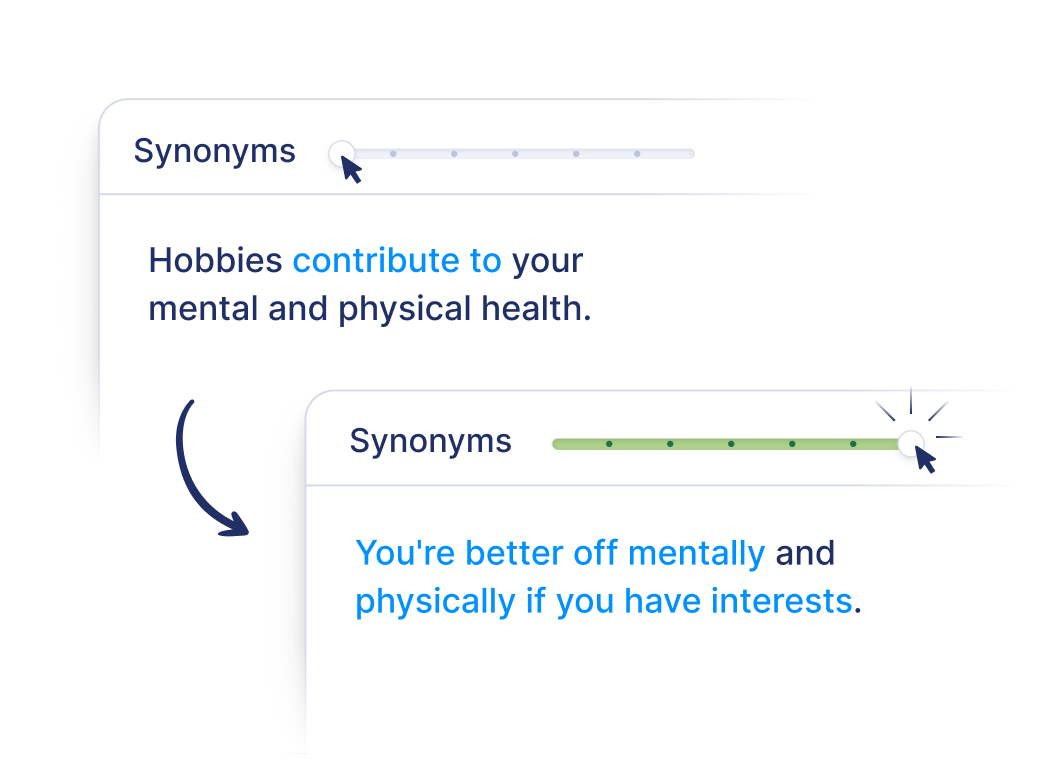
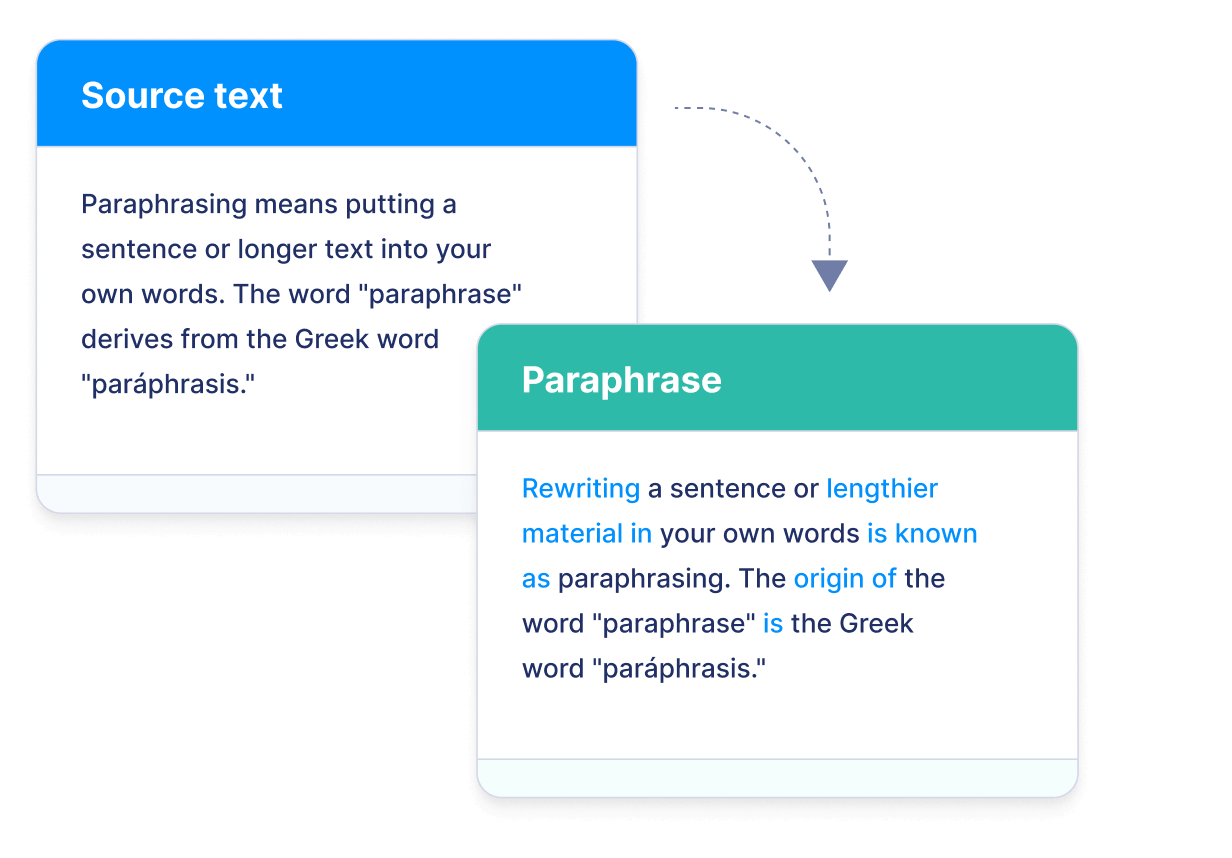
AI paraphrasing refers to the process of using artificial intelligence to rewrite a piece of text while retaining its original meaning. Unlike simple synonym swapping, modern AI paraphrasers analyze sentence structure, context, and tone to generate uniquely worded versions of the input. The goal is to produce content that reads naturally and conveys the same information without plagiarizing the source. This technology falls under natural language generation (NLG), a subfield of natural language processing (NLP). Leading platforms such as QuillBot, Wordtune, Jasper, and Grammarly’s rewrite feature exemplify how AI paraphrasing has become accessible and remarkably effective for everyday use.
How AI Paraphrasing Works
At its core, AI paraphrasing relies on transformer-based language models trained on massive text corpora. These models learn statistical relationships between words, phrases, and entire sentence patterns. When you submit a text, the AI encodes its meaning into a high-dimensional vector space, then decodes it through a generative process that selects alternative words and syntactic arrangements while preserving semantic coherence. Key techniques include:
- Contextual word embeddings – Models like BERT and GPT capture nuanced word meanings based on surrounding text.
- Sequence-to-sequence learning – The model treats paraphrasing as a translation task, mapping an original sentence to a paraphrased output.
- Attention mechanisms – These allow the AI to weigh different parts of the input differently, ensuring critical information remains intact.
- Fine-tuning on paraphrase datasets – Curated pairs of original and paraphrased sentences help the model mimic high-quality human rewriting.
- Unmatched speed – A task that might take a human writer thirty minutes can be completed in seconds, freeing up creative energy for strategy and editing.
- Consistency at scale – AI paraphrasing maintains a uniform tone and voice across thousands of product descriptions, social media posts, or report sections.
- Plagiarism avoidance – By generating structurally different sentences, these tools help writers incorporate research into new work without duplicating source text.
- Improved readability – Complex or jargon-heavy passages can be instantly simplified, making content more accessible to broader audiences.
- Multilingual support – Many paraphrasers now offer cross-lingual rewriting, allowing a single idea to be expressed naturally in multiple languages.
- Writer’s block relief – Seeing an alternate phrasing often sparks new angles, unblocking creativity during the drafting process.
- Loss of nuance – Irony, sarcasm, and cultural references may be flattened or entirely misinterpreted.
- Factual drift – In rare cases, the AI might inadvertently alter a statistic, date, or proper noun, introducing inaccuracies.
- Generic output – When used without customization, the paraphrase can sound bland or robotic, lacking the distinctive voice of a human author.
- Ethical ambiguity – Using AI to rewrite academic papers or copyrighted material without attribution can still constitute plagiarism or unethical conduct.
- Over-reliance risk – Heavily depending on paraphrasing tools erodes a writer’s own ability to rephrase and think critically about language.
- Select the right tool – Choose a reputable AI paraphrasing platform that aligns with your needs. For short, creative copy, a tool with tone control may be best. For academic work, opt for one that emphasizes factual preservation.
- Prepare your source text – Ensure the original is clear and grammatically correct. AI models amplify existing errors, so fixing typos and awkward phrasing before paraphrasing prevents flawed outputs.
- Choose the appropriate mode – Many tools offer modes like “standard,” “fluency,” “creative,” or “formal.” Select the one that matches your intent. For professional documents, a “formal” mode usually works best, while “creative” suits storytelling.
- Paraphrase in manageable chunks – Instead of feeding an entire article at once, work paragraph by paragraph. This allows the AI to focus on local coherence and reduces the risk of contextual drift.
- Review and refine – Compare the output with the original. Verify that meaning is intact and key terminology remains accurate. Adjust word choice manually where the AI missed nuance.
- Run a plagiarism and grammar check – Even after paraphrasing, scanning for unintentional similarities and grammatical errors is essential. Tools like Grammarly or Copyscape can serve as a final safety net.
- Add your unique voice – Infuse the text with personal insights, examples, or stylistic touches. This step transforms a generic paraphrase into authentic, human-centered content.
- Blindly trusting the output – The AI may introduce factual inaccuracies or awkward phrasing that goes unnoticed without a thorough review.
- Skipping plagiarism checks – AI paraphrasing can still produce text that mirrors the source too closely, especially with short or highly technical passages. Verification is critical.
- Using paraphrasing as a substitute for original thinking – The best content combines machine efficiency with human creativity. Relying solely on AI dilutes the author’s perspective.
- Ignoring citation requirements – Even a perfectly reworded idea from another author demands proper attribution in academic and journalistic settings.
- Overusing the same tool or mode – Repeatedly applying the same paraphrasing style leads to monotonous, detectable patterns. Varying tools and manual editing avoids this trap.
Advanced tools also incorporate tone and style controls, enabling users to request formal, casual, creative, or concise rewrites. The entire process often happens in milliseconds, making AI paraphrasing a near-instantaneous aid in content workflows.
Types of AI Paraphrasing Tools
Not all paraphrasing tools are built alike. The market offers a spectrum of solutions, each with distinct operational principles and use cases.
Rule-Based Paraphrasers
Early tools relied on pre-programmed synonym replacement rules and basic sentence restructuring templates. While fast and deterministic, they frequently produced awkward or grammatically incorrect outputs. They still exist in lightweight browser extensions but rarely meet professional standards.
Statistical Machine Learning Models
These models use probability distributions to select replacements based on co-occurrence in large corpora. They improve fluency compared to rule-based systems but often lack deep contextual understanding. Output can be inconsistent, especially with longer texts.
Neural Network-Based Paraphrasers
This is the current standard. Built on transformer architectures, neural paraphrasers excel at understanding context and generating human-like rewrites. They can handle idiomatic expressions, domain-specific jargon, and even adapt the paraphrasing style. Many commercial tools blend neural generation with post-processing grammar checks.
Hybrid Systems
Some enterprise platforms combine neural generation with rule-based safeguards and human-in-the-loop validation. This approach minimizes errors in sensitive fields like legal or medical documentation, where precision is paramount.
Key Benefits of AI Paraphrasing
Adopting AI paraphrasing tools yields tangible advantages that extend well beyond simple rewording.
Limitations and Challenges
Despite impressive progress, AI paraphrasing is far from flawless. Recognizing its boundaries helps users deploy it responsibly.
Quality control through human review remains non-negotiable for any content intended for publication or formal submission.
AI Paraphrasing vs. Human Paraphrasing
Understanding the differences between machine and human rewriting clarifies when each approach is appropriate.
| Aspect | AI Paraphrasing | Human Paraphrasing |
|---|---|---|
| Speed | Produces output in milliseconds | Requires minutes to hours depending on length |
| Depth of understanding | Statistical pattern matching; may miss subtle subtext | Grasps intent, emotion, and cultural context |
| Creativity | Limited to learned phrasing; can feel formulaic | Truly original rephrasing with stylistic flair |
| Error rate | Occasional grammatical or factual slip-ups | Errors still possible but usually infrequent with skilled writers |
| Cost | Low—many tools offer free tiers or modest subscriptions | Higher when hiring professional editors or writers |
| Scalability | Excellent for high-volume, repetitive content | Best suited for nuanced, high-stakes pieces |
Practical Applications of AI Paraphrasing
The versatility of AI paraphrasing makes it a valuable asset across multiple domains.
Content Marketing and SEO
Marketers use AI paraphrasing to create multiple versions of blog intros, meta descriptions, and ad copy for A/B testing. By refreshing existing articles, they can extend a piece’s lifecycle while maintaining search engine friendliness. Tools also help avoid duplicate content penalties by generating unique phrasing for similar topic clusters.
Academic Writing and Research
Students and researchers deploy paraphrasing to integrate source material without quoting excessively. When paired with a plagiarism checker, AI paraphrasing can ensure that rewritten passages remain original while upholding academic integrity—provided the final text is properly cited.
Business Communication
Emails, reports, and proposals often need to be tailored for different stakeholders. A formal summary for executives and a simplified version for team members can be generated quickly through paraphrasing, maintaining message consistency while adapting tone.
Language Learning
Learners use AI paraphrasing to see alternative ways of expressing a thought, expanding vocabulary and grammatical intuition. Comparing the original, AI-rewritten version, and their own attempt accelerates comprehension.
Social Media Management
Social media managers craft platform-specific variations of a post. The same idea can be paraphrased to match Twitter’s brevity, LinkedIn’s professionalism, or Instagram’s conversational style, all while retaining the core message.
Step-by-Step Guide: How to Use AI Paraphrasing Effectively
Maximizing the value of AI paraphrasing requires more than simply pasting text and accepting the first result. The following workflow elevates output quality.
Common Mistakes to Avoid When Using AI Paraphrasing
Even experienced users slip into habits that undermine the benefits of AI paraphrasing. Steering clear of these pitfalls keeps content ethical and effective.
Important Considerations and Ethical Notes
AI paraphrasing resides in a gray zone that demands careful ethical navigation. In academic contexts, many institutions explicitly classify uncredited AI-assisted rewrites as plagiarism, even if the wording appears original. Professional writers should disclose AI assistance when transparency is valued, particularly in journalism and research. From a legal standpoint, paraphrasing copyrighted content does not automatically circumvent intellectual property laws; substantial similarity can still constitute infringement. Ultimately, the responsibility for originality and integrity rests with the user, not the tool. Implementing a clear internal policy on AI paraphrasing—defining when it is acceptable and what review steps are mandatory—protects both credibility and legal standing.
Frequently Asked Questions About AI Paraphrasing
What is the difference between AI paraphrasing and an article spinner?
AI paraphrasing uses neural networks to understand context and generate grammatically sound rewrites, whereas article spinners typically rely on simple synonym replacement that often results in unreadable text. The modern AI approach produces natural, coherent content suitable for professional use, while spinners are largely obsolete and harmful to SEO.
Can AI paraphrasing help avoid plagiarism?
It can reduce the risk of accidental copying by restructuring sentences and applying new vocabulary, but it does not guarantee originality. A paraphrased text may still be flagged if it reproduces the source’s structure or closely mimics key phrases. For full protection, always combine AI paraphrasing with a reliable plagiarism checker and, when appropriate, cite the original source.
Is it legal to use AI-paraphrased content for commercial purposes?
Yes, in most cases, as long as the original material was not copied in a way that infringes copyright. When paraphrasing content that is in the public domain or for which you have the right to create derivative works, commercial use is generally permissible. However, paraphrasing proprietary data, trade secrets, or copyrighted works without permission can lead to legal complications.
How accurate are AI paraphrasing tools with technical or scientific content?
Accuracy varies. Neural models trained on general corpora may misinterpret domain-specific terminology. Leading tools now offer specialized modes or allow users to define custom glossaries, improving reliability. For mission-critical technical documents, human expert review remains essential to prevent costly misstatements.
Does Google penalize AI-paraphrased content?
Google’s algorithms evaluate content based on quality, helpfulness, and originality, not on the tool used to create it. If the final text provides unique value and reads naturally, it can perform well in search rankings. Poorly paraphrased, low-value content that merely rehashes existing pages may trigger ranking drops, regardless of how it was produced.
Conclusion
AI paraphrasing has permanently changed how content gets rewritten, offering a blend of speed, scalability, and linguistic flexibility that was unimaginable just a few years ago. From marketers refreshing campaign copy to students mastering academic tone, the technology empowers users to work smarter without sacrificing meaning. Yet, its true potential only unfolds when paired with sharp human judgment. Reviewing output, preserving factual accuracy, and maintaining ethical standards transform AI paraphrasing from a mere shortcut into a strategic advantage. As language models continue to advance, the line between machine and human writing will blur further, but the demand for authentic, well-curated content will only intensify. Those who master the art of blending AI efficiency with human insight will set the standard for the next era of communication.
Xem thêm:
- AI SEO Looker Studio: The Complete Guide to Automated Reporting
- AI SEO Software: How Artificial Intelligence Is Redefining Search Optimization in 2025
- AI Local SEO: The Smart Way to Dominate Neighborhood Search Results
- AI SEO Knowledge Management: The Complete Guide to Scaling Organic Growth in 2025
- AI SEO Content Syndication: The Complete Guide to Scaling Your Reach in 2025
Bài viết cùng chủ đề:

AI SEO SEO Automation with Make: The Complete Workflow Guide

AI SEO SEO Automation with Zapier: The Complete Workflow Guide

AI SEO SEO Automation with n8n: The Complete Workflow Guide
AI SEO SEO Automation with Gemini: The Complete Guide to Scaling Organic Growth

AI SEO SEO Automation with Claude: The Complete Guide to Scaling Content in 2025

AI SEO SEO Automation with ChatGPT: The Complete Playbook for 2025

AI SEO & SEO Automation for Affiliate Sites: The 2025 Playbook for Passive Income Growth
AI SEO & SEO Automation for Bloggers: The Complete Guide to Scaling Your Content

AI SEO & SEO Automation for Agencies: The Complete 2025 Playbook

AI SEO and SEO Automation for Ecommerce: The Complete Playbook for 2025

AI SEO & SEO Automation for WordPress: The Complete Playbook for 2025
AI SEO SEO Automation Strategy: The Complete Playbook for 2025

Mastering the AI SEO SEO Automation Process: A Complete Guide to Scaling Organic Growth
AI SEO SEO Automation System: The Complete Guide to Scaling Organic Growth in 2025
AI SEO SEO Automation Platform: The Complete Guide to Scaling Organic Growth in 2025
AI SEO SEO Automation Software: The Complete Guide to Scaling Organic Growth in 2025















