
No products in the cart.
The Ultimate Guide to AI Prompt Optimization: Unlocking Precision in Every AI Interaction

29
Jul
Jul
Effective communication with artificial intelligence hinges on one critical skill: AI Prompt Optimization. As large language models become integrated into daily workflows, the difference between a vague instruction and a meticulously crafted prompt can mean the gap between unusable output and a result that drives revenue. This comprehensive guide breaks down the methodology, explores advanced techniques, and provides actionable strategies to turn prompt writing into a systematic advantage. You will discover how to reduce hallucination, amplify relevance, and build repeatable templates that save hours of manual correction.
What is AI Prompt Optimization?
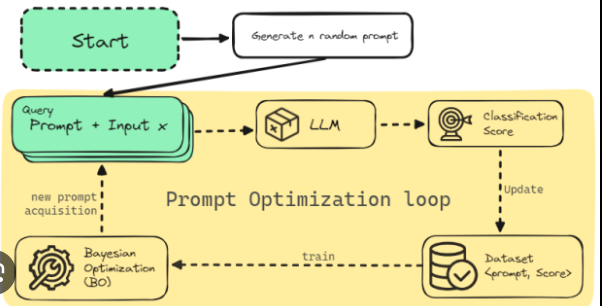
At its core, AI prompt optimization is the structured process of iteratively refining input text to maximize the quality, accuracy, and consistency of a language model’s response. It goes beyond simple “prompt engineering” by introducing a continuous improvement loop that leverages output analysis, user feedback, and domain-specific constraints. A well-optimized prompt does not merely ask the model a question—it frames the task with precise role definition, stylistic boundaries, and contextual anchors that guide the model’s latent space toward the desired output distribution.
The discipline borrows from instructional design, linguistics, and software testing. Practitioners treat prompts as testable units that can be version-controlled, measured, and tuned for specific metrics such as factual accuracy, response length, or sentiment alignment. Whether you are generating marketing copy, code snippets, or medical summaries, the underlying principle remains the same: explicit constraints reduce entropy, leading to outputs that match expectations with minimal error.
The Core Principles of AI Prompt Optimization
Successful optimization rests on a handful of immutable principles. These are not model-specific; they apply to GPT, Claude, Gemini, and open-source alternatives alike. Understanding them forms the foundation of every advanced technique.
- Specificity over ambiguity. Replace “write a blog post about health” with “write a 600-word blog post on the benefits of intermittent fasting for women over 40, using a conversational tone and citing three peer-reviewed studies.” The narrower the aperture, the tighter the model’s focus.
- Context windows as working memory. Provide relevant background directly within the prompt. If the task is to summarize a legal document, include a sample summary you consider excellent. This in-context learning dramatically improves coherence.
- Role assignment. Prepend the prompt with “You are a seasoned patent attorney” or “You are a senior frontend developer with 15 years of React experience.” This primes the model’s statistical persona, aligning vocabulary and reasoning patterns with the desired expertise.
- Explicit output formatting. Specify structure: “Return a JSON object with keys ‘title’, ‘summary’, and ‘tags’,” or “Present the answer as a bulleted list with no more than five items.” Unambiguous formatting instructions prevent narrative drift.
- Iterative constraint layering. Begin with a broad prompt, observe the output, then add one constraint at a time. This isolates which element shifts performance, enabling data-driven refinement.
- Radically reduced error rates. Optimized prompts cut hallucination frequency by as much as 60% in some internal benchmarks, particularly when grounded with explicit sourcing instructions.
- Consistent brand voice. Marketing teams can replicate a specific tone—witty, empathetic, authoritative—across thousands of assets without manual editing.
- Faster time-to-value. Developers move from experimentation to deployment in half the time when using a versioned prompt library with proven templates.
- Cost efficiency. Shorter, tighter prompts reduce token consumption. Optimized prompts often use 20-30% fewer tokens by removing redundant framing, directly lowering API costs.
- Cross-model portability. A well-architected prompt transfers more easily between models, reducing rework when switching providers.
- Enhanced safety and compliance. Granular constraints prevent the generation of toxic, biased, or non-compliant content, a critical requirement in regulated industries.
- Over-constraining early. Adding too many rules upfront stifles the model’s ability to reason. Start broad, then tighten. Over-constrained prompts often produce robotic, unnatural text.
- Ignoring temperature and top_p. Prompt optimization is not just about text; it is about parameters. A highly specific prompt coupled with a high temperature setting still yields unpredictable output. Pair optimized prompts with low temperature (0.1–0.3) for factual tasks.
- Vague negative instructions. Telling a model “don’t be boring” is useless. Instead, contrast: “Avoid passive voice and abstract metaphors. Use concrete, action-oriented language.” Give the model a positive alternative.
- Assuming one-size-fits-all. A prompt optimized for GPT-4 often underperforms on Claude or Llama 3. Each model has unique inductive biases. Validate across target models before production use.
- Neglecting edge cases. Test for adversarial inputs: extremely long context, contradictory instructions, rare languages, or homonyms. A robust prompt handles boundary conditions gracefully or fails safely.
- Skipping the human-in-the-loop. Automated metrics miss nuance. Periodically have domain experts review outputs to catch subtle errors, such as a legally correct but tonally inappropriate response.
- Legal document summarization. A law firm optimized a prompt to digest 50-page contracts and extract only clauses related to indemnification, liability caps, and termination rights. After three iterations, paralegals reported a 40% reduction in review time with no missed critical clauses.
- E-commerce product descriptions. An online retailer built a prompt chain that ingested spreadsheet data and generated SEO-optimized descriptions. By optimizing for keyword density, readability (Flesch-Kincaid grade 8), and mobile-friendly length, they saw a 22% uplift in organic traffic within two months.
- Code generation and review. A software engineering team optimized prompts for GitHub Copilot by prepending “You are a senior Rust developer. Write code that follows the official style guide and includes error handling for all edge cases.” Bug density in generated code dropped by 35%.
- Medical note summarization. A hospital’s AI team built a HIPAA-compliant prompt that converted raw physician dictation into structured SOAP notes. Optimization focused on faithful extraction (no invented symptoms) and consistent formatting. Clinicians saved an average of 6 hours per week.
- Educational tutoring. An EdTech startup crafted prompts that adapt difficulty based on student responses. The optimization loop involved analyzing student success rates and adjusting the prompt’s hint style until the platform achieved its targeted 85% mastery threshold.
- Maintain a prompt playbook. Document every high-performing prompt with its version number, intended model, target output, and known limitations. Treat it as a living document that team members can contribute to and learn from.
- Use delimiters religiously. Separate instructions from data with triple backticks, XML tags, or clearly marked sections like “### Input” and “### Format”. This prevents the model from confusing instruction with content.
- Test with adversarial examples. Intentionally feed the prompt misleading or incomplete information. A robust prompt should flag uncertainty rather than confidently producing a wrong answer.
- Leverage the system message (if available). For chat-based APIs, the system message is more persistent than user prompts. Set global constraints—tone, safety filters, role—in the system message, then use the user prompt for task-specific instructions.
- Keep a changelog for model updates. When the model provider announces an update, re-run your benchmark suite. Document any performance shift. This historical data is invaluable for predicting future brittleness.
- Never stop measuring. Optimization is not a one-time project. Set up a dashboard that tracks key metrics over time. A slow drift in factual accuracy might indicate that a model’s knowledge cutoff is becoming outdated, prompting a prompt refresh.
The Step-by-Step Process of AI Prompt Optimization
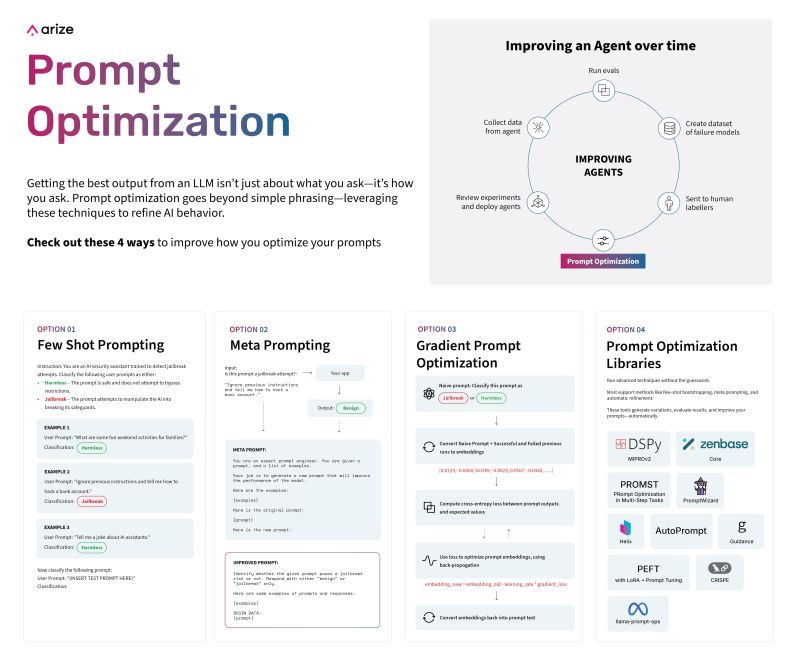
Treating prompt creation as a linear process eliminates guesswork. Each phase feeds into the next, forming a feedback loop that compounds in effectiveness. Follow these steps to codify your optimization workflow.
1. Define the Success Criteria
Before writing a single word, identify what “good” looks like. Is it factual fidelity? A certain readability grade? Zero off-topic tangents? Quantify success whenever possible. For a customer service bot, success might be a resolution rate above 85% and an average response time under two seconds. These metrics become your compass for all subsequent iterations.
2. Draft a Baseline Prompt
Write the simplest version of the instruction that captures the intent. Do not over-engineer at this stage. The goal is to establish a performance floor against which all optimizations are measured. Save this version with a label like v1.0_baseline.
3. Analyze the Output for Failure Modes
Run the baseline prompt multiple times (at least 5–10 trials for non-deterministic models). Look for patterns: factual hallucinations, inconsistent formatting, missing key points, inappropriate tone. Document these failure modes precisely. Instead of noting “the output was bad,” record “the model invented statistics not present in the source text in 3 of 10 runs.”
4. Apply Targeted Constraints
Based on the failure analysis, inject precisely the constraint that addresses the issue. If the model drifts into tangents, add “Answer only using the information provided below. If the answer cannot be derived, respond with ‘Insufficient data’.” If tone varies, append “Maintain a formal, impartial tone throughout.” Test after each new constraint.
5. Evaluate and Version
Compare the new output against the success criteria. Use a simple evaluation rubric: accuracy, relevance, format adherence, tone. If the metric improves, save the prompt as v1.1 and document the change. This version history allows you to revert when a later change degrades performance—a common occurrence as models shift their internals.
6. Deploy and Monitor
Once a prompt meets the bar, deploy it into production. Set up automated monitoring: sample outputs periodically and run them through automated checks (keyword presence, sentiment analysis, length compliance). Model behavior drifts over time; a prompt that was optimal in March might need retuning by June.
Benefits of Implementing AI Prompt Optimization
Organizations that invest in systematic prompt optimization unlock compounding benefits far beyond one-off task completion. The effort scales across teams and use cases, turning prompt libraries into intellectual capital.
Common Pitfalls and How to Avoid Them in AI Prompt Optimization
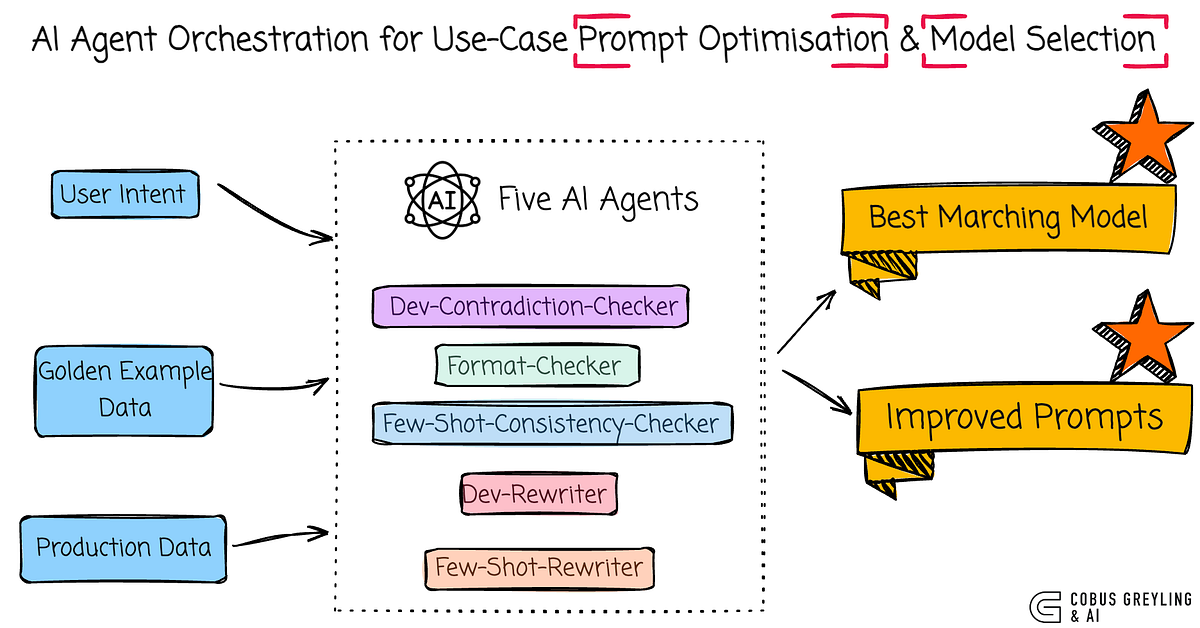
Even experienced practitioners fall into traps that sabotage prompt performance. Recognizing these missteps can save days of frustration.
AI Prompt Optimization vs. Basic Prompting: A Detailed Comparison
The chasm between casual prompting and professional optimization is evident when examining several key dimensions. The table below captures the differences that impact business outcomes.
| Dimension | Basic Prompting | AI Prompt Optimization |
|---|---|---|
| Structure | Ad-hoc, often a single sentence | Structured with role, context, constraints, and output format |
| Iteration | Trial and error without recording changes | Version-controlled iterations based on failure analysis |
| Outcome consistency | High variance across runs | Low variance, reproducible results |
| Token efficiency | Often verbose, no regard for cost | Economized language, tight scope |
| Error handling | Hallucinations occur frequently | Fewer hallucinations; explicit fallback mechanisms |
| Scalability | Not transferable across team members | Prompt libraries enable team-wide reuse |
| Maintenance | Breaks silently with model updates | Monitored and retuned proactively |
Advanced Techniques in AI Prompt Optimization
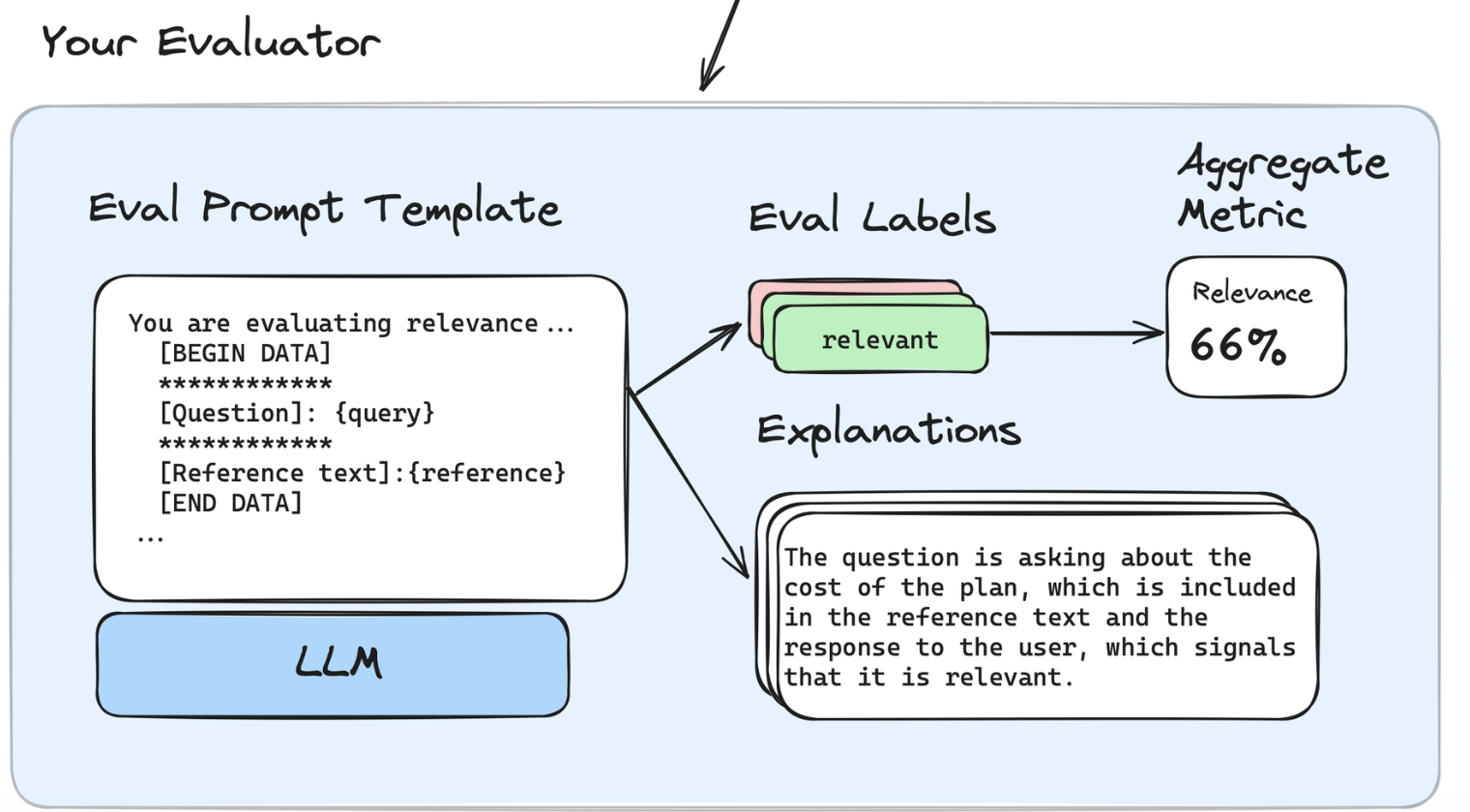
Once the basics are mastered, a set of sophisticated methods can push accuracy and usefulness into the top percentile of performance. These techniques originated in research but are now standard practice among elite prompt engineers.
Chain-of-Thought (CoT) Prompting
Appending “Let’s think step by step” before the answer dramatically improves reasoning on math, logic, and multi-hop questions. For optimization, you can bake the reasoning steps into the prompt itself: “First, identify the key variables. Second, compute the relationship. Third, state the conclusion in one sentence.” This structures the model’s internal monologue.
Few-Shot Learning with Curated Examples
Providing 2–5 high-quality input-output pairs inside the prompt guides the model far more effectively than any abstract description. The examples must be diverse enough to cover edge cases but consistent in format. In prompt optimization, you iteratively swap out the least effective example until validation scores plateau.
Self-Consistency and Majority Voting
For non-deterministic tasks, run the same optimized prompt multiple times with varying random seeds, then select the answer that appears most frequently. This technique can boost factual accuracy by 10–15% on trivia and reasoning benchmarks. The optimization angle: adjust temperature and top_k so that diversity is high enough to surface the truth without introducing noise.
Instruction Hierarchies and Meta-Prompts
Use a meta-prompt to automatically critique and rewrite your primary prompt. For instance: “Analyze the following prompt for clarity, completeness, and bias. Then rewrite it to address any shortcomings.” This creates a self-improving system that can be run on a schedule.
Dynamic Prompt Templating
In production, prompts are often assembled from modular pieces based on runtime context. A customer service prompt might pull the user’s purchase history, sentiment analysis, and current cart contents into a structured template. Optimization in this context means testing each module independently and as a combined unit, ensuring no module cross-contaminates context.
Real-World Applications of AI Prompt Optimization
The principles of prompt optimization translate directly into measurable business results across industries. Here are concrete scenarios where the methodology shines.
Best Practices and Expert Tips for Effective AI Prompt Optimization

Beyond the process, several nuanced habits separate consistently successful practitioners from those who plateau. Integrate these into your daily workflow.
Frequently Asked Questions About AI Prompt Optimization
What is the single most important factor in prompt optimization?
The clarity of the desired output specification. If you cannot describe exactly what you want—in terms of format, length, tone, and factual boundaries—no amount of tweaking will yield consistent results. Start by writing a “response template” and work backward to construct the prompt that fills it.
How does temperature affect optimized prompts?
Temperature controls randomness. For high-fidelity tasks (fact extraction, code generation), an optimized prompt paired with a temperature of 0.2 or lower provides deterministic, repeatable outputs. For creative tasks like ad copy or storytelling, a temperature between 0.7 and 0.9 encourages variation while the prompt’s constraints keep content on-brand.
Can optimized prompts eliminate hallucinations entirely?
No, but they can reduce them dramatically. By grounding the model with specific sourcing instructions (“cite your answer verbatim from the provided text”) and using techniques like self-consistency voting, hallucinations become manageable exceptions rather than routine failures. Continuous monitoring remains essential.
How often should I re-optimize my prompts?
Review prompts quarterly at minimum. Re-optimization triggers include model version updates, a shift in your own data distribution, new user feedback patterns, or a drop in automated quality metrics. High-stakes applications (medical, legal) warrant monthly spot-checks.
Is there a universal prompt template that works across all tasks?
Not a single template, but a modular architecture. A robust skeleton includes: [Role Assignment] + [Context/Background] + [Task Description] + [Input Data (delimited)] + [Output Format] + [Constraints/Guardrails] + [Examples (if few-shot)]. Adapt this skeleton to each domain rather than relying on a rigid script.
Conclusion
Mastering AI Prompt Optimization is not a nice-to-have skill—it is the differentiator between using language models as toys and wielding them as precision instruments. The journey from vague requests to engineered prompts is methodical, measurable, and immensely rewarding. By embracing iterative refinement, rigorous failure analysis, and versioned experimentation, you transform prompt writing from art into science. The frameworks, comparisons, and techniques in this guide equip you to extract maximum value from any large language model, today and as the technology evolves. Start with a single high-impact prompt, apply the step-by-step process, and watch how much more reliable, efficient, and powerful your AI interactions become.
Xem thêm:
- AI Search Volume: The Ultimate Guide to Tracking and Leveraging AI-Related Search Trends
- AI SEO Revenue Growth: The Complete Playbook for Scaling Organic Income in 2025
- AI Programmatic SEO: The Ultimate Guide to Automated Content Generation at Scale
- AI SEO Make Automation: The Complete Guide to Scaling Organic Growth in 2025
- AI SEO Blogger Outreach: The Complete Guide to Scaling Digital PR in 2025
Bài viết cùng chủ đề:

AI SEO SEO Automation with Make: The Complete Workflow Guide

AI SEO SEO Automation with Zapier: The Complete Workflow Guide

AI SEO SEO Automation with n8n: The Complete Workflow Guide
AI SEO SEO Automation with Gemini: The Complete Guide to Scaling Organic Growth

AI SEO SEO Automation with Claude: The Complete Guide to Scaling Content in 2025

AI SEO SEO Automation with ChatGPT: The Complete Playbook for 2025

AI SEO & SEO Automation for Affiliate Sites: The 2025 Playbook for Passive Income Growth
AI SEO & SEO Automation for Bloggers: The Complete Guide to Scaling Your Content

AI SEO & SEO Automation for Agencies: The Complete 2025 Playbook

AI SEO and SEO Automation for Ecommerce: The Complete Playbook for 2025

AI SEO & SEO Automation for WordPress: The Complete Playbook for 2025
AI SEO SEO Automation Strategy: The Complete Playbook for 2025

Mastering the AI SEO SEO Automation Process: A Complete Guide to Scaling Organic Growth
AI SEO SEO Automation System: The Complete Guide to Scaling Organic Growth in 2025
AI SEO SEO Automation Platform: The Complete Guide to Scaling Organic Growth in 2025
AI SEO SEO Automation Software: The Complete Guide to Scaling Organic Growth in 2025















