
No products in the cart.
AI Search Volume: The Ultimate Guide to Tracking and Leveraging AI-Related Search Trends
29
Jul
Jul
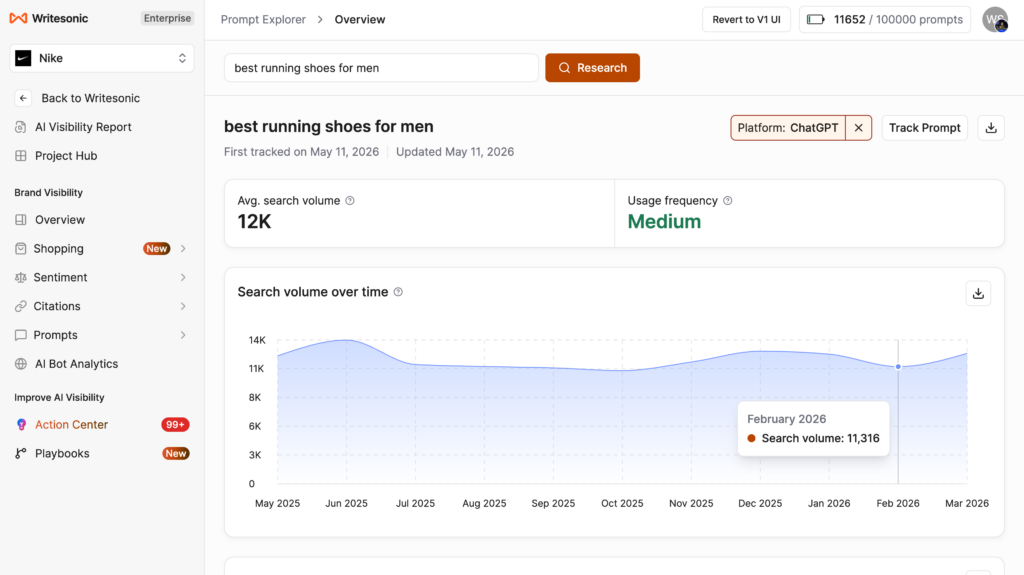
AI search volume represents the total number of queries users enter into search engines — such as Google, Bing, and YouTube — that contain terms related to artificial intelligence. From broad keywords like “artificial intelligence” to specific phrases such as “AI image generator” or “best AI tools 2025,” the surge in these searches mirrors the rapid adoption of AI technologies across every sector. For marketers, business owners, and content creators, understanding AI search volume is no longer optional; it is a direct line to demand, intent, and opportunity. This guide unpacks the data, tools, and strategies needed to turn search trends into measurable results.
What Is AI Search Volume?
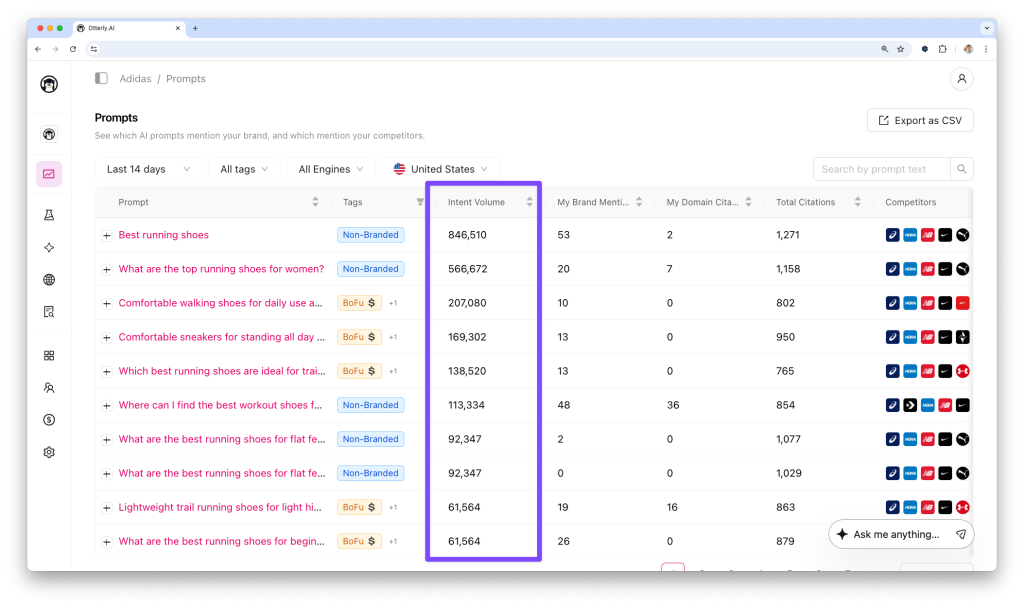
AI search volume quantifies how many times a specific AI-related keyword or phrase is searched over a given period, usually a month. It includes everything from broad informational queries to precise navigational or commercial searches. When a person types “what is machine learning” or “ChatGPT login,” each entry contributes to the aggregate volume for those terms. Search volume is typically segmented by location, language, and device, giving a granular view of global and local interest. The metric is foundational for search engine optimization (SEO), pay-per-click (PPC) advertising, and market research.
Importantly, AI search volume skyrocketed in late 2022 with the launch of ChatGPT. Since then, generative AI, large language models, and AI-powered tools have dominated search trend charts. According to data from multiple keyword research platforms, terms like “ChatGPT” consistently rank among the highest-volume searches globally, dwarfing many traditional technology topics. This dramatic shift has transformed how digital strategists approach content planning and keyword targeting.
The Difference Between Search Volume and Search Intent
High search volume alone does not guarantee business success. A keyword like “AI” may attract millions of monthly searches but carries extremely low commercial intent — users are often simply curious. Conversely, a long-tail query such as “best AI software for small business accounting” has far lower volume but signals strong buyer intent. Segmenting AI searches by intent (informational, navigational, transactional, commercial investigation) ensures that volume data translates into meaningful traffic and conversions. Pairing volume with intent analysis reveals which keywords deserve investment in content creation, paid ads, or product development.
Why AI Search Volume Matters for Businesses and Marketers
Tracking AI search volume serves as a real-time barometer of public and professional interest. When a new AI model or tool launches, search spikes immediately. Businesses that monitor these fluctuations can capitalize on trending topics before they become oversaturated. The insights derived from search volume touch multiple business functions:
- Demand generation: A sudden increase in “AI video generator” searches signals a growing market for such tools. Companies can tailor their offerings or marketing campaigns accordingly.
- Content strategy: Creating blog posts, videos, and guides around trending AI queries positions a brand to capture organic traffic. For example, after GPT-4 was released, websites publishing detailed comparisons and use cases saw significant traffic gains.
- Competitive analysis: Examining which AI keywords competitors rank for reveals content gaps and underserved niches. Tools show that many brands overlook middle-of-the-funnel terms like “AI for project management” where volume is healthy but competition lower.
- Product development: Search data validates feature requests and product roadmaps. An uptick in “AI transcription with speaker diarization” tells SaaS teams exactly what users want.
- Ad targeting: High-volume AI keywords can drive targeted PPC campaigns, though cost-per-click may be steep for head terms. Long-tail variations often deliver better ROI.
- Generative AI: “AI image generator” (1M+), “AI art” (700K), “Midjourney” (1M+), “DALL-E” (500K), “AI voice generator” (300K), “AI music generator” (200K).
- Text and Writing: “AI writer” (800K), “ChatGPT” (10M+), “AI essay writer” (500K), “best AI writing tools” (100K), “AI paraphrasing tool” (120K).
- AI Concepts: “what is AI” (500K), “machine learning” (600K), “deep learning” (200K), “neural network” (150K), “natural language processing” (80K).
- Business Applications: “AI in marketing” (60K), “AI in healthcare” (90K), “AI in finance” (50K), “AI customer service” (70K), “AI project management” (30K).
- AI Tools and Software: “AI video editor” (200K), “AI logo generator” (180K), “AI presentation maker” (120K), “AI data analysis” (80K), “AI chatbot for website” (150K).
- Ethics and Future: “AI ethics” (40K), “AI bias” (50K), “AI jobs” (100K), “will AI replace humans” (120K), “AI regulation” (50K).
- Ignoring seasonality and event-driven spikes: AI search volumes often follow product launches or news cycles. A spike in “GPT-5” may vanish after the announcement. Relying on a single month’s data leads to overinvestment in fleeting trends.
- Targeting only head terms: Chasing “AI” or “machine learning” is expensive and rarely converts. Skipping mid-volume, high-intent long-tail keywords leaves valuable traffic on the table.
- Not segmenting by geography: Global volume can be misleading. A term with 100,000 global searches might have only 2,000 in a specific country. Campaigns must localize accordingly.
- Relying on a single data source: Tool discrepancies are common. Google Keyword Planner might show broad ranges (10K-100K) while Semrush gives a precise figure. Cross-referencing with Google Trends and competitor rankings builds a complete picture.
- Overlooking emerging zero-volume keywords: Brand-new AI concepts like “AI agents” or “spatial AI” may show negligible search volume today but explode in six months. Early content creation can capture first-mover advantage.
- Confusing trending graph with absolute volume: Google Trends shows relative popularity, not actual search counts. A term with a high Trend score might still have small absolute volume compared to a slightly lower-scoring term that has a massive base.
- Neglecting search intent misalignment: A keyword with high volume but purely informational intent won’t drive sales. Mapping the intent behind each AI keyword is essential before allocating resources.
In practice, an e-learning platform noticed a 400% rise in searches for “AI course with certificate” in early 2023. By quickly launching a dedicated curriculum and optimizing existing pages, the platform captured a surge of enrollments, directly attributed to search volume monitoring.
Key AI Search Trends Shaping the Digital Landscape
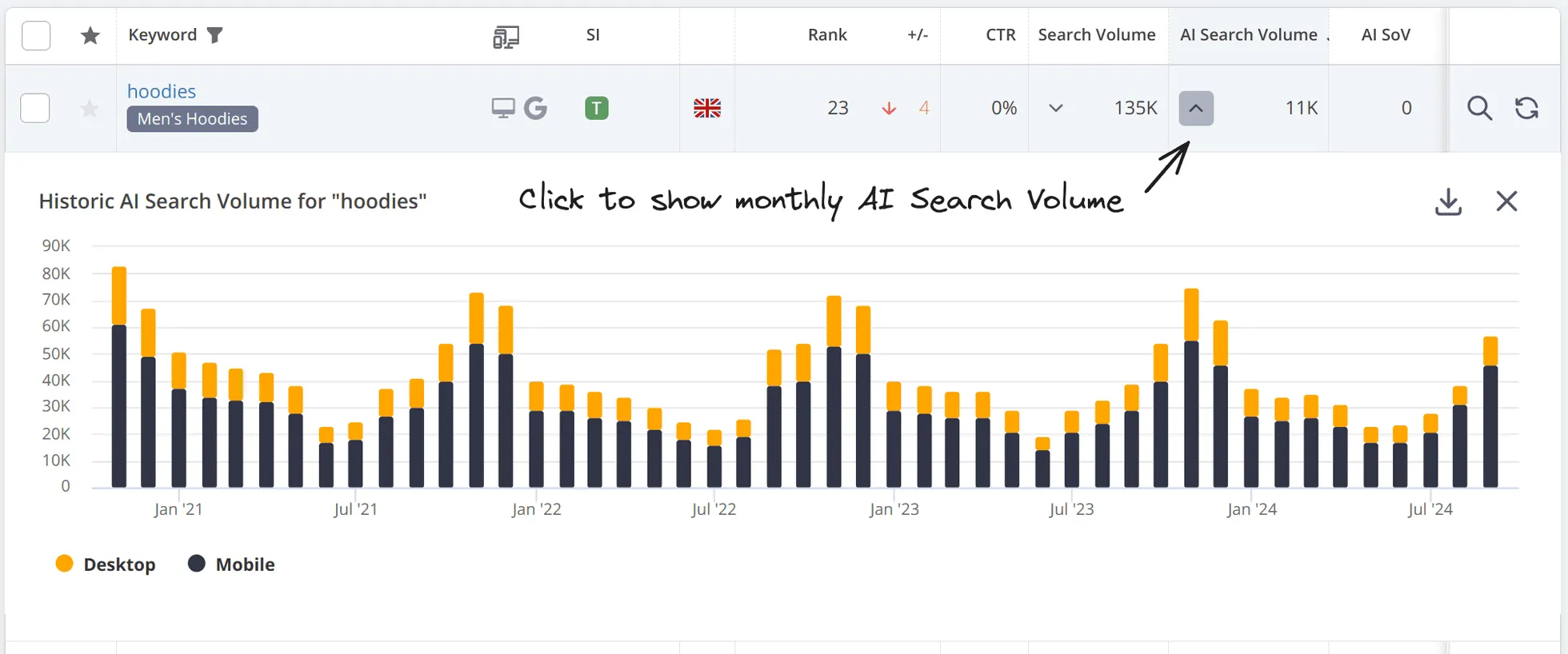
The AI search landscape evolves weekly. Recognizing macro trends helps forecast future volumes and stay ahead of the curve. Below are the most impactful shifts observed across multiple data sources and industry reports.
Explosive Growth in Generative AI Searches
Terms anchored in generative capabilities — “AI image generator,” “AI text to speech,” “AI voice cloning,” “AI video maker” — have experienced triple-digit percentage growth year over year. Midjourney, DALL-E, and Runway ML related searches surged as creative professionals and hobbyists embraced these tools. Simultaneously, queries for “ChatGPT alternatives” and “best AI chatbot” multiplied as the market diversified. Search volume for “AI art generator” alone reached millions of monthly global searches, indicating a sustained cultural shift.
Localized and Language-Specific AI Queries
While English dominates AI search volume, non-English queries are climbing faster in some regions. Searches like “inteligencia artificial cursos” (Spanish) and “KI Tools” (German) reflect global curiosity. Moreover, location-based searches such as “AI companies near me” or “AI services in London” show that businesses must optimize for local AI-related keywords. Google Business Profile listings with AI services now attract a meaningful share of local intent traffic.
Niche AI Application Searches
The long tail of AI is where volume meets specificity. Queries like “AI interior design app,” “AI for resume screening,” “AI stock trading bot,” and “AI recipe generator” each command sizable monthly searches. These niches present lower competition and higher conversion potential. Industries from healthcare (“AI diagnostic tool”) to agriculture (“AI crop yield prediction”) are generating dedicated search niches that early movers can dominate.
AI Ethics, Regulation, and Job Displacement
Public concern has translated into search volume. “AI bias examples,” “AI regulation 2025,” “will AI replace jobs,” and “AI ethics certification” all trend upward during news cycles. Content addressing these uncertainties attracts substantial traffic and builds authority. Government and institutional queries like “EU AI Act summary” also reflect demand for trustworthy information.
Voice and Mobile AI Searches
With the proliferation of AI assistants (Siri, Alexa, Google Assistant), voice search is reshaping query patterns. Conversational phrases like “how can AI help me plan a trip” now register as typed searches too, especially on mobile devices. Mobile accounts for over 60% of AI-related searches, making mobile-optimized content critical for capturing this volume.
How to Analyze AI Search Volume: Tools and Methods
Accurate measurement requires a combination of tools that compensate for each other’s limitations. The table below summarizes the most reliable platforms for tracking AI search volume.
| Tool | Key AI Search Volume Feature | Pricing Model | Best For |
|---|---|---|---|
| Google Keyword Planner | Direct Google search volume data, forecasting, competition level | Free with Google Ads account | PPC campaign planning, baseline volume estimates |
| Semrush | Monthly volume, trend charts, keyword difficulty, AI topic clusters | Subscription starting ~$129/month | Comprehensive SEO and content strategy |
| Ahrefs | Global and country-specific volume, click metrics, AI parent topic analysis | Subscription starting ~$99/month | Competitor keyword gap analysis |
| Google Trends | Real-time relative interest over time, regional breakdown, related queries | Free | Spotting trends, comparing AI terms, seasonality |
| AlsoAsked | Extracts “People Also Ask” questions for AI topics, revealing long-tail question volumes | Freemium with paid plans | Content idea generation, featured snippet targeting |
| Ubersuggest | AI keyword suggestions, volume, SEO difficulty | Freemium, affordable paid plans | Budget-friendly initial research |
The analysis process begins with seed keywords — terms core to your niche. Using Semrush or Ahrefs, input seeds like “AI writer” to generate hundreds of related keywords along with search volumes and difficulty scores. Filter by volume to prioritize, then layer on Google Trends to confirm whether a keyword is rising or falling. For instance, “AI copywriting tool” may show stable volume, but Trends can reveal a recent spike due to a product launch.
Using Google Trends for Real-Time AI Search Volume Insights
Google Trends does not provide absolute numbers, but its relative index is invaluable. Compare “ChatGPT” versus “Google Gemini” over the past 12 months, and the graph immediately shows which term dominates public mindshare. Setting the geography to a target country helps localize strategy. The “related queries” section surfaces breakout terms you might miss in traditional keyword tools — for example, “Devin AI” or “Sora text to video” when those first emerged. Proactive marketers used Trend alerts to publish content within hours of the first surge, capturing early traffic before competition stiffened.
High-Volume AI Keywords and Niches to Target
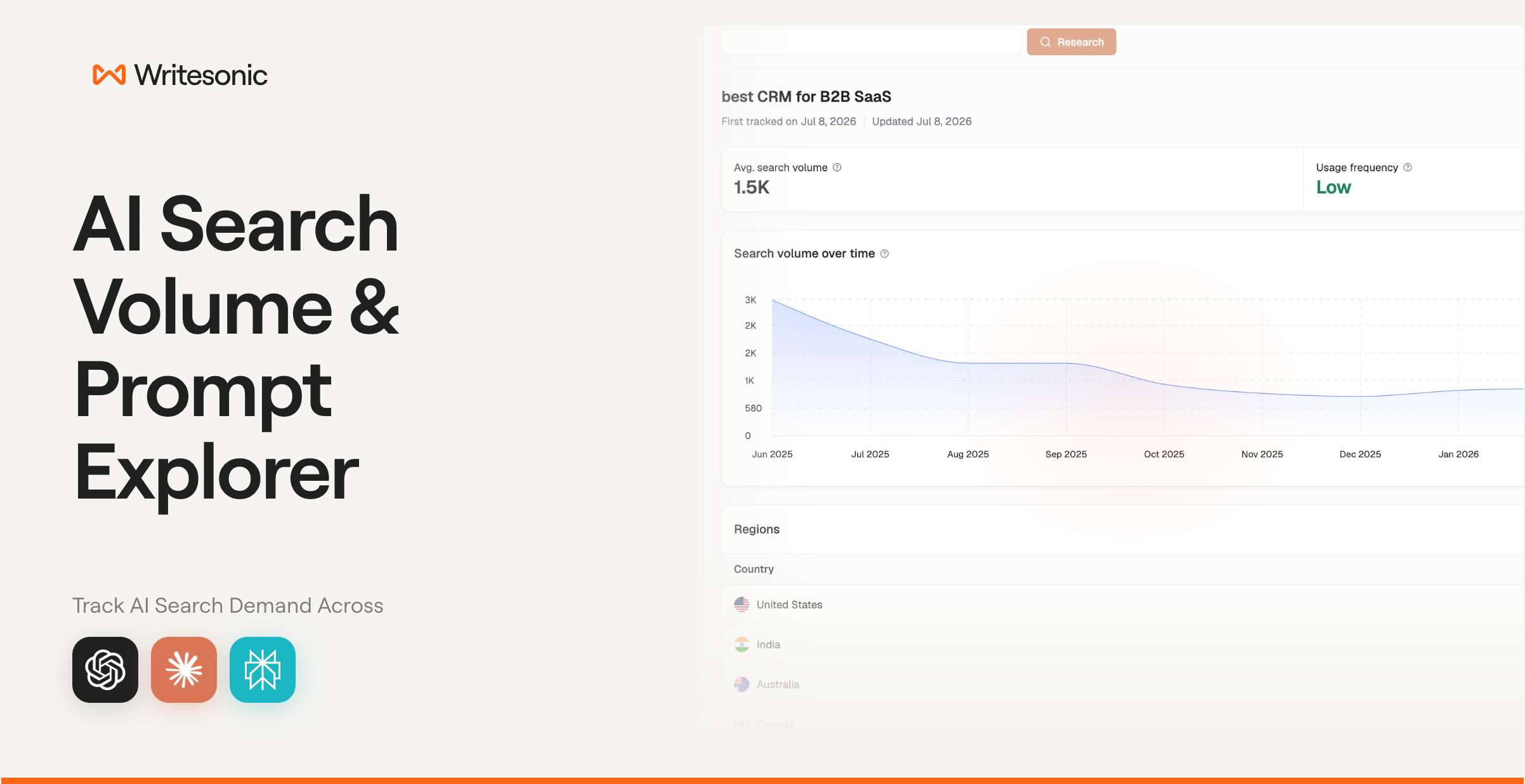
Below is a curated selection of AI keywords grouped by category, with approximate monthly search volumes based on aggregated tool data. Volumes are global estimates and will differ by location and tool accuracy. These illustrate the breadth of high-opportunity queries.
Long-tail variations often carry stronger intent. Queries like “how to use AI for small business social media content,” “best AI tools for real estate agents 2025,” and “AI transcription software for interviews free” may each drive only a few thousand searches, but combined they form a substantial traffic stream with lower competition. Structuring content hubs around broad topics (e.g., “AI for Small Business”) with pillar pages linking to granular long-tail articles is a proven method for capturing the full AI search volume spectrum.
Common Mistakes When Analyzing AI Search Volume
Even seasoned SEO professionals misinterpret AI search data. Avoiding these pitfalls ensures more accurate forecasting and smarter resource allocation.
Future of AI Search Volume: Predictions and Preparations

As AI integrates deeper into search engines themselves, the nature of AI search volume will evolve. Google’s AI Overviews and Bing’s Copilot already answer many queries directly, potentially reducing click-through rates for informational searches but increasing the quality of clicks that do happen. Search volume may fragment further as conversational and multimodal queries become the norm. “Show me AI-generated floor plans for a 2-bedroom house” type queries — using voice, text, and image — will create new keyword categories that challenge traditional volume metrics.
Three developments will shape future AI search volumes. First, the rise of AI agents capable of performing tasks will generate transactional searches like “book a flight using AI agent.” Second, heightened scrutiny around AI safety will sustain and increase regulatory and ethical query volumes. Third, emerging AI hardware (wearable AI devices, AR glasses) will spawn entirely new search behaviors with unknown volume patterns. Companies that build agile, tool-agnostic monitoring systems today will be best prepared to adapt to these shifts.
Preparing for this future means moving beyond static keyword lists. Implement real-time trend dashboards, invest in long-tail content hubs that can quickly expand, and treat AI search volume as a continuous intelligence function rather than a one-time research project.
Frequently Asked Questions
What is AI search volume?
AI search volume is the number of times users enter artificial intelligence-related keywords into search engines within a specific timeframe, typically a month. It includes queries from “AI tools” to long-tail phrases like “how to use AI for SEO” and is a core metric for SEO, PPC, and market analysis.
How can I check AI search volume for free?
You can use Google Keyword Planner (free with a Google Ads account), Google Trends for relative interest data, and Ubersuggest’s free tier for limited monthly searches. These tools provide enough insight to identify trending AI topics and baseline volumes without a paid subscription.
Which AI keywords have the highest search volume?
“ChatGPT” consistently tops the list with millions of global monthly searches. Other high-volume terms include “AI art generator,” “AI image generator,” “AI writer,” “machine learning,” and “Midjourney.” Exact volumes vary by region, but these terms anchor the AI search landscape.
Does AI search volume indicate market demand?
Partially. High search volume reflects strong public interest, but it does not automatically equate to purchase intent. Successful strategies combine volume with intent analysis — a mid-volume term like “buy AI transcription software” often signals higher commercial demand than a high-volume informational query like “what is AI.”
How often should I monitor AI search trends?
For dynamic AI niches, weekly checks using Google Trends and keyword tool alerts are recommended. Broad industry shifts can be reviewed monthly. Setting up automated alerts for spike detection in your target keywords helps capitalize on sudden surges without manual daily effort.
Conclusion
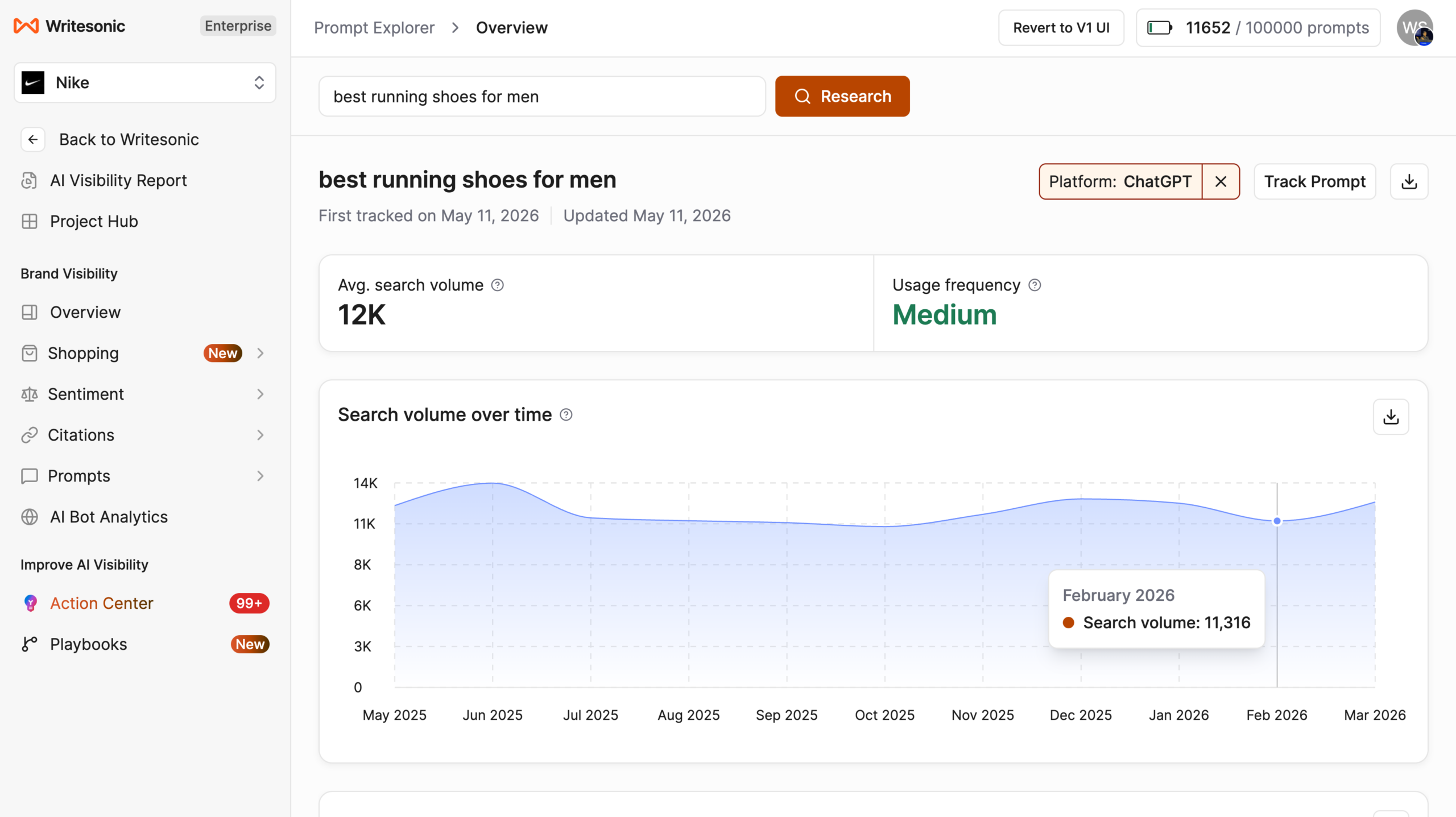
AI search volume is more than a metric — it is a strategic compass pointing directly to what the world wants to know, buy, and build. The explosive growth of AI-related queries demands that businesses move beyond guesswork and harness data to inform content, product, and advertising decisions. By using the right tools, avoiding common misinterpretations, and staying agile in the face of rapid change, any organization can turn search trends into tangible growth. The AI search landscape will continue to shift, but the fundamentals of listening to the data remain constant. Start monitoring, start optimizing, and let the search volume guide the next big move.
Xem thêm:
- AI SEO Blog Post Generator: The Complete Guide to Automated Content That Ranks
- AI SEO Microsoft Clarity: The Complete Guide to Smarter User Behavior Analysis
- AI SEO AI APIs: The Complete Guide to Automating Search Optimization in 2025
- AI Content Refresh: The Ultimate Guide to Reviving Old Content with Artificial Intelligence
- AI Proofreading: The Complete Guide to Flawless, Professional Writing at Scale
Bài viết cùng chủ đề:

AI SEO SEO Automation with Make: The Complete Workflow Guide

AI SEO SEO Automation with Zapier: The Complete Workflow Guide

AI SEO SEO Automation with n8n: The Complete Workflow Guide
AI SEO SEO Automation with Gemini: The Complete Guide to Scaling Organic Growth

AI SEO SEO Automation with Claude: The Complete Guide to Scaling Content in 2025

AI SEO SEO Automation with ChatGPT: The Complete Playbook for 2025

AI SEO & SEO Automation for Affiliate Sites: The 2025 Playbook for Passive Income Growth
AI SEO & SEO Automation for Bloggers: The Complete Guide to Scaling Your Content

AI SEO & SEO Automation for Agencies: The Complete 2025 Playbook

AI SEO and SEO Automation for Ecommerce: The Complete Playbook for 2025

AI SEO & SEO Automation for WordPress: The Complete Playbook for 2025
AI SEO SEO Automation Strategy: The Complete Playbook for 2025

Mastering the AI SEO SEO Automation Process: A Complete Guide to Scaling Organic Growth
AI SEO SEO Automation System: The Complete Guide to Scaling Organic Growth in 2025
AI SEO SEO Automation Platform: The Complete Guide to Scaling Organic Growth in 2025
AI SEO SEO Automation Software: The Complete Guide to Scaling Organic Growth in 2025















