
No products in the cart.
AI Publishing Workflow: The Complete Guide to Automating and Scaling Your Content Production
29
Jul
Jul
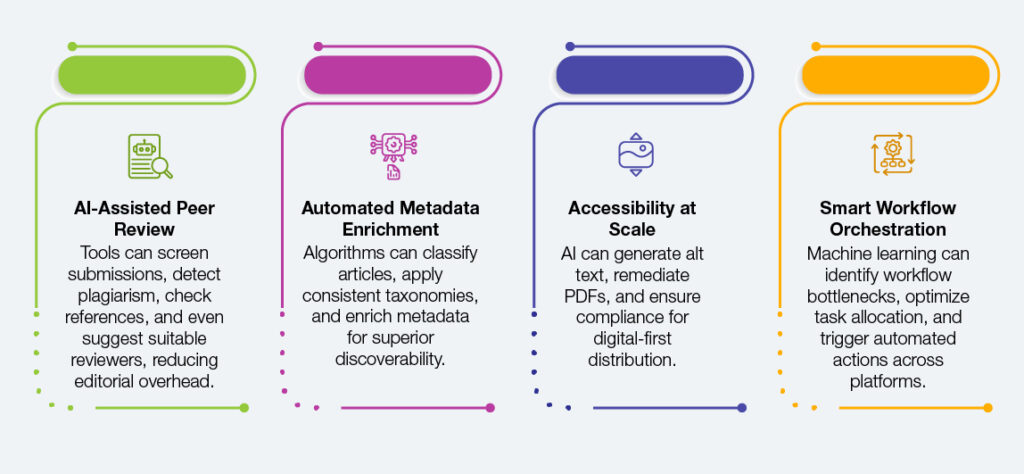
The modern content landscape demands speed, consistency, and strategic depth that manual processes alone can no longer deliver. An AI publishing workflow transforms how creators, marketers, and publishers move from a raw idea to a live piece of content distributed across multiple channels. By integrating artificial intelligence at each stage—planning, drafting, editing, media creation, formatting, and analytics—the entire publishing pipeline becomes faster, more efficient, and data-driven. This detailed guide breaks down every component of an AI publishing workflow, offering practical steps, comparing tools, highlighting common pitfalls, and answering the most pressing questions about blending human creativity with machine intelligence.
What Is an AI Publishing Workflow?
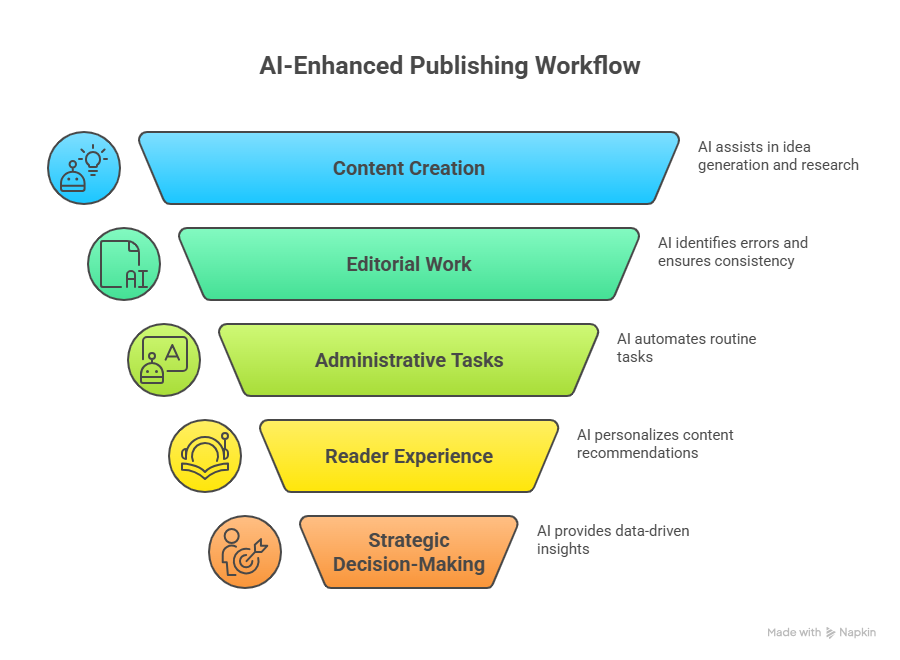
An AI publishing workflow is a structured sequence of content production stages where artificial intelligence tools handle or assist with repetitive, time-consuming, and analytical tasks. It includes AI-driven ideation, outline generation, writing, editing, visual asset creation, SEO optimization, formatting, scheduling, and performance tracking. Instead of treating AI merely as a text generator, a true workflow weaves intelligence through the entire content lifecycle.
The goal is not to replace human judgment but to amplify it. Human editors set the strategy, brand voice, and final approval gates, while AI accelerates research, polishes drafts, enforces consistency, and surfaces insights from data. This synergy lets a single content team publish at a volume and quality level previously unattainable without massive headcount.
Why AI Publishing Workflows Are Reshaping Content Operations
Organizations that adopt an AI publishing workflow quickly notice a shift in both output and strategic capability. Manual publishing often bounces content between writers, editors, designers, SEO specialists, and social media managers, creating bottlenecks. AI compresses that timeline by automating handoffs and providing real-time recommendations.
- Production speed multiplies: Drafting a 2,000-word article with AI assistance takes minutes, not hours. Editing, image generation, and meta tag creation happen in parallel.
- Consistency scales across channels: AI can enforce tone of voice, terminology, and formatting rules across thousands of pieces, ensuring brand coherence.
- Data informs every decision: AI tools analyze search intent, competitor gaps, and historical performance before a single word is written, improving relevance and ranking potential.
- Cost efficiency improves: Reducing manual hours per piece frees budget for strategic initiatives and higher-value creative work.
- Personalization becomes achievable: AI can tailor content variations for different audience segments without starting from scratch.
- Define content goals and target audience segments. Map your editorial mission to measurable KPIs such as organic traffic, lead generation, or brand awareness.
- Select an AI research and topic cluster tool. Use Semrush’s Topic Research or Ahrefs Content Explorer to find topics where AI can give you an advantage in depth and freshness.
- Generate SEO-driven outlines. Feed primary and secondary keywords into Surfer SEO or Frase to produce an outline with exact LSI terms, headers, and question sets.
- Draft with a long-form AI writer. Use Claude or Jasper in a document-style interface. Provide the outline, tone instructions, and desired examples. Generate section by section for better control.
- Inject human expertise and storytelling. Review the draft for factual accuracy, add proprietary data, case studies, or expert quotes, and refine the narrative arc.
- Run AI editing passes. Use ProWritingAid for grammar and readability, then Writer for brand consistency. Edit for EEAT signals: add author bios, cite sources, and include publication dates.
- Create visuals with AI. Prompt Midjourney for blog hero images, use Canva’s AI design tools for infographic templates, and generate alt text with AI vision features.
- Optimize for on-page SEO and markup. Ensure AI-generated meta titles, descriptions, and schema are accurate. Tools like All In One SEO (AIOSEO) now include AI-assisted meta optimization.
- Schedule and distribute cross-channel. Use Missinglettr for social campaigns that auto-create drips, and FeedBlitz or Mailchimp with AI send-time optimization for email.
- Track and iterate. Set a 30-day review window. For any post below benchmark, run an AI content refresh tool to add updated stats and relaunch.
- Unmatched speed: Content that once took a week can go live within a day while maintaining quality.
- SEO precision: AI handles the granular on-page elements—keyword density, header structure, internal linking—more reliably than a human scanning a checklist.
- Multilingual scalability: AI translation and localization tools publish in dozens of languages without proportional cost increases.
- Data-backed creativity: AI suggests content angles based on actual search demand, reducing guesswork.
- Burnout reduction: Writers shift from heavy production to strategic editing, improving job satisfaction and retention.
- Hallucination risk: AI can confidently present false facts. Every claim must be verified by a human expert.
- Generic voice slide: Without careful prompting and editing, AI content can feel bland and lack the brand’s distinct tone.
- Context blindness: AI misses cultural nuances, recent events, and unspoken audience sentiments that a human would catch.
- Compliance gaps: In regulated industries (finance, healthcare), AI-generated text can unknowingly violate guidelines. Legal review remains essential.
- Over-optimization penalties: If every piece is generated solely to match SEO patterns, search engines may eventually devalue the site. Quality and originality must lead.
- Removing human oversight too early: Publishing unedited AI content erodes trust and leads to embarrassing errors. Always have a human in the loop.
- Ignoring brand style guide integration: AI must be fine-tuned with custom instructions, sample texts, and tone parameters. Generic output damages brand equity.
- Skipping freshness and originality checks: AI can unknowingly replicate phrasing from training data. Plagiarism scanners like Copyscape or Originality.ai should be part of the workflow.
- Focusing only on writing, not distribution: A brilliant article that sits unread is wasted. The AI workflow must encompass scheduling, repurposing, and promotion.
- Failing to analyze post-publish data: Without connecting AI analytics back to the creation process, the workflow never learns. Every content asset should feed insights into the ideation stage.
- Using too many disconnected tools: A fragmented stack creates data silos. Choose platforms that integrate or use automation tools like Zapier to keep the pipeline flowing.
Key Components of an AI Publishing Workflow
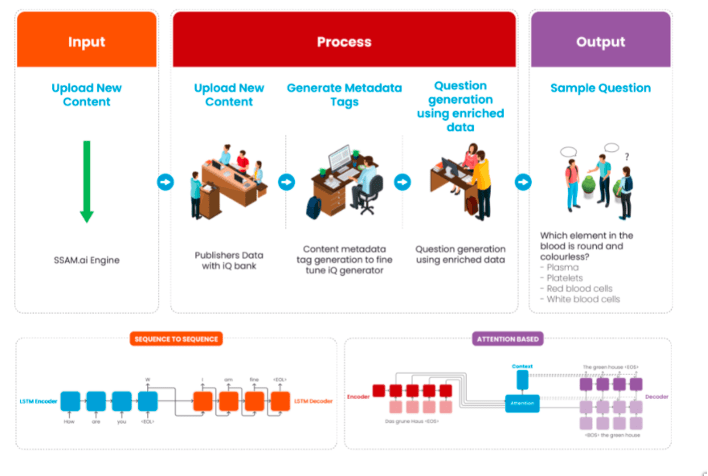
A mature AI publishing workflow isn’t a single tool but a connected stack. The following stages map the journey from concept to analytics, with AI deeply embedded.
Content Ideation and Trend Analysis
AI scours the web for trending topics, analyzes competitor content clusters, and identifies keyword gaps that align with audience needs. Tools like BuzzSumo, Exploding Topics, and AnswerThePublic use AI to surface high-interest queries. Integrated with SEO platforms such as Semrush or Ahrefs, the AI can then suggest topic clusters and a content calendar that targets both immediate traffic spikes and long-term authority building.
AI-Assisted Outlining and Brief Creation
Once a topic is selected, AI generators produce structured outlines that mirror top-ranking content while introducing unique angles. Tools like Surfer SEO and Frase combine SERP analysis with natural language generation to build comprehensive briefs, including recommended headers, word count, keywords, and questions to answer. This ensures that the writing phase starts with a strategic blueprint, not a blank screen.
AI Writing and Drafting
Large language models form the core of the drafting stage. Platforms such as Jasper, Claude, and Copy.ai can generate long-form content tailored to specific tones, formats, and audience personas. The best AI publishing workflows use these not for final-copy output but for a solid first draft. Human writers then inject nuance, real anecdotes, and brand-specific insights. The AI can be prompted to write different sections simultaneously, dramatically cutting drafting time.
AI Editing, Proofreading, and Readability Enhancement
After the draft is complete, AI editing tools step in for grammar, style, and clarity. Grammarly Business, ProWritingAid, and Writer check for passive voice, sentence length, lexical variety, and inclusive language. Advanced workflows use AI to ensure the content matches the intended reading level and overall brand guidelines. Some tools also flag factual inconsistencies and suggest places to strengthen authority with data or external links.
AI Image and Multimedia Generation
Visuals are no longer a bottleneck. AI image generators such as DALL·E 3, Midjourney, and Adobe Firefly create custom featured images, infographics, and social media graphics from text prompts. AI video tools can convert blog posts into short video summaries. Stock image curation is accelerated by AI search that understands scene context. The result is a cohesive visual identity without requiring a full-time graphic designer for every asset.
Formatting, Layout, and Content Management
For long-form assets like eBooks or whitepapers, AI-powered formatting tools such as Vellum or Atticus automate interior book design. In web publishing, AI plugins for WordPress (e.g., Elementor AI, Rank Math AI) generate formatted posts with optimized structures, internal linking suggestions, and schema markup. AI also assists in creating email newsletter templates that preserve layout integrity across clients.
Automated Distribution and Scheduling
An AI publishing workflow extends beyond the CMS. Tools like Buffer AI Assistant, Hootsuite, and CoSchedule use AI to determine the best posting times for each platform, repurpose content into platform-specific formats, and even generate social captions and hashtags. Email sequences are triggered automatically based on user behavior, with AI adjusting send times for maximum open rates.
AI Performance Analytics and Continuous Optimization
Post-publish, AI monitors engagement, bounce rates, conversions, and search rankings. Platforms like Google Analytics 4 with its machine learning insights, Parse.ly, and Chartbeat identify underperforming content and recommend updates. Some AI tools can refresh older posts by adding new sections, updating statistics, and strengthening internal links—all with a human sign-off.
Step-by-Step Practical Guide: Implementing an AI Publishing Workflow
Building an effective system requires deliberate tool selection and process design. Below is a repeatable framework used by high-performing content teams.
AI Publishing Workflow for Different Content Formats
The same core stages adapt slightly based on the final output. The table below highlights key AI tool categories per use case.
| Content Type | Ideation & Planning | Drafting | Media | Distribution |
|---|---|---|---|---|
| Blog posts & SEO articles | Surfer SEO, Frase, BuzzSumo | Jasper, Claude, Copy.ai | DALL·E, Canva AI, Adobe Firefly | Rank Math AI, Buffer, Hootsuite |
| eBooks & lead magnets | AnswerThePublic, ChatGPT outlining | Sudowrite, Jasper long-form | Midjourney, Vellum formatting | Mailchimp AI, ConvertKit automations |
| Social media campaigns | Trends by Later, SparkToro | Ocoya, ChatGPT for captions | Canva Magic Media, CapCut AI | CoSchedule AI, Sprout Social |
| Email newsletters | Exploding Topics, Google Alerts curated by AI | Jasper Email Assistant, Rasa.io AI curation | BeePro AI design assistant | Seventh Sense, MailerLite AI |
Benefits and Limitations of an AI Publishing Workflow
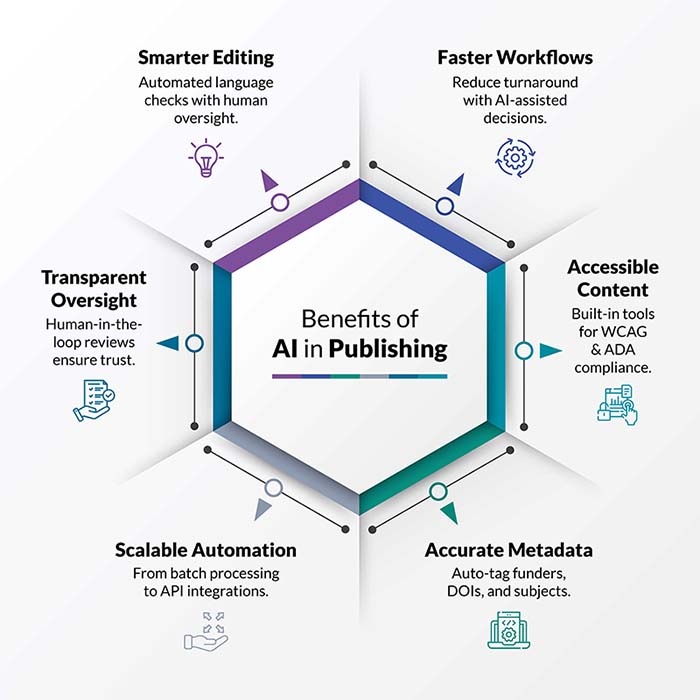
While the advantages are substantial, an honest assessment must acknowledge where AI falls short. The balance is crucial for setting realistic expectations.
Benefits
Limitations
Common Mistakes When Building an AI Publishing Workflow
Many teams stumble by treating AI as a magic button. Recognizing these traps ensures a sustainable, high-quality output.
Important Notes for a Successful AI Publishing Strategy
A winning AI publishing workflow respects the technology’s strengths and compensates for its weaknesses. The following principles protect quality and drive results.
Treat AI as a junior collaborator, not the executive editor. It excels at volume and pattern recognition. Strategy, emotional intelligence, and ethical judgment must stay human. Assign a senior editor to validate each piece before it goes live.
Invest in prompt engineering and training. Generic prompts yield generic content. Develop a library of prompts crafted for specific directions—listicles, how-to guides, opinion pieces. Document what works, and iterate based on editorial feedback.
Build a fact-checking layer. For any statistic, date, or claim generated by AI, cross-reference at least two authoritative sources. Establish a quick verification checklist that every editor follows.
Monitor EEAT signals relentlessly. Google’s emphasis on Experience, Expertise, Authoritativeness, and Trustworthiness means AI-only content without visible author credentials, updated dates, and cited references will struggle. Include real author bios, original images, and clearly marked sources.
Start narrow and scale. Perfect the AI publishing workflow on a single content type—say, blog posts—then expand to email, social, and video. This approach lets you refine the tool stack and editorial guidelines before adding complexity.
The ROI of a well-tuned AI publishing workflow often materializes within the first quarter: content output typically doubles or triples while costs per piece drop by 40–60%. More importantly, the team’s creative energy shifts from assembly-line writing to high-impact storytelling, audience engagement, and strategic experimentation.
Frequently Asked Questions About AI Publishing Workflow
What is an AI publishing workflow?
An AI publishing workflow is a systematic process that integrates artificial intelligence tools across content planning, drafting, editing, media creation, distribution, and analytics. It enables teams to automate repetitive tasks, maintain consistency, and scale output without compromising quality.
How can I automate my content publishing from start to finish?
Automate by chaining AI tools: use research platforms for topic ideas, AI writers for first drafts, AI editors for polishing, AI image generators for visuals, and scheduling platforms with AI time optimization. Human editors approve each stage. Automation platforms like Zapier connect these tools seamlessly.
Can AI write and publish articles completely on its own?
Technically, yes, but fully autonomous publishing carries significant risks. AI can draft articles and even push them live via CMS integration, but without human review the content often contains inaccuracies, lacks brand voice, and may violate quality standards. The most effective and ethical approach is a semi-automated workflow with human oversight at critical gates.
Which AI tools are considered essential for a publishing workflow?
Core tool categories include: SEO research (Semrush, Ahrefs), AI drafting (Claude, Jasper, ChatGPT), editing (Grammarly, ProWritingAid, Writer), original AI imagery (Midjourney, DALL·E), content optimization (Surfer SEO, Frase), and distribution (Buffer, CoSchedule). A comprehensive workflow connects these into a single pipeline, often with middleware like Zapier or Make.
Does an AI publishing workflow replace human writers and editors?
No. A mature AI publishing workflow augments the team, shifting the human role to strategy, creative direction, quality assurance, and nuanced storytelling. High-performing teams use AI to handle volume and data, while humans provide context, empathy, and final approval. The result is higher capacity without staff reduction.
How do I maintain content quality when using AI at scale?
Maintain quality by implementing a rigorous review layer: factual verification, tone alignment checks against a detailed style guide, plagiarism scans, and post-publish performance monitoring. Regularly update your AI prompts based on editorial feedback and ensure every piece carries clear authorship and date stamps to meet EEAT standards.
Will search engines penalize content produced through an AI publishing workflow?
Search engines evaluate content based on quality, helpfulness, and adherence to guidelines, not the tool used to create it. As long as content is original, accurate, and provides genuine value with appropriate human oversight, an AI-assisted publishing workflow is perfectly acceptable. Deceiving users or publishing unedited, low-quality AI spam, however, risks penalties.
Conclusion
An AI publishing workflow represents a fundamental shift from isolated content tasks to an integrated, intelligent production engine. By embedding AI into ideation, drafting, editing, visual creation, formatting, distribution, and analytics, publishers unlock speed, scale, and strategic depth that manual approaches simply cannot match. The technology handles the heavy lifting of research, optimization, and first drafts, while human talent focuses on differentiation, trust-building, and creative excellence.
The difference between mediocre and exceptional results lies in intentional design: selecting compatible tools, training AI on brand specifics, maintaining a relentless human-in-the-loop quality assurance, and continuously feeding performance data back into the system. Organizations that master this balance will produce more high-impact content, reach broader audiences, and build lasting authority in their niches. The ultimate AI publishing workflow isn’t about removing people—it’s about empowering them to do their best work, faster and smarter.
Xem thêm:
- AI SEO Keyword Database: The Complete Guide to Smarter Search Rankings
- AI SEO Brand Signals: The Complete Guide to Building a Future-Proof Digital Presence
- AI SEO Keyword Clustering Tool: The Complete Guide to Smarter Content Optimization
- AI SEO Podcasts: Master the Future of Search With Every Episode
- AI SEO CDN Setup: The Complete Guide to Boosting Search Rankings and Site Speed
Bài viết cùng chủ đề:

AI SEO SEO Automation with Make: The Complete Workflow Guide

AI SEO SEO Automation with Zapier: The Complete Workflow Guide

AI SEO SEO Automation with n8n: The Complete Workflow Guide
AI SEO SEO Automation with Gemini: The Complete Guide to Scaling Organic Growth

AI SEO SEO Automation with Claude: The Complete Guide to Scaling Content in 2025

AI SEO SEO Automation with ChatGPT: The Complete Playbook for 2025

AI SEO & SEO Automation for Affiliate Sites: The 2025 Playbook for Passive Income Growth
AI SEO & SEO Automation for Bloggers: The Complete Guide to Scaling Your Content

AI SEO & SEO Automation for Agencies: The Complete 2025 Playbook

AI SEO and SEO Automation for Ecommerce: The Complete Playbook for 2025

AI SEO & SEO Automation for WordPress: The Complete Playbook for 2025
AI SEO SEO Automation Strategy: The Complete Playbook for 2025

Mastering the AI SEO SEO Automation Process: A Complete Guide to Scaling Organic Growth
AI SEO SEO Automation System: The Complete Guide to Scaling Organic Growth in 2025
AI SEO SEO Automation Platform: The Complete Guide to Scaling Organic Growth in 2025
AI SEO SEO Automation Software: The Complete Guide to Scaling Organic Growth in 2025















