
No products in the cart.
AI Search vs Google Search: The Complete Guide to How Modern Query Engines Actually Work
29
Jul
Jul
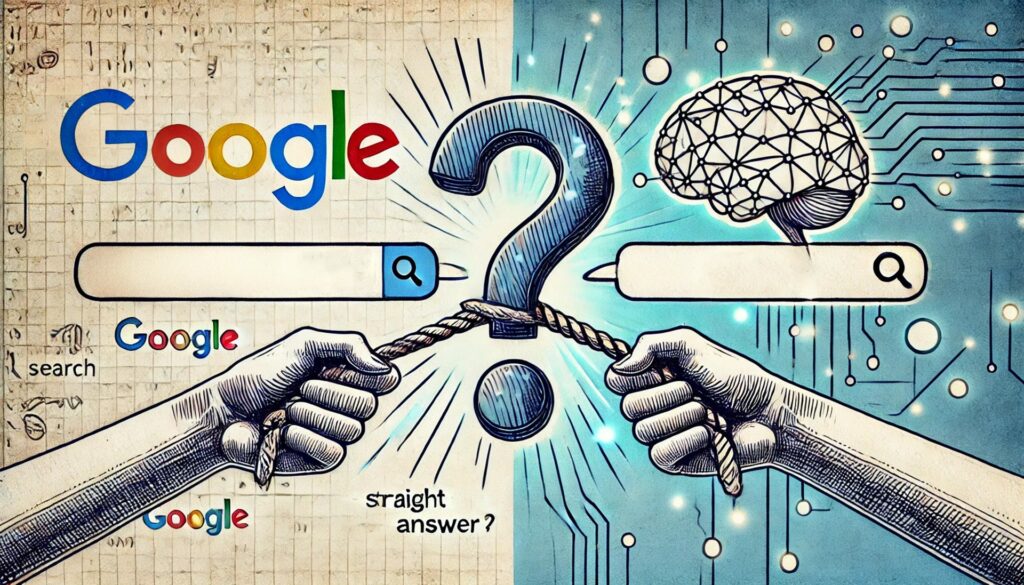
The way people find information online has split into two distinct paths. On one side sits traditional Google Search, a keyword-driven indexing giant that has dominated for two decades. On the other, AI search engines like Perplexity, You.com, and the new Bing Chat use large language models to generate direct answers instead of a list of blue links. The difference goes far deeper than interface design. It reshapes how facts are retrieved, verified, and presented. Understanding the real gap between AI search and Google search means examining speed, accuracy, source transparency, and the very nature of how a question turns into an answer.
What Is AI Search and What Is Google Search
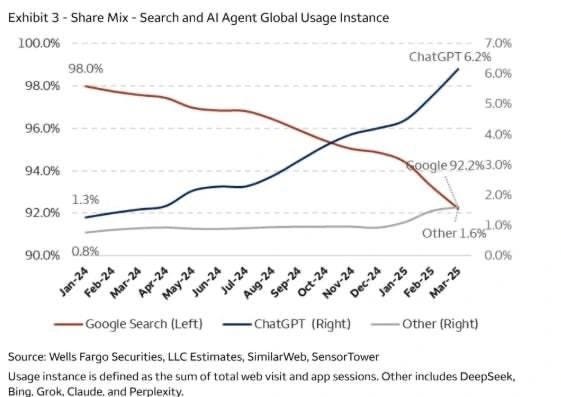
Google Search operates by continuously crawling the web, building a massive index of trillions of pages, and then applying a proprietary ranking algorithm to match keywords with relevant documents. When a user types a query, Google does not generate new content. It retrieves the most authoritative, useful pages that already exist and ranks them based on over 200 signals including backlinks, page experience, and semantic relevance.
AI search takes a fundamentally different approach. Instead of solely retrieving documents, it uses generative AI models—typically large language models—to understand the user’s intent, synthesize information from multiple sources in real time, and produce a consolidated, conversational answer. The AI reads dozens of pages, extracts key points, and rewrites them into a single coherent response, often citing the original URLs. This moves the interaction from a document retrieval model to an answer generation model.
The Core Technology Behind Each Approach
Google search relies on three pillars: crawling, indexing, and ranking. Crawlers discover public pages, the index stores them in a searchable database, and the ranking system scores them based on relevance, quality, and authority. Classic information retrieval techniques like TF-IDF and PageRank evolved into neural matching, BERT, and MUM—but the end result is still a list of hyperlinks.
AI search engines are built on transformer-based architectures. They take a user prompt, break it into tokens, process context windows that can hold hundreds of pages worth of text, and generate a response token by token. The process involves no traditional index look-up for the final answer. Instead, the model draws on a retrieval-augmented generation (RAG) pipeline: it first gathers relevant sources via a search API, feeds those snippets into the model, and then generates a summary grounded in the retrieved text.
Key Differences Between AI Search and Google Search
A side-by-side comparison reveals that these two search paradigms serve different mental models. AI search treats queries as conversations; Google search treats queries as lookups. The table below breaks down the most critical distinctions.
| Feature | Google Search (Traditional) | AI Search Engines |
|---|---|---|
| Output format | Ranked list of clickable links with snippets | Paragraphs, bullet points, or tables in a single generated answer |
| Source of information | Direct link to indexed web pages | Synthesized from multiple sources, often with inline citations |
| Query understanding | Keyword matching + semantic signals | Full-context natural language intent |
| Personalization | Search history, location, device signals | Conversation memory within a session, limited long-term profiling |
| Real-time data | Index updates within minutes to hours | Depends on live search grounding; some models have stale knowledge cutoffs |
| Monetization | Paid ads above organic results | Subscription tiers, possibly embedded ads in generated responses |
How AI Search Engines Retrieve and Verify Information
The retrieval process in AI search begins with a user prompt that gets transformed into multiple search queries behind the scenes. The engine hits conventional search APIs—often Bing or Google’s own index—pulls the top 10 to 30 pages, and extracts the most relevant passages. These passages are then injected into the AI model’s context window as grounding material. The model is instructed to answer only from the provided sources and to cite each factual claim.
Verification remains an unsolved challenge. Unlike Google, which outsources truth assessment to the authority of publishers and the collective judgment of links, AI search engines try to cross-reference multiple sources in real time. However, if the top-ranking sources contain conflicting data, the AI may present a false consensus. Citation does not guarantee accuracy, because the model can still misinterpret figures, misattribute statements, or generate plausible-sounding hallucinations that are not present in any source.
Strengths and Limitations of Google Search
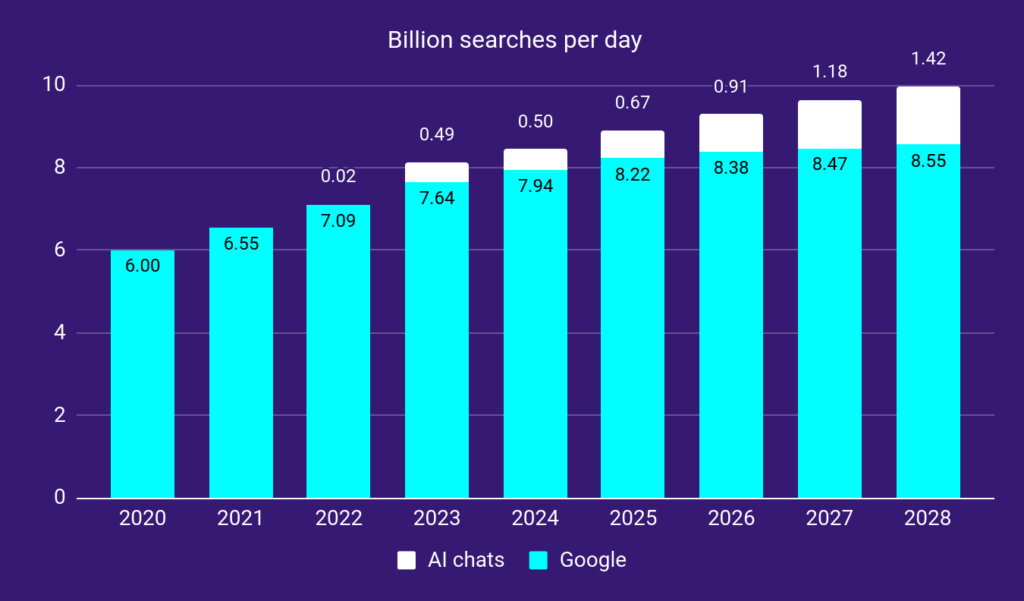
Google search excels when the user knows what they are looking for but needs the authoritative source. A search for a government form, a scientific DOI, a specific X thread, or a product comparison page is best served by a list of direct links. The user judges credibility by scanning recognizable domains, publication dates, and meta descriptions. Google also offers unparalleled scale: it processes over 8.5 billion searches per day, with an index that covers hundreds of billions of public pages.
The limitations are equally tangible. For open-ended, multi-step research questions, users must manually open several tabs, read articles, cross-check data, and synthesize their own conclusions. Google’s featured snippets occasionally extract the wrong passage from a page, presenting misinformation in a position of high trust. Also, the ad model increasingly pushes organic results below the fold, forcing users to scroll past multiple paid placements before reaching content.
Strengths and Limitations of AI Search
AI search shines when handling complex, conversational queries. A question like “Compare the tax treatment of LLCs vs S-corps for a freelance designer in Berlin” would require at least four separate Google searches and manual synthesis. An AI search engine can deliver a structured comparison with citations in seconds. The ability to clarify ambiguous terms, remember context across turns, and refine answers interactively saves cognitive load and time.
The downsides are significant. AI models tend to hallucinate, inserting names, dates, or statistics that sound correct but are completely made up. Even with grounding, the selection bias of top-ranking pages means the answer might reflect SEO-optimized consensus rather than expert truth. Privacy concerns also loom: many AI search platforms store query logs to improve models, and the lack of a clear ad model raises questions about future data monetization.
Use Cases Where AI Search Outperforms Google
Several practical scenarios tilt strongly in favor of AI search. The table below maps common information tasks to the better-suited tool.
| Task | Preferred Search Type | Reason |
|---|---|---|
| Multi-step research with heavy synthesis | AI Search | Saves hours of reading, presents consolidated view with citations |
| Code debugging and technical explanations | AI Search | Can generate code snippets, explain logic step by step |
| Fact-checking a specific claim or statistic | Google Search | Requires original source verification, domain authority visible |
| Finding a local service, business, or map location | Google Search | Deep integration with Maps, reviews, hours of operation |
| Creative brainstorming and content drafts | AI Search | Generates novel structured outlines directly |
| Shopping comparison by price and reviews | Google Search | Aggregated shopping tab, price history, merchant trust signals |
Accuracy, Hallucination, and Source Reliability
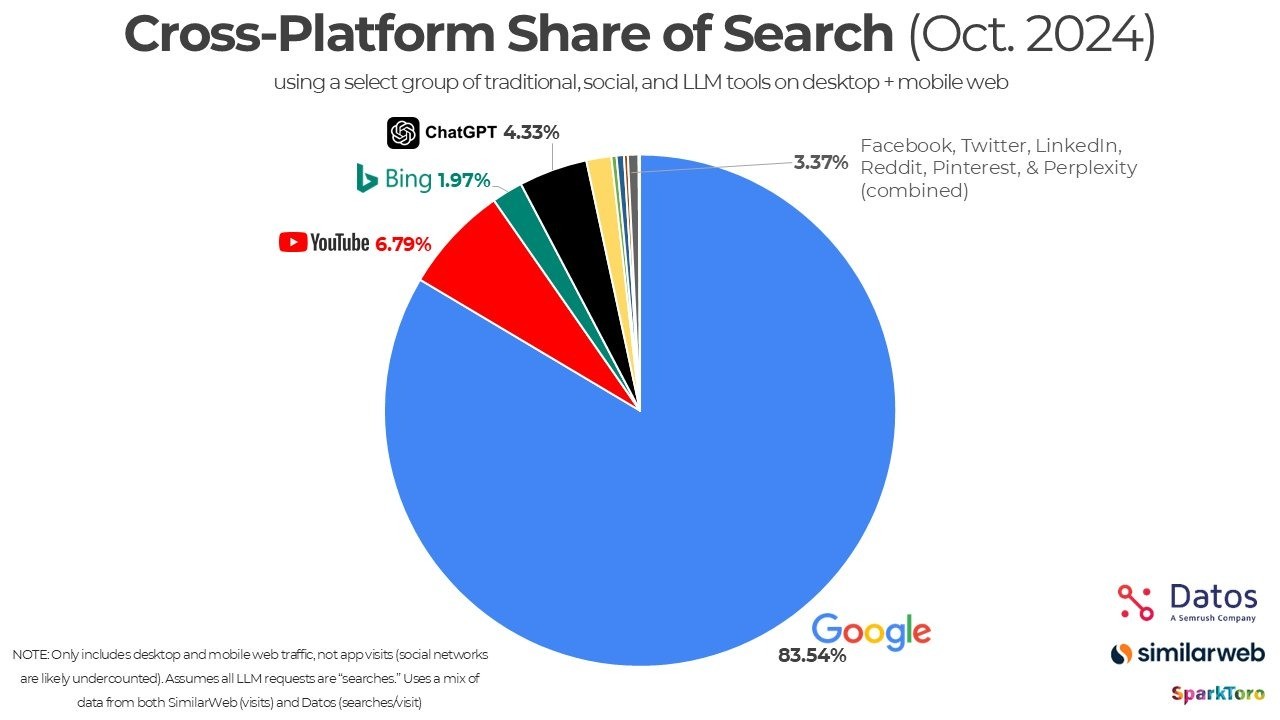
Google search does not verify facts itself; it reflects the web’s content. A page ranking #1 may contain outdated or false information, but the user can inspect the URL, the author credentials, and cross-reference independently. The burden of verification rests with the user, but the raw data is transparent.
AI search shifts the verification burden to the machine while reducing user visibility. Generated answers appear authoritative and seamless, so users are less likely to double-check. When hallucinations occur, they are woven into grammatically correct prose that mimics the style of a confident expert. Some AI engines implement fact-checking modules, but these are not foolproof. Research from Stanford and Duke has shown that even retrieval-augmented models can hallucinate facts at rates ranging from 3% to 27% depending on the topic and the prompt style.
Search Engine Optimization Implications: AI Search vs Google Search
The rise of AI search engines upends traditional SEO. For Google, the goal is to appear in the top three organic listings, earn clicks, and satisfy searcher intent on-site. For AI search, the goal shifts to being a trusted source that the model consistently extracts and cites. Content must be structured in a way that large language models can easily parse: concise definitions, clear subheadings, factual claims directly backed by data, and proper schema markup.
This changes keyword strategy. Long-tail conversational queries gain importance because AI search users type full sentences. Informational content that directly answers “what is,” “how to,” and “compare” questions becomes the primary target. Brand authority also amplifies: AI models tend to cite domains with consistent E-E-A-T signals such as academic outlets, established media, and official documentation. Sites with thin, aggregated content risk being completely ignored by AI answer engines.
Privacy, Data Collection, and User Control
Google search monetizes through advertising that relies on user data signals. Queries, clicks, location, and browsing history build anonymized profiles used for ad targeting. Users can manage some controls through My Activity and privacy settings, but the fundamental exchange is free search for behavioral data.
AI search platforms vary widely. Perplexity Pro claims to keep conversations private, while ChatGPT stores data by default unless opted out. The presence of a paid subscription model in many AI search tools hints at a future where privacy is a premium feature. Without ads, the economic incentive to harvest personal search terms may diminish, but the incentive to use human conversations for model training remains. Users should examine the data retention policy of each AI search tool before submitting sensitive queries.
Practical Guide: How to Choose Between AI Search and Google Search
Deciding which tool to use depends on the nature of the question, the required depth, and the level of trust needed. A straightforward method is to assess query intent.
- For navigational queries (e.g., “Netflix login,” “IRS W-9 form”): Google search is faster and takes you directly to the correct website without intermediary interpretation.
- For transactional queries (e.g., “buy running shoes size 10”): Google’s shopping integrations with reviews, prices, and merchant ratings outperform AI’s static text.
- For informational queries with a definitive short answer (e.g., “capital of Mongolia”): both tools work well, but Google gives immediate trust cues like a knowledge panel.
- For complex research, comparisons, or thought framework building: AI search reduces the time to synthesize information and presents it in a digestible format. However, always verify critical facts by clicking the primary sources.
Common Mistakes When Using AI Search Instead of Google
One frequent error is treating AI-generated answers as final truth. People copy generated text without verifying the underlying sources, causing misinformation to spread inside organizations and personal projects. A second mistake is over-relying on session context. The A Important findings must be saved externally, not assumed to persist.
Another costly oversight involves ignoring the knowledge cutoff date. Even if the AI uses live search grounding, the base model may retain older biases or outdated facts. When researching rapidly evolving topics—crypto regulations, clinical trial results, or software updates—always filter by date directly on Google or inside the AI tool’s settings. Finally, users sometimes enter extremely long prompts with multiple disjointed requests, expecting the AI to prioritize correctly. A focused query with clear instructions always yields better citations and fewer hallucinations.
Expert Notes on the Future Convergence
Google is not standing still. Search Generative Experience (SGE) already brings AI-powered snapshots directly into the classic search results page, blurring the line between the two categories. Meanwhile, dedicated AI search engines are adding more traditional features like news tabs, image search, and source filtering. The near future will likely produce a hybrid where the interface adapts dynamically: simple lookups return classic links, while complex questions trigger instant generative summaries with clickable origins.
The key for users and content creators alike is source literacy. Understanding how a system constructed an answer matters more than whether a human or an algorithm held the pen. The division between AI search and Google search is not permanent; it is a snapshot of a moment where two philosophies of information access are colliding and cross-pollinating.
Frequently Asked Questions About AI Search vs Google Search
Is AI search more accurate than Google?
AI search can be more convenient for synthesis but is not inherently more accurate. Accuracy depends on the quality of the retrieved sources and the model’s tendency to hallucinate. Google provides direct access to original pages, allowing users to assess trust themselves. For mission-critical facts, cross-referencing with Google remains essential.
Does AI search replace Google completely?
Not entirely. AI search excels at answering complex, multi-part questions, while Google remains superior for navigation, local services, shopping, and real-time news. Most power users employ both in tandem, selecting the tool that matches the query type.
Will SEO strategies need to change for AI search engines?
Yes. Content optimized solely for traditional Google ranking factors—backlinks, keyword density, and meta tags—must also be structured for AI parsing. Clear, well-sourced factual claims, strong brand authority, and semantic richness increase the chance of being cited in AI-generated answers.
How do AI search engines access live information?
Most AI search engines connect to a live search API. When a query is submitted, the system performs a real-time web search, retrieves the top pages, and feeds relevant passages to the language model. The model then generates an answer grounded in those pages, which is why citations often link to current articles.
Can AI search handle visual or voice queries?
Leading AI search platforms now offer image generation capabilities and accept voice input, but are still catching up with Google Lens and Google Voice Search in terms of visual recognition of objects, landmarks, and real-time camera translation. Expect rapid evolution in this area.
Is my data safe when using AI search tools?
Data safety varies by provider. Some offer encrypted, privacy-focused experiences with no query logging, while others use interactions for training purposes. Always review the privacy policy, and avoid sharing sensitive personal information in prompts if the platform lacks clear data handling commitments.
Conclusion
AI search and Google search represent complementary approaches rather than competing replacements. Google offers transparency, raw access to the web’s ecosystem, and unmatched reliability for transactional and navigational tasks. AI search brings synthesis, conversational nuance, and time-saving aggregation for research-heavy work. The smartest strategy is to understand the strengths and weaknesses of each, verify critical information across both, and stay informed as the technologies merge. The future of information retrieval does not belong to a single engine but to users who can switch fluently between retrieval and generation, always anchoring answers in trustworthy sources.
Xem thêm:
- AI SEO SERP Scraping: The Complete Guide to Automated Rank Tracking in 2025
- AI SEO Keyword Classification: The Complete Guide to Smarter Search Strategy
- Startup AI SEO: The Complete Playbook for Scaling Organic Growth in 2025
- How to Write SEO Content with AI: The Ultimate Guide to Ranking Smarter
- AI SEO AI Search Audit Tool: The Complete Guide to Modern Search Visibility
Bài viết cùng chủ đề:

AI SEO SEO Automation with Make: The Complete Workflow Guide

AI SEO SEO Automation with Zapier: The Complete Workflow Guide

AI SEO SEO Automation with n8n: The Complete Workflow Guide
AI SEO SEO Automation with Gemini: The Complete Guide to Scaling Organic Growth

AI SEO SEO Automation with Claude: The Complete Guide to Scaling Content in 2025

AI SEO SEO Automation with ChatGPT: The Complete Playbook for 2025

AI SEO & SEO Automation for Affiliate Sites: The 2025 Playbook for Passive Income Growth
AI SEO & SEO Automation for Bloggers: The Complete Guide to Scaling Your Content

AI SEO & SEO Automation for Agencies: The Complete 2025 Playbook

AI SEO and SEO Automation for Ecommerce: The Complete Playbook for 2025

AI SEO & SEO Automation for WordPress: The Complete Playbook for 2025
AI SEO SEO Automation Strategy: The Complete Playbook for 2025

Mastering the AI SEO SEO Automation Process: A Complete Guide to Scaling Organic Growth
AI SEO SEO Automation System: The Complete Guide to Scaling Organic Growth in 2025
AI SEO SEO Automation Platform: The Complete Guide to Scaling Organic Growth in 2025
AI SEO SEO Automation Software: The Complete Guide to Scaling Organic Growth in 2025















