
No products in the cart.
AI SEO Keyword Classification: The Complete Guide to Smarter Search Strategy
10
Aug
Aug
AI SEO keyword classification is transforming how digital marketers approach search engine optimization. Instead of manually sorting hundreds of keywords into spreadsheets, artificial intelligence now categorizes search terms by intent, relevance, and commercial value in seconds. This shift allows SEO teams to focus on strategy rather than data entry. Understanding how AI classifies keywords and how to leverage these systems gives your content a competitive edge in organic search rankings. This guide breaks down the entire process, from core concepts to practical implementation.
What is AI SEO Keyword Classification?
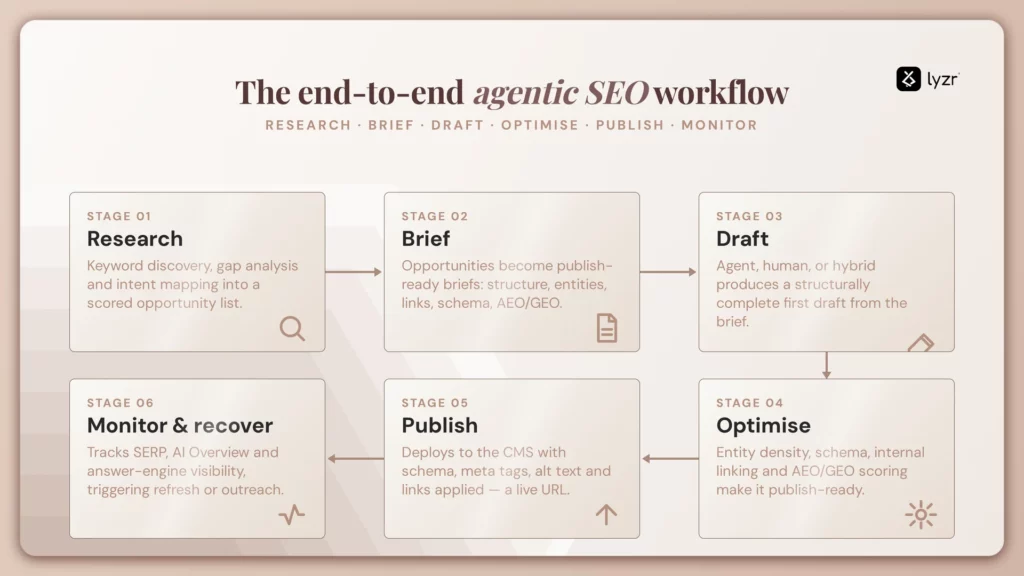
AI SEO keyword classification refers to the use of machine learning algorithms and natural language processing to automatically sort and categorize keywords based on predefined criteria. These systems analyze search queries and assign them to groups such as transactional, informational, navigational, or commercial investigation. The classification goes beyond simple word matching, understanding context, user intent, and semantic relationships between terms.
Traditional keyword classification relied on manual review and basic spreadsheet filters. Marketers would look at a keyword like “best running shoes” and decide it was commercial intent based on experience. AI systems achieve the same result by analyzing millions of data points, including click-through rates, SERP features, and user behavior patterns. This automation scales across thousands of keywords, providing consistent categorization that human teams cannot match in speed or accuracy.
The Core Components of AI Keyword Classification Systems
Modern AI classification tools operate through several interconnected layers. The first layer involves data ingestion, where the system collects keywords from various sources like Google Search Console, paid search campaigns, or third-party tools. The second layer applies natural language processing to understand the query structure, identifying parts of speech, modifiers, and context clues. The third layer uses trained models to assign categories based on historical patterns and labeled datasets.
These systems continuously learn from new data. When a new keyword enters the system, the AI compares it against millions of similar queries it has already classified. This pattern recognition allows for accurate categorization even with never-before-seen terms. The result is a dynamic classification system that improves over time, adapting to shifts in search behavior and language usage.
Why AI Keyword Classification Matters for SEO Strategy
Accurate keyword classification directly impacts content creation, link building, and conversion optimization. When you know whether a keyword is informational or transactional, you can create content that matches user expectations. A user searching “how to fix a leaky faucet” wants a tutorial, not a product page. Conversely, someone searching “buy brass faucet online” expects an e-commerce experience. AI classification ensures your content aligns with these expectations.
The strategic value extends to resource allocation. SEO teams have limited time and budget. AI classification helps prioritize keywords that drive revenue versus those that build brand awareness. By understanding the intent distribution across your keyword portfolio, you can allocate content production resources to the areas with the highest return on investment.
Improving Content Relevance Through AI Classification
Search engines reward content that satisfies user intent. AI SEO keyword classification helps you identify the specific intent behind each query, allowing you to tailor your content accordingly. For example, a keyword classified as “informational” requires in-depth guides, tutorials, or listicles. A “transactional” keyword demands product pages, pricing information, and clear calls-to-action. Matching content format to intent classification improves engagement metrics like time-on-page and bounce rate, which indirectly influence rankings.
Furthermore, AI classification reveals content gaps in your existing strategy. By clustering keywords by topic and intent, you can identify areas where you have strong coverage and areas where competitors outrank you. This gap analysis drives editorial calendars and helps you create content that fills unmet user needs.
Types of Keyword Classifications in AI Systems

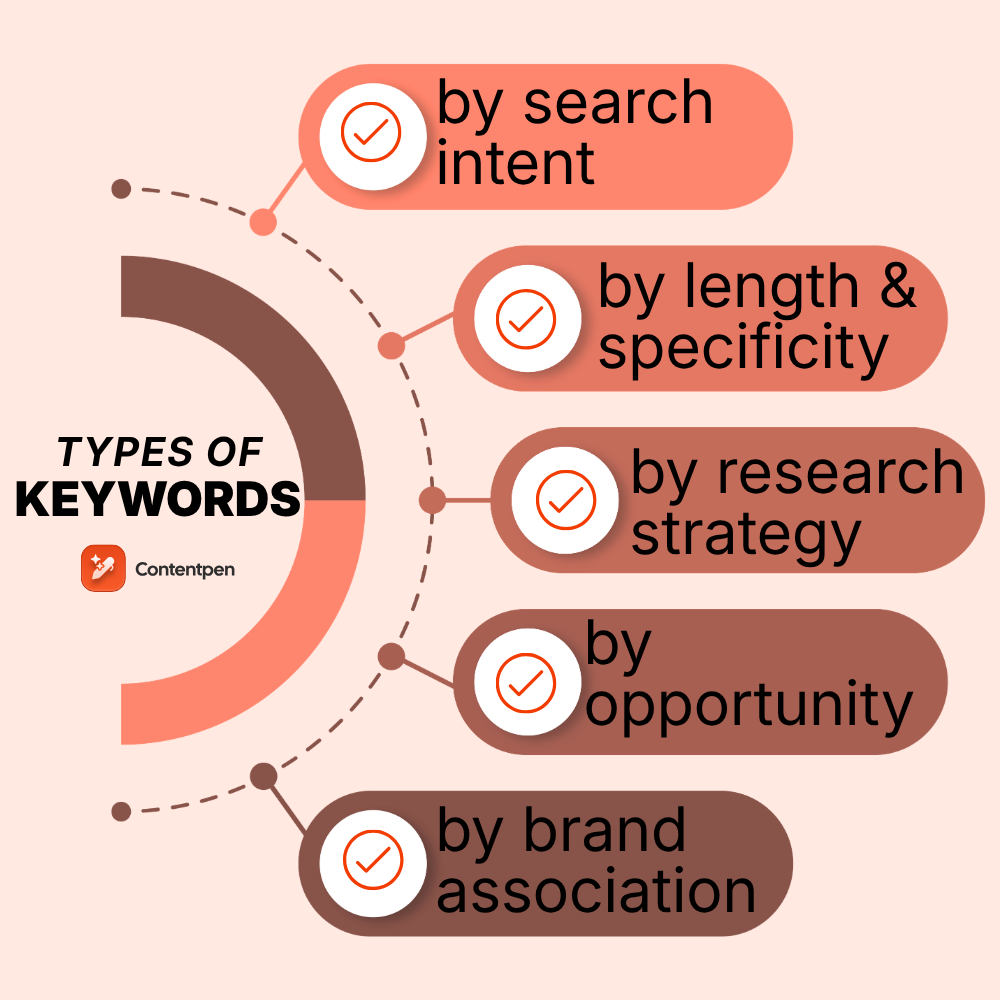
AI systems typically classify keywords across multiple dimensions. Understanding these categories helps you interpret the data and apply it effectively.
Search Intent Classification
This is the most common classification type. AI assigns each keyword to one of four primary intent categories:
- Informational: Users seeking knowledge or answers. Examples include “what is SEO” or “how to bake bread.”
- Navigational: Users looking for a specific website or page. Examples include “Facebook login” or “Nike official store.”
- Commercial Investigation: Users researching products before purchase. Examples include “best laptops 2025” or “iPhone 15 vs Samsung S24.”
- Transactional: Users ready to complete an action or purchase. Examples include “buy running shoes online” or “subscribe to Netflix.”
- Lexical features: Word frequency, word length, and presence of specific terms like “buy” or “how.”
- Syntactic features: Word order, part-of-speech tags, and grammatical structure.
- Semantic features: Word embeddings, synonyms, and contextual meaning.
- Behavioral features: Click-through rates, dwell time, and SERP feature presence.
- Supervised learning: The model trains on a labeled dataset where human experts have already classified keywords. The AI learns patterns from this data and applies them to new keywords.
- Unsupervised learning: The model identifies patterns and clusters in unlabeled data without human guidance. This approach often reveals unexpected keyword groupings.
- Deep learning: Neural networks with multiple layers process complex patterns in keyword data, achieving high accuracy for nuanced classifications.
- What percentage of your keywords are informational versus transactional?
- Which topics have the most keywords and which have the least?
- Where are the gaps between your content coverage and keyword opportunities?
- Which high-commercial-value keywords lack dedicated landing pages?
- Combine AI with human expertise: AI handles the heavy lifting, but human judgment provides the final quality check.
- Document your classification criteria: Ensure your team understands how classifications are assigned and what they mean for content creation.
- Integrate with your existing SEO stack: Choose tools that connect with your analytics, rank tracking, and content management systems.
- Track classification accuracy over time: Periodically compare AI classifications against actual user behavior and conversion data.
- Start with a pilot project: Test the system on a small keyword set before rolling it out across your entire portfolio.
Advanced AI systems further subdivide these categories. Commercial investigation might split into “product comparison,” “review seeking,” and “price checking.” Informational intent might split into “definition,” “how-to,” and “research.” This granularity provides deeper insights for content optimization.
Topic and Entity Classification
AI systems also classify keywords by topic clusters and entities. Topic classification groups keywords under broad themes like “digital marketing,” “health and fitness,” or “personal finance.” Entity classification identifies specific people, places, products, or organizations mentioned in the query. This dual classification helps you understand your topical authority and identify entity relationships that matter for SEO.
For example, the keyword “best DSLR camera for vlogging” would be classified under the topic “photography equipment” and the entities “DSLR camera” and “vlogging.” This information helps you create content that covers the full topic ecosystem, improving your chances of ranking for related queries.
Commercial Value Classification
AI systems assign commercial value scores to keywords based on their likelihood to convert. This classification considers factors like purchase intent signals, product affinity, and historical conversion data. Keywords with high commercial value might include “buy,” “discount,” “price,” or specific product model numbers. Low commercial value keywords focus on general information or entertainment.
This classification helps prioritize paid search campaigns and content marketing efforts. High commercial value keywords deserve dedicated landing pages and aggressive optimization. Low commercial value keywords might be better suited for blog content that builds authority and captures top-of-funnel traffic.
How AI SEO Keyword Classification Works: The Technical Process
Understanding the underlying technology helps you choose the right tools and interpret their outputs correctly. The classification process involves several distinct stages.
Data Collection and Preprocessing
AI systems first gather keyword data from multiple sources. This includes search engine query logs, Google Search Console, keyword research tools, and even social media platforms. The raw data undergoes preprocessing, which involves cleaning, deduplication, and normalization. Stop words are removed, spelling errors are corrected, and variations are consolidated.
For example, “SEO tips,” “seo tips,” and “SEO Tip” all normalize to the same keyword. This preprocessing ensures the AI works with clean, consistent data, improving classification accuracy.
Natural Language Processing and Feature Extraction
Once the data is clean, the AI applies natural language processing techniques to extract features from each keyword. These features include:
These features create a unique fingerprint for each keyword, which the classification algorithm uses to assign categories.
Machine Learning Models for Classification
AI SEO keyword classification tools use various machine learning models. Common approaches include:
Most commercial tools use a hybrid approach, combining supervised learning for known categories with unsupervised learning to discover new patterns.
Top AI SEO Keyword Classification Tools in 2025
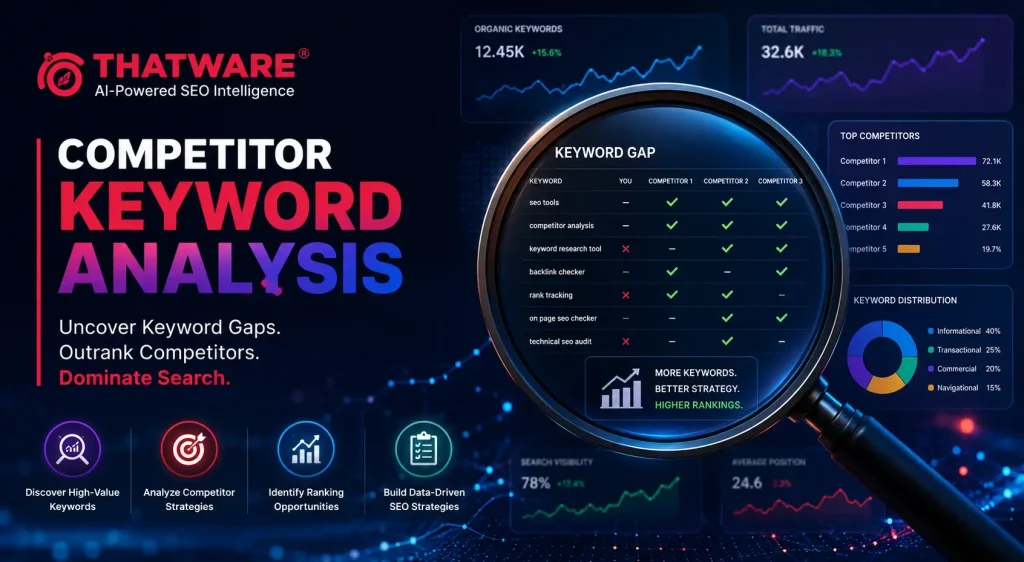
Several tools dominate the market for AI-powered keyword classification. Each offers unique features and pricing structures.
| Tool | Key Features | Best For | Pricing Model |
|---|---|---|---|
| Ahrefs | Intent classification, content gap analysis, SERP analysis | Comprehensive SEO teams | Subscription-based |
| Semrush | Keyword intent scoring, topic clustering, competitive analysis | Digital marketing agencies | Subscription-based |
| Clearscope | Content optimization, keyword relevance scoring, entity analysis | Content marketing teams | Subscription-based |
| Surfer SEO | Content structure recommendations, keyword grouping, NLP analysis | Freelancers and small teams | Subscription-based |
| Google’s Natural Language API | Entity extraction, sentiment analysis, content classification | Developers and advanced users | Pay-per-use |
These tools integrate with popular SEO platforms and content management systems, allowing seamless workflow integration. Most offer API access for custom implementations.
Practical Guide: Implementing AI SEO Keyword Classification
Implementing AI keyword classification requires a systematic approach. Follow these steps to integrate AI classification into your SEO workflow.
Step 1: Audit Your Current Keyword Portfolio
Start by exporting your existing keywords from Google Search Console, your SEO tool, and your analytics platform. Compile this data into a single spreadsheet or database. Include metrics like search volume, current rankings, click-through rates, and conversion data. This baseline gives you a reference point for measuring the impact of AI classification.
Step 2: Choose Your Classification Tool
Select a tool that matches your budget and technical capabilities. For small teams, a tool like Surfer SEO or Clearscope offers user-friendly interfaces. For enterprise operations, Ahrefs or Semrush provide more advanced features and API access. Consider running a trial period to test classification accuracy against your manual classifications.
Step 3: Run the Classification Process
Upload your keyword list to the chosen tool and run the classification process. Most tools provide immediate results, categorizing your keywords by intent, topic, and commercial value. Review the output for any obvious errors or misclassifications. AI systems are accurate but not perfect, especially for niche industries with specialized terminology.
Step 4: Analyze the Classification Results
Examine the distribution of keywords across categories. Look for patterns and insights:
These insights directly inform your content strategy and resource allocation.
Step 5: Restructure Your Content Strategy
Based on the classification results, reorganize your content plan. Create content that matches the intent classification of your target keywords. Develop topic clusters around your highest-priority classifications. Prioritize content production for keywords with high commercial value and achievable ranking difficulty.
Step 6: Monitor and Refine
AI classification is not a one-time exercise. Search behavior evolves, new keywords emerge, and your competitors change their strategies. Re-run the classification process quarterly to keep your strategy current. Track the performance of content created based on AI classifications and refine your approach based on actual results.
Benefits of AI SEO Keyword Classification
The advantages of using AI for keyword classification extend beyond time savings. These systems provide strategic benefits that improve overall SEO performance.
Scalability and Speed
Manual keyword classification becomes impossible at scale. A website with 10,000 keywords would take weeks to classify manually. AI systems process this volume in minutes. This scalability allows you to manage keyword portfolios across multiple websites, languages, and markets without expanding your team.
Consistency and Objectivity
Human classifiers bring personal biases and inconsistent judgment to the task. Two team members might classify the same keyword differently. AI systems apply the same criteria to every keyword, ensuring consistent classification across your entire portfolio. This consistency improves data quality and makes performance analysis more reliable.
Discovery of Hidden Patterns
AI systems identify patterns that humans miss. Unsupervised learning might reveal that keywords containing “best” and “2025” consistently convert better than other commercial investigation keywords. These insights lead to more effective content strategies and better ROI.
Real-Time Adaptation
Search behavior changes rapidly, especially during events like product launches or global crises. AI systems can reclassify keywords in real-time as new data comes in. This agility allows you to pivot your strategy quickly when market conditions change.
Limitations and Challenges of AI Keyword Classification
While powerful, AI classification systems have limitations that SEO professionals must understand.
Contextual Nuance
AI systems struggle with ambiguous keywords that have multiple meanings. The keyword “apple” could refer to the fruit or the technology company. While AI uses context clues, it sometimes misclassifies these ambiguous terms. Human oversight remains necessary for edge cases.
Industry-Specific Terminology
Niche industries with specialized jargon often confuse generic AI models. A keyword like “bearing” in a manufacturing context means something entirely different than in a construction context. Custom training data or manual corrections may be necessary for specialized verticals.
Data Quality Dependence
AI classification accuracy depends on the quality of training data. If the labeled dataset contains errors or biases, the A Regular audits of classification outputs help identify and correct these problems.
Cost Considerations
Advanced AI classification tools require subscription fees that may be prohibitive for small businesses or individual freelancers. The ROI must justify the expense, which is not always the case for low-volume websites.
Common Mistakes in AI SEO Keyword Classification
Avoid these frequent errors when implementing AI classification systems.
Ignoring the Human Review Step
Trusting AI outputs blindly leads to misclassification errors. Always review a sample of classified keywords, especially for your most important pages. Human expertise catches nuances that AI misses, particularly for brand-specific or industry-specific terms.
Over-Reliance on Intent Labels
Intent classification is not absolute. A keyword like “best running shoes” might be commercial investigation for most users, but informational for a beginner researching shoe types. Use intent labels as guidance, not rigid rules. Create content that addresses multiple intents when appropriate.
Neglecting to Update Classifications
Keyword intent shifts over time. The keyword “crypto exchange” was informational in 2015 but became highly transactional by 2020. Failing to re-run classifications regularly means your strategy becomes outdated.
Mixing Classification Systems
Different tools use different classification methodologies. Comparing intent labels from Ahrefs with those from Semrush can lead to confusion. Stick with one primary tool for consistency, or map classifications across tools carefully.
Important Notes for Successful Implementation
Keep these considerations in mind as you integrate AI keyword classification into your SEO workflow.
Frequently Asked Questions About AI SEO Keyword Classification
What is the difference between keyword classification and keyword clustering?
Keyword classification assigns predefined categories like intent or topic to individual keywords. Keyword clustering groups keywords together based on similarity, often using semantic analysis or search result overlap. Classification answers “what type of keyword is this?” while clustering answers “which keywords belong together?” Both techniques complement each other in a comprehensive SEO strategy.
Can AI SEO keyword classification replace human SEO experts?
No, AI classification automates the categorization process but cannot replace strategic thinking. Human experts interpret classification data, make content decisions, and understand business context. AI provides the data foundation, but human judgment drives the strategy. The most effective approach combines AI efficiency with human expertise.
How accurate is AI keyword classification compared to manual methods?
Studies and tool benchmarks suggest AI classification achieves 85-95% accuracy for common keyword types. Manual classification achieves similar accuracy but takes significantly longer. For niche industries or ambiguous keywords, accuracy drops. The best practice is to use AI for initial classification and manually review high-priority or ambiguous keywords.
What is the best free AI keyword classification tool?
Google’s Natural Language API offers a free tier with limited usage, providing entity and content classification. Google Search Console provides basic query data but lacks intent classification. For free intent classification, some SEO tools offer limited free versions, though they restrict the number of keywords you can process. For serious SEO work, investing in a paid tool is usually worthwhile.
How often should I re-run keyword classification?
Re-run classification at least quarterly to account for seasonal shifts and market changes. If you operate in a fast-moving industry like technology or fashion, consider monthly updates. Major algorithm updates from Google may also warrant immediate reclassification to ensure your strategy aligns with current ranking factors.
Does AI keyword classification help with voice search optimization?
Yes, AI classification helps identify conversational and long-tail keywords typical of voice searches. These queries often have different intent patterns than typed searches. AI systems classify voice search queries accurately, allowing you to create content that matches natural language patterns and question-based queries.
Conclusion: The Future of SEO Relies on AI Classification
AI SEO keyword classification has moved from a nice-to-have feature to a core component of successful search strategies. The ability to automatically categorize thousands of keywords by intent, topic, and commercial value transforms how SEO teams allocate resources and create content. The technology continues to improve, with advances in natural language processing and machine learning making classifications more accurate and nuanced.
Implementing AI classification requires more than just purchasing a tool. Success depends on integrating the classification data into your content workflow, maintaining human oversight, and continuously refining your approach based on performance data. The organizations that master this integration will gain significant competitive advantages in organic search visibility and conversion rates.
Start by auditing your current keyword portfolio, selecting a classification tool that fits your needs, and running your first classification cycle. Use the insights to restructure your content strategy, prioritize high-value keywords, and create content that precisely matches user intent. The investment in AI classification pays dividends through improved rankings, higher click-through rates, and better conversion performance.
Xem thêm:
- AI SEO DNS Optimization: The Complete Guide to Boosting Search Rankings in 2025
- AI B2C SEO: Mastering Consumer Search with Artificial Intelligence for Unmatched Growth
- AI SEO Image Captions: The Complete Guide to Boosting Search Visibility in 2025
- AI SEO Content Distribution: The Complete Playbook for 2025
- AI SEO Content Structure: The Blueprint for Ranking in 2025
Bài viết cùng chủ đề:

AI SEO SEO Automation with Make: The Complete Workflow Guide

AI SEO SEO Automation with Zapier: The Complete Workflow Guide

AI SEO SEO Automation with n8n: The Complete Workflow Guide
AI SEO SEO Automation with Gemini: The Complete Guide to Scaling Organic Growth

AI SEO SEO Automation with Claude: The Complete Guide to Scaling Content in 2025

AI SEO SEO Automation with ChatGPT: The Complete Playbook for 2025

AI SEO & SEO Automation for Affiliate Sites: The 2025 Playbook for Passive Income Growth
AI SEO & SEO Automation for Bloggers: The Complete Guide to Scaling Your Content

AI SEO & SEO Automation for Agencies: The Complete 2025 Playbook

AI SEO and SEO Automation for Ecommerce: The Complete Playbook for 2025

AI SEO & SEO Automation for WordPress: The Complete Playbook for 2025
AI SEO SEO Automation Strategy: The Complete Playbook for 2025

Mastering the AI SEO SEO Automation Process: A Complete Guide to Scaling Organic Growth
AI SEO SEO Automation System: The Complete Guide to Scaling Organic Growth in 2025
AI SEO SEO Automation Platform: The Complete Guide to Scaling Organic Growth in 2025
AI SEO SEO Automation Software: The Complete Guide to Scaling Organic Growth in 2025















