
No products in the cart.
AI Semantic Analysis: Unlocking Human-Like Understanding from Text Data
29
Jul
Jul
Every day, businesses generate petabytes of unstructured text—customer reviews, support tickets, social media comments, medical notes, and legal contracts. Traditional keyword matching fails to grasp the nuance, intent, or emotional charge behind these words. AI semantic analysis changes this completely. It teaches machines to look beyond surface-level tokens and understand meaning, context, and relationships the way a human would. By combining natural language processing, knowledge graphs, and deep learning, semantic analysis becomes the cognitive layer that powers smarter search engines, virtual assistants, and real-time customer insight tools.
What Exactly Is AI Semantic Analysis?
At its core, semantic analysis is the branch of artificial intelligence that extracts meaning from language. While syntactic analysis concerns grammar and sentence structure, semantic analysis deals with what words actually mean in a given context. When a customer types “my coffee maker is stone cold after 2 minutes,” a lexical system might flag the word “cold” as a temperature descriptor. AI semantic analysis interprets the frustration, identifies the product (coffee maker), links “stone cold” to a malfunction, and routes the issue to the warranty team.
This technology relies on word embeddings, transformer architectures, and contextual models that map words and phrases into high-dimensional vectors. These vectors capture semantic similarity—words like “happy,” “elated,” and “joyful” cluster closely, while “happy” and “sad” drift apart. BERT, GPT, RoBERTa, and other large language models have become the backbone of modern semantic systems, allowing the machine to read between the lines of every sentence.
The Evolution from Keyword Matching to Deep Meaning
A decade ago, search engines functioned on exact or fuzzy keyword hits. If you typed “best way to fix a broken phone screen,” a rule-based system might return pages containing all those words without understanding intent. AI semantic analysis sees the query’s real purpose: the user wants a DIY repair guide, not a history of phone screens. This shift has revolutionized search, chatbots, content recommendation, and compliance monitoring.
The journey passed through latent semantic indexing (LSI), Word2Vec, and GloVe embeddings, which gave words static vector representations. The true leap came with contextual models like ELMo and BERT, where the word “bank” in “river bank” and “bank account” gets entirely different vector values depending on surrounding words. Suddenly, nuance became computationally tangible.
Core Components of Semantic Analysis Systems
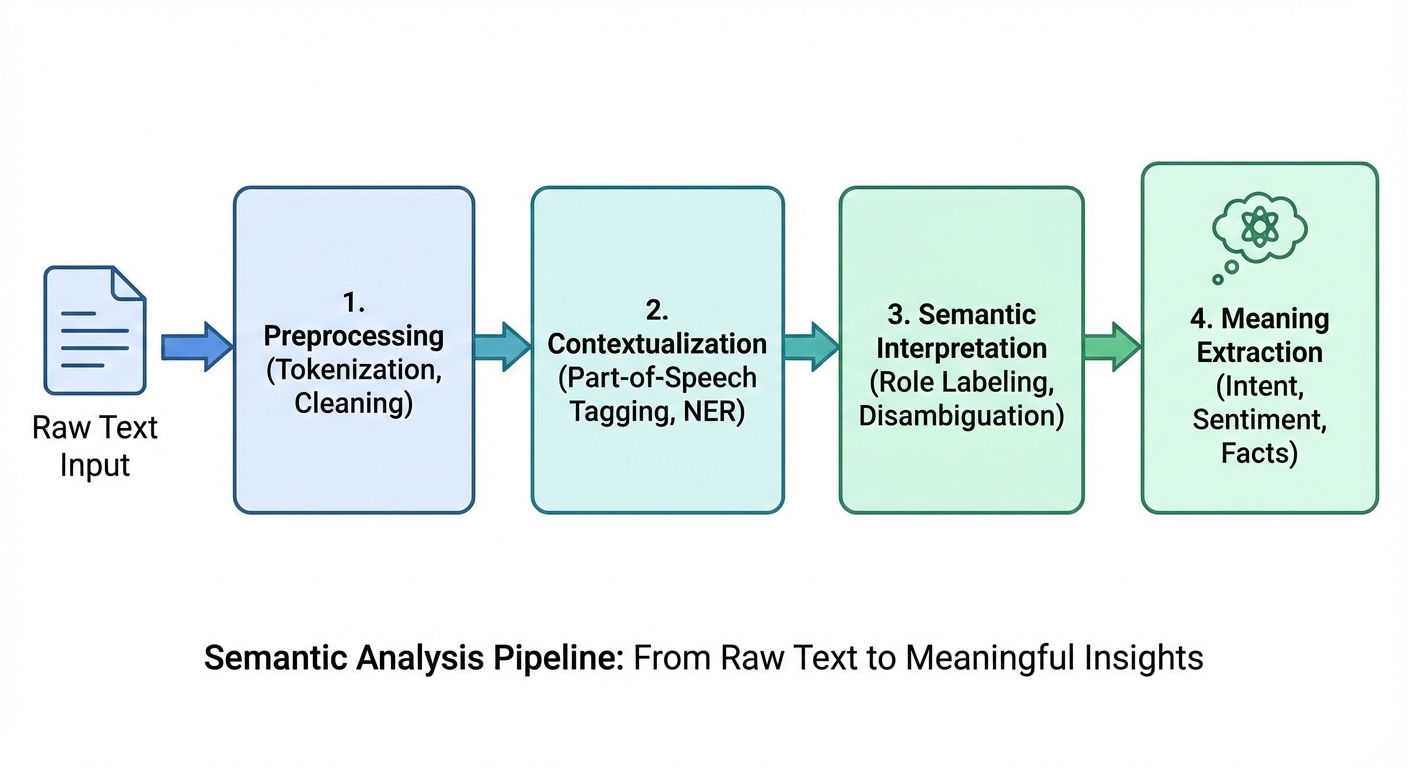
Every robust AI semantic analysis pipeline combines several discrete tasks. Understanding these layers demystifies how machines convert raw text into actionable insight.
1. Named Entity Recognition (NER)
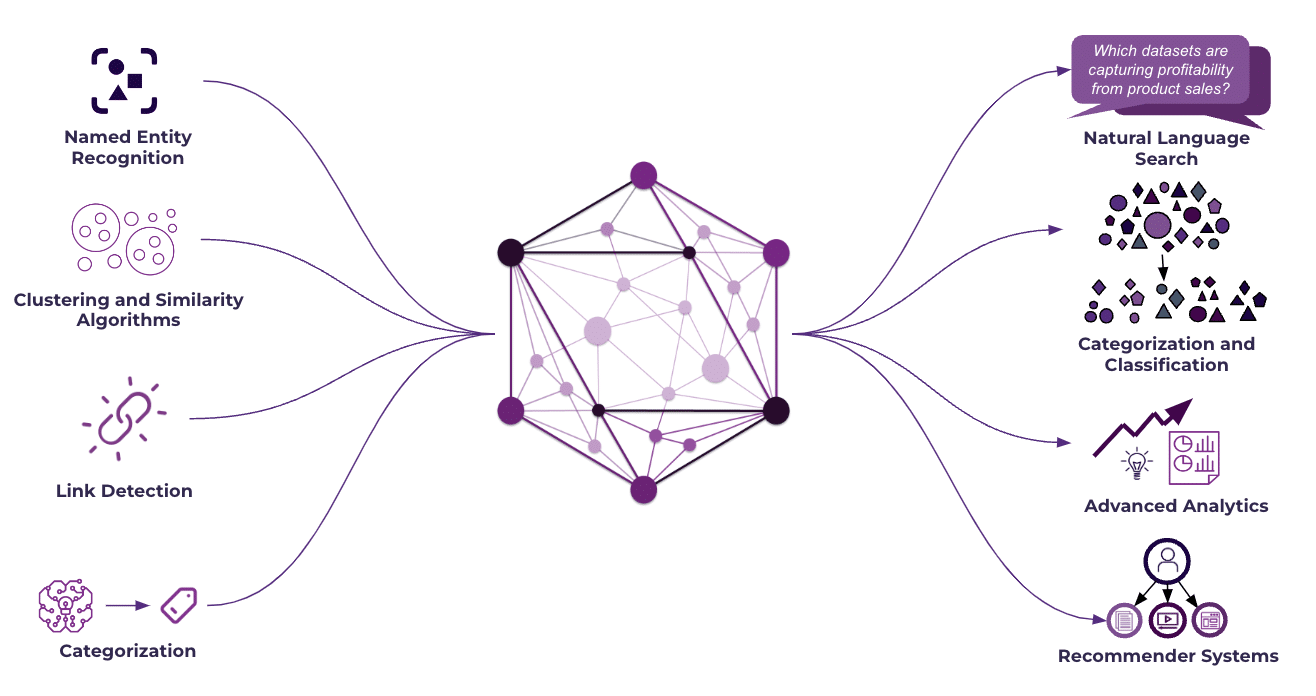
NER identifies and classifies proper nouns and key factual elements—people, organizations, locations, dates, monetary values—within unstructured text. In a sentence like “Apple opened a new store in Tokyo last Friday,” NER tags “Apple” as an organization, “Tokyo” as a location, and “last Friday” as a date. This annotation feeds downstream tasks such as knowledge graph construction, event extraction, or compliance flagging when a restricted entity appears in a confidential document.
2. Relationship Extraction
After identifying entities, the system determines how they relate. In pharmaceutical literature, a passage might state “Metformin reduces HbA1c levels in type 2 diabetes patients.” Relationship extraction maps the subject (Metformin), the action (reduces), and the object (HbA1c levels) to create a structured triple. These triples enable advanced question answering and automated drug interaction alerts. Without semantic analysis, such connections remain buried in paragraphs.
3. Sentiment and Emotion Detection
Modern AI semantic analysis goes far beyond positive, negative, neutral labels. It deciphers emotional tones—frustration, sarcasm, urgency, delight—using context. A message like “Oh great, my package arrived soaked, love that for me” reads as positive if taken literally, but a fine-tuned transformer recognizes the sarcasm and correctly flags negative sentiment. Real-world applications range from brand reputation monitoring to detecting early signs of patient distress in telehealth transcripts.
4. Intent Classification
Conversational AI depends on accurately mapping user utterances to predefined intents. “Book a table for two at 7 PM” triggers a restaurant reservation intent with slots for number of people and time. Semantic analysis identifies variants like “I want to dine out tonight, party of two, around 7” as the same intent. The model learns to disregard filler words and surface variation, extracting the core purpose reliably.
5. Semantic Role Labeling (SRL)
SRL answers “who did what to whom, when, where, and how.” It annotates sentences with predicates and their associated arguments. For a legal contract clause, SRL highlights the obligating party, the action required, and the deadline. This granular breakdown feeds automated contract review tools and risk scoring engines.
6. Coreference Resolution
Language constantly refers back to previously mentioned entities with pronouns or alternative descriptions. “Sarah submitted the report. She was praised by the manager.” Coreference resolution links “She” to “Sarah,” ensuring the sentiment attached to “praised” connects to the right person. Without this, a semantic system misattributes actions, weakening accuracy across all downstream tasks.
How Modern AI Models Perform Semantic Analysis
Before deep learning, semantic analysis leaned on manually crafted rules and ontologies like WordNet. These systems were brittle, labor-intensive, and failed on domain-specific language. The current paradigm rests on pre-trained language models fine-tuned for specific semantic tasks.
Transformer-based architectures like BERT process text bidirectionally, looking at both left and right context to build word representations. During pre-training on massive corpora, the model learns language patterns, facts, and relationships. When fine-tuned on a labeled dataset for sentiment analysis or NER, it adapts that broad knowledge to the niche task—yielding high accuracy even with limited training data.
More recently, large language models (LLMs) such as GPT-4 and Llama 3 have introduced zero-shot and few-shot semantic capabilities. A prompt like “Extract all medical conditions from this discharge summary” works without task-specific training, because the model internalized entity types and grammatical patterns during training. This flexibility dramatically cuts time-to-value for enterprise deployment.
Real-World Applications Across Industries
AI semantic analysis is not an abstract research concept; it drives measurable business outcomes. Below are concrete examples of its impact.
Healthcare and Life Sciences
Clinical NLP systems parse electronic health records to identify adverse drug reactions, cancer staging information, and undocumented comorbidities. The Memorial Sloan Kettering Cancer Center uses semantic analysis to match patients to clinical trials based on nuanced eligibility criteria extracted from unstructured physician notes. This application shortens the recruitment cycle and helps patients access cutting-edge therapies sooner.
E-Commerce and Customer Experience
Amazon and Shopify merchants deploy semantic engines to analyze product reviews at scale. Instead of a simple star rating summary, the system clusters feedback into themes like “battery life,” “setup complexity,” and “customer support responsiveness.” Brands then prioritize feature updates based on the most frequent semantic clusters, creating a direct feedback loop from customer language to product roadmap decisions.
Legal and Compliance
Law firms and corporate legal departments apply semantic analysis for e-discovery, contract review, and regulatory compliance monitoring. A model can instantly flag clauses that deviate from a standard template by understanding the legal meaning, not just term presence. For example, an indemnification clause that contains unusual wording gets highlighted even if it shares no literal keywords with the template departure.
Finance and Investment
Hedge funds and asset managers analyze earnings call transcripts, central bank statements, and news feeds to detect shifts in sentiment and forward-looking statements. AI semantic analysis quantifies the uncertainty in phrases like “challenging macroeconomic conditions” versus “moderate headwinds,” allowing trading algorithms to adjust positions ahead of market-moving events. The nuance is subtle, yet the financial implications are enormous.
Media and Content Moderation
Platforms process billions of user-generated posts daily. Semantic models identify hate speech, harassment, and misinformation by understanding coded language and contextual meaning, not just blacklisted words. When a phrase evolves to evade filters, the model’s contextual understanding catches the new variant because it shares semantic proximity with previously flagged content.
Benefits and Limitations in Practice
While AI semantic analysis provides transformative value, a realistic view must acknowledge its boundaries. Understanding both sides helps organizations plan responsibly.
| Benefits | Limitations |
|---|---|
| Handles ambiguity, sarcasm, and domain jargon better than keyword systems | Performance degrades on low-resource languages or highly specialized dialects with insufficient training data |
| Automates information extraction, saving thousands of manual hours | Large transformer models require significant computational resources for training and inference |
| Enables hyper-personalized search and recommendation based on actual user intent | Model bias inherited from training data can produce unfair sentiment scores or misclassify minority dialects |
| Works across modalities when combined with speech-to-text and OCR | Struggles with extremely long documents unless equipped with efficient attention mechanisms |
| Continuously improves via fine-tuning on domain-specific corpora | Explainability remains challenging; deep models are often black boxes |
AI Semantic Analysis vs. Other Language Technologies
Decision-makers often conflate semantic analysis with adjacent NLP capabilities. Clear differentiation prevents misaligned expectations and wasted investment.
| Technology | Primary Focus | Example Output |
|---|---|---|
| AI Semantic Analysis | Meaning, intent, relationships | “The customer is angry about a late delivery” (emotion + root cause) |
| Syntactic Parsing | Grammar structure, part-of-speech tagging | “Customer (noun) is (verb) angry (adjective) about (preposition) late (adjective) delivery (noun)” |
| Keyword Extraction | Frequent or salient terms | “late delivery”, “angry”, “customer” |
| Topic Modeling | Unsupervised document clustering by theme | Document assigned to topic cluster 7 (shipping complaints) |
| Text Classification | Broad category assignment | Label: “Complaint” |
Semantic analysis subsumes aspects of these technologies but pushes deeper. It does not just know a document belongs to a complaint category; it uncovers the specific object of frustration, the responsible party, and the recommended resolution path—all extracted from the original wording.
Building and Deploying a Semantic Analysis System: A Practical Guide
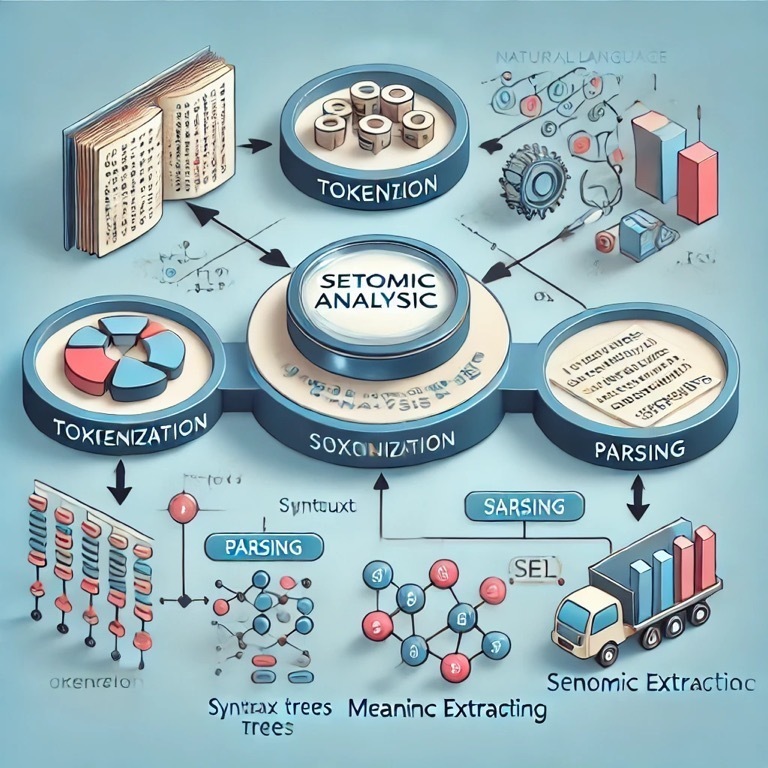
Implementing AI semantic analysis demands more than picking a model. The following roadmap synthesizes best practices from successful enterprise deployments.
Step 1: Define Business Objectives and Success Metrics
Start with the end in mind. A customer support team might aim to auto-tag tickets with root cause categories and route them to the correct department with at least 90% accuracy. A legal team might need to reduce contract review time by 40%. Concrete metrics—precision, recall, F1 score, or dollar savings—anchor the project and justify the AI investment.
Step 2: Assemble and Label Domain-Specific Data
Off-the-shelf models struggle with industry jargon. An insurance company’s claims notes contain phrases like “total loss due to perils of the sea” that general models miss. A labeled dataset of at least 500-1000 domain examples per semantic task (NER, sentiment, relation extraction) is typical for fine-tuning. Data annotation can be done internally by subject matter experts or outsourced to specialized teams, always with rigorous inter-annotator agreement checks.
Step 3: Choose the Right Model Architecture
For most semantic tasks, fine-tuning a pre-trained transformer like DeBERTa, RoBERTa, or domain-adapted models like BioBERT (biomedical) or FinBERT (finance) yields state-of-the-art results. When data is extremely scarce, few-shot prompting with an LLM API offers a fast but potentially less controllable alternative. Evaluate trade-offs in latency, cost, and accuracy against the specific use case.
Step 4: Engineer Features and Context Windows
Semantic analysis rarely operates on isolated sentences. Real meaning emerges from surrounding paragraphs. For relation extraction, the model may need to read an entire contract section to connect a clause’s liability cap to the correct party. Implement sliding window or long-range attention mechanisms (like Longformer or BigBird) to handle documents up to 4,096 or more tokens without losing coherence.
Step 5: Validate and Iterate with Human-in-the-Loop Review
Even high-performing models make mistakes on edge cases. A review dashboard where domain experts can correct predictions and feed those corrections back for periodic retraining creates a virtuous cycle of continuous improvement. This human-in-the-loop approach maintains trust and adapts the system to evolving language, such as new product names or regulatory terminology.
Common Mistakes That Undermine Semantic Analysis Projects
Avoiding these pitfalls separates high-impact deployments from expensive failures.
- Ignoring context length limits: Truncating documents mid-paragraph destroys cross-sentence dependencies. Use models with expanded context windows or intelligent chunking with overlapping segments.
- Treating model output as infallible: Publishing unverified extractions to customer-facing dashboards can cause embarrassment. Always build a confidence score threshold and flag low-confidence results for human review.
- Neglecting multilingual and dialectal variation: A system trained solely on American English reviews will misinterpret British sarcasm or Spanish code-switching. Invest in multilingual models or separate fine-tuned pipelines for key markets.
- Overfitting to a single domain without validation: A model trained on restaurant reviews will fail on clinical notes. Regularly benchmark on out-of-domain samples to detect brittleness early.
- Skipping bias audits: Semantic systems can pick up gender, racial, or cultural biases from training data. For instance, sentiment analysis may score texts in African-American Vernacular English as more negative. Auditing with disaggregated performance metrics protects both brand reputation and compliance.
Important Notes for Long-Term Success
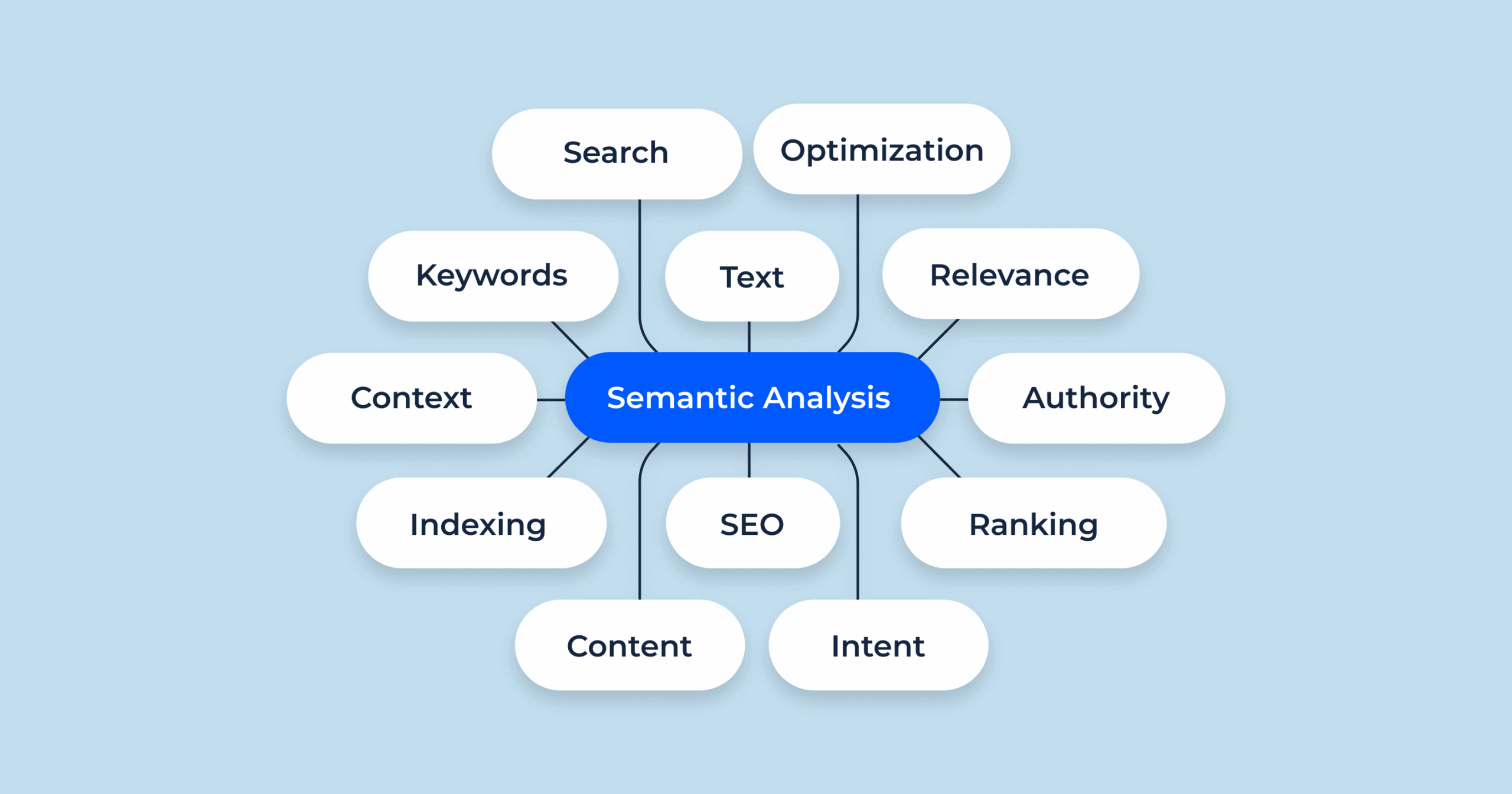
Semantic analysis is not a “set and forget” technology. Language evolves—new slang emerges, product lines change, and regulations introduce fresh terminology. Plan for quarterly retraining cycles fed by production data annotations. Monitor data drift by tracking embedding shifts and distribution changes in entity types or sentiment scores over time.
Cost management remains critical. Serving a large transformer for real-time sentiment analysis on millions of daily messages can become prohibitive. Techniques like model distillation (training a smaller student model to mimic a large teacher model), quantization, and on-device inference using TensorFlow Lite or ONNX Runtime reduce infrastructure spend while preserving acceptable accuracy.
Finally, respect privacy and compliance frameworks. Text data often contains personally identifiable information (PII). Anonymize or pseudonymize inputs before semantic processing, especially in healthcare, finance, and education domains, to stay within GDPR, HIPAA, or CCPA boundaries.
Frequently Asked Questions
What is AI semantic analysis in simple terms?
AI semantic analysis is a technology that enables computers to understand the real meaning of words, sentences, and documents, rather than just matching keywords. It looks at context, intent, emotion, and relationships between ideas, much like a human reader comprehends text beyond its dictionary definitions.
How does AI semantic analysis differ from sentiment analysis?
Sentiment analysis is a subset of AI semantic analysis. While sentiment analysis focuses specifically on classifying the emotional tone (positive, negative, neutral), semantic analysis encompasses much more—entity extraction, intent detection, relationship mapping, and coreference resolution. A full semantic analysis system can tell you not only that a review is negative, but exactly which product feature the customer criticized and what they expect instead.
Which industries benefit most from AI semantic analysis?
Healthcare, legal, finance, e-commerce, and customer service derive some of the strongest ROI. In healthcare, it extracts diagnoses from unstructured notes. In legal, it accelerates contract review. In e-commerce, it turns millions of product reviews into actionable product insights. Any industry dealing with large volumes of text can benefit.
Can AI semantic analysis understand sarcasm and humor?
Yes, to a degree. Modern large language models have become surprisingly adept at detecting sarcasm because they learn contextual incongruity patterns from vast internet text. Phrases like “What a brilliant idea, let’s hold the meeting at midnight” are flagged as negative despite positive words. However, very subtle or culturally specific humor may still trip up even advanced models.
Is AI semantic analysis only for English?
No. Multilingual transformers like XLM-RoBERTa and LaBSE support over 100 languages. The quality varies based on availability of pre-training data, but many languages including Spanish, Chinese, Arabic, German, and Hindi now have robust semantic analysis capabilities. Fine-tuning on native-language datasets closes the gap for lower-resource languages.
How accurate is current AI semantic analysis?
Accuracy depends heavily on the specific task, domain, and training data quality. For standard named entity recognition on well-formed text, F1 scores routinely exceed 93%. Sentiment analysis on product reviews can reach above 95%. In highly specialized domains with limited labeled data, accuracy may fall to 85% or lower, but active learning and human review steadily push performance upward.
What role do knowledge graphs play in semantic analysis?
Knowledge graphs provide structured relational information that enhances pure text-based models. When a text mentions a drug, linking its entity to a medical knowledge graph instantly surfaces its drug class, side effects, and interactions. This fusion of unstructured text understanding and structured world knowledge creates a much richer semantic representation than either approach alone.
The Future of AI Semantic Analysis
Semantic analysis is rapidly moving toward multimodal understanding—interpreting meaning across text, images, audio, and video simultaneously. A model analyzing a TikTok video can correlate spoken words, on-screen captions, facial expressions, and background music to determine overall sentiment and message intent. This convergence will unlock new frontiers in automated content moderation, accessibility tools, and immersive customer analytics.
Another frontier is neuro-symbolic AI, which combines neural networks with explicit symbolic reasoning. Instead of only statistical pattern matching, a neuro-symbolic semantic system can apply logical rules to verify extracted relationships, reducing hallucinations and enabling verifiable compliance checking. For regulated industries, this hybrid approach promises both the flexibility of deep learning and the trustworthiness of rule-based systems.
Quantifiable business impact will keep accelerating. Early adopters of AI semantic analysis already report 30-50% reductions in manual document processing time and double-digit improvements in customer satisfaction scores from better support ticket routing. As models become lighter, faster, and more interpretable, semantic intelligence will embed into everyday enterprise software, much as spell-check did decades ago.
The organizations that succeed will treat semantic analysis not as a standalone tool but as a core data layer that feeds every customer-facing and internal decision system. Investing in clean data pipelines, domain expert oversight, and continuous model evaluation builds a foundation from which profound competitive advantage grows.
Xem thêm:
- AI Product Description Generator: Create Compelling Listings That Sell in Seconds
- AI SEO Content Quality: The Complete Guide to Publishing Content That Ranks in 2025
- AI SEO Automated Competitor Analysis: The Complete Guide to Outranking Your Rivals in 2025
- AI SEO Forums: The Hidden Hubs Where Search Strategy Gets Rewired by Machine Intelligence
- AI SEO Commercial Intent: The Complete Guide to Converting Search Traffic
Bài viết cùng chủ đề:

AI SEO SEO Automation with Make: The Complete Workflow Guide

AI SEO SEO Automation with Zapier: The Complete Workflow Guide

AI SEO SEO Automation with n8n: The Complete Workflow Guide
AI SEO SEO Automation with Gemini: The Complete Guide to Scaling Organic Growth

AI SEO SEO Automation with Claude: The Complete Guide to Scaling Content in 2025

AI SEO SEO Automation with ChatGPT: The Complete Playbook for 2025

AI SEO & SEO Automation for Affiliate Sites: The 2025 Playbook for Passive Income Growth
AI SEO & SEO Automation for Bloggers: The Complete Guide to Scaling Your Content

AI SEO & SEO Automation for Agencies: The Complete 2025 Playbook

AI SEO and SEO Automation for Ecommerce: The Complete Playbook for 2025

AI SEO & SEO Automation for WordPress: The Complete Playbook for 2025
AI SEO SEO Automation Strategy: The Complete Playbook for 2025

Mastering the AI SEO SEO Automation Process: A Complete Guide to Scaling Organic Growth
AI SEO SEO Automation System: The Complete Guide to Scaling Organic Growth in 2025
AI SEO SEO Automation Platform: The Complete Guide to Scaling Organic Growth in 2025
AI SEO SEO Automation Software: The Complete Guide to Scaling Organic Growth in 2025















