
No products in the cart.
AI SEO Agent Workflow: The Complete Blueprint for Automated Search Dominance
31
Jul
Jul
The digital marketing landscape has shifted dramatically. Traditional SEO relied on manual audits, spreadsheet tracking, and slow, iterative updates. Today, the AI SEO Agent Workflow represents a fundamental change in how websites achieve and maintain search visibility. This system uses autonomous artificial intelligence agents to handle everything from keyword discovery to content optimization and technical health monitoring. By the end of this guide, you will understand exactly how to build, deploy, and scale a workflow that saves hundreds of hours while producing measurable ranking improvements.
What is an AI SEO Agent Workflow?
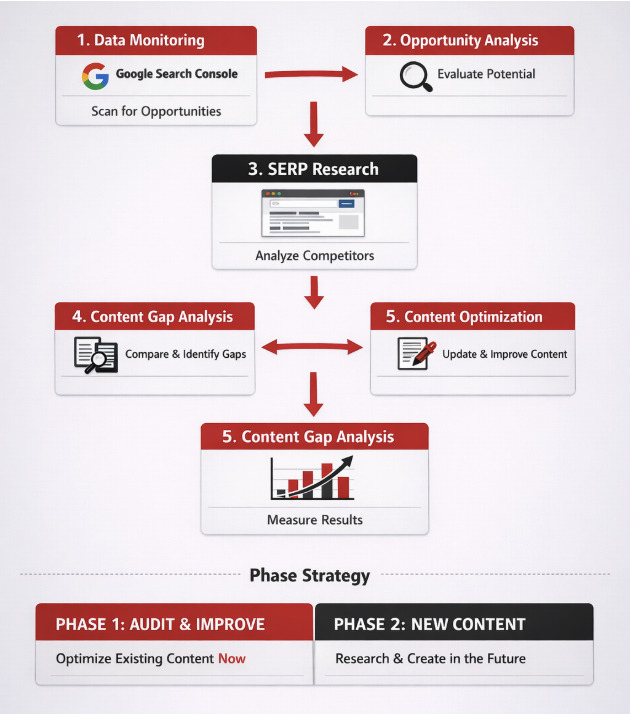
An AI SEO Agent Workflow is a structured sequence of automated tasks performed by specialized AI models. Unlike simple automation tools that follow rigid rules, these agents use machine learning to make decisions. They analyze search engine results pages (SERPs), understand user intent, generate content briefs, and even execute technical fixes without human intervention.
The core difference lies in the “agent” aspect. A standard tool waits for commands. An agent observes the environment, sets a goal, and takes a series of actions to achieve that goal. In SEO, this means the system can identify a drop in rankings, hypothesize the cause, test a fix, and monitor the results—all without a human logging in.
The Core Components of a Modern AI SEO Agent System
To build a functional workflow, you need to understand the five pillars that support it. Each component plays a distinct role in the automation chain.
- Data Ingestion Layer: This connects to Google Search Console, Google Analytics, and third-party APIs (like Ahrefs or Semrush) to pull raw data.
- NLP Processing Unit: Natural Language Processing models read the content, understand semantics, and extract entities, topics, and sentiment.
- Decision Engine: This is the “brain” that uses reinforcement learning to choose which actions to take based on the data received.
- Execution Module: This connects to your CMS (WordPress, Shopify) to publish content, update meta tags, or modify robots.txt files.
- Feedback Loop: This monitors the outcomes of executed actions and feeds the results back into the system for continuous learning.
- Mistake: Ignoring the Human Review. AI is not a replacement for human judgment. You must have a human editor review all AI-generated content before publication to ensure factual accuracy and brand alignment.
- Mistake: Over-Automating Link Building. Sending thousands of automated emails can damage your domain reputation. Limit outreach to 50 high-quality prospects per day and always personalize the first line.
- Mistake: Using AI for “Black Hat” Tactics. Trying to use AI to generate spammy links or keyword-stuffed content will result in a Google penalty. Use the technology to improve user experience, not to game the algorithm.
- Mistake: Lack of Context. AI models do not understand your business history or your customers’ pain points unless you tell them. Provide the agent with your brand guidelines, customer personas, and USPs before letting it generate content.
- Mistake: Failing to Monitor the Agent. An AI agent can develop “drift” over time, where its outputs become less aligned with your goals. Review a sample of its work weekly to ensure quality remains high.
Why Traditional SEO Fails Without an AI Agent Workflow
Manual SEO processes are no longer sustainable. Google processes billions of searches daily, and its algorithms update thousands of times per year. A human team cannot keep pace with the volume of data or the speed of change. The limitations of manual work are clear when you examine the numbers.
Consider a mid-sized e-commerce site with 10,000 product pages. A manual audit of title tags, meta descriptions, and internal links would take a team of five specialists roughly two weeks. By the time the audit is complete, the data is already stale. An AI agent can crawl, analyze, and rewrite all 10,000 tags in under four hours, prioritizing the pages with the highest revenue potential.
Furthermore, manual workflows suffer from “siloed knowledge.” The content team doesn’t talk to the technical team, and the technical team doesn’t understand the link-building strategy. An AI agent workflow centralizes all this information, creating a single source of truth that eliminates miscommunication and redundant work.
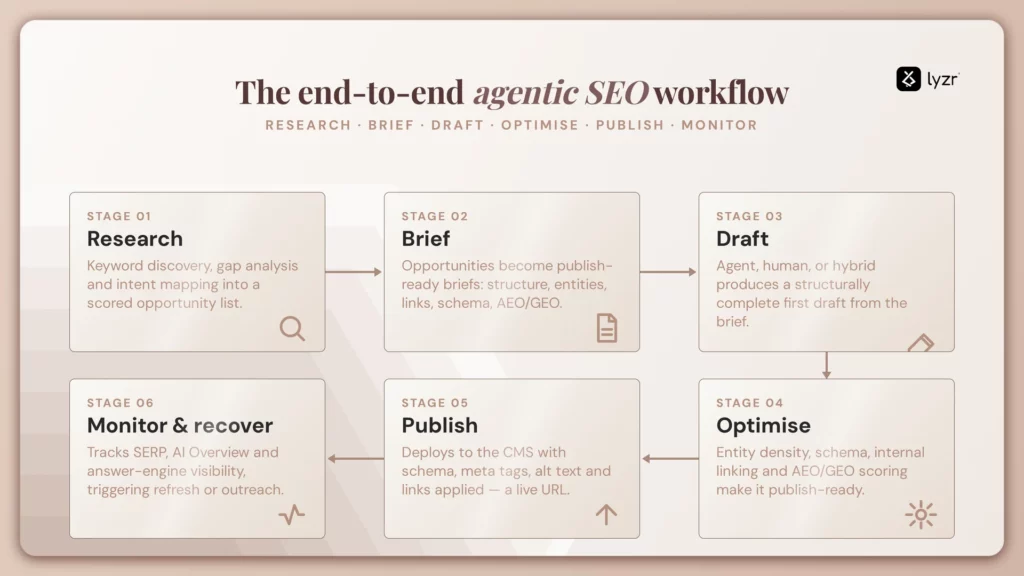
The Step-by-Step AI SEO Agent Workflow Process
Implementing this system requires a clear operational sequence. Below is the exact process used by leading digital agencies to automate their SEO operations. This is not a theoretical framework; it is a practical, actionable pipeline.
Phase 1: Automated Keyword Clustering and Intent Mapping
The workflow begins with raw keyword data. Instead of manually sorting thousands of keywords into spreadsheets, the AI agent uses embedding models to cluster keywords by semantic similarity. It does not just look for exact-match words; it understands that “best running shoes for flat feet” and “stability running shoes review” belong to the same buyer intent cluster.
The agent then maps these clusters to specific stages of the marketing funnel. Informational queries are flagged for blog content, commercial queries are flagged for product comparison pages, and transactional queries are flagged for product pages. This mapping ensures that every piece of content created targets a specific user need, reducing bounce rates and increasing conversion potential.
Phase 2: Competitive Gap Analysis and SERP Feature Targeting
Once the keyword clusters are defined, the agent analyzes the current SERP for those terms. It identifies which domains are ranking, what content formats are winning (listicles, videos, guides), and which featured snippets are available. The agent specifically looks for “position zero” opportunities—queries where the current featured snippet is weak or poorly formatted.
This analysis feeds directly into the content brief. If the top three results for a keyword all lack a comparison table, the agent flags this as a gap. The workflow then instructs the content generation module to include a detailed comparison table in the new article, giving it a higher probability of capturing the featured snippet.
Phase 3: AI-Driven Content Generation and Optimization
This is where the workflow moves from analysis to action. The AI agent generates a comprehensive content brief that includes the primary keyword, secondary LSI keywords, entity lists, internal linking suggestions, and structural outlines. This brief is not a simple list of keywords; it is a data-driven blueprint that tells the writer exactly what to cover and how to structure it.
For the actual writing, the system uses a combination of GPT-class models for drafting and smaller, specialized models for fact-checking and tone adjustment. The draft is then passed through a semantic analysis tool to ensure it covers the “Topical Map” of the query. If the agent detects missing entities that competitors cover, it automatically appends a section to the article to fill that gap.
Phase 4: Automated Technical SEO Auditing and Fixing
Technical SEO is the most tedious part of the job, but it is also the most logical for automation. The AI agent continuously crawls the website, checking for broken links, duplicate content, missing alt tags, and slow-loading pages. It does not just report these issues; it fixes them directly.
For example, if the agent finds a 404 error on a high-traffic page, it checks the URL structure to find the closest matching live page. It then implements a 301 redirect automatically and logs the change in the audit trail. Similarly, if it detects that a page’s title tag is too long, it rewrites the tag to fit within the pixel limit while preserving the primary keyword.
Phase 5: Link Building and Digital PR Automation
Link building remains a critical ranking factor, and AI agents are now handling the outreach process. The workflow scans the web for broken links on high-authority sites within your niche. It then generates a personalized email template that highlights the broken link and suggests your content as a replacement.
The agent manages the entire outreach sequence—sending follow-ups, tracking responses, and logging positive replies. While the final placement still requires a human to approve the link, the agent handles 90% of the administrative work. This allows your team to focus on relationship building rather than spreadsheet management.
Key Benefits of Implementing an AI SEO Agent Workflow
The shift to automated workflows delivers tangible business outcomes. These are not just “nice to have” features; they are competitive advantages that directly impact revenue and operational efficiency.
| Benefit | Impact on Business | Time Saved (Weekly) |
|---|---|---|
| Real-time Rank Tracking | Immediate response to algorithm updates | 10+ hours |
| Automated Content Briefs | 50% faster content production cycle | 15+ hours |
| Self-Healing Technical SEO | Reduced downtime and crawl errors | 8+ hours |
| Dynamic Internal Linking | Improved crawl depth and page authority | 5+ hours |
| Predictive Analytics | Proactive strategy instead of reactive fixes | 12+ hours |
The most significant advantage is the “always-on” nature of the system. While your human team sleeps, the AI agent is monitoring your competitors, checking your server logs, and testing new meta descriptions. This continuous operation ensures that you never miss an opportunity or a threat.
Limitations and Risks of AI-Driven SEO
It is crucial to approach this technology with a clear understanding of its boundaries. AI agents are powerful, but they are not infallible. The primary risk is “automation bias”—trusting the output without human oversight.
One major limitation is the lack of true creativity. AI can analyze data and generate grammatically correct text, but it cannot replicate the unique brand voice or the deep industry insight that comes from years of hands-on experience. Content generated purely by AI often lacks the “E-E-A-T” signals (Experience, Expertise, Authoritativeness, Trustworthiness) that Google uses to evaluate quality.
Another risk is the “black box” problem. Some AI models cannot explain why they made a specific decision. If the agent decides to remove a page from the index, you need to know why. Without transparent logging and audit trails, you cannot verify the logic, which can lead to catastrophic SEO mistakes.
AI SEO Agent Workflow vs. Traditional SEO Tools
To understand the value of this approach, it helps to compare it directly with the legacy software that most companies still use. The difference is not just in speed; it is in the fundamental architecture of the systems.
| Feature | Traditional Tools (e.g., Screaming Frog) | AI SEO Agent Workflow |
|---|---|---|
| Data Analysis | Generates reports for humans to read | Makes decisions and executes changes |
| Keyword Research | Provides volume and difficulty scores | Clusters by intent and predicts future trends |
| Content Creation | Offers basic suggestions | Writes full drafts and optimizes for entities |
| Error Handling | Flags issues in a log file | Fixes issues automatically via API |
| Learning Capability | Static rules and filters | Improves based on historical performance data |
Traditional tools are diagnostic. They tell you what is wrong. An AI agent workflow is therapeutic. It tells you what is wrong, fixes it, and then checks to see if the fix worked. This closed-loop system is what separates modern automation from simple software.
Practical Implementation: How to Build Your First AI SEO Agent
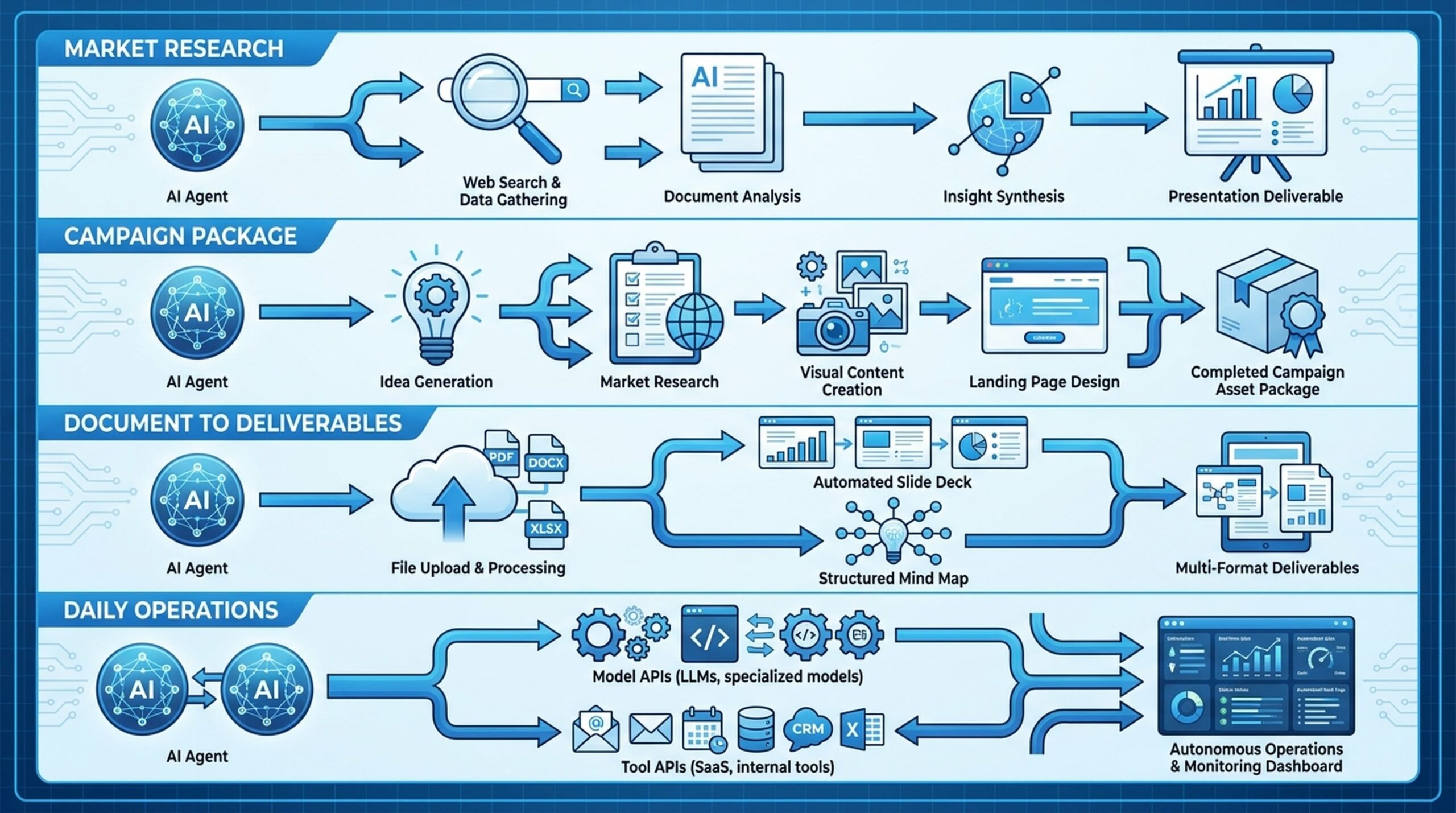
Building this system does not require a PhD in computer science. You can start with a simple stack of existing APIs and a low-code automation platform. The key is to start small and scale gradually.
Step 1: Define Your Objective and KPIs
Before writing any code, define what success looks like. Are you trying to increase organic traffic by 20%? Reduce crawl errors to zero? Increase keyword rankings for a specific product line? Your objective will determine which data sources you connect and which actions the agent is allowed to take.
Set clear boundaries. Decide which actions require human approval. For example, you might allow the agent to rewrite meta descriptions automatically, but require human sign-off before it deletes any pages or changes the URL structure.
Step 2: Connect Your Data Sources
Use the Google Search Console API and Google Analytics API to pull performance data. Connect your CMS via its REST API (WordPress has a robust one). If you use a tool like Ahrefs or Semrush, they offer APIs that allow the agent to pull backlink data and keyword difficulty scores.
This is the most technical part of the setup. If you are not comfortable with APIs, use a middleware platform like Zapier or Make.com. These platforms have pre-built connectors that allow you to pass data between Google Sheets, your CMS, and AI models without writing a single line of code.
Step 3: Configure the AI Model and Prompt Engineering
Choose a large language model (like GPT-4 or Claude) for content generation and a separate model for classification tasks. The key to success is prompt engineering. You must write detailed system prompts that tell the AI exactly what its role is, what data it has access to, and what constraints it must follow.
A good prompt for a meta description agent would be: “You are an SEO specialist. Given the following page content and target keyword, write a meta description under 155 characters. Include the keyword naturally at the beginning. Use an active voice and include a call to action.”
Step 4: Implement the Feedback Loop
This is the step that most people skip, but it is the most important. The agent must be able to see the results of its actions. If it rewrites a title tag, it needs to track the click-through rate (CTR) for that page over the next 14 days. If the CTR improves, it reinforces the strategy. If it drops, the agent adjusts its approach.
Set up a weekly automated report that shows the agent’s actions and the corresponding performance metrics. This report should be sent to a human supervisor for review. The human provides feedback, and the agent uses that feedback to refine its future decisions.
Common Mistakes and How to Avoid Them
Many companies fail to see results from AI automation because they make predictable errors. Understanding these pitfalls will save you time, money, and frustration.
Important Notes on Data Privacy and Compliance
When implementing an AI SEO Agent Workflow, you must consider data governance. The AI models process data that may include user behavior, IP addresses, and search queries. Ensure that your data processing complies with GDPR and CCPA regulations.
Do not feed sensitive customer data into public AI models. Use enterprise-grade APIs that offer data privacy guarantees. Additionally, maintain a clear log of all automated actions. If a regulator or a client asks how a specific change was made, you must be able to provide a transparent audit trail.
Finally, remember that Google’s guidelines prohibit “automated content” that is generated primarily for ranking purposes. However, Google explicitly states that automation is acceptable if it is used to produce helpful, original content. The key is to use AI to assist human creators, not to replace them entirely. Always add a layer of human editing and fact-checking to ensure your content meets the “Helpful Content” standards.
Frequently Asked Questions
What is the difference between an AI SEO agent and a standard SEO plugin?
A standard plugin (like Yoast) provides recommendations based on static rules. It tells you if your keyword density is too low or if your title is too long. An AI SEO agent goes further. It analyzes the competitive landscape, understands user intent, and executes changes automatically. It learns from the results of its actions and adapts its strategy over time, making it a dynamic system rather than a static checklist.
How much does it cost to implement an AI SEO Agent Workflow?
The cost varies widely based on your needs. A basic setup using open-source models and Zapier integrations can cost less than $100 per month in API fees. A fully custom enterprise solution with dedicated infrastructure and custom model training can cost upwards of $10,000 per month. Most small to medium businesses can start with a “middle ground” approach using existing SaaS platforms that offer AI-powered SEO automation for $300 to $1,000 per month.
Will AI replace SEO professionals?
A The repetitive tasks—data collection, basic reporting, and technical audits—will be automated. The human professional will focus on strategy, creative content direction, and relationship building. SEO experts who learn to work with AI agents will be more valuable than those who resist the change, as they will be able to manage larger portfolios and deliver faster results.
How long does it take to see results from an AI SEO Agent Workflow?
Results depend on the current state of your website and the competitiveness of your niche. For technical fixes (like broken links or slow pages), you can see improvements in crawl efficiency within 2 to 4 weeks. For content-related changes, it typically takes 3 to 6 months to see significant ranking movements, as Google needs time to crawl, index, and evaluate the new content. The main advantage is speed—the AI agent can implement changes in days that would take a human team months to complete.
Can I use an AI SEO Agent Workflow for local SEO?
Yes, the workflow is highly effective for local SEO. The agent can automate the management of Google Business Profile listings, respond to customer reviews (with human approval), and generate location-specific content. It can also monitor local search rankings and adjust the NAP (Name, Address, Phone) citations across directories to ensure consistency, which is a critical ranking factor for local searches.
Conclusion
The AI SEO Agent Workflow is not a futuristic concept; it is a present-day necessity for businesses that want to remain competitive. The ability to automate data analysis, content creation, technical fixes, and link outreach provides a significant operational advantage. The key to success lies in a balanced approach: use AI for speed and scale, but maintain human oversight for quality, creativity, and strategic direction.
Start by identifying one repetitive task in your current SEO process—perhaps meta description optimization or internal linking. Build a small agent to handle that task, measure the results, and then expand to other areas. This incremental approach reduces risk and allows your team to adapt to the new workflow gradually. The future of search is autonomous, and the time to build your agent is now.
Xem thêm:
- AI SEO GPT Tools: The Complete Guide to Automating Your Search Rankings in 2025
- AI SEO JSON-LD Generator: The Complete Guide to Automated Structured Data
- How to Use Claude for SEO: A Complete Guide to Ranking Higher with AI Assistance
- AI SEO Silo Structure: The Complete Guide to Building Topically Authoritative Websites
- AI Blog SEO: The Complete Guide to Ranking With Machine Intelligence
Bài viết cùng chủ đề:

AI SEO SEO Automation with Make: The Complete Workflow Guide

AI SEO SEO Automation with Zapier: The Complete Workflow Guide

AI SEO SEO Automation with n8n: The Complete Workflow Guide
AI SEO SEO Automation with Gemini: The Complete Guide to Scaling Organic Growth

AI SEO SEO Automation with Claude: The Complete Guide to Scaling Content in 2025

AI SEO SEO Automation with ChatGPT: The Complete Playbook for 2025

AI SEO & SEO Automation for Affiliate Sites: The 2025 Playbook for Passive Income Growth
AI SEO & SEO Automation for Bloggers: The Complete Guide to Scaling Your Content

AI SEO & SEO Automation for Agencies: The Complete 2025 Playbook

AI SEO and SEO Automation for Ecommerce: The Complete Playbook for 2025

AI SEO & SEO Automation for WordPress: The Complete Playbook for 2025
AI SEO SEO Automation Strategy: The Complete Playbook for 2025

Mastering the AI SEO SEO Automation Process: A Complete Guide to Scaling Organic Growth
AI SEO SEO Automation System: The Complete Guide to Scaling Organic Growth in 2025
AI SEO SEO Automation Platform: The Complete Guide to Scaling Organic Growth in 2025
AI SEO SEO Automation Software: The Complete Guide to Scaling Organic Growth in 2025















