No products in the cart.
How to Use Claude for SEO: A Complete Guide to Ranking Higher with AI Assistance
29
Jul
Jul
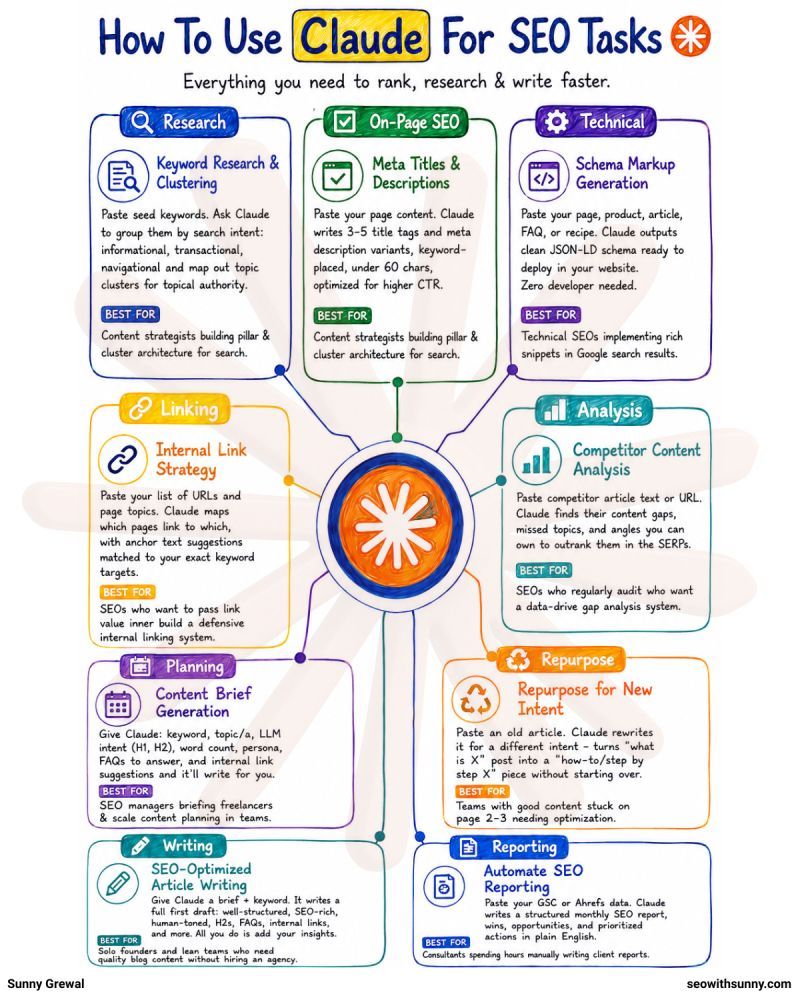
Search engine optimization demands speed, precision, and a deep understanding of user intent. Anthropic’s Claude has emerged as a powerful AI assistant that can reshape the way SEO professionals and content creators approach their daily tasks. Learning how to use Claude for SEO means unlocking a tool that goes beyond simple text generation—it analyzes documents, thinks through complex instructions, and produces context-rich output that aligns with modern ranking factors. This guide walks through practical applications, from keyword discovery and content structuring to technical audits, while addressing the model’s strengths and boundaries. No fluff, only actionable techniques that experienced practitioners apply when integrating Claude into their SEO workflows.
What Is Claude and Why Use It for SEO?
Claude is a large language model created by Anthropic, designed with a strong emphasis on safety, reasoning, and long-form content understanding. Unlike many AI tools that treat every prompt as a blank slate, Claude excels at handling detailed instructions and large volumes of context. For SEO professionals, this translates into an assistant that can consume an entire content brief, a set of competitor pages, or a keyword list, then produce nuanced output that respects brand voice and structural requirements.
Using Claude for SEO makes sense because search engines now reward depth, relevance, and expertise. The model can help generate outlines that fulfill multiple search intents, rewrite sections for readability without losing semantic richness, and even surface content gaps that a human writer might overlook. Its ability to process and reference uploaded files—spreadsheets, PDFs, and plain text—means raw SEO data becomes immediately actionable within a single conversation thread.
Key Features of Claude That Directly Benefit SEO Workflows
Understanding the technical foundation of the model clarifies where it fits into an optimization strategy. Claude’s strengths are not in real-time data retrieval but in synthesis, analysis, and instruction-following.
- Massive context window: Claude 3 variants handle up to 200K tokens, roughly the length of a full novel. SEO teams can upload multiple competitor articles, a full site crawl export, or a comprehensive content inventory and ask the model to identify patterns.
- Document upload and processing: Accepting PDFs, CSVs, and Word documents allows Claude to turn raw keyword research data, GSC exports, or audit logs into structured recommendations.
- Precise instruction following: Where other models drift from style guides, Claude adheres tightly to formatting rules, character limits, and structured data templates—critical for meta tags and schema.
- Granular content analysis: The model breaks down content by readability, tone, topical coverage, and entity density, offering SEOs a checklist-style improvement report without additional tools.
- Safety and consistency: Built‑in constitutional AI guidelines reduce the risk of hallucinated facts, making outputs safer for YMYL (Your Money or Your Life) niches where accuracy directly impacts trust.
- Publishing AI‑generated content without editing: Search engines do not penalize AI content when it demonstrates expertise, but raw, unchecked output often contains thin fluff, outdated references, or unnatural flow. Always have a subject matter expert review and enhance the draft.
- Ignoring E‑E‑A‑T signals: Claude can write about medical or financial topics, but without real‑world author credentials, case studies, or cited sources, the content lacks the trustworthiness Google demands. Layer in author bios, references, and first‑hand data.
- Over-optimizing for keywords: A prompt that forces too many exact‑match keywords leads to stilted copy that harms user experience. Instruct Claude to prioritize natural language and topical breadth, not keyword stuffing.
- Assuming factual accuracy: The model may confidently state incorrect statistics or misattribute quotes. Fact‑check every claim, especially for date‑sensitive or statistical information, against primary sources.
- Using generic prompts: Vague instructions like “write an SEO article about X” produce mediocre results. Detailed prompts referencing audience persona, tone, competitor URLs, and content format yield far better output.
- Always provide context documents: Upload your brand style guide, existing top‑performing content, and a list of keywords. The more the model understands your unique angle, the less generic the output becomes.
- Chain prompts for complex tasks: Instead of asking for a full article in one go, first request an outline, then flesh out each section in separate turns. This iterative method reduces drift and improves topical depth.
- Use Claude as a critic: After drafting a page, paste it back and ask the model to evaluate SEO strength—heading structure, keyword distribution, readability, and entity coverage. Acting as a first‑line editor, Claude often spots gaps humans miss.
- Combine with SEO tools: Pair Claude’s analytical output with hard data from Google Search Console, Ahrefs, or Screaming Frog. The model interprets data but cannot create it.
- Keep prompts specific to one domain: Avoid mixing drastically different subjects in a single conversation, as that can confuse the model’s contextual grounding and dilute the relevance of suggestions.
- Leverage seed content for tone control: If a brand writes in a witty, conversational style, paste a few paragraphs of that brand’s published work and tell Claude to match the tone. The results become far more authentic.
How to Use Claude for Keyword Research and Topic Discovery
Claude does not have live internet access by default, so it cannot pull real‑time search volumes or trending data. However, its analytical capabilities make it an effective second layer in the keyword research process. SEO professionals use it to expand raw seed lists, classify terms by intent, and brainstorm long‑tail variations derived from known patterns.
Expanding Seed Keywords with Contextual Awareness
Upload a spreadsheet containing your primary seed keywords. Prompt Claude to generate clusters of semantically related terms, long‑tail questions, and comparison‑based queries that real users type into search bars. Because the model understands concept hierarchies, it rarely suggests wildly irrelevant terms. It can also prioritize suggestions based on topical authority rather than mere adjacency.
Example approach: “Attached is a list of 50 core terms for a SaaS project management tool. Based on common information needs in this space, produce 100 additional keyword variations grouped by commercial, informational, and transactional intent.” The output typically mirrors sophisticated keyword mapping exercises, saving hours of manual ideation.
Classifying Search Intent at Scale
Given a mixed list of keywords, Claude can label each with the dominant intent—informational, navigational, commercial investigation, or transactional—and justify the classification. This helps teams align content types with the right stage of the buyer’s journey without scrolling through thousands of rows manually. Uploading raw data from Ahrefs or Semrush into Claude transforms a static export into an actionable content strategy document.
Creating SEO-Optimized Content with Claude
Generating content that ranks requires more than inserting keywords. Claude’s abilities in long‑form reasoning make it suitable for crafting comprehensive articles that demonstrate E‑E‑A‑T. The model can build structured outlines that mirror top‑ranking pages while ensuring the piece goes deeper, addressing subtopics that competitors miss.
Building Detailed Content Outlines that Cover Multiple Intents
Provide Claude with a primary keyword and a list of competitor URLs (pasted as text or uploaded as screenshots of headings). Ask it to analyze the structural patterns—common H2s, H3s, and media placements—then propose an enriched outline that fills content gaps. A prompt for a health niche might instruct: “Design an outline that covers symptoms, diagnosis, treatment, and prevention, but also add sections on recent clinical research and patient experience that competitors lack.” Claude will produce a comprehensive skeleton, complete with suggested word counts per section and entity mentions.
Writing Entire Drafts with On‑Page SEO Elements
Once the outline is approved, Claude can write full drafts that incorporate the target keyword in the first 100 words, maintain optimal keyword density, and use related terms naturally. More importantly, it generates title tag suggestions, meta description drafts, and even URL slug ideas simultaneously. A single prompt can yield: an SEO title under 60 characters, a compelling meta description between 150‑160 characters, and a body text that flows from introduction to conclusion while hitting all outlined points.
Optimizing Existing Content for Better Rankings
Upload an underperforming blog post along with a list of target keywords. Claude conducts a gap analysis, pointing out missing subtopics, thin paragraphs, and opportunities to strengthen internal linking. It can then rewrite sections to include latent semantic keywords without sacrificing readability. The model also evaluates the content’s entity footprint—whether it mentions the right people, places, and concepts that Google expects for the topic. This approach often resparks stale content without a complete rewrite.
On‑Page SEO Enhancements Using Claude

Beyond content creation, Claude serves as an on‑page optimization partner. Its ability to produce structured data, review heading hierarchies, and craft internal linking suggestions streamlines tasks that are often repetitive but critical for rankings.
Generating Title Tags and Meta Descriptions at Scale
For e‑commerce sites with hundreds of category pages, generating unique, click‑worthy title tags is a challenge. Feed Claude a list of product categories along with brand guidelines and character limits. The model outputs titles that incorporate primary keywords, highlight unique selling points, and stay within the truncation threshold. Similarly, meta descriptions that evoke curiosity while accurately describing the page content help improve click‑through rates without manual effort per page.
Structured Data Markup Without Coding Hassles
While many SEOs rely on schema generators, Claude can produce JSON‑LD markup for articles, products, local businesses, FAQs, and how‑to content directly. By describing the page elements—headline, publish date, author, product price, availability, and review ratings—the model crafts valid, nested schema that passes Google’s Rich Results Test. The output can be copied directly into a page’s head section, reducing dependency on plugins and manual coding errors.
Internal Linking Recommendations Based on Content Analysis
Upload a list of your website’s top‑level pages and a target article. Claude identifies contextual link opportunities, suggesting anchor text variations that feel natural while distributing link equity to deeper pages. It can also audit an existing page’s internal links for over‑optimization and propose more diverse anchor profiles. This data‑driven internal linking strategy strengthens site architecture without needing complex tools.
Technical SEO Tasks Claude Can Help With
While Claude cannot crawl a website or retrieve live server information, it still contributes meaningfully to technical SEO workflows by processing pre‑collected data and generating actionable fixes.
Interpreting Crawl Data and Log File Analysis
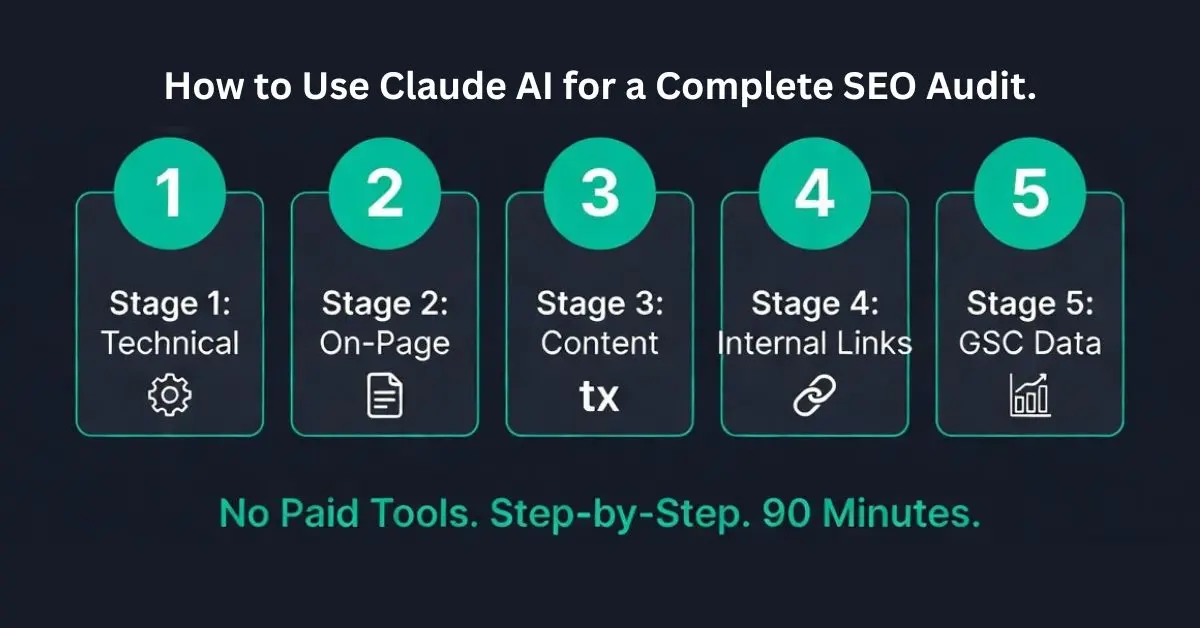
Upload cleaned crawl reports from Screaming Frog or log files in CSV format. Claude identifies patterns such as high crawl frequency on low‑value pages, missed important pages in search engine budgets, or status code anomalies. It then summarizes findings in plain English and prioritizes fixes. Instead of staring at raw numbers, you get a narrative report with action items like “reduce crawl depth on the blog subfolder by consolidating pagination” or “301 redirect 4xx pages to relevant category pages.”
Generating.htaccess and Robots.txt Rules
The model can write clean redirect rules, canonical tag suggestions, and robots.txt directives based on site structure descriptions. While you must test implementations before deployment, Claude’s output often needs only minor adjustments, expediting technical SEO implementations for small teams without dedicated developers.
Benefits and Limitations of Using Claude for SEO
Integrating Claude into an SEO toolkit brings significant efficiency gains, but it is not a magic wand. Knowing exactly where the model shines and where human oversight remains mandatory prevents costly mistakes.
| Benefits | Limitations |
|---|---|
| Saves hours on content research and outline creation | No real‑time internet access; cannot pull live rankings or search volumes |
| Handles massive datasets (keywords, crawl exports) in one prompt | Knowledge cutoff limits awareness of very recent algorithm updates |
| Generates accurate schema markup and clean code snippets | Output must be verified for factual errors in YMYL niches |
| Maintains brand voice cues across hundreds of pages | Can produce repetitive phrasing if prompts lack variety |
| Flawlessly follows multi‑step, complex formatting instructions | Does not replace tools for technical audits that require live crawling |
Comparison: Claude vs ChatGPT for SEO
Many SEOs weigh the choice between Anthropic’s Claude and OpenAI’s ChatGPT. Both are capable, but their strengths diverge in practical use cases.
| Feature | Claude | ChatGPT |
|---|---|---|
| Context window size | Up to 200K tokens (Claude 3), ideal for bulk content analysis | 128K tokens (GPT‑4 Turbo), solid but smaller than Claude |
| Instruction adherence | Extremely precise; follows character counts, formatting, and style rules consistently | Good, but occasionally deviates under long conversation chains |
| Document analysis | Handles PDFs, CSVs, and text files with strong extraction accuracy | Supports file uploads but may misinterpret complex spreadsheet layouts |
| Real‑time browsing plug‑ins | No native browsing; some third‑party integrations exist | Browse with Bing available; useful for competitor SERP checks |
| Safety and hallucination rate | Lower hallucination due to constitutional AI; safer for YMYL queries | Can confidently state incorrect facts; requires rigorous fact‑checking |
| SEO-specific prompt libraries | Smaller community, but growing library of effective prompts | Large ecosystem of shared SEO prompts and plugins |
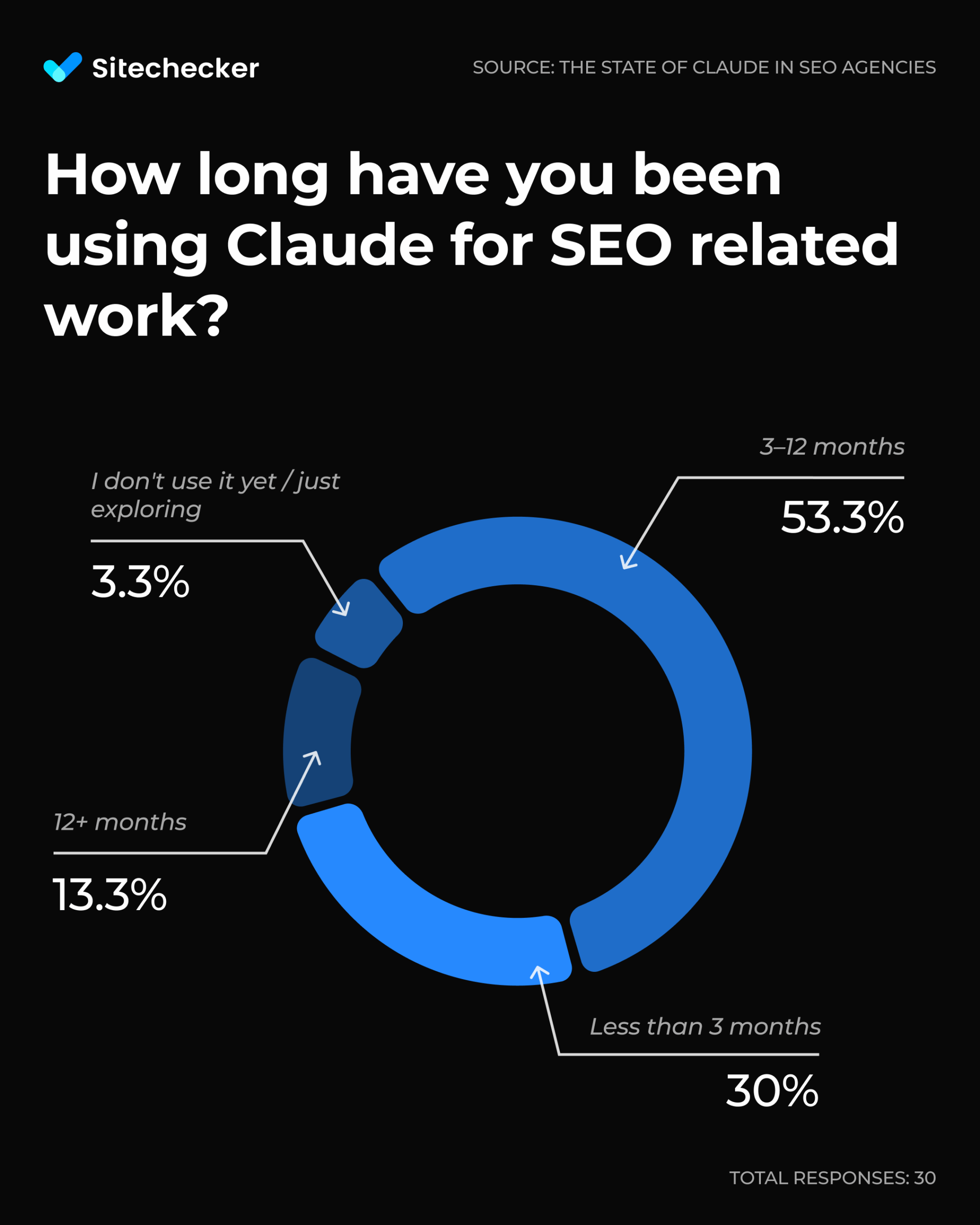
For SEO tasks that demand digesting enormous amounts of data—like analyzing a full site’s meta tags or merging competitor content patterns—Claude’s larger context window and analytical depth often win. When live SERP data or integration with external tools is essential, ChatGPT with browsing might be more practical. Many experienced SEOs use both in sequence: Claude for deep content work, ChatGPT for real‑time verification.
Common Mistakes When Using AI for SEO and How to Avoid Them
Even the most advanced models can lead SEO efforts astray if not properly directed. Recognizing these pitfalls keeps the human firmly in control.
Important Tips for Getting the Best SEO Results from Claude
Maximizing Claude’s potential requires a blend of technical know‑how and smart prompting. These recommendations stem from daily use in production SEO environments.
Frequently Asked Questions About How to Use Claude for SEO
Can Claude replace an SEO specialist?
No. Claude accelerates research, content drafting, and data analysis, but it cannot replace human judgment. Strategy, creativity, stakeholder communication, and final editorial oversight still require a skilled SEO professional who understands the audience and business goals.
Does Google penalize content written by Claude?
Google’s guidelines focus on content quality, not the tool used to create it. As long as the content demonstrates experience, expertise, authoritativeness, and trustworthiness, and is reviewed by a human editor, it can rank well. Publishing unedited AI output that lacks value, however, can lead to poor performance.
How do I get Claude to output proper schema markup?
Clearly describe the page type and elements, then specify the format you need: “Generate valid JSON‑LD FAQ schema for the following questions and answers, without any additional commentary.” Test the output in Google’s Rich Results Test tool before deployment.
Can Claude analyze my competitors’ SEO strategies?
Yes, indirectly. Paste the visible text of competitor pages or upload a document containing their headings, meta tags, and content snippets. Claude can identify common themes, entity coverage, and content gaps. It cannot access live backlink profiles or real‑time rankings, so combine its insights with dedicated SEO tool data.
What’s the best way to handle Claude’s lack of internet access?
Use it as a secondary analysis layer. Gather data from traditional SEO tools first—keyword research, SERP analysis, crawl reports—then feed that structured data into Claude for pattern recognition and recommendations. For live checks like verifying featured snippets, rely on browser‑based tools or ChatGPT with browsing.
How do I prevent Claude from hallucinating statistics or facts?
Instruct the model to state when it is uncertain and to avoid inventing data. Phrase prompts like: “Only include statistics if you can cite a verified source; otherwise, describe the concept without numbers.” Afterward, cross‑reference any provided figures with authoritative databases.
Conclusion
Mastering how to use Claude for SEO elevates strategic output while cutting repetitive work. The model’s capacity to process large data sets, follow detailed instructions, and produce nuanced content makes it a versatile member of any SEO stack. Yet it remains a tool—one that amplifies human expertise rather than replacing it. Pairing Claude’s analytical depth with real‑world SEO data and a rigorous editing process leads to content that not only ranks but builds sustained authority. As search engines mature, the professionals who wield AI assistants like Claude with both creativity and critical oversight will stay ahead of algorithm shifts and competitive noise.
Xem thêm:
- AI SEO SEO Automation System: The Complete Guide to Scaling Organic Growth in 2025
- AI Programmatic SEO: The Ultimate Guide to Automated Content Generation at Scale
- AI SEO AI Overview Visibility: The Complete Playbook for 2025
- AI SEO AI Search Optimization Audit: The Complete 2025 Guide to Future-Proofing Your Rankings
- AI SEO Content Audits: The Complete Guide to Automated Content Optimization
Bài viết cùng chủ đề:

AI SEO SEO Automation with Make: The Complete Workflow Guide

AI SEO SEO Automation with Zapier: The Complete Workflow Guide

AI SEO SEO Automation with n8n: The Complete Workflow Guide
AI SEO SEO Automation with Gemini: The Complete Guide to Scaling Organic Growth

AI SEO SEO Automation with Claude: The Complete Guide to Scaling Content in 2025

AI SEO SEO Automation with ChatGPT: The Complete Playbook for 2025

AI SEO & SEO Automation for Affiliate Sites: The 2025 Playbook for Passive Income Growth
AI SEO & SEO Automation for Bloggers: The Complete Guide to Scaling Your Content

AI SEO & SEO Automation for Agencies: The Complete 2025 Playbook

AI SEO and SEO Automation for Ecommerce: The Complete Playbook for 2025

AI SEO & SEO Automation for WordPress: The Complete Playbook for 2025
AI SEO SEO Automation Strategy: The Complete Playbook for 2025

Mastering the AI SEO SEO Automation Process: A Complete Guide to Scaling Organic Growth
AI SEO SEO Automation System: The Complete Guide to Scaling Organic Growth in 2025
AI SEO SEO Automation Platform: The Complete Guide to Scaling Organic Growth in 2025
AI SEO SEO Automation Software: The Complete Guide to Scaling Organic Growth in 2025