
No products in the cart.
AI SEO AI Brand Mentions: The Complete Guide to Automated Brand Monitoring
10
Aug
Aug
AI SEO AI Brand Mentions represents the convergence of artificial intelligence, search engine optimization, and automated brand monitoring. In today’s digital landscape, brands generate thousands of online mentions daily across social media, news sites, forums, and review platforms. Understanding how AI-powered tools track, analyze, and leverage these mentions has become essential for SEO professionals and marketing teams. This comprehensive guide explores how artificial intelligence transforms brand mention tracking into actionable SEO insights, helping businesses improve their search visibility and online reputation.
Understanding AI SEO AI Brand Mentions
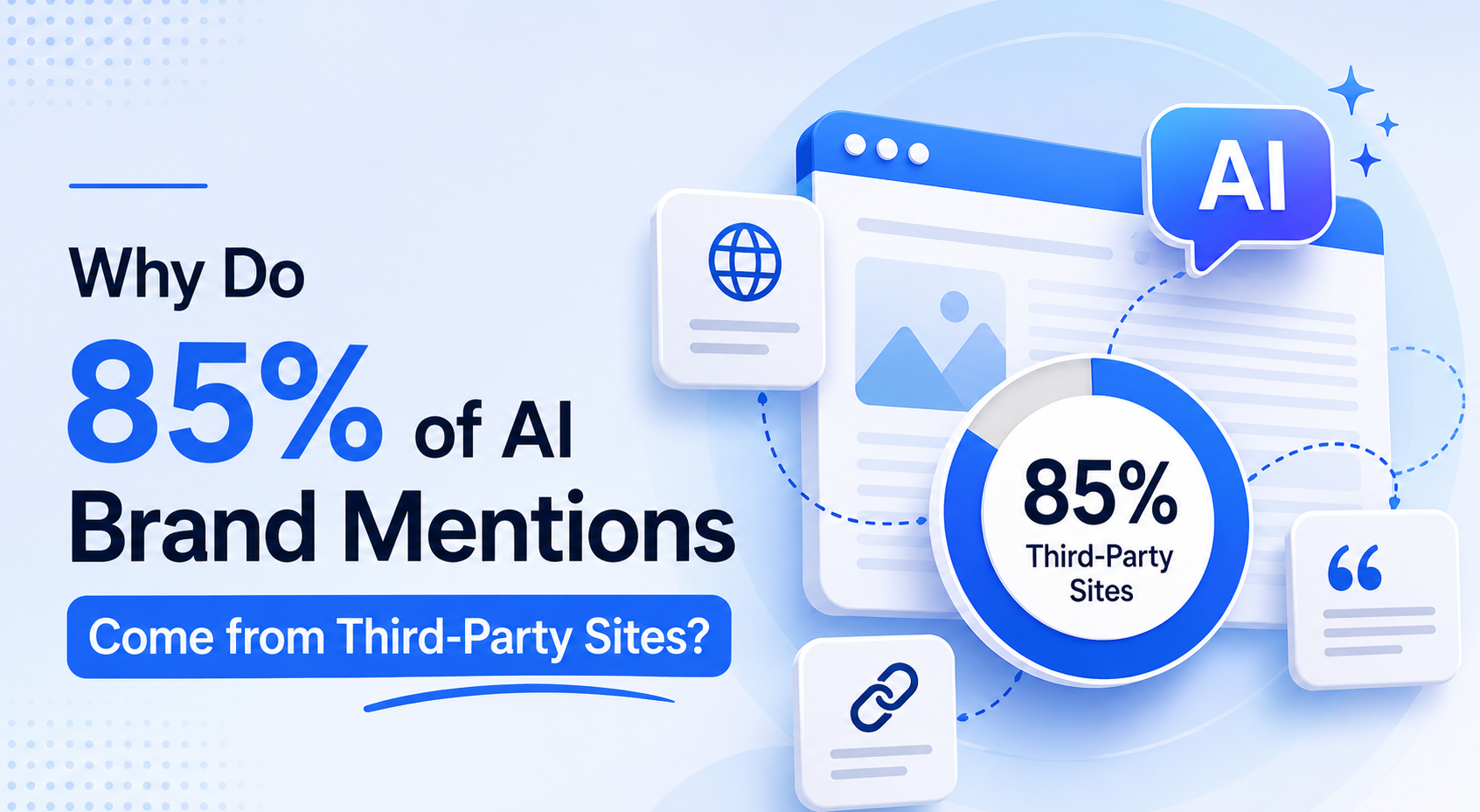
AI SEO AI Brand Mentions refers to the use of artificial intelligence algorithms to automatically detect, categorize, and analyze every instance where a brand name appears across the internet. Traditional brand monitoring required manual searches or basic keyword alerts, but AI-powered systems now process millions of data points in real-time, identifying not just direct mentions but also contextual references, sentiment, and potential SEO opportunities.
The core value lies in the intersection of three elements. First, AI provides the computational power to scan vast digital ecosystems. Second, SEO frameworks determine which mentions carry search value. Third, brand mentions themselves serve as signals that influence search engine rankings, consumer trust, and overall online authority.
How AI Transforms Brand Mention Detection
Artificial intelligence systems use natural language processing (NLP) and machine learning to understand the context surrounding brand mentions. These systems distinguish between a simple text mention, a backlink opportunity, a customer complaint, or a positive review. The technology continuously learns from new data, improving its ability to identify subtle brand references, misspellings, and industry-specific terminology.
Modern AI tools track mentions across multiple languages and platforms simultaneously. They recognize brand logos in images, transcribe audio mentions from podcasts, and analyze video content for verbal references. This comprehensive approach ensures no mention goes undetected, regardless of format or platform.
The Role of AI Brand Mentions in SEO Strategy
Search engines increasingly consider brand mentions as ranking factors, even when those mentions lack hyperlinks. Google’s algorithms have evolved to recognize entity-based search, where the prominence and sentiment of brand mentions contribute to overall domain authority. AI SEO AI Brand Mentions tools help marketers capitalize on this shift by identifying unlinked mentions that present backlink acquisition opportunities.
When a reputable website mentions your brand without linking, that mention still signals relevance and authority to search engines. AI tools flag these instances, allowing your team to reach out and request link additions. This proactive approach transforms passive mentions into active SEO assets.
Entity Recognition and Semantic Search
Search engines now operate on entity recognition principles, understanding relationships between brands, products, people, and concepts. AI brand mention analysis feeds directly into this understanding. When your brand appears consistently alongside industry keywords, positive sentiment, and authoritative sources, search engines strengthen their understanding of your brand’s relevance for those topics.
Semantic search algorithms evaluate the co-occurrence of brand mentions with related terms. For example, if your coffee brand appears frequently in articles about sustainable farming, search engines associate your brand with sustainability. AI tools track these semantic relationships, providing insights into which associations strengthen your SEO profile.
Key Benefits of AI-Powered Brand Mention Tracking
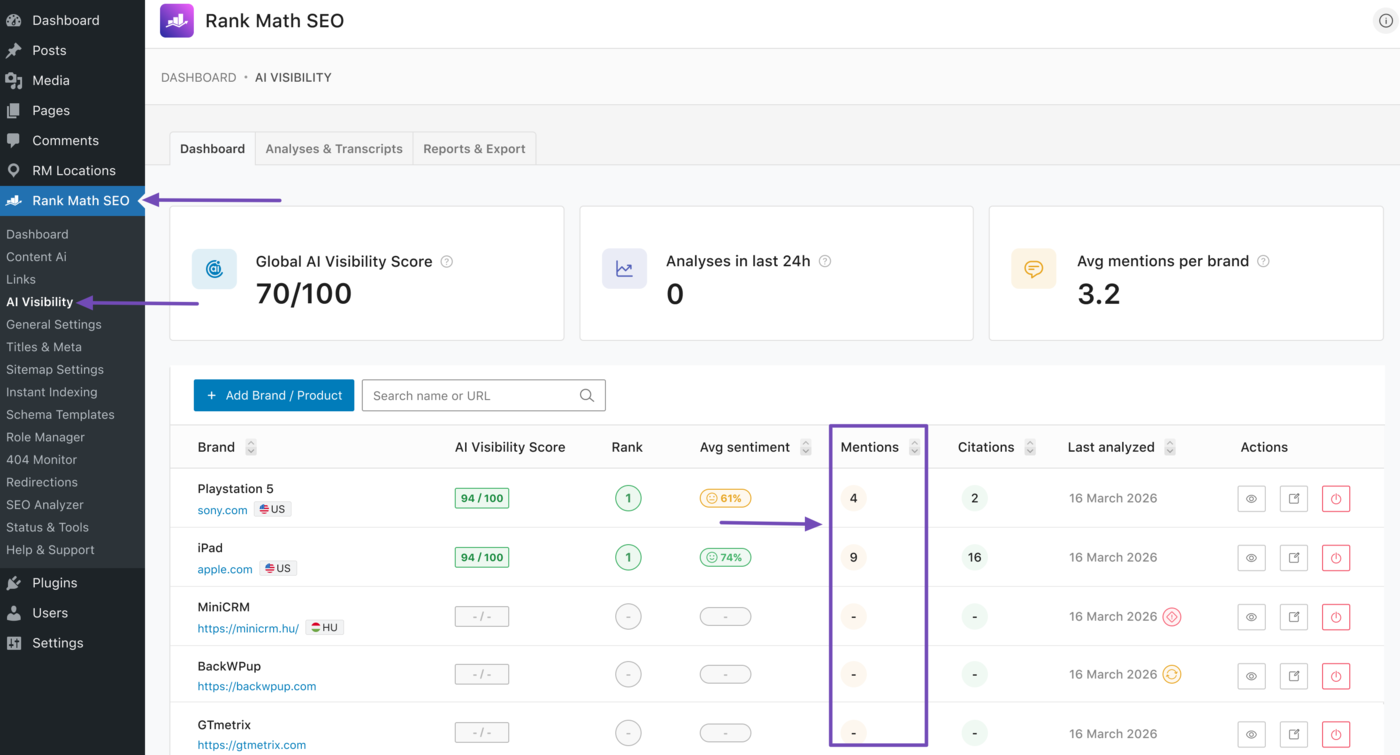
Implementing AI SEO AI Brand Mentions strategies delivers measurable advantages across multiple marketing dimensions. The benefits extend beyond simple monitoring into predictive analytics and strategic planning.
- Real-time alerting: Instant notifications when brand mentions occur, enabling rapid response to both opportunities and crises
- Sentiment analysis: Automated classification of mentions as positive, negative, or neutral, providing continuous reputation monitoring
- Competitor benchmarking: Comparative analysis of your brand mentions against competitors, revealing market position shifts
- Influencer identification: Discovery of high-authority individuals who mention your brand, creating partnership opportunities
- Content gap detection: Recognition of topics where your brand receives mentions but lacks dedicated content, guiding content strategy
- Link building pipeline: Automated identification of unlinked mentions, streamlining outreach efforts
- Crisis management: Early warning systems for negative sentiment spikes, enabling proactive damage control
- Ignoring negative sentiment: Some teams focus exclusively on positive mentions, missing early warning signs of reputation issues
- Over-reliance on automation: AI tools provide data, but human judgment remains essential for nuanced decision-making
- Neglecting competitor mentions: Tracking only your own brand misses valuable intelligence about market positioning
- Failing to act on data: Collecting mention data without implementing changes wastes the entire investment
- Incomplete monitoring parameters: Missing misspellings or industry terms creates blind spots in coverage
- Ignoring mention context: Treating all mentions equally ignores the vast difference between a Reddit comment and a Forbes article
- Lack of integration: Keeping mention data siloed from other marketing systems limits its strategic value
Quantifiable Impact on Search Rankings
Data from multiple SEO studies indicates that brands with consistent, positive mention profiles rank higher for their target keywords. The correlation between brand mention volume and search visibility has strengthened as search engines refine their entity-based algorithms. Brands that actively manage their mention landscape typically see improvements in branded search volume, organic click-through rates, and overall domain authority.
Consider a scenario where a brand receives fifty unlinked mentions per month across high-authority publications. AI tools identify these mentions, the marketing team secures links from twenty of them, and the resulting backlink profile improvement contributes to ranking gains. Without AI detection, most of these opportunities would remain undiscovered.
AI Brand Mentions vs Traditional Monitoring Tools
Traditional brand monitoring relied on exact-match keyword alerts and manual review. These approaches missed contextual mentions, failed to analyze sentiment accurately, and provided limited actionable insights. AI-powered systems represent a fundamental upgrade in capability and intelligence.
| Feature | Traditional Monitoring | AI-Powered Monitoring |
|---|---|---|
| Mention detection | Exact keyword matches | Contextual and semantic recognition |
| Sentiment analysis | Manual review required | Automated NLP-based classification |
| Data volume processing | Limited by human capacity | Millions of data points per day |
| Actionable insights | Basic alerts | Predictive analytics and recommendations |
| Competitor tracking | Separate manual searches | Integrated comparative dashboards |
| Response time | Hours to days | Real-time or near real-time |
The comparison clearly demonstrates why AI-driven approaches have become the industry standard. Marketing teams that rely on outdated monitoring methods operate at a significant disadvantage, missing opportunities and failing to detect emerging issues promptly.
Implementing AI Brand Mention Strategies

Successful implementation of AI SEO AI Brand Mentions requires a structured approach that combines technology selection, workflow design, and continuous optimization. Organizations should follow a systematic process to maximize value from their investment.
Step 1: Define Monitoring Objectives
Before selecting tools, clarify what your organization needs from brand mention tracking. Objectives might include link building, reputation management, competitor analysis, or content ideation. Different objectives require different data points and reporting structures. Document specific goals and key performance indicators that will measure success.
Step 2: Select Appropriate AI Tools
The market offers numerous AI-powered brand monitoring platforms, each with distinct strengths. Evaluate tools based on language coverage, platform integration, sentiment analysis accuracy, and reporting capabilities. Consider whether the tool integrates with your existing SEO and marketing technology stack. Request demonstrations and trial periods to assess real-world performance.
Step 3: Configure Monitoring Parameters
Set up comprehensive monitoring parameters that include your brand name, common misspellings, product names, key personnel, and industry-specific terms. Configure alert thresholds to avoid notification fatigue while ensuring critical mentions receive immediate attention. Establish sentiment classification rules that align with your brand voice and industry context.
Step 4: Establish Response Workflows
Define clear workflows for different mention types. Positive mentions may trigger thank-you responses or amplification. Unlinked mentions initiate outreach sequences. Negative mentions activate crisis protocols. Assign ownership for each workflow and establish service level agreements for response times.
Step 5: Integrate with SEO Operations
Connect brand mention data with your broader SEO operations. Feed unlinked mention lists into your link building pipeline. Use sentiment trends to inform content strategy. Share competitor mention analysis with content teams to identify content gaps and differentiation opportunities.
Common Mistakes in AI Brand Mention Management
Organizations often encounter predictable challenges when implementing AI-powered brand mention strategies. Recognizing these pitfalls helps teams avoid costly errors and maximize their return on investment.
How to Avoid Implementation Pitfalls
Successful programs share common characteristics that prevent these mistakes. They maintain balanced monitoring that includes both positive and negative sentiment. They combine automated alerts with human review for high-stakes mentions. They track competitors alongside their own brand. Most importantly, they establish clear processes for converting mention insights into marketing actions.
Regular program reviews ensure monitoring parameters remain current as your brand evolves. New products, entering new markets, or rebranding efforts all require updates to monitoring configurations. Quarterly audits of tool performance and workflow effectiveness help maintain program quality.
Measuring the ROI of AI Brand Mention Programs
Quantifying the return on investment for AI SEO AI Brand Mentions requires tracking multiple metrics that connect mention activities to business outcomes. Organizations should establish baseline measurements before implementation and track progress over time.
| Metric | Measurement Method | Business Impact |
|---|---|---|
| Link acquisition rate | Percentage of unlinked mentions converted to links | Improved domain authority and rankings |
| Response time to mentions | Average time from mention detection to response | Enhanced customer satisfaction and reputation |
| Sentiment score trends | Monthly average sentiment across all mentions | Brand health and consumer trust |
| Share of voice | Your brand mentions vs competitors | Market position and visibility |
| Traffic from mention sources | Referral traffic from platforms where mentions occur | Direct revenue and engagement |
| Crisis prevention | Number of potential issues detected early | Protected reputation and avoided revenue loss |
Organizations that track these metrics consistently can demonstrate clear ROI from their AI brand mention investments. The data also supports budget justifications for expanding program scope or upgrading tool capabilities.
Future Trends in AI Brand Mention Technology
The field of AI-powered brand monitoring continues to evolve rapidly. Emerging technologies promise even greater capabilities for understanding and leveraging brand mentions across the digital landscape.
Predictive analytics will soon forecast mention trends before they occur, enabling proactive strategy rather than reactive responses. Advanced natural language generation will draft personalized responses to mentions automatically, subject to human approval. Integration with customer relationship management systems will connect mention data directly to sales and support workflows.
Voice search optimization will become increasingly important as more brand mentions occur through voice-activated devices and digital assistants. AI tools will need to track and analyze these audio mentions with the same precision applied to text-based content.
Important Considerations for Enterprise Organizations
Large organizations face unique challenges in implementing AI brand mention strategies across multiple brands, markets, and languages. Enterprise implementations require additional planning around data governance, cross-team collaboration, and global consistency.
Data privacy regulations vary by jurisdiction, and mention tracking must comply with applicable laws. Organizations should work with legal teams to ensure their monitoring practices align with regulations like GDPR and CCPA. Data retention policies should define how long mention data is stored and who has access to it.
Multi-brand enterprises need centralized dashboards that provide both consolidated views and brand-specific breakdowns. Global organizations require tools that handle multiple languages and cultural contexts accurately. Regional teams need the ability to customize workflows while maintaining global reporting standards.
Frequently Asked Questions
What are AI brand mentions in SEO?
AI brand mentions in SEO refer to automated detection and analysis of every online reference to your brand using artificial intelligence. These systems use natural language processing to identify mentions across websites, social media, forums, news outlets, and review platforms. The data helps SEO teams identify link opportunities, monitor reputation, and understand brand visibility in search engine algorithms.
How do unlinked brand mentions affect SEO?
Unlinked brand mentions contribute to SEO through entity-based ranking signals. Search engines recognize brand prominence and relevance even without hyperlinks. Unlinked mentions also present valuable link building opportunities when outreach successfully converts them into linked mentions, providing direct SEO benefits through improved backlink profiles.
Which tools provide AI brand mention tracking?
Several platforms offer AI-powered brand mention tracking, including Brand24, Mention, Awario, and Meltwater. These tools vary in pricing, features, and coverage. Enterprise solutions like Cision and Sprout Social offer comprehensive monitoring integrated with broader marketing capabilities. Tool selection should align with organizational size, budget, and specific monitoring needs.
How quickly should brands respond to mentions?
Response time depends on mention type and platform. Negative mentions require immediate attention, ideally within hours. Positive mentions from influencers or media outlets also warrant rapid engagement to maximize amplification. Customer service mentions should follow your standard support response times. AI tools enable real-time alerts that make rapid response feasible.
Can AI brand mention analysis predict crises?
Yes, AI systems can identify patterns that precede reputation crises. Sudden spikes in negative sentiment, coordinated mention patterns across platforms, or mentions appearing in high-authority negative contexts all serve as early warning signals. Predictive analytics capabilities continue to improve, enabling earlier detection of potential issues.
What is the difference between brand mentions and backlinks?
Brand mentions are any textual references to your brand, with or without hyperlinks. Backlinks are specific hyperlinks from external websites pointing to your domain. Both carry SEO value, but backlinks provide direct link equity while mentions contribute to entity-based relevance signals. AI tools help convert mentions into backlinks through targeted outreach.
Conclusion
AI SEO AI Brand Mentions has transformed how organizations monitor, analyze, and leverage their digital presence. The integration of artificial intelligence into brand mention tracking provides unprecedented visibility into online conversations, sentiment patterns, and SEO opportunities. Organizations that implement comprehensive AI-powered mention strategies gain competitive advantages through faster response times, more effective link building, and deeper understanding of their market position.
The technology continues to evolve, with predictive capabilities and automation expanding the potential applications. Forward-thinking marketing teams recognize that brand mention intelligence represents a critical component of modern SEO strategy. By combining AI-powered detection with human judgment and strategic action, organizations can build stronger brands, improve search visibility, and protect their reputation in an increasingly connected digital world.
Success requires commitment to ongoing optimization of monitoring parameters, response workflows, and integration with broader marketing operations. The organizations that treat AI brand mention management as a strategic priority rather than a tactical tool will realize the greatest benefits from this powerful technology.
Xem thêm:
- AI SEO Masterclass: The Complete Guide to Dominating Search in 2025
- AI SEO Product Schema: The Complete Guide to Structured Data That Ranks
- AI Search Traffic: Your Complete Guide to Organic Visibility in the Age of Generative AI
- AI Affiliate Content: How to Automate Reviews, Comparisons, and Earn Commissions Faster
- Unlocking the Power of AI Natural Language Processing: A Deep Dive into Intelligent Text Analysis
Bài viết cùng chủ đề:

AI SEO SEO Automation with Make: The Complete Workflow Guide

AI SEO SEO Automation with Zapier: The Complete Workflow Guide

AI SEO SEO Automation with n8n: The Complete Workflow Guide
AI SEO SEO Automation with Gemini: The Complete Guide to Scaling Organic Growth

AI SEO SEO Automation with Claude: The Complete Guide to Scaling Content in 2025

AI SEO SEO Automation with ChatGPT: The Complete Playbook for 2025

AI SEO & SEO Automation for Affiliate Sites: The 2025 Playbook for Passive Income Growth
AI SEO & SEO Automation for Bloggers: The Complete Guide to Scaling Your Content

AI SEO & SEO Automation for Agencies: The Complete 2025 Playbook

AI SEO and SEO Automation for Ecommerce: The Complete Playbook for 2025

AI SEO & SEO Automation for WordPress: The Complete Playbook for 2025
AI SEO SEO Automation Strategy: The Complete Playbook for 2025

Mastering the AI SEO SEO Automation Process: A Complete Guide to Scaling Organic Growth
AI SEO SEO Automation System: The Complete Guide to Scaling Organic Growth in 2025
AI SEO SEO Automation Platform: The Complete Guide to Scaling Organic Growth in 2025
AI SEO SEO Automation Software: The Complete Guide to Scaling Organic Growth in 2025















