
No products in the cart.
Unlocking the Power of AI Natural Language Processing: A Deep Dive into Intelligent Text Analysis
29
Jul
Jul
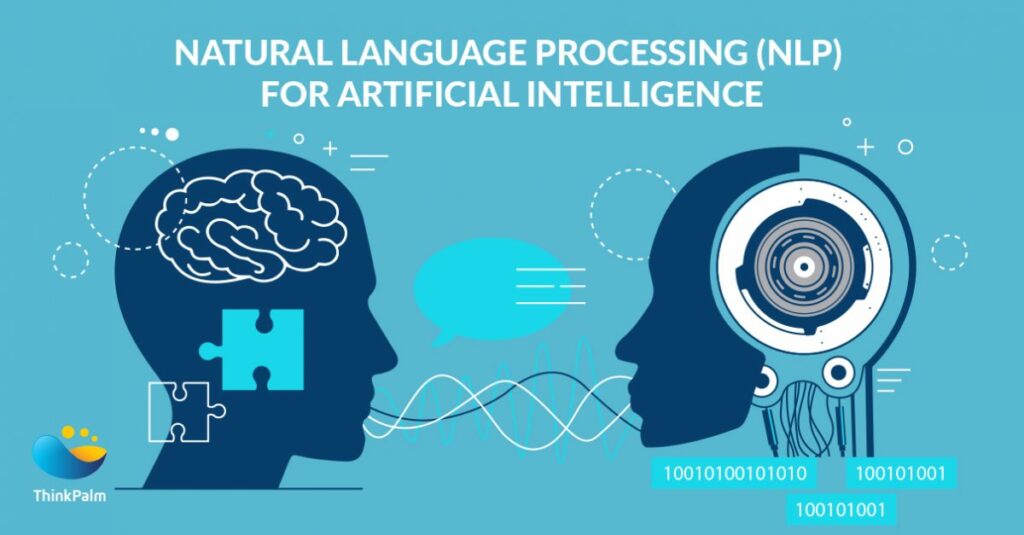
Every time a chatbot answers a customer question, a search engine completes your query, or your email filters out spam, a sophisticated technology works silently in the background. That technology is AI Natural Language Processing—the fusion of artificial intelligence and human language. It is what lets machines read, interpret, understand, and even generate text in a way that feels remarkably human. From healthcare diagnostics that parse millions of clinical notes to sentiment analysis tools that track brand perception across social media, AI Natural Language Processing has become the invisible layer connecting people and data-driven decisions.
Understanding how this field works is no longer reserved for researchers. Business leaders, developers, and content creators alike benefit from grasping its core concepts, its practical applications, and its limitations. This guide explores every essential layer of AI Natural Language Processing, from foundational ideas to the latest transformer models, so you can harness its power with clarity and confidence.
What Is AI Natural Language Processing?
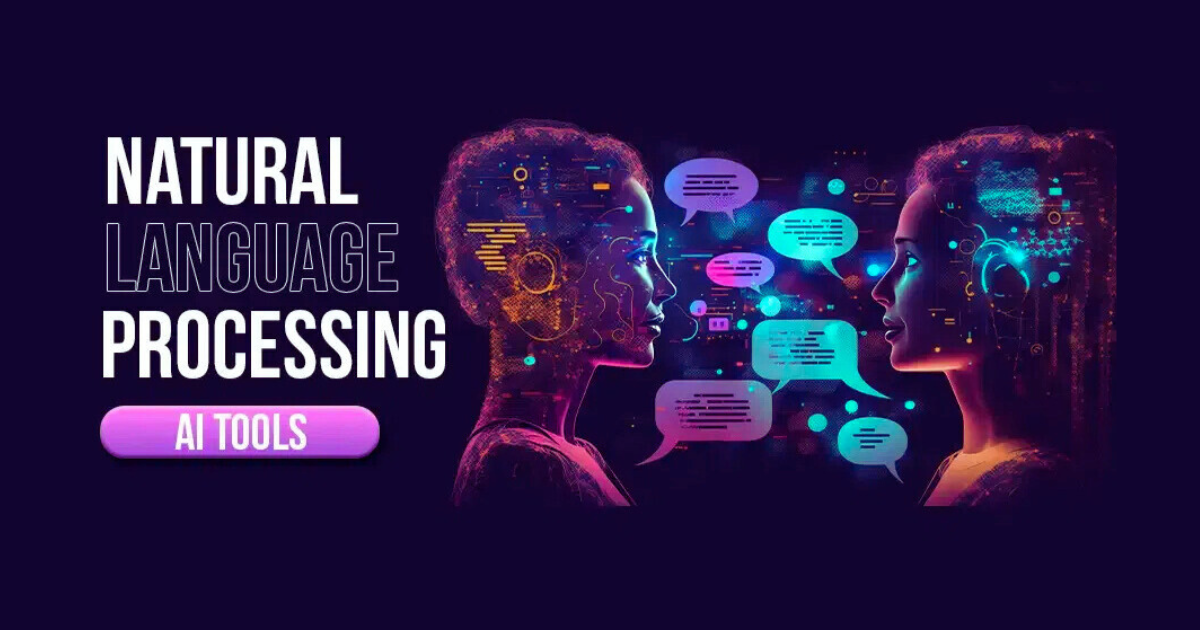
At its most basic, Natural Language Processing (NLP) is a branch of computer science that deals with the interaction between computers and human language. When we add artificial intelligence to the equation, we move from simple pattern matching to systems that can learn context, infer meaning, and adapt over time. AI Natural Language Processing uses machine learning and deep learning algorithms to analyze text and speech data in a way that mimics human understanding—but at an enormous scale and speed.
Traditional NLP relied heavily on hand-crafted rules. An early spam filter, for example, might look for keywords like “free” or “win” and flag an email based on rule thresholds. Modern AI NLP models, on the other hand, learn statistical representations of language from millions or billions of examples. This shift has enabled tasks such as real-time translation, voice-controlled assistants, and automated document summarization to reach near-human performance levels.
Core Components of AI Natural Language Processing
To truly appreciate how AI NLP works, it helps to break it down into two foundational pillars: Natural Language Understanding (NLU) and Natural Language Generation (NLG). Together, they form the complete pipeline from reading to writing.
Natural Language Understanding (NLU)
NLU focuses on interpreting the intended meaning behind a piece of text. It goes far beyond recognizing individual words; it resolves ambiguities, identifies entities, extracts relationships, and gauges sentiment. For example, when someone types “Can you book a flight to Paris next Tuesday?”, an NLU system must map the phrase to the intent of booking a flight, extract the destination and date, and distinguish that Paris refers to the city, not a person. This intent and entity extraction powers chatbots, voice assistants, and intelligent search.
Natural Language Generation (NLG)
Once a system understands the input, NLG takes structured data or internal representations and transforms them into coherent, fluent human language. This component is responsible for generating reports, product descriptions, email responses, and even creative stories. Advanced NLG models, such as those based on the transformer architecture, can produce multi-paragraph texts that are often indistinguishable from human writing. The synergy between NLU and NLG is what makes interactive AI Natural Language Processing so powerful.
The Evolution: From Rule-Based Systems to Transformers
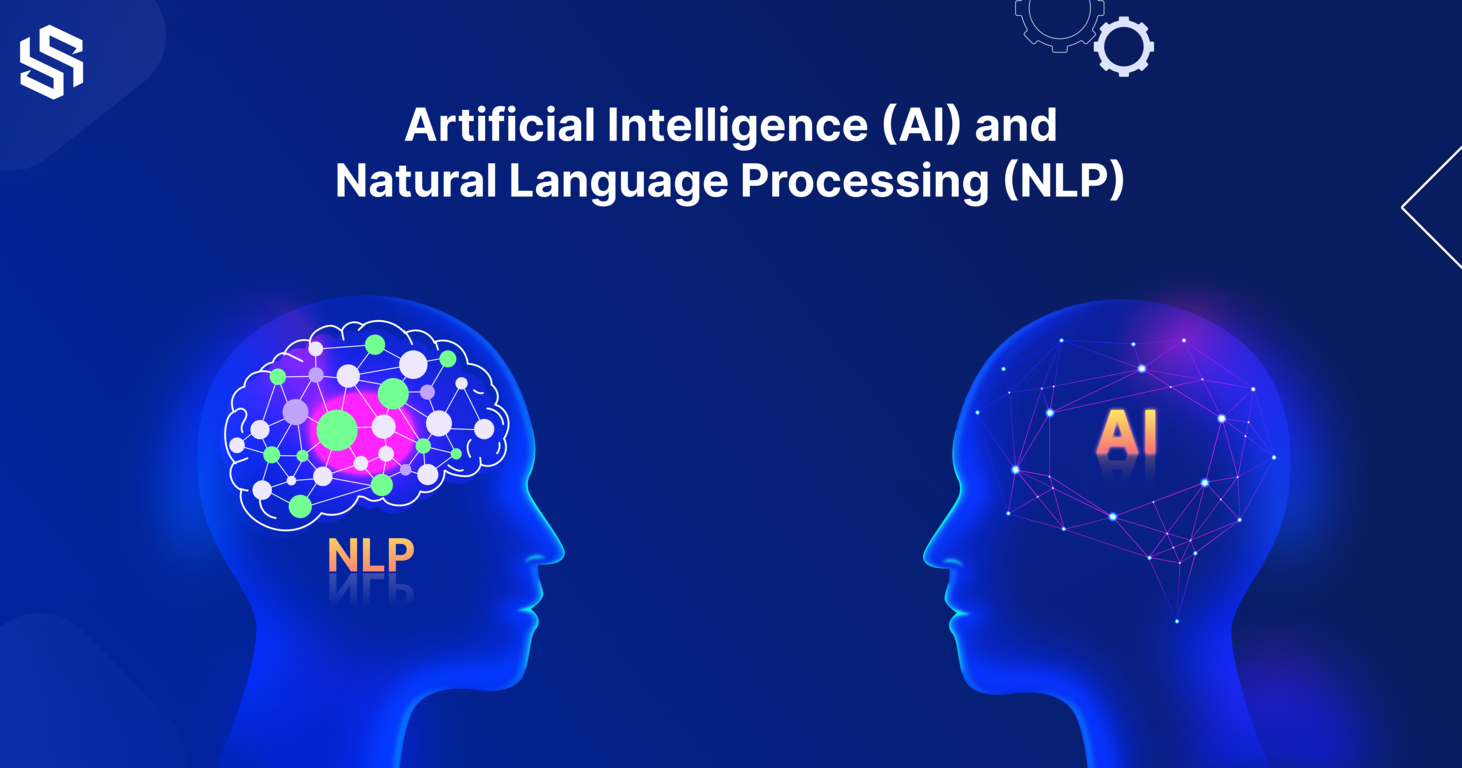
The journey of NLP mirrors the broader progression of artificial intelligence. Early systems in the 1950s and 1960s, like ELIZA, used scripted pattern matching to simulate conversation. By the 1990s, statistical methods and machine learning entered the scene, with algorithms like Naive Bayes and Support Vector Machines applied to text classification. The real breakthrough came with the introduction of word embeddings—vector representations that capture semantic similarity—followed by recurrent neural networks (RNNs) and long short-term memory networks (LSTMs) capable of handling sequential data.
The modern era of AI Natural Language Processing began in 2017 with the paper “Attention Is All You Need,” which introduced the transformer architecture. Transformers process entire sequences of words in parallel while using attention mechanisms to weigh the importance of different words in a sentence. This innovation led to pre-trained language models like BERT, GPT, and T5, which shattered performance benchmarks on dozens of NLP tasks. Today, these models are the backbone of everything from Google Search to advanced writing assistants.
Key Techniques in AI Natural Language Processing
Under the hood, a robust NLP pipeline involves a series of stages, each designed to refine raw text into structured, actionable information. While deep learning has automated some of these steps, understanding them helps practitioners debug models and improve performance.
- Tokenization: Splitting text into individual words, subwords, or characters. For AI NLP, subword tokenization (like Byte Pair Encoding) handles rare words elegantly.
- Part-of-Speech (POS) Tagging: Labeling each token as a noun, verb, adjective, etc., providing grammatical context for downstream tasks.
- Named Entity Recognition (NER): Identifying and classifying proper nouns, such as people, organizations, locations, dates, and monetary values.
- Dependency Parsing: Analyzing the grammatical structure of a sentence to determine relationships between words.
- Sentiment Analysis: Extracting the emotional tone of a text—positive, negative, neutral—often broken down by aspect or intensity.
- Topic Modeling: Uncovering thematic structures in large document collections using algorithms like Latent Dirichlet Allocation (LDA).
- Text Classification: Assigning predefined categories to documents, such as spam detection, genre identification, or intent recognition.
- Machine Translation: Automatically converting text from one language to another, now dominated by neural machine translation models.
- Customer Service: AI-powered chatbots handle thousands of concurrent conversations, resolving common issues instantly while escalating complex ones to human agents. Sentiment analysis monitors customer frustration in real time, allowing proactive intervention.
- Healthcare: Clinical NLP extracts symptoms, diagnoses, and treatments from unstructured physician notes, enabling faster research, automated coding, and clinical decision support without manual chart review.
- Finance: Algorithms scan news articles, earnings reports, and social media to detect market-moving sentiment. Compliance teams use NLP to flag potential insider trading or fraud in communications.
- Legal: E-discovery platforms analyze millions of documents during litigation, identifying relevant evidence through conceptual search rather than simple keyword matching.
- Marketing and E-commerce: Product reviews are automatically categorized and summarized. Recommendation engines understand product descriptions and user queries to surface relevant items.
- Education: Automated essay scoring, plagiarism detection, and personalized language tutoring adapt to each learner’s proficiency level.
- Ignoring Data Quality: A model trained on messy, biased, or insufficient data will produce unreliable outputs. Invest time in data cleaning, annotation consistency, and representative sampling before any model training begins.
- Over-Reliance on Pre-Trained Models Without Fine-Tuning: Generic language models understand general language well but may falter on domain-specific jargon. Fine-tuning on domain-specific corpora dramatically boosts accuracy.
- Neglecting Evaluation Metrics Beyond Accuracy: In imbalanced datasets, accuracy can be misleading. Use precision, recall, F1-score, and task-specific metrics like BLEU for translation or ROUGE for summarization.
- Forgetting the Human-in-the-Loop: Fully autonomous NLP systems can drift over time. Building feedback loops where humans review and correct model outputs ensures continuous improvement.
- Underestimating Deployment Complexity: A model that works in a research environment may fail in production due to latency requirements, memory constraints, or changing input distributions. MLOps practices like model versioning, monitoring, and A/B testing are essential.
Deep Learning and Transformers: The Game Changer

The transformer architecture’s self-attention mechanism allows a model to weigh the relevance of every word in a sentence relative to all others simultaneously. This eliminates the sequential bottleneck of RNNs and enables training on massive datasets. Pre-training on a large corpus with unsupervised objectives like masked language modeling (predicting missing words) or next-sentence prediction creates a general-purpose language understanding engine. Fine-tuning then adapts this base model to specific tasks with relatively little labeled data.
Models like BERT (Bidirectional Encoder Representations from Transformers) set new standards on question answering and natural language inference. Generative Pre-trained Transformers (GPT) series pushed the boundaries of NLG, demonstrating that a single model can write essays, code, and poetry. These advances made AI Natural Language Processing more accessible: developers can now use off-the-shelf pre-trained models via APIs or open-source libraries like Hugging Face Transformers, dramatically reducing the time and cost to deploy NLP solutions.
Real-World Applications Across Industries
The ubiquity of AI Natural Language Processing is reflected in its diverse use cases. It has moved from academic curiosity to a core business function across virtually every sector.
Benefits and Limitations of AI Natural Language Processing
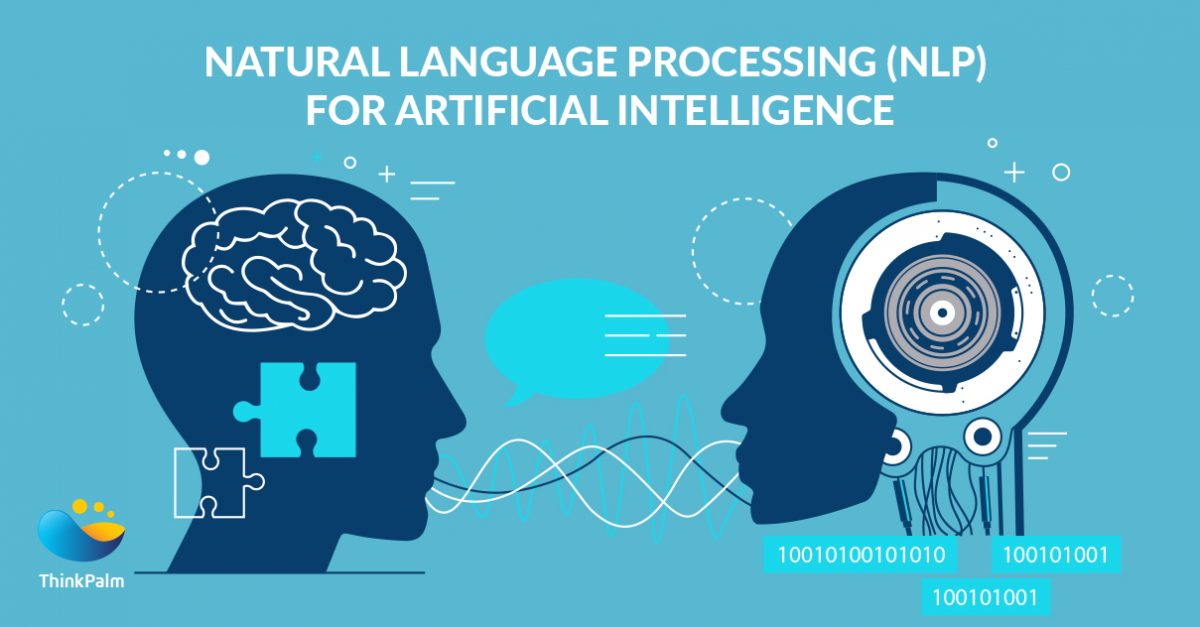
Like any technology, AI NLP brings transformative advantages but also faces real constraints. A clear-eyed view of both helps in setting realistic expectations.
| Benefits | Limitations |
|---|---|
| Processes vast volumes of unstructured text in minutes | Struggles with sarcasm, humor, and highly nuanced cultural references |
| Operates 24/7 without fatigue, enabling global, real-time support | Requires large amounts of high-quality labeled data for specialized domains |
| Democratizes insight extraction, making complex analysis accessible to non-technical users | Can inherit and amplify biases present in training data, leading to unfair outcomes |
| Reduces operational costs and human error in repetitive tasks | Limited explainability: deep learning models often function as black boxes, complicating accountability |
| Enables multilingual capabilities, bridging language barriers | Performance degrades for low-resource languages with insufficient training data |
Common Mistakes When Implementing NLP Systems and How to Avoid Them
Many organizations rush into AI NLP without fully understanding the underlying data and model requirements. The result is underperforming systems and disillusioned teams. The following pitfalls are among the most frequent—and avoidable.
Important Notes for Building Reliable AI NLP Solutions
Engineering teams that succeed with AI Natural Language Processing share a common mindset: they treat the project as an iterative, data-centric process rather than a one-time model build. Start with a well-defined problem—broad ambitions like “understand text” almost always fail. Narrow the scope to a specific use case, such as “classify incoming support tickets by urgency and department.”
Choose the right model complexity for the task. For many text classification tasks, a fine-tuned DistilBERT or even a simple logistic regression on TF-IDF features may be faster, cheaper, and more interpretable than a massive generative model. Always assess the ethical implications: conduct bias audits, ensure user privacy, and clearly communicate when a user is interacting with an AI system. Finally, plan for multilingual and multimodal expansion from the start if your product will eventually need to handle multiple languages or combine text with vision or audio.
Frequently Asked Questions About AI Natural Language Processing
What is the difference between NLP and AI Natural Language Processing?
Traditional NLP encompasses rule-based and statistical methods to process text without necessarily involving learning from data. AI Natural Language Processing specifically refers to systems that use machine learning or deep learning to improve language understanding and generation through experience, making them more adaptable and accurate over time.
How does AI NLP handle multiple languages?
Modern multilingual models like XLM-R and mBERT are pre-trained on dozens of languages simultaneously. They learn shared representations that allow zero-shot cross-lingual transfer, meaning a model fine-tuned on English sentiment data can classify sentiment in French without additional training. However, performance is still best for high-resource languages.
Can small businesses afford to implement AI NLP?
Yes. Cloud providers such as AWS, Google Cloud, and Azure offer pay-as-you-go NLP APIs for tasks like sentiment analysis, entity recognition, and translation. Open-source libraries like Hugging Face provide thousands of pre-trained models that can be fine-tuned on modest hardware. The barrier to entry has never been lower.
What are the ethical concerns around AI Natural Language Processing?
Key concerns include bias amplification, where models perpetuate stereotypes present in training data; privacy risks when processing sensitive textual information; the potential for generating misleading or harmful content; and the lack of transparency in decision-making processes. Responsible development requires regular fairness audits, transparent documentation, and strong human oversight.
How accurate is AI NLP compared to human understanding?
For narrowly defined tasks like factoid question answering or named entity recognition, state-of-the-art models often surpass human-level accuracy on benchmark datasets. However, deep comprehension, reasoning, emotional intelligence, and common-sense inference remain areas where humans significantly outperform machines. AI NLP excels as an augmentation tool, not a wholesale replacement for human judgment.
Conclusion
The fusion of artificial intelligence and language has reshaped how we interact with technology, unlocking capabilities that once belonged solely to science fiction. From intelligent assistants that manage our schedules to enterprise systems that distill insights from mountains of documents, AI Natural Language Processing is now a foundational layer of the digital world. Its power lies not in any single algorithm but in the careful integration of data, model design, and human expertise.
As you explore or implement NLP solutions, maintain a pragmatic focus on the problem you aim to solve, invest deeply in data quality, and never lose sight of the ethical dimensions. The field will continue to evolve at a breathtaking pace, but those who understand both its mechanisms and its limitations will be best positioned to create systems that are not only intelligent but also trustworthy and inclusive.
Xem thêm:
- AI SEO Automated SEO Monitoring: The Complete Guide to 24/7 Rank Tracking
- AI SEO AI Overview Optimization Strategy: The Complete Playbook for 2025
- The Ultimate AI SEO Workflow: How to Automate Your Search Rankings from Research to Reporting
- AI SEO for Lawyers: The Complete Guide to Dominating Legal Search in 2025
- AI SEO Knowledge Base: The Complete Guide to Building and Using One in 2025
Bài viết cùng chủ đề:

AI SEO SEO Automation with Make: The Complete Workflow Guide

AI SEO SEO Automation with Zapier: The Complete Workflow Guide

AI SEO SEO Automation with n8n: The Complete Workflow Guide
AI SEO SEO Automation with Gemini: The Complete Guide to Scaling Organic Growth

AI SEO SEO Automation with Claude: The Complete Guide to Scaling Content in 2025

AI SEO SEO Automation with ChatGPT: The Complete Playbook for 2025

AI SEO & SEO Automation for Affiliate Sites: The 2025 Playbook for Passive Income Growth
AI SEO & SEO Automation for Bloggers: The Complete Guide to Scaling Your Content

AI SEO & SEO Automation for Agencies: The Complete 2025 Playbook

AI SEO and SEO Automation for Ecommerce: The Complete Playbook for 2025

AI SEO & SEO Automation for WordPress: The Complete Playbook for 2025
AI SEO SEO Automation Strategy: The Complete Playbook for 2025

Mastering the AI SEO SEO Automation Process: A Complete Guide to Scaling Organic Growth
AI SEO SEO Automation System: The Complete Guide to Scaling Organic Growth in 2025
AI SEO SEO Automation Platform: The Complete Guide to Scaling Organic Growth in 2025
AI SEO SEO Automation Software: The Complete Guide to Scaling Organic Growth in 2025















