
No products in the cart.
AI SEO AI Copilots: The Complete Guide to Autonomous Search Optimization

31
Jul
Jul
The digital marketing landscape has shifted dramatically with the introduction of AI SEO AI Copilots. These intelligent systems are no longer experimental tools but essential partners for marketers who want to maintain competitive rankings. Unlike traditional software that requires manual input for every task, an AI copilot actively analyzes, suggests, and executes SEO strategies in real time. This guide explores how these copilots function, their practical benefits, and the critical considerations for integrating them into your workflow.
What Are AI SEO AI Copilots?
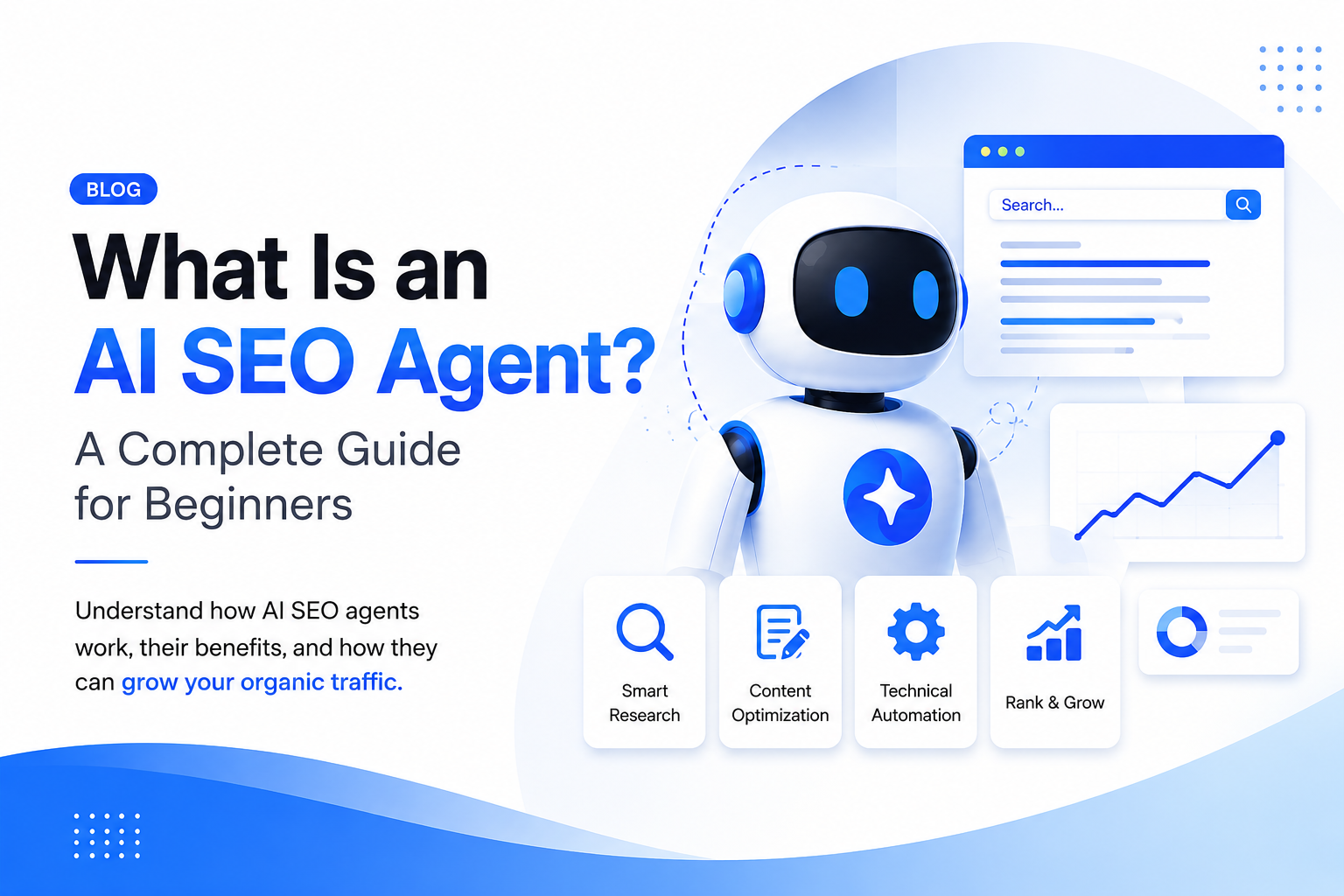
An AI SEO AI Copilot is a specialized artificial intelligence system designed to assist with search engine optimization tasks through natural language processing and machine learning. These copilots operate within your existing SEO tools or as standalone platforms, interpreting your goals and automatically generating actionable recommendations. They differ from basic automation because they learn from your website’s data, search engine behavior, and industry trends to provide context-aware guidance. The core functionality revolves around three pillars: data analysis, content optimization, and performance monitoring. A copilot can crawl your site, identify technical errors, suggest keyword clusters, and even draft meta descriptions that align with current ranking factors. The “copilot” designation implies a collaborative relationship where the AI handles heavy lifting while you maintain strategic control.
How AI Copilots Transform SEO Workflows
Automated Keyword Research and Clustering
Traditional keyword research involves hours of exporting data, filtering irrelevant terms, and manually grouping related queries. AI copilots streamline this by analyzing search intent patterns across millions of queries. They can identify semantic relationships between keywords that human researchers might miss, such as grouping “best running shoes” with “durable sneakers for marathon training” based on user behavior data. The copilot also monitors keyword difficulty scores and search volume fluctuations in real time. When a topic gains sudden traction, the system alerts you and suggests content angles that match the emerging demand. This proactive approach ensures your content calendar stays ahead of trends rather than reacting to them after competitors have already published.
Content Generation and Optimization
Writing SEO-friendly content requires balancing readability with keyword placement. AI copilots excel at this by analyzing top-ranking pages for your target queries. They extract common structural elements, heading patterns, and content depth metrics to create a blueprint for your article. The copilot then assists with drafting sections, suggesting internal link opportunities, and ensuring your content covers all relevant subtopics that search engines expect. For existing content, the copilot performs a comprehensive audit. It flags thin sections, identifies missing schema markup, and recommends improvements to title tags and meta descriptions. Some advanced copilots even predict how search engine algorithm updates will affect your pages and suggest preemptive adjustments.
Technical SEO Auditing and Monitoring
Technical issues like broken links, slow page speeds, and improper canonical tags can silently damage your rankings. AI copilots continuously scan your website for these problems, prioritizing them based on their potential impact. Instead of receiving a generic report, you get a prioritized action list with step-by-step instructions for resolution. The monitoring capabilities extend to competitor analysis. The copilot tracks your competitors’ new content, backlink acquisitions, and on-page changes. It then compares their strategies against yours, identifying gaps and opportunities. This competitive intelligence was previously only available through expensive enterprise tools, but copilots now democratize access to these insights.
Key Benefits of Implementing AI SEO Copilots
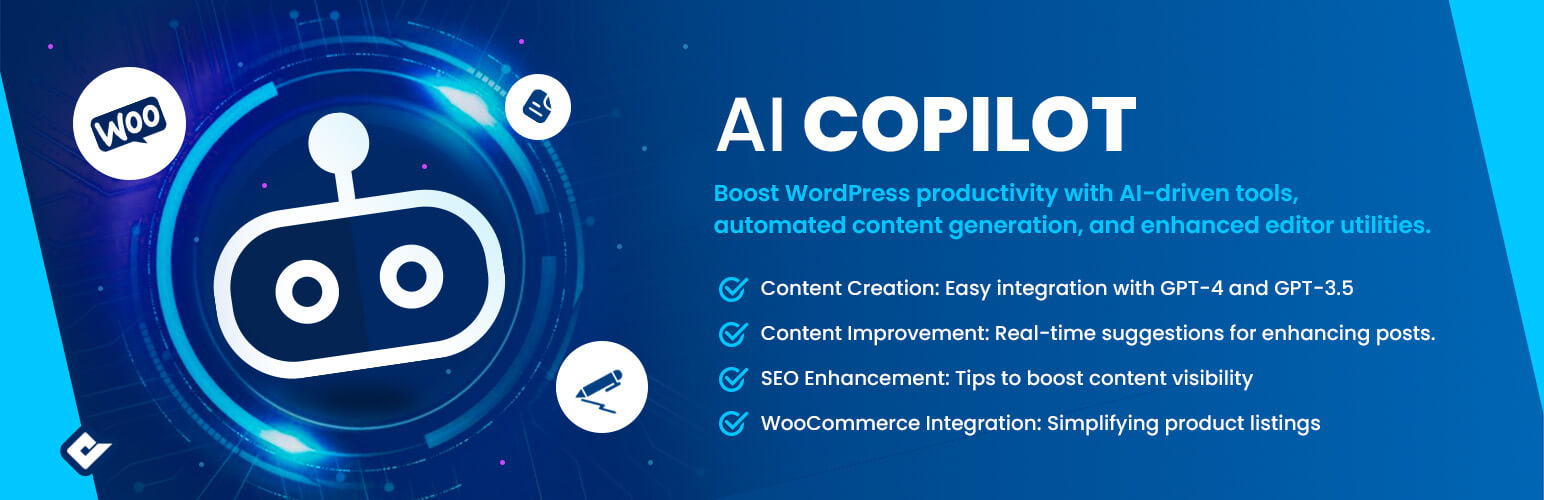
- Time Efficiency: Automates repetitive tasks like rank tracking, report generation, and data collection, freeing up hours each week for strategic planning.
- Data-Driven Decisions: Processes vast datasets to uncover patterns that inform content strategy, link building, and technical fixes.
- Scalability: Manages SEO for multiple websites or large e-commerce catalogs without proportional increases in manual effort.
- Consistency: Ensures all content follows best practices for structure, keyword usage, and internal linking, reducing human error.
- Real-Time Adaptation: Responds quickly to algorithm updates or sudden ranking drops, minimizing potential traffic losses.
Limitations and Challenges to Consider
While AI copilots offer significant advantages, they are not without constraints. The quality of output depends heavily on the training data and the specific algorithms used. A copilot trained primarily on English-language content may struggle with nuanced local SEO queries in other languages. Additionally, these systems require substantial data to function effectively, which can be a barrier for new websites with limited traffic history. Another challenge is the potential for over-optimization. Copilots might suggest keyword placements that feel unnatural to human readers, prioritizing search engines over user experience. Search engines like Google have become sophisticated at detecting this behavior, and pages that read awkwardly can suffer from reduced engagement metrics, indirectly harming rankings. Cost is also a consideration. Premium AI copilots with advanced features often come with monthly subscription fees that may be prohibitive for small businesses or freelance marketers. Free versions typically offer limited functionality, such as basic keyword suggestions without the full automation capabilities.
AI SEO AI Copilots vs. Traditional SEO Tools
| Feature | Traditional SEO Tools | AI SEO AI Copilots |
|---|---|---|
| Data Analysis | Provides raw data and reports | Interprets data and recommends actions |
| Keyword Research | Manual filtering and grouping | Automated clustering with intent analysis |
| Content Optimization | Checklist-based suggestions | Contextual, learning-based recommendations |
| Competitor Monitoring | Periodic manual checks | Continuous automated tracking |
| User Interface | Complex dashboards with many metrics | Conversational, task-oriented interface |
| Learning Capability | Static rules and filters | Adapts to algorithm changes and site data |
The distinction lies in the level of intelligence. Traditional tools require you to know what to look for and how to interpret the data. Copilots act as an expert consultant, guiding you through the process and explaining the rationale behind each recommendation.
Practical Guide to Implementing an AI SEO Copilot
Step 1: Define Your Objectives
Before selecting a copilot, clarify what you want to achieve. Are you focusing on increasing organic traffic, improving conversion rates, or expanding into new markets? Different copilots have varying strengths. Some excel at content creation, while others specialize in technical audits or link building. Your objectives will determine which features are essential.
Step 2: Choose the Right Tool
Evaluate copilots based on integration capabilities with your existing stack, such as Google Analytics, Search Console, or WordPress. Test the user interface to ensure it aligns with your team’s technical proficiency. Look for tools that offer transparent pricing and a free trial period to assess performance on your actual website data.
Step 3: Connect Your Data Sources
For the copilot to provide accurate recommendations, it needs access to your website’s analytics, search performance data, and content management system. Most tools offer one-click integrations, but you may need to configure API access for custom platforms. Ensure you comply with data privacy regulations when connecting these systems.
Step 4: Start with a Pilot Project
Rather than overhauling your entire SEO strategy at once, select a specific segment, such as a blog category or a product line. Apply the copilot’s recommendations to this pilot project and monitor the results over a defined period, typically four to six weeks. Compare performance metrics against a control group that did not receive AI-driven changes.
Step 5: Iterate and Scale
Analyze the pilot results to identify which copilot suggestions had the most significant impact. Refine your usage patterns based on these findings. Once you have confidence in the system, gradually expand its application to other parts of your website, continuously monitoring for unintended consequences.
Common Mistakes When Using AI SEO Copilots

Blindly Following All Recommendations
Copilots provide suggestions based on probabilities and patterns, not certainties. Some recommendations may not align with your brand voice or business goals. Always review the rationale behind each suggestion and apply your judgment. For instance, a copilot might recommend targeting a high-volume keyword that is irrelevant to your product offerings, which would attract unqualified traffic.
Neglecting Human Oversight
AI systems can hallucinate or generate content that contains factual errors. Never publish AI-generated content without human review, especially for topics that require expertise or current information. Establish a workflow where a subject matter expert verifies claims, statistics, and technical details before publication.
Ignoring User Experience Signals
Copilots focus on search engine ranking factors, but user experience remains paramount. A page that ranks well but has high bounce rates will eventually lose its position. Use the copilot’s suggestions as a baseline, then prioritize readability, page speed, and mobile responsiveness based on actual user behavior data.
Failing to Update Training Data
Search algorithms evolve constantly. If your copilot relies on historical data without incorporating recent algorithm updates, its recommendations may become outdated. Regularly check for software updates and ensure the tool’s training data includes current search engine guidelines.
Important Notes for Maximizing Copilot Effectiveness
AI copilots work best when they have access to high-quality, structured data. Ensure your website has proper schema markup, clean URL structures, and accurate sitemaps. This foundational work allows the copilot to analyze your site more effectively and provide precise recommendations. Collaboration between human expertise and AI assistance yields the best results. Use the copilot to handle data processing and pattern recognition, while you focus on creative strategy, brand storytelling, and relationship building with other websites for link acquisition. Monitor the copilot’s performance metrics regularly. Track the accuracy of its predictions, the quality of its content suggestions, and the overall impact on your search rankings. If you notice declining performance, investigate whether the tool’s algorithms need adjustment or if your industry has experienced significant changes.
Frequently Asked Questions
What is the difference between an AI SEO copilot and a standard SEO plugin?
A standard SEO plugin typically provides static checklists and basic recommendations based on predefined rules. An AI SEO copilot uses machine learning to analyze your specific website data, search trends, and competitor behavior. It adapts its suggestions over time, offering personalized guidance rather than generic advice. Copilots also handle more complex tasks like content generation and predictive analysis, which plugins generally do not.
Can AI SEO copilots replace human SEO experts?
No, AI copilots are designed to augment human expertise, not replace it. They excel at processing large datasets, identifying patterns, and automating repetitive tasks. However, they lack the creative intuition, strategic thinking, and relationship-building skills that experienced SEO professionals bring. The most effective approach combines AI efficiency with human judgment for tasks like content strategy, brand messaging, and high-level planning.
How much does an AI SEO copilot cost?
Pricing varies widely based on features and usage limits. Basic copilots with limited queries may start around $20 to $50 per month. Mid-tier solutions with advanced content generation and competitor analysis typically range from $100 to $300 monthly. Enterprise-level copilots with custom integrations and dedicated support can cost over $1,000 per month. Many tools offer annual billing discounts and free trials to evaluate their value.
Will AI SEO copilots work for local SEO?
Yes, many copilots have specific features for local search optimization. They can manage Google Business Profile listings, monitor local keyword rankings, and suggest location-specific content. However, the effectiveness depends on the tool’s training data for local search patterns. Some copilots may require additional configuration to handle multiple locations or niche local queries effectively.
How do AI copilots handle algorithm updates?
Advanced copilots continuously monitor search engine algorithm changes and adjust their recommendations accordingly. They analyze the impact of updates on your website’s performance and modify their suggestions to align with new ranking factors. However, t During this period, it is wise to rely on established SEO fundamentals and avoid drastic changes based solely on copilot suggestions.
Conclusion
AI SEO AI Copilots represent a significant advancement in how digital marketers approach search optimization. They transform complex data analysis into actionable insights, automate time-consuming tasks, and provide a level of scalability that manual processes cannot match. The key to success lies in using these tools as collaborative partners rather than replacements for human expertise. The most effective SEO strategies will combine the analytical power of AI copilots with the creative and strategic capabilities of experienced marketers. By understanding the strengths and limitations of these systems, setting clear objectives, and maintaining human oversight, you can leverage AI copilots to achieve sustainable search visibility and drive meaningful business results. As the technology continues to evolve, those who adapt early and refine their workflows will gain a lasting competitive advantage in the ever-changing landscape of search engine optimization.
Xem thêm:
- AI SEO AI Overview Sources: The Complete Guide to Earning Visibility in Google’s AI Search
- How to Build AI SEO Workflows: A Complete Guide to Supercharging Organic Growth
- AI SEO External Links: The Complete Guide to Smarter Link Building in 2025
- The Ultimate AI SEO Prompt Library: Streamline Your Content Strategy with Ready-to-Use Prompts
- AI SEO Brand Mentions: The Complete Guide to Digital PR in the Age of Algorithms
Bài viết cùng chủ đề:

AI SEO SEO Automation with Make: The Complete Workflow Guide

AI SEO SEO Automation with Zapier: The Complete Workflow Guide

AI SEO SEO Automation with n8n: The Complete Workflow Guide
AI SEO SEO Automation with Gemini: The Complete Guide to Scaling Organic Growth

AI SEO SEO Automation with Claude: The Complete Guide to Scaling Content in 2025

AI SEO SEO Automation with ChatGPT: The Complete Playbook for 2025

AI SEO & SEO Automation for Affiliate Sites: The 2025 Playbook for Passive Income Growth
AI SEO & SEO Automation for Bloggers: The Complete Guide to Scaling Your Content

AI SEO & SEO Automation for Agencies: The Complete 2025 Playbook

AI SEO and SEO Automation for Ecommerce: The Complete Playbook for 2025

AI SEO & SEO Automation for WordPress: The Complete Playbook for 2025
AI SEO SEO Automation Strategy: The Complete Playbook for 2025

Mastering the AI SEO SEO Automation Process: A Complete Guide to Scaling Organic Growth
AI SEO SEO Automation System: The Complete Guide to Scaling Organic Growth in 2025
AI SEO SEO Automation Platform: The Complete Guide to Scaling Organic Growth in 2025
AI SEO SEO Automation Software: The Complete Guide to Scaling Organic Growth in 2025















