
No products in the cart.
The Ultimate AI SEO Prompt Library: Streamline Your Content Strategy with Ready-to-Use Prompts
29
Jul
Jul
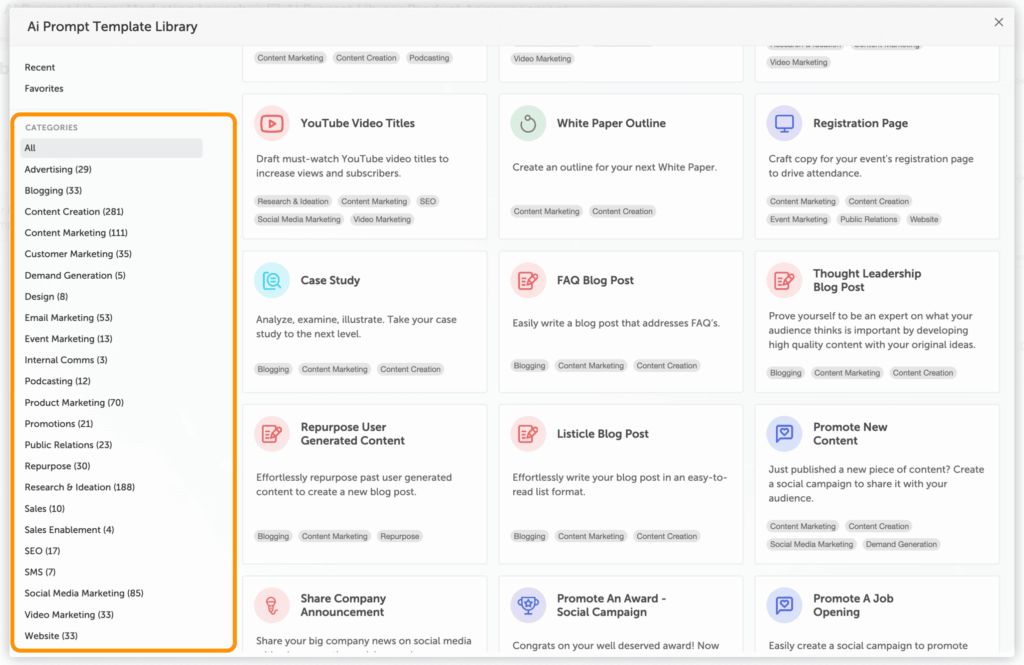
A well-organized AI SEO prompt library is the backbone of any efficient content operation today. Instead of reinventing the wheel every time you sit down to optimize a page or craft a blog post, a curated collection of prompts ensures consistency, saves hours of mental bandwidth, and dramatically improves the output from large language models like ChatGPT, Claude, or Gemini. This article breaks down what a prompt library really is, how to build one that works across all stages of search engine optimization, and which ready-to-use templates deliver the best results for ranking higher.
What Exactly Is an AI SEO Prompt Library?
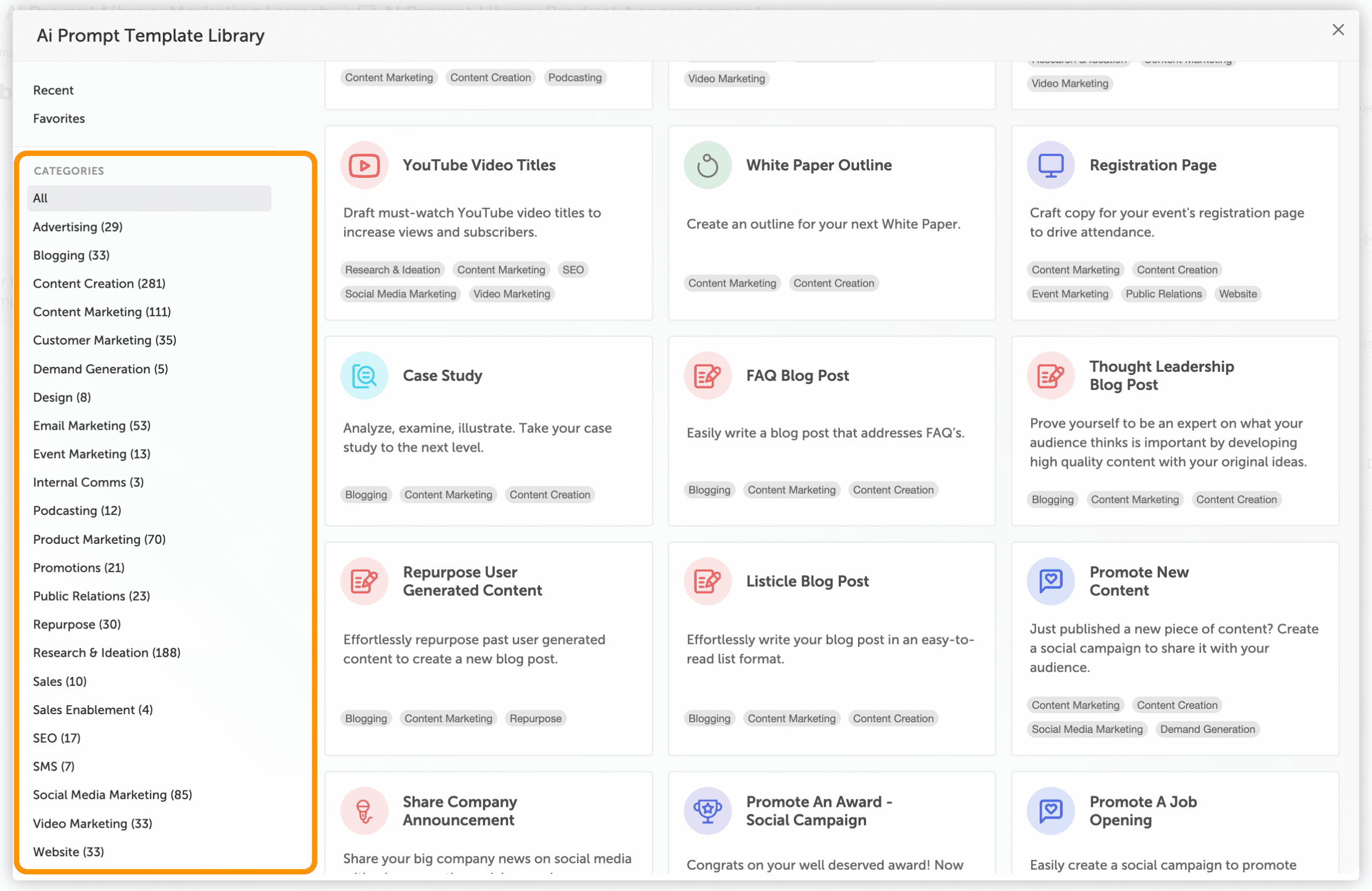
An AI SEO prompt library is a structured repository of pre-written, tested, and categorized text prompts designed to instruct generative AI tools to perform specific search-optimization tasks. It goes far beyond a simple notepad file of one-liners. A mature library contains layered prompts for everything from keyword clustering and meta-description generation to technical SEO audit scripts and content gap analysis. Each prompt is engineered to produce output that closely aligns with Google’s quality guidelines, E-E-A-T signals, and current ranking factors.
The core idea is repeatability. Instead of describing the same requirements every time you need a title tag, your library stores a refined prompt that already accounts for character limits, primary and secondary keyword placement, brand voice, and click-through optimization. This system makes AI an extension of your SEO workflow rather than a random brainstorming partner.
Professional SEOs treat these libraries as living documents. They are constantly updated when algorithm changes occur, when new model capabilities emerge, or when a specific prompt iteration proves to deliver higher conversion rates or better top-of-funnel traffic. A static library quickly becomes obsolete.
Core Components of a High-Performing Prompt Library
An effective library breaks down SEO into distinct modules. Each module contains prompts that map to a specific user intent, output format, and level of detail. Below are the essential categories that any complete AI SEO prompt library must cover.
Keyword Research and Clustering Prompts
These prompts help you discover semantic variations, long-tail phrases, and topic clusters without manually sifting through keyword tools. A well-designed prompt instructs the model to act as a seasoned keyword researcher, proposing terms that match a defined search intent, usually commercial investigation or informational. For example, a clustering prompt might request groups of 10 related keywords around a head term, with volume estimates and difficulty indicators pulled from the model’s training data. Always specify that output should be returned in a structured format like a table or CSV-ready list for easy manipulation.
Content Strategy and Briefing Prompts
High-quality content doesn’t start with writing; it starts with a strategy. Prompts in this category generate content outlines, specify H2/H3 structures, suggest data sources, and define the target audience’s pain points. A strong brief prompt includes a detailed buyer persona, the primary keyword with its intent, competitors to analyze for gaps, and a note on freshness. The output is a full editorial brief that a human writer or another AI can execute with clarity, reducing the back-and-forth editing cycle.
On-Page Optimization Prompts
Title tags, meta descriptions, header hierarchies, image alt text, and internal linking suggestions all fall under on-page prompts. The best libraries store templates that automatically fill in the placeholder for the target keyword, brand name, and unique value proposition. For title tags, you can prompt the AI to generate 10 variations under 60 characters, include a power word, and prioritize the primary keyword near the beginning. The same granular approach applies to meta descriptions that balance emotional hooks with a clear call-to-action while staying within the 155-160 character safe zone.
Technical SEO and Schema Markup Prompts
AI can generate structured data markups, robots.txt rules, and.htaccess directives when guided correctly. A prompt for FAQ schema might instruct the model to output a valid JSON-LD snippet based on a set of questions and answers from your article. For technical audits, a prompt can ask the AI to simulate a crawler and list potential issues like missing canonical tags, orphan pages, or incorrect hreflang implementations based on a described site architecture. This transforms vague advice into actionable code blocks that developers can validate quickly.
Link Building and Outreach Prompts
Outreach email templates are one of the oldest uses of AI in SEO, yet a refined prompt library elevates them beyond generic “I love your post” messages. Store prompts that generate personalized pitch angles based on the prospect’s site category, specific broken link opportunities, or resource page additions. Include variables for recipient name, site URL, and the specific asset you want them to link to, ensuring that every outreach feels customized and maintains high deliverability rates.
Benefits of Using a Dedicated Prompt Library for SEO
Adopting a systematic AI SEO prompt library delivers compounding advantages that go far beyond saving a few minutes per task. Teams that centralize their prompts see measurable improvements in output quality, scalability, and onboarding speed.
- Consistency across all content – Every meta description, every blog outline, and every schema snippet follows the same quality bar. Brand tone and SEO rules are baked into the prompt itself, eliminating drift when multiple team members or freelancers are involved.
- Faster execution – Instead of typing detailed instructions for each task, you copy a proven prompt, insert the variables, and receive a near-final draft. Tasks that previously took an hour shrink to 10 minutes.
- Reduced prompt fatigue – The mental load of constantly explaining context to an AI is genuine. A library offloads that cognitive burden, enabling you to focus on strategy rather than re-engineering the same prompt for the hundredth time.
- Version control and A/B testing – You can store prompt variations that performed better for specific types of pages. If prompt version 3 of the product description template produces a higher conversion rate, you swap it in immediately.
- Easier training and collaboration – New team members ramp up quickly because they don’t need to learn prompt engineering from scratch. They use the library as a playbook, ensuring everyone produces work at a senior level from day one.
- Using one-size-fits-all prompts – A B2B SaaS blog post outline prompt won’t work for a local service page. Build category-specific prompts that include the tonal nuances, legal disclaimers, or local geo-modifiers relevant to the page type.
- Neglecting to specify output format – Telling the AI to “write meta descriptions” without constraining the format yields unpredictable results. Always demand a markdown table, a JSON object, or a numbered list as appropriate.
- Ignoring search intent signals – If the prompt doesn’t explicitly mention the intent (informational, commercial, transactional, navigational), the AI may produce content that mismatches what users expect, resulting in high bounce rates.
- Failing to include de-indexing or disavow safeguards – When generating technical directives, always add a safety note in the prompt. This prevents the AI from suggesting overly aggressive no-index rules that could wipe out valuable pages.
- Lack of branded seed data – A prompt without context about your brand’s USPs, tone, and existing authority will churn out generic SEO text. Embed a concise brand snippet in every prompt that deals with customer-facing content.
Limitations and Common Mistakes When Building an AI SEO Prompt Library
A prompt library is not a magic wand. Misunderstanding its constraints leads to mediocre results and a false sense of security. Recognizing the limitations upfront prevents costly mistakes.
The biggest limitation is model drift. AI models evolve; a prompt that worked perfectly with GPT-4 may produce overly verbose or inaccurate responses with a later version or a different model. Libraries require periodic auditing and tweaking. Another critical issue is over-reliance on generic prompts. Many users copy prompts from public forums without adapting them to their specific niche, audience, or content format. That results in templated, spammy output that search engines increasingly penalize.
People often treat prompt outputs as final deliverables. No AI-generated SEO component should ever go live without human review. Misleading statistics, outdated references, and hallucinated links can creep in, damaging credibility. The library must be used as a powerful accelerator, not as a replacement for editorial judgment.
Common Mistakes and How to Avoid Them
How to Build Your Own AI SEO Prompt Library from Scratch
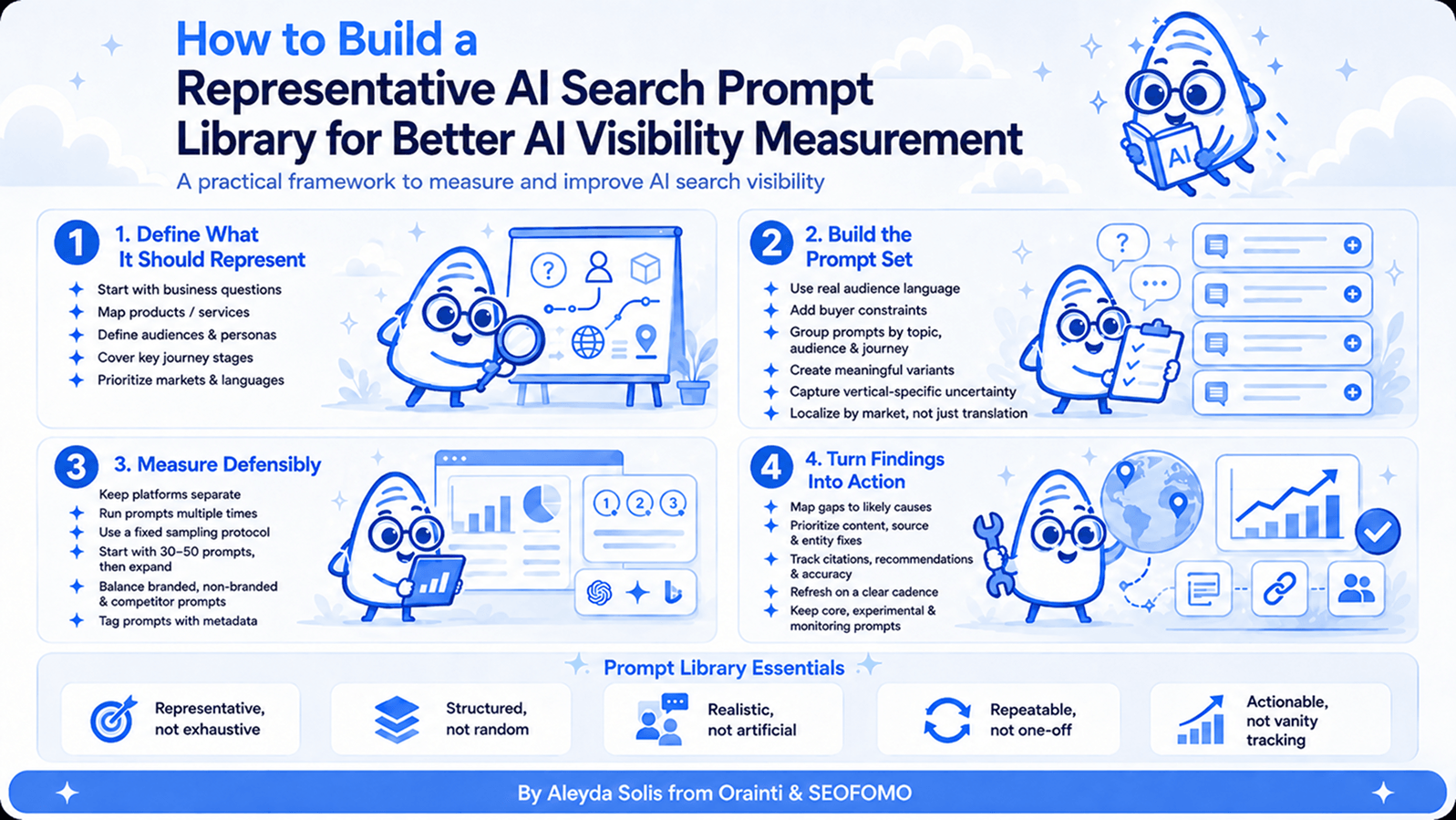
Constructing a library that truly moves the needle starts with a simple inventory of your recurring SEO tasks. Map out every repeatable activity: keyword mapping, content briefing, image optimization, FAQ schema creation, and quarterly content audits. For each task, design a prompt that contains four essential elements: the role assignment, the task description with constraints, the required output format, and the contextual seed data.
Begin with a foundational prompt structure. For example, in a keyword clustering prompt, you might assign the role: “You are an expert SEO strategist specializing in topical authority.” Then state the task: “Group the following list of 50 keywords into 5 to 7 topic clusters based on semantic relevance. Each cluster should have a primary keyword and a cluster name.” Finally, specify the output: “Provide the clusters in a markdown table with columns for Cluster Name, Primary Keyword, Secondary Keywords, and Suggested Content Type.”
Store these prompts in a shared platform that supports versioning. Tools like Notion, Google Docs with linked headings, or dedicated prompt-management software work well. Tag each prompt by category and difficulty level so that even junior team members can locate and apply them correctly.
Test every prompt with at least three variations of input data. If a prompt reliably produces correct JSON-LD schema for different article types, it earns a place in the “Technical SEO” section. If it hallucinates statistics or misformats data, refine it before adding it to the library. Only battle-tested prompts should make it into the active collection.
Practical Examples: Ready-to-Use Prompts for Your Library
Below are concrete examples that demonstrate how specificity transforms an average prompt into a powerful asset. These can be adapted and inserted directly into a live AI SEO prompt library for immediate use.
Meta Description Generator Prompt: “You are an expert SEO copywriter. Write 3 distinct meta descriptions for the URL and title provided. Each description must be under 155 characters, include the primary keyword naturally, incorporate a compelling emotional benefit, and end with a soft call-to-action. Target audience: [insert audience]. Brand tone: [insert tone]. Primary keyword: [insert keyword]. Output as a numbered list.”
Content Gap Analysis Prompt: “Act as a senior content strategist. Analyze the main topics, subtopics, and unique angles covered by each competitor that are missing from my page. Identify at least 5 content gaps. For each gap, suggest the specific H2 heading, the search intent it serves, and a brief outline of the missing section. Output as a table with columns: Gap Topic, Suggested H2, Intent, Outline.”
Schema Markup Generation Prompt: “You are a technical SEO specialist. Generate an FAQPage JSON-LD schema snippet based on the following Q&A pairs. The output must be valid JSON without surrounding code fences. Ensure the @context and @type properties are correct. Use only the exact text provided; do not add or paraphrase. Insert the brand’s main logo URL as the publisher image where appropriate.”
Internal Linking Suggestion Prompt: “Based on the blog post topic and the list of published URLs on the site, recommend 5 internal links that would strengthen the topical relevance of the new article. For each suggested link, provide the anchor text, the target URL, a one-sentence rationale, and specify whether the link should be in the body or in a related-posts section. Output as a markdown table.”
Comparison: AI SEO Prompt Library vs. Ad-Hoc Prompting
Many professionals still rely on crafting a fresh prompt each time they need an output. While that approach can work for one-off creative endeavors, SEO is a systematic discipline where repeatability and scale matter. The following table highlights the stark differences.
| Factor | AI SEO Prompt Library | Ad-Hoc Prompting |
|---|---|---|
| Consistency | High – same structure, tone, and formatting across all outputs | Variable – depends on memory and mood of the person prompting |
| Onboarding | New team members produce senior-level work immediately | Steep learning curve; quality fluctuates wildly |
| Iteration & Optimization | Prompt versions can be A/B tested and stored | Improvements are lost or never duplicated |
| Scalability | Easily generate 100+ meta descriptions or briefs in an hour | Bottlenecked by prompt creation time for each batch |
| Error Rate | Lower – constraints and format locks reduce hallucinations | Higher – missing constraints lead to off-brand or unusable outputs |
The table demonstrates that while ad-hoc prompting feels flexible, it introduces unpredictability into a process that demands precision. A library doesn’t eliminate creativity; it channels it through a proven, repeatable framework that protects your search rankings.
Integrating the Prompt Library with Everyday SEO Workflows
The real power emerges when the library is embedded into your daily tool stack. For content teams, connect the prompt library directly into your content management system or project management board. When a new task card is created for a “pillar page brief,” the assigned writer immediately pulls the approved brief-generation prompt, fills in the placeholders, and pastes the output into the document. No guesswork.
Technical SEO specialists can maintain a dedicated channel in Slack or Teams where a bot runs the library’s diagnostic prompts against a staging site URL, returning a pre-formatted audit snippet that flags issues before they reach production. Outreach teams can have a CRM integration that auto-inserts prospect details into the outreach prompt and generates personalized templates in batches of twenty.
What separates leaders from laggards is the commitment to maintain the library as a living asset. Schedule a quarterly prompt audit. Remove prompts that are underperforming because of model updates, add new ones that cover emerging formats like generative AI snippets and voice search optimization, and retire those that produced thin content. Treat your AI SEO prompt library with the same rigor you apply to your core keyword dataset.
Important Considerations for Long-Term Success
Always remember that search engines detect patterns. If your entire site’s metadata follows the exact same AI sentence structure because the library prompt never varied, you risk looking like a content farm. Introduce controlled randomization within your prompts. Ask for “creative variations,” rotate power words from a predefined list, or include conditional logic that splits output by page type.
Another crucial note is to respect data boundaries. Never feed proprietary customer data, un-redacted analytics, or confidential business metrics into a public AI model via your prompt. Build a sanitized version of your prompts that uses generic placeholders when working in non-private instances, and consider using API-based models with zero-data-retention policies for sensitive tasks.
Finally, always fact-check any statistical claim or data point the AI inserts. The library is a drafting engine, not a truth oracle. Every figure needs a verified source before publication. This one discipline alone prevents the majority of E-E-A-T failures that can derail otherwise solid SEO programs.
Frequently Asked Questions
What is an AI SEO prompt library?
An AI SEO prompt library is a curated collection of pre-written, tested, and categorized text prompts that instruct artificial intelligence tools to perform specific search engine optimization tasks such as keyword research, meta description writing, schema generation, and content outlining. It standardizes the quality and format of AI outputs across teams and projects.
Why do I need a prompt library instead of just winging it?
A prompt library saves enormous time, enforces brand and quality consistency, reduces the cognitive load of re-explaining requirements, and enables version control. Without it, each SEO task becomes a random experiment with unpredictable results, which damages scaling efforts and makes it nearly impossible to maintain uniform on-page standards.
Can ChatGPT prompts really improve my SEO rankings?
ChatGPT prompts themselves don’t directly affect rankings, but the output generated from well-engineered prompts helps create optimized content, structured data, and meta elements that align with search engine algorithms. The efficiency and consistency provided by a good prompt library indirectly lead to better indexation, higher click-through rates, and stronger topical authority.
How often should I update my AI SEO prompt library?
At a minimum, update the library quarterly or whenever a major AI model update is released. Also revise prompts immediately after Google algorithm core updates to account for new ranking signals, as well as when your brand voice, target audience, or content strategy shifts significantly.
What are the most important prompt categories to include?
The essential categories are keyword research and clustering, content strategy briefs, on-page optimization (title tags, meta descriptions, headers), technical SEO and schema markup, and link building outreach. These five pillars cover the vast majority of daily SEO operations.
Should I share my prompt library with external freelancers?
Yes, but with caution. Sharing the library with vetted freelancers ensures consistent output and drastically reduces editing time. However, avoid exposing your most proprietary prompts that contain sensitive brand strategy or internal data. Create a sanitized, guidelines-only version for external use.
Turning Your Prompt Library into a Competitive Advantage
Building and maintaining an AI SEO prompt library is one of the highest-leverage investments a modern SEO professional can make. It transforms generative AI from a novelty into an industrial-grade tool that consistently delivers production-ready assets. The key is to move beyond static text files and treat your library as a strategic framework that evolves with the search landscape. Categorize meticulously, test relentlessly, and embed it so deeply into your workflow that no team member ever starts a task from a blank prompt box again. With the right structure in place, you’ll spend less time engineering prompts and more time analyzing performance—exactly where your expertise matters most.
Xem thêm:
- AI Search Intent Analysis: The Definitive Guide to Understanding What Users Really Want
- AI SEO Brand Signals: The Complete Guide to Building a Future-Proof Digital Presence
- AI SEO AI Overview Optimization Strategy: The Complete Playbook for 2025
- AI SEO Masterclass: The Complete Guide to Dominating Search in 2025
- AI SEO Content Engagement: The Complete Guide to Boosting Rankings and Reader Retention
Bài viết cùng chủ đề:

AI SEO SEO Automation with Make: The Complete Workflow Guide

AI SEO SEO Automation with Zapier: The Complete Workflow Guide

AI SEO SEO Automation with n8n: The Complete Workflow Guide
AI SEO SEO Automation with Gemini: The Complete Guide to Scaling Organic Growth

AI SEO SEO Automation with Claude: The Complete Guide to Scaling Content in 2025

AI SEO SEO Automation with ChatGPT: The Complete Playbook for 2025

AI SEO & SEO Automation for Affiliate Sites: The 2025 Playbook for Passive Income Growth
AI SEO & SEO Automation for Bloggers: The Complete Guide to Scaling Your Content

AI SEO & SEO Automation for Agencies: The Complete 2025 Playbook

AI SEO and SEO Automation for Ecommerce: The Complete Playbook for 2025

AI SEO & SEO Automation for WordPress: The Complete Playbook for 2025
AI SEO SEO Automation Strategy: The Complete Playbook for 2025

Mastering the AI SEO SEO Automation Process: A Complete Guide to Scaling Organic Growth
AI SEO SEO Automation System: The Complete Guide to Scaling Organic Growth in 2025
AI SEO SEO Automation Platform: The Complete Guide to Scaling Organic Growth in 2025
AI SEO SEO Automation Software: The Complete Guide to Scaling Organic Growth in 2025















