
No products in the cart.
How to Build AI SEO Workflows: A Complete Guide to Supercharging Organic Growth
29
Jul
Jul
Building effective SEO strategies without automation no longer makes sense when you consider the volume of data, content demands, and personalization Google’s algorithms reward today. Learning how to build AI SEO workflows transforms a manual, time‑draining process into an intelligent system that uncovers opportunities, scales quality content, and continuously adapts to search intent. This article breaks down every component, step, and cautionary tale you need to automate your SEO intelligently—without sacrificing the human touch that search engines value most.
What Exactly Is an AI SEO Workflow?

An AI SEO workflow is a connected sequence of tasks where artificial intelligence models handle or significantly accelerate core search engine optimization activities. Instead of isolated tools, you build a pipeline where AI‑powered keyword research feeds into content briefs, which then flow into automated drafting, on‑page scoring, internal linking suggestions, and performance reporting. The goal is not to remove SEO experts but to free them from repetitive work so they can focus on strategy, creativity, and trust‑building elements that AI cannot replicate alone.
At its heart, a mature AI SEO workflow combines natural language processing (NLP), machine learning classification, generative AI, and predictive analytics. When assembled correctly, it lets you process thousands of keywords, audit hundreds of pages, and personalize outreach at a scale manual processes could never achieve—all while maintaining quality checks that keep the output aligned with Google’s E‑E‑A‑T standards.
The Core Components of an AI SEO Workflow
Before you build anything, understanding the moving parts ensures you don’t automate chaos. Every robust AI SEO workflow relies on these five pillars, each powered by specialized AI functions.
AI‑Powered Keyword Research and Clustering
Keyword research shifts from one‑by‑one spreadsheet hunting to using transformer‑based models that understand topic relationships. Tools like Semrush’s Keyword Magic Tool with intent filters, Ahrefs’ AI‑assisted parent topic detection, or Google’s Natural Language API can group thousands of queries by search intent, semantic similarity, and commercial value. An AI workflow might take a seed keyword, generate a complete topic cluster map, and assign each term a content type—informational blog, comparison page, or product landing page—within minutes. The output becomes a structured content calendar that mirrors how real users move through their journey, not just a list of high‑volume terms.
Advanced implementations use custom Python scripts with Sentence‑BERT embeddings to create internal topic clusters that competitors aren’t targeting, uncovering low‑competition pockets that standard tools miss.
Automated Content Strategy and Brief Generation
With clusters defined, the next component translates them into prioritized content briefs. AI crawls the top‑ranking pages for each target keyword and extracts commonalities: average word count, heading hierarchy, entities mentioned, FAQs people also ask, and media types used. Platforms like MarketMuse or Frase build comprehensive briefs that tell you exactly which subtopics to cover to satisfy a query’s full intent. This isn’t about copying competitors; it’s about identifying the needle‑moving details that signal topical authority to Google.
You can further enrich these briefs by having a large language model suggest unique angles, statistics from trusted databases, and internal linking opportunities based on your existing content inventory—all assembled in a structured JSON format your content management system can ingest automatically.
AI Content Creation and On‑Page Optimization
Generative AI has matured past basic article spinning. Today’s workflows use models like GPT‑4, Claude, or Google Gemini as collaborative drafting partners. You provide the detailed brief, brand voice guidelines, and target keyword, and the AI produces a first draft that already respects heading structure, keyword density, and featured snippet patterns. Then, human editors refine tone, add proprietary insights, case studies, and experience‑based examples that satisfy E‑E‑A‑T.
Simultaneously, AI‑driven on‑page tools like SurferSEO or NeuronWriter score the draft in real time for term frequency, NLP entities, and readability, suggesting adjustments before publishing. The real power emerges when you connect these tools via API: a draft file automatically triggers an on‑page audit, and a dashboard shows both the content score and a predicted ranking probability.
Technical SEO Inspection and Monitoring
Technical health is the foundation; an AI workflow can catch issues before they become ranking drops. Crawling tools like Screaming Frog or Sitebulb combined with an AI analysis layer can read a site’s crawl report and not just flag broken links and missing meta tags but group them by impact, detect patterns (e.g., all blog pagination pages are missing canonical tags), and even draft fix tickets in plain language for developers.
Log file analysis, once an advanced niche, becomes accessible when an AI model parses server logs and highlights crawl budget waste, pages Googlebot ignores, or sudden spikes in 404 errors tied to recent deployments. These insights feed into automated alerts in Slack or email, so no critical SEO issue lingers.
AI‑Enhanced Reporting and Continuous Learning
The final component ties everything together. Instead of copying and pasting Google Search Console data into spreadsheets, an AI workflow daily queries GSC, Google Analytics, and rank tracking APIs, then uses a language model to interpret shifts. You get a morning digest that says, “Your article on ‘beginner yoga poses’ dropped five positions because a competitor added video tutorials; consider embedding a short instructional video and refreshing the FAQ section.” This moves reporting from reactive dashboards to prescriptive action items.
Additionally, reinforcement loops update topic models based on what newly published content achieves. If certain subtopic headings consistently correlate with faster ranking gains, the AI can adjust future briefs to prioritize those patterns—a self‑optimizing SEO machine.
How to Build AI SEO Workflows: A Practical Step‑by‑Step Process
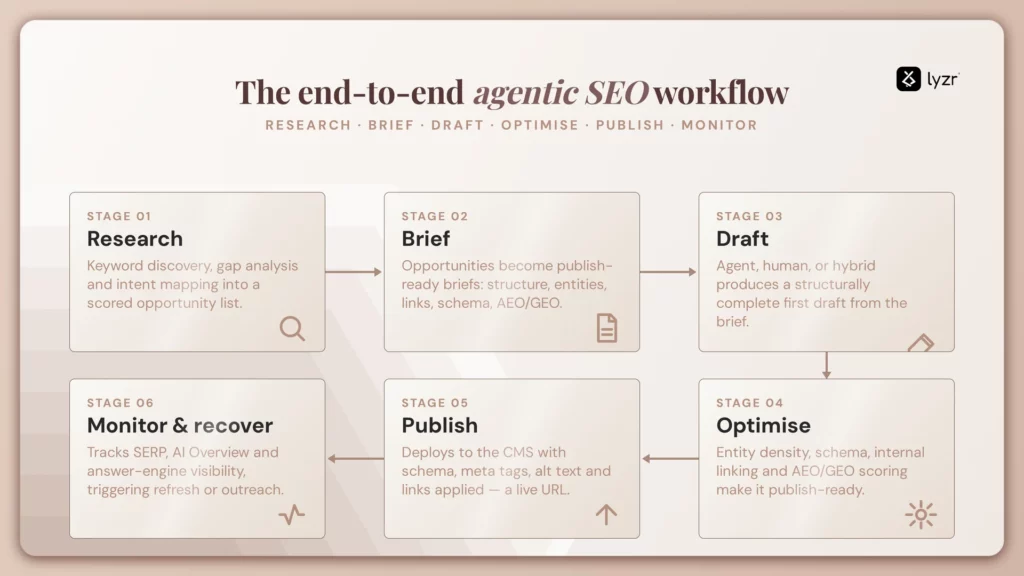
Building an AI SEO workflow doesn’t require a team of data scientists. Following this nine‑step framework turns the concept into a repeatable, scalable system that respects both technical accuracy and brand authenticity.
- Define crystal‑clear SEO objectives. Are you aiming for topical authority in a niche, e‑commerce category dominance, or national brand awareness? Each goal changes which AI signals matter most. Document primary KPIs: organic traffic, keyword ranking growth, conversion rate from organic, and content freshness score.
- Inventory your existing tech stack and data sources. List every tool you use—CMS, analytics, rank trackers, content platforms. Identify which offer APIs and which only export CSVs. AI workflows thrive on live data, so prioritize tools with robust integration capabilities like Google Search Console API, Ahrefs API, and OpenAI API.
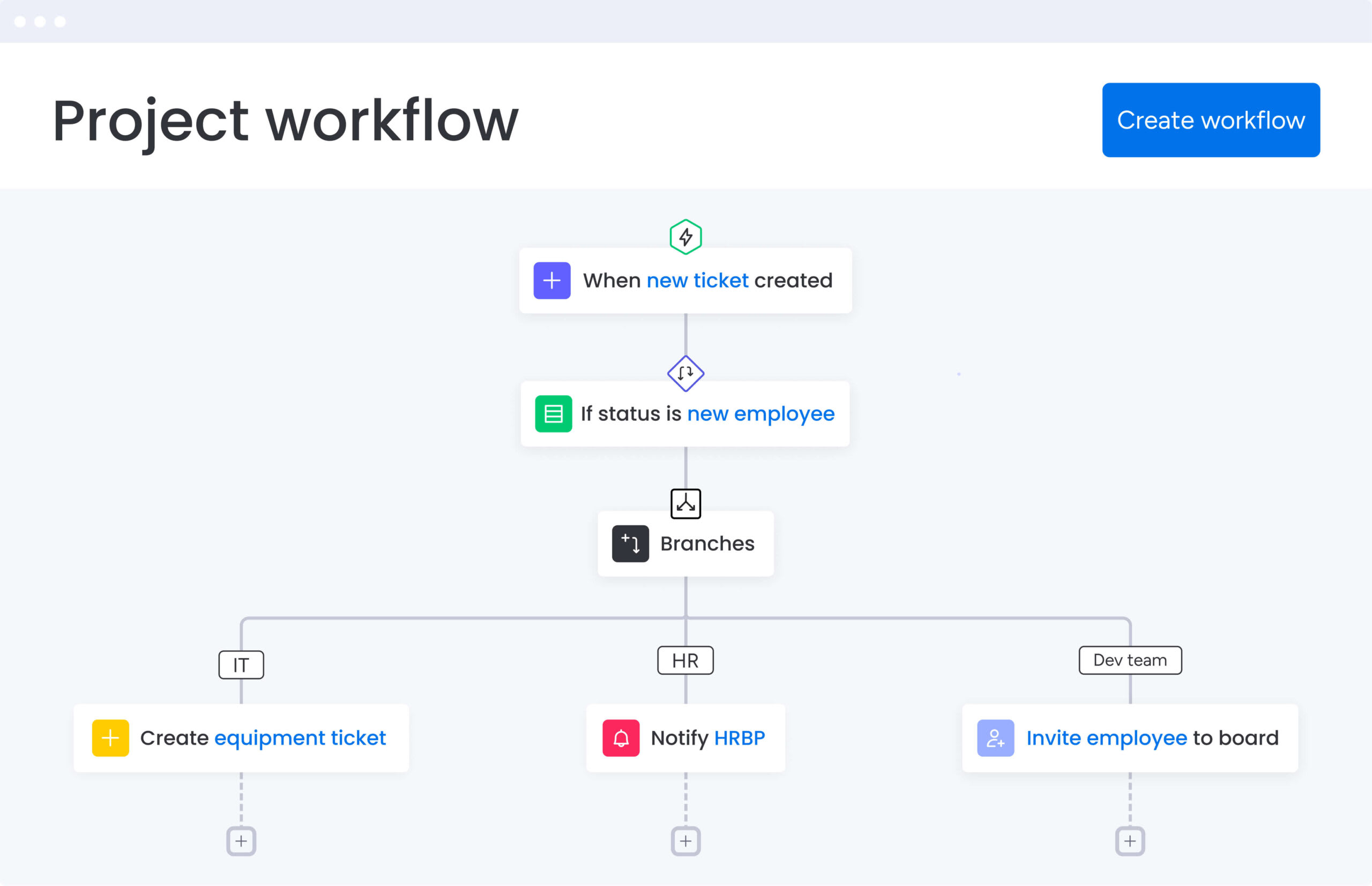
- Map out the ideal data flow. Draw a diagram starting from keyword research → content brief → draft generation → on‑page optimization → CMS upload → periodic technical crawl → rank monitoring → performance digest. Mark where AI decisions happen and where a human must approve or edit.
- Select and connect AI tools for each stage. For small teams, an all‑in‑one platform like Alli AI or Outranking can shortcut the build. For dedicated SEO departments, wire together best‑of‑breed tools via Zapier, Make, or custom Python scripts. For example: Semrush for keywords → Google Sheets → OpenAI GPT for briefing → SurferSEO for scoring → WordPress REST API for publishing.
- Automate keyword research and clustering. Set up a weekly trigger that ingests your competitor domains and new seed topics, then outputs a refreshed topic cluster map. Use a language model to score clusters by “business potential” based on your CRM data, not just search volume.
- Build the AI‑assisted content machine. Create a template where variables (target keyword, audience persona, stage of funnel) are replaced automatically in a prompt that the AI uses to generate a full content outline. Add a quality gate: the draft goes to Grammarly, then to a manual editor dashboard. Only after approval does the workflow push the article to your CMS as a draft, complete with optimized meta tags and schema markup variables pre‑filled.
- Implement AI‑driven technical safeguards. Schedule daily crawls of critical sections. If the number of pages with >500ms load time increases beyond a threshold, or if a new page lacks a canonical tag, the AI‑analysis layer emails the development team with a severity label and a recommended fix snippet. For immediate threats like accidental noindex on top pages, send an SMS alert.
- Create an outreach personalization engine. Feed a list of prospects from tools like Pitchbox or Respona into a prompt that analyzes their recent blog topics and builds a hyper‑personalized outreach email. The AI can mention a specific stat from their article and suggest a natural link insertion. Preset human review before sending maintains authenticity.
- Close the loop with a smart performance digest. Each Monday, aggregate ranking changes, traffic anomalies, and new keyword opportunities. An AI model written in plain English interprets the “why” behind major moves and suggests three priority tasks. Archive these digests; over time they become a training set for even more accurate predictions.
Benefits and Limitations of AI SEO Workflows
Automating SEO with AI unlocks advantages that scale far beyond headcount, but it also carries risks that require built‑in guardrails.
Key Benefits
- Speed and scale. Tasks that took days—like competitor SERP analysis for 200 terms—finish in minutes, allowing monthly instead of quarterly content refreshes.
- Data‑driven precision. AI processes millions of data points to find correlations humans miss, such as the exact content length and entity density the top 10 results share.
- Consistent brand output. With a well‑trained model, all content follows the same style guide, tone, and formatting, reducing editorial drift across a large writing team.
- Proactive opportunity spotting. Instead of reacting to ranking drops, AI can predict seasonal trends and recommend content to prepare months in advance.
- Cost efficiency over time. While setup requires investment, an automated workflow reduces the need for repetitive manual labor, freeing budget for high‑value creative and strategic work.
Limitations and Risks
- Generic, repetitive content. If you don’t inject first‑party data, expert quotes, and unique visual assets, AI content reads like every other text‑only page on the same topic.
- Hallucinations and factual errors. Generative models can confidently state incorrect statistics. Every fact must be verified by a human before publication.
- Google penalties from scaled AI abuse. Google’s March 2024 core update specifically targeted unhelpful, scaled content practices. Publishing AI drafts without significant value‑add can lead to manual actions.
- Black‑box decision‑making. Over‑reliance on AI scoring can make you optimise for a tool’s algorithm rather than user experience, creating content that looks perfect to a machine but fails to engage real people.
- Integration complexity. Connecting dissimilar APIs, handling authentication, and maintaining data privacy requires technical oversight that not all teams have in‑house.
Manual SEO vs. AI SEO Workflows: A Direct Comparison
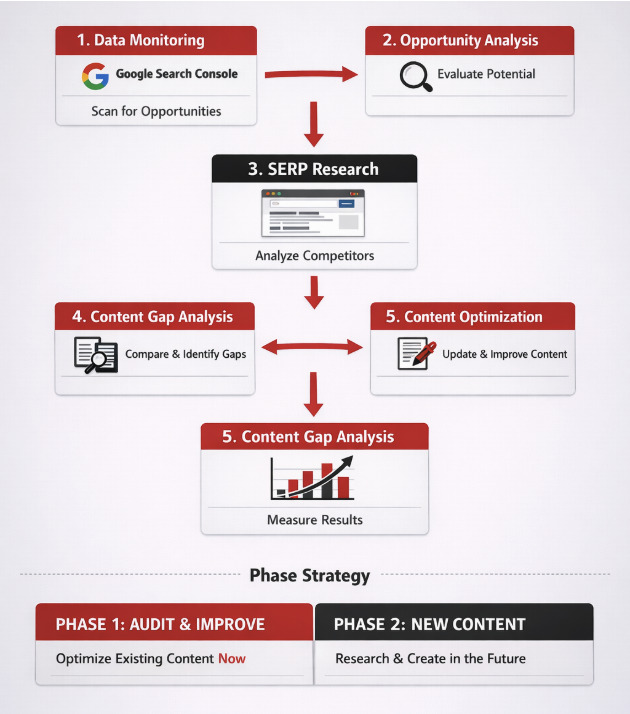
The difference isn’t about bad vs. good; it’s about allocating human brainpower where it creates the most value. The table below highlights when to lean on automation and when the human touch remains irreplaceable.
| Aspect | Manual SEO Approach | AI SEO Workflow Approach |
|---|---|---|
| Keyword research | Hours of spreadsheet filtering, subjective grouping | Instant cluster generation with intent and business value scoring |
| Content briefs | Manually reviewing top 10 SERPs, copy‑pasting headings | Automated extraction of must‑cover subtopics, ideal word count, and entity gaps |
| First draft writing | Writer starts from scratch, 1‑2 days per post | AI generates structured draft in minutes; editor injects EEAT elements |
| On‑page optimization | Checklist‑based review, often after publishing | Real‑time scoring during drafting, auto‑suggested internal links |
| Technical audits | Quarterly crawl, massive PDF report, hard to prioritize | Daily crawl, AI‑triaged alerts with plain‑English fix advice |
| Outreach | Generic templates, low reply rates | Personalized emails referencing each prospect’s recent content |
| Reporting | End‑of‑month performance recap, reactive | Weekly automated digests with root‑cause analysis and next actions |
Common Mistakes When Building AI SEO Workflows
Even experienced SEOs stumble when integrating AI. Avoiding these five traps keeps your workflow effective and safe.
- Automating everything without a human review layer. Treating AI drafts as publish‑ready often results in thin content that damages brand credibility. Every output must pass through an expert who adds proprietary data, checks facts, and rewrites for tone.
- Ignoring Google’s guidelines on AI content. Google doesn’t penalize AI assistance; it penalizes content created primarily to manipulate rankings. Ensure every piece demonstrates experience and expertise—something a language model alone cannot provide.
- Using the same AI model for every task. A model great at writing blog posts is not ideal for technical SEO audit classification. Using fine‑tuned models or domain‑specific tools improves accuracy at each step.
- Forgetting to train the AI on your brand voice. Generic prompts produce generic output. Feed your model examples of your best content, your tone guide, and even customer interview transcripts to help it mirror your brand personality.
- Neglecting data privacy and security. Sending sensitive performance data or unpublished content plans to public AI APIs without proper data processing agreements can violate GDPR and client confidentiality. Use enterprise‑grade API tiers or on‑premise hosting where needed.
Important Notes for Long‑Term Success
AI SEO workflows are living systems, not set‑it‑and‑forget‑it scripts. Regularly audit how your AI outputs perform. If articles from a certain cluster underperform despite high AI‑scored on‑page optimization, that’s a signal the model might be missing a nuance—perhaps it’s not incorporating enough recent EEAT signals or user‑intent shifts. Re‑train or adjust prompts accordingly.
Invest in data literacy within your team. The people tweaking prompts and interpreting AI dashboards need to understand the fundamentals of SEO just as they did before automation. AI amplifies good judgment; it also amplifies mistakes made at scale. A workflow that generates 100 poorly optimized pages in a day is far more dangerous than a human writing five mediocre ones.
Finally, maintain a feedback channel where editors and strategists can easily mark good and bad AI suggestions. Over weeks this builds a labeled dataset you can use to fine‑tune your own custom model, turning a generic assistant into a proprietary SEO tool that understands your niche better than any off‑the‑shelf platform ever could.
Frequently Asked Questions
What is the best way to start building an AI SEO workflow?
Begin with one high‑impact, repetitive task such as keyword clustering or content brief generation. Use a low‑code tool like Zapier to connect your existing keyword research tool with OpenAI’s API, and set up a simple prompt that exports a topic map to Google Sheets. Measure the time saved and output quality for one month, then expand to the next stage.
Can AI completely replace human SEO specialists?
No. AI excels at processing data, recognizing patterns, and accelerating drafting, but it lacks genuine experience, original insights, and the ability to build real‑world trust with your audience. The most successful AI workflows pair machine efficiency with human editorial judgment, strategic thinking, and the creation of unique assets like proprietary research and in‑person interviews.
Which AI tools are essential for an SEO workflow?
T For technical SEO, Screaming Frog with a custom AI analysis layer is especially powerful.
How do I avoid Google penalties when using AI-generated content?
Make human‑led value addition non‑negotiable. After AI generates a draft, add original data, expert quotes, case studies, custom images, or interactive elements. Demonstrate first‑hand experience—review the product yourself, interview a practitioner. Google’s algorithms are increasingly sophisticated at detecting content that lacks genuine depth, so your goal is to ensure every page passes the “would a human who has used this product recommend it” test.
How do AI SEO workflows handle multiple languages or local markets?
Modern language models work fluently in dozens of languages, but culturally relevant nuances and local search intent still require human input. Build a workflow where the AI generates a base draft in the target language, and a native‑speaking SEO specialist polishes idioms, adjusts examples, and verifies local search terms. Pair this with region‑specific keyword research tools and hreflang tag automation to ensure correct indexing.
Conclusion
Mastering how to build AI SEO workflows places you at the forefront of a search landscape where speed, quality, and depth determine winners. The shift isn’t about replacing hard‑earned SEO expertise with algorithms; it’s about embedding that expertise into scalable systems that handle the grind while you focus on the strategic thinking that genuinely moves rankings. Start with a single automated step, prove its value, and expand methodically. As AI tools grow more sophisticated, the competitive edge will belong to those who know exactly where automation ends and human brilliance begins—and then build workflows that respect that line completely.
Xem thêm:
- AI SEO Funnel Optimization: The Complete Guide to Converting Search Traffic
- AI SEO Content Hierarchy: The Complete Blueprint for 2025 Rankings
- AI SEO Tips: Mastering the Future of Search Engine Optimization
- AI SEO Monitoring: The Ultimate Guide to Smarter Search Performance Tracking
- AI SEO Resources: The Ultimate Guide to AI-Powered Search Optimization
Bài viết cùng chủ đề:

AI SEO SEO Automation with Make: The Complete Workflow Guide

AI SEO SEO Automation with Zapier: The Complete Workflow Guide

AI SEO SEO Automation with n8n: The Complete Workflow Guide
AI SEO SEO Automation with Gemini: The Complete Guide to Scaling Organic Growth

AI SEO SEO Automation with Claude: The Complete Guide to Scaling Content in 2025

AI SEO SEO Automation with ChatGPT: The Complete Playbook for 2025

AI SEO & SEO Automation for Affiliate Sites: The 2025 Playbook for Passive Income Growth
AI SEO & SEO Automation for Bloggers: The Complete Guide to Scaling Your Content

AI SEO & SEO Automation for Agencies: The Complete 2025 Playbook

AI SEO and SEO Automation for Ecommerce: The Complete Playbook for 2025

AI SEO & SEO Automation for WordPress: The Complete Playbook for 2025
AI SEO SEO Automation Strategy: The Complete Playbook for 2025

Mastering the AI SEO SEO Automation Process: A Complete Guide to Scaling Organic Growth
AI SEO SEO Automation System: The Complete Guide to Scaling Organic Growth in 2025
AI SEO SEO Automation Platform: The Complete Guide to Scaling Organic Growth in 2025
AI SEO SEO Automation Software: The Complete Guide to Scaling Organic Growth in 2025















