
No products in the cart.
AI SEO AI Search Analytics Tools: The Complete Guide to Modern Search Intelligence
10
Aug
Aug
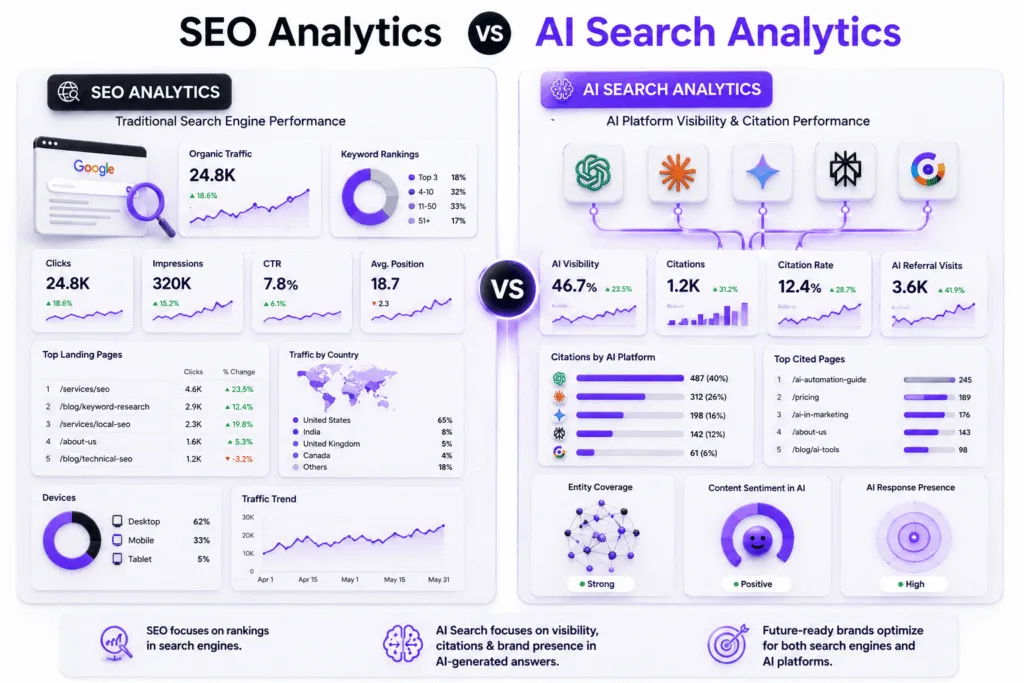
The digital marketing landscape has shifted dramatically with the integration of artificial intelligence into search engines and analytics platforms. AI SEO AI Search Analytics Tools represent the convergence of machine learning, natural language processing, and predictive analytics to help businesses understand, optimize, and forecast their search performance. These tools go beyond traditional keyword tracking by analyzing user intent, content relevance, and algorithmic patterns that human analysts might miss. As search engines evolve with AI-powered features like Google’s Search Generative Experience (SGE) and Bing’s Copilot, the need for sophisticated analytics has never been greater. This comprehensive guide explores the essential AI SEO AI Search Analytics Tools that are reshaping how marketers approach organic visibility.
Understanding AI SEO AI Search Analytics Tools
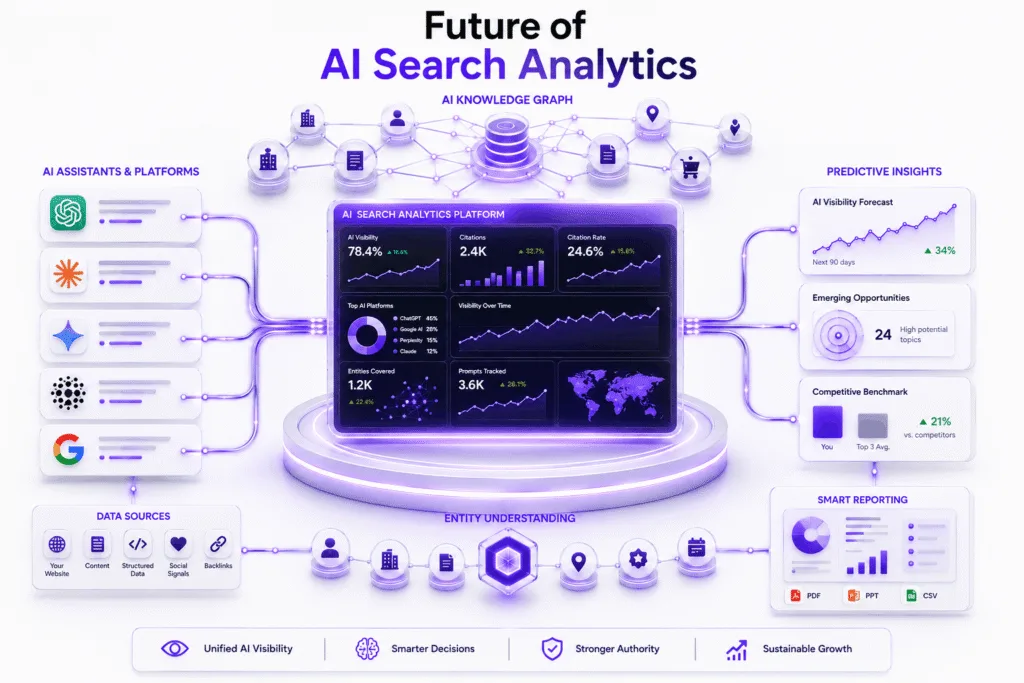
AI SEO AI Search Analytics Tools are software platforms that leverage artificial intelligence to collect, process, and interpret search data. Unlike conventional analytics tools that simply report metrics, these advanced systems use machine learning algorithms to identify patterns, predict outcomes, and provide actionable recommendations. They analyze vast datasets including search queries, click-through rates, dwell time, content structure, and competitor performance to deliver insights that drive strategic decisions.
The core value proposition lies in their ability to process unstructured data at scale. Traditional tools might show you that a page lost rankings, but AI-powered platforms can explain why by correlating algorithm updates, content changes, and user behavior shifts. They also automate repetitive tasks like keyword clustering, content gap analysis, and technical audits, freeing up human experts to focus on strategy and creative execution.
The Evolution of Search Analytics
Search analytics has progressed through several distinct phases. The first generation focused on basic metrics like page views and bounce rates. The second generation introduced keyword tracking and backlink monitoring. The current third generation, powered by AI, adds predictive capabilities and semantic understanding. This evolution mirrors the changes in search engines themselves, which now prioritize context, user satisfaction, and entity-based understanding over simple keyword matching.
Modern AI SEO AI Search Analytics Tools incorporate features like natural language processing to understand query semantics, computer vision to analyze image search performance, and reinforcement learning to adapt strategies based on real-time feedback. They also integrate with other marketing platforms, creating a unified view of customer journeys across search, social, and paid channels.
Key Features of AI-Powered Search Analytics Platforms
When evaluating AI SEO AI Search Analytics Tools, several core features distinguish them from traditional software. These capabilities directly impact the quality of insights and the efficiency of optimization workflows.
Predictive Ranking and Traffic Forecasting
Machine learning models analyze historical data to predict future rankings and organic traffic with remarkable accuracy. These predictions account for seasonal trends, algorithm updates, and content freshness. Marketers can simulate different scenarios, such as publishing new content or acquiring backlinks, to see potential outcomes before committing resources.
Natural Language Processing for Content Optimization
NLP engines break down top-ranking pages to identify semantic entities, topical authority signals, and content structure patterns. The tools then provide specific recommendations for improving readability, adding relevant subtopics, and matching search intent more precisely. This goes far beyond simple keyword density checks.
Automated Competitor Analysis
AI systems continuously monitor competitor websites, tracking their new content, backlink acquisition, and ranking fluctuations. They identify gaps in your strategy and highlight opportunities where competitors are underperforming. This intelligence allows for proactive rather than reactive optimization.
Real-Time Algorithm Change Detection
Sophisticated anomaly detection algorithms monitor search engine result pages for volatility. When rankings shift unexpectedly, the tools correlate these changes with known algorithm updates or site-specific issues, providing immediate alerts and diagnostic information.
Top AI SEO AI Search Analytics Tools in 2025
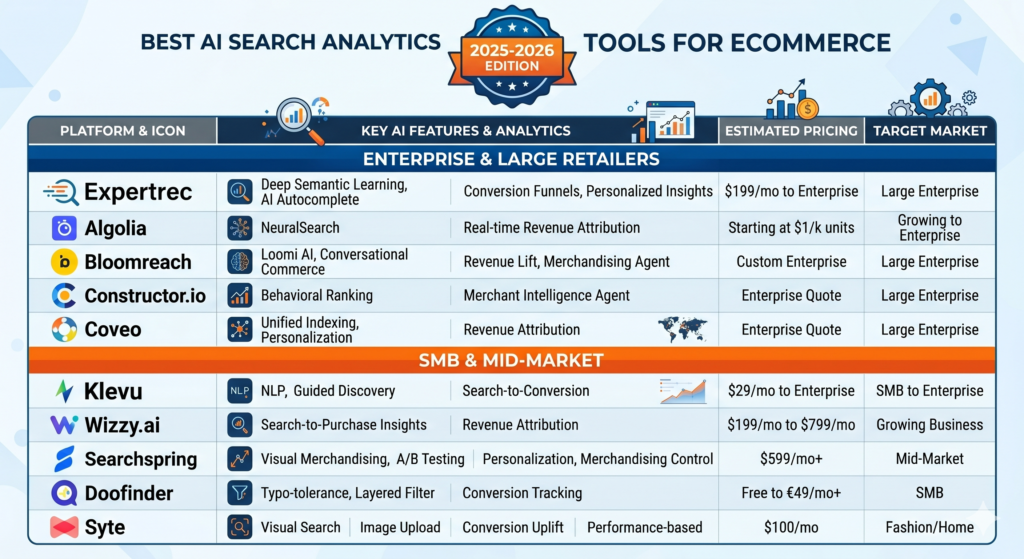
The market offers a diverse range of platforms, each with unique strengths. The following table compares the leading solutions based on their core capabilities, pricing models, and ideal use cases.
| Tool Name | Primary AI Features | Best For | Pricing Model |
|---|---|---|---|
| Semrush | Content Marketing AI, Topic Research, Position Tracking with AI predictions | Comprehensive SEO campaigns | Subscription tiers |
| Ahrefs | Content Gap Analysis, Rank Tracker with AI forecasting, Site Audit | Backlink analysis and content strategy | Subscription tiers |
| Surfer SEO | Content Editor with real-time NLP scoring, SERP Analyzer | On-page optimization | Subscription tiers |
| MarketMuse | Content Intelligence, Inventory Analysis, AI-driven briefs | Enterprise content teams | Custom pricing |
| BrightEdge | Data Cube, AI Insights, Predictive Analytics | Enterprise-level organizations | Custom pricing |
| Conductor | Content Intelligence, AI Recommendations, Search Insights | Marketing teams focused on ROI | Custom pricing |
| SE Ranking | AI-based SEO Audit, Rank Tracker, Competitor Analysis | SMBs and agencies | Affordable tiers |
How AI Search Analytics Tools Work
Understanding the underlying mechanics helps marketers maximize the value from these platforms. The process typically involves several stages of data processing and analysis.
Data Collection and Integration
Tools connect to multiple data sources including Google Search Console, Google Analytics, Bing Webmaster Tools, and proprietary crawlers. They also ingest data from social platforms, review sites, and industry databases. This comprehensive data collection ensures no relevant signal is overlooked.
Pattern Recognition and Modeling
Machine learning algorithms process the collected data to identify correlations and causal relationships. For example, the system might detect that pages with certain content structures consistently outperform others for specific query types. These patterns form the basis for predictive models and recommendations.
Actionable Insight Generation
The final stage translates complex analysis into clear, prioritized actions. Instead of overwhelming users with raw data, the tools present insights like “Optimize title tags for 15 pages to potentially gain 20% more clicks” or “Create content targeting the ‘best CRM software’ cluster to fill a critical gap.”
Benefits of Implementing AI Search Analytics
Organizations that adopt AI SEO AI Search Analytics Tools gain significant competitive advantages. The benefits extend beyond simple time savings to fundamentally improve strategic decision-making.
- Enhanced Accuracy: AI eliminates human bias and errors in data interpretation, leading to more reliable insights.
- Scalability: These tools can analyze thousands of pages and millions of data points simultaneously, making them essential for large websites.
- Speed to Insight: What takes a human analyst days to uncover, AI can surface in minutes, enabling faster response to market changes.
- Proactive Strategy: Predictive capabilities allow marketers to anticipate trends and act before competitors, rather than reacting to changes after they occur.
- Resource Optimization: By automating routine analysis, teams can redirect effort toward creative strategy, content production, and relationship building.
- Improved ROI: Data-driven decisions lead to higher conversion rates and more efficient allocation of marketing budgets.
- Combine Multiple Data Sources: Integrate data from search consoles, analytics platforms, customer feedback, and sales data to create a holistic view of performance.
- Customize AI Models: Many tools allow you to train their algorithms on your specific industry or website data. Take the time to set up custom parameters for more relevant insights.
- Monitor AI Confidence Scores: Pay attention to the confidence levels associated with AI predictions. High-confidence recommendations should be prioritized over those with lower certainty.
- Stay Updated on Tool Features: AI tools are rapidly evolving. Regularly check for new features and updates that could provide additional competitive advantages.
- Invest in Training: Ensure your team has the necessary skills to interpret AI outputs and translate them into effective strategies. Ongoing education is critical in this fast-moving field.
Limitations and Challenges

While powerful, AI SEO AI Search Analytics Tools are not without their challenges. Understanding these limitations is crucial for setting realistic expectations and avoiding common pitfalls.
The accuracy of AI predictions depends heavily on the quality and quantity of historical data. New websites with limited data may not receive reliable forecasts. Additionally, search algorithms are constantly evolving, and even the most advanced AI can struggle to predict major, unprecedented updates. T Finally, the cost of premium AI tools can be prohibitive for small businesses and individual creators.
Practical Implementation Guide
Successfully integrating AI SEO AI Search Analytics Tools into your workflow requires a structured approach. Follow these steps to maximize the value from your investment.
Step 1: Define Clear Objectives
Before selecting a tool, identify your primary goals. Are you focused on content optimization, technical SEO, competitor intelligence, or all three? Your objectives will determine which features are essential and which are nice-to-have.
Step 2: Conduct a Data Audit
Ensure your analytics accounts are properly configured and tracking the right events. Clean, accurate data is the foundation for meaningful AI analysis. Remove spam traffic, set up conversion tracking, and verify that all pages are being indexed correctly.
Step 3: Choose the Right Tool
Take advantage of free trials to test different platforms. Evaluate them against your specific use cases rather than generic feature lists. Consider integration capabilities with your existing tech stack, such as CMS platforms, CRM systems, and reporting dashboards.
Step 4: Start with a Pilot Project
Rather than overhauling your entire SEO strategy at once, apply the AI insights to a specific segment of your website. This allows you to measure the impact and refine your processes before scaling up.
Step 5: Establish a Review Cadence
Set regular intervals for reviewing AI-generated recommendations. Weekly reviews for tactical changes and monthly reviews for strategic shifts are common best practices. Document the outcomes of implemented changes to build a feedback loop that improves future recommendations.
Common Mistakes and How to Avoid Them
Many marketers fail to realize the full potential of AI SEO AI Search Analytics Tools due to avoidable errors. Recognizing these pitfalls is the first step toward avoiding them.
Mistake 1: Over-Reliance on Automation. AI provides recommendations, but human judgment is still essential for context. A tool might suggest optimizing for a keyword that is technically relevant but misaligned with your brand voice. Always review AI suggestions through the lens of your overall marketing strategy.
Mistake 2: Ignoring Data Quality. Garbage in, garbage out remains a fundamental truth. If your analytics tracking is broken or your search console data is incomplete, the AI’s predictions will be unreliable. Invest time in data hygiene before trusting the insights.
Mistake 3: Focusing Only on Rankings. Rankings are a means to an end, not the ultimate goal. AI tools can provide a wealth of data on user engagement, conversion rates, and customer lifetime value. Shift your focus to business outcomes rather than vanity metrics.
Mistake 4: Neglecting the Human Element. AI cannot create compelling narratives, build relationships with influencers, or understand nuanced cultural contexts. Use AI to handle the heavy lifting of data analysis, but rely on human creativity for content creation and outreach.
Mistake 5: Failing to Act on Insights. The most sophisticated tool is useless if the insights are not implemented. Create a clear workflow for turning AI recommendations into actionable tasks with assigned owners and deadlines.
Important Notes for Maximizing Tool Effectiveness
To truly leverage the power of AI SEO AI Search Analytics Tools, consider these advanced practices that separate top-performing teams from the rest.
Frequently Asked Questions
What is the difference between traditional SEO tools and AI SEO AI Search Analytics Tools?
Traditional tools primarily report on historical data, such as past rankings and traffic. AI-powered tools go further by using machine learning to predict future performance, identify patterns, and generate prescriptive recommendations. They can process unstructured data like search queries and content semantics, providing deeper insights than standard reporting dashboards.
Can AI SEO AI Search Analytics Tools replace human SEO experts?
No, these tools are designed to augment human expertise, not replace it. AI excels at data processing, pattern recognition, and prediction, but human experts are still needed for strategic thinking, creative content development, relationship building, and understanding nuanced business contexts. The most effective approach combines AI-driven insights with human judgment and experience.
How much do AI-powered search analytics tools cost?
Pricing varies widely based on features, data volume, and the size of the user base. Entry-level tools like SE Ranking start around $50 per month. Mid-tier platforms like Semrush and Ahrefs range from $100 to $500 per month. Enterprise solutions like BrightEdge and Conductor often require custom quotes that can reach thousands of dollars per month. Most providers offer free trials or limited free tiers.
Are these tools suitable for small businesses and individual bloggers?
Yes, there are affordable options designed specifically for smaller operations. Tools like SE Ranking, Mangools, and smaller tiers of Surfer SEO provide essential AI features at accessible price points. Additionally, Google Search Console offers free data that can be manually analyzed or used with free AI tools like Google’s own performance insights.
How quickly can I see results from using AI search analytics tools?
The timeline for seeing results depends on several factors including your current website authority, the competitiveness of your niche, and how quickly you implement recommendations. Some quick wins, like fixing technical issues or optimizing meta descriptions, can show improvements within days. More substantial changes, such as building topical authority through new content, typically take several weeks to months to impact rankings and traffic.
Do these tools work for local SEO and voice search optimization?
Modern AI SEO AI Search Analytics Tools have adapted to include local search features like Google Business Profile monitoring and local keyword tracking. For voice search, the NLP capabilities help optimize content for conversational queries and long-tail phrases that are common in voice searches. However, dedicated local SEO tools may still be necessary for managing citations and local listings.
Conclusion
AI SEO AI Search Analytics Tools have fundamentally transformed the practice of search engine optimization. These platforms provide unprecedented visibility into the complex factors that influence search rankings and organic traffic. By leveraging machine learning, natural language processing, and predictive analytics, marketers can move from reactive reporting to proactive strategy, making data-driven decisions that drive measurable business results.
The key to success lies not in the tools themselves, but in how they are integrated into a broader marketing ecosystem. Combining AI-driven insights with human creativity, strategic thinking, and a deep understanding of your audience creates a powerful synergy that outperforms either approach in isolation. As search engines continue to evolve with generative AI and more sophisticated ranking algorithms, the importance of these analytics tools will only grow.
Organizations that embrace this technology early and learn to use it effectively will gain a significant competitive advantage. Those that ignore the shift risk falling behind as their competitors leverage AI to optimize faster, predict trends more accurately, and deliver content that better satisfies user intent. The future of search is intelligent, and the tools to navigate that future are available today.
Xem thêm:
- AI SEO Podcasts: Master the Future of Search With Every Episode
- AI SEO Content Scoring: The Complete Guide to Data-Driven Content Optimization
- AI SEO Ecommerce Product SEO: The Complete Playbook for 2025
- WP Trove SEO Plugin: The Complete Guide to Smarter WordPress Optimization
- Can AI Replace SEO? Why Human Strategy Still Dominates the Future of Search
Bài viết cùng chủ đề:

AI SEO SEO Automation with Make: The Complete Workflow Guide

AI SEO SEO Automation with Zapier: The Complete Workflow Guide

AI SEO SEO Automation with n8n: The Complete Workflow Guide
AI SEO SEO Automation with Gemini: The Complete Guide to Scaling Organic Growth

AI SEO SEO Automation with Claude: The Complete Guide to Scaling Content in 2025

AI SEO SEO Automation with ChatGPT: The Complete Playbook for 2025

AI SEO & SEO Automation for Affiliate Sites: The 2025 Playbook for Passive Income Growth
AI SEO & SEO Automation for Bloggers: The Complete Guide to Scaling Your Content

AI SEO & SEO Automation for Agencies: The Complete 2025 Playbook

AI SEO and SEO Automation for Ecommerce: The Complete Playbook for 2025

AI SEO & SEO Automation for WordPress: The Complete Playbook for 2025
AI SEO SEO Automation Strategy: The Complete Playbook for 2025

Mastering the AI SEO SEO Automation Process: A Complete Guide to Scaling Organic Growth
AI SEO SEO Automation System: The Complete Guide to Scaling Organic Growth in 2025
AI SEO SEO Automation Platform: The Complete Guide to Scaling Organic Growth in 2025
AI SEO SEO Automation Software: The Complete Guide to Scaling Organic Growth in 2025















