
No products in the cart.
AI SEO Ecommerce Product SEO: The Complete Playbook for 2025

10
Aug
Aug
AI SEO Ecommerce Product SEO has fundamentally transformed how online retailers approach visibility in search engines. The days of manually optimizing every product title and meta description are fading fast. Today, artificial intelligence tools analyze search patterns, predict consumer behavior, and generate optimized content at scale. For ecommerce businesses, this shift represents both an opportunity and a challenge. Those who adapt their product SEO strategies to incorporate AI capabilities gain a significant competitive edge, while those who ignore these developments risk falling behind in an increasingly crowded digital marketplace.
Understanding AI SEO Ecommerce Product SEO
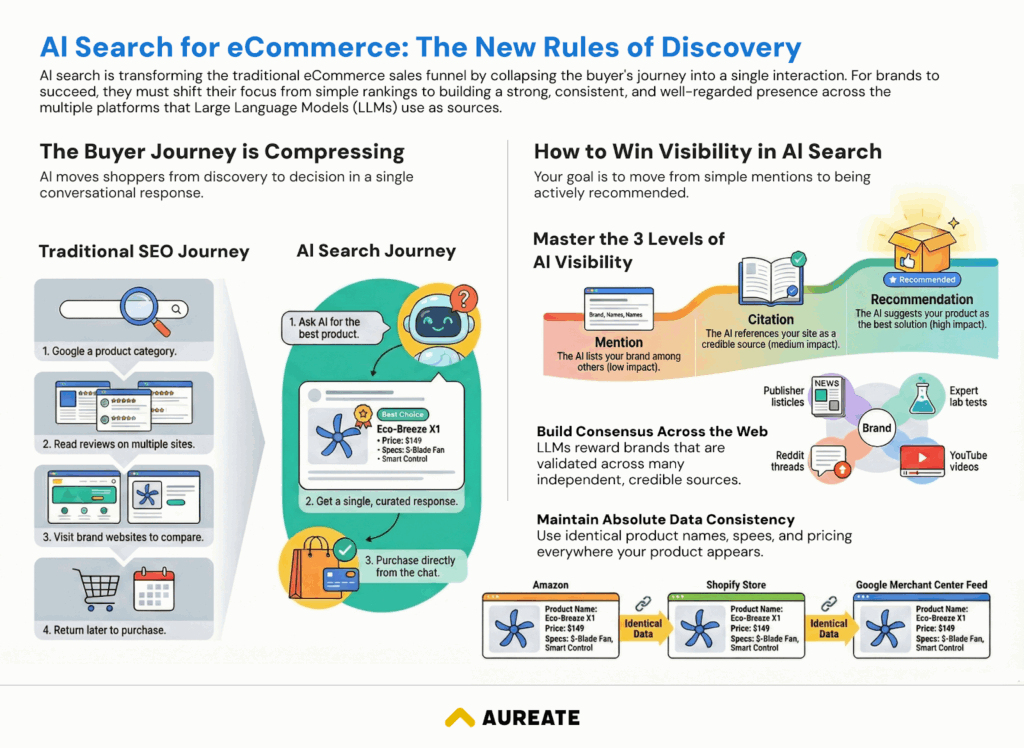
AI SEO Ecommerce Product SEO refers to the application of artificial intelligence and machine learning algorithms to optimize product pages for search engine visibility. This approach goes beyond traditional keyword stuffing and basic on-page optimization. AI systems analyze vast amounts of data, including search queries, user behavior, competitor strategies, and market trends, to generate highly targeted product content that resonates with both search engines and potential customers.
The core principle behind this methodology is automation combined with intelligence. Instead of manually researching keywords and writing unique descriptions for thousands of products, ecommerce teams leverage AI tools that can perform these tasks in minutes. These systems learn from performance data, continuously refining their output to improve rankings and conversion rates over time.
Why Traditional Product SEO Falls Short
Traditional product SEO relied heavily on manual processes. Merchants would research keywords, write product descriptions, and optimize images one by one. This approach worked well for small catalogs but becomes unsustainable for larger operations. A store with 10,000 products would require weeks or months of dedicated effort to properly optimize every page.
Moreover, traditional methods often produced generic, duplicate content. Many ecommerce sites used manufacturer-provided descriptions, resulting in identical content across multiple retailers. Search engines began penalizing this duplicate content, pushing these pages down in rankings. AI SEO Ecommerce Product SEO solves this problem by generating unique, contextually relevant descriptions for each product, even when dealing with thousands of variations.
Core Components of AI-Driven Product SEO
Automated Keyword Research and Mapping
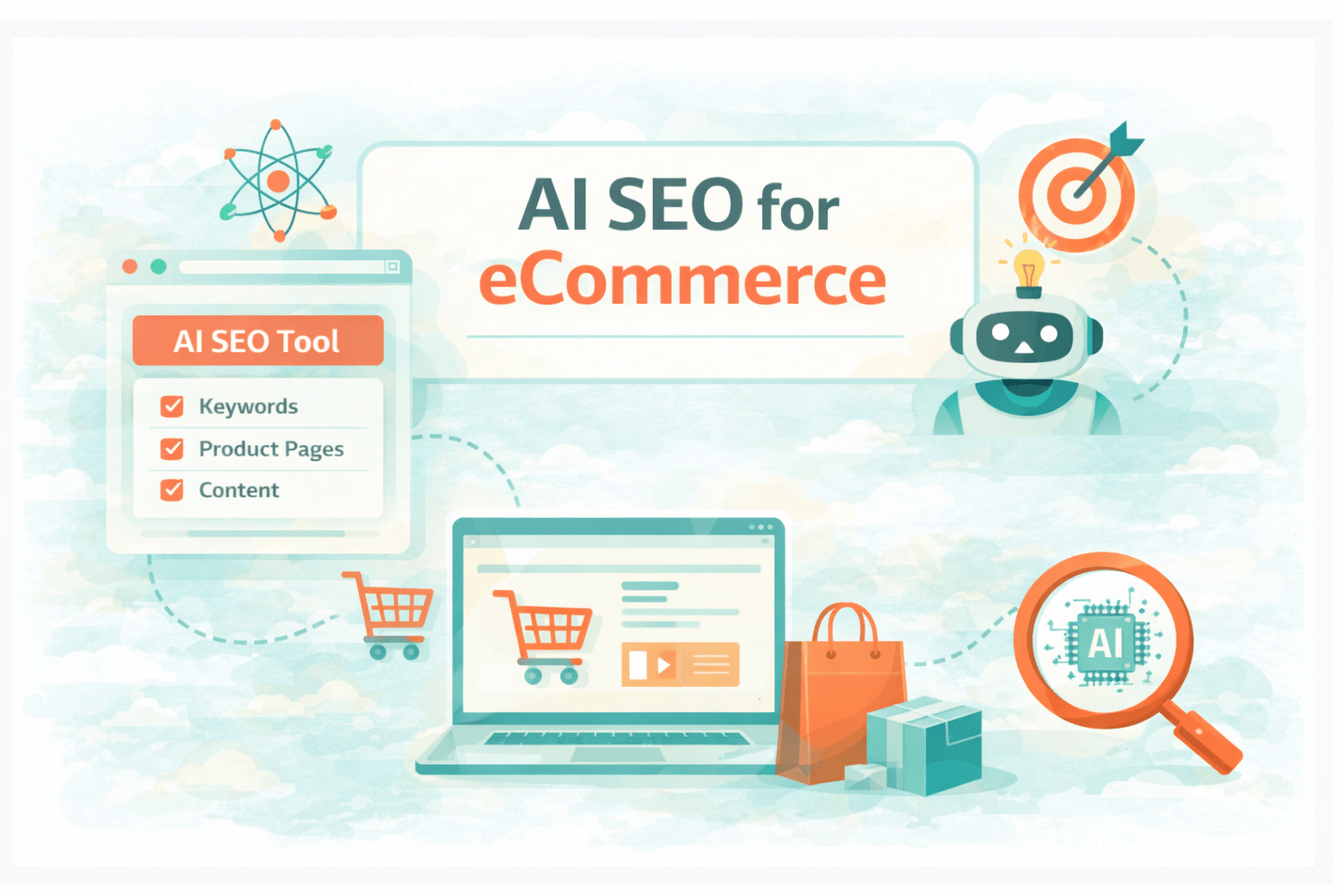
AI tools analyze search engine data to identify high-intent keywords for each product. These systems consider factors like search volume, competition level, and user intent. They also identify long-tail keywords that traditional research might miss. For example, an AI system might discover that customers searching for “waterproof hiking backpack for women” have different needs than those searching for “lightweight daypack.” This granular understanding allows for precise keyword mapping across the product catalog.
Dynamic Content Generation
Modern AI writing tools generate product titles, descriptions, and bullet points that are both SEO-friendly and compelling to human readers. These systems understand context, incorporate relevant keywords naturally, and adapt tone based on the product category. A luxury watch description will differ significantly from a budget smartphone case description, even though both are optimized for search.
Schema Markup Implementation
Structured data helps search engines understand product information better. AI tools automatically generate and implement schema markup for price, availability, reviews, and other key attributes. This enhances the chances of appearing in rich snippets and product carousels, which significantly improves click-through rates.
Image and Video Optimization
Visual content plays a crucial role in ecommerce SEO. AI systems analyze product images to generate descriptive alt text, identify visual elements, and suggest improvements. Some advanced tools can even generate video content or optimize existing videos for better search visibility.
Benefits of Implementing AI SEO Ecommerce Product SEO
The advantages of adopting AI-driven product SEO strategies extend far beyond improved rankings. Ecommerce businesses that embrace this technology report significant improvements across multiple metrics.
- Scalability: AI systems can optimize thousands of product pages simultaneously, making it feasible to maintain a fully optimized catalog regardless of size.
- Time Efficiency: Tasks that previously took hours or days now take minutes, freeing up team members to focus on strategic initiatives.
- Consistency: AI ensures uniform optimization across all product pages, eliminating the inconsistencies that often occur with manual processes.
- Data-Driven Decisions: AI tools provide actionable insights based on real performance data, allowing for continuous improvement.
- Competitive Advantage: Stores using AI SEO can respond faster to market changes and algorithm updates than those relying on manual methods.
- Cost Reduction: While t
- Over-Reliance on Automation: AI should augment human expertise, not replace it entirely. Review AI-generated content for accuracy and brand alignment.
- Ignoring User Intent: Keywords matter, but understanding why users search is equally important. AI tools help with this, but human judgment is still valuable.
- Neglecting Mobile Optimization: AI-generated content must display well on mobile devices. Test your product pages across various screen sizes.
- Forgetting About Internal Linking: AI tools optimize individual pages but may not address site-wide linking structures. Ensure your product pages connect logically to category pages and related items.
- Using Low-Quality AI Tools: Not all AI SEO tools are created equal. Some generate spammy, low-quality content that harms rankings. Invest in reputable platforms with proven track records.
- Ignoring Technical SEO: AI content optimization cannot compensate for slow page speeds, broken links, or poor site architecture. Address technical issues alongside content improvements.
Limitations and Challenges
Despite its many benefits, AI SEO Ecommerce Product SEO is not without challenges. Understanding these limitations helps businesses implement AI tools more effectively.
AI-generated content can sometimes lack the human touch that builds brand connection. While algorithms have improved dramatically, they still struggle with nuanced storytelling and emotional appeal. Successful ecommerce strategies often combine AI-generated content with human editing and refinement.
Another challenge is the initial setup cost. Quality AI tools require subscription fees, and implementing them effectively may require technical expertise. Smaller businesses with limited budgets might find these costs prohibitive, though many affordable options exist in the market.
Data quality also matters. AI systems learn from the data they receive. If the underlying product data is incomplete or inaccurate, the generated content will reflect these issues. Maintaining clean, structured product data is essential for optimal AI performance.
AI SEO vs. Traditional SEO: A Comparison
| Aspect | Traditional SEO | AI SEO Ecommerce Product SEO |
|---|---|---|
| Keyword Research | Manual analysis, limited scope | Automated, comprehensive, real-time |
| Content Creation | Human-written, time-consuming | AI-generated, instant, scalable |
| Optimization Speed | Days or weeks per product | Minutes for entire catalogs |
| Adaptability | Slow response to changes | Immediate adjustments based on data |
| Cost Structure | High labor costs | Subscription-based, lower long-term cost |
| Content Uniqueness | Risk of duplication | Guaranteed unique content |
| Data Insights | Limited analytics | Deep learning and predictive analysis |
Practical Implementation Guide for AI SEO Ecommerce Product SEO
Step 1: Audit Your Current Product Pages
Before implementing AI solutions, assess your current state. Identify which product pages are underperforming, which have duplicate content, and where keyword targeting is weak. This baseline helps you measure the impact of AI implementation later.
Step 2: Choose the Right AI Tools
Several AI-powered SEO tools cater specifically to ecommerce businesses. Popular options include Clearscope for content optimization, Frase for AI-generated content, and Semrush for comprehensive SEO analysis. Consider your budget, technical capabilities, and specific needs when selecting tools. Many platforms offer free trials, allowing you to test their effectiveness before committing.
Step 3: Clean and Structure Your Product Data
AI systems require clean, consistent data to generate optimal content. Ensure your product feeds contain accurate titles, descriptions, specifications, and category assignments. Standardize naming conventions and remove any outdated or incorrect information.
Step 4: Implement AI-Generated Content
Start with a pilot program. Select a subset of products and generate AI-optimized titles and descriptions. Compare their performance against your existing content. Monitor metrics like organic traffic, click-through rates, and conversion rates to validate the approach before scaling.
Step 5: Integrate Schema Markup
Use AI tools to generate and implement structured data across your product pages. This includes product schema, review schema, and breadcrumb schema. Proper implementation increases your chances of earning rich snippets and other enhanced search results.
Step 6: Monitor and Refine
AI SEO is not a set-and-forget strategy. Continuously monitor performance data and adjust your approach. Most AI tools provide analytics dashboards that show which keywords are driving traffic and which pages need improvement. Use this data to refine your content and targeting strategies.
Common Mistakes in AI SEO Ecommerce Product SEO
Many ecommerce businesses make avoidable errors when implementing AI-driven SEO strategies. Recognizing these pitfalls helps you navigate around them.
Important Notes for Successful Implementation

Several factors influence the success of AI SEO Ecommerce Product SEO initiatives. Paying attention to these details maximizes your return on investment.
Search engine algorithms continuously evolve. What works today may not work tomorrow. AI tools help you stay ahead of these changes by adapting quickly, but you must stay informed about industry developments. Follow reputable SEO blogs, attend webinars, and participate in professional communities.
User experience remains paramount. Search engines prioritize pages that provide value to users. Ensure your AI-generated content is informative, accurate, and genuinely helpful. Avoid creating content solely for search engines at the expense of user experience.
Brand voice consistency matters. AI tools can be trained to match your brand’s tone and style. Provide examples of your preferred writing style to the AI system and review outputs regularly to ensure consistency.
Privacy regulations affect data collection and usage. Ensure your AI tools comply with GDPR, CCPA, and other relevant regulations. This is particularly important when using AI to personalize content based on user behavior.
Future Trends in AI SEO Ecommerce Product SEO
The landscape of AI-driven ecommerce SEO continues to evolve rapidly. Several emerging trends will shape the future of this field.
Voice search optimization is becoming increasingly important. As more consumers use voice assistants like Siri and Alexa, AI tools are adapting to optimize content for conversational queries. This involves targeting longer, more natural language phrases and structuring content to provide direct answers.
Visual search technology is also advancing. AI systems can now analyze images to identify products and match them with relevant search queries. Ecommerce sites that optimize their images for visual search gain an advantage as this technology becomes more widespread.
Predictive analytics will play a larger role in product SEO. AI systems will anticipate trends before they peak, allowing ecommerce businesses to optimize their product pages for upcoming search demand. This proactive approach provides a significant competitive advantage.
Personalization will become more sophisticated. A This level of personalization improves user experience and increases conversion rates.
Frequently Asked Questions
What is AI SEO Ecommerce Product SEO?
AI SEO Ecommerce Product SEO is the application of artificial intelligence technologies to optimize product pages for search engine visibility. It involves using machine learning algorithms to research keywords, generate content, implement structured data, and analyze performance data across ecommerce product catalogs.
How does AI improve product page rankings?
AI improves product page rankings by generating unique, relevant content at scale, identifying high-intent keywords, implementing proper schema markup, and continuously optimizing based on performance data. These factors help search engines understand and rank product pages more effectively.
Is AI-generated product content considered duplicate content?
No, quality AI tools generate unique content for each product. Unlike manufacturer descriptions that are copied across multiple sites, AI-generated content is tailored to each specific product and incorporates unique keyword targeting and contextual information.
What are the best AI tools for ecommerce SEO?
Several tools excel in this space. Clearscope and Surfer SEO help optimize content for target keywords. Frase and Jasper generate AI-written product descriptions. Semrush and Ahrefs provide comprehensive SEO analysis. The best choice depends on your specific needs, budget, and technical requirements.
How much does AI SEO cost for ecommerce businesses?
Costs vary widely depending on the tools and features you need. Basic AI writing tools start around $30 per month, while comprehensive SEO platforms can cost several hundred dollars monthly. Many businesses find that the labor savings and improved performance justify the investment.
Can small ecommerce businesses benefit from AI SEO?
Absolutely. Many AI SEO tools offer tiered pricing that accommodates smaller businesses. Even a small store with 50 products can benefit from AI-generated content and automated keyword research. The key is selecting tools that fit your budget and scale.
Will AI replace human SEO professionals?
A Professionals who embrace AI tools become more efficient and effective. Human expertise remains essential for strategy development, creative direction, and nuanced decision-making that AI cannot replicate.
Conclusion
AI SEO Ecommerce Product SEO represents the present and future of online retail visibility. The ability to generate optimized content at scale, respond quickly to market changes, and make data-driven decisions gives ecommerce businesses a substantial advantage in competitive search landscapes. While challenges exist, particularly around content quality and initial implementation costs, the benefits far outweigh the drawbacks for most businesses.
Successful implementation requires a strategic approach. Start by auditing your current product SEO, selecting appropriate AI tools, cleaning your product data, and running pilot programs before scaling. Monitor performance continuously and refine your strategies based on real data. Combine AI efficiency with human creativity and judgment to create product pages that satisfy both search engines and customers.
The ecommerce landscape will continue to evolve, and A Businesses that embrace these technologies now position themselves for long-term success. Those who delay risk losing ground to competitors who have already integrated AI into their SEO strategies. The time to act is now, and the tools are more accessible than ever before.
Xem thêm:
- AI SEO LowFruits: The Complete Guide to Automated Low-Hanging Keyword Wins
- AI SEO Compression: The Complete Guide to Slimming Down Your Content for Higher Rankings
- AI SEO SERP Monitoring: The Complete Guide to Automated Rank Tracking in 2025
- AI SEO Automated Keyword Research: The Complete Guide to Scaling Content Strategy
- Mastering AI SEO DeepSeek Prompts: The Complete Guide to Higher Rankings in 2025
Bài viết cùng chủ đề:

AI SEO SEO Automation with Make: The Complete Workflow Guide

AI SEO SEO Automation with Zapier: The Complete Workflow Guide

AI SEO SEO Automation with n8n: The Complete Workflow Guide
AI SEO SEO Automation with Gemini: The Complete Guide to Scaling Organic Growth

AI SEO SEO Automation with Claude: The Complete Guide to Scaling Content in 2025

AI SEO SEO Automation with ChatGPT: The Complete Playbook for 2025

AI SEO & SEO Automation for Affiliate Sites: The 2025 Playbook for Passive Income Growth
AI SEO & SEO Automation for Bloggers: The Complete Guide to Scaling Your Content

AI SEO & SEO Automation for Agencies: The Complete 2025 Playbook

AI SEO and SEO Automation for Ecommerce: The Complete Playbook for 2025

AI SEO & SEO Automation for WordPress: The Complete Playbook for 2025
AI SEO SEO Automation Strategy: The Complete Playbook for 2025

Mastering the AI SEO SEO Automation Process: A Complete Guide to Scaling Organic Growth
AI SEO SEO Automation System: The Complete Guide to Scaling Organic Growth in 2025
AI SEO SEO Automation Platform: The Complete Guide to Scaling Organic Growth in 2025
AI SEO SEO Automation Software: The Complete Guide to Scaling Organic Growth in 2025















