
No products in the cart.
AI SEO AI Search Citations: The Complete Guide to Winning AI Search Visibility
10
Aug
Aug
The digital landscape is shifting beneath our feet. Traditional search engine optimization focused on ranking in Google’s blue links, but the rise of generative AI has introduced a new battleground: AI search citations. When users ask ChatGPT, Perplexity, or Google’s AI Overviews a question, these systems now cite sources. Understanding how AI SEO and AI search citations work is no longer optional—it is the defining factor for organic visibility in 2025 and beyond. This guide breaks down the mechanics of getting your content cited by AI engines, the strategies that work, and the pitfalls to avoid.
What Are AI Search Citations?
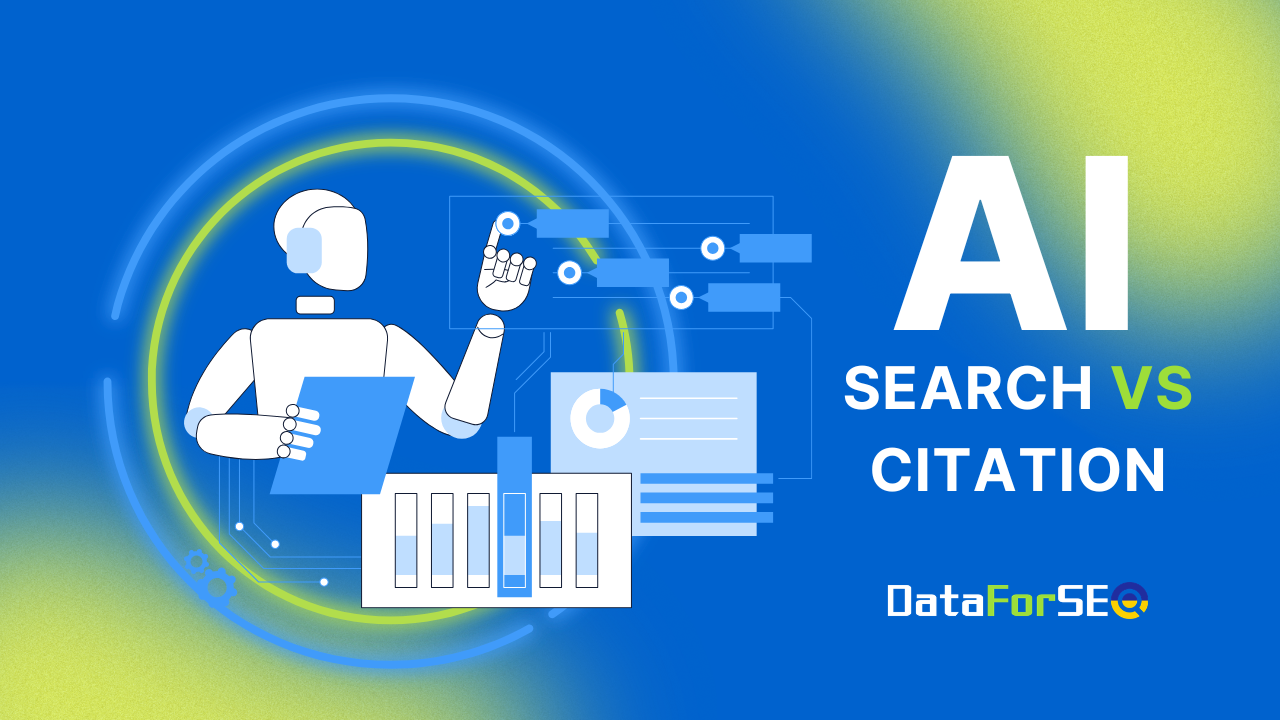
AI search citations are the references, links, and attributions that generative AI models display alongside their answers. Unlike a traditional search result page that lists ten blue links, an AI search engine synthesizes information from multiple sources and then provides citations to back up its claims. These citations often appear as numbered footnotes, inline links, or a “Sources” section below the AI-generated response.
For example, if you ask an AI assistant about the best running shoes for flat feet, the A Those cited URLs receive the traffic and the authority boost. The goal of AI SEO is to ensure your content is one of those cited sources.
The Difference Between Traditional SEO and AI SEO
Traditional SEO focuses on crawling, indexing, and ranking. You optimize for keywords, build backlinks, and improve page speed to climb the SERPs. AI SEO is fundamentally different. AI models do not “rank” pages in the same way. Instead, they retrieve information based on semantic relevance, entity recognition, and source trustworthiness. The AI reads your content, extracts key facts, and decides whether to include it in a generated answer.
This shift means that keyword density matters less than clarity and structure. An AI model needs to easily parse your content to understand what it says. If your article is buried under pop-ups, lacks clear headings, or uses ambiguous language, the A
How AI Engines Choose Their Citations
To master AI SEO, you must understand the selection process. While the exact algorithms are proprietary, research and testing reveal several consistent factors that influence whether an AI cites your content.
1. Source Authority and Domain Reputation
AI models are trained on vast datasets, but they are also programmed to prioritize trustworthy domains. Established news outlets, government sites (.gov), educational institutions (.edu), and industry-leading blogs are cited more frequently. If your domain is new or has a poor backlink profile, the AI may still cite you, but you will need to work harder to prove your expertise.
2. Content Structure and Semantic Clarity
AI models use natural language processing (NLP) to break down your content. Clear headings (H2, H3), short paragraphs, bullet points, and tables help the AI extract information quickly. Content that uses direct answers to common questions—often in a “question and answer” format—is highly favored because it matches the user’s query intent perfectly.
3. Freshness and Recency
AI search engines prioritize up-to-date information, especially for news, technology, and health topics. A study of Perplexity citations showed that articles published within the last six months are significantly more likely to be cited than older evergreen content. Regularly updating your posts with new data and statistics signals freshness to the AI crawler.
4. Entity Recognition and Factual Accuracy
AI models are designed to avoid hallucinations. They cross-reference facts across multiple sources. If your content contains unique, verifiable data points—like specific statistics, named experts, or proprietary research—the AI is more likely to use it as a citation. Generic content that says the same thing as everyone else offers no added value to the AI’s synthesis.
The Role of Structured Data in AI Search Citations
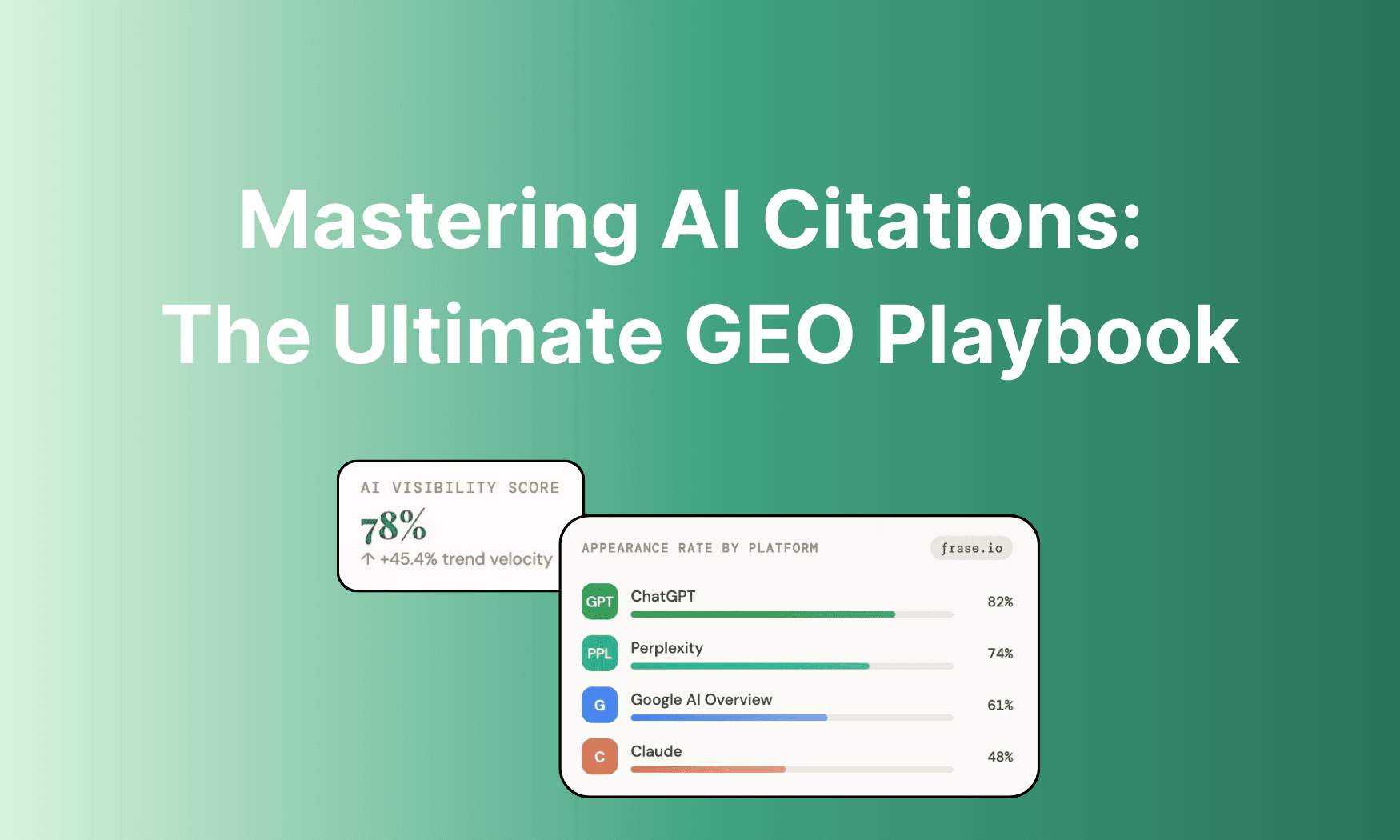
Structured data, or schema markup, is a critical component of AI SEO. Schema helps AI engines understand the context of your content. While traditional SEO uses schema for rich snippets, AI search uses it to categorize entities and relationships.
Implementing the following schema types can increase your chances of being cited:
- Article Schema: Defines the headline, author, and publication date.
- FAQ Schema: Marks up question-and-answer pairs, making it easier for AI to extract direct answers.
- HowTo Schema: Breaks down step-by-step instructions, which AI loves for procedural queries.
- Person/Organization Schema: Establishes your entity as a real, credible author or brand.
- Dataset Schema: If you publish original research, this schema tells AI that your data is structured and reliable.
- Audit Your Current Citations: Use tools like Perplexity or ChatGPT to ask questions related to your niche. See which of your competitors get cited. Analyze their content structure and length.
- Rewrite Your Introductions: Ensure the first 50-100 words contain a direct answer to the primary query. Remove fluff and introductory pleasantries.
- Add an FAQ Section: Create a dedicated FAQ block at the bottom of your articles. Use natural language questions that people actually type into search bars. Mark these up with FAQ schema.
- Update Statistics and Dates: Replace old data with fresh numbers. Add a “Last Updated” date at the top of the article. AI engines favor recent data.
- Improve Readability: Break up long paragraphs. Use bullet points for lists. Ensure your H2 and H3 headings are descriptive and contain keywords naturally.
- Include Expert Quotes: Reach out to industry professionals for a quote. Even a single quote from a recognized name adds a layer of authority that AI models detect.
- High-Quality Referral Traffic: Users who click a citation are highly engaged and likely to convert.
- Brand Authority: Being cited by an AI positions you as a thought leader in your niche.
- Long-Tail Visibility: AI search excels at answering niche, conversational queries that traditional SEO ignores.
- Future-Proofing: As AI search grows, early adoption gives you a competitive edge.
- Zero-Click Problem: Many users never click the citations; they just read the AI answer.
- Lack of Control: You cannot control how the AI paraphrases your content or which part it quotes.
- Attribution Errors: Sometimes AI cites the wrong source or misattributes a quote.
- Constant Algorithm Changes: AI models update frequently, and what works today may not work next month.
Without schema, the AI must guess what your content is about. With schema, you are explicitly telling the machine: “This is a fact, from this author, published on this date.” This reduces the cognitive load on the AI and increases citation probability.
Content Strategies to Win AI Search Citations
Creating content that gets cited by AI requires a shift from “writing for humans” to “writing for both humans and machines.” Here are the proven strategies that are working right now.
1. Write Direct, Definitive Answers
AI search queries are often phrased as questions. “What is the best way to remove a stain?” or “How does a heat pump work?” Your content should answer these questions directly in the first paragraph. Do not bury the answer in a 500-word introduction. Use a clear, concise sentence that provides the answer immediately, then expand with supporting details.
2. Create “Citation-Worthy” Data Points
Generic advice is easily ignored. Original statistics, case studies, and expert quotes are not. If you conduct a survey, analyze a dataset, or interview a recognized authority, the A This is the highest value target for AI SEO. Even simple additions, like a table comparing different product features, can be extracted and cited by the AI.
3. Optimize for the “Zero-Click” Answer
AI search often provides a summary answer without requiring a click. To be the source of that summary, your content must contain a clear, standalone definition or explanation. Use the “inverted pyramid” style: put the most critical information at the top, followed by supporting context. This ensures that even if the AI only reads the first 100 words, it gets the full answer.
4. Build a Strong Internal Linking Network
AI crawlers follow links to understand your site’s architecture. A well-structured internal linking strategy helps the AI understand which pages are most important. Link from your high-authority pages to your newer content. Use descriptive anchor text that includes the target keyword. This creates a web of context that AI can navigate easily.
Practical Guide: How to Optimize Your Existing Content for AI Citations
You do not need to start from scratch.
Common Mistakes That Kill Your AI Search Citations
Many website owners are unknowingly sabotaging their chances of being cited. Here are the most frequent errors and how to fix them.
1. Keyword Stuffing and Over-Optimization
AI models are trained to detect spammy content. If you repeat the target keyword unnaturally, the A Write naturally. Use synonyms and related terms instead of repeating the exact phrase.
2. Ignoring User Intent
If your content is about “best coffee makers” but the user query is “how to clean a coffee maker,” the A You must match the intent of the query. Create separate content for informational, transactional, and navigational queries.
3. Blocking AI Crawlers
Some websites have robots.txt files that block GPTBot, ClaudeBot, or PerplexityBot. While this protects your content from being scraped, it also prevents you from being cited. If you want AI search citations, you must allow these crawlers access. Check your robots.txt file and ensure you are not blocking major AI user agents.
4. Relying Solely on User-Generated Content
Forums and review sections are difficult for AI to parse. The conversational tone and lack of structure make it hard to extract facts. If your site relies on UGC, consider creating a “Summary” or “Key Takeaways” section that is written in a structured, authoritative tone.
Comparison: AI Search Engines vs. Traditional Search Engines
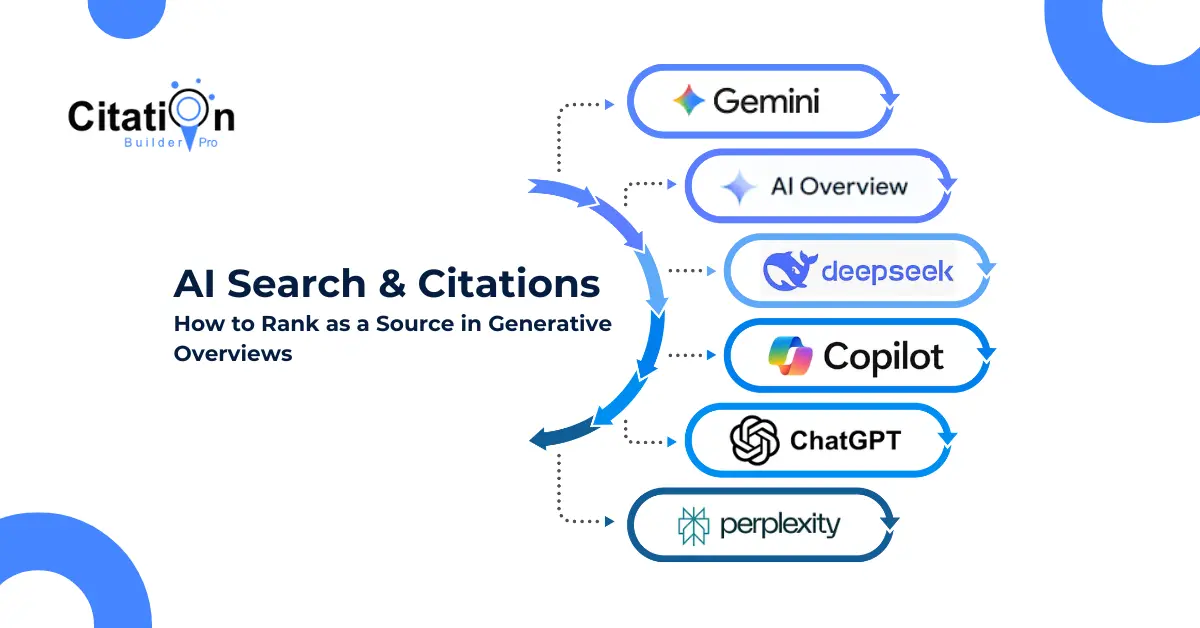
Understanding the differences helps you allocate your resources effectively.
| Feature | Traditional SEO (Google) | AI SEO (ChatGPT, Perplexity) |
|---|---|---|
| Primary Goal | Rank #1 for a keyword | Be cited as a source in an answer |
| Content Length | Often prefers long-form (1500+ words) | Prefers concise, direct answers |
| Backlinks | Critical for domain authority | Important, but content clarity matters more |
| User Engagement | Click-through rate, dwell time | Factual accuracy, source trust |
| Structured Data | Used for rich snippets | Used for entity recognition and context |
| Update Frequency | Regular updates help | Recency is a major ranking factor |
This table illustrates that while the two overlap, the emphasis is different. You cannot simply copy your traditional SEO strategy and expect AI citations. You must adapt.
Benefits and Limitations of AI Search Citations
Winning an AI search citation is a major victory, but it is not without its challenges.
Benefits
Limitations
Important Notes for Long-Term Success
AI SEO is not a one-time fix. It requires ongoing maintenance and a shift in mindset. Focus on building a brand that is recognized as an authority. Publish original research. Engage with the AI community by testing your content in different tools. Monitor your analytics to see which pages are generating AI referral traffic.
Also, remember that AI search citations are not a replacement for traditional SEO. They are an addition. A strong presence in both Google and AI engines provides the most robust digital footprint. Diversify your traffic sources to protect against algorithm updates on any single platform.
Frequently Asked Questions
How do I check if my content is cited by AI?
You can manually test by asking ChatGPT, Perplexity, or Google’s AI Overviews questions related to your niche. Look for your domain name in the citations. Alternatively, use analytics tools to track referral traffic from AI platforms. Some SEO tools now offer specific “AI Citation” tracking features that monitor your visibility across multiple AI engines.
Does page speed affect AI search citations?
Yes, indirectly. AI crawlers are efficient, but they still have crawl budgets. If your page loads slowly, the crawler may abandon it before reading the full content. A fast-loading page ensures that the AI can access and parse your content quickly. Optimize images, use caching, and ensure your server response time is under 200ms.
Can I pay for AI search citations?
No. AI search citations are organic. You cannot pay to be included in a ChatGPT response or a Perplexity answer. However, you can pay for sponsored placements in some AI platforms, but these are clearly marked as ads and do not carry the same trust as organic citations. Focus on earning citations through high-quality content.
Are AI search citations the same as backlinks?
No. A backlink is a link from another website to yours. An AI citation is a reference within a generated text response. While a citation may include a clickable link, it is not a traditional backlink. However, citations can lead to backlinks if other websites see your content cited by AI and decide to link to you directly.
What is the best content format for AI citations?
Listicles, how-to guides, and FAQ pages perform best. These formats are highly structured and easy for AI to parse. Data-driven articles with original statistics also perform exceptionally well. Avoid long, rambling essays without clear headings or bullet points.
Conclusion
AI SEO and AI search citations represent the next evolution of organic search. The strategies that worked for the past decade are losing their effectiveness as users shift to conversational AI interfaces. To remain visible, you must optimize for the machine’s reading process. This means writing clear, direct answers, publishing original data, implementing structured data, and maintaining a technically sound website.
The transition is not easy, but the rewards are substantial. Early adopters who master AI search citations will dominate their niches as AI search usage grows. Start by auditing your current content, implementing the strategies outlined in this guide, and continuously testing your visibility in AI tools. The future of search is conversational, and your content needs to be ready to speak that language.
Xem thêm:
- AI SEO Content Hierarchy: The Complete Blueprint for 2025 Rankings
- AI SEO Experiments: Future-Proof Your Search Strategy with Data-Driven Insights
- AI SEO URL Generator: The Complete Guide to Automated Link Optimization
- AI SEO Answer Generator: The Complete Guide to Automated Content Intelligence
- AI SEO GEO Tools: The Complete Guide to Generative Engine Optimization in 2025
Bài viết cùng chủ đề:

AI SEO SEO Automation with Make: The Complete Workflow Guide

AI SEO SEO Automation with Zapier: The Complete Workflow Guide

AI SEO SEO Automation with n8n: The Complete Workflow Guide
AI SEO SEO Automation with Gemini: The Complete Guide to Scaling Organic Growth

AI SEO SEO Automation with Claude: The Complete Guide to Scaling Content in 2025

AI SEO SEO Automation with ChatGPT: The Complete Playbook for 2025

AI SEO & SEO Automation for Affiliate Sites: The 2025 Playbook for Passive Income Growth
AI SEO & SEO Automation for Bloggers: The Complete Guide to Scaling Your Content

AI SEO & SEO Automation for Agencies: The Complete 2025 Playbook

AI SEO and SEO Automation for Ecommerce: The Complete Playbook for 2025

AI SEO & SEO Automation for WordPress: The Complete Playbook for 2025
AI SEO SEO Automation Strategy: The Complete Playbook for 2025

Mastering the AI SEO SEO Automation Process: A Complete Guide to Scaling Organic Growth
AI SEO SEO Automation System: The Complete Guide to Scaling Organic Growth in 2025
AI SEO SEO Automation Platform: The Complete Guide to Scaling Organic Growth in 2025
AI SEO SEO Automation Software: The Complete Guide to Scaling Organic Growth in 2025















