
No products in the cart.
AI SEO AI Search Mentions: The Complete Guide to Winning Brand Visibility in Generative Search
10
Aug
Aug
The digital marketing landscape has shifted dramatically with the rise of generative engine optimization. Brands are no longer competing solely for clicks on a blue link; they are competing for a mention within an AI-generated answer. Understanding AI SEO AI Search Mentions is now a critical component of any modern visibility strategy. This guide breaks down what these mentions are, why they matter, and exactly how to secure them for your brand.
What Are AI Search Mentions?
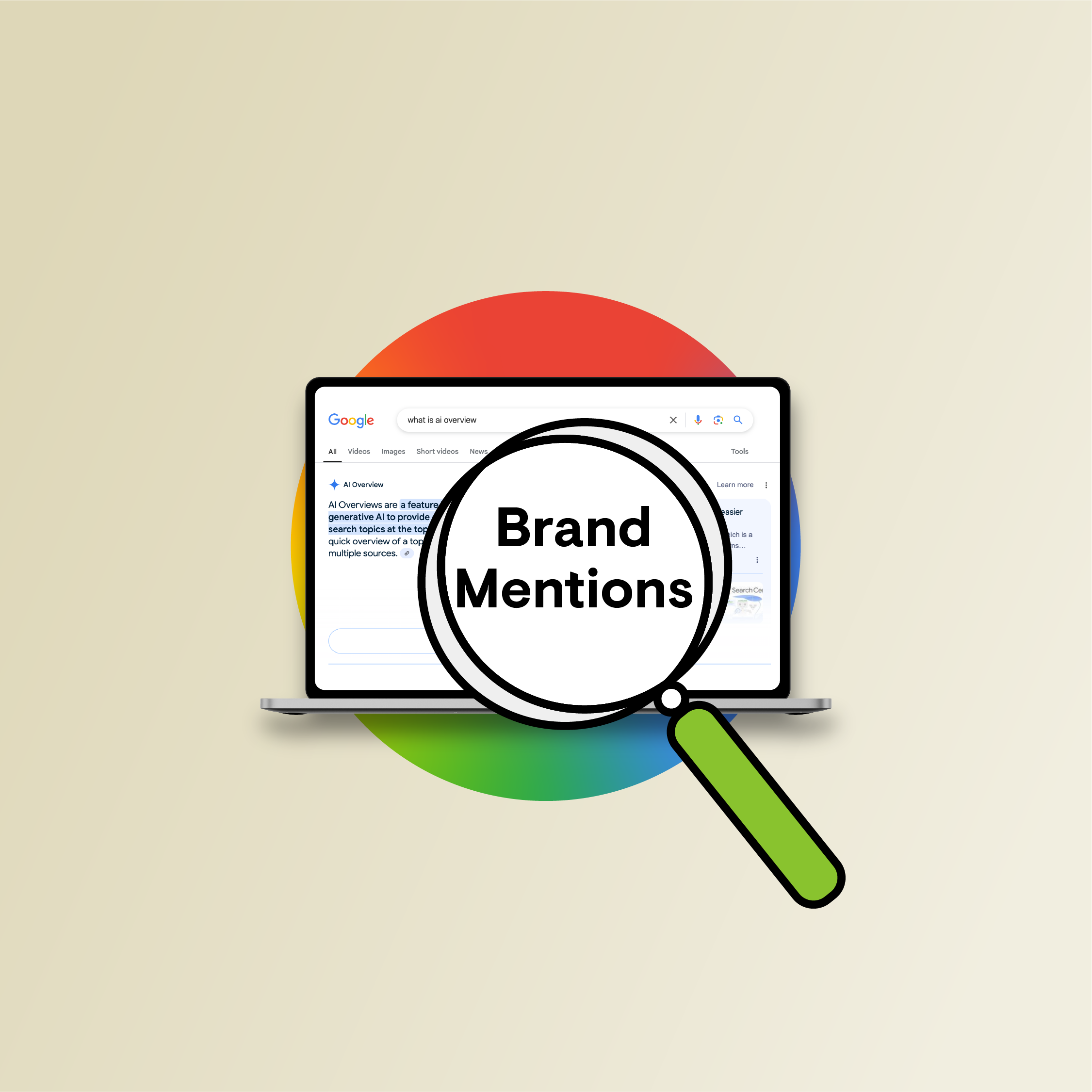
An AI search mention occurs when a large language model (LLM) or generative engine references your brand, product, or service within its synthesized response to a user query. Unlike traditional search results that display a list of URLs, AI search engines like Google AI Overviews, Perplexity, and Bing Chat provide a conversational summary. If your brand is named in that summary, you have earned an AI search mention.
These mentions are distinct from standard citations. A citation might link to a source URL, but a mention specifically involves the AI naming your entity as a recommended solution, a relevant authority, or a key data point. For example, if a user asks “What is the best project management software for remote teams?” and the AI responds, “Tools like Asana and Monday.com are popular choices,” both brands have received a valuable AI search mention.
The Difference Between Traditional SEO and AI Search Mentions
Traditional SEO focuses on ranking pages in a list of blue links. The goal is to get a user to click through to your website. AI search mentions operate differently. The goal is to get your brand name included in the AI’s narrative. This often means the user does not click through to your site at all, yet the brand impression and trust signal are incredibly high.
This shift requires a change in optimization tactics. You are no longer optimizing solely for keywords in a title tag; you are optimizing for entity recognition, semantic relevance, and source trustworthiness. The AI acts as a filter, and your goal is to become a primary source that these models rely on.
Why AI Search Mentions Matter for Your Brand
The importance of securing AI search mentions cannot be overstated. As users increasingly turn to AI for answers, the visibility you gain from these mentions becomes a primary driver of brand awareness and credibility.
Capturing Zero-Click Search Traffic
AI search engines are designed to provide immediate answers. This often results in zero-click searches, where the user finds the answer directly in the AI response and never visits a website. If your brand is not mentioned in that answer, you are completely invisible to that user. Securing a mention ensures you are part of the conversation even when the user does not click through.
Building Authority and Trust
When an AI model cites your brand as a source or recommends your product, it acts as a third-party endorsement. Users perceive AI as an objective aggregator of information. Being named by an AI engine signals to the user that your brand is a leader in your industry. This trust transfer is invaluable and difficult to replicate through traditional advertising.
Future-Proofing Your Digital Strategy
Search behavior is evolving rapidly. Voice search, conversational queries, and AI assistants are becoming the norm. By focusing on AI search mentions now, you are positioning your brand to succeed in the next era of search. This is not a temporary trend but a fundamental shift in how information is consumed.
How AI Engines Choose Brands to Mention
To win AI search mentions, you must understand the mechanics behind the selection process. AI models do not randomly pick brands. They rely on a complex algorithm that weighs several key factors.
Source Authority and Trustworthiness
AI models are trained on vast datasets, but they prioritize information from high-authority sources. This includes established news outlets, government websites, academic institutions, and industry-leading publications. If your brand is consistently featured in these types of sources, the AI is more likely to consider you a credible entity worth mentioning.
Entity Clarity and Consistency
AI needs to understand exactly who you are. This is where entity SEO comes into play. Your brand must have a clear, consistent presence across the web. This means your name, logo, address, and key descriptions should be uniform across your website, social media profiles, and business directories. A confused AI is unlikely to recommend a brand it cannot clearly identify.
Semantic Relevance and Context
The AI analyzes the context of the user’s query and matches it against the content it has indexed. Your content must not only contain relevant keywords but also demonstrate a deep understanding of the topic. The AI looks for content that answers the “why” and “how” behind a query, not just the “what.” Comprehensive, well-structured content that covers a topic from multiple angles is more likely to be used as a source.
Strategies to Win AI Search Mentions
Securing AI search mentions requires a proactive approach. You cannot simply rely on old SEO tactics. You need to implement a strategy specifically designed for generative engines.
1. Optimize for Entity SEO
Your first step is to make your brand an unmissable entity for AI. This involves creating a robust digital footprint that leaves no doubt about who you are and what you do.
- Create a dedicated “About” page: Clearly state your company’s mission, history, and key people. Use structured data markup like Organization and Person schema to help AI understand your corporate structure.
- Maintain consistent NAP (Name, Address, Phone): Ensure your business information is identical across all platforms. Inconsistencies confuse AI crawlers.
- Build a strong Wikipedia presence: While difficult to achieve, a Wikipedia page is a strong authority signal. If you do not qualify, focus on being mentioned in industry-specific wikis and glossaries.
2. Create Content That Answers Questions Directly
AI models love content that is direct, factual, and structured for easy extraction. You need to create content that answers specific questions clearly and concisely.
Focus on creating “answer-first” content. Start your paragraphs with the direct answer, then provide supporting details. Use bullet points and tables to present data in a scannable format. This makes it easier for AI to parse your content and extract the key information it needs to formulate a response.
3. Target Long-Tail and Conversational Keywords
AI search queries are often longer and more conversational than traditional text searches. Users ask full questions like “What is the best way to improve customer retention?” instead of typing “customer retention tips.” Your content strategy must include these long-tail, question-based keywords. Create dedicated FAQ sections and blog posts that address these specific queries.
4. Build High-Quality Digital PR and Backlinks
Backlinks remain a crucial ranking factor, but for AI search mentions, the quality of the linking site matters more than ever. A mention in a major publication like Forbes or TechCrunch carries immense weight with AI models. Focus on digital PR campaigns that earn you placements in authoritative, high-trust domains. These links serve as “votes of confidence” that signal your brand’s relevance and authority to AI systems.
5. Leverage Structured Data
Schema markup is a direct line of communication to search engines and AI models. It helps them understand the context of your content. Implement structured data for your products, reviews, articles, and FAQs. This provides AI with explicit signals about your brand’s offerings and reputation, increasing the likelihood of a mention.
Measuring the Impact of AI Search Mentions
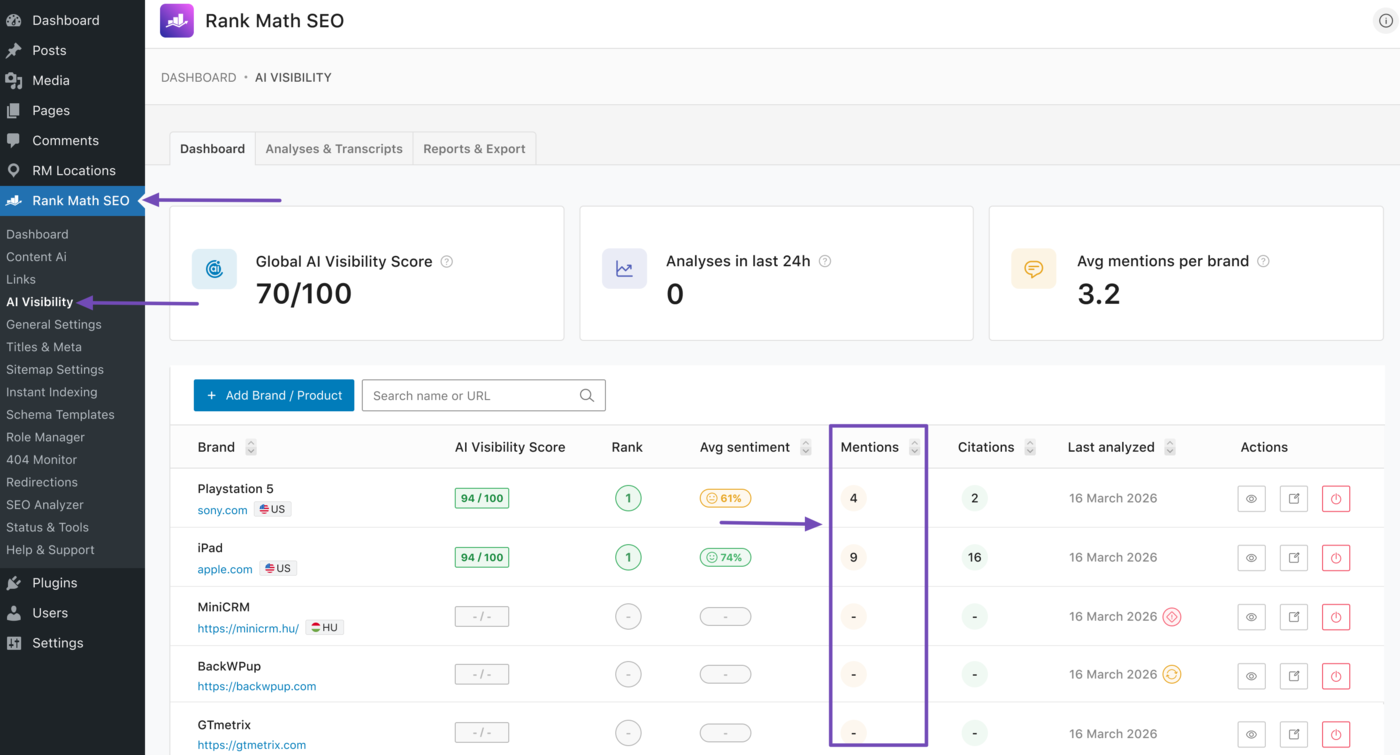
Tracking AI search mentions is more complex than traditional rank tracking. Since AI responses are dynamic and personalized, you need specialized tools and methods to monitor your visibility.
Using AI Search Tracking Tools
Several platforms have emerged that specifically track brand mentions in AI search results. These tools allow you to input a set of target keywords and monitor which AI engines mention your brand. They provide insights into your share of voice in the AI landscape.
Monitoring Brand Mentions Manually
You can also perform manual checks. Use incognito browsing to search for your primary keywords on Perplexity, Google AI Overviews, and Bing Chat. Document whether your brand appears and in what context. Regular manual audits can provide a baseline understanding of your current visibility.
Analyzing Referral Traffic
While AI search often results in zero-click interactions, some users do click through to the source. Analyze your referral traffic in Google Analytics to identify traffic coming from AI platforms. This can give you a sense of which mentions are driving actual engagement.
Common Mistakes to Avoid in AI SEO
Many brands are making critical errors in their approach to AI search. Avoiding these mistakes is just as important as implementing the right strategies.
Ignoring the “Zero-Click” Reality
Many marketers still measure success solely by clicks. In the AI search era, this is a flawed metric. A mention that does not generate a click still builds brand awareness and authority. Focusing only on click-through rates will cause you to undervalue the power of AI search mentions.
Keyword Stuffing in AI Content
AI models are sophisticated enough to detect unnatural keyword usage. Stuffing your content with keywords in an attempt to game the system will likely result in your content being ignored. Focus on natural language and semantic relevance instead.
Neglecting Content Freshness
AI models rely on up-to-date information. If your content is outdated, the AI may choose a more recent source. Regularly update your cornerstone content and ensure your statistics and data points are current. This signals to AI that your brand is active and relevant.
Failing to Optimize for Entities
If your brand is not clearly defined as an entity, A Overlooking entity SEO is a major mistake. Ensure your brand is properly defined across the web with consistent information and structured data.
Important Notes on AI Search Mentions
There are several nuances to keep in mind as you navigate this new landscape. Understanding these will help you set realistic expectations and refine your strategy.
AI Search is Not a Replacement for Traditional SEO
AI search mentions are an addition to your digital strategy, not a replacement for traditional SEO. Many users still prefer to browse through a list of search results. A strong presence in both traditional search and AI search is the ideal scenario. The two strategies often complement each other, as the content that ranks well in traditional search is often the same content that AI models use for their responses.
The Volatility of AI Responses
AI responses are not static. They change based on updates to the model, new data, and even the specific phrasing of the user’s query. A mention you secure today may not be there tomorrow. This volatility requires continuous monitoring and adaptation. You cannot “set it and forget it” when it comes to AI search optimization.
The Importance of User Experience
While AI is the gatekeeper, the end user is still the ultimate target. The content that AI chooses to cite is often content that provides a superior user experience. This means fast-loading pages, clear navigation, and genuinely helpful information. Prioritizing user experience is a foundational element of earning AI search mentions.
Frequently Asked Questions (FAQ)
What is the difference between a citation and an AI search mention?
A citation is a link to a source URL that the AI provides as a reference. An AI search mention is when the AI actually names your brand within the text of its answer. A mention is more powerful because it integrates your brand into the narrative of the response, while a citation is often just a footnote.
How long does it take to see results from AI SEO efforts?
T It depends on the authority of your domain, the quality of your content, and the competitiveness of your industry. Some brands see mentions within weeks of publishing high-quality, entity-optimized content. For others, it can take several months of consistent effort to build the necessary authority.
Can small businesses win AI search mentions?
Yes, small businesses can absolutely win AI search mentions. While it is harder to compete with large brands for broad queries, small businesses can dominate niche, long-tail queries. By creating highly specific, authoritative content for a local or specialized audience, a small business can become the go-to entity for that particular topic.
Is it necessary to use paid tools to track AI search mentions?
Paid tools offer comprehensive tracking and are useful for large-scale monitoring. However, small businesses can start with manual monitoring using incognito searches. This provides a basic understanding of your visibility without any financial investment. As your strategy grows, you can invest in more advanced tools.
Does Google Ads impact AI search mentions?
No, paid advertising does not directly influence organic AI search mentions. AI models are designed to provide organic, unbiased answers. While ads may appear alongside AI search results, they do not influence which brands the AI chooses to mention in its organic response.
Conclusion
The era of AI search is here, and AI SEO AI Search Mentions are the new currency of digital visibility. Brands that adapt to this shift by focusing on entity clarity, authoritative content, and direct answers will thrive. Those that ignore it risk becoming invisible to a growing segment of users who rely on AI for their information needs. The strategies outlined in this guide provide a clear roadmap for securing these valuable mentions. Start by auditing your brand’s entity presence, then create content designed for AI consumption. The future of search is conversational, and your brand needs to be part of that conversation.
Xem thêm:
- AI Blogging Tools: The Complete Guide to Automating Content Creation Without Losing Your Voice
- AI SEO Automated Internal Linking: The Complete Guide to Smarter Site Architecture
- AI SEO Content Editing: The Complete Guide to Smarter, Faster Optimization
- AI SEO Generative Search Content: The Complete Playbook for Ranking in the Age of SGE
- AI SEO Content Originality: The Complete Guide to Standing Out in 2025
Bài viết cùng chủ đề:

AI SEO SEO Automation with Make: The Complete Workflow Guide

AI SEO SEO Automation with Zapier: The Complete Workflow Guide

AI SEO SEO Automation with n8n: The Complete Workflow Guide
AI SEO SEO Automation with Gemini: The Complete Guide to Scaling Organic Growth

AI SEO SEO Automation with Claude: The Complete Guide to Scaling Content in 2025

AI SEO SEO Automation with ChatGPT: The Complete Playbook for 2025

AI SEO & SEO Automation for Affiliate Sites: The 2025 Playbook for Passive Income Growth
AI SEO & SEO Automation for Bloggers: The Complete Guide to Scaling Your Content

AI SEO & SEO Automation for Agencies: The Complete 2025 Playbook

AI SEO and SEO Automation for Ecommerce: The Complete Playbook for 2025

AI SEO & SEO Automation for WordPress: The Complete Playbook for 2025
AI SEO SEO Automation Strategy: The Complete Playbook for 2025

Mastering the AI SEO SEO Automation Process: A Complete Guide to Scaling Organic Growth
AI SEO SEO Automation System: The Complete Guide to Scaling Organic Growth in 2025
AI SEO SEO Automation Platform: The Complete Guide to Scaling Organic Growth in 2025
AI SEO SEO Automation Software: The Complete Guide to Scaling Organic Growth in 2025















