
No products in the cart.
AI SEO Content Editing: The Complete Guide to Smarter, Faster Optimization
10
Aug
Aug
AI SEO content editing has transformed how digital marketers refine their work. Instead of manually checking every sentence for keyword density or readability, editors now use intelligent tools that analyze, suggest, and even rewrite content in real time. This guide explains what AI SEO content editing is, how it works, why it matters, and how to apply it without losing the human touch that builds trust with readers.
What Is AI SEO Content Editing?

AI SEO content editing refers to the process of using artificial intelligence tools to improve a piece of content for both search engines and human readers. Unlike basic grammar checkers, these systems understand context, search intent, and semantic relationships between words. They can suggest better headings, optimize meta descriptions, adjust tone, and flag missing subtopics that competitors cover.
The core difference between traditional editing and AI-driven editing lies in scale and speed. A human editor might spend thirty minutes reviewing a 1,500-word article. An AI tool can analyze the same text in seconds, comparing it against thousands of top-ranking pages to identify gaps in coverage, keyword usage, and structural weaknesses.
How AI Understands Search Intent
Modern AI models are trained on massive datasets of web pages, search queries, and user behavior patterns. When you input a draft, the system breaks down the text into entities, topics, and concepts. It then cross-references this against what Google considers authoritative for that query. For example, if your article about “best running shoes” lacks information about pronation, the AI flags it as a missing subtopic because 80% of top-ranking pages cover it.
Core Components of AI SEO Content Editing Tools
To get the most out of AI SEO content editing, you need to understand what happens behind the scenes. Most platforms combine several technologies into one interface.
Natural Language Processing (NLP)
NLP allows the AI to read your text like a human would. It identifies parts of speech, sentence structure, and the relationships between concepts. This powers readability scores, tone analysis, and grammar suggestions that go beyond simple spell-checking.
Semantic Keyword Analysis
Instead of just counting how many times you use a keyword, semantic analysis looks at related terms. If your target keyword is “AI SEO content editing,” the tool checks for LSI keywords like “content optimization,” “search engine ranking,” “editorial workflow,” and “machine learning in SEO.” This helps search engines understand your topic depth.
Competitor Gap Analysis
Many AI editors connect to live search data. They pull the top 10-20 ranking pages for your target keyword and compare your draft against them. The tool highlights sections where your content is thinner, where you miss key questions, or where your word count falls short of the average.
Real-Time Scoring
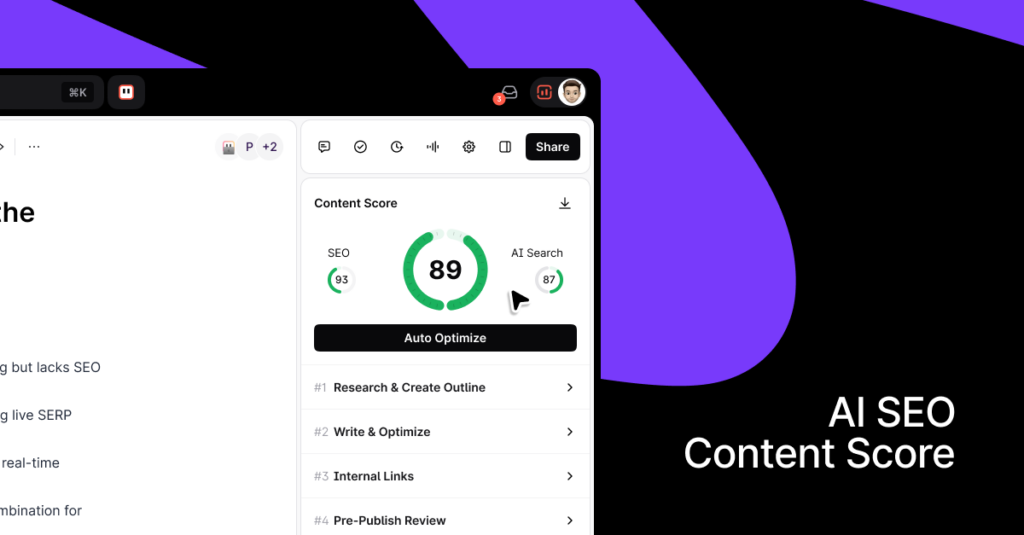
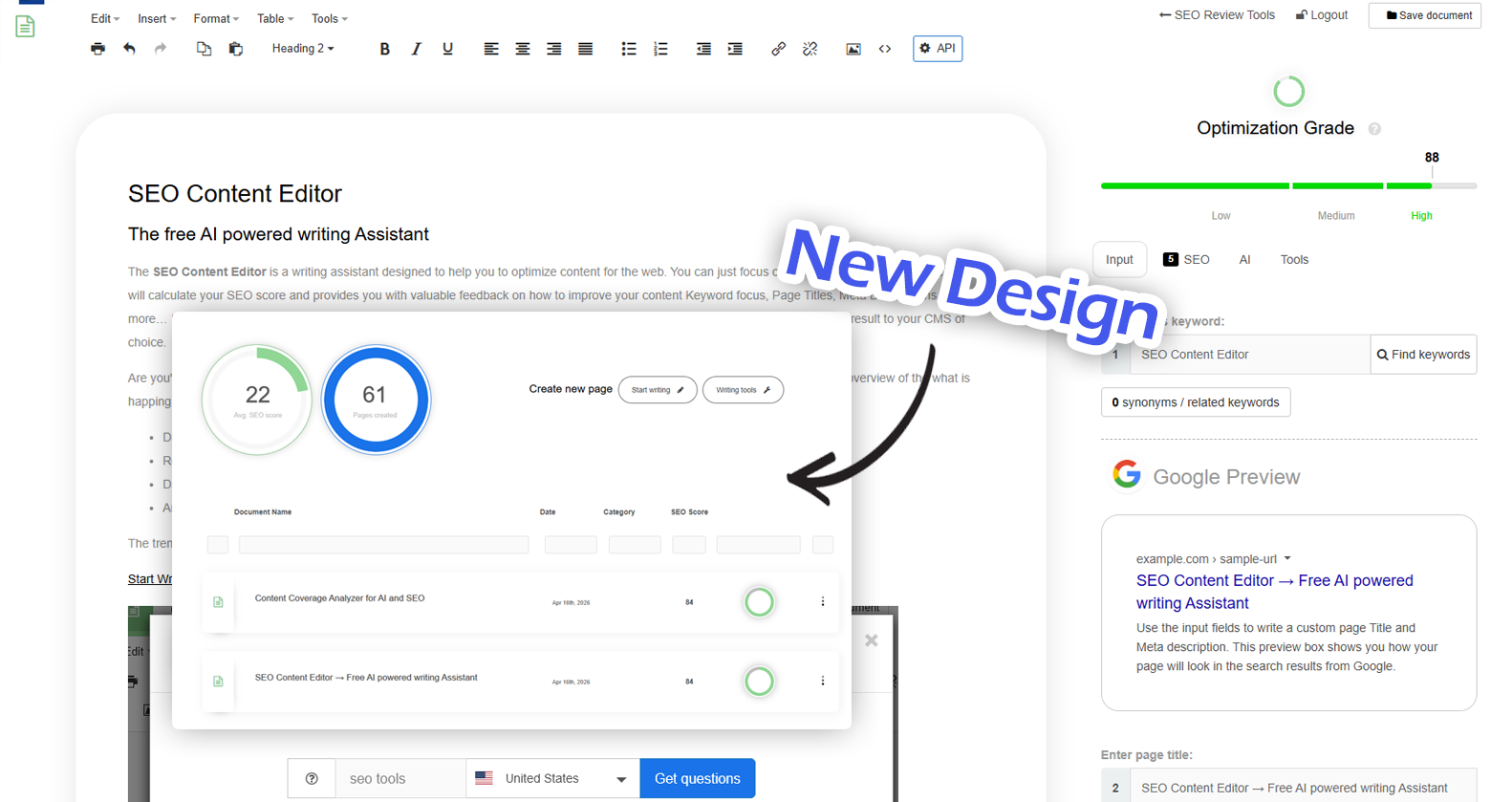
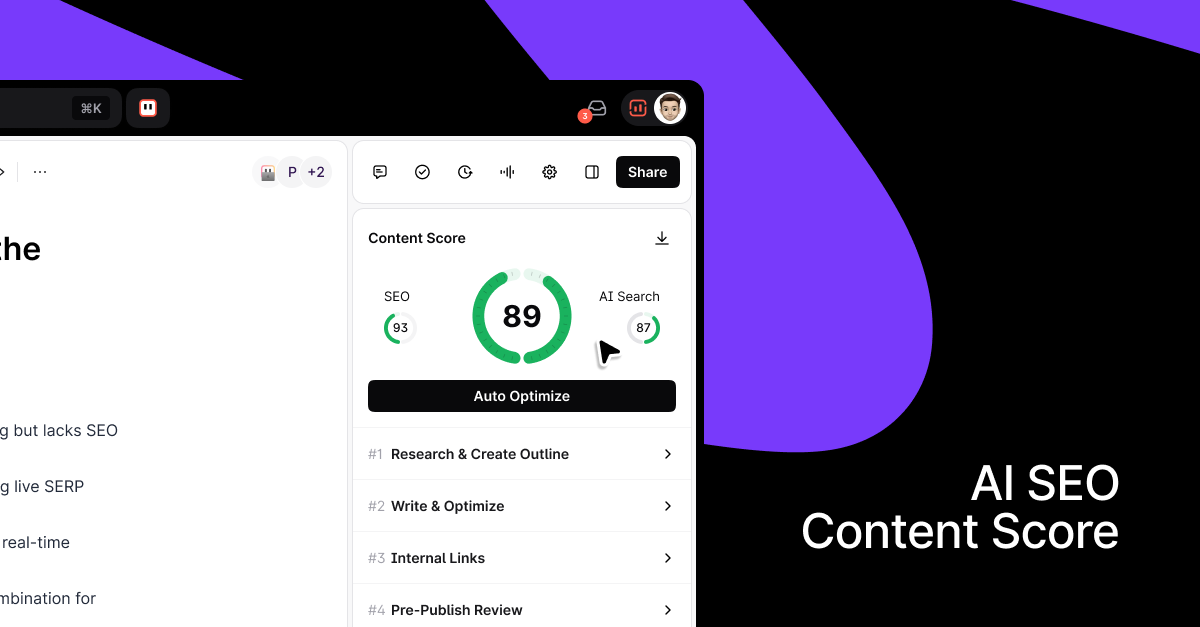
Most tools provide a live score that updates as you edit. This score combines keyword usage, readability, structure, and topical authority. While not a direct ranking factor, it serves as a useful benchmark for improvement.
Benefits of Using AI for SEO Content Editing
Adopting AI SEO content editing brings measurable advantages to solo bloggers, marketing teams, and agencies alike.
- Speed: What takes a human editor an hour takes AI under a minute. This allows for more content iterations and faster publishing cycles.
- Consistency: AI applies the same standards to every piece. No more one editor who loves long paragraphs and another who prefers short ones.
- Coverage: AI catches missing subtopics that even experienced editors might overlook, especially in niche industries.
- Cost-Effectiveness: Reducing manual editing time lowers production costs, especially for high-volume content operations.
- Data-Driven Decisions: Instead of guessing what works, you get concrete suggestions based on what already ranks.
- Multilingual Support: Many tools edit content in multiple languages, making international SEO campaigns easier to manage.
- Use AI as a Second Pair of Eyes: Write your first draft without AI assistance. This preserves your natural voice. Then use AI to polish and optimize.
- Update Old Content: AI editing is not just for new articles. Run your existing top-performing posts through the tool to refresh them with current data and new keywords.
- Track Your Results: Compare rankings and organic traffic before and after AI editing. This data tells you which suggestions actually move the needle.
- Combine with Human SEO Expertise: AI cannot replace a skilled SEO strategist who understands link building, technical SEO, and user experience. Use AI for the tactical work, not the strategy.
- Check for Plagiarism: Some AI tools generate suggested sentences that closely mirror existing content. Run the final version through a plagiarism checker to ensure originality.
Limitations and Risks to Consider
AI SEO content editing is powerful, but it is not a magic bullet. Understanding its limitations prevents over-reliance and potential quality issues.
Lack of True Creativity
AI works by predicting patterns from existing data. It cannot invent a completely novel angle or craft a metaphor that has never been used. For highly creative or opinion-driven pieces, human editing remains essential.
Risk of Over-Optimization
Following every AI suggestion blindly can lead to keyword stuffing or unnatural phrasing. Search engines penalize content that reads like it was written for bots rather than people. Always apply human judgment to AI suggestions.
Context Blindness
AI does not truly understand your brand voice, your specific audience’s pain points, or the nuance of a particular industry. It works with general patterns, which sometimes miss the mark.
Data Dependency
AI tools are only as good as their training data. If you work in a very new or niche field with little online content, the AI may provide irrelevant suggestions.
AI SEO Content Editing vs. Traditional Editing
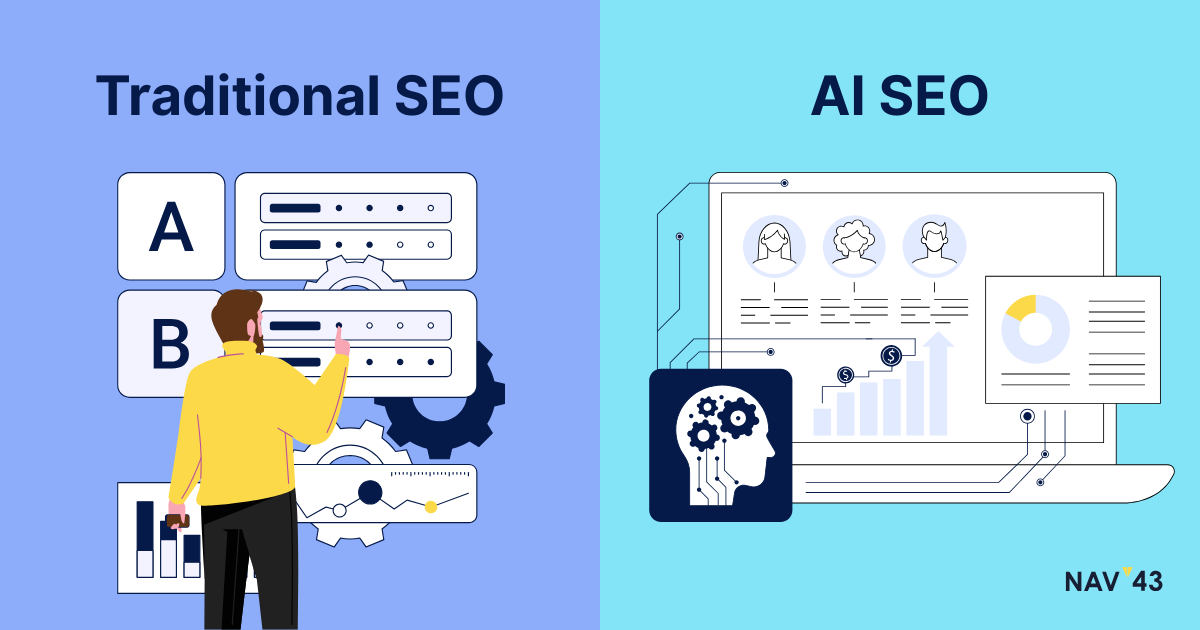
Understanding the differences helps you decide when to use each approach.
| Aspect | Traditional Editing | AI SEO Content Editing |
|---|---|---|
| Speed | Slow, manual review | Instant analysis and suggestions |
| Keyword Optimization | Manual counting and placement | Semantic analysis and gap detection |
| Subjectivity | Based on editor’s experience | Based on aggregated ranking data |
| Creativity | High, can suggest unique angles | Low, follows existing patterns |
| Scalability | Limited by human hours | Unlimited, handles bulk content |
| Cost | High per article | Low per article after subscription |
| Brand Voice | Easily maintained | Requires manual adjustment |
Practical Guide: How to Edit Content with AI Tools
Step 1: Choose the Right Tool
Popular options include Surfer SEO, Frase, Clearscope, and MarketMuse. Each has strengths. Surfer excels at on-page optimization, Frase focuses on content briefs and Q&A, Clearscope emphasizes readability, and MarketMuse offers deep topical research. Start with a free trial to see which interface fits your workflow.
Step 2: Input Your Draft
Paste your raw draft into the editor. Do not worry about perfection at this stage. The AI needs to see your natural writing style to provide accurate feedback.
Step 3: Review the Content Score
Look at the overall score and the breakdown by category. Most tools show separate scores for keyword usage, readability, structure, and topical coverage. Identify your weakest areas first.
Step 4: Address Keyword Suggestions
Add missing LSI keywords naturally. If the AI suggests “content optimization” and your article only uses “AI SEO content editing,” find a place to include the related term without forcing it. A good rule is to use the main keyword in the title, first paragraph, one H2, and the conclusion. Use secondary keywords once or twice each.
Step 5: Improve Readability
If the AI flags long sentences, break them up. If paragraphs are too dense, add subheadings. Most tools suggest a target reading level, usually around 8th to 9th grade for general audiences. Adjust your vocabulary accordingly.
Step 6: Fill Content Gaps
Check the “related questions” or “people also ask” section. If your draft does not answer common queries, add a short paragraph or a dedicated FAQ section. This directly improves your chances of earning a featured snippet.
Step 7: Optimize Meta Data
Use the AI’s suggestions for title tags and meta descriptions. Keep the title under 60 characters and the description under 155 characters. Include the main keyword in both, preferably near the beginning.
Step 8: Human Review
Read the edited version aloud. Does it sound natural? Does it reflect your brand voice? Remove any awkward phrasing the AI introduced. Add personal anecdotes or unique insights that only you can provide.
Common Mistakes in AI SEO Content Editing
Even experienced marketers make errors when using these tools. Here are the most frequent pitfalls and how to avoid them.
Blindly Accepting All Suggestions
AI tools are advisors, not dictators. If a suggestion does not make sense for your audience, ignore it. Over-optimizing for keywords at the expense of readability will hurt your engagement metrics, which indirectly affects rankings.
Ignoring Search Intent
AI tools analyze top-ranking pages, but those pages might not match the user’s true intent. For example, if the top results for “best laptops” are listicles, but your article is a buying guide, the AI might push you toward a list format. Always prioritize what your specific reader needs.
Neglecting Fact-Checking
AI does not verify facts. It only checks text patterns. If your draft contains outdated statistics or incorrect information, the A Always manually verify any claims, numbers, or quotes before publishing.
Using AI for YMYL Content
Your Money or Your Life (YMYL) topics like health, finance, and legal advice require high levels of expertise. Google applies stricter quality standards to these areas. AI editing can help with structure, but the actual content must be written or heavily reviewed by a qualified human expert.
Forgetting About Internal Linking
Most AI tools focus on on-page optimization and ignore internal linking strategies. After editing, manually add links to your other relevant articles. This improves site architecture and distributes link equity.
Important Notes for Effective AI SEO Content Editing
Keep these principles in mind to get the best results from your AI editing workflow.
Frequently Asked Questions
What is the difference between AI content writing and AI SEO content editing?
AI content writing generates new text from scratch based on a prompt. AI SEO content editing takes existing text and improves it for search engine visibility. Writing tools create the raw material, while editing tools refine it for ranking potential.
Can AI SEO content editing replace human editors?
No. AI excels at technical optimization like keyword placement and readability scoring, but it lacks the creativity, brand awareness, and critical thinking of a human editor. The best results come from combining AI efficiency with human judgment.
How much does AI SEO content editing cost?
Pricing varies widely. Basic tools start around $29 per month for limited queries. Professional platforms like Clearscope or MarketMuse range from $150 to $400 per month. Some tools offer pay-as-you-go credits, which work well for freelancers with low volume.
Will Google penalize content edited by AI?
Google does not penalize content simply because AI tools were used in the editing process. The search engine evaluates the final output, not the tools used to create it. As long as the content is helpful, original, and matches search intent, it can rank well.
What are the best free AI SEO content editing tools?
Google’s free tools like Search Console and Analytics provide data but not editing suggestions. For free editing help, consider the basic versions of Grammarly for grammar and Hemingway Editor for readability. Some paid tools offer limited free trials that allow you to edit a few articles per month.
How long does it take to edit a 2,000-word article with AI?
Most AI tools analyze a 2,000-word article in under 30 seconds. The editing process itself depends on how many suggestions you implement. A thorough edit that addresses all keyword, readability, and structure suggestions typically takes 20 to 40 minutes, including human review.
Conclusion
AI SEO content editing has become an essential part of modern content marketing. It saves time, improves consistency, and provides data-backed suggestions that help articles rank higher. However, the technology works best when paired with human expertise. Use AI to handle the repetitive analysis and optimization tasks, then apply your own knowledge of your audience, brand, and industry to make final decisions. This balanced approach produces content that satisfies both search engine algorithms and real human readers, leading to sustainable organic growth.
Xem thêm:
- AI Search Optimization: The Ultimate Guide to Ranking in LLMs and Generative Engines
- AI SEO Keyword Clusters: The Complete Guide to Building Topical Authority in 2025
- OpenAI SEO: The Ultimate Guide to AI-Powered Search Optimization
- AI SEO AI Citation Optimization: The Complete Guide to Dominating Local Search in 2025
- AI SEO Updates: Navigating the New Era of Search Engine Optimization
Bài viết cùng chủ đề:

AI SEO SEO Automation with Make: The Complete Workflow Guide

AI SEO SEO Automation with Zapier: The Complete Workflow Guide

AI SEO SEO Automation with n8n: The Complete Workflow Guide
AI SEO SEO Automation with Gemini: The Complete Guide to Scaling Organic Growth

AI SEO SEO Automation with Claude: The Complete Guide to Scaling Content in 2025

AI SEO SEO Automation with ChatGPT: The Complete Playbook for 2025

AI SEO & SEO Automation for Affiliate Sites: The 2025 Playbook for Passive Income Growth
AI SEO & SEO Automation for Bloggers: The Complete Guide to Scaling Your Content

AI SEO & SEO Automation for Agencies: The Complete 2025 Playbook

AI SEO and SEO Automation for Ecommerce: The Complete Playbook for 2025

AI SEO & SEO Automation for WordPress: The Complete Playbook for 2025
AI SEO SEO Automation Strategy: The Complete Playbook for 2025

Mastering the AI SEO SEO Automation Process: A Complete Guide to Scaling Organic Growth
AI SEO SEO Automation System: The Complete Guide to Scaling Organic Growth in 2025
AI SEO SEO Automation Platform: The Complete Guide to Scaling Organic Growth in 2025
AI SEO SEO Automation Software: The Complete Guide to Scaling Organic Growth in 2025















