
No products in the cart.
AI SEO Content Originality: The Complete Guide to Standing Out in 2025
10
Aug
Aug
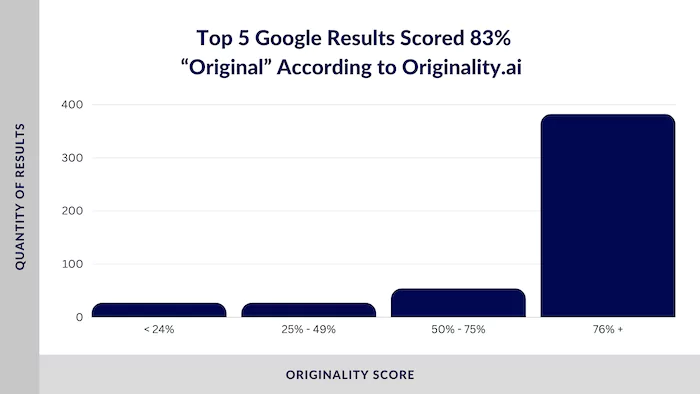
The rise of generative AI has fundamentally changed how content is produced, but it has also created a massive wave of sameness across the web. AI SEO content originality is no longer just a nice-to-have; it is the primary ranking factor that separates high-performing websites from those buried on page two of Google. When every competitor uses the same tools to generate the same generic advice, the algorithm rewards the unique, the experienced, and the genuinely insightful. This guide breaks down exactly how to maintain originality while leveraging AI for search engine optimization, ensuring your content survives and thrives in an era of automated saturation.
What is AI SEO Content Originality?
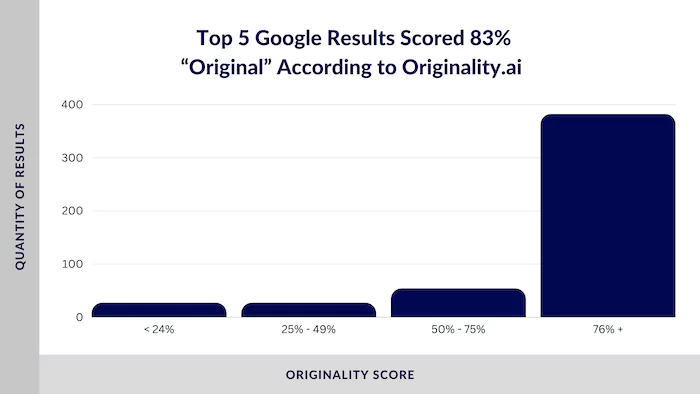
AI SEO content originality refers to the degree of uniqueness, fresh perspective, and non-replicable value present in content that is either fully generated or heavily assisted by artificial intelligence. It is not merely about passing a plagiarism checker. True originality in this context means the content offers a perspective that a standard language model would not naturally produce without specific, human-provided data, experience, or proprietary research.
This concept has become critical because AI models are trained on existing data. When asked to write about “best marketing strategies,” the output is a statistical average of every article ever written on that topic. This creates a “median content” problem, where everything sounds the same. Originality, therefore, is the deliberate injection of non-average data points, unique case studies, and personal expertise that the AI model cannot hallucinate or guess.
The Difference Between Plagiarism and Originality
Plagiarism is copying text verbatim. Originality is about the synthesis of ideas. You can write a 100% unique sentence that is still completely unoriginal in substance because it states the obvious. AI SEO content originality focuses on the substance. If you ask an AI to write about “email marketing,” it will produce grammatically perfect, unique sentences that say nothing new. To be original, you must feed the AI your proprietary data, your specific failures, and your unique workflow, forcing it to output something that exists nowhere else on the internet.
Why Originality Matters More Than Ever in SEO
Google’s algorithms have evolved significantly. The Helpful Content Update and the core ranking systems now prioritize “first-hand experience” and “original research” over aggregated information. The search engine explicitly states that it rewards content that demonstrates E-E-A-T (Experience, Expertise, Authoritativeness, and Trustworthiness). AI-generated content, by default, lacks the “Experience” component. Without human intervention to add originality, the content fails the E-E-A-T test.
Furthermore, the sheer volume of AI-generated content has led to a phenomenon known as “content decay.” Websites that publish generic AI articles see high bounce rates because users immediately recognize the lack of depth. Search metrics like dwell time and click-through rates drop, signaling to Google that the page is not satisfying the query. This creates a negative feedback loop where the unoriginal content ranks lower, driving less traffic, and eventually being de-indexed entirely.
The Core Components of Original AI Content
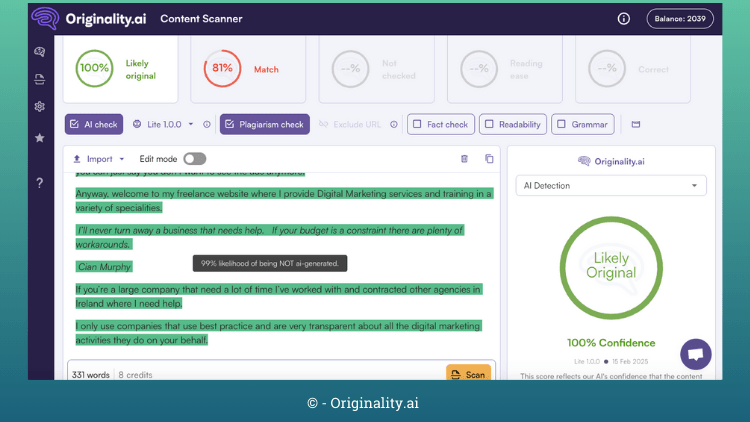
To achieve high AI SEO content originality, you must deconstruct the content creation process. It is not a single action but a combination of several distinct elements that, when combined, create a piece that is impossible to replicate.
Proprietary Data and Research
This is the strongest signal of originality. If you conduct a survey, analyze your internal analytics, or compile industry statistics that are not publicly available, you have a unique asset. AI cannot invent this data. When you feed this data into an AI tool, the output is automatically original because the input is exclusive to you.
Personal Experience and Case Studies
Sharing a specific failure or success story from your own business is inherently original. AI can write a generic case study template, but it cannot know what happened in your specific sales call last Tuesday. Including these narratives makes the content authoritative and impossible to duplicate.
Unique Frameworks and Methodologies
If you have developed a specific step-by-step process for solving a problem, document it. For example, instead of writing “How to do keyword research,” write “The 5-Step Reverse Engineering Keyword Method We Use for SaaS Clients.” The framework itself is the original asset.
How to Use AI Tools Without Losing Originality
The most common mistake is treating AI as a ghostwriter rather than a research assistant. To maintain originality, you must change your workflow. The AI should not be the author; it should be the editor, the summarizer, and the data organizer.
Start by writing your own outline based on your experience. Then, use AI to fill in the gaps with general knowledge. After the AI generates a draft, rewrite the introduction and conclusion entirely in your own voice. Inject specific examples that the AI did not provide. The goal is to use AI for the “heavy lifting” of grammar and structure while reserving the “soul” of the content for yourself.
The “Seed” Method for Unique Output
Instead of asking for a full article, provide the AI with a “seed” of unique information. For instance, give it a transcript of a podcast you recorded, a customer support ticket, or a specific data set. Ask the AI to “rewrite this transcript into a blog post” or “analyze this data and find trends.” Because the seed is unique, the output will be unique. This is the most effective way to scale original content production.
Benefits of Prioritizing Originality in AI Content
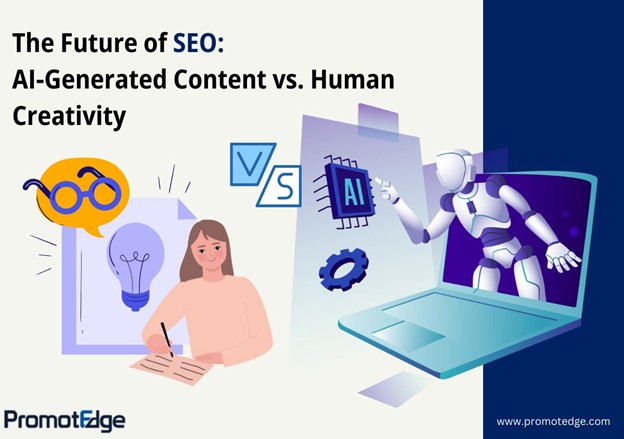
Investing in originality yields tangible SEO benefits that go beyond simple rankings. It builds a brand moat that competitors cannot easily cross.
- Higher Ranking Stability: Original content is less likely to be affected by algorithm updates that target “thin” or “scaled” content abuse.
- Increased Backlink Acquisition: Other websites link to unique data and original research, not to generic summaries. Originality is a link-building magnet.
- Improved Brand Authority: When you consistently provide unique insights, you become a thought leader. Users trust you as a source, increasing brand searches.
- Better Conversion Rates: Original content speaks to specific pain points with specific solutions, which resonates more deeply with buyers than generic advice.
- Keyword Research with Intent: Identify a keyword where you have specific knowledge. Do not target topics you know nothing about.
- Draft a “Human Outline”: Before touching AI, write down 5-10 bullet points of things you know about the topic that are not common knowledge. Include specific numbers, client names (with permission), or personal anecdotes.
- Use AI for the “Boring” Sections: Prompt the AI to write the definitions, the background history, and the general statistics. This is the “filler” that you would normally spend hours writing.
- Merge and Rewrite: Combine your human outline with the AI draft. Rewrite the AI sections to match your tone. Insert your unique bullet points as dedicated sections.
- Fact-Check Everything: Verify every statistic the AI provided. If you cannot verify it, delete it. Replace it with your own data or a qualitative statement.
- Add Visual Originality: Create a custom chart or graph using your own data. This is a visual signal of originality that Google can recognize.
- Final Human Pass: Read the article out loud. If it sounds like a robot, rewrite it. The final pass must be 100% human.
Limitations and Risks of AI-Generated Content
While AI is a powerful tool, it has inherent limitations that directly threaten originality if not managed. Understanding these risks is the first step to mitigating them.
Hallucination and Factual Errors
AI models are designed to predict the next word, not to verify facts. They often “hallucinate” statistics, quotes, or events that sound plausible but are entirely false. Publishing this damages your trustworthiness. Originality requires accuracy, and accuracy requires human fact-checking of every AI output.
The “Average” Problem
AI outputs the most statistically likely answer. This means the content is often “correct” but “boring.” It lacks the edge, the strong opinions, and the controversial takes that make content memorable. To be original, you must actively edit the AI text to include your own strong opinions, even if they are contrarian.
AI SEO Content Originality vs. Traditional Content
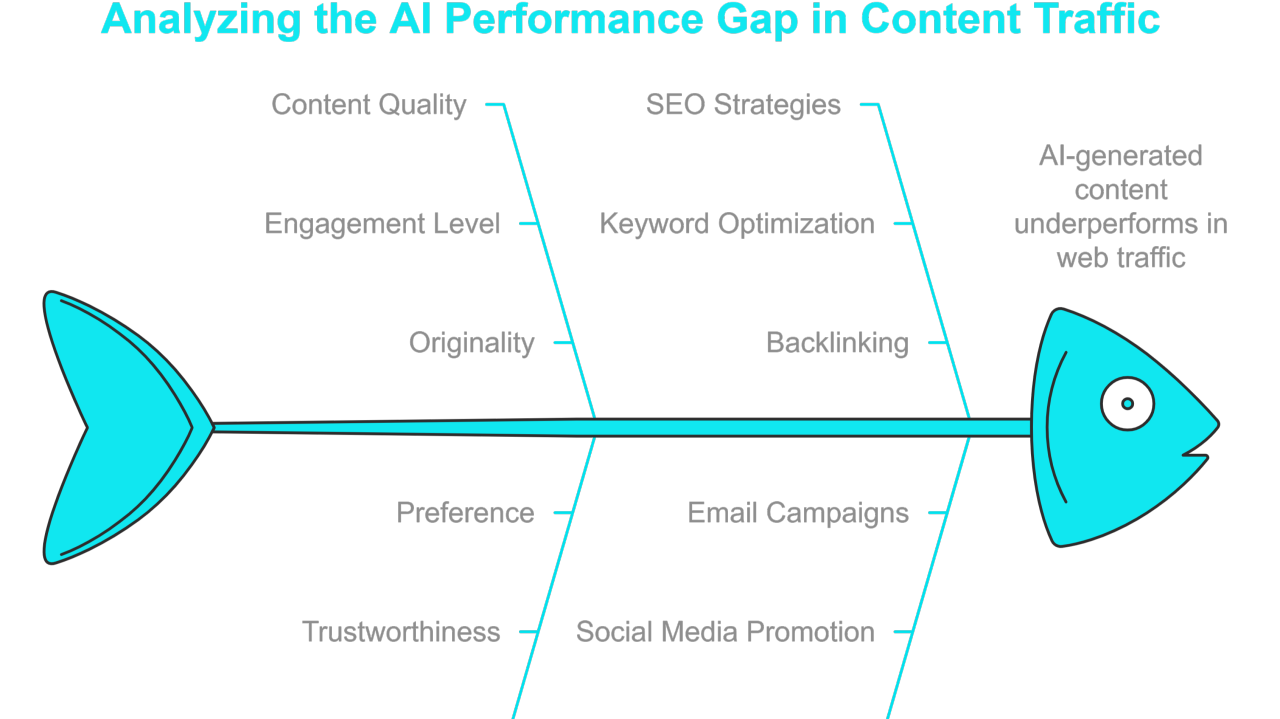
Understanding the difference between traditional writing and AI-assisted writing helps clarify where the value lies. Traditional content relies on the author’s time and research capacity. AI content relies on the author’s editing and strategic capacity.
| Feature | Traditional Content | Original AI-Assisted Content |
|---|---|---|
| Research Speed | Slow (hours/days) | Fast (minutes) |
| Data Integration | Manual, prone to human error | Automated, but requires validation |
| Voice Consistency | High, natural | Low, requires heavy editing |
| Scalability | Limited by writer capacity | High, but requires editorial oversight |
| Originality Source | Human experience | Human-provided data + AI structure |
The table illustrates that AI is not a replacement for the writer; it is an accelerator. The originality in AI content comes from the human layer of strategy and experience, not from the machine itself.
Practical Guide: A Step-by-Step Workflow for Original AI Content
This process takes longer than simply prompting an AI, but the results are exponentially better.
Common Mistakes That Kill AI SEO Content Originality
Many marketers fail to achieve originality because they fall into predictable traps. Avoiding these mistakes is often more important than following best practices.
Prompting for “Complete Articles”
Asking an AI to “write a complete article on X” is the fastest way to get generic content. The A Instead, break the article into sections and prompt for each section individually, providing unique context for each.
Ignoring the “About Us” Page
Your brand has a history. Your company has a specific origin story. AI does not know this. If you do not include your company’s specific journey in your content, you are missing the easiest opportunity for originality. Every article should reference your specific experience with the product or service.
Publishing Without Human Editing
Publishing raw AI output is a death sentence for SEO. The content will be grammatically correct but semantically shallow. Google’s classifiers are increasingly good at detecting the “statistical fingerprint” of AI text. Human editing breaks this fingerprint by introducing irregular sentence lengths and specific jargon.
Important Notes on Google’s Stance on AI Content
Google has officially stated that it does not ban AI content. However, it bans “spammy” content, regardless of how it is produced. The key takeaway is that Google rewards “originality and quality,” not the method of production. This means you can use AI as much as you want, as long as the final product is original and helpful.
It is also important to note that Google’s systems are designed to detect “scaled content abuse.” This refers to producing hundreds of articles that say the same thing. Even if you use AI to produce 500 articles, if they all lack originality, you risk a manual action. Focus on producing fewer, more original pieces rather than a high volume of generic ones.
Frequently Asked Questions (FAQ)
Does Google penalize AI-generated content?
Google does not penalize content simply for being generated by AI. It penalizes content that is unoriginal, spammy, or unhelpful. If AI content is heavily edited to include unique data and personal experience, it can rank just as well as human-written content. The penalty is for the lack of originality, not the tool used.
How can I check if my AI content is original?
You can use plagiarism checkers like Copyscape to check for exact matches. However, for semantic originality, you need to check if the content offers a unique perspective. Ask yourself: “Does this article contain information that is not available on the top 10 ranking pages?” If the answer is no, it is not original enough.
What is the best AI tool for creating original content?
T The best tool is the one that allows you to input your own data and edit the output easily. Tools like ChatGPT, Claude, and Jasper are all effective. The originality comes from your workflow, not the tool. The tool is only as good as the unique information you feed it.
How long should an original AI article be?
Length is secondary to originality. A 1,000-word article with a unique case study will outrank a 3,000-word article that repeats common knowledge. Focus on covering the topic completely, but do not add fluff just to hit a word count. Originality is about density of unique information, not volume.
Can I use AI to rewrite my competitor’s content?
Technically, yes. But this is a terrible strategy for originality. Rewriting a competitor’s article will produce a “synonymized” version that offers no new value. Instead, use your competitor’s content as a checklist of topics to cover, but write your article from scratch using your own experience and data.
Conclusion
AI SEO content originality is the defining factor of successful digital marketing in the current landscape. The tools are available to everyone, so the competitive advantage no longer lies in having access to AI, but in how you use it. The future belongs to those who treat AI as a junior researcher and editor, not as the final author. By injecting proprietary data, personal experience, and unique frameworks into your AI workflow, you create content that is not only original but also authoritative and trustworthy. This approach satisfies both the search engine algorithms and the end-user, building a sustainable online presence that withstands the test of time and algorithm updates. The path forward is clear: leverage the speed of AI, but never sacrifice the uniqueness of your human perspective.
Xem thêm:
- AI SEO Content Workflow: The Complete Blueprint for Scaling Organic Growth in 2025
- AI SEO SEO Automation with Gemini: The Complete Guide to Scaling Organic Growth
- AI Keyword Clustering: Build a Smarter Search Strategy With Data-Driven Topic Groups
- AI SEO Competitor Rankings: The Complete Guide to Outranking in the Age of Artificial Intelligence
- AI SEO URL Structure: The Complete Guide to Optimizing for Machine Learning Search Engines
Bài viết cùng chủ đề:

AI SEO SEO Automation with Make: The Complete Workflow Guide

AI SEO SEO Automation with Zapier: The Complete Workflow Guide

AI SEO SEO Automation with n8n: The Complete Workflow Guide
AI SEO SEO Automation with Gemini: The Complete Guide to Scaling Organic Growth

AI SEO SEO Automation with Claude: The Complete Guide to Scaling Content in 2025

AI SEO SEO Automation with ChatGPT: The Complete Playbook for 2025

AI SEO & SEO Automation for Affiliate Sites: The 2025 Playbook for Passive Income Growth
AI SEO & SEO Automation for Bloggers: The Complete Guide to Scaling Your Content

AI SEO & SEO Automation for Agencies: The Complete 2025 Playbook

AI SEO and SEO Automation for Ecommerce: The Complete Playbook for 2025

AI SEO & SEO Automation for WordPress: The Complete Playbook for 2025
AI SEO SEO Automation Strategy: The Complete Playbook for 2025

Mastering the AI SEO SEO Automation Process: A Complete Guide to Scaling Organic Growth
AI SEO SEO Automation System: The Complete Guide to Scaling Organic Growth in 2025
AI SEO SEO Automation Platform: The Complete Guide to Scaling Organic Growth in 2025
AI SEO SEO Automation Software: The Complete Guide to Scaling Organic Growth in 2025















