
No products in the cart.
AI SEO AI Search Monitoring: The Complete Guide to Tracking Your Brand in the Age of Generative Engines
10
Aug
Aug
The digital landscape has shifted dramatically. Traditional search engine optimization focused on rankings in a list of blue links. Today, the rise of generative AI and large language models has created a new frontier: AI search. This shift demands a new discipline known as AI SEO AI Search Monitoring. This practice involves tracking how your brand, products, and content appear within AI-generated answers, chatbot responses, and zero-click search results. Understanding this new form of visibility is no longer optional; it is a critical component of any modern digital strategy.
What is AI Search and Why Does It Matter?

AI search refers to the use of artificial intelligence to generate direct answers to user queries. Instead of providing a list of websites, these systems synthesize information from multiple sources to create a conversational, comprehensive response. Platforms like OpenAI’s ChatGPT, Google’s AI Overviews, Perplexity AI, and Microsoft’s Copilot are prime examples. These tools are changing how users find information, bypassing traditional organic listings entirely.
For businesses, this means a significant portion of your target audience may never see your website in a traditional search results page. They will receive an answer generated by an AI, which may or may not cite your content. If your brand is not referenced in these AI responses, you are effectively invisible to a growing segment of users. This is where AI SEO AI Search Monitoring becomes essential. It provides the data needed to understand your presence in this new ecosystem.
The Shift from Page Rankings to Answer Engines
Traditional SEO focuses on technical factors, backlinks, and content relevance to rank on a search engine results page (SERP). AI search operates differently. It prioritizes information extraction, source credibility, and semantic understanding. The goal is to provide a single, accurate answer. This shift requires a change in mindset. You are no longer optimizing for a click; you are optimizing to be the source of truth within an AI-generated paragraph.
This transition has profound implications. The click-through rate for traditional results is declining as AI Overviews capture user attention. Monitoring your AI visibility helps you understand if your content is being used as a source for these answers. It reveals whether your expertise is being recognized by the algorithms that power these new search tools.
Understanding AI SEO AI Search Monitoring
AI SEO AI Search Monitoring is the systematic process of tracking, analyzing, and measuring your brand’s visibility within AI-generated search outputs. It involves querying various AI platforms with relevant keywords and analyzing the responses. The goal is to determine if your brand is mentioned, cited, or recommended. This process provides actionable insights into your brand’s share of voice in the AI-driven discovery landscape.
This monitoring goes beyond simple brand mentions. It analyzes the sentiment of the mention, the context in which it appears, and whether the AI recommends your product or service. It also tracks your competitors’ presence. This comprehensive view allows you to identify gaps in your content strategy and adjust your approach to become a more authoritative source for AI algorithms.
Key Metrics in AI Search Monitoring
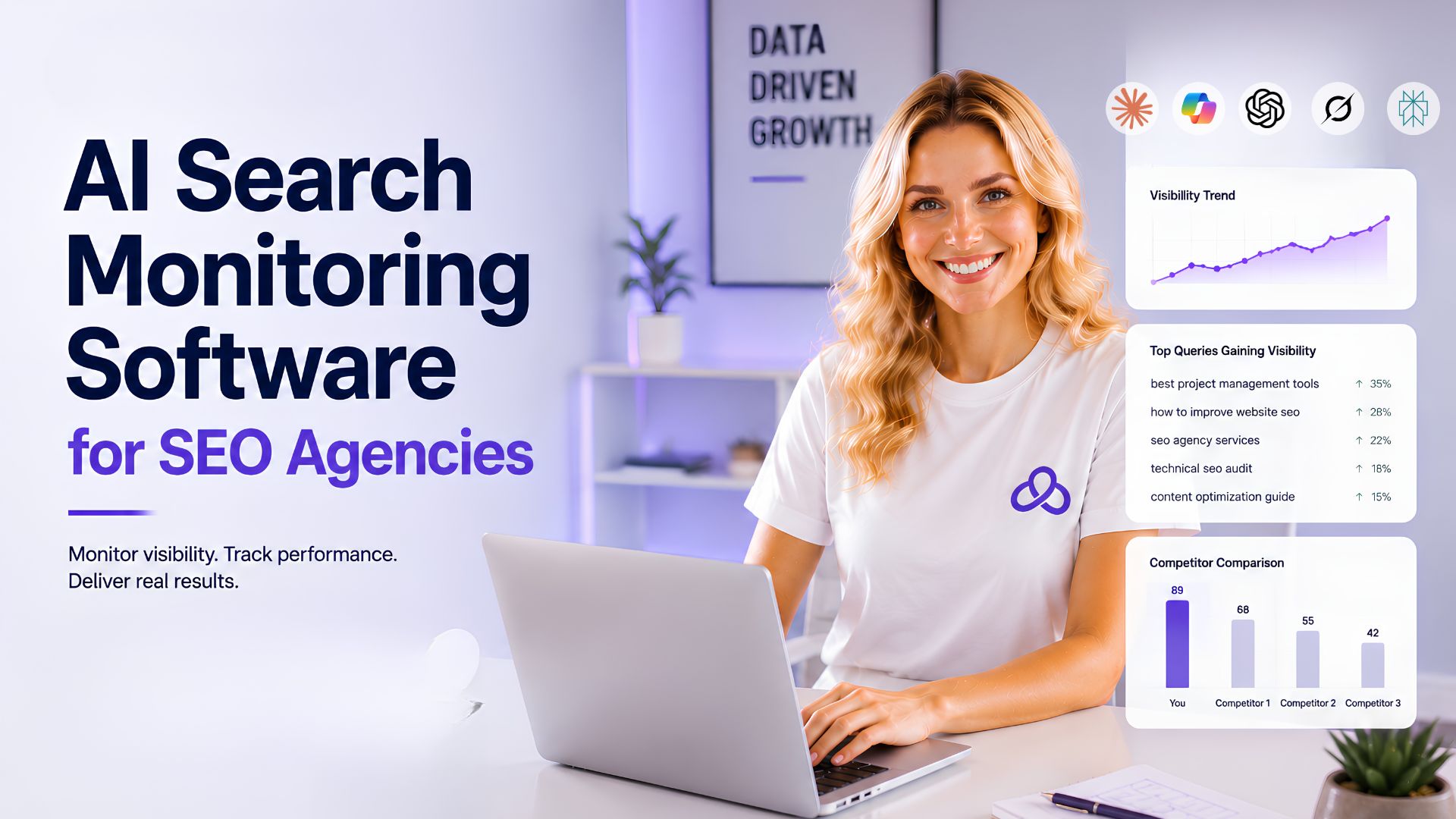
To effectively monitor your AI presence, you need to track specific metrics. These metrics provide a quantitative view of your performance in AI search results. They help you measure progress and identify areas for improvement.
- Brand Visibility Rate: The percentage of AI-generated responses that mention your brand for a set of target keywords.
- Source Citation Frequency: How often your website or content is listed as a source link within an AI response.
- Sentiment Analysis: The tone of the AI’s mention. Is it positive, negative, or neutral?
- Recommendation Share: The number of times the AI explicitly recommends your product, service, or content over a competitor’s.
- Answer Completeness: Whether the AI provides a complete answer that includes your key differentiators or value propositions.
- Proactive Reputation Management: You can identify negative or inaccurate AI-generated information about your brand early and take corrective action.
- Competitive Intelligence: You gain insights into how your competitors are being positioned in AI answers, allowing you to counter their strategies.
- Content Gap Analysis: You discover which topics are being discussed by AI but do not include your brand, highlighting content opportunities.
- Improved Content Strategy: You learn what types of content AI algorithms trust, allowing you to create more of it.
- Sales and Marketing Alignment: You can provide your sales team with data on how your product is being recommended in AI searches, which can be used in pitches.
- Mistake: Focusing only on ChatGPT. Many users only check ChatGPT. This ignores other major players like Perplexity and Google’s AI Overviews, which have different user bases and data sources. Solution: Monitor at least three different AI platforms to get a holistic view.
- Mistake: Ignoring Sentiment. A mention is not always a good thing. If the AI says your product is “expensive” or “difficult to use,” that is a negative signal. Solution: Always read the full context of the mention to understand the sentiment.
- Mistake: Treating it like Traditional SEO. Stuffing keywords into your content will not help you get cited by AI. AI models prioritize clarity and factual accuracy. Solution: Focus on creating comprehensive, well-structured content that answers questions directly.
- Mistake: Not Tracking Over Time. A single snapshot is not useful. AI models change frequently. Solution: Set up a recurring schedule for monitoring and track changes over weeks and months.
Tracking these metrics over time reveals trends. You can see if your AI visibility is improving after content updates or if it declines after a competitor publishes new information. This data-driven approach is the core of effective AI SEO AI Search Monitoring.
The Process of Monitoring AI Search Results
Implementing a monitoring strategy requires a structured approach. While manual checks are possible, they are time-consuming and not scalable. A robust process involves a combination of tools and human analysis.
Step 1: Define Your Target Query Set
Start by identifying the keywords and questions that are most important to your business. These should include your primary product terms, brand-related queries, and common industry questions. For example, a project management software company might track queries like “best project management tools,” “how to manage remote teams,” and “Asana vs. Monday.com.” This query set forms the foundation of your monitoring efforts.
Step 2: Query AI Platforms Systematically
You must test your queries across multiple AI platforms. Each platform has its own algorithm and data sources. A response from ChatGPT will differ from a response from Perplexity or Google’s AI Overviews. You need to run your query set through each major platform to get a complete picture. This process should be repeated regularly, as AI models are updated frequently.
Step 3: Analyze the Responses for Brand Presence
For each response, you need to analyze the content carefully. Look for direct mentions of your brand name. Check if your website is listed as a citation. Assess the context of the mention. Is the AI quoting a positive review, or is it highlighting a limitation? This qualitative analysis is crucial for understanding the nature of your visibility.
Step 4: Aggregate Data and Identify Trends
Collect the data from your queries and platforms into a central dashboard. Look for patterns. Are you mentioned more often for informational queries than transactional ones? Are there specific competitors that consistently appear where you do not? This aggregation helps you prioritize your content creation efforts. It turns raw data into a strategic roadmap.
Benefits of Implementing AI Search Monitoring
Investing in AI SEO AI Search Monitoring provides several distinct advantages. It moves your strategy from reactive to proactive. You gain a clear understanding of your digital footprint in a rapidly evolving space. The benefits extend beyond simple tracking to inform broader business decisions.
Limitations and Challenges of AI Search Monitoring
While the benefits are clear, there are also significant challenges. The AI landscape is volatile, and monitoring is not a perfect science. Understanding these limitations is essential for setting realistic expectations and interpreting data correctly.
Lack of Standardization: T Each platform provides different data, making it difficult to compare across the board. The lack of a standard like Google Search Console for AI search is a major hurdle.
Model Volatility: AI models are updated constantly. A response that includes your brand today may not include it tomorrow, even without any changes to your website. This volatility makes it difficult to attribute changes in visibility to specific actions.
Data Silos: AI platforms do not share their search logs or ranking factors. You are essentially working with a “black box.” You can see the output, but you cannot see the internal reasoning or data sources used to generate it.
Scalability Issues: Running manual queries is slow. Automated tools are emerging, but they can be expensive and may not cover all AI platforms. Scaling monitoring across a large keyword portfolio requires significant resources.
AI Search Monitoring vs. Traditional SEO Tools
It is important to distinguish between traditional SEO tools and those used for AI search monitoring. They serve different purposes and provide different insights. A standard SEO tool tracks rankings on Google or Bing. An AI monitoring tool tracks mentions in generative AI responses.
| Feature | Traditional SEO Tools | AI Search Monitoring Tools |
|---|---|---|
| Primary Focus | Keyword rankings on SERPs | Brand mentions in AI answers |
| Data Source | Search engine index (Google, Bing) | LLM outputs (ChatGPT, Perplexity, AI Overviews) |
| Key Metrics | Position, impressions, clicks | Mention rate, citation frequency, sentiment |
| Update Frequency | Daily or weekly crawls | Real-time or on-demand queries |
| Actionable Output | Optimize pages for keywords | Optimize content for entity recognition and citations |
Both are necessary. Traditional SEO ensures your site is technically sound and ranks for high-intent keywords. AI search monitoring ensures you are part of the conversation when users ask questions in a natural language format. They are complementary disciplines.
Practical Applications and a Guide to Getting Started
Implementing AI SEO AI Search Monitoring does not require a massive budget. You can start with a manual process and scale up as you see value.
Step 1: Build Your Keyword List
Use your existing SEO keyword research. Focus on long-tail keywords and question-based queries. These are the types of prompts users are most likely to type into an AI chatbot. Include your brand name plus your primary product category. For example, “Acme Software pricing” or “Acme Software alternatives.”
Step 2: Create a Testing Protocol
Set up a spreadsheet to log your results. For each keyword, you will record the date, the AI platform used, the full response text, and a “Yes/No” column for brand mention. You should also note the sentiment and whether a link to your site was included. Consistency is key. Run the same queries at the same time each week to get comparable data.
Step 3: Analyze and Act on the Data
After a few weeks of data collection, analyze the results. If your brand is missing from critical queries, you need to adjust your content. Create content that directly answers these questions in a clear, concise manner. Use structured data and cite authoritative sources to build trust with AI algorithms. The goal is to make it easy for AI models to extract and cite your information.
Common Mistakes and How to Avoid Them
Many businesses make errors when they first start monitoring AI search. Being aware of these pitfalls can save you time and prevent frustration. Here are the most common mistakes and how to avoid them.
Important Notes for a Successful Strategy
As you develop your AI SEO AI Search Monitoring strategy, keep these critical points in mind. They will help you navigate the complexities of this new field with greater confidence.
Focus on Entity Optimization: AI models work with entities (people, places, things) and their relationships. Ensure your website clearly defines who you are, what you do, and how you relate to other entities in your industry. Use consistent naming conventions and schema markup.
Prioritize Authoritative Content: AI models are trained to prefer information from authoritative sources. Build your brand’s authority through high-quality guest posts, digital PR, and citations from reputable industry publications. This external validation signals trust to AI algorithms.
Embrace Structured Data: Use schema markup to help AI understand your content. FAQ schema, How-To schema, and Organization schema provide explicit signals about the meaning and structure of your information. This makes it easier for AI to parse and cite your content accurately.
Monitor Your Competitors: Do not just watch your own brand. Track your top 3-5 competitors in the same AI queries. This will show you who is winning the AI visibility battle and what they are doing differently. Use this intelligence to inform your own strategy.
Frequently Asked Questions (FAQ)
What is the difference between AI search and traditional search?
Traditional search provides a list of links that the user must click to find information. AI search generates a synthesized answer directly in the interface, often citing sources. AI search aims to provide the answer immediately, while traditional search aims to provide the best resources to find the answer.
How often should I run AI search monitoring queries?
For most businesses, a weekly cadence is sufficient to track trends. If you are in a fast-moving industry or are actively launching new content, you may want to run queries more frequently, such as every 2-3 days. Consistency is more important than frequency.
Can I use free tools for AI search monitoring?
Yes, you can start with manual queries using the free versions of ChatGPT, Perplexity, and Google’s AI Overviews. This is a viable way to begin. However, as your needs grow, you will likely need to invest in specialized software that automates the querying and reporting process.
Does having high Google rankings guarantee AI search visibility?
No. While t AI models use different algorithms and data sources. A page that ranks #1 on Google may not be cited by an AI if the model prefers a different source for its synthesis. You must monitor AI search separately to ensure visibility.
What is the best way to improve my brand’s AI search visibility?
Focus on creating clear, concise, and factual content that directly answers common questions. Ensure your website has strong technical SEO and uses structured data. Build your brand’s authority through external mentions and citations. Consistency and patience are key, as AI models do not update instantly.
Conclusion
The rise of AI search represents a fundamental shift in how users discover information. Relying solely on traditional SEO is no longer sufficient. AI SEO AI Search Monitoring is the essential practice for understanding and improving your brand’s presence in this new landscape. By systematically tracking your mentions, analyzing sentiment, and understanding the data, you can ensure your brand remains visible and relevant. The tools and processes are still evolving, but the need for this intelligence is clear. Start monitoring today to secure your place in the future of search.
Xem thêm:
- AI SEO Silo Structure: The Complete Guide to Building Topically Authoritative Websites
- AI SEO AI Search Mentions: The Complete Guide to Winning Brand Visibility in Generative Search
- AI SEO Ranking Factors: The Complete Guide to Ranking in the Age of Machine Learning
- AI SEO Article Schema: The Complete Guide to Structured Data for AI Search
- AI SEO Copywriting in 2025: The Ultimate Guide to Data-Driven Content That Ranks
Bài viết cùng chủ đề:

AI SEO SEO Automation with Make: The Complete Workflow Guide

AI SEO SEO Automation with Zapier: The Complete Workflow Guide

AI SEO SEO Automation with n8n: The Complete Workflow Guide
AI SEO SEO Automation with Gemini: The Complete Guide to Scaling Organic Growth

AI SEO SEO Automation with Claude: The Complete Guide to Scaling Content in 2025

AI SEO SEO Automation with ChatGPT: The Complete Playbook for 2025

AI SEO & SEO Automation for Affiliate Sites: The 2025 Playbook for Passive Income Growth
AI SEO & SEO Automation for Bloggers: The Complete Guide to Scaling Your Content

AI SEO & SEO Automation for Agencies: The Complete 2025 Playbook

AI SEO and SEO Automation for Ecommerce: The Complete Playbook for 2025

AI SEO & SEO Automation for WordPress: The Complete Playbook for 2025
AI SEO SEO Automation Strategy: The Complete Playbook for 2025

Mastering the AI SEO SEO Automation Process: A Complete Guide to Scaling Organic Growth
AI SEO SEO Automation System: The Complete Guide to Scaling Organic Growth in 2025
AI SEO SEO Automation Platform: The Complete Guide to Scaling Organic Growth in 2025
AI SEO SEO Automation Software: The Complete Guide to Scaling Organic Growth in 2025















