
No products in the cart.
AI SEO AI Search Traffic: The Complete Guide to Winning Generative Engine Rankings
10
Aug
Aug
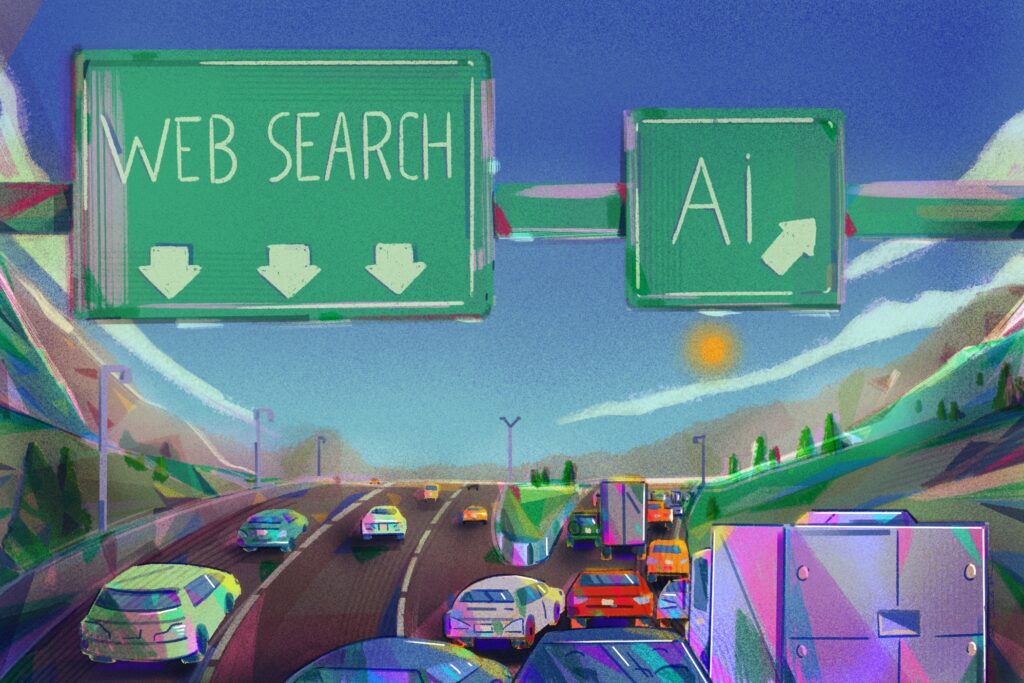
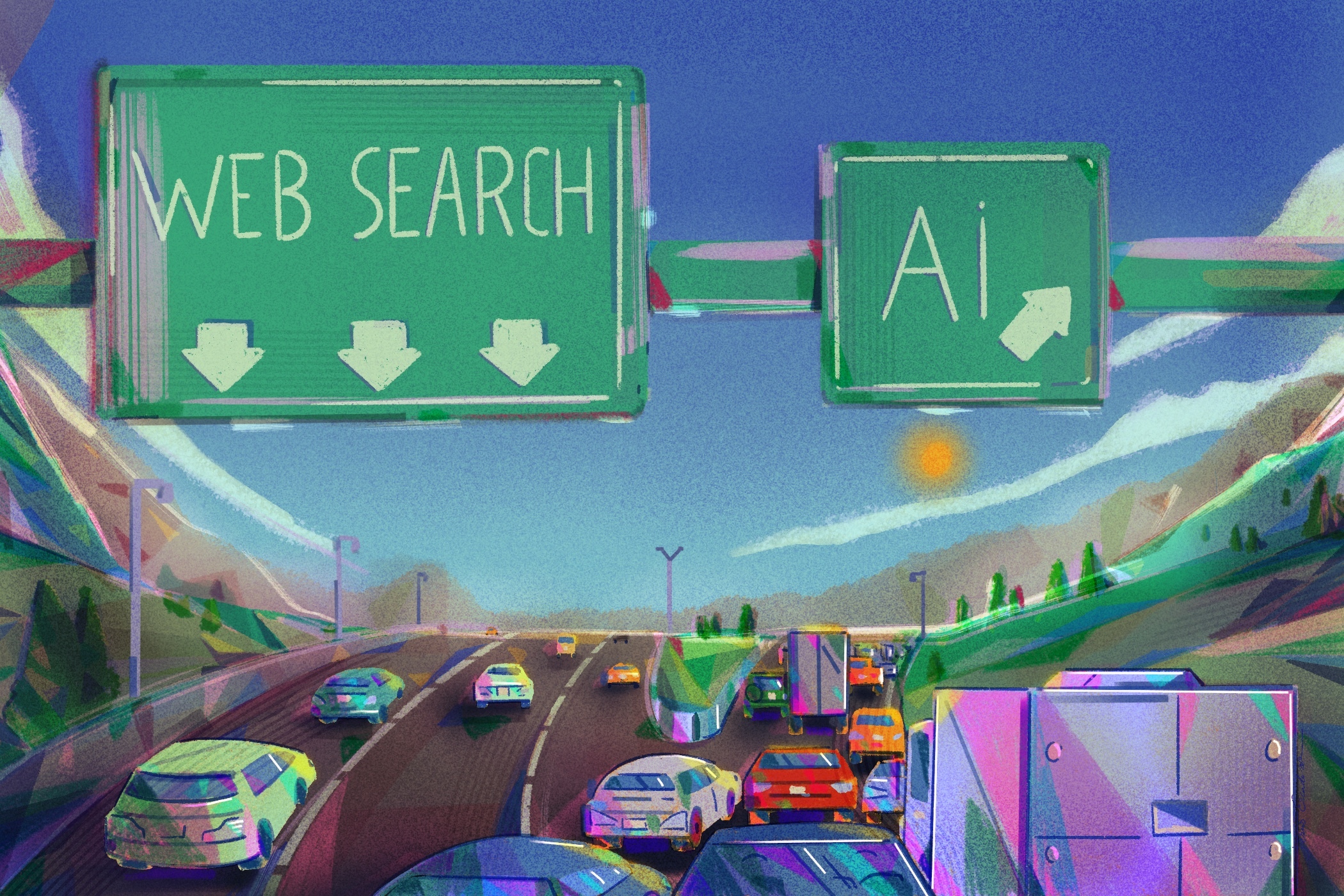
The digital marketing landscape is undergoing its most significant transformation since the advent of mobile search. Traditional search engine optimization focused on clicks, rankings, and sessions. Today, the rise of generative AI and large language models has introduced a new metric that matters more than ever: AI Search Traffic. This refers to the visits, referrals, and brand visibility generated when users interact with AI-powered search engines like Google AI Overviews, Perplexity, ChatGPT Search, and Bing Copilot. Understanding how to optimize for these platforms is no longer optional; it is a survival skill for brands that rely on organic discovery.
This comprehensive guide explores the mechanics of AI SEO and AI Search Traffic, providing actionable strategies to ensure your content is cited, referenced, and recommended by artificial intelligence systems. We will move beyond traditional keyword density to focus on entity clarity, data authority, and conversational relevance. By the end, you will have a clear roadmap to capture visibility in a world where the search engine result page is being replaced by a synthesized answer.
What is AI Search Traffic and Why Does It Matter?
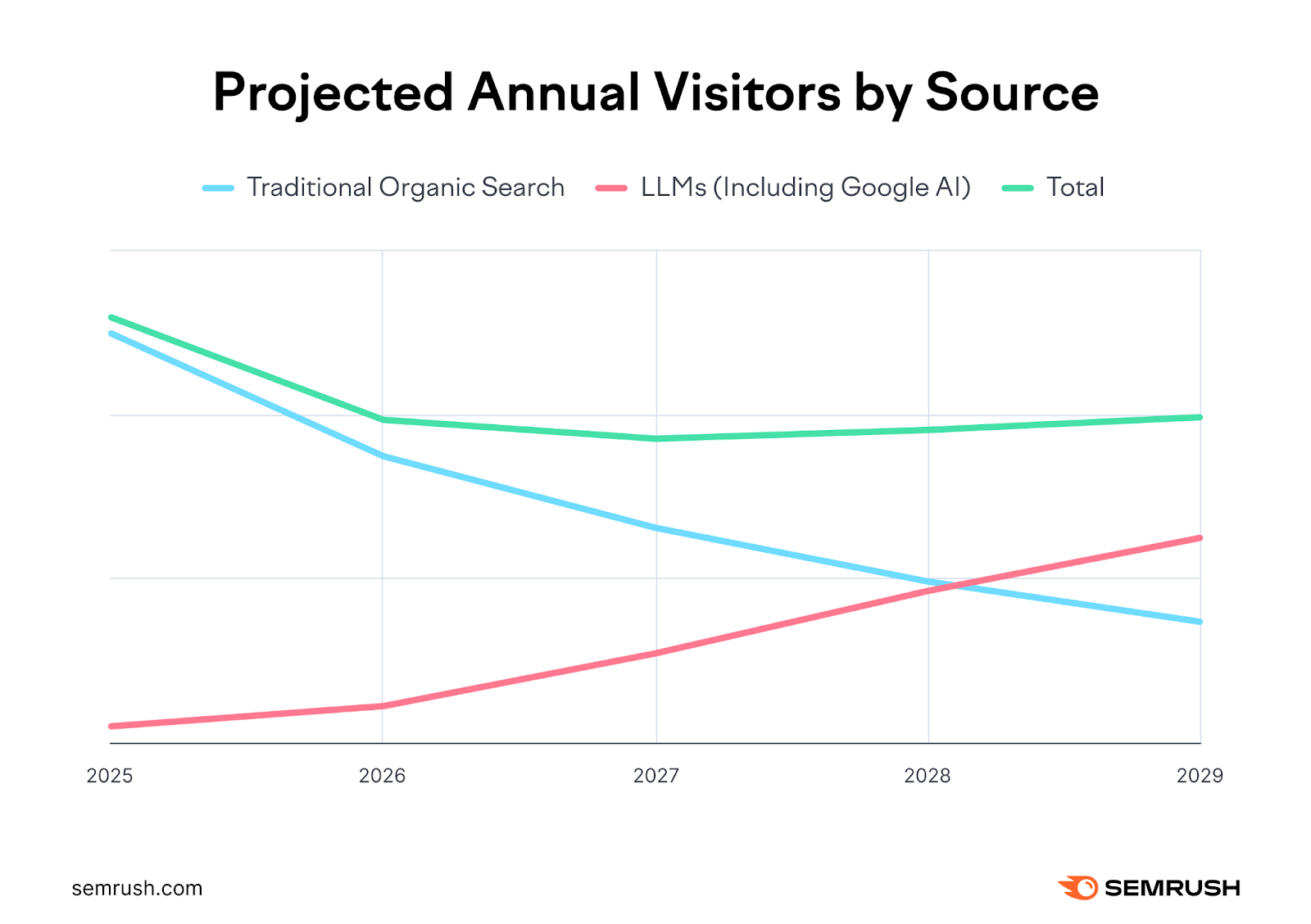
AI Search Traffic is the measurable flow of users to your website that originates from AI-generated responses rather than traditional blue links. When a user asks ChatGPT a question and it cites your article as a source, that referral counts as AI Search Traffic. Similarly, when Google’s AI Overview summarizes your content at the top of the SERP, the clicks generated from that summary are attributed to this new traffic channel.
This shift matters because the user behavior is fundamentally different. In traditional search, users scan multiple results. In AI search, users receive one synthesized answer. If your content is not part of that synthesis, you are invisible. Furthermore, AI systems often provide answers without requiring a click, meaning the competition is no longer for the top position but for the privilege of being the cited source of truth.
The Difference Between Traditional SEO and AI SEO
Traditional SEO relies on crawling, indexing, and ranking algorithms that prioritize backlinks and exact-match keywords. AI SEO focuses on semantic understanding, data extraction, and source reliability. While traditional SEO targets the Google crawler, AI SEO targets the language model’s training data and retrieval augmentation process.
For instance, a traditional article might rank for “best running shoes” by repeating that phrase. An AI-optimized article must clearly state the top five shoes, explain their specific features, and provide comparative data in a structured format that the AI can parse. The AI does not read your page like a human; it extracts entities, facts, and relationships. Therefore, your content must be structured for extraction, not just for reading.
How AI Engines Generate Search Results
To capture AI Search Traffic, you must understand the underlying technology. Most modern AI search systems use a technique called Retrieval-Augmented Generation (RAG). This process involves three critical steps: query understanding, information retrieval, and answer synthesis.
First, the AI parses the user’s query to identify the intent and key entities. Second, it retrieves relevant documents from its index or the live web. Third, it generates a natural language response by synthesizing information from those retrieved documents. The AI does not invent facts; it relies on the content it retrieves. If your content is not retrievable, it cannot be cited.
The Role of Structured Data in AI Retrieval
Structured data, such as Schema.org markup, acts as a direct communication channel to AI systems. When you implement schema for articles, FAQs, products, and organizations, you provide explicit signals about the meaning of your content. This reduces the cognitive load on the AI and increases the probability of accurate citation.
For example, an FAQ schema that clearly delineates a question and its corresponding answer allows the AI to extract that pair directly. Without this markup, the AI must infer the relationship, which introduces the risk of misinterpretation. Prioritize schema implementation as a foundational element of your AI SEO strategy.
Key Ranking Factors for AI Search Traffic
While the exact algorithms of AI search engines are proprietary, several consistent factors determine whether your content is selected for citation. These factors differ significantly from traditional ranking signals, although some overlap exists.
| Ranking Factor | Traditional SEO | AI SEO |
|---|---|---|
| Keyword Matching | High importance | Low importance |
| Entity Clarity | Moderate importance | Critical importance |
| Backlink Authority | Critical importance | Moderate importance |
| Content Structure | Important for UX | Critical for extraction |
| Data Accuracy | Important | Non-negotiable |
| Source Diversity | Not relevant | High importance |
Entity Clarity and Topical Authority
AI models operate on entities—people, places, concepts, and objects—and the relationships between them. Your content must clearly define the primary entity and its attributes. If you write about “digital marketing,” the AI needs to understand that you are discussing the promotion of products via digital channels, not a specific software tool.
Building topical authority involves creating a cluster of content that covers a subject comprehensively. If you publish one article about AI Search Traffic, the AI may view you as a casual source. If you publish ten interconnected articles covering AI algorithms, prompt engineering, and content extraction, the AI recognizes you as an authority. This depth of coverage signals reliability.
Practical Strategies to Increase AI Search Traffic
Capturing AI Search Traffic requires a proactive approach to content creation and technical optimization. The following strategies have proven effective for brands seeking visibility in generative engine results.
1. Optimize for Conversational Queries
AI search queries are often longer and more conversational than traditional keywords. Users ask complete questions: “What is the best way to optimize a website for AI search?” rather than typing “AI SEO.” Your content must directly answer these long-tail, question-based queries. Include a dedicated FAQ section that addresses these specific questions with concise, factual answers.
Write in a direct, declarative style. Avoid fluff and introductory filler. The AI seeks the most direct path to the answer. If your first paragraph is a story about your personal journey, the A Start with the answer, then provide the context.
2. Implement Robust Technical SEO
AI crawlers, such as GPTBot and Google-Extended, must be able to access your site. Check your robots.txt file to ensure you are not inadvertently blocking these crawlers. While some publishers block AI bots to protect content, this is counterproductive if you want AI Search Traffic. Allow access to your high-value content.
Ensure your site has a clear information architecture. Use descriptive URLs, logical internal linking, and a sitemap that is submitted to major search engines. The easier it is for a crawler to navigate your site, the more likely it is to index and retrieve your content.
3. Create Data-Rich, Citable Content
AI systems love statistics, lists, and comparisons. When you present data, ensure it is accurate and up-to-date. Cite your sources within the content. If you reference a study, link to it. This transparency builds trust with the AI model, which is programmed to prefer verifiable information.
Use tables to present comparative data. Tables are highly extractable. A table comparing the features of different AI SEO tools is more likely to be cited than a paragraph describing the same information. Structure your content with clear H2 and H3 headings that describe the exact content of the section.
4. Leverage the “Quoted Text” Principle
AI systems often pull direct quotes from web pages to support their answers. This means your sentences must be self-contained and meaningful. A sentence like “Our product is great” is useless. A sentence like “The Acme AI SEO tool increased organic traffic by 45% for 80% of its users in a 2024 study” is highly citable.
Write in a way that allows your sentences to stand alone. If a user reads only one sentence from your article, they should gain valuable insight. This atomic content approach aligns perfectly with how AI extracts information.
Benefits and Limitations of AI Search Traffic
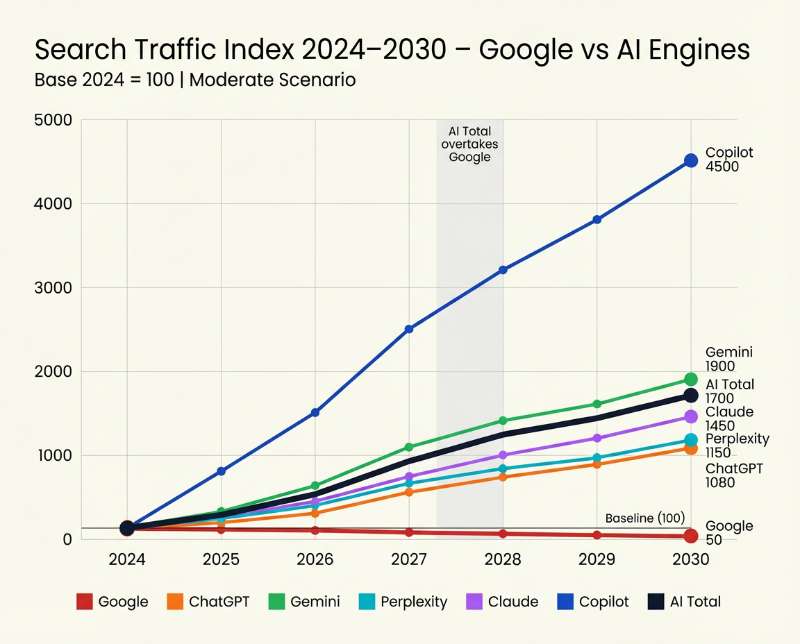
Understanding the advantages and drawbacks of this new traffic source is essential for setting realistic expectations and building a balanced strategy.
Benefits of AI Search Traffic
- Higher Conversion Potential: Users arriving from AI answers often have high intent. They have already received a synthesized answer and are clicking through for deeper information, making them more likely to convert.
- Brand Authority: Being cited by an AI system positions your brand as a trusted authority. This halo effect extends beyond the specific query to general brand perception.
- Reduced Competition for Clicks: While the SERP is crowded, the AI answer box is a single slot. Winning that slot provides massive visibility without the need to outrank every competitor for every keyword.
- Future-Proofing: As AI search becomes the default, having a strategy in place now ensures you are not left behind when the transition accelerates.
- Zero-Click Dominance: The AI often provides a complete answer, eliminating the need for a click. This can reduce overall traffic volume even as visibility increases.
- Lack of Attribution Data: Traditional analytics tools struggle to identify AI referrals accurately. It is difficult to measure the exact ROI of your AI SEO efforts.
- Algorithm Volatility: AI models are updated frequently. A strategy that works today may be obsolete tomorrow as the model changes its retrieval preferences.
- Content Scraping Concerns: Some publishers worry about AI using their content without proper attribution or compensation. This is a valid ethical and legal concern that requires careful policy decisions.
Limitations and Challenges
Common Mistakes in AI SEO and How to Avoid Them
Many marketers apply traditional SEO tactics to AI search and fail. Recognizing these common pitfalls will save you time and resources.
Mistake 1: Keyword Stuffing and Exact Match Obsession
Repeating the target keyword “AI SEO AI Search Traffic” twenty times in an article does not help. AI models use semantic analysis, not keyword density. Focus on covering the topic comprehensively with related terms like “generative engine optimization,” “LLM retrieval,” and “answer engine optimization.”
How to Avoid: Write naturally. Use synonyms and related concepts. Ensure the content reads well for a human while being structured for machine extraction.
Mistake 2: Ignoring the “Zero-Click” Reality
If your goal is purely to drive clicks, you will be disappointed. The goal of AI SEO is to drive brand visibility and authority. Sometimes, the win is being the cited source, even if the user does not click through.
How to Avoid: Track brand mentions and share of voice in AI responses. Use tools that monitor AI search results to see where your brand appears, even without a click.
Mistake 3: Neglecting Content Freshness
AI models prioritize current information, especially for news, statistics, and technology topics. An article from 2021 about AI search is likely outdated and will be ignored.
How to Avoid: Implement a regular content audit schedule. Update statistics, refresh examples, and add new sections to keep your content relevant. Add a “Last Updated” date to signal freshness to the AI.
Mistake 4: Failing to Build Digital PR
While backlinks are less critical, they are not irrelevant. AI models still use link authority as a proxy for trust. Content that is widely referenced across the web is more likely to be considered authoritative.
How to Avoid: Continue to invest in digital PR and link building. Focus on getting links from high-authority domains that are relevant to your niche. Guest posting and original research are effective methods.
Important Notes for a Successful AI SEO Strategy
As you implement these tactics, keep the following principles in mind to ensure long-term success and ethical practice.
Transparency is Key: Be clear about who you are and what your expertise is. Include author bios with credentials. AI models are trained to prefer content from recognized experts. An author page with a detailed bio, links to social profiles, and a list of publications increases your E-E-A-T score.
Do Not Hide Content: Some sites use paywalls or login requirements. AI crawlers cannot access this content. If you want AI Search Traffic, your best content must be publicly accessible. Consider a “freemium” model where the core answer is public and the advanced details are gated.
Monitor Your Brand’s AI Presence: Regularly ask AI chatbots about your brand and your competitors. This manual audit provides insight into how you are being perceived. If the AI gives incorrect information about your company, you need to publish clear, authoritative content that corrects the record.
Focus on User Intent: The AI is a mediator. Its goal is to satisfy the user. If your content does not satisfy the user, the A Prioritize user experience, readability, and value above all else.
Frequently Asked Questions (FAQ)
What is the difference between AI Search Traffic and traditional organic traffic?
Traditional organic traffic comes from users clicking on blue links in a standard search engine results page. AI Search Traffic comes from users interacting with an AI-generated answer that cites your content as a source. The intent is often higher, but the click-through rate may be lower due to the AI providing a complete answer.
How do I track AI Search Traffic in Google Analytics?
Tracking is challenging because AI referrals often appear as direct traffic or are misattributed. You can create custom segments for known AI bot user agents (like GPTBot) to see crawling activity. For user clicks, you can use UTM parameters on links you share, but for organic citations, you must rely on specialized AI SEO tracking tools that monitor brand mentions in AI responses.
Does blocking AI crawlers help or hurt my SEO?
Blocking AI crawlers prevents your content from being used in AI training and retrieval. This protects your content from being used without attribution but also eliminates your chance of earning AI Search Traffic. For most brands, allowing access is the better strategy to maintain visibility in the evolving search landscape.
How long does it take to see results from AI SEO?
Unlike traditional SEO which can take months, AI SEO can yield faster results because AI models are constantly updating their retrieval indices. However, building the topical authority required for consistent citations takes time. Expect to see initial mentions within a few weeks of publishing optimized content, with significant growth over 3-6 months.
Are backlinks still important for AI Search Traffic?
Yes, but their role has changed. Backlinks are no longer the primary ranking factor but serve as a trust signal. AI models use the web’s link graph to determine which sources are authoritative. A few high-quality links from reputable sites are more valuable than hundreds of low-quality links.
Conclusion: The Future of Search is Conversational
The era of the ten blue links is fading. AI Search Traffic represents the new frontier of organic discovery, where visibility is determined by your ability to communicate clearly with machines. The strategies outlined in this guide—focusing on entity clarity, structured data, conversational content, and data accuracy—are the building blocks of a successful AI SEO program.
Do not view this as a replacement for traditional SEO, but as an evolution. The fundamentals of good content—accuracy, depth, and user value—remain unchanged. What has changed is the delivery mechanism. By optimizing for AI search, you are not just chasing a new traffic source; you are future-proofing your digital presence against the inevitable shift to conversational, answer-driven search experiences. Start implementing these tactics today to ensure your brand is the source the AI trusts tomorrow.
Xem thêm:
- AI SEO GEO Content: The Complete Guide to Generative Engine Optimization
- Open Source AI SEO Tools: The Complete Blueprint for Data-Driven Search Visibility
- AI Outline Generator: The Complete Guide to Structuring Content in Seconds
- How to Find Keywords with AI: The Modern Marketer’s Blueprint for Smarter Research
- AI SEO Keyword Entities: The Complete Guide to Future-Proofing Your Search Strategy
Bài viết cùng chủ đề:

AI SEO SEO Automation with Make: The Complete Workflow Guide

AI SEO SEO Automation with Zapier: The Complete Workflow Guide

AI SEO SEO Automation with n8n: The Complete Workflow Guide
AI SEO SEO Automation with Gemini: The Complete Guide to Scaling Organic Growth

AI SEO SEO Automation with Claude: The Complete Guide to Scaling Content in 2025

AI SEO SEO Automation with ChatGPT: The Complete Playbook for 2025

AI SEO & SEO Automation for Affiliate Sites: The 2025 Playbook for Passive Income Growth
AI SEO & SEO Automation for Bloggers: The Complete Guide to Scaling Your Content

AI SEO & SEO Automation for Agencies: The Complete 2025 Playbook

AI SEO and SEO Automation for Ecommerce: The Complete Playbook for 2025

AI SEO & SEO Automation for WordPress: The Complete Playbook for 2025
AI SEO SEO Automation Strategy: The Complete Playbook for 2025

Mastering the AI SEO SEO Automation Process: A Complete Guide to Scaling Organic Growth
AI SEO SEO Automation System: The Complete Guide to Scaling Organic Growth in 2025
AI SEO SEO Automation Platform: The Complete Guide to Scaling Organic Growth in 2025
AI SEO SEO Automation Software: The Complete Guide to Scaling Organic Growth in 2025















