
No products in the cart.
How to Find Keywords with AI: The Modern Marketer’s Blueprint for Smarter Research

29
Jul
Jul
Keyword research has always been the bedrock of any successful SEO strategy. Yet the old ways of manually brainstorming terms, checking spreadsheets, and guessing search intent are quickly becoming relics of the past. Learning how to find keywords with AI changes the entire game. Instead of spending hours sifting through data, you can now tap into language models and machine learning to uncover topic clusters, long-tail variations, and search intents that human analysis alone might miss. This guide walks you through the entire process—from selecting the right tools to avoiding common pitfalls—so you can build a keyword strategy that actually matches how modern search engines understand content.
What Does It Mean to Find Keywords with AI?
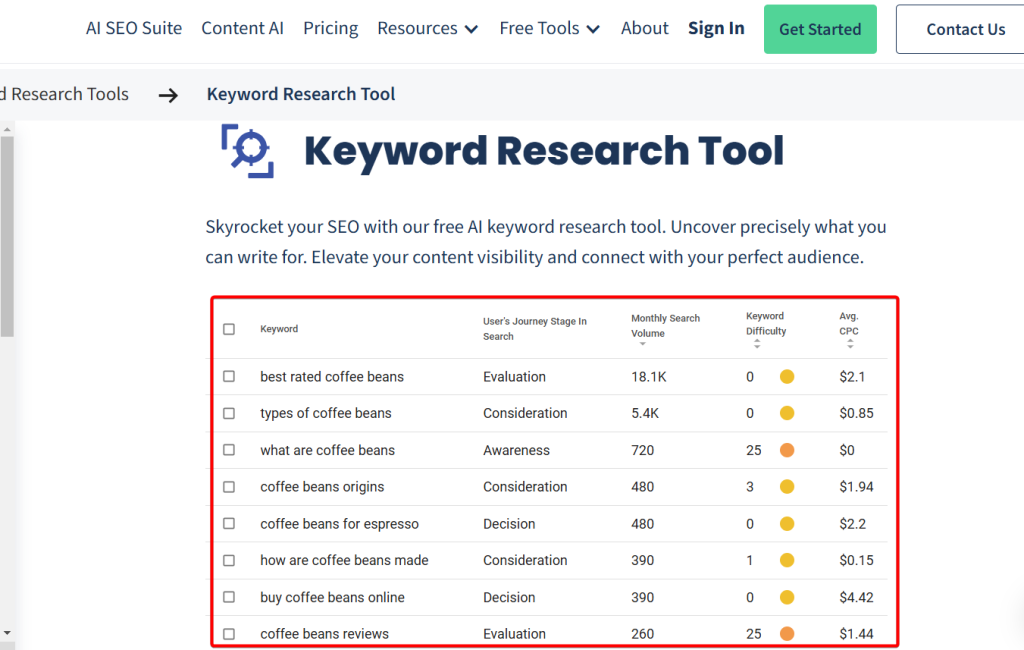
AI-powered keyword research goes beyond extracting a list of queries from a database. It uses natural language processing (NLP) and large language models to understand the semantics, context, and intent behind a search. Instead of simply matching the string of characters “best coffee grinder,” the AI analyzes related concepts like burr vs. blade, price sensitivity, user pain points, and even the stage of the buyer’s journey.
When you know how to find keywords with AI, you aren’t just pulling related searches from Google’s autocomplete. You are feeding a seed topic into an intelligent system that returns clusters of semantically connected terms, question-based queries, and topical gaps in your existing content. This fundamentally shifts keyword research from a reactive counting exercise to a proactive discovery engine that mirrors how search engines like Google’s RankBrain and BERT process language.
The output often includes classic metrics like search volume and difficulty, but layered with AI-driven insights: topic authority scores, content structure recommendations, and even predicted conversion probability for a given query.
How AI Keyword Research Differs from Traditional Methods
Traditional manual research relies on tools that pull keyword suggestions based on prefix matching and historical search volume. While effective at scale, this approach misses nuance. AI, on the other hand, reads the entire search results page, identifies entities, and groups keywords by the underlying problem the user is trying to solve.
The table below highlights the core differences between the two approaches when you set out to find keywords with AI.
| Criteria | Traditional Keyword Research | AI-Powered Keyword Research |
|---|---|---|
| Discovery method | Seed keyword expansion, manual competitor scraping | Semantic analysis, NLP clustering, topic modeling |
| Intent detection | Guessed based on word presence (buy, best, how to) | Language model analyzes full query meaning and SERP intent |
| Keyword grouping | Manual tagging or simple string similarity | Automatic topical clusters with pillar/sub-page logic |
| Content gap analysis | Manually comparing competitor URLs | AI scans thousands of pages and returns missing subtopics |
| Output speed | Hours to days for complex campaigns | Minutes, often with automatically prioritized lists |
A Step-by-Step Process: How to Find Keywords with AI Effectively

The real power of AI shows up when you integrate it into a repeatable workflow. The following process ensures you harness the technology without losing strategic control.
Step 1: Define Your Core Topic and Seed Keywords
AI excels at expanding ideas, but it still needs a starting point. Begin with the main problem your audience wants to solve. If you run a site about sustainable living, your seed might be “eco-friendly kitchen products.” Write down 3-5 seed phrases that represent the pillars of your business. Avoid overthinking this stage; the A
Also, attach a clear goal to each seed: informational content to attract top-of-funnel visitors, commercial investigation terms, or transactional queries for immediate conversions. Feeding the AI a brief like “I need keywords for a blog post that helps beginners choose a composting bin” yields far better results than a single word.
Step 2: Choose the Right AI Keyword Tool
Not all AI tools are built the same. Your choice depends on whether you need a dedicated research platform or a flexible language model you can prompt directly.
- Semrush’s Keyword Magic Tool with AI features: Generates millions of suggestions and uses NLP to cluster them into topical groups. The “Intent” filter is AI-driven.
- Ahrefs with AI content assistant: Provides keyword ideas and uses machine learning to suggest parent topics and content structure.
- SurferSEO and Frase: Analyze SERP competition and use AI to extract must-include terms, questions, and latent semantic keywords.
- ChatGPT or Claude (prompt-based): Perfect for brainstorming unique angles and long-tail queries. You can ask: “Act as an SEO expert. Generate a list of 30 long-tail keywords related to ‘how to find keywords with AI’ grouped by user intent.”
- Google’s own NLP API and entity extraction: More technical but reveals exactly what entities Google associates with a topic.
- “List 20 questions a beginner would ask about [topic].”
- “Categorize these keywords into informational, commercial, and navigational intent.”
- “What are the top 10 pain points for someone searching for ? Turn each pain point into 3 keyword phrases.”
- “Analyze the top 5 ranking pages for [query] and suggest content subtopics I haven’t covered.”
- Deeper intent understanding: The AI doesn’t just see “buy running shoes.” It detects if the user wants stability shoes for overpronation or lightweight racers for a marathon.
- Discovery of hidden long-tail gems: Because AI understands language, it suggests phrasal combinations no standard database would surface, like “quiet coffee grinder for early morning apartment use.”
- Massive time savings: A task that used to take a full day now takes 30–45 minutes, including validation.
- Built-in SERP analysis: AI tools instantly evaluate what’s already ranking and pinpoint exactly which entities and subtopics you must include.
- Content brief ready to go: Many platforms output not just keywords but headings, word counts, and internal linking suggestions.
- Blindly trusting AI volume estimates: AI-predicted volumes are often modeled, not exact. Validate critical terms with Google Ads Keyword Planner or trusted third-party data.
- Ignoring SERP features: A keyword may have high volume but be dominated by a featured snippet, knowledge panel, or video carousel. AI tools can flag this, but many users skip the SERP screenshot.
- Grouping only by text, not by intent: Clustering “how to bake a cake” with “cake bakery near me” is a disaster. Even if they share the word “cake,” the intent is worlds apart. AI clustering reduces but doesn’t eliminate the need for a human review of intent alignment.
- Chasing low-difficulty keywords with zero relevance: AI might surface an easy keyword that brings traffic but doesn’t convert. Always tie keywords back to a business goal.
- Using one prompt and stopping: The real depth comes from iterative prompting. Start broad, then drill into sub-niches, questions, and comparisons.
For most practitioners, a combination of a dedicated tool for volume metrics and a large language model for creative expansion gives the best of both worlds.
Step 3: Generate Keyword Ideas Using AI Prompts
When you actively decide to find keywords with AI, prompting is a superpower. Instead of just clicking “get keyword ideas,” you engineer requests that force the model to think about user needs. Examples of effective prompts:
Run multiple prompt variations. The AI often reveals low-competition niches like “best X for small apartments” or “X without Y” that standard tools bury under high-volume head terms.
Step 4: Analyze Metrics and Validate with AI-driven Insights
Raw ideas mean nothing without data. Upload your AI-generated list back into a traditional keyword tool or use the built-in analysis of platforms like Semrush or Ahrefs. Look beyond volume: AI can now predict keyword difficulty trends, seasonality, and even the likelihood that the SERP will remain stable.
Many AI tools assign a “content score” or “topic authority” number. These scores estimate how well a single page can rank based on your domain’s existing authority. For instance, if you’re a new site, targeting “how to find keywords with AI” might be tough, but the A
Step 5: Cluster and Prioritize Keywords
AI turns a chaotic list of 500 terms into a clean topical map. Tools automatically group keywords by parent topic, so you see which terms can be targeted on a single page and which deserve their own dedicated post. This clustering prevents keyword cannibalization.
Create a priority matrix using these clusters. Assign each group a tier: primary (high volume, directly aligned with your product), secondary (medium volume, supporting topics), and tertiary (long-tail, niche questions). This step ensures you aren’t just finding keywords with AI—you are building an entire content architecture.
Benefits of Using AI to Find Keywords
Marketers who adopt AI-driven research consistently report these advantages:
Limitations and Challenges to Keep in Mind
While knowing how to find keywords with AI gives you a huge edge, the technology has boundaries. AI models are trained on historical data, so they can miss brand-new trending terms or very recent shifts in user behavior. They also rely heavily on available search volume data; for truly zero-volume niche terms that will explode next quarter, pure human intuition still plays a role.
Accuracy drift is another concern. An AI might confidently generate a list of keywords that are grammatically awkward or ones nobody actually types. Always sanity-check suggestions against Google Trends or live search suggestions. Additionally, over-relying on AI can lead to homogenized strategies where your keyword list looks identical to competitors who used the same tool with similar prompts.
Common Mistakes When You Find Keywords with AI
Even seasoned SEOs can slip up. Watch out for these frequent errors:
Important Notes for a Sustainable AI Keyword Research Workflow
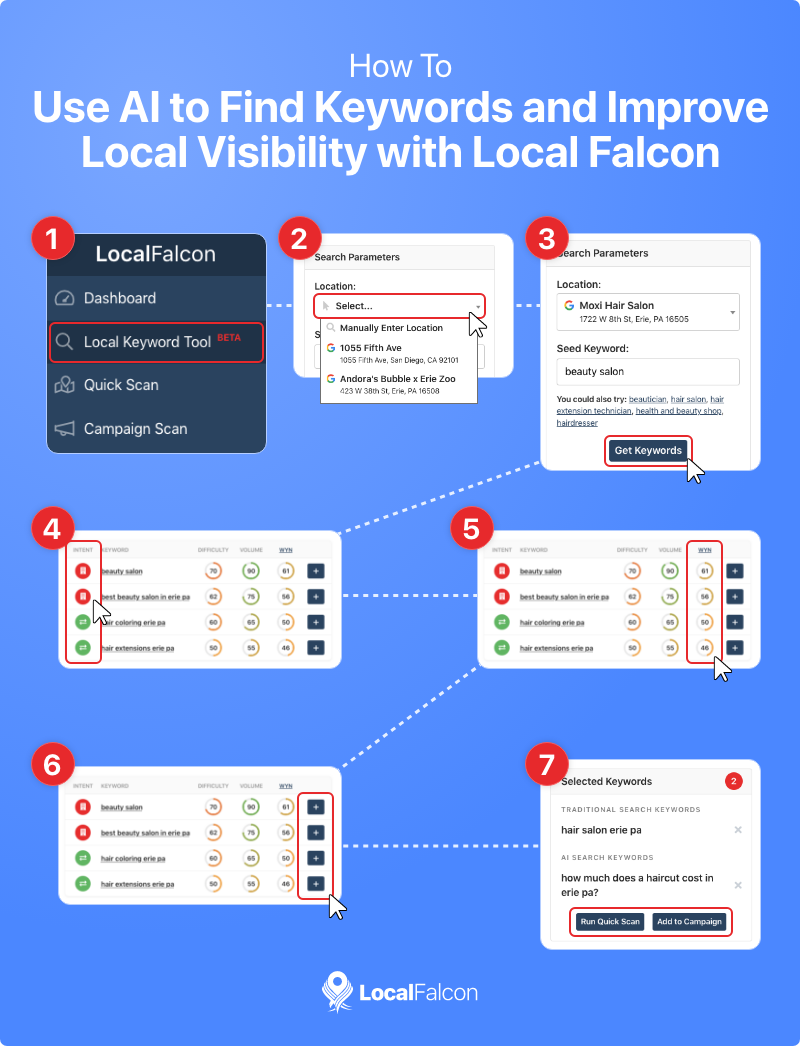
To build a durable process, blend AI efficiency with editorial judgment. Keep a master taxonomy of your site’s topics and map new clusters against it. Never skip the step where you manually check the top 3-5 ranking pages for a keyword you plan to target. The AI can tell you what they include, but your own critical eye catches tone, freshness, and format gaps that an algorithm might overlook.
Regularly audit your existing content. Use an AI tool to re-scan your top pages and find new keyword opportunities based on what has changed in the SERPs. Search intent evolves; a term that was purely informational last year may now have a strong purchase intent if Google started showing product carousels.
Finally, document your prompts and results. The art of learning how to find keywords with AI improves with each iteration. Build a prompt library specific to your niche so you can repeat successes and refine failures.
Frequently Asked Questions About Finding Keywords with AI
What is the best AI tool for keyword research?
The best tool depends on your needs. For all-in-one keyword metrics, clustering, and competitive analysis, Semrush and Ahrefs are industry leaders with deeply integrated AI modules. For content-focused keyword extraction and briefing, SurferSEO and Frase excel. For raw brainstorming and prompt-based discovery, ChatGPT with a well-crafted prompt is incredibly powerful. Many professionals use a combination of two or three tools.
Can AI replace manual keyword research entirely?
Not completely. AI dramatically accelerates the discovery and grouping phases, but human judgment remains essential for final intent verification, brand alignment, and creative strategy. AI can tell you what terms exist, but you must decide how those terms fit into your overall narrative and user journey.
How do I find keywords with AI for a brand new website?
Start with very specific niche prompts. Instead of asking for “SEO keywords,” use “low-competition keywords for a new blog about indoor gardening.” Focus the AI on informational long-tail questions and “best X for beginners” patterns. Cross-reference suggestions with a tool that shows a difficulty score under 20. Prioritize topics where you can create genuinely better content than what is currently ranking.
Is AI keyword research safe to use with Google’s guidelines?
Yes. Using AI to research keywords is no different from using any other data analysis tool. You are analyzing search behavior to create helpful content, not generating automated spam. Google’s guidelines focus on the quality of the content you publish, not how you selected the topics. As long as you write for humans first, AI-assisted research is perfectly compliant.
How often should I run AI keyword research?
Perform a full-scale AI keyword discovery once per quarter for strategic planning. For ongoing content operations, run a lightweight version monthly or whenever you publish a new piece of pillar content. Also trigger an AI re-scan whenever t
Bringing It All Together
Mastering how to find keywords with AI means moving beyond the spreadsheet and embracing a partnership with machine intelligence. AI gives you the speed to process millions of data points and the depth to understand context and intent. Yet your expertise steers the ship, ensuring every keyword you target serves a real human need and moves your business forward. By following the structured process—defining seeds, prompting creatively, validating with metrics, clustering intelligently, and refining with a human eye—you transform a chaotic data swamp into a clear roadmap for content that ranks and converts.
Xem thêm:
- AI SEO GEO Tools: The Complete Guide to Generative Engine Optimization in 2025
- Free AI SEO Tools: Supercharge Your Rankings Without Paying a Cent
- AI SEO Category Optimization: The Complete Playbook for 2025
- AI SEO Machine Learning: The Complete Guide to Smarter Search Rankings
- AI WordPress SEO: Your Complete Blueprint for Automated Organic Growth
Bài viết cùng chủ đề:

AI SEO SEO Automation with Make: The Complete Workflow Guide

AI SEO SEO Automation with Zapier: The Complete Workflow Guide

AI SEO SEO Automation with n8n: The Complete Workflow Guide
AI SEO SEO Automation with Gemini: The Complete Guide to Scaling Organic Growth

AI SEO SEO Automation with Claude: The Complete Guide to Scaling Content in 2025

AI SEO SEO Automation with ChatGPT: The Complete Playbook for 2025

AI SEO & SEO Automation for Affiliate Sites: The 2025 Playbook for Passive Income Growth
AI SEO & SEO Automation for Bloggers: The Complete Guide to Scaling Your Content

AI SEO & SEO Automation for Agencies: The Complete 2025 Playbook

AI SEO and SEO Automation for Ecommerce: The Complete Playbook for 2025

AI SEO & SEO Automation for WordPress: The Complete Playbook for 2025
AI SEO SEO Automation Strategy: The Complete Playbook for 2025

Mastering the AI SEO SEO Automation Process: A Complete Guide to Scaling Organic Growth
AI SEO SEO Automation System: The Complete Guide to Scaling Organic Growth in 2025
AI SEO SEO Automation Platform: The Complete Guide to Scaling Organic Growth in 2025
AI SEO SEO Automation Software: The Complete Guide to Scaling Organic Growth in 2025















