
No products in the cart.
AI SEO H1 Optimization: The Complete Guide to Dominating Search Rankings in 2025
10
Aug
Aug
AI SEO H1 optimization has transformed how websites achieve top search engine rankings. The days of manually crafting a single headline and hoping for the best are fading. Modern search algorithms now analyze hundreds of ranking factors, and the H1 tag remains one of the most powerful on-page signals. This comprehensive guide explores how artificial intelligence reshapes H1 strategy, providing actionable techniques to boost organic traffic, improve click-through rates, and align content with user intent. Understanding this synergy between AI tools and headline optimization is no longer optional—it is essential for digital marketers, content creators, and SEO professionals aiming for sustainable growth.
Understanding AI SEO H1 Optimization
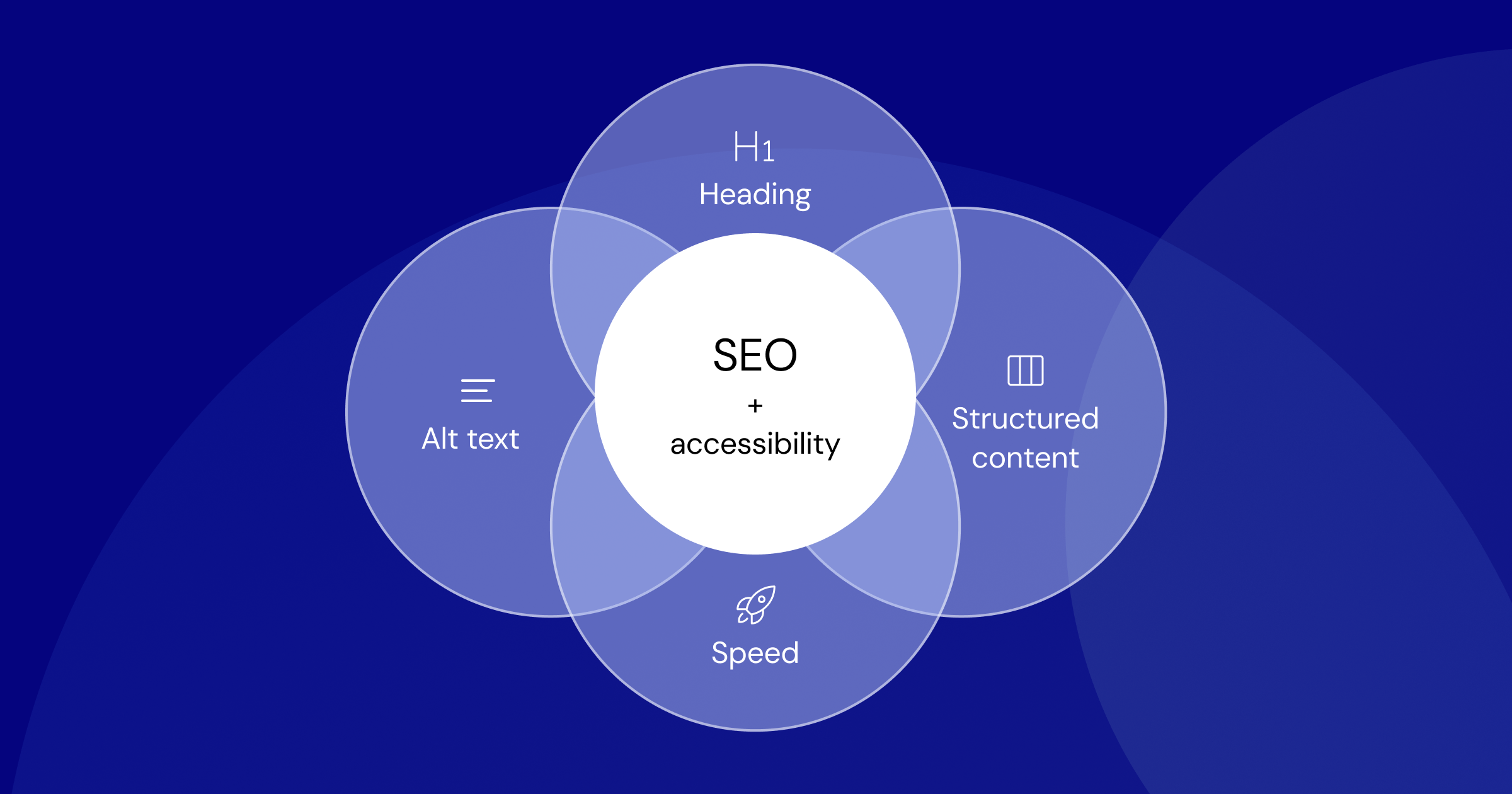
AI SEO H1 optimization refers to the strategic use of artificial intelligence tools and machine learning algorithms to create, test, and refine H1 headline tags for maximum search visibility. Unlike traditional methods that rely on manual keyword placement, AI analyzes vast datasets of search queries, competitor headlines, and user behavior patterns to predict which H1 variations will perform best.
The core principle involves moving beyond simple keyword insertion. AI systems evaluate semantic relevance, emotional triggers, length optimization, and topical authority. These systems process millions of data points to determine how search engines interpret headline structure and how users respond to different phrasing styles. The result is a data-driven approach that continuously improves content performance.
The Evolution from Manual to AI-Driven Headlines
Traditional SEO relied on exact-match keywords in H1 tags. Practitioners would stuff primary keywords into headlines, often sacrificing readability. Search engines evolved, penalizing keyword stuffing while rewarding natural language and user engagement metrics. AI SEO H1 optimization emerged as a solution, using natural language processing to understand context and intent behind search queries.
Modern AI tools analyze SERP features, featured snippet opportunities, and voice search patterns. They identify gaps in existing content and suggest H1 variations that target long-tail queries. This evolution means headlines now serve dual purposes: satisfying algorithmic requirements while compelling human readers to click through from search results.
Why H1 Tags Remain Critical for SEO Success
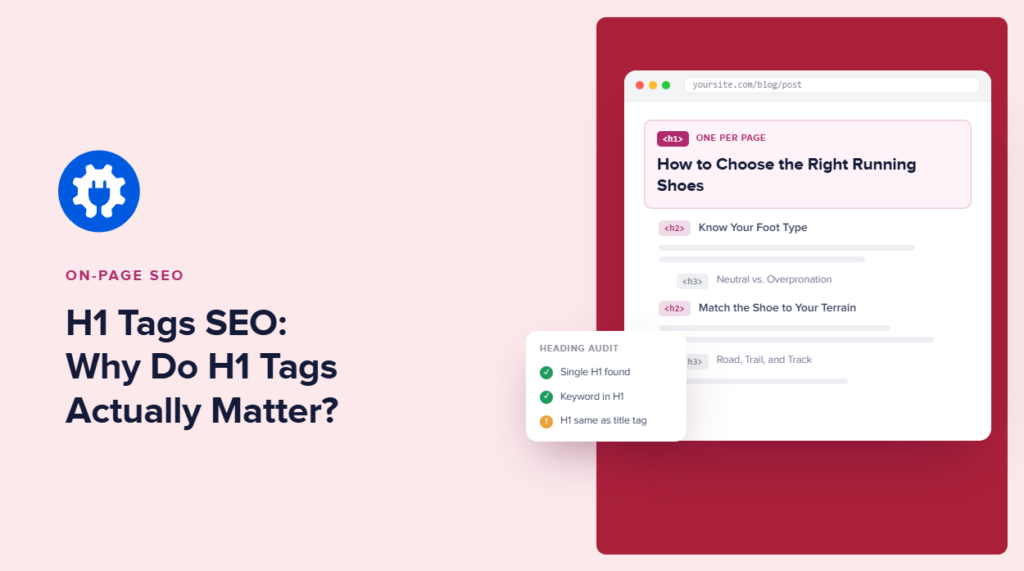
The H1 tag acts as the primary structural signal for search engine crawlers. It defines the main topic of a page, establishing relevance for targeted keywords. While Google’s algorithms have become sophisticated, they still rely heavily on H1 tags to understand page hierarchy and content focus. Pages with clear, descriptive H1 tags consistently outperform those with vague or missing headlines.
User experience also depends on effective H1 implementation. A well-crafted headline sets expectations, guides readers through content, and reduces bounce rates. When visitors immediately understand what a page offers, they stay longer, engage more deeply, and are more likely to convert. This behavioral data feeds back into search rankings, creating a positive feedback loop.
Key Ranking Factors Influenced by H1 Tags
- Keyword Relevance: H1 tags signal primary topic focus to crawlers
- User Engagement: Compelling headlines increase click-through rates from SERPs
- Content Structure: H1 establishes hierarchy for subsequent H2 and H3 tags
- Semantic Context: AI algorithms analyze H1 wording for topical depth
- Mobile Optimization: Concise H1s improve readability on smaller screens
- Time Efficiency: AI generates and evaluates headlines in minutes, not hours
- Data-Driven Decisions: Eliminates guesswork with predictive analytics
- Scalability: Apply consistent optimization across thousands of pages
- Competitive Intelligence: Understand and outperform rival strategies
- Continuous Improvement: Algorithms learn and adapt to algorithm changes
- Cost Reduction: Decrease reliance on expensive manual testing
How AI Tools Transform H1 Optimization Strategies
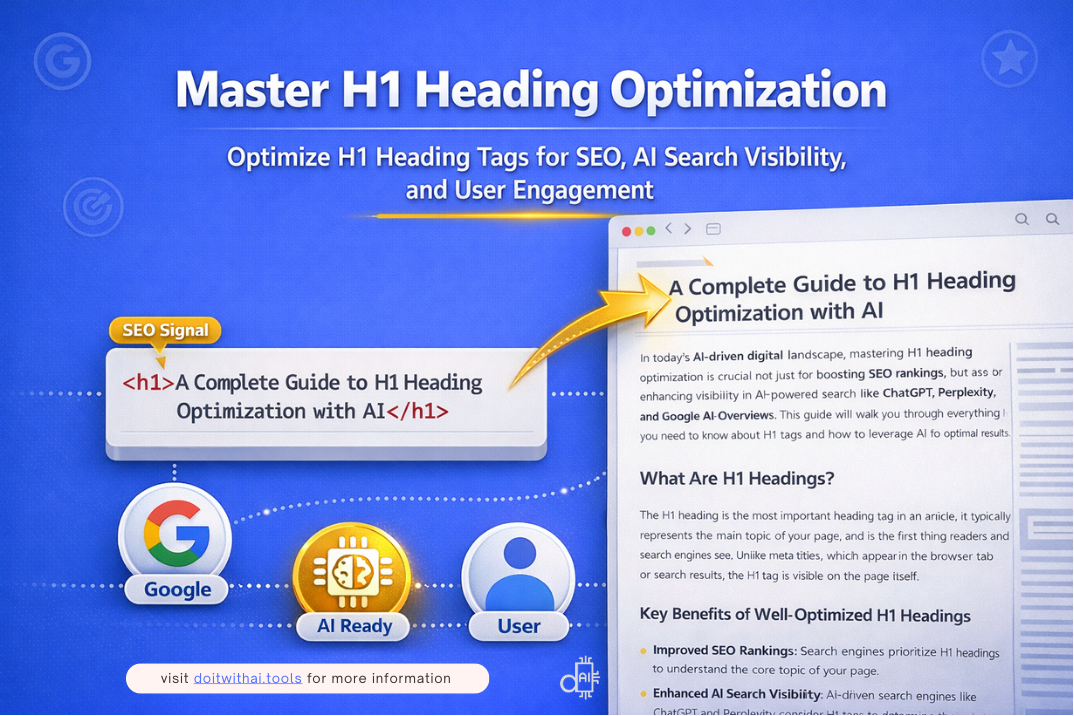
AI-powered SEO platforms offer capabilities far beyond basic keyword suggestions. These tools generate multiple H1 variations, score them against ranking probability, and provide real-time optimization recommendations. Natural language generation models create headlines that match brand voice while incorporating high-value keywords naturally.
Predictive analytics represent another breakthrough. AI systems forecast how specific H1 changes will impact rankings based on historical data and current algorithm updates. This allows content teams to make informed decisions before publishing, rather than testing and adjusting after the fact. The speed of AI analysis means hundreds of headline variations can be evaluated in seconds, a task that would take humans days.
Popular AI Tools for H1 Optimization
| Tool | Primary Function | Key Benefit |
|---|---|---|
| Surfer SEO | Content optimization | Analyzes top-ranking pages for H1 patterns |
| Clearscope | Keyword intelligence | Identifies semantic terms for headline inclusion |
| Frase.io | Content generation | Creates AI-suggested H1 variations |
| MarketMuse | Topical authority | Evaluates H1 against content depth requirements |
| Jasper AI | Copywriting assistance | Generates multiple headline options instantly |
Core Components of Effective AI SEO H1 Optimization
Successful H1 optimization through AI involves several interconnected components. Each element contributes to the overall effectiveness of the headline in both search algorithms and user perception. Understanding these components helps create a systematic approach to headline development.
Keyword Placement and Density
AI tools analyze optimal keyword positioning within H1 tags. While exact-match keywords remain valuable, their placement matters significantly. Front-loading primary keywords often yields better results, but AI algorithms can identify when mid-phrase placement performs better for specific queries. The ideal density varies by topic, competition level, and search intent.
Length Optimization
Data shows that H1 tags between 20-70 characters perform best in search results. AI tools analyze SERP display limitations and recommend optimal lengths for maximum visibility. Shorter headlines appear fully in search results, while longer ones may get truncated. AI balances completeness with display constraints.
Emotional and Psychological Triggers
Beyond algorithms, H1 tags must resonate with human psychology. AI systems analyze emotional language patterns that drive clicks. Words like “ultimate,” “complete,” “essential,” and “proven” trigger curiosity and authority perceptions. AI tools score headlines based on emotional impact, helping writers craft more compelling titles.
Practical Implementation: Step-by-Step AI H1 Optimization Process
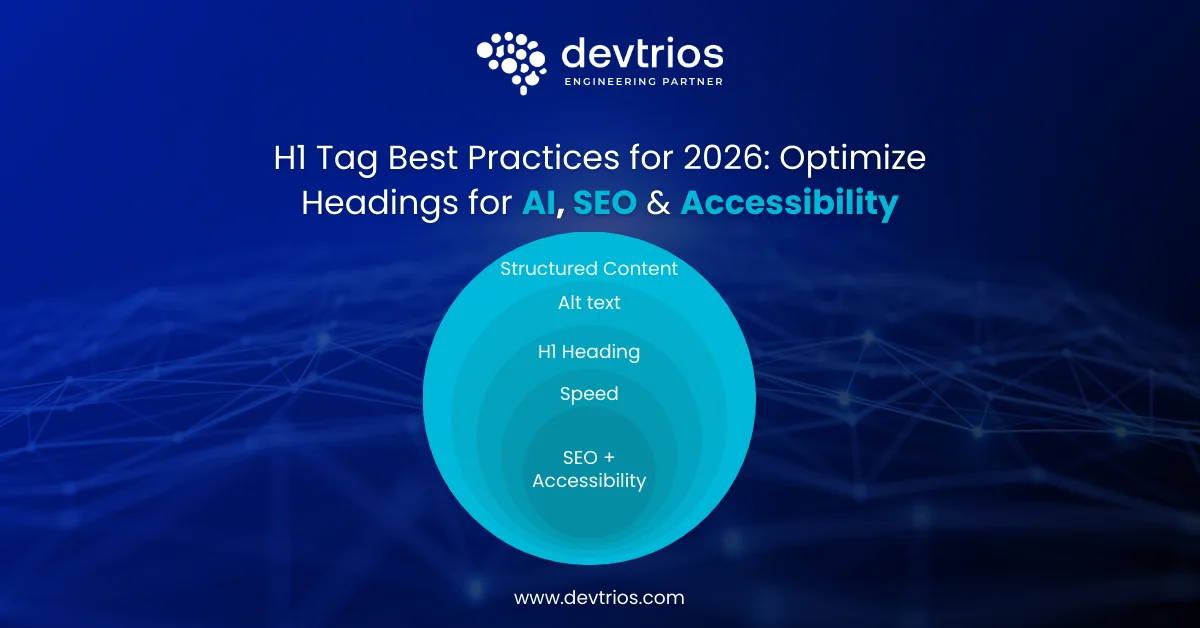
Implementing AI SEO H1 optimization requires a structured workflow. Following a proven process ensures consistent results across all content pieces. This step-by-step guide outlines the essential stages from initial research to final implementation.
Step 1: Conduct Comprehensive Keyword Research
Begin with thorough keyword analysis using AI-powered tools. Identify primary keywords, secondary terms, and long-tail variations. AI platforms provide search volume data, competition metrics, and trend forecasts. This foundation determines which keywords deserve inclusion in H1 tags.
Step 2: Analyze Competitor H1 Strategies
Use AI tools to scrape and analyze H1 tags from top-ranking competitors. Identify patterns in their headline structure, keyword usage, and emotional triggers. AI comparison tools highlight gaps and opportunities that competitors may have missed.
Step 3: Generate Multiple H1 Variations
Leverage AI content generation tools to create 10-20 H1 variations. Include different keyword combinations, emotional angles, and structural approaches. AI models trained on high-performing content produce diverse options that human writers might not consider.
Step 4: Score and Select Optimal Headlines
Use AI optimization tools to score each variation against ranking factors. These scores consider keyword relevance, length, emotional impact, and predicted click-through rates. Select the highest-scoring option while ensuring it aligns with brand voice and content accuracy.
Step 5: Implement and Monitor Performance
Apply the chosen H1 tag to your content and monitor performance metrics. Track rankings, click-through rates, and engagement data. AI monitoring tools provide real-time insights, allowing for rapid adjustments if performance lags expectations.
Benefits of AI-Driven H1 Optimization
The advantages of incorporating AI into H1 optimization extend beyond improved rankings. Organizations that adopt these techniques gain significant competitive advantages in content marketing and search visibility.
Limitations and Challenges of AI SEO H1 Optimization
While AI offers powerful capabilities, understanding its limitations prevents unrealistic expectations. AI tools cannot replace human creativity and contextual understanding entirely. Several challenges require careful consideration.
Contextual Nuance
AI algorithms sometimes miss subtle cultural or industry-specific nuances. A headline that performs well in one niche may fail in another due to differing audience expectations. Human oversight remains essential for final headline selection.
Algorithm Dependence
Search engine algorithms change frequently. AI tools trained on current data may become less effective after major updates. Continuous monitoring and tool updates are necessary to maintain optimization quality.
Over-Optimization Risks
Excessive reliance on AI suggestions can lead to formulaic headlines that lack distinctiveness. Search engines increasingly reward unique, authentic content. Balance AI insights with human creativity to avoid homogenization.
Common Mistakes in AI SEO H1 Optimization
Even with advanced tools, practitioners often make avoidable errors. Recognizing these mistakes helps refine strategies and maximize the value of AI investments.
Ignoring User Intent
Focusing solely on keyword optimization while neglecting user intent produces headlines that rank but fail to convert. AI tools provide intent analysis, but human judgment determines whether a headline truly addresses what users seek.
Duplicate H1 Tags Across Pages
Using the same H1 structure for multiple pages creates cannibalization issues. AI tools can identify duplicate patterns, but content teams must ensure each page has a unique, targeted headline.
Neglecting Mobile Display
Headlines that look great on desktop may truncate on mobile devices. AI optimization should include mobile display testing to ensure headlines remain compelling across all screen sizes.
Overlooking H1-H2 Relationship
The H1 sets the stage for supporting H2 and H3 tags. AI optimization must consider the entire content structure, not just the primary headline. Coherent hierarchy improves both user experience and search visibility.
Best Practices for AI SEO H1 Optimization
Adopting proven best practices maximizes the effectiveness of AI-driven H1 strategies. These guidelines reflect current industry standards and search engine expectations.
Maintain Natural Language Flow
Write H1 tags that sound natural to human readers. Avoid awkward keyword placement that sacrifices readability. AI tools increasingly reward conversational language that matches how users actually search.
Include Power Words Strategically
Incorporate high-impact words that trigger emotional responses. Words like “proven,” “essential,” “ultimate,” and “expert” add authority. AI tools can suggest power words based on your target audience and industry.
Test Multiple Variations
Do not settle for the first AI-generated headline. Test multiple variations across similar content pieces to identify patterns that work best for your specific audience. A/B testing with AI analytics provides concrete performance data.
Align H1 with Meta Title
Ensure consistency between H1 tags and meta titles while avoiding exact duplication. Search engines appreciate alignment, but slight variations can capture additional keyword opportunities.
Measuring the Impact of AI SEO H1 Optimization
Quantifying the effectiveness of H1 optimization efforts requires tracking specific metrics. These measurements demonstrate ROI and guide future optimization strategies.
| Metric | Measurement Method | Target Improvement |
|---|---|---|
| Click-Through Rate | Google Search Console | 2-5% increase |
| Keyword Rankings | Rank tracking tools | Top 3 positions for target terms |
| Organic Traffic | Analytics platforms | 15-30% growth |
| Bounce Rate | Behavioral analytics | 10-20% reduction |
| Time on Page | Engagement metrics | 30-60 second increase |
Future Trends in AI SEO H1 Optimization
The landscape of AI-driven SEO continues evolving rapidly. Staying ahead of emerging trends positions content teams for long-term success. Several developments will shape H1 optimization in coming years.
Voice Search Optimization
As voice assistants become ubiquitous, H1 tags must accommodate conversational queries. AI tools increasingly optimize for natural language patterns used in voice searches, favoring longer, question-based headlines.
Multimodal Search Integration
Search engines now process images, videos, and text together. AI optimization will consider how H1 tags relate to visual content, creating cohesive signals across multiple formats.
Real-Time Personalization
Future AI systems may dynamically adjust H1 tags based on user location, device, and search history. This personalization promises unprecedented relevance but raises questions about content consistency.
Frequently Asked Questions About AI SEO H1 Optimization
What is the ideal length for an H1 tag?
The optimal H1 length typically falls between 20 and 70 characters. This range ensures full display in search results while providing enough space for meaningful keyword inclusion. AI tools analyze SERP display constraints and recommend specific lengths based on your target keywords and competition.
Can AI completely replace human H1 writing?
AI cannot fully replace human creativity and contextual understanding. While AI generates excellent headline options and provides data-driven insights, human judgment remains essential for brand alignment, emotional resonance, and nuanced messaging. The best approach combines AI efficiency with human oversight.
How often should H1 tags be updated?
H1 tags should be reviewed whenever search rankings decline or content performance drops. Regular monitoring every 3-6 months helps identify opportunities for improvement. Major algorithm updates or industry shifts may necessitate more frequent adjustments.
Do H1 tags affect featured snippet opportunities?
Yes, H1 tags significantly influence featured snippet selection. Clear, concise headlines that directly answer search queries have higher chances of appearing in position zero. AI tools can optimize H1 structure to target featured snippet opportunities.
Is it necessary to include the exact keyword in H1?
Exact keyword inclusion remains beneficial but is not always mandatory. Search engines understand semantic relationships and synonyms. AI optimization tools help determine when exact-match keywords add value versus when variations perform better.
Conclusion: Mastering AI SEO H1 Optimization
AI SEO H1 optimization represents the convergence of advanced technology and fundamental SEO principles. The ability to leverage artificial intelligence for headline creation and refinement provides measurable competitive advantages in search rankings and user engagement. Organizations that embrace these techniques position themselves for sustained organic growth.
The journey toward effective H1 optimization requires continuous learning and adaptation. Search algorithms evolve, user behaviors shift, and AI capabilities expand. Maintaining a flexible approach that combines data-driven insights with human creativity ensures long-term success. Start implementing AI-powered H1 strategies today to unlock the full potential of your content and dominate search results in your industry.
Xem thêm:
- AI SEO Keyword Strategy: The Complete Guide to Future-Proof Search Rankings
- AI SEO GEO Ranking: The Complete Guide to Winning Generative Engine Optimization
- AI SEO Meta Title Generator: The Complete Guide to Higher Click-Through Rates
- AI SEO Content Pipeline: The Complete Blueprint for Scaling Organic Growth in 2025
- WP Trove AI WordPress: The Complete Guide to AI-Powered Site Management
Bài viết cùng chủ đề:

AI SEO SEO Automation with Make: The Complete Workflow Guide

AI SEO SEO Automation with Zapier: The Complete Workflow Guide

AI SEO SEO Automation with n8n: The Complete Workflow Guide
AI SEO SEO Automation with Gemini: The Complete Guide to Scaling Organic Growth

AI SEO SEO Automation with Claude: The Complete Guide to Scaling Content in 2025

AI SEO SEO Automation with ChatGPT: The Complete Playbook for 2025

AI SEO & SEO Automation for Affiliate Sites: The 2025 Playbook for Passive Income Growth
AI SEO & SEO Automation for Bloggers: The Complete Guide to Scaling Your Content

AI SEO & SEO Automation for Agencies: The Complete 2025 Playbook

AI SEO and SEO Automation for Ecommerce: The Complete Playbook for 2025

AI SEO & SEO Automation for WordPress: The Complete Playbook for 2025
AI SEO SEO Automation Strategy: The Complete Playbook for 2025

Mastering the AI SEO SEO Automation Process: A Complete Guide to Scaling Organic Growth
AI SEO SEO Automation System: The Complete Guide to Scaling Organic Growth in 2025
AI SEO SEO Automation Platform: The Complete Guide to Scaling Organic Growth in 2025
AI SEO SEO Automation Software: The Complete Guide to Scaling Organic Growth in 2025















