
No products in the cart.
AI SEO Article Generator: The Complete Guide to Automated Content That Ranks
10
Aug
Aug
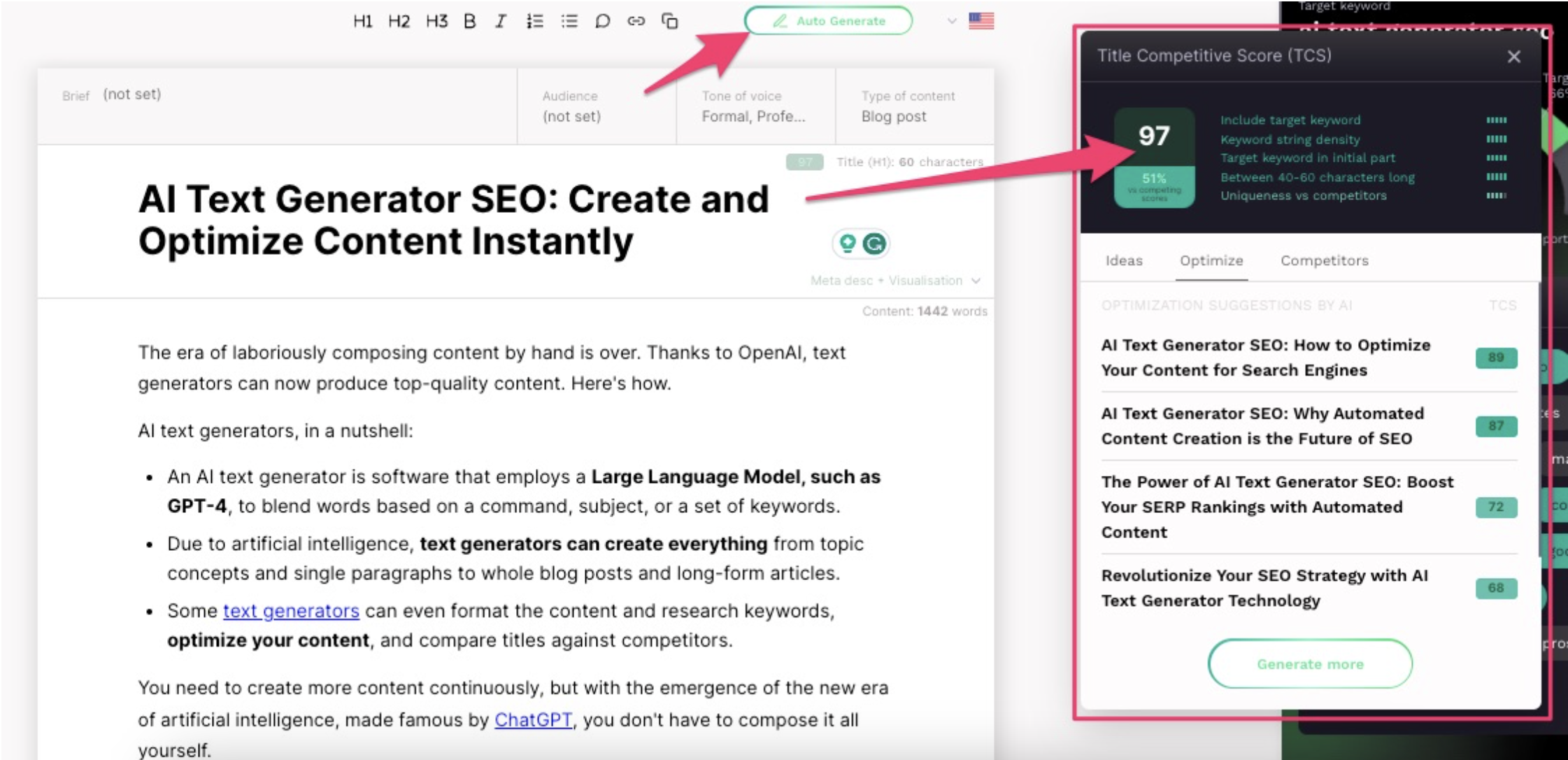
The digital marketing landscape has shifted dramatically with the introduction of advanced language models. An AI SEO Article Generator is no longer a futuristic concept but a practical tool used by thousands of content teams daily. These systems analyze search engine algorithms, user intent, and semantic patterns to produce written material designed specifically for organic visibility. This guide examines how these generators work, their true capabilities, and the strategic approach required to leverage them effectively without sacrificing quality or search rankings.
What Is an AI SEO Article Generator?

An AI SEO Article Generator is a software application that uses natural language processing (NLP) and machine learning algorithms to create written content optimized for search engines. Unlike basic text spinners that simply replace words with synonyms, modern generators understand context, structure, and topical relevance. They can produce complete articles, blog posts, product descriptions, and landing page copy based on a set of input parameters such as keywords, tone, and target audience.
The core function involves three primary steps. First, the system analyzes the target keyword and identifies related terms and concepts through semantic analysis. Second, it gathers information from its training data to construct coherent paragraphs. Third, it formats the output with appropriate headings, meta descriptions, and internal linking suggestions. The result is a draft that mimics human writing patterns while adhering to SEO best practices.
The Technology Behind AI Content Generation
These tools rely on transformer-based architectures, similar to those used in advanced chatbots. The models are trained on vast datasets comprising books, articles, websites, and academic papers. Through this training, they learn grammar rules, factual relationships, and stylistic variations. When generating an article, the AI predicts the most likely sequence of words based on the prompt and the context established in previous sentences.
Modern generators also incorporate real-time search data. Some platforms integrate with keyword research tools to suggest related queries, question-based headings, and content gaps. This integration ensures that the generated article targets not just the primary keyword but also long-tail variations that capture additional search traffic.
Key Features of a High-Quality AI SEO Article Generator
Not all AI writing tools are created equal. The most effective platforms share several distinguishing features that set them apart from basic generators. Understanding these features helps in selecting the right tool for specific content needs.
- Semantic Keyword Integration: The tool automatically includes LSI (Latent Semantic Indexing) keywords and related phrases throughout the text, improving topical authority.
- Content Structuring: It generates proper H1, H2, and H3 heading hierarchies that mirror the format preferred by Google for featured snippets.
- Readability Optimization: The output is adjusted for sentence length, paragraph structure, and vocabulary level to match the target audience’s reading ability.
- Plagiarism Prevention: Advanced algorithms ensure the generated text is original and does not duplicate existing web content.
- Customization Controls: Users can specify tone (professional, conversational, persuasive), length, and the inclusion of specific data points or examples.
- SEO Metadata Generation: The tool creates meta titles, meta descriptions, and URL slugs that align with the primary keyword.
- Publishing Without Editing: The most common mistake. AI output is a draft, not a finished product. Publishing unedited content damages credibility and rankings.
- Targeting Too Many Keywords: Stuffing an article with dozens of keywords confuses the AI and results in unreadable text. Focus on one primary keyword and a few closely related terms.
- Ignoring Search Intent: Generating an article about a keyword without understanding whether users want a tutorial, a list, or a comparison leads to high bounce rates.
- Using AI for YMYL Topics: Your Money or Your Life topics (health, finance, legal) require strict accuracy. AI errors in these areas can cause serious harm and legal issues.
- Neglecting Content Refresh: AI-generated articles become outdated quickly. Set a schedule to review and update content regularly.
Standalone Tools vs. Integrated Platforms
There are two main categories of AI SEO Article Generators. Standalone tools focus exclusively on content creation. They offer a simple interface where users input a keyword and receive an article draft. Integrated platforms combine content generation with other SEO functions such as rank tracking, site audits, and backlink analysis. The choice depends on workflow preferences. A standalone tool is often sufficient for freelance writers, while marketing agencies may benefit from an integrated suite that centralizes all SEO activities.
Benefits of Using an AI SEO Article Generator
The adoption of AI in content marketing is driven by measurable advantages. Businesses that incorporate these tools into their workflow report significant improvements in efficiency and output volume. The benefits extend beyond simple time savings.
Scalability and Speed
Producing a 2,000-word article manually takes several hours, including research, drafting, and editing. An AI generator can produce a comparable draft in under two minutes. This speed enables content teams to publish multiple articles per day, covering a wider range of keywords and topics. For large e-commerce sites with thousands of product pages, this scalability is essential for maintaining a competitive edge.
Cost Reduction
Hiring professional writers for every piece of content is expensive. AI generators offer a subscription-based model that costs a fraction of a full-time writer’s salary. While human oversight is still necessary for editing and fact-checking, the overall cost per article decreases substantially. This allows smaller businesses to compete with larger corporations in content production volume.
Consistency in Brand Voice
Maintaining a consistent tone across all content is challenging when working with multiple writers. AI tools can be trained on a specific brand voice by providing examples of previous content. Once configured, the generator produces text that aligns with the established style, ensuring uniformity across blog posts, social media updates, and website copy.
SEO Data Integration
Many generators connect directly to search engine APIs to analyze current ranking factors. They can identify the average word count for top-ranking pages, the types of headings used, and the presence of specific entities. This data-driven approach ensures that the generated content matches the format that Google currently favors for the target keyword.
Limitations and Challenges
Despite the advantages, AI SEO Article Generators have inherent limitations that must be acknowledged. Relying solely on AI without human intervention can lead to poor outcomes. Understanding these constraints is crucial for setting realistic expectations.
Factual Accuracy Issues
AI models generate text based on patterns in their training data, not on real-time fact-checking. They may produce plausible-sounding but incorrect statistics, dates, or attributions. For topics that require precise data, such as medical advice or financial regulations, the risk of inaccuracy is high. Every AI-generated article must be reviewed by a human subject matter expert before publication.
Lack of Original Insights
AI cannot conduct interviews, attend events, or analyze proprietary data. It can only rephrase and recombine information that already exists on the internet. This means that AI-generated content often lacks unique perspectives or exclusive insights. For competitive keywords where many high-quality articles already exist, purely AI-generated content may struggle to stand out.
Repetitive Phrasing
Despite improvements in language models, AI still tends to fall back on common phrases and sentence structures. This can result in content that feels formulaic or generic. Editors must rewrite sections to inject personality and variety into the text.
Google’s Stance on AI Content
Google’s official guidelines state that AI-generated content is acceptable as long as it is helpful and original. However, the search engine’s algorithms are designed to detect content that provides little value, regardless of how it was produced. Mass-produced, low-quality AI articles that simply rephrase existing content are likely to be flagged as spam. The key is to use AI as a starting point and then add substantial value through human editing.
AI SEO Article Generator vs. Human Writers

Choosing between AI and human writers is not a binary decision. The most effective content strategies use both. The table below outlines the key differences to help determine when each approach is appropriate.
| Aspect | AI SEO Article Generator | Human Writer |
|---|---|---|
| Speed | Produces drafts in minutes | Takes hours or days |
| Cost | Low per-article cost | High per-article cost |
| Originality | Recombines existing information | Can provide unique insights and experiences |
| Fact-Checking | Requires human verification | Can verify sources during research |
| SEO Optimization | Built-in keyword and structure analysis | Depends on the writer’s SEO knowledge |
| Brand Voice | Can mimic a provided style | Naturally adapts to brand culture |
| Scalability | Unlimited volume | Limited by time and resources |
For evergreen topics that require basic information, AI is highly effective. For thought leadership pieces, industry analysis, or content that requires personal experience, human writers are irreplaceable. A hybrid approach involves using AI to generate the initial draft and then having a human writer expand on key points, add examples, and refine the language.
How to Use an AI SEO Article Generator Effectively
Maximizing the value of an AI SEO Article Generator requires a structured workflow. Simply typing a keyword and publishing the output is a recipe for failure. The following process outlines the steps for producing high-ranking content with AI assistance.
Step 1: Conduct Thorough Keyword Research
Before generating content, identify the primary keyword and a cluster of secondary keywords. Use tools like Google Keyword Planner, Ahrefs, or SEMrush to find search volume, competition level, and related queries. The AI generator needs this context to produce relevant content. Provide the tool with a list of 5-10 keywords to incorporate naturally.
Step 2: Define the Content Brief
A vague prompt yields vague results. Provide the AI with a detailed brief that includes the target audience, the goal of the article (informational, transactional, navigational), the desired word count, and any specific points that must be covered. For example, if writing about “best running shoes,” specify whether the article is for beginners, marathon runners, or trail enthusiasts.
Step 3: Generate Multiple Drafts
Most generators allow users to create multiple versions of the same article. Generate at least three drafts and compare them. Each draft will have different strengths and weaknesses. One might have a better introduction, while another has a more comprehensive FAQ section. Combine the best elements from each draft to create a superior final version.
Step 4: Edit and Fact-Check
This is the most critical step. Read the entire article carefully. Verify all statistics, dates, and claims against reliable sources. Correct any factual errors. Rewrite sentences that sound awkward or robotic. Add personal anecdotes, case studies, or quotes from industry experts to increase the article’s value and uniqueness.
Step 5: Optimize On-Page Elements
Even though the AI generates meta titles and descriptions, review them critically. Ensure the title is compelling and includes the primary keyword. Check that the URL slug is short and descriptive. Add alt text to any images. Ensure internal links point to relevant pages on your website and external links go to authoritative sources.
Step 6: Review for E-E-A-T Signals
Google’s quality raters look for Experience, Expertise, Authoritativeness, and Trustworthiness. Add an author bio that highlights relevant credentials. Include a “Last Updated” date. Cite primary sources for any data points. If the article covers a topic where you have direct experience, add a section describing that experience.
Common Mistakes to Avoid
Many businesses fail to see results from AI-generated content due to avoidable errors. Recognizing these pitfalls is the first step toward avoiding them.
Important Notes on Quality and Ethics
Using an AI SEO Article Generator raises ethical considerations that content creators must address. Transparency is a growing concern among readers. Some publishers choose to disclose the use of AI in their content creation process, while others keep it private. T
Plagiarism is another concern. While AI generates original text, it can inadvertently reproduce phrases from its training data. Running the final output through a plagiarism checker is a prudent step. Additionally, the environmental impact of running large AI models is a consideration for eco-conscious brands. Some providers use energy-efficient data centers, which can be a factor in tool selection.
Frequently Asked Questions
Will Google penalize my website for using an AI SEO Article Generator?
Google does not penalize content simply for being generated by AI. The search engine’s spam policies target content that is created primarily to manipulate rankings, regardless of whether it is written by a human or a machine. If the AI-generated content is helpful, original, and provides a good user experience, it can rank well. If it is thin, repetitive, or contains factual errors, it may be demoted.
Can an AI SEO Article Generator write better than a human?
In terms of speed and volume, AI is superior. In terms of creativity, emotional depth, and original research, humans are superior. The best results come from combining the two. AI handles the heavy lifting of drafting and keyword optimization, while humans provide the unique insights and editorial judgment that make content truly valuable.
What is the best AI SEO Article Generator?
The best tool depends on specific needs, budget, and technical requirements. Popular options include Jasper, Copy.ai, Writesonic, and Surfer SEO’s Content Editor. Each has strengths in different areas. Jasper is known for its brand voice customization, while Surfer SEO excels at integrating real-time SERP analysis. A free trial is the best way to determine which tool fits a particular workflow.
How long should an AI-generated article be?
The ideal length depends on the topic and the competition. For most informational queries, articles between 1,500 and 2,500 words perform well. For highly competitive topics, longer, more comprehensive guides of 3,000 words or more may be necessary. The AI generator can analyze the average word count of current top-ranking pages and suggest an appropriate length.
Do I need to disclose that I use AI for content creation?
T However, some affiliate programs and advertising networks have specific policies regarding AI-generated content. Review the terms of service for any platform where the content will be published. If in doubt, err on the side of transparency with your audience.
Conclusion
The AI SEO Article Generator has transformed the content production landscape, offering unprecedented speed, scalability, and cost efficiency. These tools are not a replacement for human creativity and expertise but rather a powerful complement to them. The most successful content strategies treat AI as an assistant that handles the initial drafting process, allowing human writers to focus on adding unique value, verifying facts, and refining the narrative. By understanding the capabilities and limitations of these tools, implementing a rigorous editing workflow, and adhering to search engine guidelines, businesses can leverage AI to produce content that ranks well, engages readers, and drives sustainable organic traffic. The future of SEO content is not a choice between human and machine, but a collaboration that maximizes the strengths of both.
Xem thêm:
- AI SEO SEO Automation Strategy: The Complete Playbook for 2025
- AI SEO Ranking Opportunities: The Complete Playbook for 2025
- AI SEO External Links: The Complete Guide to Smarter Link Building in 2025
- Best AI Keyword Tools: Unlock Hidden Search Opportunities in 2025
- AI SEO SE Ranking: The Complete Guide to Dominating Search in 2025
Bài viết cùng chủ đề:

AI SEO SEO Automation with Make: The Complete Workflow Guide

AI SEO SEO Automation with Zapier: The Complete Workflow Guide

AI SEO SEO Automation with n8n: The Complete Workflow Guide
AI SEO SEO Automation with Gemini: The Complete Guide to Scaling Organic Growth

AI SEO SEO Automation with Claude: The Complete Guide to Scaling Content in 2025

AI SEO SEO Automation with ChatGPT: The Complete Playbook for 2025

AI SEO & SEO Automation for Affiliate Sites: The 2025 Playbook for Passive Income Growth
AI SEO & SEO Automation for Bloggers: The Complete Guide to Scaling Your Content

AI SEO & SEO Automation for Agencies: The Complete 2025 Playbook

AI SEO and SEO Automation for Ecommerce: The Complete Playbook for 2025

AI SEO & SEO Automation for WordPress: The Complete Playbook for 2025
AI SEO SEO Automation Strategy: The Complete Playbook for 2025

Mastering the AI SEO SEO Automation Process: A Complete Guide to Scaling Organic Growth
AI SEO SEO Automation System: The Complete Guide to Scaling Organic Growth in 2025
AI SEO SEO Automation Platform: The Complete Guide to Scaling Organic Growth in 2025
AI SEO SEO Automation Software: The Complete Guide to Scaling Organic Growth in 2025















