
No products in the cart.
AI SEO Audit: How to Automate Your Website’s Health Check and Boost Search Rankings
29
Jul
Jul
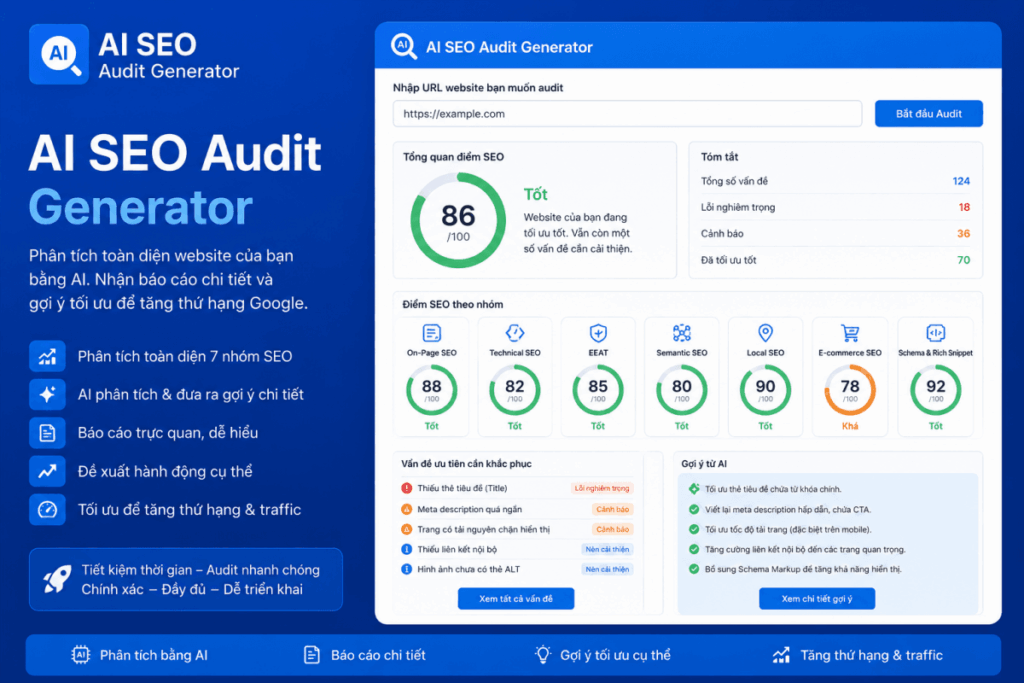
Every website owner knows that SEO is not a set-and-forget strategy. Regular audits are the backbone of sustainable organic growth. Yet traditional manual audit methods can be painfully slow, error‑prone, and unable to keep up with the scale of modern websites. An AI SEO Audit changes the game entirely. By harnessing machine learning and natural language processing, you can uncover critical issues, prioritize fixes, and spot competitive gaps in minutes—not weeks. This article walks you through everything you need to know about AI‑powered site diagnostics, from core concepts to hands‑on implementation, so you can keep your search presence healthy and agile.
What Is an AI SEO Audit?

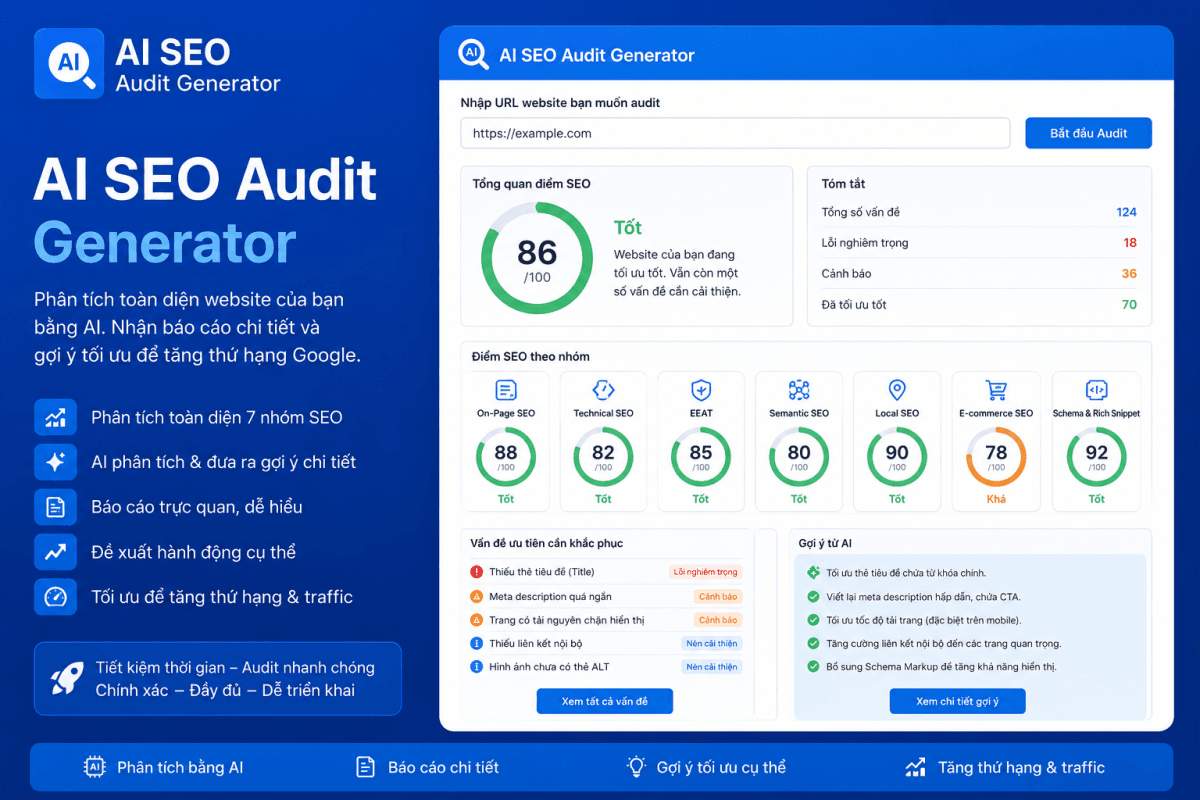
An AI SEO Audit is a comprehensive website analysis that uses artificial intelligence algorithms to evaluate all facets of search engine optimization. Unlike rule‑based crawlers that only check for known error patterns, an AI‑driven audit interprets context, learns from large data sets, and mimics the intuition of a seasoned SEO specialist. It ingests data from your site’s crawl, server logs, content corpus, backlink profile, and user behaviour signals—then processes this information through deep learning models, natural language understanding, and predictive analytics.
The output is a prioritized list of actionable issues and opportunities, often accompanied by severity scores and clear fix suggestions. The AI can spot subtle patterns a human might miss, such as a gradual decline in content relevance due to shifting search intent or the emergence of undesirable link velocity from a specific referring domain. In essence, an AI SEO audit transforms raw data into strategic intelligence, dramatically reducing the time from diagnosis to resolution.
How AI SEO Audits Differ from Traditional Manual Audits
Traditional manual SEO audits rely on an expert’s ability to manually review sampling of pages, analyze tools’ raw exports, and apply heuristics built from experience. While effective in small sites, this approach struggles with large enterprise environments and misses nuanced connections across thousands of pages. AI‑powered audits, on the other hand, scale effortlessly and bring pattern recognition far beyond human cognitive limits. The table below highlights the key distinctions.
| Factor | Traditional Manual Audit | AI SEO Audit |
|---|---|---|
| Speed | Days to weeks per full audit | Minutes to hours |
| Data coverage | Sample‑based, often 5–10% of pages | Full site crawl and holistic data ingestion |
| Pattern detection | Human observation, limited to obvious issues | Machine learning models detect subtle correlations |
| Error rate | Moderate to high due to fatigue and inconsistency | Very low; consistency across entire dataset |
| Scalability | Costly and time‑consuming for large sites | Handles millions of pages without performance drop |
| Cost efficiency | High labour cost, recurring expense | Lower operational cost after initial tool investment |
Key Components Analyzed by an AI SEO Audit
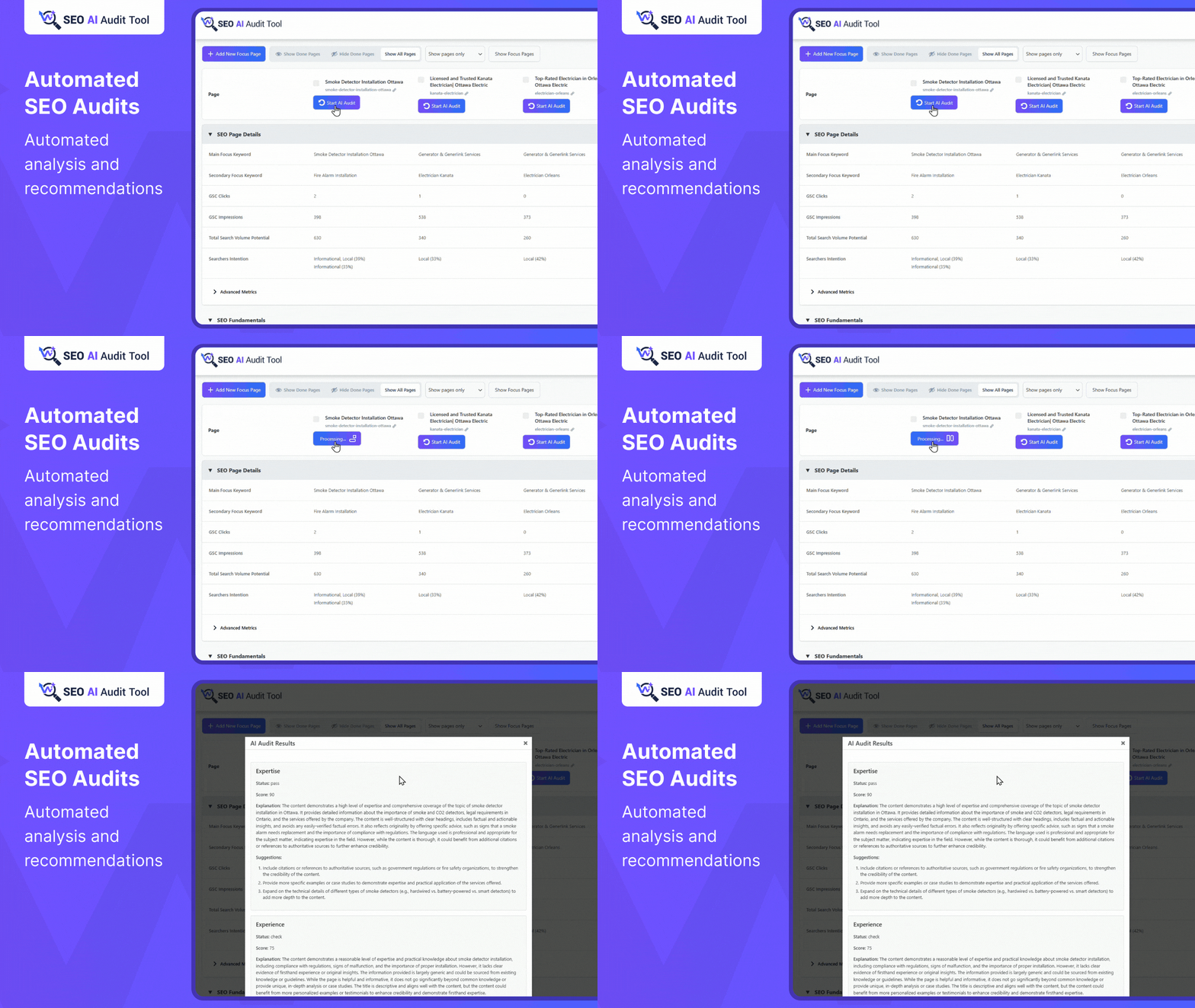
A robust AI SEO Audit does not inspect a single dimension in isolation. It correlates findings from multiple areas to provide a unified picture of site health. Below are the pillars any intelligent audit should cover.
Technical SEO Foundation
- Crawlability and indexation: AI detects crawl traps, orphan pages, and improper noindex directives while simulating how search engine bots navigate your site.
- Site architecture and internal linking: Models analyze link graph depth, click distance, and PageRank flow, flagging weak silos and isolated content hubs.
- Structured data and schema markup: Natural language processing validates schema accuracy, completeness, and adherence to Google’s latest rich‑result requirements.
- Core Web Vitals and page experience: Machine learning correlates lab data and real‑user metrics to pinpoint specific elements degrading LCP, INP, or CLS.
- Content uniqueness and thin content: AI compares every page against the indexed corpus, identifying near‑duplicates, boilerplate redundancy, and pages with insufficient helpful content.
- Keyword and topic modelling: Using entity extraction and semantic analysis, the audit maps covered topics against search intent clusters missing from your content strategy.
- Readability and E‑E‑A‑T signals: Advanced language models assess factual accuracy, authoritativeness, and clarity, comparing your content to what currently ranks in top positions.
- Backlink profile health: AI identifies toxic links using contextual relevance, unnatural anchor text distribution, and historical penalty patterns, not just domain authority.
- Link velocity and growth patterns: Predictive models spot unnatural acquisition spikes that could trigger manual actions.
- Brand sentiment and citations: Some AI audits integrate web‑wide brand mentions and sentiment analysis to gauge off‑page authority beyond traditional link graphs.
- Engagement signals: By analyzing click‑through rates, pogo‑sticking, and session depth logs, the AI deduces which pages fail to satisfy user intent despite high rankings.
- Competitive gap analysis: Machine learning reverse‑engineers competitors’ ranking assets, highlighting keywords and content types where your site underperforms.
- Radical time savings: What took an agency weeks can be completed over a morning coffee, freeing up specialists to focus on implementation and strategy.
- Comprehensive visibility: AI leaves no stone unturned, crawling every accessible URL and analyzing every backlink, eliminating sampling bias that plagues manual audits.
- Predictive insights: Rather than just reporting current errors, some AI engines forecast the long‑term impact of issues and suggest the sequencing of fixes with the highest ROI.
- Continuous monitoring: Many AI audit platforms can run on a schedule, alerting you the moment a new critical issue appears—essential for large, dynamic websites.
- Unbiased prioritization: Data‑driven scoring removes guesswork, ensuring limited development resources go to changes that genuinely move the needle.
- Democratized expertise: Junior team members can interpret audit reports with the clarity and guidance of AI‑generated explanations, closing the skill gap.
- Data quality dependence: AI models are only as good as the data they receive. Misconfigured crawling, incomplete access to server logs, or improperly tagged site versions can skew results heavily.
- Black‑box decisioning: Some machine learning algorithms do not explain their reasoning clearly, making it difficult to trust a finding without manual verification.
- Context blindness: AI may flag a drop in keyword density as a weakness, but it might not understand a deliberate pivot in brand messaging or a seasonal campaign.
- Over‑optimization risk: Blindly following automated recommendations can lead to formulaic content and technical over‑engineering that backfires with search engines’ evolving quality raters.
- Cost of advanced tools: Enterprise‑grade AI audit platforms require significant investment, although the ROI often justifies the expense for large sites.
- Treating AI scores as absolute truth: A high‑severity alert does not always mean a real‑world disaster. Context matters. Always investigate before panicking.
- Chasing every orange or yellow flag: AI dashboards can overflow with minor warnings. Trying to fix everything at once scatters resources and rarely moves the needle. Stick to the prioritized roadmap.
- Neglecting mobile and speed data: Many teams focus exclusively on content and links while ignoring Core Web Vitals alerts. An AI audit will highlight these, but you must act on them to see ranking benefits.
- Using only one AI tool: Different engines have different blind spots. For example, a content‑focused AI might miss nuanced technical debt, while a crawler‑centric tool might lack deep semantic analysis. Combine tools for a 360‑degree view.
- Failing to update AI models: As your site grows and search algorithms change, retrain or recalibrate how the AI interprets success. A static model eventually delivers outdated advice.
- Over‑automating content creation: AI audits often suggest “add X keyword” or “expand paragraph.” Applying these suggestions verbatim can lead to robotic, thin‑value content. Always infuse human creativity and brand personality.
- Human oversight is non‑negotiable: Think of the AI as a sophisticated co‑pilot, not an autopilot. Your strategic experience determines which issues to prioritise and how to implement fixes within your site’s unique ecosystem.
- Integrate with your data stack: Feed the AI audit with Google Search Console, analytics, CRM, and server log data. The richer the input, the more contextually accurate the recommendations.
- Use AI to uncover hidden correlations: Let the tool do what humans cannot—connect a drop in revenue per session to a subtle increase in page load time on key landing pages, for example.
- Educate your team: Share audit interpretations with developers and content teams. When everyone understands why a fix matters, implementation accelerates.
- Stay up to date: The algorithms that power these audits evolve continuously. Regularly review your tool’s changelog and adjust your internal processes accordingly.
On-Page and Content Quality
Off‑Page and Authority Metrics
User Behaviour and Intent Alignment
Benefits of an AI SEO Audit
Adopting an AI SEO Audit delivers operational and strategic advantages that go far beyond a quick site scan. The most impactful benefits include:
Limitations and Challenges
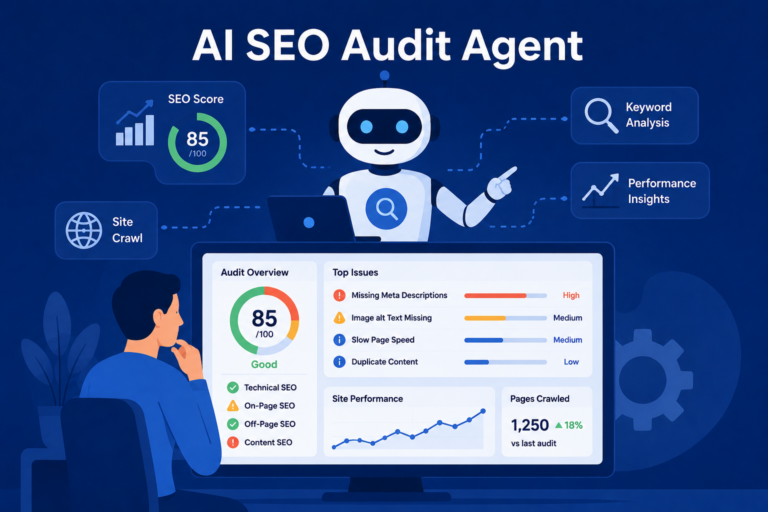
While an AI SEO Audit is a powerful tool, it is not a silver bullet. Understanding its constraints helps you integrate it wisely into your workflow.
How to Perform an AI SEO Audit (Step‑by‑Step Guide)
Running an effective audit is a structured process, not a one‑click wizard. The following step‑by‑step approach ensures you extract maximum value while avoiding common misinterpretations.
Step 1: Define Clear Audit Goals
Start by determining what you need to diagnose. A full site health audit might be appropriate for a declining domain, while a content‑centric AI analysis could be enough before a keyword refresh. Outline the KPIs you want to improve: organic traffic, crawl efficiency, conversion rate, or Core Web Vitals scores. This clarity keeps the AI’s focus aligned with business outcomes.
Step 2: Choose the Right AI‑Powered Audit Toolkit
Numerous platforms offer AI‑enhanced auditing—some as standalone crawlers with machine learning overlays, others as integrated SEO suites. Evaluate tools based on your site’s size, technology stack, and the depth of analysis needed. Look for capabilities such as natural language content evaluation, backlink toxicity detection, and real‑user monitoring integration. Do not rely on a single tool; cross‑referencing data from two complementary platforms increases audit reliability.
Step 3: Configure and Run the Crawl
Proper configuration makes or breaks the audit. Set appropriate crawl limits, respect robots.txt directives, and exclude parameter‑driven duplicate URLs. For JavaScript‑heavy sites, ensure the tool can render client‑side content. Provide access to authenticated areas if needed. A clean crawl produces the clean dataset the AI needs to analyse patterns effectively.
Step 4: Review Critical Errors First
When the AI produces its report, do not drown in a flood of warnings. Focus on items marked as critical or that block crawl: server errors (5xx), improper canonical chains, noindex disasters, pages omitted from the sitemap. These directly affect indexability and must be triaged immediately before moving to lower‑tier recommendations.
Step 5: Analyse Content and On‑Page AI Suggestions
Dive into the content module. AI may highlight pages with high crawl budget waste, internal link gaps, or missing related entities. Validate that each suggestion aligns with your brand’s voice and user intent. For content refresh recommendations, use the AI’s topic cluster analysis to plan expanded articles or new pillar pages rather than merely stuffing keywords.
Step 6: Validate Findings with Manual Spot‑Checks
Pick a representative sample of flagged pages—both high and low priority—and manually inspect them. Look at actual rendered source code, run schema validator tests, and test forms. Confirm that the AI’s fix suggestions are technically feasible and do not create new problems. This step bridges the gap between algorithmic alert and human judgment.
Step 7: Create an Actionable Roadmap
Translate audit insights into a prioritized project list. Group tasks by department—development, content, link building—and assign realistic deadlines. Use the AI’s projected impact scores to sequence work so that high‑value, low‑effort wins come first. A well‑structured roadmap turns analysis into measurable progress.
Step 8: Implement, Monitor, and Schedule Recurring Audits
Once fixes are deployed, use the AI’s monitoring feature to track improvements in real time. Set up automatic weekly or monthly audits to catch regressions early. Treat the AI audit not as an occasional fire drill but as an ongoing health check that evolves with both your site and search engine algorithms.
Common Mistakes When Using AI SEO Audits
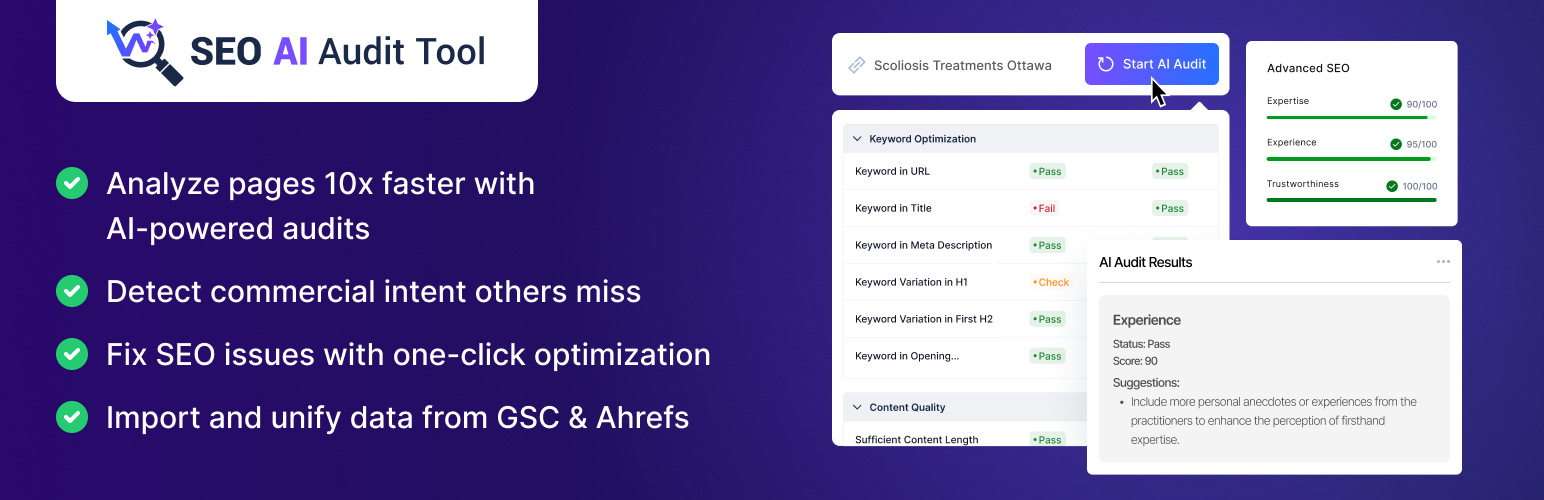
Even experienced SEOs can misuse intelligent audit tools. Avoid these pitfalls to keep your efforts productive.
Important Notes for Maximizing AI Audit Results
To truly leverage an AI SEO Audit as a strategic asset, keep these principles in mind.
Frequently Asked Questions About AI SEO Audits
What is an AI SEO audit?
An AI SEO audit is an automated website analysis that uses artificial intelligence—such as machine learning and natural language processing—to evaluate technical health, content quality, backlink profiles, and user experience. It identifies issues, prioritizes fixes, and provides data‑driven recommendations much faster than manual methods.
How often should I run an AI SEO audit?
For most websites, a comprehensive AI audit once a month keeps health checks current. High‑volume e‑commerce sites or news publishers benefit from weekly audits, while smaller brochure sites can perform them quarterly. The key is consistency and promptly acting on findings between audits.
Can an AI SEO audit replace a human SEO expert?
No. AI audits excel at processing vast data and spotting patterns, but they lack strategic context, creativity, and business understanding. Human experts interpret the results, make judgment calls, and craft brand‑aligned solutions. The best results come from pairing AI’s speed with human insight.
What are the best tools for an AI SEO audit?
T However, look for platforms that combine deep crawl capability, AI‑driven content analysis, and backlink intelligence. Some all‑in‑one suites now embed generative AI to explain issues in plain language, which drastically reduces training overhead for teams.
How accurate are AI SEO audits?
Accuracy depends on data quality and the sophistication of the underlying models. Leading AI‑powered crawlers achieve over 90% accuracy on standard technical checks. For content and intent analysis, accuracy improves when you feed the tool with historical performance data and regularly validate its suggestions against real ranking outcomes.
Conclusion
The AI SEO Audit represents a seismic shift in how digital teams maintain search visibility. It transforms days of grunt work into instant diagnostics, augments human judgment with machine‑scale pattern recognition, and creates a continuous feedback loop that keeps your site aligned with both user expectations and search engine updates. Yet the most successful implementations treat AI as an amplifier of expertise, not a replacement for it. By blending data‑driven audit intelligence with seasoned strategic thinking, you build an SEO program that is resilient, proactive, and consistently ahead of the competition. Start small with one key area, prove the value, and expand your automated auditing practice until it becomes an indispensable part of your everyday workflow.
Xem thêm:
- AI SEO LocalBusiness Schema: The Complete Guide to Smarter Local Rankings
- AI SEO Landing Page Testing: The Complete Guide to Data-Driven Conversion Optimization
- WP Trove SEO Plugin: The Complete Guide to Smarter WordPress Optimization
- AI Marketing Automation: The Definitive Guide to Smarter, Faster Growth
- AI SEO Zapier Automation: The Complete Guide to Scaling Your Organic Growth in 2025
Bài viết cùng chủ đề:

AI SEO SEO Automation with Make: The Complete Workflow Guide

AI SEO SEO Automation with Zapier: The Complete Workflow Guide

AI SEO SEO Automation with n8n: The Complete Workflow Guide
AI SEO SEO Automation with Gemini: The Complete Guide to Scaling Organic Growth

AI SEO SEO Automation with Claude: The Complete Guide to Scaling Content in 2025

AI SEO SEO Automation with ChatGPT: The Complete Playbook for 2025

AI SEO & SEO Automation for Affiliate Sites: The 2025 Playbook for Passive Income Growth
AI SEO & SEO Automation for Bloggers: The Complete Guide to Scaling Your Content

AI SEO & SEO Automation for Agencies: The Complete 2025 Playbook

AI SEO and SEO Automation for Ecommerce: The Complete Playbook for 2025

AI SEO & SEO Automation for WordPress: The Complete Playbook for 2025
AI SEO SEO Automation Strategy: The Complete Playbook for 2025

Mastering the AI SEO SEO Automation Process: A Complete Guide to Scaling Organic Growth
AI SEO SEO Automation System: The Complete Guide to Scaling Organic Growth in 2025
AI SEO SEO Automation Platform: The Complete Guide to Scaling Organic Growth in 2025
AI SEO SEO Automation Software: The Complete Guide to Scaling Organic Growth in 2025















