
No products in the cart.
AI SEO Automated Content Audit: The Complete Guide to Scaling Content Optimization
10
Aug
Aug
An AI SEO automated content audit is transforming how digital marketing teams maintain and improve their online assets. Instead of manually reviewing hundreds of pages, modern tools use machine learning to analyze content quality, keyword relevance, and technical SEO factors in minutes. This guide explains everything about automated content auditing, from core concepts to practical implementation strategies that deliver measurable results.
What Is an AI SEO Automated Content Audit?
An AI SEO automated content audit is a systematic process where artificial intelligence algorithms evaluate website content against search engine optimization best practices. Unlike traditional audits that rely on human reviewers checking pages one by one, AI-powered systems can process entire websites simultaneously, identifying patterns, gaps, and opportunities that would take weeks to uncover manually.
The core function involves several layers of analysis. First, the AI crawls every URL, extracting text, metadata, images, and internal links. Then, natural language processing (NLP) models assess readability, semantic relevance, and topical authority. Finally, the system compares each page against competitor content and search intent data to generate actionable recommendations.
How AI Differs from Traditional Content Audits
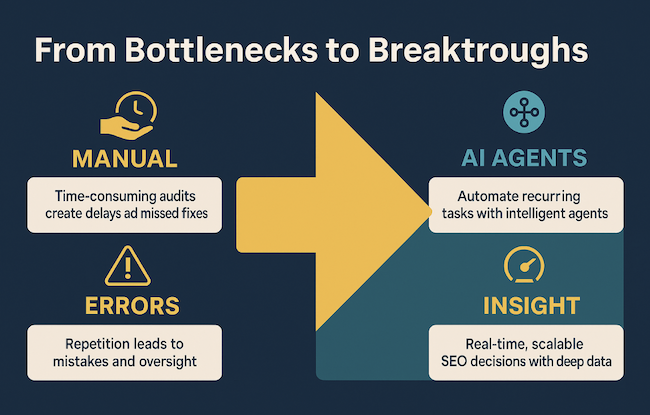
Traditional content audits depend on spreadsheets, manual checks, and subjective judgment. An auditor might review 50 pages in a day, flagging thin content or missing meta descriptions. AI systems, however, can evaluate 10,000 pages in the same timeframe, scoring each against dozens of quality signals simultaneously.
The key difference lies in pattern recognition. AI detects subtle correlations between content structure and ranking performance that humans often miss. For instance, an algorithm might discover that pages with specific heading hierarchies and word counts consistently outperform others in your niche, then apply those insights across your entire site.
Why Automated Content Audits Matter for SEO Success
Search engines increasingly prioritize content that demonstrates expertise, experience, authoritativeness, and trustworthiness (E-E-A-T). Google’s algorithms have become sophisticated at evaluating content quality, making regular audits essential for maintaining rankings. An AI SEO automated content audit provides the scale and consistency needed to keep up with these evolving standards.
The financial case is compelling. Content decay—the gradual decline in organic traffic as pages age—affects most websites. Studies show that 30-40% of pages lose rankings within six months of publication. Automated audits identify declining pages early, allowing teams to refresh content before significant traffic loss occurs.
Key Benefits of AI-Powered Auditing
- Speed and Scale: Analyze thousands of pages in minutes, not weeks
- Consistency: Apply identical quality standards across every URL
- Objectivity: Remove human bias from content evaluation
- Predictive Insights: Identify content likely to rank well before publication
- Competitive Analysis: Benchmark your content against top-ranking competitors
- Resource Optimization: Prioritize updates based on potential traffic impact
- Time Savings: Reduce audit time from weeks to hours
- Comprehensive Coverage: Analyze every page, not just a sample
- Data-Driven Decisions: Base content strategy on objective metrics
- Scalability: Maintain quality standards as your site grows
- Competitive Intelligence: Understand what works for ranking competitors
- Context Blindness: AI cannot fully understand brand voice or niche nuances
- Historical Data Dependency: Recommendations rely on past performance patterns
- Tool Variation: Different AI systems produce different scores for the same content
- Human Judgment Still Required: Final decisions need editorial expertise
Core Components of an AI SEO Automated Content Audit
Understanding what the AI actually examines helps you interpret audit results and implement recommendations effectively. Modern audit systems evaluate content across several dimensions simultaneously.
Content Quality Scoring
AI models assess readability using metrics like Flesch Reading Ease and sentence complexity. More advanced systems use NLP to evaluate semantic depth—whether your content covers a topic comprehensively or merely scratches the surface. The algorithm checks for entity coverage, related concepts, and answer completeness against search queries.
For example, an article about “coffee brewing methods” should mention pour-over, French press, espresso, and cold brew. The AI compares your entity coverage against top-ranking pages to identify missing subtopics that could improve relevance.
Keyword Optimization Analysis
Beyond simple keyword density checks, AI evaluates keyword placement, semantic variations, and search intent alignment. The system determines whether your content matches informational, transactional, or navigational intent for target queries. It also identifies keyword cannibalization—multiple pages competing for the same terms—which dilutes ranking authority.
Technical SEO Integration
Content audits extend beyond words on a page. AI systems check page speed, mobile responsiveness, structured data implementation, and internal linking patterns. Slow-loading pages with poor mobile experiences receive lower content scores because search engines prioritize user experience signals.
Engagement and Behavioral Metrics
Advanced audit tools integrate with analytics platforms to correlate content characteristics with user behavior. Metrics like time on page, bounce rate, and scroll depth provide real-world validation of content quality. The AI identifies which content elements drive engagement and which cause visitors to leave quickly.
The Automated Content Audit Process: Step by Step
Implementing an AI SEO automated content audit follows a structured workflow. Understanding each phase helps you prepare your website and interpret results effectively.
Phase 1: Crawling and Data Collection
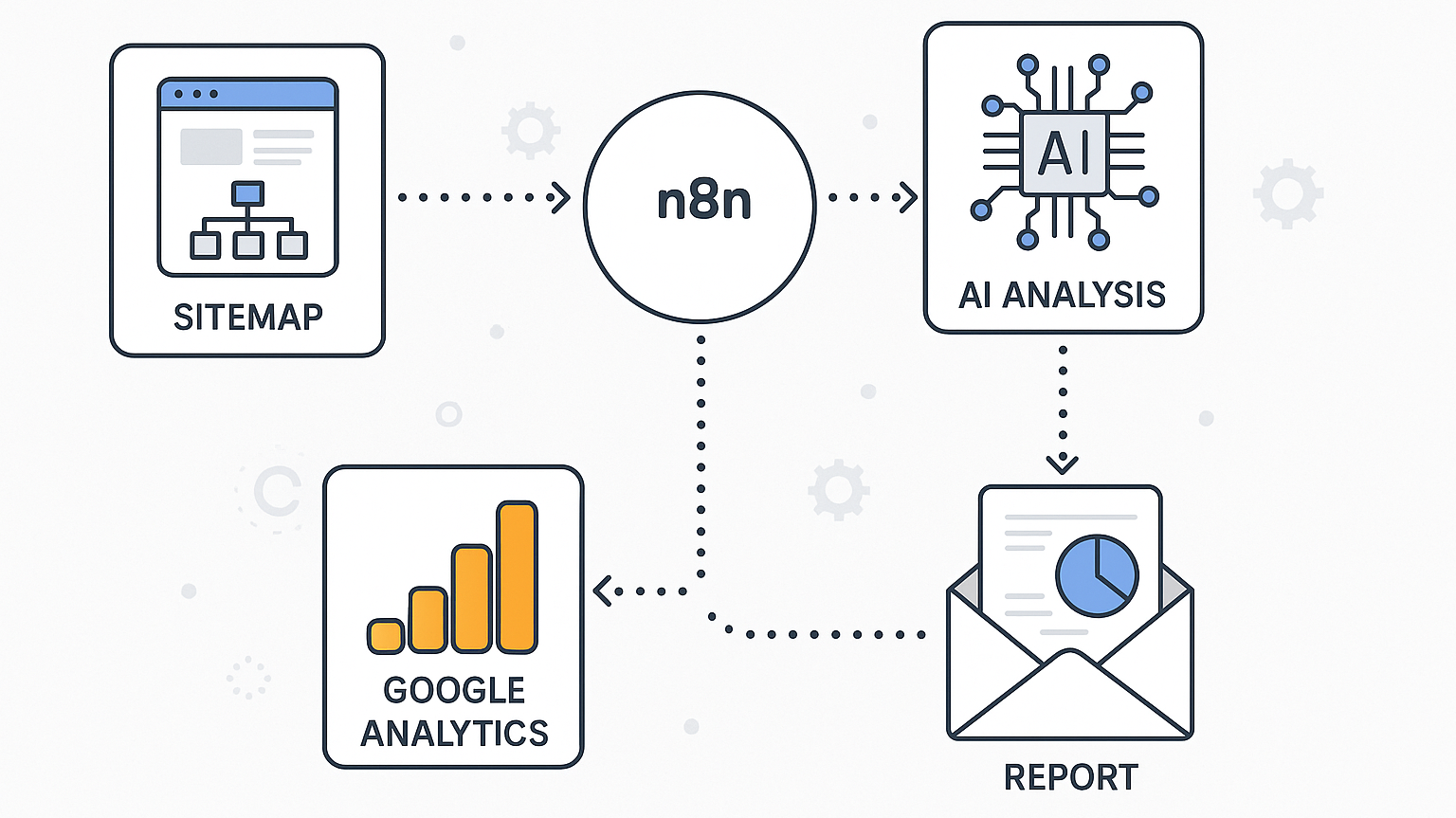
The audit begins with a comprehensive crawl of your website. The AI system follows internal links, reads sitemaps, and indexes every accessible URL. During this phase, the tool collects raw HTML, extracts text content, and records metadata including title tags, meta descriptions, and header structures.
Data collection also includes external signals. The system pulls backlink profiles, social shares, and current rankings for your target keywords. This contextual data helps the AI understand how your content performs relative to competitors.
Phase 2: Analysis and Scoring
Once data is collected, the AI applies multiple analysis models. Natural language processing evaluates content quality, topic relevance, and readability. Machine learning algorithms compare your pages against high-ranking competitors to identify gaps and opportunities.
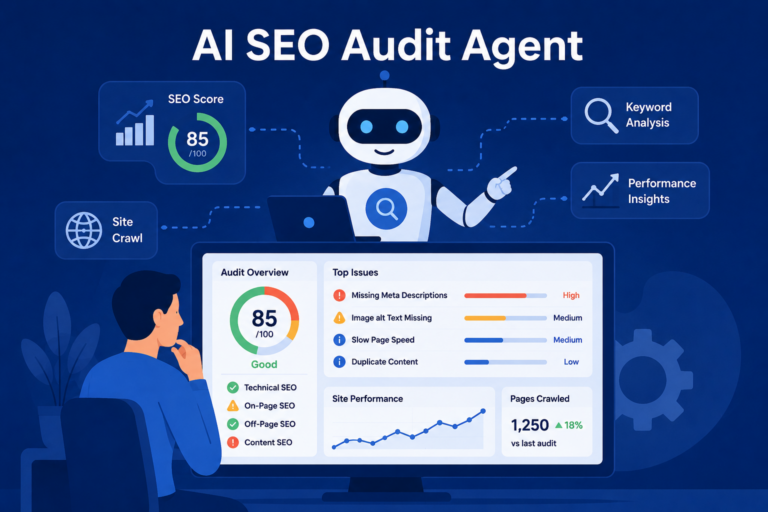
Each page receives scores across categories like content depth, keyword optimization, user experience, and technical health. These scores combine into an overall content health index that prioritizes which pages need attention first.
Phase 3: Recommendation Generation
The most valuable output of an AI audit is the actionable recommendations. The system generates specific, prioritized suggestions for each page. Recommendations might include adding 500 words to thin content, restructuring headings to match search intent, or updating statistics that have become outdated.
Modern tools go further by drafting content briefs for recommended updates. These briefs include target keywords, suggested subtopics, competitor insights, and structural guidelines—everything your writers need to execute improvements efficiently.
Phase 4: Implementation and Tracking
After implementing recommendations, the audit cycle continues. AI systems monitor the impact of content updates on rankings and traffic. This continuous feedback loop allows the AI to refine its recommendations based on what actually works for your specific website and niche.
Comparing AI Audit Tools: Key Features to Consider
The market offers numerous AI-powered content audit solutions, each with distinct strengths. Understanding the feature landscape helps you select the right tool for your needs.
| Feature | Basic Tools | Advanced AI Platforms |
|---|---|---|
| Pages Analyzed | Up to 1,000 | Unlimited |
| Content Quality Scoring | Basic readability metrics | NLP semantic analysis |
| Competitor Comparison | Limited | Real-time benchmarking |
| Recommendation Specificity | Generic suggestions | Page-level actionable briefs |
| Integration Capabilities | Standalone | CMS, analytics, and rank tracking |
| Predictive Analytics | Not available | Traffic impact forecasting |
Popular AI Audit Platforms
Several established platforms lead the AI content audit space. Clearscope and MarketMuse focus on semantic relevance and content optimization, helping writers create comprehensive articles that match search intent. Surfer SEO combines content analysis with on-page technical factors, providing real-time optimization scores as you write.
For enterprise-level needs, platforms like Semrush and Ahrefs have integrated AI features into their comprehensive SEO suites. These tools analyze content alongside backlink profiles, keyword rankings, and technical health, providing a holistic view of SEO performance.
Practical Implementation: Running Your First AI Content Audit
Launching an automated audit requires preparation to ensure accurate results. Follow these steps to maximize the value of your first audit cycle.
Step 1: Define Your Content Universe
Before running the audit, determine which pages to include. Exclude administrative pages, login screens, and duplicate URLs that could skew results. Create a clear inventory of your content assets, organized by category, target keyword, and publication date.
Step 2: Set Quality Benchmarks
Establish baseline scores for what constitutes acceptable content quality in your industry. A B2B software company might require 2,000-word technical articles, while a local restaurant benefits from concise, visually-rich pages. Configure the AI tool to flag pages falling below your specific thresholds.
Step 3: Integrate Analytics and Search Console
Connect your audit tool to Google Analytics and Google Search Console. This integration provides real performance data that enriches the AI analysis. The system can identify pages with declining impressions or high bounce rates, prioritizing them for immediate attention.
Step 4: Run the Initial Audit
Execute the first full crawl and analysis. Most tools complete the process within a few hours for sites under 10,000 pages. Review the generated reports, focusing on the highest-priority issues that could impact revenue-generating pages.
Step 5: Create an Action Plan
Translate audit findings into a prioritized content calendar. Address critical issues first—pages with zero traffic, technical errors, or outdated information. Group similar updates to streamline your team’s workflow and maintain consistency across related content clusters.
Common Mistakes in Automated Content Auditing
Even with powerful AI tools, teams make errors that undermine audit effectiveness. Recognizing these pitfalls helps you avoid them.
Ignoring Search Intent Nuances
AI tools analyze keywords, but they cannot fully understand the subtle differences in user intent. A page targeting “best running shoes” might need different content depending on whether the searcher is a beginner or a marathon runner. Review AI recommendations through the lens of your actual audience and adjust accordingly.
Over-Optimizing for AI Scores
Some teams become obsessed with achieving perfect AI quality scores, producing content that reads unnaturally or repeats keywords excessively. Remember that AI scores are proxies for quality, not quality itself. Your ultimate goal is satisfying human readers, not just algorithms.
Neglecting Content Pruning
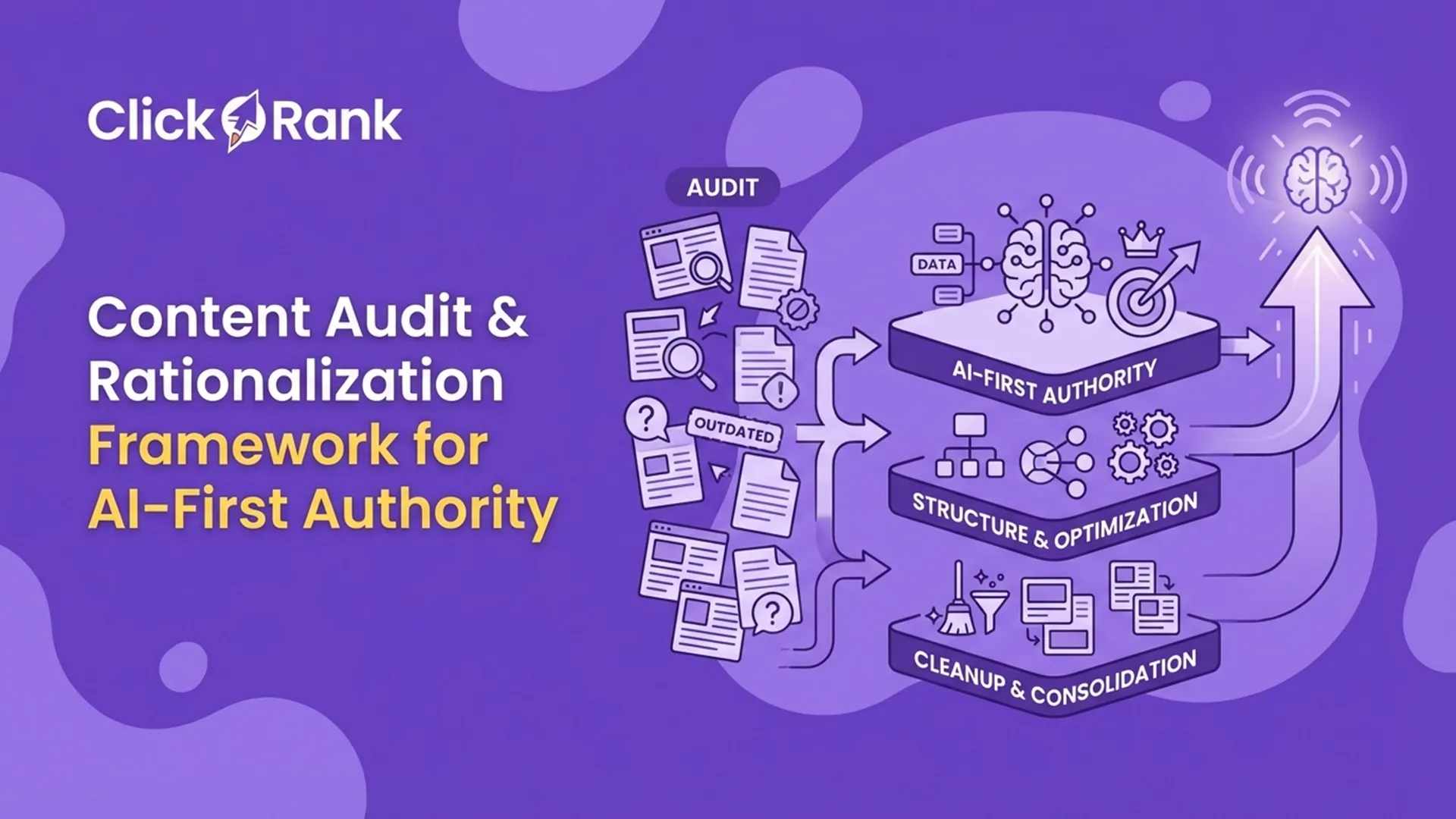
Not all content deserves improvement. Some pages have no realistic chance of ranking due to outdated topics or irrelevance. Effective audits identify content that should be consolidated, redirected, or removed entirely. Keeping low-quality pages alive dilutes your site’s overall authority.
Failing to Track Implementation
Running an audit without tracking changes is wasted effort. Document every update you make, then monitor rankings and traffic over the following weeks. This data validates the AI recommendations and helps refine your content strategy going forward.
Benefits and Limitations of AI Content Audits
Understanding what automated audits can and cannot do sets realistic expectations and helps you use the technology effectively.
Key Benefits
Important Limitations
Integrating AI Audits with Your Content Workflow
Automated audits deliver maximum value when embedded into your regular content operations rather than used as one-off projects. Establish a continuous improvement cycle that keeps your entire content library optimized.
Monthly Audit Cadence
Run a full site audit monthly to identify new issues and track progress on previous recommendations. Between full audits, use automated alerts to flag pages that suddenly lose rankings or experience traffic drops. This proactive approach catches problems before they compound.
Content Brief Generation
Use AI audit insights to generate data-backed content briefs for new articles. The system identifies gaps in your current coverage and suggests topics with high ranking potential. Writers receive detailed outlines incorporating semantic keywords and competitor insights, reducing research time significantly.
Editorial Review Integration
AI recommendations should feed into your editorial review process, not replace it. Human editors add the creative judgment and brand alignment that algorithms cannot provide. Combine AI efficiency with editorial expertise for the best results.
Measuring the ROI of Automated Content Audits
Tracking the return on investment from AI auditing helps justify the technology investment and refine your approach. Focus on metrics that directly tie content improvements to business outcomes.
Key Performance Indicators
Monitor organic traffic growth, keyword ranking improvements, and conversion rates for updated pages. Track the percentage of audited pages that show improvement after implementing recommendations. Calculate the time saved compared to manual auditing methods.
For example, a mid-sized e-commerce site with 5,000 product pages might find that AI auditing identifies 300 pages with thin content. Updating these pages could result in a 15% traffic increase over three months, representing significant revenue growth.
Future Trends in AI Content Auditing
The technology continues evolving rapidly. Understanding emerging trends helps you prepare for the next generation of content optimization tools.
Generative AI Integration
Audit tools increasingly incorporate generative AI to not only identify problems but also suggest rewritten content. These systems can draft improved headlines, meta descriptions, and even full paragraphs that align with SEO best practices while maintaining brand voice.
Real-Time Optimization
Future tools will provide real-time content scores as writers type, similar to grammar checkers but focused on SEO factors. This immediate feedback loop will dramatically reduce the time between content creation and optimization.
Predictive Performance Modeling
Advanced AI systems will forecast content performance before publication, predicting likely rankings and traffic based on historical patterns. This capability will transform content strategy from reactive to proactive, allowing teams to focus resources on high-potential topics.
Important Notes for Successful Implementation
Several practical considerations ensure your AI audit delivers lasting value rather than becoming another unused report.
First, ensure your audit tool integrates with your content management system. Direct integration allows recommendations to flow seamlessly into your editorial workflow. Teams that manually export and import audit data often abandon the process due to friction.
Second, train your team on interpreting audit results. An AI report is only useful if people understand what the scores mean and how to act on them. Invest in training sessions and create documentation explaining your specific quality benchmarks and action protocols.
Third, maintain realistic expectations. AI audits identify opportunities, but they do not guarantee rankings. Search algorithms change, competitors improve, and market conditions shift. Use audit insights as one input in your broader SEO strategy, not the sole driver of decisions.
Frequently Asked Questions
How often should I run an AI SEO automated content audit?
Most experts recommend running a comprehensive audit monthly for sites with active content publishing programs. Smaller sites can audit quarterly, while large enterprise sites with thousands of pages may benefit from weekly targeted audits focusing on high-priority sections. The key is establishing a regular cadence that catches content decay early.
What is the difference between an AI content audit and a regular SEO audit?
A regular SEO audit focuses primarily on technical factors like site speed, crawl errors, and meta tags. An AI content audit goes deeper, evaluating the actual quality, relevance, and comprehensiveness of your written content. AI audits use natural language processing to understand meaning and context, not just keyword presence.
Can AI content audits replace human content reviewers?
No. AI audits excel at scale and consistency, but they lack the creative judgment and brand understanding that human editors provide. The most effective approach combines AI analysis with human expertise. AI identifies potential issues and opportunities, while humans make final decisions about content strategy and execution.
How long does an automated content audit take?
For a typical website with 1,000-5,000 pages, the initial crawl and analysis takes 2-6 hours. Larger sites with 50,000+ pages may require 24-48 hours for complete processing. The generated reports and recommendations are available immediately after analysis completes.
What metrics does an AI content audit measure?
AI audits measure content quality scores, keyword optimization, readability, semantic relevance, entity coverage, internal linking, page speed, mobile friendliness, and engagement signals. Advanced tools also compare your content against top-ranking competitors and provide predictive traffic impact estimates for recommended changes.
Do I need technical skills to use AI content audit tools?
Most modern tools are designed for non-technical users with intuitive dashboards and plain-language recommendations. Basic familiarity with SEO concepts helps, but you do not need programming skills. The tools handle the complex analysis behind the scenes and present findings in accessible formats.
Conclusion
An AI SEO automated content audit represents a fundamental shift in how websites maintain content quality at scale. The technology transforms a tedious, subjective process into an efficient, data-driven system that continuously improves your search visibility. By understanding the core components, implementing audits systematically, and combining AI insights with human expertise, you can build a content operation that consistently outperforms competitors.
The investment in automated auditing pays dividends through recovered traffic, improved rankings, and more efficient content production. As AI technology continues advancing, the gap between organizations that embrace automated auditing and those relying on manual processes will only widen. Starting your automated audit program today positions your website for sustained SEO success in an increasingly competitive digital landscape.
Xem thêm:
- AI Duplicate Content: The Silent SEO Killer and How to Outsmart It in 2025
- AI SEO SERP Research: The Complete Guide to Dominating Search Results in 2025
- Mastering the AI Content Calendar: Automate, Optimize, and Scale Your Publishing Strategy
- AI SEO Content Gaps: The Complete Guide to Finding and Filling What Your Competitors Miss
- AI SEO Generative Search Traffic: The Complete Playbook for 2025
Bài viết cùng chủ đề:

AI SEO SEO Automation with Make: The Complete Workflow Guide

AI SEO SEO Automation with Zapier: The Complete Workflow Guide

AI SEO SEO Automation with n8n: The Complete Workflow Guide
AI SEO SEO Automation with Gemini: The Complete Guide to Scaling Organic Growth

AI SEO SEO Automation with Claude: The Complete Guide to Scaling Content in 2025

AI SEO SEO Automation with ChatGPT: The Complete Playbook for 2025

AI SEO & SEO Automation for Affiliate Sites: The 2025 Playbook for Passive Income Growth
AI SEO & SEO Automation for Bloggers: The Complete Guide to Scaling Your Content

AI SEO & SEO Automation for Agencies: The Complete 2025 Playbook

AI SEO and SEO Automation for Ecommerce: The Complete Playbook for 2025

AI SEO & SEO Automation for WordPress: The Complete Playbook for 2025
AI SEO SEO Automation Strategy: The Complete Playbook for 2025

Mastering the AI SEO SEO Automation Process: A Complete Guide to Scaling Organic Growth
AI SEO SEO Automation System: The Complete Guide to Scaling Organic Growth in 2025
AI SEO SEO Automation Platform: The Complete Guide to Scaling Organic Growth in 2025
AI SEO SEO Automation Software: The Complete Guide to Scaling Organic Growth in 2025















