
No products in the cart.
AI SEO Content Gaps: The Complete Guide to Finding and Filling What Your Competitors Miss
10
Aug
Aug
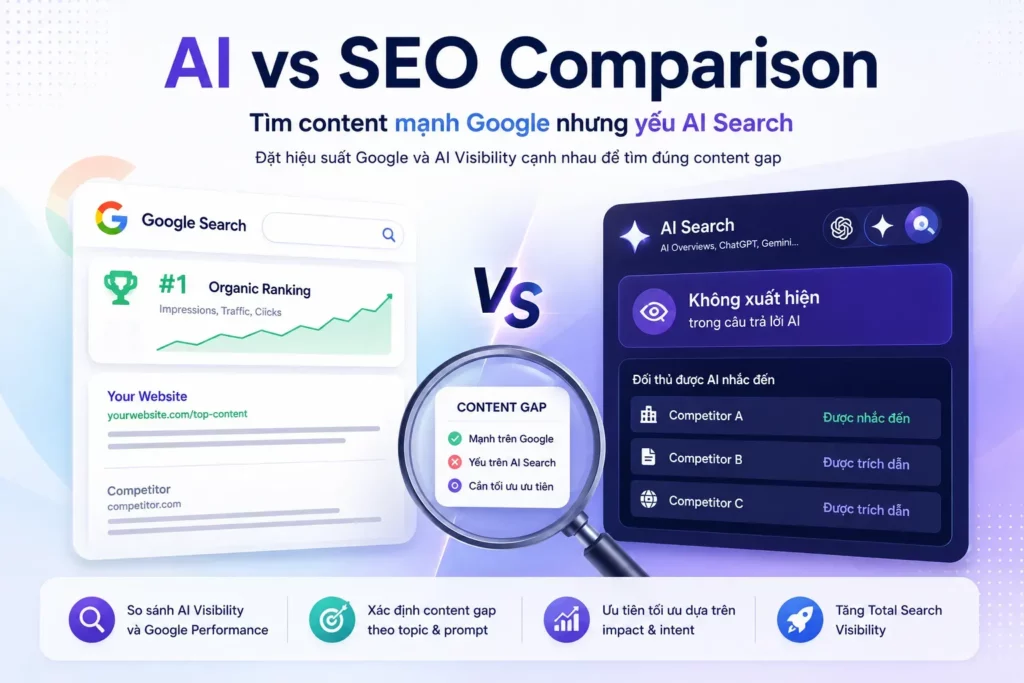
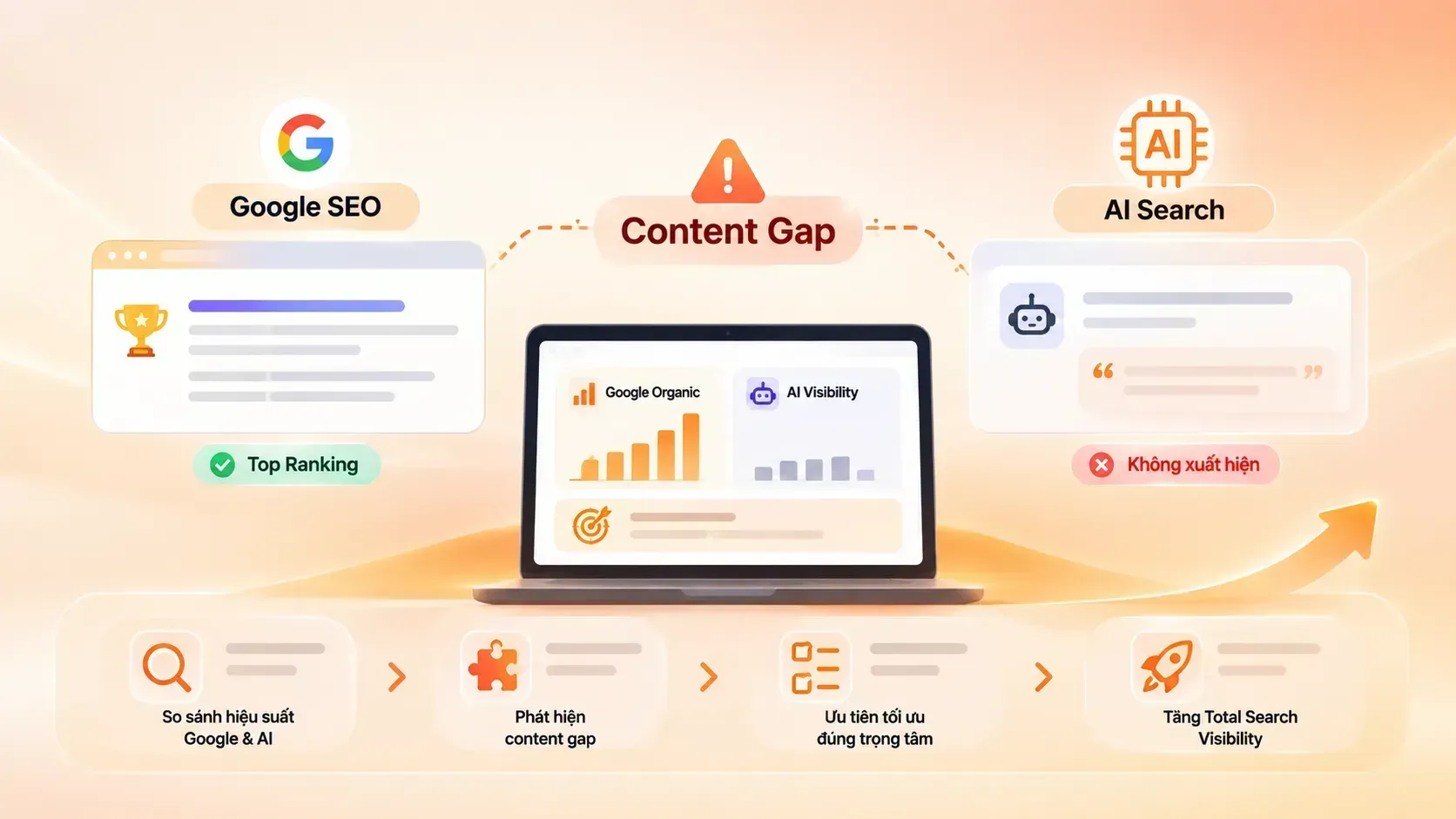
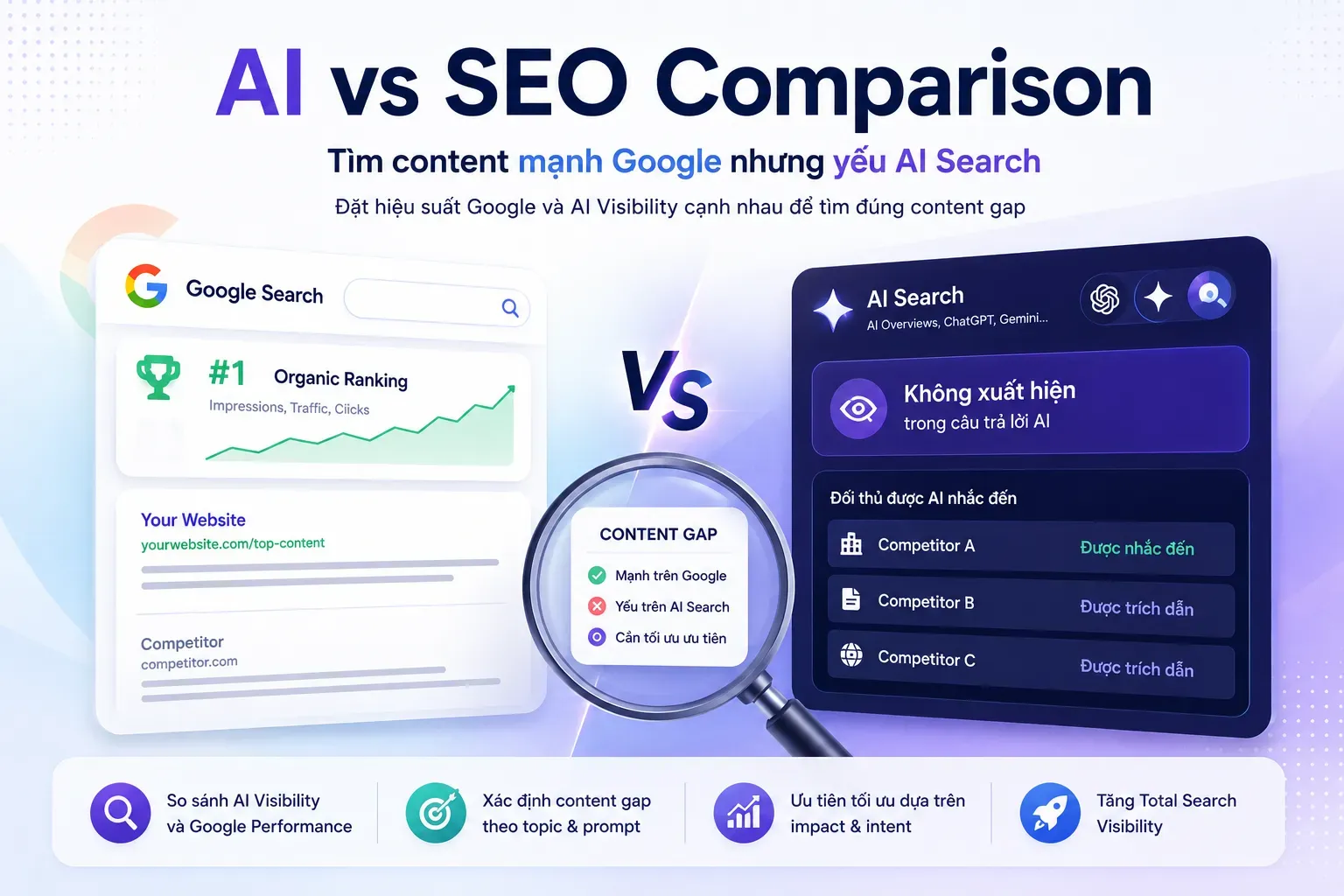
AI SEO content gaps represent the disconnect between what your target audience searches for and what your website currently publishes. In the modern search landscape, these gaps cost businesses thousands of organic visitors every month. While traditional content gap analysis focused on missing keywords, AI-powered tools now reveal deeper insights into search intent, semantic relevance, and topical authority. Understanding and addressing AI SEO content gaps is no longer optional for brands that want to dominate search results. This comprehensive guide explores how artificial intelligence transforms gap analysis, why most websites suffer from hidden content gaps, and the exact strategies to close them effectively.
What Are AI SEO Content Gaps?
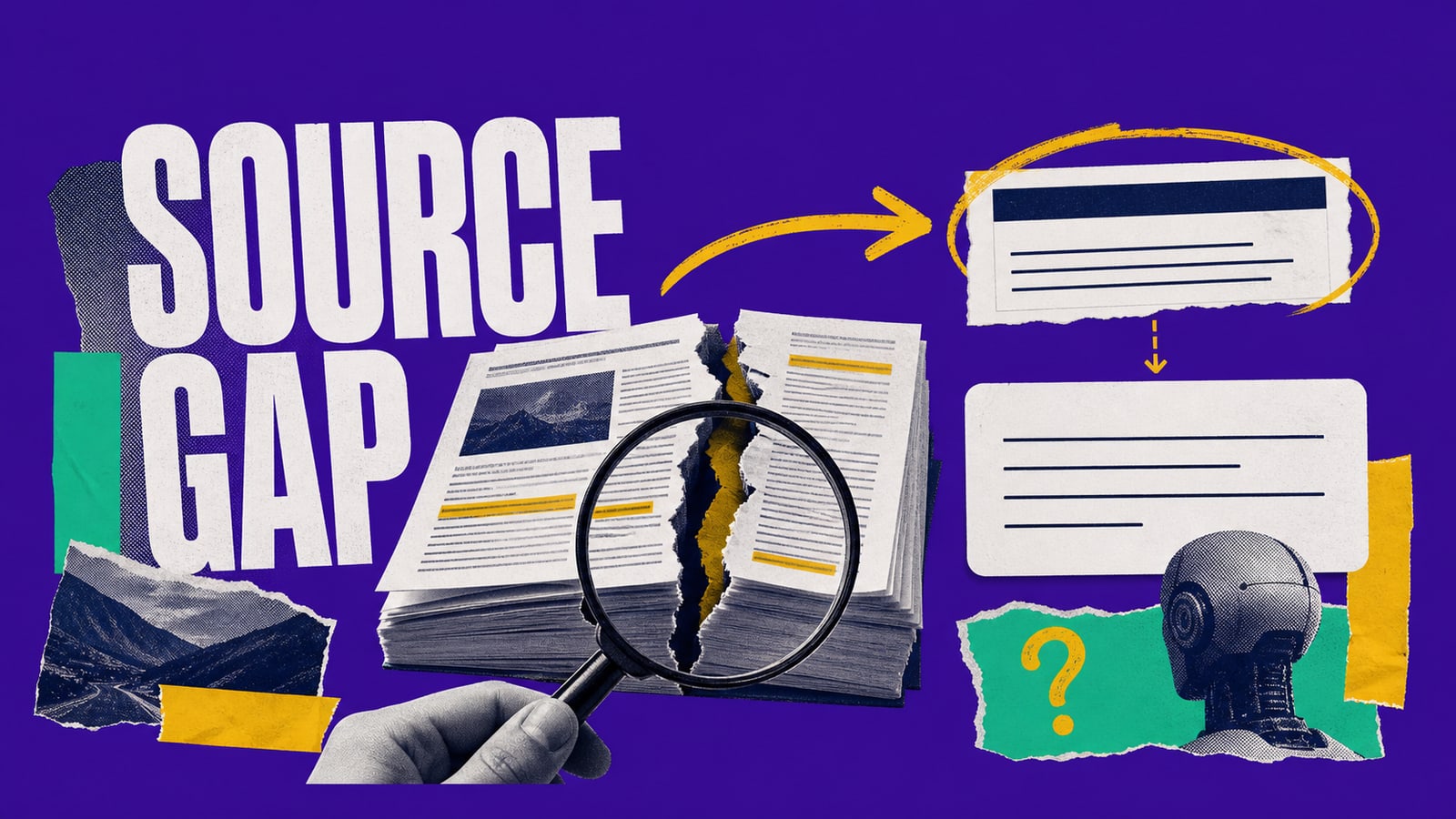
AI SEO content gaps are the missing pieces in your content strategy that artificial intelligence tools identify by analyzing search engine results pages, user behavior patterns, and semantic relationships between topics. These gaps represent opportunities where your competitors rank but you do not, or where search demand exists but no website adequately satisfies the user’s query.
Traditional content gap analysis involved comparing your keyword list against competitors’ rankings. AI takes this further by understanding the context behind searches. Machine learning algorithms process millions of data points to identify not just what keywords you miss, but why you miss them. This includes analyzing content depth, readability, entity coverage, and topical relevance that standard keyword tools overlook.
The Evolution from Manual to AI-Driven Gap Analysis
Five years ago, SEO professionals exported keyword lists from tools like Ahrefs or SEMrush and manually compared them against competitor URLs. This process took days and often produced misleading results because it ignored search intent variations. Modern AI SEO content gap analysis automates this process while adding layers of intelligence that reveal opportunities invisible to manual analysis.
AI systems now crawl entire SERPs, parse thousands of competing articles, and build semantic maps of topics. They identify subtopics that authoritative pages cover, questions that users ask, and content formats that generate engagement. This holistic view transforms gap analysis from a keyword-matching exercise into a comprehensive content strategy framework.
Why AI SEO Content Gaps Matter for Your Rankings
Search engines continuously refine their algorithms to reward comprehensive, authoritative content. Google’s helpful content system and BERT updates prioritize pages that fully satisfy user intent. When your website has AI SEO content gaps, you signal to search engines that your site lacks expertise on the broader topic, which suppresses rankings even for pages that do exist.
Consider a website selling running shoes that publishes detailed reviews of individual models but lacks content about running form, injury prevention, or shoe maintenance. Google recognizes this topical incompleteness and may rank the site lower for shoe reviews because it lacks surrounding authority. AI SEO content gaps create this problem across every industry and niche.
The Financial Impact of Unaddressed Content Gaps
Every content gap represents lost organic traffic that would otherwise convert into leads or sales. Research from industry studies indicates that websites addressing comprehensive topic clusters see up to 40% more organic traffic than those publishing isolated articles. The compounding effect of filling AI SEO content gaps means each new piece of content strengthens the performance of existing pages through internal linking and topical relevance.
Businesses that ignore these gaps watch competitors capture market share in search results. The cost of inaction extends beyond lost traffic to diminished brand authority and reduced customer trust. Users who find partial answers on your site and complete answers elsewhere perceive your brand as less knowledgeable.
Types of AI SEO Content Gaps You Must Identify
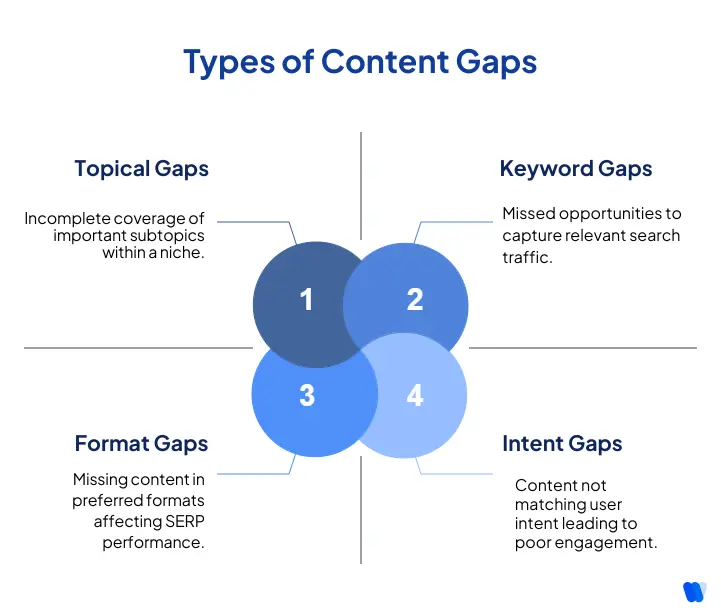
AI-powered analysis reveals several distinct categories of content gaps that require different remediation strategies. Understanding these types helps you prioritize your efforts and allocate resources effectively.
Keyword Coverage Gaps
These are the most straightforward gaps where your website does not rank for keywords that competitors target. AI tools identify these by comparing your indexed pages against the top-ranking URLs for relevant search terms. Keyword coverage gaps often indicate missing articles, product pages, or category pages that should exist on your site.
Intent Mismatch Gaps
Intent mismatch occurs when your content ranks for a keyword but fails to match the user’s actual search intent. For example, a page optimized for “best running shoes” that only lists features without comparisons or recommendations fails informational and commercial intent simultaneously. AI algorithms detect these gaps by analyzing engagement metrics and SERP features that indicate satisfied users.
Semantic and Entity Gaps
Search engines build knowledge graphs around entities such as people, places, products, and concepts. AI SEO content gaps in this category mean your content misses related entities that authoritative pages include. A comprehensive article about digital marketing should mention entities like SEO, content marketing, social media, analytics, and specific tools. Missing these entities weakens your topical authority.
Content Format Gaps
Users consume content in different formats depending on their stage in the buying journey. AI analysis reveals when competitors rank with videos, infographics, calculators, or interactive tools while your site only publishes text articles. Format gaps matter because search engines increasingly display diverse content types in results.
Freshness and Recency Gaps
Some topics require regularly updated content to maintain relevance. AI SEO content gaps include situations where your content is outdated while competitors publish recent information. Industries like technology, finance, and health demand frequent updates to satisfy both users and search algorithms.
How AI Tools Identify SEO Content Gaps
Modern AI-powered SEO platforms employ sophisticated techniques to uncover content opportunities that traditional methods miss. Understanding how these tools work helps you interpret their recommendations and take effective action.
Natural Language Processing and Semantic Analysis
AI tools use natural language processing to understand the meaning behind search queries and content. They break down articles into concepts, entities, and relationships rather than just counting keywords. This semantic analysis reveals subtopics that your content should cover to match the depth of top-ranking pages.
SERP Feature Analysis
AI systems monitor which SERP features appear for target keywords, including featured snippets, people also ask boxes, image packs, and video carousels. When competitors appear in these features and you do not, the AI identifies specific content gaps that prevent your inclusion. This analysis guides content formatting and structure decisions.
Competitor Content Mapping
AI tools crawl and index competitor content at scale, building detailed maps of their topical coverage. This mapping reveals which topics competitors address comprehensively and where their coverage has weaknesses. Smart SEO professionals exploit these weaknesses by creating superior content that fills both their own gaps and competitor gaps.
Search Intent Classification
Machine learning models classify search queries into intent categories such as informational, navigational, commercial, and transactional. AI SEO content gap tools then compare your content’s intent alignment against what users expect. This classification helps you create content that matches user expectations at every funnel stage.
Step-by-Step Guide to Finding AI SEO Content Gaps
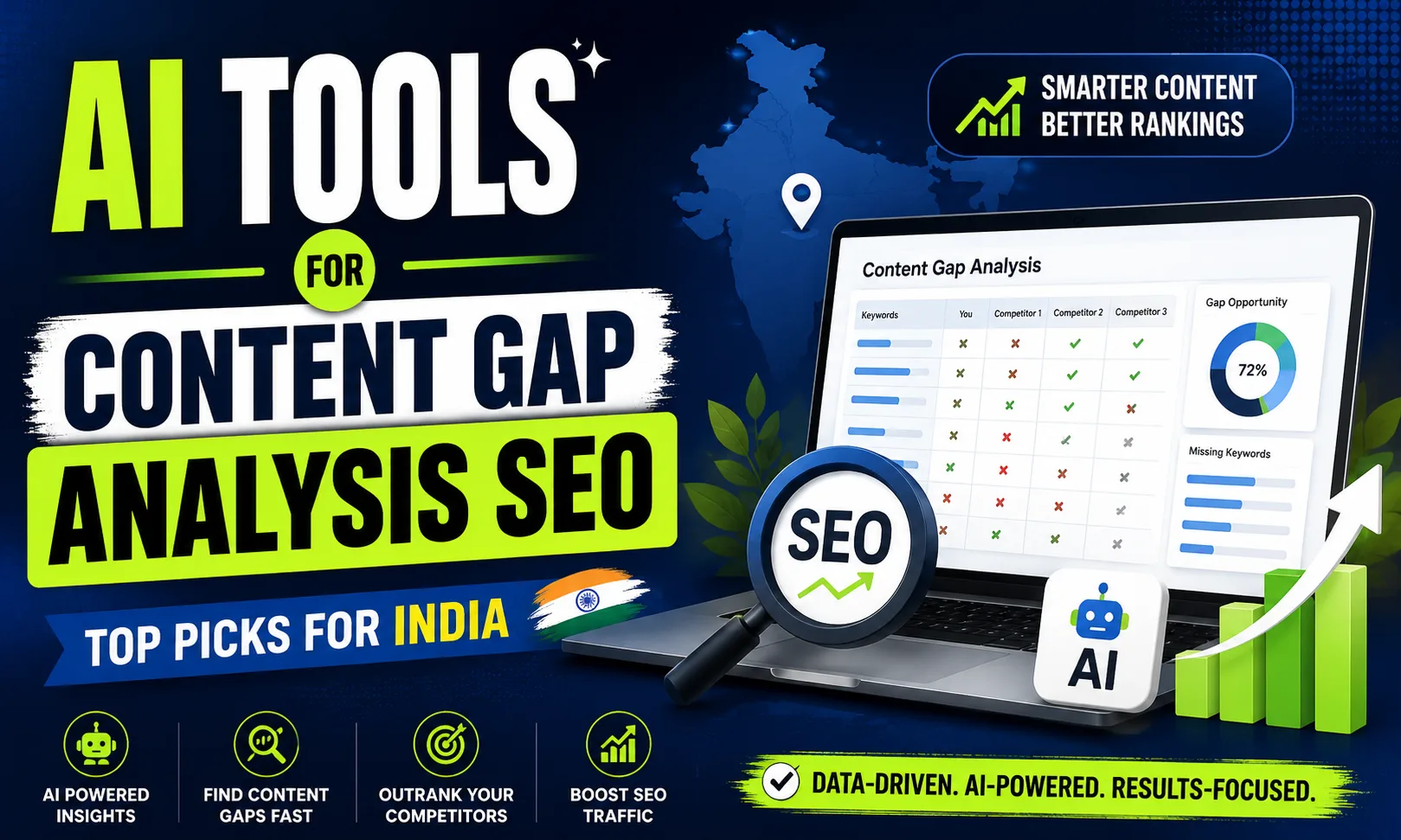
Implementing a systematic approach to gap analysis ensures you identify and prioritize the most valuable opportunities. Follow these steps to conduct a thorough AI SEO content gap analysis for your website.
Step 1: Define Your Content Universe
Start by mapping your core topics and subtopics. Create a comprehensive list of topics relevant to your business, products, and audience. This content universe serves as the baseline for identifying what exists and what is missing. Use AI tools to expand this list with related topics and questions that users ask.
Step 2: Analyze Top-Ranking Competitors
Identify your main organic competitors using SEO tools that show which domains rank for your target keywords. Select five to ten competitors that consistently appear in top positions. Run their domains through AI gap analysis tools to see their complete content coverage and identify topics where they rank but you do not.
Step 3: Compare Content Depth and Quality
Beyond keyword presence, compare the depth and quality of competitor content against yours. AI tools score content based on factors like word count, readability, entity coverage, and internal linking. Identify pages where competitors provide significantly more comprehensive information and prioritize those topics for improvement.
Step 4: Analyze Search Intent Fulfillment
Review the top-ranking pages for your target keywords and assess whether they fully satisfy user intent. Look for content formats, information types, and elements that appear consistently. If top pages include comparison tables, expert quotes, or step-by-step guides, your content should include these elements too.
Step 5: Identify Question and Long-Tail Opportunities
Use AI tools to extract questions from people also ask boxes, related searches, and forums. These questions represent specific content gaps that you can fill with dedicated FAQ sections or standalone articles. Long-tail opportunities often have lower competition and higher conversion potential.
Step 6: Prioritize Gaps by Impact and Effort
Not all content gaps deserve equal attention. Score each gap based on search volume, relevance to your business goals, competition level, and the effort required to fill it. Focus first on gaps that combine high search demand with reasonable effort and strong alignment with your products or services.
Practical Strategies to Fill AI SEO Content Gaps
Identifying gaps only provides value when you take action to fill them. Implement these proven strategies to close your AI SEO content gaps and capture the organic traffic you currently miss.
Create Comprehensive Pillar Pages
Pillar pages serve as authoritative hubs for broad topics, covering all essential aspects in depth. These pages naturally fill multiple content gaps by addressing subtopics that would otherwise require separate articles. Link from pillar pages to cluster content that explores specific subtopics in greater detail.
Develop Topic Clusters with Internal Linking
Topic clusters consist of a pillar page and multiple supporting articles that target related keywords. This structure signals topical authority to search engines and fills semantic gaps through comprehensive coverage. Ensure every cluster article links to the pillar page and to other relevant cluster content.
Update and Expand Existing Content
Many content gaps exist within your current pages rather than in missing pages. Audit your existing content and identify articles that lack depth, outdated information, or missing sections that competitors cover. Update these pages with new data, expanded sections, and improved formatting to close gaps without creating new content.
Target Featured Snippets and People Also Ask
Featured snippets occupy prime real estate at the top of search results. Analyze which questions trigger snippets for your target keywords and create content that directly answers these questions in a format suitable for snippet extraction. Use clear headings, concise paragraphs, and structured lists to increase your chances of selection.
Leverage AI Content Generation Tools
AI writing assistants can accelerate your content production to fill gaps faster. Use these tools to generate outlines, draft sections, and suggest related topics. However, always review and enhance AI-generated content with human expertise to ensure quality and accuracy.
Common Mistakes When Addressing AI SEO Content Gaps
Many businesses attempt to fill content gaps but make errors that limit their success. Avoid these common mistakes to maximize the return on your content investment.
Focusing Only on Keyword Volume
High-volume keywords attract attention, but they often come with intense competition and vague intent. Smart gap analysis balances volume with relevance and conversion potential. Prioritize gaps that align with your business objectives rather than chasing the highest search numbers.
Creating Thin Content to Fill Gaps Quickly
Publishing short, superficial articles to cover keywords damages your credibility and rankings. Search engines detect thin content and may penalize your entire site. Every piece of content should provide genuine value, comprehensive information, and a satisfying user experience.
Ignoring Content Updates and Maintenance
Filling a gap once does not guarantee long-term success. Search algorithms and user expectations evolve continuously. Establish a regular content review schedule to update statistics, refresh examples, and add new information that keeps your content current and competitive.
Neglecting Internal Linking Opportunities
Creating new content without linking it to existing pages misses a critical opportunity to strengthen your site architecture. Internal links distribute authority, help search engines discover content, and guide users through your site. Always include strategic internal links when publishing new content.
Copying Competitor Content Structure
While analyzing competitors provides valuable insights, copying their structure and approach limits your differentiation. Use gap analysis to identify opportunities where you can create superior content that offers unique perspectives, better data, or more engaging formats than what currently ranks.
Measuring the Success of Your Gap-Filling Efforts
Tracking the impact of your content gap initiatives proves their value and guides future investments. Monitor these key performance indicators to evaluate success.
Organic Traffic Growth
Track organic sessions to pages created or updated to fill gaps. Compare performance against baseline traffic from before the changes. Use analytics tools to segment traffic by landing page and identify which gap-filling efforts generate the most visits.
Keyword Ranking Improvements
Monitor rankings for target keywords that previously represented content gaps. Track movement in search results over time, noting which pages climb to page one and which keywords drive the most impressions and clicks.
Engagement Metrics
Analyze time on page, bounce rate, and pages per session for gap-filling content. Strong engagement signals indicate that your content satisfies user intent and provides value. Poor engagement suggests the content still misses the mark and requires refinement.
Conversion and Revenue Attribution
Connect content performance to business outcomes by tracking conversions from gap-filling pages. Set up goals in analytics tools to measure form submissions, product purchases, or other valuable actions. Calculate return on investment by comparing content production costs against attributed revenue.
AI SEO Content Gaps Comparison Table
| Gap Type | Identification Method | Filling Strategy | Expected Impact |
|---|---|---|---|
| Keyword Coverage | Competitor keyword comparison | Create new targeted articles | Increased visibility for specific terms |
| Intent Mismatch | Engagement and SERP analysis | Rewrite content to match intent | Better rankings and user satisfaction |
| Semantic Entities | NLP and entity extraction | Expand content with related concepts | Improved topical authority |
| Content Format | SERP feature monitoring | Add videos, infographics, tools | Enhanced SERP presence |
| Freshness | Publication date analysis | Regular content updates | Sustained rankings and relevance |
Important Notes for Long-Term Success
AI SEO content gaps are not a one-time problem to solve. The search landscape changes constantly as competitors publish new content, algorithms update, and user behaviors shift. Build a sustainable process for ongoing gap analysis and content improvement.
Invest in training your team on AI SEO tools and techniques. Understanding how to interpret AI recommendations and apply them creatively gives you a competitive advantage. Combine AI insights with human judgment about your audience, industry, and business goals.
Quality always trumps quantity when filling content gaps. A single comprehensive, well-researched article outperforms multiple thin posts. Take the time to create content that genuinely helps users and demonstrates your expertise.
Monitor your competitors regularly but do not obsess over their every move. Focus on your unique value proposition and create content that serves your audience better than anyone else. Sustainable success comes from consistent improvement, not reactive copying.
Frequently Asked Questions
What is the difference between traditional and AI SEO content gap analysis?
Traditional analysis compares keyword lists between your site and competitors. AI analysis goes deeper by examining search intent, semantic relationships, content quality, and user engagement signals. AI tools process vastly more data and reveal opportunities that manual methods miss.
How often should I conduct AI SEO content gap analysis?
Conduct a comprehensive gap analysis quarterly to account for seasonal trends and algorithm updates. Additionally, run quick gap checks monthly to identify emerging opportunities. Continuous monitoring through AI tools provides real-time insights that inform your content calendar.
Can small businesses benefit from AI SEO content gap analysis?
Small businesses benefit significantly because gap analysis reveals opportunities to compete against larger competitors. By identifying underserved topics and specific long-tail keywords, small sites can capture targeted traffic without needing massive content budgets.
How long does it take to see results from filling content gaps?
Results typically appear within 4 to 12 weeks after publishing or updating content. New pages may take longer to gain authority, while updated existing pages often see faster improvements. Consistent effort over several months produces compounding gains in traffic and rankings.
Do AI SEO content gap tools replace human SEO expertise?
AI tools enhance human expertise rather than replacing it. Tools provide data and recommendations, but experienced SEO professionals interpret these insights within the context of business goals, industry nuances, and audience needs. The best results come from combining AI capabilities with human judgment.
Conclusion
AI SEO content gaps represent one of the most significant opportunities for organic growth available to modern businesses. By leveraging artificial intelligence to identify missing topics, intent mismatches, semantic weaknesses, and format opportunities, you can build a content strategy that outperforms competitors and satisfies search engines simultaneously.
The process requires commitment to ongoing analysis, quality content creation, and continuous optimization. Start by conducting a thorough gap analysis of your current content against your top competitors. Prioritize the opportunities that align with your business goals and create exceptional content that fills those gaps completely.
Remember that filling AI SEO content gaps is not about matching competitors keyword for keyword. It is about understanding what your audience truly needs and delivering the most comprehensive, helpful, and engaging content possible. When you master this approach, rankings, traffic, and conversions follow naturally.
Take action today by auditing your content against the gap types discussed in this guide. The opportunities are waiting for you to claim them.
Xem thêm:
- AI SEO LLM Search: The Complete Guide to Optimizing for AI-Driven Discovery
- AI SEO Backlink Prospects: The Complete Guide to Smarter Link Building in 2025
- AI SEO Thin Content: Why Google Penalizes It and How to Create Content That Ranks
- AI SEO Rendering: The Complete Guide to Modern Search Visibility
- AI SEO Broken Link Opportunities: The Complete Guide to Automated Link Recovery
Bài viết cùng chủ đề:

AI SEO SEO Automation with Make: The Complete Workflow Guide

AI SEO SEO Automation with Zapier: The Complete Workflow Guide

AI SEO SEO Automation with n8n: The Complete Workflow Guide
AI SEO SEO Automation with Gemini: The Complete Guide to Scaling Organic Growth

AI SEO SEO Automation with Claude: The Complete Guide to Scaling Content in 2025

AI SEO SEO Automation with ChatGPT: The Complete Playbook for 2025

AI SEO & SEO Automation for Affiliate Sites: The 2025 Playbook for Passive Income Growth
AI SEO & SEO Automation for Bloggers: The Complete Guide to Scaling Your Content

AI SEO & SEO Automation for Agencies: The Complete 2025 Playbook

AI SEO and SEO Automation for Ecommerce: The Complete Playbook for 2025

AI SEO & SEO Automation for WordPress: The Complete Playbook for 2025
AI SEO SEO Automation Strategy: The Complete Playbook for 2025

Mastering the AI SEO SEO Automation Process: A Complete Guide to Scaling Organic Growth
AI SEO SEO Automation System: The Complete Guide to Scaling Organic Growth in 2025
AI SEO SEO Automation Platform: The Complete Guide to Scaling Organic Growth in 2025
AI SEO SEO Automation Software: The Complete Guide to Scaling Organic Growth in 2025















