
No products in the cart.
Mastering the AI Content Calendar: Automate, Optimize, and Scale Your Publishing Strategy
29
Jul
Jul
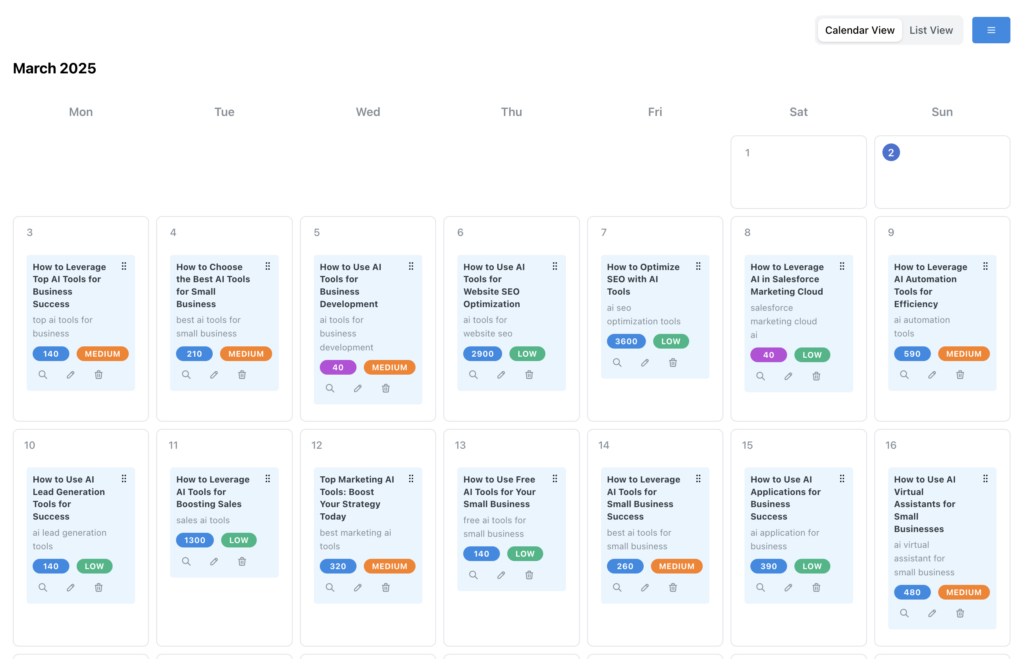
Building a reliable publishing rhythm feels impossible when you are drowning in spreadsheets, missed deadlines, and last-minute scrambles. An AI content calendar transforms that chaos into a predictable, data-driven system. By combining artificial intelligence with strategic planning, you can automate topic generation, schedule posts for maximum impact, and finally break free from the reactive content cycle.
What Exactly Is an AI Content Calendar?
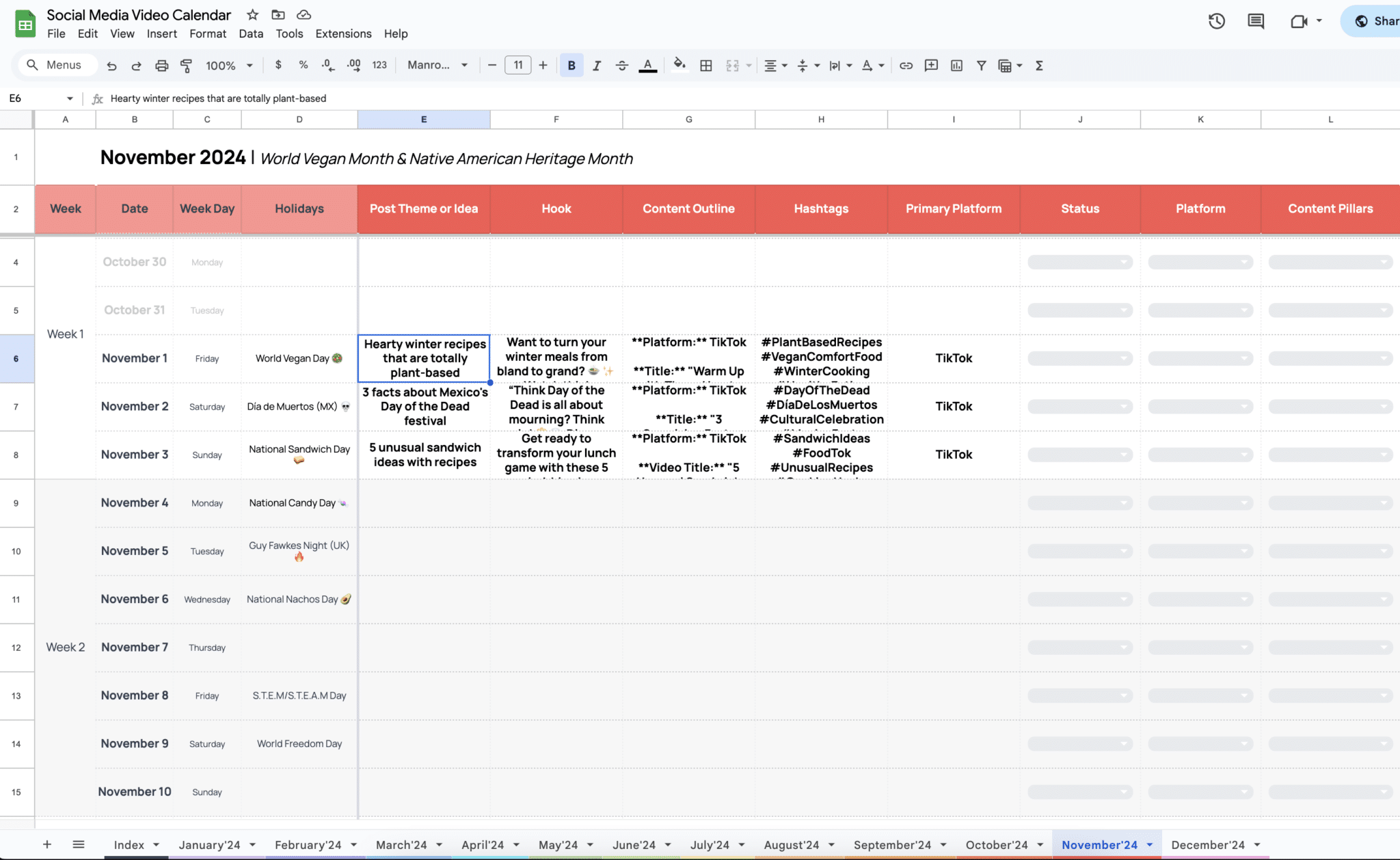
An AI content calendar is a dynamic planning tool that uses machine learning algorithms to assist in the creation, scheduling, and optimization of content across multiple channels. It goes far beyond a static spreadsheet by injecting predictive analytics, natural language processing, and automation at every stage. Instead of manually filling in dates with educated guesses, you are fed real-time suggestions for trending topics, optimal posting windows, and even complete draft outlines.
The engine behind these systems analyzes historical performance data, audience behavior patterns, and competitive landscapes to generate a roadmap tailored to your specific goals. The result is a living breathing editorial plan that learns and improves over time, consistently aligning your output with what your audience actually wants to consume.
Core Components of a Modern AI-Powered Publishing System
Truly understanding an AI content calendar requires breaking down its anatomy. A robust platform isn’t a monolithic block; it is an integration of several distinct intelligent modules working in concert. Each component solves a specific pain point in the content supply chain.
AI-Driven Ideation and Topic Clustering
Staring at a blank screen kills productivity. AI ideation modules scan the web, analyze SERPs, and dissect social conversations to surface content gaps and emerging trends. They don’t just generate random keywords; they cluster semantically related topics, helping you build topical authority and plan comprehensive content clusters over weeks or months.
Predictive Publishing Windows
Timing is not universal. A business audience on LinkedIn has a drastically different active window than consumers on TikTok. An AI content calendar ingests your unique channel analytics to identify the precise time slots where your content achieves the highest organic reach and engagement, then automatically adjusts the schedule to match.
Automated Content Briefing and First Drafts
Once a topic is approved on the calendar, the AI can instantly generate a detailed content brief. This includes target audience personas, suggested headings, semantic keywords to include, and internal linking opportunities. Advanced systems can even populate the calendar with fully formed first drafts for human refinement, drastically shrinking the production pipeline.
Cross-Channel Distribution Mapping
A single piece of pillar content shouldn’t live in isolation. The AI calendar can map out a full atomization plan, scheduling the main blog post, dozens of derivative social media snippets, email newsletter teasers, and even podcast script outlines across a synchronized timeline to maximize the asset’s lifespan.
Transactional vs. Strategic: Choosing the Right Type of AI Calendar
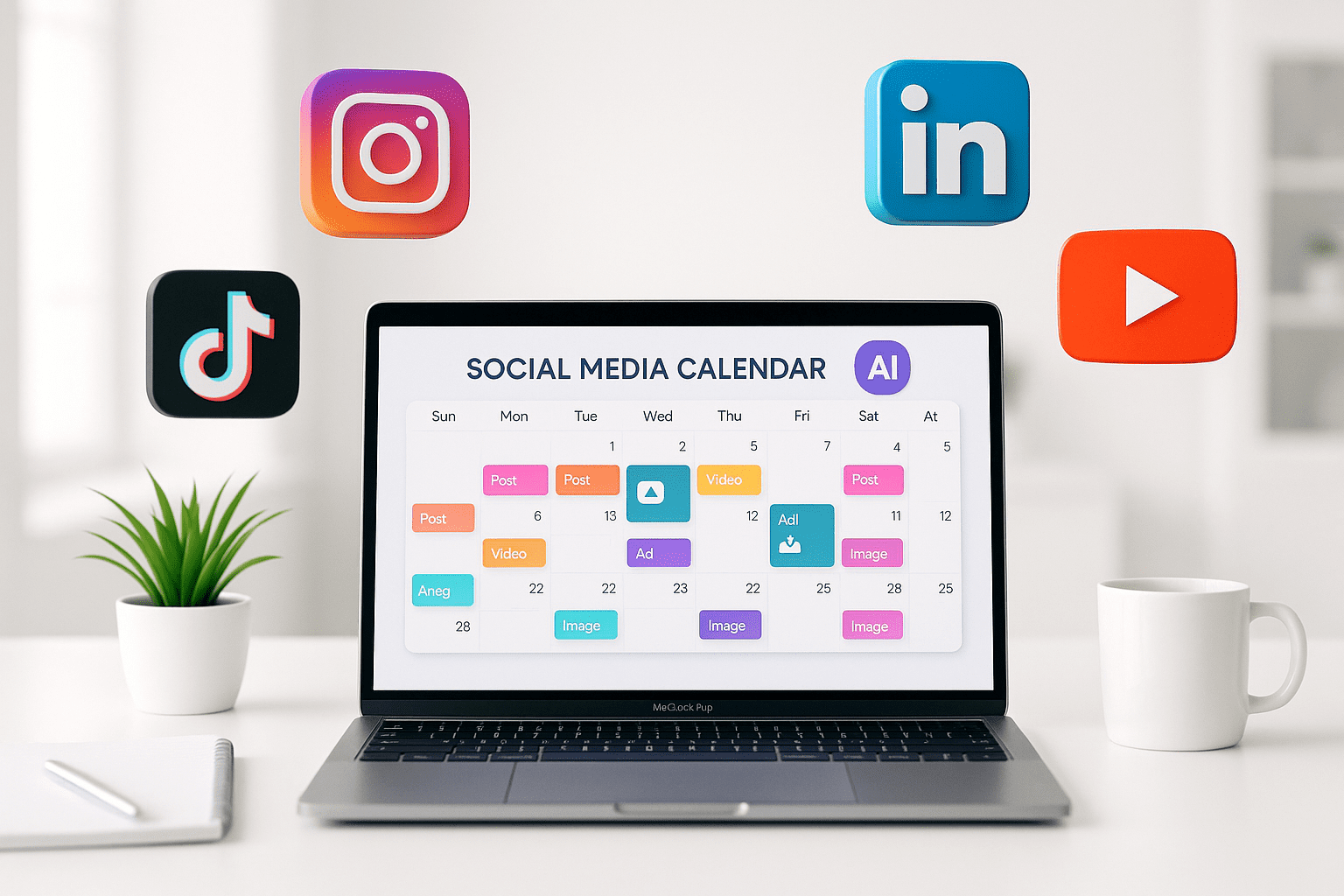
Not all AI calendars are built for the same user. The market generally splits into two distinct philosophies: the logical transactional scheduler and the strategic forecasting partner. Mistaking one for the other leads to poor ROI from your tool investment.
| Feature | Transactional AI Calendar | Strategic AI Calendar |
|---|---|---|
| Primary Function | Bulk scheduling, drag-and-drop, basic analytics | Outcome prediction, gap analysis, narrative sequencing |
| AI Depth | Automated posting at “best times” based on general rules | Custom ML models trained on your specific conversion data |
| Ideal User | Social media managers executing a predefined strategy | Marketing directors and strategists designing the blueprint |
| Content Type | Short-form, daily engagement posts | Long-form, lead nurturing sequences, multi-channel campaigns |
Unlocking the Tangible Benefits of an AI Content Calendar
Moving from a manual process to an AI-driven calendar isn’t just about novelty; it fundamentally changes the economics of your content operation. The benefits compound over time, shifting your team from high-stress execution to high-level creative direction.
- Elimination of Decision Fatigue: By offloading the mental load of “what to post today” to the AI, creative minds preserve energy for crafting quality narratives rather than wrestling with calendars.
- Consistent Brand Storytelling: AI algorithms can track narrative threads, ensuring your content tells a cohesive story over time rather than becoming a disjointed collection of random posts.
- Real-Time Relevance: When news breaks, an AI calendar can instantly reschedule evergreen content to make room for timely, reactive posts without derailing the entire plan.
- Resource Optimization: Predictive analytics show you exactly which content types and topics drive pipeline value, allowing you to stop burning budget on underperforming formats long before a quarterly review.
- Scalable Personalization: For enterprises, AI can manage hundreds of micro-calendars tailored to different segments or geographies, maintaining a unified brand voice while localizing messaging.
- The “Set and Forget” Fallacy: Treating the AI output as final. Algorithms drift. A topic that was trending during the generation phase may be stale by the publication date. You must review the calendar weekly, not quarterly.
- Ignoring Institutional Knowledge: The AI doesn’t know that your CEO is writing a controversial op-ed next month. If you don’t manually input that context, the calendar will schedule conflicting messages that fracture your audiences attention.
- Over-Optimizing for Search Bots: Letting the AI pack the calendar only with bottom-funnel, high-volume keywords. This starves your brand of the top-of-funnel, emotional storytelling content that builds the audience the bots are analyzing. Balance is a manual input.
- Paralysis by Analysis: Spending more time analyzing the AI’s dashboard recommendations than actually publishing. A calendar is a tool for action. If the predictive insights stop you from hitting publish because the score wasn’t “perfect,” you’ve lost the plot.
Acknowledging the Limitations and Blind Spots
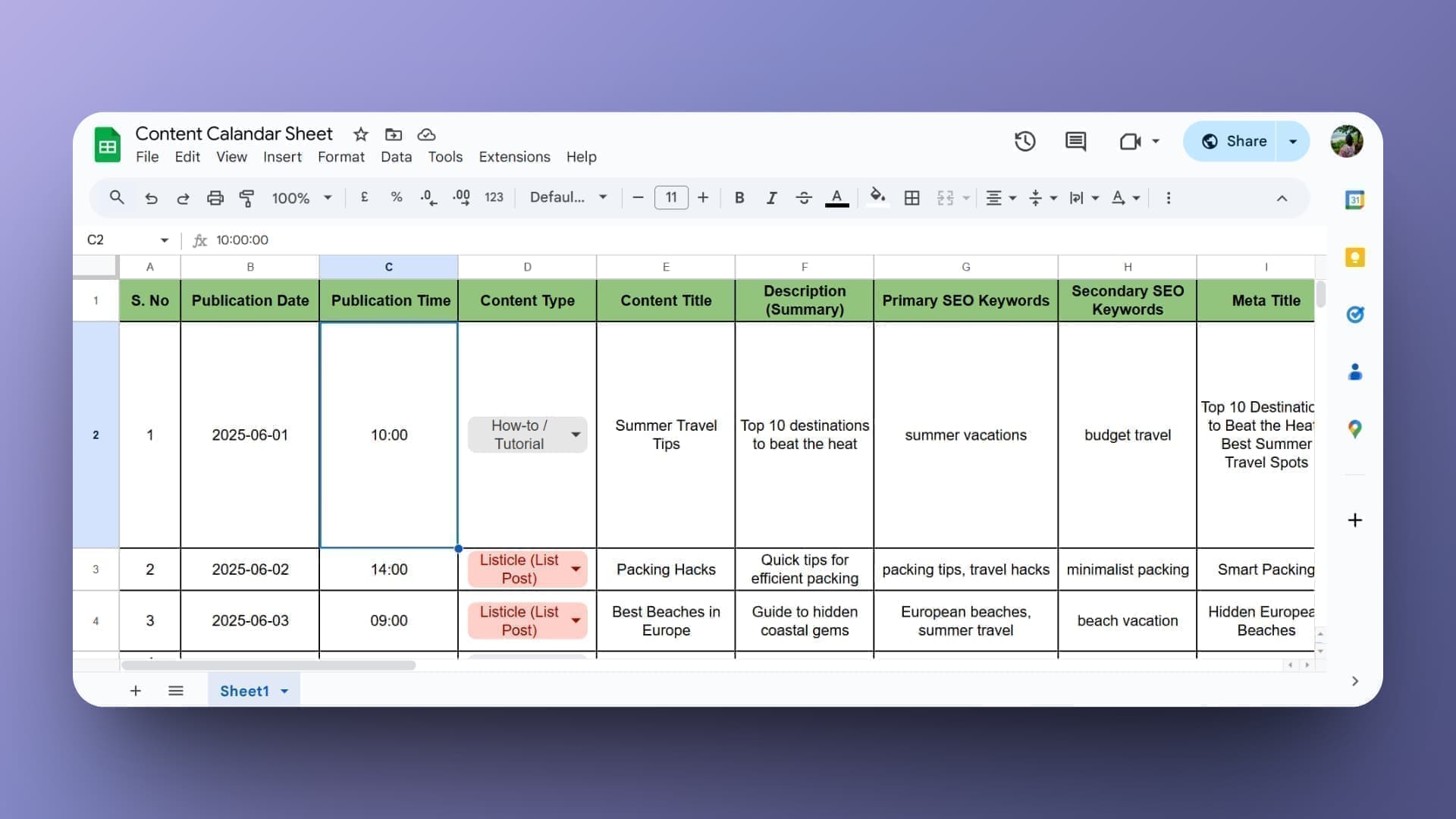
An AI content calendar is a massive lever, but it is not an autopilot that replaces strategic human judgment. Relying on it blindly leads to generic, soul-less content that erodes trust. Recognizing the boundaries keeps you in the driver’s seat.
The largest limitation is data dependency. If you feed the AI poor historical data from a previously inconsistent strategy, it will optimize for mediocrity. It also lacks genuine emotional intelligence. While it can predict sentiment, it cannot feel cultural nuance or handle sensitive societal moments without explicit human guardrails. Furthermore, generative AI can inadvertently produce “average” content—the statistical mean of the internet—lacking the distinct point of view that builds true fandom. The tool suggests; you must curate.
Comparing Popular AI Content Calendar Solutions
The landscape of tools integrating AI into content scheduling is diverse. Some are native AI platforms, while others have bolted AI features onto existing social media management suites. Your choice depends entirely on whether you prioritize workflow automation or strategic intelligence.
Tools like Notion with AI add-ons and Airtable AI provide flexible, transactional calendars where you can prompt the in-built AI to generate ideas directly within the database. They excel at managing the asset pipeline. Conversely, dedicated platforms like HubSpot’s Content Hub (formerly Marketing Hub) or MarketMuse offer a more strategic layer, using AI to analyze site-wide authority and forecast ranking potential before a piece even hits the calendar. For pure social media speed, FeedHive and Buffer’s AI Assistant offer predictive behavioral models that optimize posting times per audience micro-segment, a feature manual planners consistently misjudge.
Building Your First High-Performance AI Content Calendar
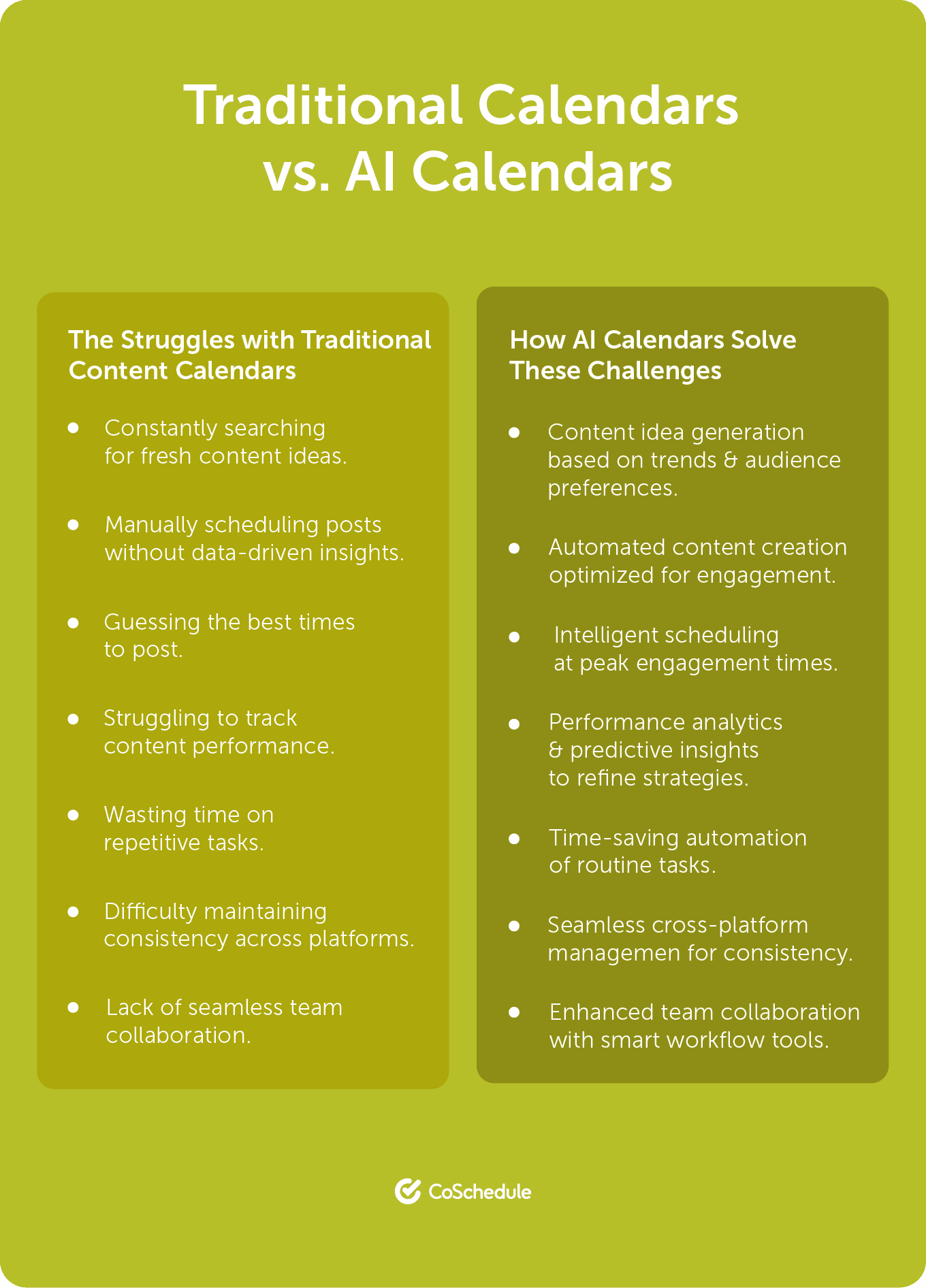
Implementing an AI content calendar successfully requires a structural reset, not just a software subscription. This is a step-by-step migration from a reactive sprint cycle to a predictive marathon cadence. Follow this pragmatic workflow to seed a system that pays dividends immediately.
Step 1: Centralize and Clean Your Historical Data
AI starves without clean fuel. Import your last 12 months of content performance data into your chosen tool. Scrub vanity metrics. Tag every piece by format, funnel stage, and core topic. The AI needs this clean taxonomy to identify the patterns a human eye misses, such as a specific topic that performs terribly on Twitter but drives qualified leads when published as a LinkedIn document at 8 AM on Tuesday.
Step 2: Define Non-Negotiable Strategic Pillars
Set firm boundaries for the AI. Input your core brand propositions, product launch dates, and legal quiet periods. The calendar must treat these as immovable anchors. Then, define your “content ratio” rules: stipulate that 40% of the calendar must focus on educational value, 30% on social proof, and 30% on product-driven conversion. The A
Step 3: Let the AI Generate the Theme Grid
Command the machine to populate the next 90 days with a thematic grid. Instead of specific titles, force it to propose weekly “big-idea themes” derived from your cleaned data and keyword gap analysis. A theme like “Financial Resilience for Bootstrapped Startups” is a guiding star that gives your writers creative freedom while ensuring the AI calendar maintains topical density for SEO authority.
Step 4: Human-in-the-Loop Refinement
Conduct a “Calendar Critique” session. Gather your creative team to scan the AI-proposed grid. This is where strategic intuition overrides data. The AI might see a logical sequencing of topics, but a human knows that scheduling a heavy technical deep-dive on the day of a major holiday is a waste of effort. Reshuffle the generated blocks, inject cultural moments, and add your unique contrarian opinions.
Common Pitfalls That Destroy AI Calendar Efficiency
Even the most advanced AI calendar becomes a graveyard of good intentions if you fall into these operational traps. Most teams don’t fail because of bad tools; they fail because of bad process design around the tools.
Critical Success Factors for Long-Term Adoption
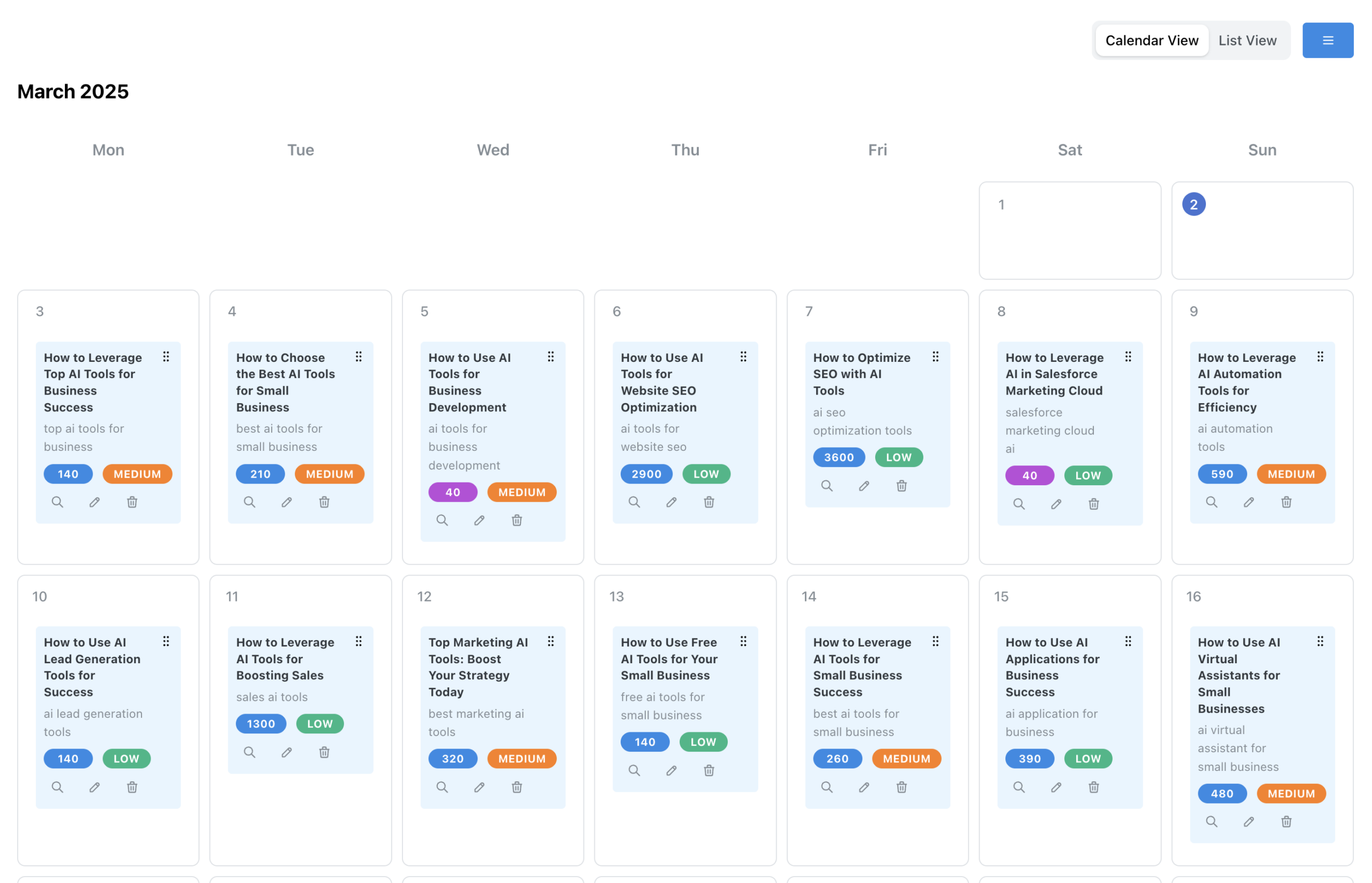
Scaling content with an AI calendar requires a library of documented standard operating procedures. The most critical note is that your AI calendar must connect to a live data source, not a static CSV. Audience behavior shifts rapidly. A calendar optimized on January data will be inaccurate by March unless the integration is real-time.
Furthermore, aggressively audit the “empty slots” in your calendar. If the AI consistently fails to fill a specific slot, it’s signaling that your team lacks the capacity to produce that format. Use these gaps as capacity planning data to justify external writers or to trim an underperforming channel from the mix entirely.
Frequently Asked Questions About AI Content Calendars
Can an AI content calendar replace my social media manager?
No, it shifts their role from an executor to a strategist. The AI handles the algorithmic timing and basic copy generation, but the human is essential for crisis communication, community engagement, and injecting the brand’s unique personality that AI models smooth over. The tool removes the busywork; the manager elevates the brand.
How much content should I schedule in advance with AI?
For “always-green” educational content, scheduling 60 to 90 days in advance is safe. However, social media reactions and industry commentary should never be scheduled more than 7 days out. A smart AI calendar reserves flexible “floating slots” for reactive content to keep the feed feeling urgent and alive, not pre-canned.
Is there a risk that AI-generated scheduling makes my feed look robotic?
Yes, if you don’t randomize the templates. Leading AI schedulers offer “natural variance” settings that slightly alter publishing times and day intervals to mimic human behavior. The real danger is textual uniformity; always apply custom rules to vary sentence length and emotional tone across the scheduled posts.
Can I use an AI content calendar for a multi-language strategy?
Absolutely. Enterprise-grade AI calendars can segment channels by locale and apply localized NLP models. A central English pillar content piece on the calendar can automatically trigger translation tasks and regional scheduling variants, accounting for different time zones and cultural holidays in the target region.
What metrics prove my AI content calendar is working?
Beyond vanity metrics like likes, track “Calendar Adherence Rate” (planned vs. posted) and “Content Lifespan Value.” If the AI is working, you should see a higher adherence rate with less manual stress, and your long-form content should have a longer sustained traffic tail because the AI sequenced it correctly with supportive internal links.
Conclusion
An AI content calendar is the operational backbone of a modern, efficient content machine. It eliminates the guesswork from publishing, surfaces insights hidden in your decaying spreadsheets, and grants your team the mental bandwidth to focus on quality over quantity. The danger lies not in the technology failing, but in the human inclination to surrender strategic thinking to the algorithm. By treating the AI as a relentless research assistant and logistical coordinator, while you remain the bold editor-in-chief, you transform a frantic publishing schedule into a sustainable, revenue-driving asset. The future of content planning is not a blank page on a Monday morning; it is a living, intelligent roadmap that ensures every piece you create has a deliberate purpose.
Xem thêm:
- AI SEO Database Optimization: The Complete Guide to Smarter Data-Driven Rankings
- AI SEO Product Schema: The Complete Guide to Structured Data That Ranks
- AI SEO Updates: Navigating the New Era of Search Engine Optimization
- AI SEO Agent: How Autonomous AI Is Reshaping Search Engine Optimization
- AI SEO Team Workflow: The Complete Guide to Scaling Organic Growth in 2025
Bài viết cùng chủ đề:

AI SEO SEO Automation with Make: The Complete Workflow Guide

AI SEO SEO Automation with Zapier: The Complete Workflow Guide

AI SEO SEO Automation with n8n: The Complete Workflow Guide
AI SEO SEO Automation with Gemini: The Complete Guide to Scaling Organic Growth

AI SEO SEO Automation with Claude: The Complete Guide to Scaling Content in 2025

AI SEO SEO Automation with ChatGPT: The Complete Playbook for 2025

AI SEO & SEO Automation for Affiliate Sites: The 2025 Playbook for Passive Income Growth
AI SEO & SEO Automation for Bloggers: The Complete Guide to Scaling Your Content

AI SEO & SEO Automation for Agencies: The Complete 2025 Playbook

AI SEO and SEO Automation for Ecommerce: The Complete Playbook for 2025

AI SEO & SEO Automation for WordPress: The Complete Playbook for 2025
AI SEO SEO Automation Strategy: The Complete Playbook for 2025

Mastering the AI SEO SEO Automation Process: A Complete Guide to Scaling Organic Growth
AI SEO SEO Automation System: The Complete Guide to Scaling Organic Growth in 2025
AI SEO SEO Automation Platform: The Complete Guide to Scaling Organic Growth in 2025
AI SEO SEO Automation Software: The Complete Guide to Scaling Organic Growth in 2025















