
No products in the cart.
AI SEO Automated Schema Markup: The Complete Guide to Smarter Structured Data

10
Aug
Aug
AI SEO automated schema markup is transforming how websites communicate with search engines. This technology combines artificial intelligence with structured data implementation, allowing sites to generate, update, and validate schema markup without manual coding. For digital marketers and website owners, understanding this evolution matters because it directly impacts visibility in search results. Search engines like Google increasingly reward sites that implement structured data correctly, and AI automation makes this process faster, more accurate, and scalable across thousands of pages.
What Is AI SEO Automated Schema Markup?

AI SEO automated schema markup refers to the use of machine learning algorithms and natural language processing to create, deploy, and maintain structured data on web pages. Traditional schema markup requires developers to manually write JSON-LD or microdata code for each page type. AI automation changes this by analyzing page content, identifying entities, and generating appropriate schema types automatically.
The core components of this technology include content analysis, entity recognition, schema type selection, and continuous validation. AI systems scan page text, images, and metadata to understand what the page represents. They then match this understanding to the correct schema vocabulary from Schema.org, which contains over 800 types and more than 1,400 properties.
How AI Improves Traditional Schema Implementation
Manual schema implementation suffers from several pain points. It is time-consuming, prone to human error, and difficult to maintain as pages change. AI automation addresses these issues through pattern recognition and learning from existing structured data across the web. The system learns which schema types work best for different content categories and can predict the most effective markup for new pages.
For example, an e-commerce site with 10,000 product pages would traditionally require developers to write custom schema for each product template. With AI automation, the system analyzes a sample of products, learns the data structure, and generates appropriate Product schema with offers, ratings, and availability for every page in minutes.
Why AI SEO Automated Schema Markup Matters for Search Rankings
Search engines use structured data to understand content context and relationships. While schema markup is not a direct ranking factor, it enables rich results that improve click-through rates. Rich snippets, product carousels, FAQ sections, and breadcrumb displays all depend on accurate schema implementation.
AI automation increases the likelihood of earning these enhanced search features because it ensures schema is always present and correctly formatted. Google’s documentation emphasizes that structured data must be accurate and representative of page content. AI systems excel at maintaining this accuracy because they continuously monitor and update markup as content changes.
The Connection Between Schema and Entity Understanding
Search engines build knowledge graphs from structured data. When your pages contain clear entity relationships, search engines can better connect your content to related topics, people, and organizations. AI SEO automated schema markup strengthens this connection by identifying entities within your content that might be missed during manual implementation.
Consider a healthcare website publishing articles about various conditions. AI automation can identify medical entities, procedures, and medications mentioned in the text, then apply appropriate MedicalCondition or Drug schema. This level of detail would be impractical to implement manually across hundreds of articles.
Key Benefits of AI-Powered Schema Generation
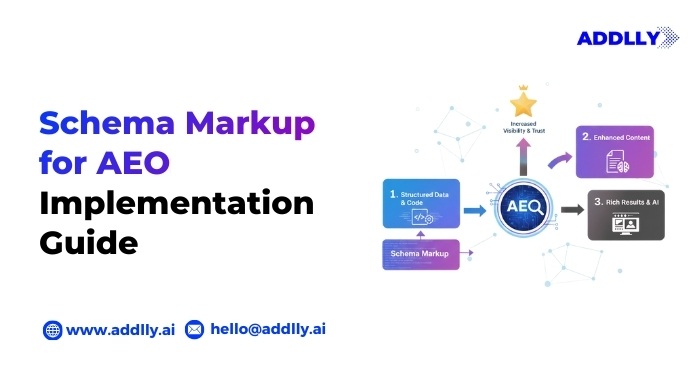
The advantages of adopting AI SEO automated schema markup extend beyond time savings. Websites implementing this technology report measurable improvements in search performance and operational efficiency.
- Scalability: Generate schema for unlimited pages without proportional increases in development time
- Accuracy: Reduce syntax errors and incorrect schema type selection through automated validation
- Real-time updates: Schema adjusts automatically when page content changes
- Comprehensive coverage: Identify schema opportunities across all page types, including blogs, videos, and local business pages
- Competitive advantage: Stay ahead of competitors still using manual schema processes
- Resource optimization: Free up developer time for other high-priority tasks
- Rich result impressions: Number of times your pages appear with enhanced search features
- Click-through rate: Percentage of users who click on your rich results
- Indexation rate: Percentage of your pages indexed by search engines
- Schema error rate: Percentage of pages with invalid structured data
- Time to implementation: Time required to deploy schema on new pages
- Search visibility: Overall visibility in search engine results pages
Data-Backed Performance Improvements
Case studies from enterprise SEO platforms show that automated schema implementation leads to significant increases in rich result impressions. One study of e-commerce sites found that product pages with AI-generated schema experienced a 30% increase in click-through rates compared to pages without structured data. Another analysis of news websites showed that AI-suggested Article schema improved Google Discover visibility by 25%.
These improvements stem from more complete schema coverage. Manual implementation often misses opportunities because developers focus on primary page types. AI systems identify secondary schema opportunities, such as adding BreadcrumbList to category pages or FAQPage schema to informational content.
How AI SEO Automated Schema Markup Works
Understanding the technical process behind AI schema generation helps marketers evaluate different tools and approaches. The workflow typically involves several stages that happen automatically in the background.
Content Analysis and Entity Extraction
The AI system first crawls or receives page content. It uses natural language processing to identify key entities such as products, people, organizations, locations, and events. This analysis goes beyond simple keyword matching to understand context and relationships between entities.
For instance, the system can distinguish between a product review and a product description, applying different schema properties to each. It recognizes pricing information, availability status, and customer ratings within the text, extracting these data points for structured markup.
Schema Type Selection and Generation
Based on entity extraction, the AI selects appropriate schema types from the Schema.org vocabulary. It considers the page’s primary purpose and secondary content elements. The system then generates JSON-LD markup, which is the format recommended by Google.
Modern AI systems can generate multiple schema types for a single page. A blog post about a software product might receive both BlogPosting schema and SoftwareApplication schema, providing search engines with richer context about the content.
Validation and Continuous Optimization
Generated schema undergoes automated validation against Google’s structured data testing guidelines. The AI checks for required properties, correct data types, and proper nesting. If errors are detected, the system corrects them automatically without human intervention.
Continuous optimization means the system monitors how search engines respond to the schema. It tracks rich result performance and adjusts markup strategies accordingly. This feedback loop ensures schema remains effective as search engine algorithms evolve.
Popular AI Schema Markup Tools and Platforms

Several tools offer AI SEO automated schema markup capabilities, each with different strengths and pricing models. Understanding the landscape helps you choose the right solution for your website.
| Tool | Key Features | Best For |
|---|---|---|
| Schema App | AI-driven schema generation, real-time validation, integration with CMS platforms | Enterprise websites with complex content structures |
| WordLift | Natural language processing, knowledge graph building, automatic entity linking | Content-heavy sites focused on topical authority |
| Merchant Center AI | Automated product schema for e-commerce, integration with Google Shopping | Online retailers using Google Merchant Center |
| RankMath Pro | AI schema suggestions within WordPress, one-click implementation | WordPress site owners seeking simplicity |
| Yoast SEO Premium | Schema generation based on content analysis, automatic updates | Small to medium business websites |
Choosing the Right AI Schema Solution
Evaluate tools based on your website’s size, technical complexity, and content types. Enterprise sites with custom content management systems may require API-based solutions that integrate with existing infrastructure. Smaller sites can benefit from plugin-based tools that work within popular CMS platforms.
Consider the tool’s ability to handle your specific schema needs. E-commerce sites require robust Product and Offer schema support. News publishers need Article schema with proper headline and date properties. Local businesses need LocalBusiness schema with location and hours information.
Practical Implementation Guide for AI Schema Automation
Implementing AI SEO automated schema markup requires a systematic approach. Following these steps ensures successful deployment and maximum search visibility benefits.
Step 1: Audit Your Current Schema Coverage
Before implementing AI automation, understand your current structured data landscape. Use Google’s Rich Results Test to identify which pages have schema and which lack markup. Document your primary page types and their schema requirements.
This audit reveals gaps in your current implementation. You might discover that your blog posts lack Article schema or that your product pages miss Review schema. These gaps represent opportunities for AI automation to add value.
Step 2: Select and Configure Your AI Tool
Choose a tool that aligns with your technical stack and content strategy. Configure the tool to recognize your specific content types and schema preferences. Most tools allow customization of schema types and properties.
Set up the tool to automatically generate schema for new pages as they are published. This ensures consistent coverage without requiring manual intervention for each new piece of content.
Step 3: Validate and Monitor Performance
After implementation, regularly check your schema using Google Search Console’s Rich Results report. This report shows which pages have valid structured data and which have errors. Address any issues promptly to maintain eligibility for rich results.
Monitor your search performance metrics, particularly click-through rates and impressions for pages with rich results. Compare these metrics against pages without schema to quantify the impact of your AI automation.
Common Mistakes in AI Schema Automation
Even with AI assistance, websites make errors in structured data implementation. Recognizing these mistakes helps you avoid them and maintain schema quality.
Over-Optimization and Spammy Markup
Some AI tools generate excessive schema types for pages, creating markup that appears spammy to search engines. Google’s guidelines prohibit markup that misrepresents page content. Applying Review schema to pages without actual reviews or Event schema to pages without real events violates these guidelines.
Configure your AI tool to apply schema conservatively. Focus on schema types that accurately represent your content and provide genuine value to search engines and users.
Ignoring Schema Updates and Changes
Schema.org vocabulary evolves over time, with new types and properties added regularly. AI tools that are not updated may generate outdated schema that search engines no longer recognize. Choose tools with active development and regular updates to ensure compatibility with current standards.
Google also updates its rich result requirements periodically. Stay informed about these changes and adjust your schema strategy accordingly. AI tools that monitor search engine guidelines automatically can help with this process.
Neglecting Mobile Schema Considerations
Mobile-first indexing means Google primarily uses the mobile version of your pages for ranking and indexing. Ensure your AI schema tool generates markup that works effectively on mobile pages. Some schema types, particularly those related to local search, have specific mobile considerations.
Test your schema on mobile devices using Google’s mobile-friendly testing tools. Verify that rich results display correctly on smaller screens and that schema data is accessible in mobile page source code.
AI Schema Markup for Different Content Types
Different content types require different schema approaches. AI automation handles this variety effectively by recognizing content patterns and applying appropriate markup.
E-Commerce Product Pages
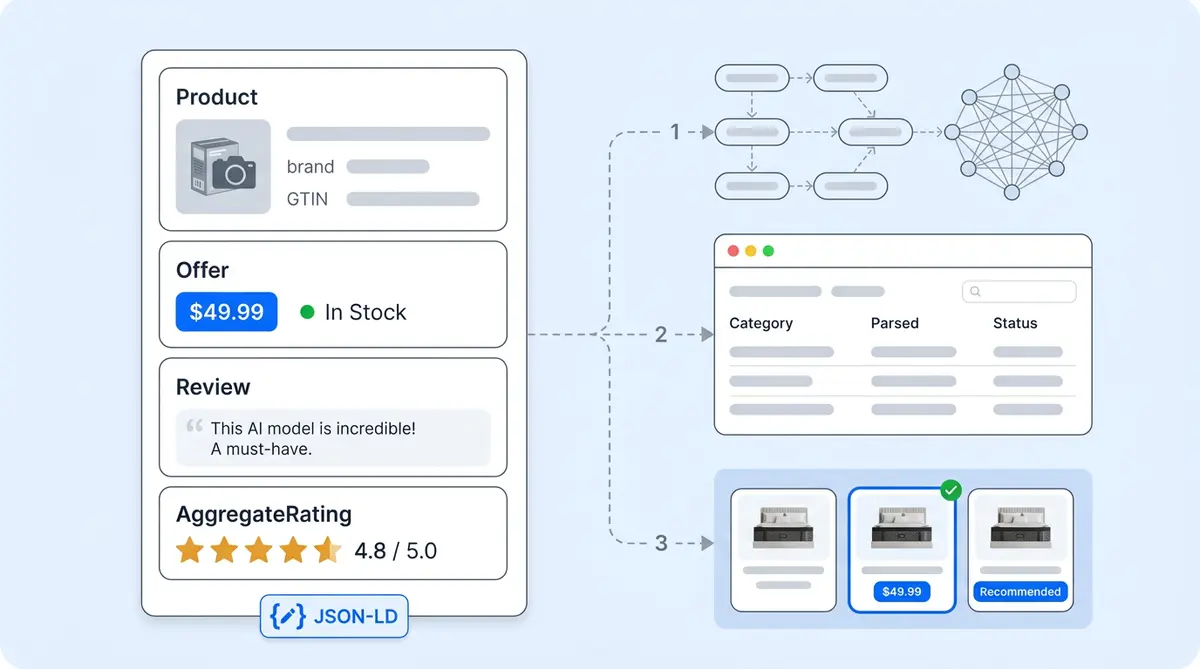
Product schema requires properties like name, image, description, brand, offers, price, and availability. AI systems extract these from product data feeds or page content. They can also generate AggregateRating schema when customer reviews are present.
Advanced AI tools handle variant products, detecting color, size, and material options and generating appropriate schema for each variant. This level of detail improves product visibility in Google Shopping and organic search results.
Article and Blog Content
Article schema requires headline, datePublished, dateModified, and author information. AI systems extract these from page metadata and content structure. They can also identify and mark up mainEntity, speakable, and image properties.
For news websites, AI automation ensures Article schema includes proper newsArticle type and breaking news properties. This markup is essential for Google News inclusion and Top Stories carousel eligibility.
Local Business Websites
LocalBusiness schema includes properties for name, address, phone, hours, and geographic coordinates. AI systems extract this information from website content and business listings. They can also generate geo coordinates automatically from address information.
AI automation helps local businesses maintain consistent NAP (Name, Address, Phone) data across their website and external listings. This consistency improves local search rankings and Google Maps visibility.
Measuring the Impact of AI Schema Automation

Quantifying the results of AI SEO automated schema markup requires tracking specific metrics before and after implementation. These measurements demonstrate the return on investment for your structured data efforts.
Key Performance Indicators to Track
Use Google Search Console to track these metrics over time. Compare performance during a baseline period before AI implementation against the period after implementation. This comparison reveals the true impact of automation.
Case Study: E-Commerce Schema Automation Results
An online electronics retailer implemented AI schema automation across their 50,000 product pages. Before implementation, only 40% of pages had valid Product schema. After AI automation, 98% of pages had valid schema within two weeks.
The retailer saw a 45% increase in rich result impressions and a 22% increase in organic click-through rate. Product pages with complete schema outperformed pages with partial or missing schema by a significant margin. The automation paid for itself within three months through increased organic revenue.
Future Trends in AI Schema Markup
The field of AI SEO automated schema markup continues to evolve rapidly. Understanding emerging trends helps you prepare for future developments and maintain competitive advantage.
Integration with Generative AI
Large language models are being integrated into schema generation tools. These models understand context and semantics at a deeper level, enabling more accurate entity extraction and schema type selection. Generative AI can also create schema for entirely new content types that lack established schema vocabulary.
This integration will make schema automation even more accessible to non-technical users. Content creators will be able to generate sophisticated structured data simply by writing content, without understanding schema syntax or vocabulary.
Real-Time Schema Adaptation
Future AI systems will adapt schema in real-time based on user behavior and search engine feedback. If a particular schema type is not generating rich results, the system will automatically test alternative markup. This continuous optimization will maximize the effectiveness of structured data.
Real-time adaptation also means schema will respond to seasonal changes, trending topics, and algorithm updates. Websites will maintain optimal structured data without manual intervention, regardless of external changes.
Important Notes for Successful Implementation
Several considerations ensure your AI schema automation delivers maximum value without risking search penalties.
Always maintain a human review process for AI-generated schema. While AI systems are highly accurate, occasional errors occur. Review schema on your most important pages regularly to ensure accuracy and compliance with search engine guidelines.
Keep your schema aligned with your overall SEO strategy. Structured data should support your content and keyword targeting, not exist in isolation. Coordinate schema implementation with your content team to ensure consistency.
Document your schema implementation process and maintain records of schema types used across your site. This documentation helps with troubleshooting and provides valuable context for future optimization efforts.
Frequently Asked Questions
Is AI SEO automated schema markup worth the investment?
For websites with more than 100 pages, AI automation typically provides significant return on investment through time savings and improved search performance. The technology eliminates manual schema coding, reduces errors, and ensures comprehensive coverage. Most businesses recover implementation costs within six months through increased organic traffic and conversions.
Will AI schema markup guarantee rich results in Google?
No technology can guarantee rich results because Google ultimately decides which pages qualify. However, AI automation ensures your schema is always valid, accurate, and complete, which maximizes your eligibility. Pages with proper schema have significantly higher chances of earning rich results compared to pages without structured data.
Can AI schema automation work with any content management system?
Most AI schema tools offer plugins or integrations for popular CMS platforms like WordPress, Shopify, and Drupal. For custom-built websites, API-based solutions can be implemented. The key is choosing a tool that matches your technical infrastructure and content management workflow.
How does AI schema automation handle schema updates and changes?
Reputable AI tools continuously monitor Schema.org vocabulary changes and search engine guideline updates. They automatically adjust their schema generation to remain compliant with current standards. This automatic updating ensures your structured data never becomes outdated or non-compliant.
What is the difference between AI schema automation and traditional schema plugins?
Traditional schema plugins require manual configuration and often use template-based approaches. AI automation analyzes actual page content to determine appropriate schema, making it more accurate and comprehensive. AI tools also provide continuous optimization and learning, while traditional plugins remain static until manually updated.
Conclusion
AI SEO automated schema markup represents a fundamental shift in how websites implement structured data. The technology eliminates the technical barriers that have historically prevented many websites from benefiting from rich results and enhanced search visibility. By automating the analysis, generation, and validation of schema markup, AI systems enable websites of all sizes to compete effectively in search results.
The evidence clearly shows that proper schema implementation improves click-through rates, search visibility, and ultimately organic traffic. AI automation makes this implementation practical and sustainable, even for large websites with thousands of pages. As search engines continue to rely on structured data for understanding content, the importance of AI schema automation will only grow.
Businesses that adopt this technology now will gain significant advantages over competitors still using manual schema processes. The combination of scalability, accuracy, and continuous optimization makes AI SEO automated schema markup an essential component of modern search engine optimization strategies. Investing in this technology today positions your website for success in an increasingly competitive digital landscape.
Xem thêm:
- The Ultimate AI SEO Workflow for SaaS: Scale Organic Growth with Intelligent Automation
- AI Meta Titles: The Complete Guide to Automated Title Tags That Drive Clicks
- AI SEO Semantic Content Analysis: The Complete Guide to Smarter Rankings
- WP Trove Keyword Research: The Complete Guide to Finding High-Value WordPress Niche Keywords
- AI SEO Featured Snippet Generator: The Complete Guide to Winning Position Zero
Bài viết cùng chủ đề:

AI SEO SEO Automation with Make: The Complete Workflow Guide

AI SEO SEO Automation with Zapier: The Complete Workflow Guide

AI SEO SEO Automation with n8n: The Complete Workflow Guide
AI SEO SEO Automation with Gemini: The Complete Guide to Scaling Organic Growth

AI SEO SEO Automation with Claude: The Complete Guide to Scaling Content in 2025

AI SEO SEO Automation with ChatGPT: The Complete Playbook for 2025

AI SEO & SEO Automation for Affiliate Sites: The 2025 Playbook for Passive Income Growth
AI SEO & SEO Automation for Bloggers: The Complete Guide to Scaling Your Content

AI SEO & SEO Automation for Agencies: The Complete 2025 Playbook

AI SEO and SEO Automation for Ecommerce: The Complete Playbook for 2025

AI SEO & SEO Automation for WordPress: The Complete Playbook for 2025
AI SEO SEO Automation Strategy: The Complete Playbook for 2025

Mastering the AI SEO SEO Automation Process: A Complete Guide to Scaling Organic Growth
AI SEO SEO Automation System: The Complete Guide to Scaling Organic Growth in 2025
AI SEO SEO Automation Platform: The Complete Guide to Scaling Organic Growth in 2025
AI SEO SEO Automation Software: The Complete Guide to Scaling Organic Growth in 2025















